

Home Blog Page 136

Amount of money farmers make from supplying pigs, cattle to Farmer’s Choice

0

Farmer’s Choice is one of the biggest processors of meat products in Kenya. The company is known for its full range of meats, including fresh and processed sausages, bacon, smokies, ham, beef, lamb, pork, and chicken.

Since it was founded in 1980, Farmers Choice has over the years created employment for thousands of Kenyans both directly and indirectly.

The firm has also served as a reliable market for farmers engaged in cattle, chicken, and pig farming.  However, to win a contract to supply live livestock to the agro-processing firm, various standards must be met.

According to Farmer’s Choice CEO Felisters Gitau Mutugu, the company trains farmers on the best farming practices to meet the required standards. The training covers key areas including best genetics, feeding and disease management.

“For Farmers’ Choice, one of our key stakeholders is our farmers because we deal with meat and meat products. To get this meat consistently, we work closely with farmers. We make sure we avail for them the best genetics and work with the Ministry of Livestock,” Ms Mutugu explained.

“We also provide feed at subsidised prices because feed is over 70% of what an animal needs to convert into meat. Our extension officers help farmers with disease management and farm management to ensure profitability,” she added.

The CEO explained that the company purchases live animals from farmers per kilogram, based on a grading system that accounts for the animals’ ratio of lean meat to bones and fats.

For farmers supplying cattle, Mitugu noted that they sell about 350 Kilograms at Sh500 per kg, translating to Sh175,000 per cattle.

The price per kilo varies depending on grading. The grading is based on factors such as back fat and the bone-to-meat ratio.

“For cattle beyond 350 kilos, we buy at an average of over Sh500 per kilogram. We educate farmers on grading, back fat, and bone-to-meat ratio to ensure they sell more meat, not just bone. It’s about working with the farmer from the beginning, including disease management, so that all animals survive and generate income,” she said.

On the other hand, farmers supplying pigs for bacon and sausages earn about Sh400 per kg of pork, with adult pigs selling for between Sh30,000 and Sh40,000.

ALSO READ: Bernard Nyaramba: What it took me to win a contract at Farmer’s Choice

Things to look out for when buying bonds from primary and secondary markets

What are some of the things every investor should be on the look out for when buying bonds both from primary and secondary markets? Rhina Namsia, the founder and chief executive officer of The Acemt Consulting, a training and consultation company that provides financial planning and investment advisory, explains the main things every investor should focus on for both primary and secondary purchase of bonds.

PRIMARY BIDDING: (Buying directly from CBK auction)

1). Auction Terms

Coupon rate – fixed or to be determined (for new issues).

Tenor/maturity period – how long your money stays invested.

Minimum investment amount – usually Sh50,000 for infrastructure bonds and Sh100,000

Taxation – IFB is tax-free, others are taxed according to their tenor.

2). Bidding Structure

Competitive vs Non-competitive bid

Competitive: You quote your interest rate (risk of being partially or fully rejected)

Non-competitive: You accept the market rate (always allocated but may be prorated)

Bid cut-off time – ensure you submit before deadline.

3). Pricing

Issued at par, premium, or discount – affects how much you pay.

Discount pricing means you pay less than face value.

Premium pricing means you pay more than face value.

Check pricing formula on the CBK auction notice.

4). Allocation Risk

Not all bids are accepted (especially competitive).

You can be: Fully allocated, partially allocated or unsuccessful

5). Settlement Requirements

Payment date(s)

Ensure funds are available in your bank or broker account.

Late settlement can lead to penalties.

6). Your Bond Strategy

Before placing a bid, confirm: your objective (income, long-term, reinvestment),your risk appetite and whether the bond fits your cash-flow needs.

SECONDARY MARKET: (Buying over-the-Counter via brokers)

1). Current Market Price

Bonds trade at discount, par, or premium.

Market prices change daily.

A higher price reduces your effective yield.

2). Accrued Interest Payable

When you buy a bond mid-cycle, you pay the seller: Clean price + Accrued interest

This affects the total cost of acquiring the bond.

3). Yield-to-Maturity (YTM)

This is the actual return you earn if you hold the bond to maturity.

Compare different bonds using YTM, not coupon rate.

4). Liquidity

Some bonds are actively traded, others are illiquid.

Illiquid bonds are hard to sell quickly or may force you to sell at a discount.

5). Broker Transaction Costs

Brokerage fees apply when buying or selling.

6). Remaining Time to Maturity

Affects: Returns, sensitivity to interest rate changes, accrued interest payable, and liquidity

7). Taxation

Interest from:

IFBs – tax-free

Treasury bonds – taxed Withholding Tax, (10 percent for bonds less than 10 years and 15 percent for bonds more than 10 years)

Tax applies even in secondary purchases.

8). Cash Flow Schedule

Check: next coupon date, Interest cycle (semi-annual) and final maturity amount

This helps plan your cash flow.

9). Clean Price vs Dirty Price

Clean price: Is the price without accrued interest.

Dirty price: what you actually pay (includes accrued interest).

Ensure the broker gives you both

10). Bond Documentation

Ask your broker to show:

Trade confirmation

Pricing sheet

Settlement details


New York Times: How Ruto’s family, allies make profits from sending Kenyans to Saudi

How to invest in new CBK Sh60 billion bonds with 12pc, 14pc interest rates

0

The Central Bank of Kenya (CBK) has reopened bids for two fixed-coupon Treasury bonds in the government’s efforts to raise Sh60 billion from the domestic market to support budgetary needs.

In a notice on Tuesday, December 9, CBK invited Kenyans to invest in the two bonds, FDX1/2019/020 and FDX1/2022/025.

“Central Bank of Kenya, acting in its capacity as fiscal agent for the Republic of Kenya, invites bids for the above bonds whose terms and conditions are as follows,” the CBK notice stated.

FXD1/2019/020, a 20-year bond with 13.2 years remaining until maturity, pays a fixed annual interest (coupon) of 12.873 percent and matures on March 21, 2039.

The second bond FDX1/2022/025 has 21.8 years to maturity with a coupon rate of 14.188 percent. It will mature on September 23, 2047, and is subject to a 10 percent withholding tax.

According to CBK, the official sale period runs from Tuesday, December 9, 2025, to Wednesday, January 7, 2026.

Both bonds will be listed on the Nairobi Securities Exchange and qualify for statutory liquidity requirements for commercial banks and non-bank financial institutions.

How to invest

For non-competitive bids, the minimum investment is Sh50,000 and Sh2 million for competitive bids. Non-competitive bids are ideal for retail investors while competitive bids are more suited for institutional and large-scale investors.

CBK invited interested investors to submit their bids via its portal.

“All successful bidders should obtain the payment key and amount payable from the CBK DhowCSD Investor Portal/App under the transactions tab on Friday, 09/01/2026, for FXD1/2019/020 and FXD1/2022/025,” CBK advised.

The lender warned that defaulters may be suspended from subsequent investment in Government Securities.

Secondary trading in multiples of Sh50,000 will commence on January 12, 2026.

ALSO READ: Ndindi Nyoro pockets millions from sale of Kenya Power shares

How to leverage AI for soccer predictions – The Things you Probably Don’t Know

0

Soccer has been the leading sport for online bettors for a long time, so it’s no surprise that people are looking for ways to improve their results. Besides researching everything themselves, some bettors prefer to trust others, which is why they like looking for betting tips.

While the classic betting tips can be handy, most people will agree that AI opens a new opportunity for users who need help when betting on soccer. The problem is that most punters have no idea how to take advantage of the latest opportunities, so it’s time to learn more about them.

Data Collection and Integration

The first thing that people should know about AI is that it can be used to process large amounts of data. In fact, all of the leading AI soccer predictions rely on this in order to provide people with the information they need. AI can process vast amounts of data from various sources, including different stats and performance analyses. This helps users gain a better understanding of what has happened in a given clash and can use the information to determine what may happen in the future.

Another thing that should be noted is that many AI systems can continuously ingest data from live matches. Having access to real-time information about ball tracking, player movement and tactical setups can do wonders. Just make sure to use the correct AI tool for the job because many of the available options are just not that good.

Predicting Match Outcomes

Since soccer fans can use AI to analyze a lot of data, these tools can also check past matches, team form and all other key options. The advanced machine learning models use historical and current data to predict different outcomes. This is how things like Random Forests work, and they have become increasingly popular, even among casual players.

Roulette Training Platforms and Demos: The Smart Way to Level Up

Another thing about AI that people should be aware of is related to the factorization models. AI utilizes player and team performance data to develop models that predict the likelihood of a given team’s success. This sounds complicated, but what’s important to know is that they can help you achieve better results.

Player Performance and Tactic analysis

Before the age of AI, players had to watch various games and analyze all the different statistics. While some of them do that today, others prefer to use AI and require it to track different stats, such as assists, goals, tackles, pass accuracy, and so on.

Another thing that AI is also amazing at is evaluating a player’s development trajectory. This is typically achieved by comparing current performance with historical data and providing projections for future performance. Even though these results can’t be fully trusted, they show a given sports bettor what could potentially happen and allow that person to make better decisions when betting.

Another thing that AI is particularly well-suited for is analyzing the past formations and strategies of specific teams. Doing this allows the model to predict how a team will perform in an upcoming match. Depending on the specific model, it is also possible for AI to simulate different tactical outcomes based on a given opponent’s strengths and weaknesses.

Injuries and Suspensions

It’s safe to say that one of the areas where professional soccer bettors tend to fail the most is in predicting injuries and suspensions. These are two of the things that are almost impossible to predict and when they happen, they can completely mess up a given person’s prediction.

While it is true that AI can’t predict them accurately as well, it can track player fitness and historical data. By having access to this information, the model can forecast the likelihood of an injury and what could happen during a match. The same is true for suspensions.

The good thing about AI is that it can also give you potential outcomes of what could happen if a given player is not going to be a part of a specific team’s lineup. This is a powerful tool that can be used to gain a considerable advantage when betting.

Odds, Markets and Real-Time betting Adjucements

AI opens a lot of doors when it comes to soccer betting, and one of the things that people can use it for is to analyze the betting odds. Some people use it to compare the odds across many different operators to decide which one is better. Others will even use the tool to check all markets and their odds and pick options based on how likely it is to predict them.

Some of the most innovative tools can also adapt in real-time and people often use them when betting on live matches. There are cases where these tools can adapt to in-game data like goals and red cards. In fact, many bookmakers use them to adjust the odds.

Roulette Training Platforms and Demos: The Smart Way to Level Up

0

As the popularity of online gaming continues to rise, roulette training platforms have emerged as a valuable resource for players looking to level up your roulette gameplay. These platforms provide a safe environment for players to practice without financial risk, allowing them to experiment with different strategies and techniques. By offering realistic simulations and comprehensive tutorials, these platforms cater to a wide range of skill levels, making them an essential tool for anyone serious about improving their roulette skills.

The benefits of using roulette training platforms

Roulette training platforms offer numerous benefits for players aiming to enhance their skills. By simulating real-world gaming scenarios, these platforms allow you to practice and refine your strategies without the pressure of a live casino environment. This practice can lead to increased confidence and better decision-making during actual gameplay.

Additionally, these platforms often provide access to expert advice and community forums where you can learn from experienced players. Engaging with a community of fellow enthusiasts can help you gain new insights and tips, further enhancing your understanding of the game. This collaborative learning environment fosters growth and encourages players to continuously improve their skills.

Technological advancements in roulette training

Technological advancements have significantly improved the quality and accessibility of roulette training platforms. High-speed internet and mobile technology enable seamless access to these tools, allowing players to practice anytime and anywhere. This flexibility is particularly appealing to users who prefer gaming on the go.

AFCON 2025: Why the tournament is more than football — culture, music, fandom and betting buzz

Moreover, the integration of virtual reality (VR) into training platforms offers an immersive experience that closely mimics real casino settings. VR technology allows you to engage with the game on a deeper level, enhancing your learning experience and making practice sessions more enjoyable. By embracing these technological innovations, training platforms can provide a more comprehensive and engaging learning experience.

Overcoming challenges in roulette training

While roulette training platforms offer significant advantages, they also face challenges such as maintaining user engagement and ensuring the accuracy of simulations. To address these issues, platforms must continually update their content and technology to reflect the latest trends and strategies in the gaming world.

Another challenge is differentiating from competitors in a crowded market. Offering unique features, such as personalized coaching or advanced analytics, can help a platform stand out. By focusing on user experience and continuously enhancing the quality of training materials, these platforms can attract and retain a loyal user base, ensuring long-term success.

AFCON 2025: Why the tournament is more than football — culture, music, fandom and betting buzz

0

The Africa Cup of Nations isn’t just about football. Many vibrant colours adopted by people of different ethnicities and races. When there is AFCON, the host nation does not only host matches, but it also hosts a carnival. A rollercoaster of music, fashion, food, stories and national pride blends into the highs and lows on the pitch. With AFCON 2025 on the horizon, fans are buzzing about the teams. The occasion’s culture and energy are going to be just as large as the games.

Fan zones and diaspora celebrations: The whole city gets involved

AFCON isn’t just about what happens inside the stadium. Whole cities get swept up in the euphoria. There are pre-approved fan zones and pop-up viewing areas that create street parties on match days. A giant screen, music performances, food stands, and all sorts of games and activities are galore. It’s not just about watching football. People visit to quibble over strategies, exchange forecasts, and mock the competition. People arrive early to make their guesses to break down the lineups and find out which team is going.

Recently, CAF and hosts have made a concerted effort to include the diaspora supporters.  They want everyone to feel ‘plugged in’ to the tournament, whether you’re in Casablanca, Nairobi or London. The first thing fans do is check the AFCON fixtures today, especially if they want to bet or want to play in prediction pools. The schedule isn’t just about dates and times. Rather, it allows people to size up team fatigue and travel schedules. Not just that. It does so by helping people check the head-to-head records before making their picks.

Fan zones frequently host local sports experts to engage in pre-match discussions. They discuss important players, anticipated lineups and past battles. It creates a kind of betting buzz in the area where everyone is exchanging injury news and comparing their odds while eavesdropping. The entire scene, Moroccan Amazigh chants, Nigerian street hype, South African dance-offs, is a rich cocktail of culture and the effort of outsmarting the day’s predictions.

The music that sets the tone

Music runs right through the heart of AFCON. All tournaments have their own anthems, massive opening ceremonies, halftime shows, and so on. You will hear Afrobeats, amapiano, coupe-decale, and highlife. These aren’t just background tracks. The songs tell stories. They preserve the history as well as the eccentricity of the continent.

How SportPesa Aviator is becoming Kenya’s fastest-growing online casino game — and why the country can’t stop playing it

For AFCON 2025, organizers are going even bigger on music. Envision huge lines, performers from various parts of Africa, performances that feel as important as the matches themselves. A catchy song that goes viral remains stuck in your head long after the game ends. Sometimes, these songs continue to exist long after we forget who won.

The sound of the crowd: Drums, chants and ritual

European crowds have chants. AFCON crowds bring the whole band. Drums, horns, whistles. Stadiums come alive with rhythm. But it’s more than just noise. Every chant, every beat means something. Fans spend weeks practicing together. When the match begins, the stands start becoming a stage performance that comes alive. That energy? That’s the soul of AFCON.

Fashion, food, and pure color

AFCON doubles as a fashion runway. Supporters attend in the wildest, boldest outfits; team jerseys mashed up with traditional prints, with their faces painted, beads and headwraps, flags worn as capes. Every supporter becomes a walking shout-out to their roots.

And the food? Don’t even get started. The fragrance of grilled meat, spicy stews and snacks, and drinks unique to the region fills the air. Match day serves as a tasting tour of sorts with every corner exuding something different.

Fandom feeds the culture and the economy

AFCON’s cultural side isn’t just for fun. It’s a big economic driver. Artists, small businesses and entrepreneurs get a boost through fan zones, concerts, tourism, and merch. Designers create special AFCON collections. Musicians pick up new fans around the world. Tourism gets a shot in the arm.

This has turned into real soft power for Africa. Through music, fashion, and online trends, AFCON continually showcases Africa’s creative spirit to the globe. At times, the match closes the curtains, but the cultural waves keep rolling.

Tradition vs. modern rules

AFCON’s wild, joyful atmosphere sometimes takes on the stadium stipulations. Old musical instruments and fans are banned in consideration of safety. That always sparks debate. People wish to retain the spirit that makes AFCON unique.

Organisers are constantly looking for the right formula that keeps everyone safe but does not lose the magic of AFCON.

More than a trophy

Ultimately, AFCON is a reflection of Africa – its diversity, energy, and passion for storytelling. Whether it is the music we hear in the stands, the outfits we see on the streets or the anthems we play on the radio, all is as important as football.  When countries sing together, when families surround a big screen, when fans take to the streets after a last-minute goal, AFCON is indeed a celebration of Africa.

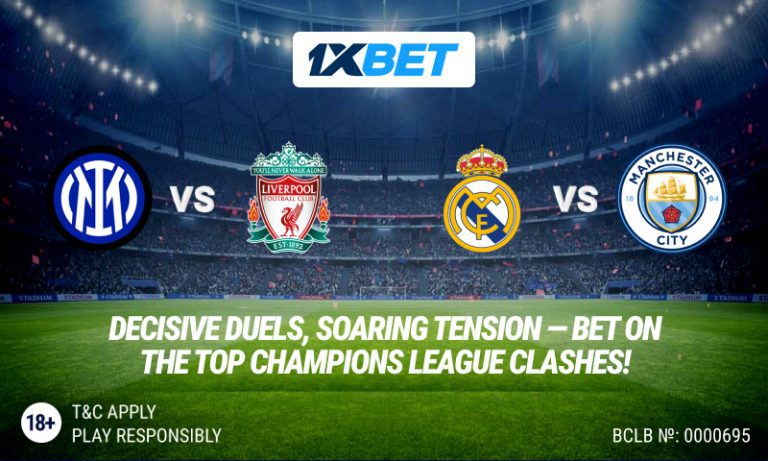
Inter hosts Liverpool and Mbappé v Haaland clash in Madrid: Top games of Champions League matchday 6

0

Europe’s most prestigious club tournament continues to delight fans with high-profile clashes. In the upcoming round, Liverpool will travel to Milan, while the Santiago Bernabéu is ready to welcome Pep Guardiola’s team. The best sports betting site has prepared a preview of the most anticipated matches of the coming week.

Do you know who will win? You can make your predictions at the highest odds via the link!

Inter v Liverpool, December 9

In the previous round, the Nerazzurri suffered their first defeat in the current Champions League campaign, losing 1-2 away to Atlético. With 12 points, the Milan side sits in 4th place in the standings and remains in contention for a direct spot in the Round of 16.

Liverpool, in their most recent match of the tournament, endured a sensational thrashing at Anfield, somehow conceding four goals to PSV. The Merseysiders have collected 9 points and currently occupy 13th place.

This season, Inter has struggled in games against top-level opponents, while Arne Slot’s players are in a prolonged crisis. The upcoming clash is an excellent opportunity for both teams not only to improve their position in the standings but also to regain some psychological confidence.

The Nerazzurri are expected to rely on a packed midfield and the goalscoring talent of Lautaro Martínez. Liverpool will depend on the individual brilliance of their stars, as their teamwork has been far from ideal lately.

Odds: W1 – 2.38, Х – 3.72, W2 – 3.03

Real Madrid v Manchester City, December 10

The Royal Club and the Citizens will meet for the fifth consecutive season. Their previous clash ended with Kylian Mbappé’s hat-trick and a confident progression for Los Blancos into the Champions League Round of 16. Now, Real and Man City will face each other not in the knockout stage but in the league phase, yet their struggle will be no less intense.

Madrid, with 12 points, sits in 5th place in the standings, while the Manchester side occupies 9th place with 10 points. Both squads are fighting for a spot in the top eight.

Waziri 1xCup 2025: The Qualifiers Bring Kenya’s Football Spirit to Life

Real has lacked stability in recent matches, but in front of their home crowd at the Santiago Bernabéu, they will try to do their best. Los Blancos’ leaders, Vinícius Júnior, Jude Bellingham, and Federico Valverde, understand the weight of responsibility on their shoulders and are ready for a clash against a strong opponent. Special mention goes to Kylian Mbappé, who is in excellent form and, with 9 goals, is the top scorer of the current Champions League campaign.

Manchester City also has its own worthy answer to Madrid’s French superstar – the unstoppable Erling Haaland. The Norwegian giant is in phenomenal form and scores goals of every kind. If Tijjani Reijnders and company can supply Erling with quality passes, Real could be in serious trouble.

Odds: W1 – 2.34, Х – 3.94 , W2 – 2.97

Follow the fiery Champions League matches together with the best sports betting site! Enter the promo code BIZNAKENYA25 during registration to receive a 200% bonus on your first deposit, up to 20,000 KES.

Kenya signals major shift toward local pharmaceutical manufacturing

0

Kenya today marked a pivotal turning point in its industrial and health security agenda, endorsing a bold shift from dependence on imported pharmaceutical products to a nationally anchored manufacturing ecosystem. This transformation agenda dominated the Pharmaceutical Manufacturing Investors’ Breakfast in Nairobi, themed “Paradigm Shift: From Importation to Local Manufacturing of Pharmaceutical Products.” Delegates from government policy makers, pharmaceutical manufacturers and health sector stakeholders aligned on one message: Kenya must produce more of what it consumes to create jobs and grow the economy.

Speaking during the event, the Cabinet Secretary for Investments, Trade and Industry, Hon. Lee Kinyanjui, reiterated the government’s firm commitment to supporting local pharmaceutical manufacturing, stating: “We will work closely with the Ministry of Health to ensure uptake of locally produced products, timely payment, and the removal of any regulatory or legal barriers that hinder growth in this sector.” He further emphasized the centrality of localization to Kenya’s economic strategy, noting: “Our role as a ministry is to spur economic growth. No country can thrive through imports alone.”

The urgency of this paradigm shift is underscored by Kenya’s over reliance on imported medicines, currently accounting for more than 70% of its supply. This import dependency fuels foreign exchange pressure, exposes the market to fluctuating global pricing, increases vulnerability to supply disruptions, and inflates healthcare costs. Principal Secretary for Investment Promotion, Abubakar Hassan Abubakar, affirmed that shifting toward local manufacturing is a strategic necessity for job creation, export competitiveness, and health system resilience. He added that Kenya is aiming to meet at least 60% of its domestic medicine demand through local production, supported by targeted incentives, Special Economic Zones and policy realignments.

“There is a need to resolve the challenges facing the pharmaceutical manufacturing industry to fully unlock its potential. By addressing high import costs, financing gaps, technology transfer barriers, and regulatory hurdles, we can strengthen local production, create jobs, save foreign exchange, and enhance access to quality healthcare. Through targeted incentives, supportive policies, and collaboration with manufacturers, Kenya is positioning itself as a regional and continental leader in healthcare innovation and manufacturing” said State Department for Medical Services PS, Dr. Ouma Oluga.

Addressing the financial bottlenecks hindering localized manufacturing, the Kenya Development Corporation (KDC) announced a decisive measure to explore long-term financing and equity investment vehicles tailored to pharmaceutical sector realities. KDC Director General, Norah Ratemo emphasized that the manufacturing industry requires patient capital to thrive. With this financial and policy realignment, KDC issued a strong invitation to existing and prospective investors, to submit applications for equity and debt financing targeting priority areas that would quickly scale Kenya’s pharmaceutical capacity. The shift is intended to secure Kenya’s pharmaceutical value chain, reduce import dependence, and position Kenya as the region’s manufacturing and logistics backbone.

Kenya rolls out electronic certificate of origin system to boost regional trade

In reinforcing the shift, the Pharmaceutical Society of Kenya (PSK) declared that a country that cannot produce essential medicines “cannot secure its population.” The PSK President Dr. Wairimu Njuki called for Kenya to treat medicines as strategic assets just like food security, energy supply, and defence, urging a shift from dependency to investable, innovation-driven production. Leveraging its EPIC pillars – Education, Policy, Innovation, Collaboration; the Society committed to strengthening workforce preparedness, regulatory consistency, technology adoption, research, and quality-driven investment partnerships.

“Kenya’s objective is aligned with Africa’s call to produce at least 60% of its vaccines locally by 2040. At BioVax, we are turning this goal into action; building the capabilities, partnerships, and technologies that will position Kenya as a regional biotechnology hub” reiterated Dr. Wesley Rono, CEO BioVax.

The meeting concluded with a united resolve: Kenya’s pharmaceutical future must be built locally, competitively, and collaboratively. With clear policy direction, investable financing pathways, regulatory alignment, and a health-industry coalition, Kenya is transitioning from buyers to manufacturers and from dependency to sovereignty. The paradigm is shifting. The industry is opening. Kenya is choosing production as the path to economic growth, job creation, and national resilience.


Savannah Honey crowned among Africa’s 100 Most Dependable Brands

Savannah Honey has secured a prestigious spot among the “100 Most Dependable Brands in Africa” at the Dependable Brands Africa Awards held on December 5, 2025. It’s a win that speaks not only to product quality, but to a long-standing commitment to farmers, innovation, and community transformation across the region.

From the quiet hum of hives to the bustling markets of East Africa, Savannah Honey has built a reputation anchored in trust—proving that when passion meets craftsmanship, the results are sweet and sustainable.

Powering prosperity through beekeeping

At the heart of Savannah Honey’s success is a robust empowerment model built around modern, market-driven beekeeping.

1. Contractual beekeeping that puts farmers first

The company offers a structured platform that enables farmers to invest, learn, and earn. Through guaranteed markets and hands-on professional support, beekeepers can confidently supply:

  • Honey

  • Propolis

  • Bee pollen

  • Royal jelly

  • Beeswax

  • Bee venom

Market Prices (Per Kg/gram):

  • Bee pollen – Ksh 6,800

  • Propolis – Ksh 1,900

  • Royal Jelly – Ksh 38,000

  • Beeswax – Ksh 700

  • Bee venom – Ksh 4,000 per gram

  • Honey – Ksh 500

2. Professional services that raise productivity

Farmers benefit from a suite of expert services, including:

  • Apiary installation and maintenance

  • Training and skills development

  • Re-queening and colony division

  • Harvesting support

3. High-Quality, modern beekeeping equipment

Savannah Honey supplies top-tier, sustainable tools—from Langstroth and Kenya Top Bar hives to protective gear, harvesting tools, and advanced equipment like bee venom extractors.

4. Value-Added products with market appeal

The brand has built a thriving line of natural, artisanal products through value addition:

  • Infused Honey: lemon, mint, cinnamon, Mugombero

  • Beauty Range: wax creams, royal jelly lotions

  • Propolis Line: soaps, lip balms, detergents

  • Bee Venom Body & Beard Oils

  • And other premium wellness products

Savannah Honey: The Beekeeping champion sweetening lives across Africa

Apitherapy: Where tradition meets modern wellness

Savannah Honey works with farmers, researchers, and medical practitioners to advance apitherapy—an emerging natural-health approach that uses bee products for healing and wellness.

Therapies include:

  • Bee venom therapy for arthritis relief

  • Honey for wound care and digestive health

  • Propolis for immunity and oral wellness

  • Bee pollen for energy and vitality

Growing footprint across Africa

Born in Nairobi and now buzzing across the region, Savannah Honey operates in:
Embu, Kakamega, Bomet, Nyahururu, Nakuru, Eldoret, Kitale, Meru, and extends services to Uganda, Tanzania, South Sudan, Ethiopia, Rwanda, Congo, and Djibouti—a footprint that cements its status as a continental champion.

Savannah Honey crowned among Africa’s 100 Most Dependable Brands

2026 Community Support Program: Scaling impact nationwide

In celebration of this award, Savannah Honey is launching a bold 2026 Community Support Program aimed at equipping 20 community groups in every Kenyan county with the tools and knowledge to build income through beekeeping.

It’s a high-impact initiative that aligns with Kenya’s grassroots economic agenda and positions beekeeping as a pathway to poverty alleviation.

How you can participate

Community members can nominate deserving groups or CBOs for support by submitting details through the official form: NOMINATION

Contact Savannah Honey

📞 0724 052 975
📧 [email protected]
🌐 www.savannahhoneyafrica.com

U.S. government strips Architecture, Education, and Nursing of “Professional Degree” Status — A shockwave through America’s talent pipeline

In a move that has stirred classrooms, boardrooms, and professional circles across the United States, the U.S. Department of Education has quietly redrawn the map of what it considers a professional degree. And in a stark departure from decades of academic tradition, fields like architecture, education, and nursing no longer make the cut.

The decision, part of the sweeping One Big Beautiful Bill Act (OBBBA), signals a strategic shift in how the federal government defines and funds graduate-level learning. For students, universities, and employers, the implications are immediate and far-reaching — touching everything from tuition decisions to national workforce planning.

A redefinition with real-world consequences

For generations, programs such as nursing, teaching, social work, and architecture have stood shoulder-to-shoulder with medicine and law in America’s professional canon. They demand rigorous academic preparation, multi-year training, and often, licensure.

But under the new federal rubric, only a narrow set of advanced degrees will retain “professional” status for student-loan purposes. The rest — no matter how demanding or essential — are being moved into a more restrictive funding tier.

Here’s the operational impact:

  • Loan limits shrink dramatically for students pursuing architecture, nursing, education, engineering masters, business masters, social work, and other previously recognized professional fields.
  • Graduate students in these disciplines will now qualify for US $20,500 per year, capped at US $100,000 lifetime – a sharp drop from the more generous financing available before. 
  • Meanwhile, the generous “Grad PLUS” program — once a critical lifeline for students in specialised fields — will be phased out entirely by 2026.

The government maintains this is purely a financing framework, not a comment on the value of these professions. But in the public arena, perception and policy often walk hand-in-hand.

Intern teachers not assured of permanent and pensionable jobs – TSC

Industry backlash: ‘This undermines the future.’

The reaction from affected sectors has been nothing short of emphatic.

Architects argue that the change downgrades a profession that shapes cities, safety standards, and sustainable development. The American Institute of Architects warns the decision could choke the talent supply at a time when urban development challenges are escalating.

Nursing organizations — representing frontline workers in hospitals, emergency rooms, and community clinics — say the ruling arrives at the worst imaginable time. The U.S. continues to face chronic nursing shortages, and lowering access to graduate-level training risks widening that gap.

Educators add their voice to the chorus, noting that teacher shortages have already reached crisis levels in several states. If the cost of becoming a teacher rises higher than the returns, fewer young people will choose the calling.

Across the board, institutions say the new rules may discourage capable students who simply cannot afford the financial burden without full federal loan support.

The bigger picture — who gets to become a professional?

Beyond the political wrangling, this shift forces a deeper national reflection: Who do we want shaping society’s most essential systems?

Architecture influences safety and design. Education shapes minds. Nursing keeps hospitals standing. These fields are not luxuries; they are strategic assets.

The new policy risks concentrating access to these professions among the wealthy — creating a bottleneck that will reverberate through construction, healthcare, and education for decades.

From a talent-pipeline perspective, the reclassification raises red flags:

  • Equity concerns: Students from lower-income families may find entire career paths closed off.
  • Workforce shortages: Healthcare and education — sectors already under strain — may face deeper talent deficits.
  • Institutional shifts: Universities could reconfigure programs, raise fees, or reduce capacity as federal financing declines.
  • Long-term societal cost: When fewer people qualify for high-demand professions, productivity, innovation, and public welfare all take a hit.

Ndindi Nyoro sponsors best performed Kiharu headteachers for Dubai vacay

What the world can learn — including Kenya

For countries watching from afar, including Kenya, this moment is instructive. It highlights how funding decisions — often dismissed as routine bureaucracy — can redefine entire professions.

Here at home, we understand deeply how vital accessible training is for our nurses, architects, teachers, and social workers. These are the unsung entrepreneurs of human progress — the builders, healers, and mentors who hold society together.

The U.S. move is a reminder: when a government reshapes the bridge between education and employment, the ripple effects touch generations.

As Kenya scales its workforce for a modern economy, investing in accessible professional training remains one of the smartest catalysts for national growth.

My final thoughts…

Titles may shift. Classifications may change. But the work of architects, teachers, and nurses remains as indispensable as ever.

The U.S. government may no longer call their degrees “professional” — but their impact on society is nothing short of profound.

For the students whose dreams hang in the balance, for the institutions recalibrating their models, and for the global community watching closely, one truth endures:

A society becomes what it chooses to support. And the professions it elevates today will define its strength tomorrow.