

Home Blog Page 2225

Land Rover Discovery Sport: performance, running cost and mpg

0

Performance

There is only one engine option on the Land Rover Discovery Sport for now – a 2.2-litre turbocharged four-cylinder diesel unit. More engines will arrive later from JLR’s new range of efficient ‘Ingenium’ four-cylinder engines.

Despite its Freelander heritage, the Sport’s most noticeable connection to the past is unmistakably that engine, which currently shadows everything the car does with the clatter and gunsmoke odour of yesteryear. Denying the car the new four-cylinder Ingenium oil-burner from launch is clearly the model’s on-paper Achilles heel and, to a greater or lesser extent, that’s the way it plays out on the road.

However, although the direct-injected 2.2-litre motor is not a paragon of refinement or efficiency, its later-life development has at least ensured that it produces the unmistakable surge expected of a modern blower-equipped diesel.

On stream, its 310lb ft of torque is a plentiful amount, and it feels that way. For a car that tipped the scales on the wrong side of two tonnes when we weighed it, a sub-9.0sec 0-60mph time is very decent. So is the 9.0sec it takes to get from 30mph to 70mph, very slightly bettering the time we recorded for the much-admired 2.2-litre engine in the Mazda CX-5 a couple of years ago.

In fact, the soft underbelly of the package is at times evident less in the 20th century motor and more in the 21st century gearbox to which it has been shackled.

Rather inevitably, the nine-speed automatic transmission’s keenness to keep the engine spinning at its productive mid-range pitch means that you’re going to have to live with a lot of downshifting – particularly on the motorway, where the never-ending 47.5mph per 1000rpm final ratio cannot be trusted with even modest acceleration.

However, it’s the intermittent hesitancy experienced at fast getaways that tends to chafe. It’s not quite clear whether this is a function of the gearbox’s default to second – keeping an ultra-low first ratio chiefly for off-road duties – or the initial reluctance to lock up that we’ve sometimes encountered in other ZF-equipped Land Rovers, but the half second of driveline bemusement is infuriating when you’re trying to make a gap in the traffic.

Nevertheless, the nine-speeder’s otherwise swift function (it will block change rather than cycle sequentially) and inclination to shift are what make the automatic Sport significantly faster than the six-speed manual and keeping the fire stoked is an attitude that suits the car just fine.

MPG and Running Costs

At present, the Land Rover Discovery Sport doesn’t feel like especially good value, not because it isn’t very well kitted out (it is) but because the smaller yet more stylish Evoque and the much quicker BMW X3 xDrive30d are both available for less.

The fact that the BMW, despite being 68bhp superior in output and two cylinders to the good in size, also trumps the Sport on quoted economy and emissions highlights just how badly this new model needs its Ingenium engine.

Later, a more frugal two-wheel-drive model will prop up the range. For now, though, buyers will have to make do with 44.8mpg combined – pruned to just 33.9mpg when we subjected it to True MPG analysis – and 166g/km of CO2, a full 49g/km more than the two-wheel-drive Volvo XC60 D4, which is the class leader on running costs. However, the Sport has excellent resale values and trumps the BMW X3 and XC60 in this area, being able to hold its retained value stronger over a three year period.

Nevertheless, in SE auto spec, the Sport is decently equipped and generally well priced compared with its mostly German rivals, even if some of the things you really want – sat-nav, a powered tailgate, front foglights – are the preserve of the aptly named SE Tech trim and above.

We’d avoid the manual gearbox and the top spec HSE Luxury trim level. Our pick would be the nine-speed automatic transmission with the mid-level SE Tech trim and all the optional USB sockets.
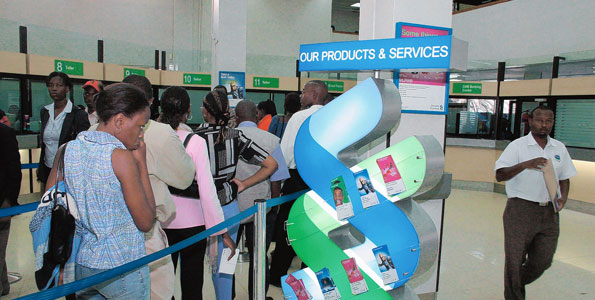

Stanchart reports a 35pc profit drop on bad loans

0

Standard Chartered Bank has suffered a 35 per cent decline in net profit in the first half of this year as it remained under the weight of bad debts brought forward from 2014.

Profit after tax stood at Sh3.9 billion in the first six months of 2015, representing a 35 per cent drop from Sh6.1 billion in a similar period in 2014.

Loans and advances to customers increased marginally by 0.4 per cent to Sh123.3 billion from Sh122.7 billion in the period under review.

Net interest income remained unchanged at Sh8.7 billion.

The lender set aside Sh1.29 billion as insurance against bad loans, up from Sh857 million set aside in the half of 2014.

OPERATING EXPENSES

Chief executive officer, Mr Lamin Manjang, said performance was subdued by the effects of the sharp increase in non-performing loans (NPLs) in 2014 coupled with the large gain on sale of property that has not been repeated.

“We have taken various risk mitigating actions through 2014 and into 2015 and we have been largely successful. One large account, however, deteriorated in Q1 2015 and we had to take a lumpy impairment charge in March 2015 which has increased the impairment charge compared to the same period last year and this has impacted our bottom line,” Mr Manjang said in a statement.

Operating expenses rose by 10 per cent to Sh5.3 billion from Sh4.8 billion in the period under review. Non-interest income declined by 31 per cent to Sh3.4 billion from Sh4.9 billion.

In the period under review, NPLs declined by 55 per cent to Sh6 billion from Sh13.3 billion.

“We have taken decisive actions to derisk our portfolio and whilst this has resulted in a material drag to our income it has improved the overall quality of the portfolio and risk profile for the business,” Mr Manjang said.

How car insurance conmen work and how to protect yourself

0

Conmen in general are smooth operators who are able to talk you out of your money without any form of threat. Insurance is not spared from conmen. Insurance conmen are sophisticated, bright, and strategic in their approach. Insurance is a technical field. Not many people understand the inner workings of an industry. Therefore, anyone that takes the time to understand how motor insurance works can use that knowledge to con a large portion of the ignorant public. Here is how a car insurance conman works.

1. He’ll profile you

Insurance conmen make their pick carefully. They look at the car you are driving, and may look at when your current insurance will expire. They will note your current car insurance provider and will find out the rates your car attracts in premiums. In other words, someone who intends to con you will take time to profile you in order to come up with a plan.

2. Show up at the “right” time

All conmen prey on desperation. Something about desperate people attracts conmen like flies to something rotten.  A sure way of becoming desperate is waiting too long before renewing your car insurance. If you become desperate to get insurance, you become more vulnerable to insurance fraud. Check out car insurance quotes (we have a free service that can help you compare insurance quotes) early.

3. Slow things down

Most conmen will have an urgent call to action. Usually if you are given sufficient time, you will be able to detect an ongoing fraud. Conmen are aware of this. They will try to make you move to a decision quickly before you can think through your suspicions. Consider this, you meet a neatly dressed man who claims to be a sales rep or a section head in one of the major insurance companies. He claims to have a few slots to get you a motor insurance policy, a comprehensive one, at say 80% of the normal cost. He even has the stickers for some clients with him, which he shows you. However, this offer expires today or tomorrow morning at 10 am. If you were actually looking for insurance at the time, this can sound very attractive.

4. He’ll bait you

Then comes the bait. He will present you with an opportunity to get you a deal of your lifetime. It could be a limited edition insurance product, a special waiver because of his connection, or a special offer based on something like the celebration of a certain milestone (say 50th anniversary) in the insurance company. The bait usually works if you are desperate enough, or if you are completely taken by his confidence trick. Imagine what it is like for you to be interacting with an MD of a company that can bring you business, offer you a job, or connect you to a client you really want to land. Once you take the bait, the con is on.

5. Verify all the credentials you receive from an Insurance Representative

Learn to verify the credentials of anyone you meet from an insurance company.  A business card is not enough. All one needs to print business cards is access to a computer, a printer, the correct type of paper, and a few minutes. You can get all these in any cyber cafe for the price of a loaf of bread. If you are dealing with an insurance fraudster, he will present you with a nice looking business card. Verify someone’s credentials by calling the office line (not the one on the business card you took!) and ask to speak to the person. You can also Google the person’s name and see what it brings up.

6. Beware of zeal to present “Proof of authenticity”

One of the most effective tactics used by conmen is the presentation of proof of authenticity. Every insurance fraud perpetrator wants to convince you he is the real deal. He will therefore present you with proofs of authenticity, at times too many of them. Beware of someone working too hard (could be in a very subtle way) to convince you they are the real deal. One particularly effective tactic is a fake call to either a client or colleague discussing something that verifies this person’s credentials. You may also find someone discussing car insurance with your contact that then leaves you two to discuss your insurance needs. Someone might show you a business card or a work id, or may have documents displayed prominently that have the company’s branding. Presented with this much evidence, many people do not even consider the thought that they might be dealing with a conman

7. Insist on following the Procedure

One of the dead giveaways of an insurance con-job is when the con artist encourages you to ditch procedure, or claims he can get you certain favours, usually outside of the warranted procedure. Find out from friends how they have received similar services and question the rep on why you are skipping procedure. If you are supposed to send money to a mobile money platform, do not send money to a personal number. Once you have the paybill number, verify who owns it before you make any transactions. If you like shortcuts, you will be vulnerable to conmen.

Why your cow must sleep under a net for better health and productivity

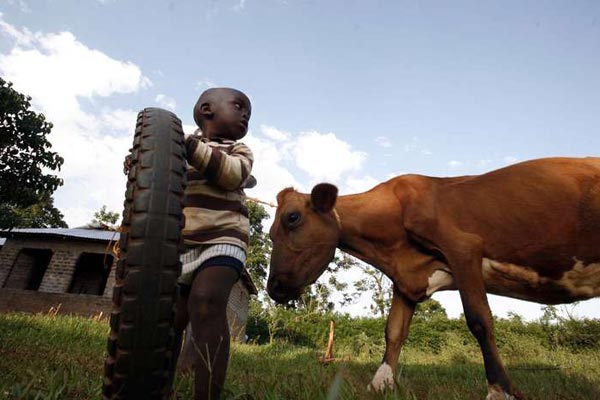
Did you know that your cows also need to sleep in nets to protect themselves from the nagana disease?

However, unlike our bed nets, cow nets are placed vertically one and-a-half metres high.

Previously the preserve of large commercial farms, cow nets are now finding their way into smaller farms.

The nets are treated with deltamethrin insecticide. Their main aim is to trap flies as they try to enter the cow pens.

Tsetse flies and other biting flies do not fly one and-a-half metres above the ground. They are blocked from reaching the cows by the nets and die within a short while.

The nets are also installed around manure pits to reduce flies migrating from the cow dung to the animal pens, hence reducing cases of mastitis.

REDUCE PRODUCTIVITY

According to Kenya Tsetse and Trypanosomiasis Eradication Council (Kenttec), biting pests can reduce a cow’s productivity by between 30 to 40 per cent.

The council has declared tsetse flies a major impediment to increased milk production.

Milk records of small scale farmers using the nets confirm increased production as well as reduction in veterinary costs due to the disappearance of disease causing flies.

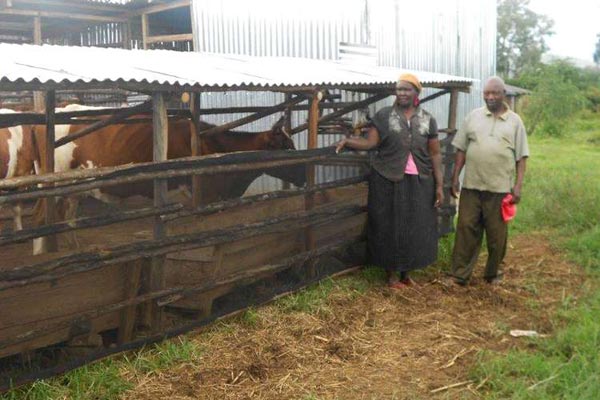
Mrs Lucy Mburu Wanjatha is one such farmer. Sandwiched between several dairy farms in the lucrative dairy belt of Githunguri in Kiambu County, Wanjatha’s farm has maintained a constant production of 260 litres of milk every day since she installed her first nets two years ago.

On the three quarters of an acre of land, Wanjatha’s 13 dairy cows, were producing 200 litres of milk before she started using the nets.

The nets are treated with the deltamethrin insecticide, which kills the tsetse flies.

SIMPLE TECHNOLOGY

According to Mr Dominic Simba, a livestock department officer in Kisii, the prevalence of mastitis has dropped in areas where farmers are using nets.

The treated nets are a simple technology that protects cows from bites from flies which causes nagana. The flies also cause discomfort to the animals thus destabilizing the milk production.

According to Kenya Tse tse and Trypanosomiasis Eradication Council (Kenttec), biting flies reduce a cow’s production by between 30-40 per cent. They say a disturbed animal produces adrenaline when it is bitten, or it could knock down the milking can.

Joseah Kogo, a manager at Corporate Business Forms Ltd, which makes the ZeroFly brand, said demand for the nets was outweighing their supply.

Mr Kogo said a typical zero grazing unit of 6 to 12 cows will need 30 to 50 metres of the net. “At Sh250 per metre, this comes to about Sh7,500 to Sh12,500. This is about Sh1,200 per cow per year,” he said.

Kogo spoke even as a government agency has raised the red flag over the need for counties to scale up fight against tsetse and trypanosomiasis problem in Kenya.

According to the Kenya Tsetse and Trypanosomiasis Eradication Council (KENTTEC), only Nairobi, Kiambu, Nyandarua, Nyeri, Nandi, Kisii, Uasin Gishu, Kericho, Nyamira and Trans Nzoia counties are free of the dangerous pest. These counties are still at risk of infestation due to climate change, which can easily convert them into tsetse habitat.

The KENTTEC chief executive Dr Pamela Olet said all the other counties infested find it hard to rear exotic dairy breeds which are susceptible to deadly disease spread by tsetse flies.

“This is one of the neglected tropical diseases. Areas adjacent to National parks are worst hit because parks act as a natural habitat for the pest while wildlife act as reservoirs for the disease causing protozoa – the trypanosome,” said Dr Olet.

What you should only have in your wallet

0

Your wallet should be an organizational tool, not a catch-all.

If yours is bulging with month-old receipts, random gift cards, and every single credit card you own, it may be time for a little process of elimination.

Recently, the Today Show aired a segment that focused on the items you should carry in your wallet as part of their Take Charge Of Your Life series.

Here’s what they designated necessary to keep close, plus a few extra items you might want to have on hand.

1. The main forms of ID you use
The Today Show says your driver’s license or photo ID should always have a place in your wallet in case of an emergency or any situation where someone needs to verify your identity.

It’s a good idea to carry your health insurance card as well, for doctors’ appointments or in case of an emergency.

Keep your social security card at home or in a safe deposit box at a bank — there’s a greater chance of someone stealing it if you carry it on you.

2. Debit, credit, and loyalty cards
There’s no need for more than one debit card in your wallet, explains the Today Show, and you should try to limit yourself to two credit cards in case your wallet is lost or stolen. Identifying the one or two credit cards that give you the most rewards will encourage you to use those more often, benefitting you in the long term.

Retail credit cards, however, are better off left at home unless you’re planning on hitting that store specifically, since they have a higher interest rate than most other credit cards.

If there’s a store loyalty card (not a credit card) you use frequently — like one from your grocery store — you might want to carry that, too. If not, most stores will allow you to give your phone number instead.

Take a look at the perfectly streamlined wallet, numbered according to category

3. Some cash
The Today Show also says that it’s always a good idea to have a little cash in your wallet, for a tip, for an emergency, or for the odd cash-only purchase. If you’re ever caught in a cash-only situation without any cash, you might end up paying $2.50 or $3.00 to use an out of network ATM.

4. Your work ID
If you use an ID or a badge to get into the building where you work, it makes sense to keep that in your wallet, since you use it regularly.

5. A transportation card
Anyone who has ever missed the rush hour might want to move it from the bottom of their purse or briefcase to their wallet. If you take public transportation to and from work, you’ll want to have your card handy.

Bernard Njoroge: how I earn my living from hatching and selling chicks

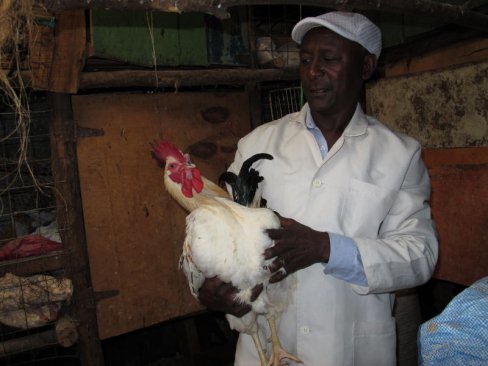
Bernard Njoroge never thought he would one day do chicken business. After completing Form Four at Afraha High School, Nakuru, Njoroge joined Raybridge College in Nairobi to pursue diploma in electronics.

On graduating, he was employed at Silver Springs Hotel as Disc Jockey (DJ). Njoroge would later abandon his entertainment to do other jobs in the hotel. He left as hotel chief steward in 2009 after 30 years. Armed with Sh100,000 as capital, Njoroge bought an incubator at Sh80,000, eggs for hatching, feeds, and constructed chicken structures and began his business.

Today, Njoroge is a breeder of chicks, which he supplies to residents of Uthiru and its environs. “I am making good proceeds supplying chicks. I entirely depend on this business for livelihood,” he says.

He explains: “I also modified my incubator such that when I am not around it is able to refill its water tank by itself.” Njoroge, 55, put the incubator machine into his sitting room where he manages the breeding today. Once the chicks are hatched, they are transferred to other structures outside the house.

However, most of his chicks are bought after a day. “I deal mostly with one day old chicks, so l do not have space problem,” he says.

He says he started chicken business aware they are on demand but did not exactly know who he would sell to. He explains: “Since l produced chicks of high quality, my first customers spread the word and with time many people started coming to purchase. I have since developed a big network of market.”

He discloses that the demand for chicks is so high that he cannot meet, and at times he is forced to outsource from his friends to meet the demand.

His incubator carries a total of 440 eggs, which are hatched after 21 days. He says he makes Sh60,000 in a month and the expenses like buying eggs, electricity and immunisation of chicks and others takes around Sh 15,000. The rest he invests and uses some to pay his children school fees and other requirements at home. A one day old chick goes for Sh 100, and one week old cost Sh250. He says he buys each egg at Sh25. Njoroge advises that buying of eggs should be done with due care else they will not hatch, resulting into loses.

He warns: “It is good to know where you buy eggs for hatching. Not all people will provide you with quality eggs. In fact, they should be 1-7 days old.”

He also faces various challenges. One is of electricity blackouts which results in many eggs not hatching. After suffering several losses due to power blackouts, he says he was forced to install a backup-battery and solar that turns on immediately power disappears.

He also says managing diseases for chicks is expensive. His job is also involving for he needs to be around to inspect the processes. He has employed one person to help him with the management.

Njoroge has plans to expand his business. Apart from chick breeding, he also intends to start rearing chick and open a chicken restaurant. “The chicken l want to rear will be used in my eatery,” he concludes.

Depositors of collapsed Dubai Bank to be paid a maximum of Sh. 100,000 only

0

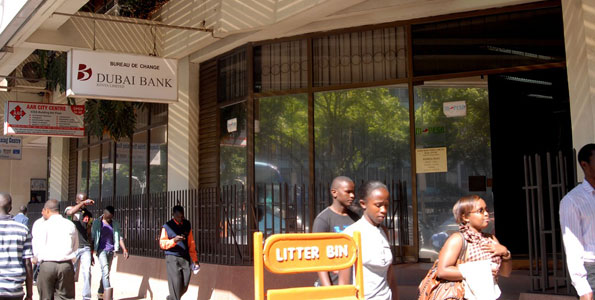
Depositors who have money in the collapsed Dubai Bank will only be paid a maximum of Sh100,000 as the reality of the bank’s situation starts to sink in.

Kenya Deposit Insurance Corporation’s (KDIC) acting Chief Executive Officer Aggrey Bett – the corporation was appointed receivers of the bank – said yesterday that all insured deposits would be paid up to a maximum of Sh100,000 per depositor.

“Any balances above this amount shall equitably be paid as and when the liquidator accumulates enough funds from sale of assets of the collapsed bank and recoveries from outstanding loans and debts,” he said in a statement.

The corporation, formerly the Deposit Protection Fund Board, was appointed by Central Bank of Kenya (CBK) as a receiver for a maximum period of 12 months.
The bank was placed under receivership due to liquidity and capital deficiencies, which exposed depositors, creditors and the banking sector to financial risk.

Upon appointment as a receiver, KDIC assumed control of the assets, liabilities, business and affairs of Dubai Bank. Mr Bett said KDIC had already appointed a receiver manager to carry out the business and manage the assets and liabilities of Dubai Bank.

“All powers of Dubai Bank and of its directors under the constituent documents exercisable by the bank or its directors under any law are now vested on KDIC and the receiver manager,” the corporation said.

KDIC says it has declared a moratorium on business that shall apply equally and without discrimination to all stakeholders of Dubai Bank during the receivership period.

“Accordingly, normal operations of the bank are suspended except for collection of loan re-payments or any other payments into the bank. Debtors are therefore encouraged to continue servicing their obligations,” the statement adds. The corporation will in the next two weeks keep all the four branches of the bank open for such transactions.

Britam eyes Sh. 5 billion annually from retirees

0

British-American Investments Company is eyeing billions of money from retirees who still don’t want to take their money with them home.

The asset management and insurance company yesterday launched a new product that will allow retirees to re-invest and take away some portion of the fund as income.

Last year, the firm says, Sh5 billion worth of retirement money came in the market. The product to be marketed as Platinum Drawdown Plan is available to individuals aged 50 and above. But they should be having retirement benefit savings in a registered scheme with the Retirement Benefits Authority.

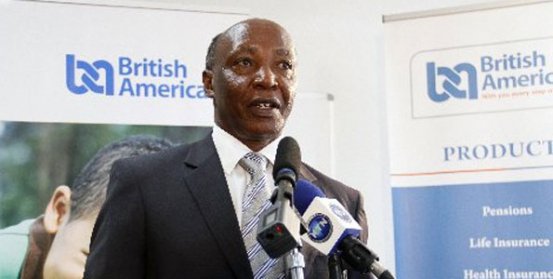
“There has been an increased demand from the market on how retirees can make their pension income work for them after retirement, hence the diversification,” Britam’s Managing Director Benson Wairegi said.

The firm says pension benefits under this plan will be invested with a capital guarantee against investment losses for a minimum of 10 years. The new product comes at a time when there has been increasing pressure on the industry to innovate and grow penetration. Insurance penetration in Kenya has remained low, at less than 3 per cent in most product lines. The Insurance Regulatory Authority says that insurance penetration contracted from 3.4 per cent last year to 2.8 per cent this year.

This virgin market is increasingly attracting new players among them banks.
Britam is also looking at bancassurance, where banks are now selling insurance products in banking halls, as a new revenue drive. Its new product is also targeting retirees who want to purchase an annuity at a later date, have other sources of income and do not need a guaranteed income from their retirement savings.

“It is also an option to members of provident funds and retirees who chose not to take part or all their benefits as a lump sum. It also suits those who wish to leave an inheritance to their beneficiaries,” the firm said. If one dies, the money is passed over to beneficiaries. “If the deceased was above 65 years, beneficiaries get favourable tax treatment since the benefits are not taxed,” the firm added.

Here’s what to do when your cow eats polythene bags

Hygiene in the farm starts with clean surroundings because some waste material can disturb animal comfort and health.

Many a times, we focus of clearing animal waste, feed remains, any unwanted vegetation or soiled pieces of paper within the vicinity of the animals but forget the disastrous plastic bags. Ingestion of plastic bags can kill animals.

Pieces of plastic bags may find their way into the farm through hay bale wraps, package material from mineral supplements, package from commercial animal feeds, materials carried by wind and frequently the use of polythene pieces in tightening Jerican containers like those of molasses.

The effects of plastic ingestion extend beyond the animals to include consumers of milk or meat. Most farmers suspecting that an animal has ingested plastic bags will many times slaughter them secretly and this because they are aware of the harmful effects on people consuming the product.

The plastics have polymers that are carcinogenic, thus induce cancer and tuberculosis in humans who consume products from the affected animals.

To some extent, the toxins in the plastics remain in human breast milk and expose suckling babies to health dangers.

WHY ANIMALS EAT PLASTICS

Just like children can eat dirty stuff, animals can eat different materials that may have no known nutritional value but just for curiosity. Plastic materials have varying tastes; some are sweet while others taste salty.

Another scenario is where animals are confined, like in the zero grazing units. In this case, if not well supplemented with minerals, animals become mineral starved thus start hunting or get attracted to tasty materials or licking someone near them, grind wooden posts that are not dry within their enclosures. Such animals will swallow plastic polythene bags that hang around.

Some animals are also tethered along the roads while others are left to graze openly. During this time of grazing, they get exposed to these dangerous plastic materials or at times are forced to scavenge for food in garbage areas.

They should be well supplemented with minerals, and if they must be tethered, then tether them away from garbage materials with pieces of polythene bags.

SIGNS THAT AN ANIMAL MAY HAVE INGESTED PLASTIC BAGS

Ingestion of plastic materials may not result in immediate death, but there are several difficult symptoms seen in the victim animals.

These plastics are indigestible and therefore pile up in their stomachs (rumen for cattle) with time and get entangled with different materials, forming a hard cement-like ball.

After some time, the animal shows signs of being weak and tired then goes off feed and at times experiences bloat due to stomach blockage. The animal may also start drinking a lot of water.

What follows high amount of water intake may be diarrhoea because of blockage except in liquids. This animal’s condition gets poorer every day to an extent of showing extreme discomfort, and if no action is taken, the animal dies.

TREATMENT

There is no vaccination that will help keep your animal safe from ingesting plastic bags. Your animal will also not pass large plastic material through the waste.

Some are lucky though, to pass them out when consumed in smaller pieces. There are no drugs for destroying plastic bags while in the animals’ stomach.

Luckily, some people have successfully used laxatives like high quantities of mineral oils, given to the animal to help breakdown solid materials and smoothen plastic to increase chances of slippery passage. This on the other hand, could complicate diarrhoea.

As such, a sure way to try and save the animal from death is surgery to remove the plastics plus other waste items from the stomach by the help of a veterinary surgeon.

Surgery, again, will cost you much money, just imagine doctors’ fees and the loss of the animal whether most valued in the farm or not. It can be this painful, just because of the plastic bags we ignore around the animal.

As prevention is better than cure, keep the animal surrounding free of plastics, be selective on where to tether your animals to forage and ensure mineral supplements are availed to the animals.

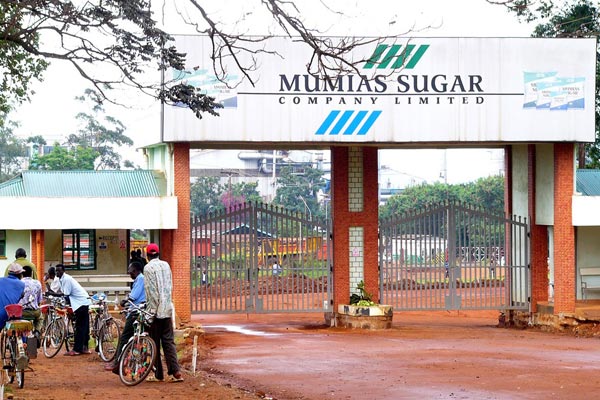
Mumias Sugar to report Sh. 3.4 billion full year loss

Mumias Sugar has issued a profit warning, indicating that the sugar miller has sunk deeper into loses.

The management of Mumias Sugar is currently expecting the sugar miller to record losses of at least Sh3.4 billion this year, more than 25 per cent higher than the Sh2.7 billion posted last year.

It attributed the fall to shortage of cane. It has been struggling with a cash crunch that forced the government to give it a Sh1 billion bailout.

In Tuesday’s NSE trading the company’s stock remained stuck at Sh1.90 per unit despite a general downward movement of other counters which saw the 20-share index fall below the 4,500 mark.