Home Blog Page 2224

KICC Eyes Conferencing Potential in Counties

0

The Kenyatta International Convention Centre (KICC) is partnering with counties to promote the Meeting Incentives Conference and Exhibition (Mice) in the country.

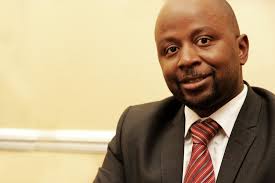
Speaking to Weekend Business in Mombasa, KICC Managing Director Fred Simiyu said they have carried out successful activation campaigns on conferencing. “We are keen to ensure bigger events are held away from Nairobi and for that reason, counties are required to have the capacity and ability to host such events,” he said. He said the counties identified for setting up Mice convention centres include Mombasa, Kisumu, Nyeri, Turkana and Bungoma. “We are carrying out product mapping which in itself is a research exercise – to tell capacities in each of the identified counties and fill in the gaps before Mice concept is established,” he said. Mr Simiyu explained that they discussed with the Mombasa County government to have it set up modern conference facilities.
He expects the Mombasa facility to have a capacity of 15,000 people. “This kind of facility if and when in use will provide and feed the 18,000 plus bed capacities in and around North and South Coast hotels which have had to grapple with the traditional tourism seasonality of high and low seasons,” he said. He said Nairobi hotels have reaped big from Mice tourism since conferencing business is dynamic. Preferred destination Mr Simiyu said increased conferencing has seen the establishment of new hotels within Nairobi City such as Villa Rosa Kempinski, Best Western, Sankara and the Radison Blue. “Mice tourism requires concerted efforts from the Government, Mice industry players and other stakeholders to push its agenda globally,” he said.
He observed that this has been possible through various bidding and marketing strategies which KICC has been central to in delivering international conferences and events to Kenya.
East African Community, Commerce and Tourism Cabinet Secretary Phyllis Kandie in earlier remarks said Mice concept has set objectives and timelines to achieve tourism targets that will see Kenya attain status of a preferred destination.
Fred Simiyu - Managing Director KICC
Fred Simiyu – Managing Director KICC
After successfully hosting the Global Entrepreneurship Summit graced by US President Barack Obama, his Kenyan counterpart Uhuru Kenyatta and a host of world top notch entrepreneurs, Kenya is set to host the 10th World Trade Organisation (WTO) inter ministerial conference later in December. Simiyu said the WTO meeting will have more than 7,000 delegates who include 200 trade ministers from around the world.
Kenya has also won bids to host the International Association of Travel and Tourism Professionals in October, closely followed by World Conference on Public Relations Forum in November and the World Youth Championships later in 2017.
Simiyu observed that KICC has put in place measures that will work towards ensuring a coordinated approach in enhancing effective and efficient management of the Mice agenda in processes of lead generation, qualification, bidding and hosting Mice gatherings in Kenya.

Pay teachers bigger salaries, Supreme Court orders

0

The Supreme Court has upheld Court of Appeal ruling demanding the teachers’ employer to pay them a 50-60pc pay raise until its case challenging the increment is heard and determined.

In their ruling, judges Willy Mutunga, Kalpana Rawal, Jackton Ojwang, Mohamed Ibrahim and Smokin Wanjala said they had no jurisdiction to entertain the application.

The orders, they said, were issued by the Court of Appeal which had exercised its powers under the law.

The Labour Court had ruled that teachers be awarded the pay rise effective August 1, a ruling that was upheld by the Court of Appeal. Kenya National Union of Teachers (Knut) Secretary General Wilson Sossion welcomed the decision by the Supreme Court saying teachers have been given clean bill of health by all courts in this country.

“Teachers have been awarded justice, the truth has been availed, we’ve won. Now TSC must pay all the arrears,” said Sossion. “No teacher will resume duty until the pay rise is reflected in the accounts of each one of them,” said Sossion amid cheers from teachers who had gathered to hear the ruling.

Albert Sigei Appointed COO at Cement Firm EAPCC

0

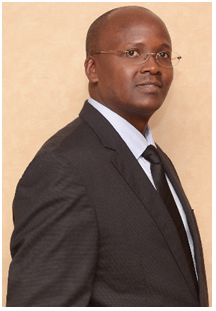
The Board of Directors EAPCC has appointed Mr. Albert Sigei  to the new position of Chief Operating Officer with effect from 24th August, 2015. This position is key to continuing to improve EAPCC’s operational effectiveness.

Mr. Sigei will be responsible for Production Operations, Production Engineering, Supply Chain Management and Sales and Marketing. He will be based in the Athi River Office.

Albert Sigei has an 18-year record of management and leadership in the cement industry. Until his appointment Mr. Sigei was Vice-President of Business Support & Ready Mix operations with Lafarge, Nigeria. He has previously worked with Pricewaterhouse Coopers.

He has a B.Sc in Engineering from the University of Nairobi. In addition, he has qualifications in Professional Accounting, Systems Management and Auditing.

EAPCC welcomes Mr. Sigei and wishes him every success in assisting the organization achieve operational excellence and business growth.

3 things that will kill your business

0

Successful businesses grow.  Through better products and processes, they win the favor of customers, increasing their volume and margins.  That success often translates into further advantages as they invest in new and better equipment, develop expertise and gain bargaining power with suppliers.

The typical explanation for why successful firms fail is that they somehow lost their way, but as Clayton Christensen explained in The Innovator’s Dilemma, that’s not really true. Yet while he attributes the problem to disruptive innovation, the broader truth is that the likely cause of your business’s future failure is a factor in its success today. Here are 3 things to look out for:

1. Your Business Model

Every business has a model, even if it isn’t clearly stated. A business model is how an enterprise creates, delivers and captures value. Any significant shift in the viability of any of those three areas and your business is in trouble. The problem is that it’s often hard to change an area that has historically been a crucial part of your success.

Consider the case of Xerox. Chester Carlson first developed his copy machine in the 1930’s, but couldn’t find a way to commercialize it. While it was a vast improvement over existing products, it was also expensive. Nobody, not even large firms, was making enough copies to justify the expense.

Joe Wilson, President of Haloid Corporation, found a solution. Rather then try to sell the copiers, he leased them cheaply and charged per copy.  Once customers started using the product, they soon found themselves making more copies then they ever thought they would.  Very much more, in fact.  Haloid changed its name to Xerox and became a runaway success.

Yet as Xerox continued to improve its product, making bigger and faster copiers, low priced Japanese copiers entered the market.  They weren’t as good as Xerox’s, but they were good enough to serve the market and were much cheaper and more convenient.  Within ten years, Xerox’s market share dropped in half.  It never really recovered.

2. Your Culture

When the GM ignition switch scandal hit in 2014, people were appalled.  A faulty part, costing less than $10 wholesale, led to the deaths of nearly 100 people.  Worse, it soon became clear that the company knew about the problem for at least a decade. It was, to all appearances, a particularly egregious case of being penny smart and pound foolish.

Yet as Rana Foroohar explained in an article in Time, there’s more to the story than meets the eye.  The problem with the ignition switch was, in fact, relatively minor.  What made it lethal was that the airbags—designed by another team—didn’t deploy when the car was switched off.  So each team was making decisions that were independently sensible, but collectively disastrous.

So the root of the problem was not callousness, but a culture engineered to deliver within narrow parameters.  The ignition team was striving to—and compensated for—produce the best product at the lowest cost, as was the airbag team.  Everybody stayed in their lanes and did the job they were tasked with. Nobody, however, was looking after the system as a whole.

Culture, in the final analysis, is a double edged sword.  Strong cultural alignment allows an enterprise to get things done, yet excessive alignment makes it hard for an organization to adapt to outside information.  What makes a culture strong is not how “aligned” it is, but how it instills a sense of mission and values.

3. A Linear View Of Technology

In The Second Machine Age, Erik Brynjolfsson  and Andrew McAfee tell a story about the invention of chess.  As legend has it, the emperor was so impressed with the game that he invited its creator to name his reward.  As they described, the inventor’s request seemed modest, he simply told the Emperor:

‘All I desire is some rice to feed my family.’ Since the emperor’s largess was spurred by the invention of chess, the inventor suggested they use the chessboard to determine the amount of rice he would be given. ‘Place one single grain of rice on the first square of the board, two on the second, four on the third, and so on,’ the inventor proposed, ‘so that each square receives twice as many grains as the previous.’

For the first half of the chessboard, the emperor had to pay 232 grains of rice, or about the equivalent of one field, but as the doubling continued, the total amount owed far exceeded all the rice that existed in the world. That, in essence, is the concept of accelerating returns.  When growth is exponential, even seemingly insignificant trends can become predominant.

Today, the emperor’s dilemma has become all too real.  Our technology no longer follows an orderly, linear path.  For instance, we can expect our computers to be 100 times more powerful in ten years, 1000 times more powerful in fifteen years and a million times more powerful in thirty years.  We are also beginning to see similar trends in gene sequencing and solar power, as well as other fields.

The phenomenon of accelerating returns compounds the effects of business model and culture.  The “first half of the chessboard” tends to reinforce the status quo.  Existing business models continue to prosper and that gives credence to cultures that support them.  When the second half of the chessboard hits, it’s already too late to adapt.

Why Agility Trumps Strategy

Running a business is a very tough job.  You have to run operations efficiently to stay competitive and, at the same time, you need to plan for the future.  You constantly have to make decisions with incomplete information in a compressed time frame that will affect thousands of people, including employees, customers and other stakeholders.

There are also no shortage of pundits, analysts and other observers who think they can do the job better.  They point to alternative approaches, emerging trends and other factors which you fail to account for.  Of course, even if you did follow their advice, you would run afoul of others who stress the importance of a different set of approaches, trends and factors.

The truth is that you probably won’t see trouble coming, because whatever threatens to kill your company in the future is most likely a source of its strength today.  There is no set of strategies or processes that will change that simple fact.  You can be right a thousand times, it is the one thing that you get wrong that will put you in hot water.

That’s why it’s important to build to master the art of the shift, because today agility trumps strategy.  Even the most complete success carries the seeds of its own destruction.  We never really get it right, but must become less wrong over time.

Car Review: The 2008 Nissan Fuga

0

The 2008 Fuga features a revised model lineup, a redesigned exterior and interior, Nissan’s new VQ35HR and VQ25HR engines and the world’s first Distance Control Assist (Intelligent Pedal) System, among other refinements, the combination of which further advances the car’s all-around qualities as a premium sports sedan.

Nissan Fuga

Living up to its marketing tagline of “SHIFT_luxury,” Fuga transforms the traditional notion of a luxury car. Fuga is available in three grades (GT, GT Type S and GT Type P) for three engine variations (V6 2.5-liter, V6 3.6-liter and V8 4.5-liter). 4WD version is available for 350GT.

A Redesigned Exterior With Substantial Presence

The 2008 Fuga announces its substantial presence and premium class image with a new “look” featuring redesigned headlights, grille, front and rear bumpers and rear combination lamps. Making even more of a statement is the GT Type S model, with an exterior styling package that includes new side sill spoilers and a “smoky chrome” finish to the inside of the headlights.

New wheel and tire packages add to the sporty look of the 2008 Fuga, with new 18-inch aluminum wheels standard on the 450GT Type P, 450GT, 350GT, 250GT and 350GT FOUR models, and new 19-inch aluminum wheels standard on the GT Type S model.

Nissan Fuga

Seven body colors are available on the Fuga, including five all-new colors – Crystal White Pearl, with three coats of pearl paint; metallic Blade Silver; a pearl metallic Stratosphere Blue; a metallic Warm Satin Silver; and a titanium metallic Titanium Gray. Nissan’s advanced “Scratch Shield” – a special “self-healing” clearcoat paint treatment – is also available on three colors – Super Black, Stratosphere Blue and Titanium Gray.


A Luxurious, Detailed Interior

Fuga’s interior has been revised to enhance the feelings of luxury and craftsmanship, with special attention paid to the interior materials and details of all controls and trim panels. Improvements include new three-dimensional instrument dials with white and blue violet illumination, new bubinga wood and grain pattern of the genuine wood finishers (from rosewood), the addition of pure silver accents to the piano-black interior finisher trim, new billet aluminum center stack control switches, new rear seat fabric and a new full-automatic air-conditioning system with a Plasma Cluster Ion® anti-bacterial function*3.

Nissan Fuga

A top-grade option on the Fuga is a new semi-aniline genuine leather interior trim package featuring the finest grade of leather. This new package includes semi-aniline genuine leather seats, hand-polished genuine wood trim finishers with a rare grain pattern, genuine leather-wrapped steering wheel and shift lever knob, and a suede-like headliner. Additional comfort is provided by a front passenger seat with a power ottoman (standard on all models except for 250GT and 350GT FOUR) and power reclining rear seats (standard on GT Type P).


A Responsive Driveline

Fuga showcases the latest in Nissan engine technology with its choice of 3.5-liter VQ35HR and 2.5-liter VQ25HR engines, which combine high levels of power and torque with low fuel consumption, as well as producing sounds that befit its position as a sports luxury machine.

Both powerplants are backed by a standard full-range electronically controlled 5-speed automatic transmission with a DS mode. The DS mode works to provide maximum performance by optimizing gear selection for the applicable driving conditions. Additional control is available through magnesium paddle shifters, which are standard on the GT Type S model.

Nissan Fuga


Advanced Technology

Fuga is one of Nissan’s most technologically advanced vehicles, and the Fuga carries forward that reputation. Standard on all models is an HDD-based CARWINGS navigation system, along with a standard side blind-spot monitor and back-view monitor. Also available is a factory-installed Bose® surround sound audio system.

The highlight of the 2008 Fuga’s technology is the adoption of the world’s first Distance Control Assist (Intelligent Pedal) System, which is standard on the 450GT Type P/Type S and 350GT Type P and optional on the other models. Using an accelerator pedal actuator, this system assists drivers in controlling the distance between their car and the vehicle in front, reducing the driver’s workload in a variety of driving situations – from city driving to expressway cruising.

Nissan Fuga

Also available is a revised Intelligent Cruise Control system incorporating “all-speed following capability” and the world’s first “navigation-cooperative control function,” standard on the 450GT Type P/Type S, 450GT and 350GT Type P, and optional on other models. This system has the capability of stopping the Fuga when the vehicle in front comes to a stop, and can control vehicle speed from a standing start to approximately 100 km/h (the previous system had a range of 5 km/h to 100 km/h). Additionally, the new system features a “navigation-cooperative control function” that assists in controlling the Fuga’s speed according to the reading of an upcoming curve in the road.

4 tips to keep your car insurance premiums low

0

Motor insurance is one of the costs that contribute a significant part to the overall operational costs of your car. These costs may be anywhere between 20 and 50 % of all maintenance costs a motorist incurs in a year, depending on the age of the car. Knowing what to do to keep these costs low can help keep your overall maintenance costs low. Here are some tips that you can use to keep your motor insurance premiums as low as possible.

1. Talk to Insurance Agents

The first tip we have to help you to keep your motor insurance premiums low is to talk to motor insurance agents. Motor insurance agents tend to have access to insider information regarding existing deals and the prevailing rates for motor insurance in the industry. If you view a motor insurance agent as a consultant, you can get access to this information. We encourage you to talk to a few of them and see who has access to the best deals.

2. Take Advantage of No-Claims Discounts

Careful drivers have access to a no-claims discount that accrues annually. This discount can add up to significant saving if you have a consistent non-claims history. The purpose of the no-claims discount is to encourage policyholders to be as careful as possible on the road. In other words, this discount is the motor insurance company’s way of saying, “thank you” for giving them a good return in the previous year. Having no claims may not always depend on you because even to the most careful drivers can cause accidents. However, careless drivers have a higher risk of causing accidents compared to careful ones. This is why you should resolve to drive as carefully as possible to hopefully earn the no-claims discount.

3. Negotiate for Flexible Premium Payments

This tip does not necessarily make motor insurance premiums cheaper in the absolute sense, but it makes it easier for you to make the payments. Many motor insurance companies will allow you to pay your premiums in two or more installments. The beauty of this arrangement is that it makes it easier and more affordable for you to make insurance payments. The flip side of this arrangement is that you will need to clear any outstanding premiums in the event that you need to make a claim before you finish paying your insurance premiums.

4. Get a Variety of Quotes from Different Insurance Companies

The final tip we have is this, get an insurance quote from different companies, and make a decision on which one has the most affordable motor insurance premiums. Just like buying a car, shop for the best insurance rates in the market and find the one that best meets your needs. Insureafrika makes this process seamless and very convenient for you through its free online quoting form. All you need to do is to enter the details of your car, and you then get a prioritized list of quotes from different motor insurance companies.

Customers lose out as Safaricom and Equity fight each other over mobile tariffs

0

A fresh storm is brewing between Kenya’s financial services giants, Safaricom and Equity Bank, over the rates being levied to consumers making transactions across the two service providers. The latest wars also puts to question the security of money sent across both platforms, with consumers paying the ultimate price.

The latest round of controversy comes as Equity accuses Safaricom of arbitrarily increasing the mobile money transfer rates charged to Equitel’s consumers transferring money to Safaricom’s M-Pesa service. Consumers of Equitel last week took to social media after finding out that the rates for sending money to M-PESA had suddenly doubled without prior notice.

They stated on twitter that the cost had risen on account of Safaricom increasing its termination rates stating that Equitel’s prices are capped at Sh27.50. Previously, Equitel to M-Pesa transfers were charged a uniform Sh33 per transaction. This meant that Equitel to M-Pesa transfers were cheaper than M-Pesa to M-Pesa transfers for amounts above Ksh1,500. This made Equitel a more attractive proposition, just as it looked to gain market share, especially from M-Pesa, a new higher tariff rates are now in operation.

An enquiry by infotake, a technology company, to Equitel’s Customer Care says that the new fees were brought about by Safaricom’s increase in “termination fee” – the money Equitel pays Safaricom for money transacted to M-Pesa. Equity says it’s Equitel charges are capped at Ksh27.50, and that any extra fee here is being levied by Safaricom. According to Equity Bank’s tariff schedule seen by The Standard, sending money between Equitel and M-Pesa valued at more than Sh1,500 are levied the highest rates compared to similar transactions between Airtel and Orange.

Sending Sh35,000 between Equitel and M-Pesa for example attracts Sh135 in mobile money transfer levy. The same amount of money sent to any bank account from Equitel costs consumers Sh55. Safaricom on its part states that the tariff revisions were effected from August 1, 2015 and had arisen on account of security and regulatory concerns.

“These changes have arisen partly in light of our ongoing efforts to streamline our M-Pesa proposition and also partly in response to our continuous efforts to ensure compliance with regulatory guidelines,” reads a letter sent to Equity by Safaricom dated July 9, 2015.

The letter signed by Safaricom’s General manager for enterprise business Rita Okuthe further shows increased fraud cases on transactions between banks and M-Pesa account. “It has come to our attention that there has been an increase in the number of alleged incidents of erroneous and fraudulent transfers involving bank customers utilising their accounts to transfer money to M-Pesa accounts,” the letter reads. “The increase in cases have been attributed to the fact that customers are enabled to make direct M-Pesa transfers to third party accounts.”

Safaricom has further raised concerns over Equitel’s inability to verify transactions originating from its network to M-Pesa, which it claims has been the source of erroneous transactions. This, it says, has led to complains and disputes that are complicated to settle.

The dos and don’ts when making poultry feeds at home

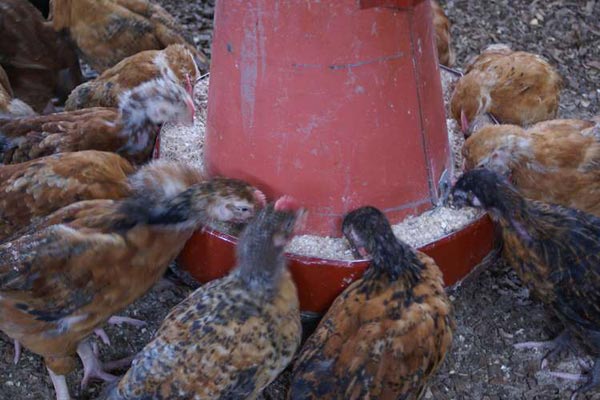
To begin with, the choice between maize germ and whole maize as the primary source of carbohydrates, or between soya meal and fishmeal as the primary source of proteins raises practicalities regarding cost and safety.

A kilogramme of maize germ retails between Sh15 and Sh35 depending on where and when you buy it, while a kilo of whole maize retails at Sh50. This means that using whole maize instead of maize germ increases costs three to eight times.

On my poultry farm, I use maize germ (without whole maize), wheat bran, sunflower and fishmeal (omena) as the source of carbs and proteins.

The reason is that the nutrients that could have been contributed by whole maize, but were not found in maize germ (if any), are contributed by either wheat bran, or sunflower or even fishmeal.

In fact, maize germ (14 per cent Crude Protein – CP) is more nutritious than whole grain maize (9 per cent CP) and one doesn’t need to include both ingredients.

Besides whole maize grain is more expensive than maize germ. As a general nutrition principle, there is added value in combining raw materials from varied sources (better balance in diet), but this increases cost unnecessarily.

Second, the choice of soy meal as a source of protein, (or to replace fishmeal) raises safety concerns if necessary precautions are ignored. Granted, soybean has one of the highest sources of proteins. I have even used it for making dairy feeds, but only after baking it. However, buying already baked grain from unreliable suppliers who don’t pre-treat can be fatal.

The reason is that soybean has a chemical called anti-trypsin which requires to be inactivated by baking using heat of about 180 degrees centigrade, especially if it is to be used in poultry feeds.

I once had to withdraw and discard poultry feeds worth Sh40,000 that I had used soy bean as the ingredient. Unfortunately, most suppliers of soybean by-product for chickens don’t even comprehend this concept. As a precaution, always pre-test your feeds on a few birds before feeding the rest of the stock.

Third, apart from CP (the basic nutritional formula for making animal feeds discussed in last week’s article), it is important to consider the bioavailability of the feeds. Just because the CP value is correct, say 23 per cent, does not mean that all of it will be digested and absorbed (bio-available).

I once purchased cheap blood meal hoping that its high CP (>80 per cent) added value. However, because of the high crude protein, the birds (broilers) could not digest it.

Fourth, it is important to subject homemade feeds to laboratory testing for quality assurance. However, from experience, the best test for animal feeds is to buy the raw materials from credible sources, mix in the right proportions and test empirically by isolating a few birds, feeding them and observing their performance.

The testing undertaken in many laboratories, called Proximate Analysis, simply determines the crude fibre, crude protein, ash (minerals) and metabolisable energy of feeds, but does not indicate the amino acid (building blocks of proteins), mineral and vitamin content.

Fifth, I found the author was too generous on micro-nutrients and amino acids like zinc bacitracin, mycotoxin binder and tryptophan (an aromatic amino acid).

These can be quite expensive. A kilo of lysine and methionine (amino acids) retail for Sh1,000 and Sh1,200 respectively. I advise that you download the amino acid profile of your poultry and determine if tryptophan is deficient before adding (kienyeji chickens may not need all these additives). The most critical additional nutrients for poultry is lysine and methionine.

Most grains – maize, sorghum, wheat and rice- are deficient in lysine and methionine, which are essential.

Lastly, whereas there are safety reasons associated with feeds kept longer than a month (after grain is milled, some nutrients like Vitamin A degenerate very first), thus, one may need feed stabilisers to keep them fresh for a little longer.

What I wish I had known before I became an entrepreneur

0

What I wish I had known before I became an entrepreneur by Waceke Nduati-Omanga

I hope that my reflecting on what I know now about business that I did not know before, will help you even as you listen to all the entrepreneurship noise going on. Here goes:

  1. It is never about the money.

If you want to be an entrepreneur to make money you are in the wrong business. If you think money is what will help you get through the dark times or keep you going in the long run, then you are mistaken. It could take forever to get that money, so you need something more than money to keep you going. Entrepreneurs don’t respond so much to money as they respond to providing a solution.

2. You grow when you work yourself out of a job.

When you start you do play multiple roles – business development, administrator, debt collector, strategic thinker, sales, capital raising, etc. However, progressively you need to let go of these roles. It doesn’t mean you don’t do anything, but your ability to let go ensures you are building something that works without you and releases you to take your business to the next level, the next region, the next product, and so on. You wouldn’t be able to do these things if all your time is spent trying to play multiple roles and frustrating people working with you who know they have the ability to rise up to the challenge. Progressively put up structures and get the right people to work with you.

3. Your business will grow in tandem with the value of your network.

Networking doesn’t mean that you know the CEOs of big companies. That may be good for some businesses, but others do not need that kind of network. If you want to start growing tomatoes, knowing the CEO of Safaricom may not help you. However, knowing the person who sells or distributes seeds and fertilisers, has information on new technology, can help you access capital or market, etc., is what will help you. Networking is not about how many people you know but the quality of the relationships you have. If you go to an event, you are better off coming out of there with two solid contacts rather than 50 business cards that will never help you. Be focused with your networking.

4. Entrepreneurship is not just about you the founder.

It is not just about your personal growth, wealth and making a name for yourself. Entrepreneurship is also about lifting others and cultivating an environment where others can thrive and even explore their own entrepreneurial spirit. Entrepreneurship is not just about starting a business. In fact that doesn’t make you an entrepreneur. It’s an attitude that is necessary even in your employees. There are many entrepreneurs who have not necessarily started a business but are creating a huge impact in the organisations they work for. Companies die because the founder was the sole entrepreneur in the organisation. Create the environment where entrepreneurship can thrive. Let it be a culture you operate within.

5. Having an idea is OK.

However, between two people with ideas, the one who actually executes is in a better place. Having passion is great; it gives energy and impetus to the idea. Having a vision is fantastic. This gives passion direction. However, you must combine a variety of elements to succeed. The winning formula is: Idea +Execution+ Passion+ Vision.

Read: Tonnie Mello – The Good and the Bad of Being an Entrepreneur

6. An entrepreneur has a different relationship with money.

They can see millions of shillings in their accounts and still know that they cannot touch a cent of it. Entrepreneurs are not concerned with short-term gratification, they are concerned with achieving their vision; that is why they look at money differently. Business money is business money, not your money. The business account cannot be your personal account and vice versa.

7. You will feel bad.

Contrary to popular belief entrepreneurs are not always cheerful, confident, optimistic, focused, solution-driven, or assertive. Many times they are petrified, depressed, broke, confused, annoyed, etc. Every so often you might even give yourself a moment to feel bad. But after that and despite still feeling bad, entrepreneurs will still get up. They learn not to let their feelings dictate what they chose to do. Feel bad but do it anyway. Fail, but fail forward.

8. The best attitude to have is that of a child and a student.

Children always ask why, why, why?  As an entrepreneur you cannot stop asking that same question. You cannot stop challenging the status quo – because opportunities are found in those questions. You need to know you don’t know it all and will never know it all. Go into situations, meetings, and conversations ready to learn. The less attached you are to your own way of thinking, the more you will see. The minute you think you are the best at what you do, you will become complacent.

Bull’s surgical procedure that offers top beef quality

The following feature is by Dr. Mary Muchunguh, a livestock expert.

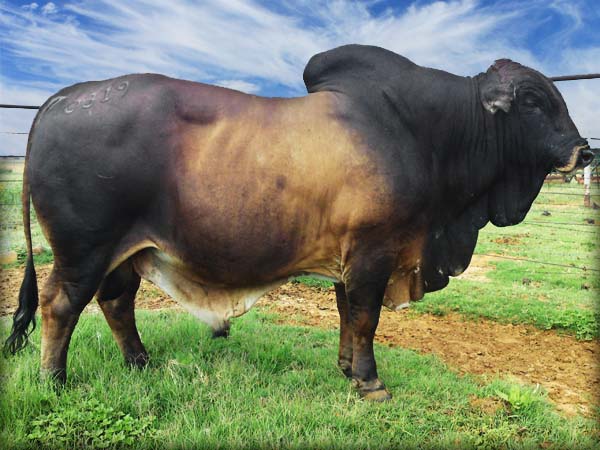
Castration is a practice that farmers have used over the years to manage their herds. It involves the complete removal or destruction of the testicles. A castrated bull is called a steer.

The first and most common reason why farmers undertake castration is for breed selection. This is primarily driven by the farmer’s need to select bulls with superior traits and keep them for breeding purposes while making sure that those with inferior traits do not get a chance to pass on their genes.

Often farmers look out for superior production traits in animals such as high milk and meat production in the case of cattle production.

Farmers seek out these traits so as to ensure they maintain superior traits in their herd and to sustain a desirable calf crop. Castration of bulls also contributes towards regulating the genetic quality of the herd by ensuring inbreeding is kept at bay, through castration of closely related animals.

There are numerous benefits that have been documented that are associated with the management practice of castration. These include improved beef quality.

Often, beef from steers has a better flavour and is more consistently marbled and tender. Castration of beef cattle also reduces the number of “dark cutters” due to the high muscle pH evidenced.

“Dark cutting” is a term that is often used to describe beef that is darker in colour than normal (characteristic bright cherry-red colour). The darker colouration is unappealing and shunned by the more keen consumers, often fetching a lower market price.

Steer carcasses are known to fetch good market prices and thus are preferred by many beef producers.

In addition, steers tend to be docile and exhibit less aggressive temperament due to the reduced testosterone levels. Historically, they were the choice draught animals as it was easier to handle them as compared to bulls. Due to their docility, it is easier to manage the herd in the grazing fields or feedlots. It has also been documented that steers have a higher growth rate due to better feed efficiency as opposed to bulls.

BEST AGE

There are variations as to when a farmer should carry out this management practice. Some farmers prefer early castration. The procedure is carried out at birth or at three to six months of age.

Most farmers prefer this age group as the calf heals faster and suffers less stress from the procedure than a mature bull. The earlier, the better.

Indeed there are increased risks associated with castrating an older animals including; increased bleeding, infections and pain. The older animal suffers more stress and its recovery is much slower than the younger calf. There are also decreased liveweight gains in animals castrated at an older age as opposed to the younger calves.

The greatest disadvantage of early castration, however, is the loss of potential breeding stock given that the observable traits of the particular calf are not fully developed or been exhibited.

The farmer can only depend on performance records of its parents, if available, to make the decision. However, it is recommended that the best time to castrate an animal is before it reaches puberty.

CHOICE OF METHODS

Once the farmer makes the decision to castrate his bulls, there are various methods to choose from to undertake this procedure.

Castration can either be done by stopping the blood flow to the testicles or surgically removing the testicles. The tool of choice is dependent on the livestock keepers’ preferences.

Castration is a delicate procedure that requires the services of a trained veterinarian or animal health extension officer. However, a well-trained farmer can also carry out the procedure.

The first method (elastration) involves the placing of a tight rubber band at the neck of the scrotum thus cutting the blood supply to the testicles, followed by necrosis and eventual fall off of the scrotum and testicles.

The completion of the above described process takes approximately 6 weeks but can be longer in older bulls. The advantages of this method include; technical ease and lowered risk to infections.

However, the disadvantages include missed testicles, the band may break and thus procedure is incomplete and considerable pain experienced by the animal.

The other method is the use of burdizzo clamps. This is a fairly common method in Kenya. The burdizzo clamps are used to crush the blood vessels to the testicles. This procedure is more difficult as it requires the animals to be well restrained, but is a much faster process. Its disadvantages include incomplete processes that may result in stags.

The surgical process is the surest way of castration. The testicles are surgically removed and thus sterility is assured. However, there is an increased risk of infections, bleeding and possibility of death is higher than the other methods. It is important that this procedure be undertaken in sterile conditions and by skilled personnel.

It is important to highlight that one of the freedoms of animals, is the freedom from pain. It is paramount that as a livestock keeper, you ensure that these procedures are made as painless as possible.

Animal welfare is as important as human rights. The administration of local, short-lasting anesthetic and other pain relief medication is recommended. As livestock keepers, we must put the animal welfare issues as a priority so as to reap the best from our animals.

After any of these operations is undertaken, it is important as a good farmer to:

  • Provide a good clean and dry environment especially for the castrated calves
  • Provide adequate feed and water where necessary
  • Regularly inspect the wounds for swellings and signs of infection
  • Regularly clean the wound with the prescribed medications
  • Promptly seek the veterinarian’s advice upon detection of any abnormal behaviour or gait.