

Home Blog Page 2226

Brookside farmers to get easy loans in 15 banks

A local milk processing firm has entered into partnership with financial institutions to give credit to dairy farmers.

Brookside Dairy has reached a deal with over 15 banks and co-operative societies.

In the agreement, farmers contracted by the processor will access loans using milk delivery statements as collateral.

The move comes amidst a renewed focus by commercial banks on the lucrative dairy industry in their bid to grow revenue.

Banks are now competing in developing products targeting raw milk suppliers contracted to large-scale processors.

Brookside’s director of milk procurement, Mr John Gethi said the credit agreement had resulted in more farmers signing a contract with the firm.

RECOVER LOANS

Under the deal, the financial institutions, which serve as pay points for Brookside’s contracted farmers, recover the loans from pay-outs made by the processor to the farmers.

“The credit arrangement has become a popular empowerment tool for our farmers. We came up with the facility to enable dairy farmers to access loans to develop their herds,” Mr Gethi said.

“Our milk supply statements, which are issued to farmers every month, act in the same way pay slips do for salaried workers during negotiation for personal loans. The banks use them to determine creditworthiness of individual farmers.”

Some of the financial institutions already involved in the deal are Commercial Bank of Africa, Equity Bank, Family Bank, Kenya Commercial Bank, K-Rep, Co-operative Bank and more than 10 co-operative societies.

The arrangement also seeks to deepen financial inclusion among dairy farmers who have largely been kept out of mainstream banking.

TRANSFORM DAIRY INDUSTRY

Brookside hopes to use the initiative to transform the dairy industry from largely a subsistence undertaking to a viable commercial enterprise.

“As part of reforms in the industry, Brookside will pioneer programmes that make dairy a reliable income earner for smallholder farmers, who form the bulk of raw milk suppliers in the country. Dairy is key in the economic transformation of rural households,” Mr Gethi said.

The Ruiru-based processor currently has 160,000 farmers supplying milk. The number rose after the firm made its latest acquisition, Buzeki Dairy, the makers of Molo Milk and Kilifi Gold.

The one Sh1.1 billion acquisition last year followed three others. These were Ilara in 2007, and Delamere and SpinKnit, the makers of Tuzo milk brand.


Don’t freeze my Sh. 1 bn account over Sh. 650 million Mumias Sugar payment, Kidero asks court

0

Nairobi Governor Evans Kidero wants the High Court to reject an application seeking to freeze his accounts with about Sh1billion.

Businessman Jacob Juma has asked the court to put the account on ice, accusing Dr Kidero of stealing Sh650m belonging to Mumias Sugar Company where he served as Managing Director.

The governor on Monday dismissed the application as an abuse of the judicial process, driven by political ill will.

The theft allegations, he said, were based on mere rumours and therefore have no legal basis.

On a replying affidavit through lawyer Tom Ojienda, Dr Kidero said claims that he received Sh650 million on behalf of Mumias Sugar Company were unfounded.

1,3450 TONS PAY

“I never received the money in cash on behalf of the company but that the sum alleged to have been paid to me by Y.H Wholesalers Limited for the sale of 1,3450 metric tons of sugar was paid to the account belonging to Mumias Sugar Company through three different bank transfer transactions on different dates,” reads the affidavit filed before vacation judge Isaac Lenaola.

“To freeze my accounts with respect to monies that I never took would be a great injustice to my person as I would be evidently curtailed in the use of my property due to the huge amounts of money the petitioner is requesting the court to freeze.”

He said allegations that he received the payment do not hold any water as there is evidence to show that the said amounts were indeed paid into Mumias account.

JUMA’S PLEA

In his application, Mr Juma said there were revelations that Dr Kidero received Sh650 million on behalf of the company but he never deposited it in Mumias accounts.

“It is important that Dr Kidero’s accounts be frozen to the tune of Sh650 million pending the hearing and determination of this application to protect this case otherwise it may be rendered nugatory since he is likely to hide this money,” Mr Juma said in his court papers.

The allegations against the Nairobi governor were made by Kakamega Senator Boni Khalwale who claimed that Dr Kidero received the funds on behalf of Mumias as envisaged in the sales agreement between Mumias and Y. H Wholesalers for the sale of 13,450 metric tons of sugar.

The all new Mercedes C-Class Coupe

0

The new C-Class family will soon be joined by a Coupé, Mercedes has revealed. It is expected to be unveiled at the Frankfurt Motor Show in September and will go on sale towards the end of 2015.

The C-Class Coupé is the third car in the new range and will rival the BMW 4 Series, with a Cabriolet expected in 2016. As the sportiest model, it has been given an extra 95mm of length over its predecessor and is 40mm wider.

A sloping roofline, 15mm lower ride height, 80mm longer wheelbase and a more aggressive backend similar to the S-Class complete the exterior changes.

mercedes-c-class-coupe-1_w900 (1)

Inside, the C-Class Coupé borrows from the Saloon so it should be instantly familiar to existing owners, but has been slightly enhanced. Unique sport seats, a seat belt ‘butler’ and special colour combinations continue the sportier theme.

Initially there will be four petrol engines available, including a 1.6-litre four-cylinder with 156hp and a two-litre with either 211hp or 245hp, depending on whether you go for the C 250 or C 300 model. Two four-cylinder diesels, meanwhile, offer 170hp and 204hp.

Suspension duties are taken care of by steel springs with two-mode adaptive damping. The option of a five-stage Dynamic Select Airmatic air suspension system that allows the driver to swap between Eco, Comfort, Sport, Sport + and Individual modes, each with their own characteristics, is available.

mercedes-c-class-coupe-7_w900

Safety systems fitted as standard include Attention Assist, which warns you if you are drowsy, Collision Prevention Assist Plus, which warns you of an obstacle beyond 7km/h and Adaptive Brake Assist, which enhances the braking effect.

Distronic Plus, meanwhile, is an optional extra that can adjust the speed to match the car in front from 0-200km/h, while steering intervention keeps you in the correct lane. There’s also Active Parking Assist for helping you slot into parallel and end-on spaces and a 360-degree camera for helping you maneuver in tight spots.

mercedes-c-class-coupe-6_w900

Merc’s Comand Online offers a larger display of 960×540 pixels and infotainment functionality such as Bluetooth connectivity, access to Mercedes apps, integrated WiFi hotspot and a voice control system for keeping your hands on the wheel. Apple CarPlay, which debuts in the new A-Class, appears to be missing.

mercedes-c-class-coupe-5_w900

No doubt AMG will be bringing a thunderous C63 version in the future, which will offer greatly enhanced performance over the initial petrol and diesel engines.

A price for the new C-Class Coupé is yet to be announced. Expect to hear more at the Frankfurt Motor Show in September.

mercedes-c-class-coupe-4_w900

SAFARICOM FOUNDATION LAUNCHES A REVOLVING FUND FOR KENYAN POPULATIONS WITH NO ACCESS TO MICRO CREDIT

0

As the world marks International Youth Day, Safaricom Foundation has launched a revolving fund targeting Kenyan populations with no access to micro-credit especially young people.

The fund will be managed by two non-governmental organisations -Junior Achievement Kenya and Hand in Hand Eastern Africa who will grow it into a revolving fund. They will train beneficiaries on entrepreneurship and business literacy, group dynamics, governance and savings after which the recipients will be eligible for micro loans.

“Many young people who wish to start small and medium enterprises lack the capital to do so and unfortunately financial institutions classify them as high risk borrowers who cannot access financial support,” said Joseph Ogutu, Chairman, Safaricom Foundation during the launch of the fund.

Statistics indicate that 75 percent of the country’s population is under 30 years of age and 40 percent of the population is jobless. Out of this, 70 percent are youths. Further, an estimated 800,000 young Kenyans are released into the job market each year and only a paltry 50,000 get employment.

(LR) Junior Achievement  John Wali Safaricom Foundation Chairman Joseph ...-1
(LR) Junior Achievement John Wali Safaricom Foundation Chairman Joseph …-1

“We believe that through this revolving fund, we will significantly contribute to the reduction of unemployment because we are looking forward to support young people who have exciting ideas but nobody is willing to finance them,” Ogutu added.

Junior Achievement Kenya will work with young people aged 18-24 years while Hand in Hand Eastern Africa will work with persons of 18 years and above. The two organisations already have existing grassroot relationships that are crucial for the projects’ success. Both organisations also have expertise in group mobilisation, business training, access to credit and linkages to markets.
The first year will entail a pilot in select counties across the country with possible scale up in subsequent years.

Applications are through the Safaricom Foundation Website (www.safaricomfoundatio.org); and also through application forms available at each of the partners’ offices and websites.

About Safaricom Foundation

Building Communities, Transforming Lives, Safaricom Foundation partners with Kenyan communities, organizations and institutions to improve and transform lives.

With a footprint in all of Kenya’s 47 counties, and a strong history of partnerships dating back to our inception in 2003, the Safaricom Foundation has worked with Speed, Simplicity and Trust to implement over 1,000 community projects, impacting over 3 million people, through our thematic areas of Health, Education, Environmental Conservation, Economic Empowerment, Water, Disaster Relief, and Arts & Culture.

Our three year strategy which runs from April 2014 to March 2017 will build on our strong history of results and partnerships, and will contribute towards Vision 2030 and the Sustainable Development Goals. We will leverage the power of innovation and technology to drive our projects forward; and will also offer a blend of grants, equity and ultra-low cost loans to our partners.

The participation of Safaricom staff in our projects will extend our personalized approach towards partnerships; and our project monitoring and our dissemination forms will provide platforms for technical assistance, learning and capacity building.

Centum CEO joins Chris Kirubi in Centum’s top 10 shareholders

Centum’s chief executive James Mworia has acquired four million shares worth Sh207.4 million in the investment company, breaking into the list of the firm’s top 10 shareholders. The latest stock market filings for June show Mr Mworia is now the fourth largest individual shareholder with a 0.61 per cent stake in the Nairobi Securities Exchange (NSE)-listed firm.

“I bought the shares in the open market. My goal is to become a sizeable shareholder in the company,” Mr Mworia said without specifying to what level he would like to raise his stake.

“It definitely shows my confidence in the company,” he added, echoing the view that share purchases by senior executives is a reflection of their confidence in the companies’ future prospects.

This is based on the fact that the high-ranking staff have deep insights into the financial position, risk and operations of the companies they lead. Such purchases, when done in the open market, could also be an indication of senior executives’ belief that their stocks are fairly or undervalued.

Significant purchases

Mr Mworia joins Centum’s top owners including Mr Chris Kirubi who has the single largest stake at 26 per cent and billionaire investor John Kibunga Kimani whose equity stands at 0.9 per cent.

The Centum CEO also joins the ranks of executives who own shares in the publicly traded firms they lead. Mr Frank Ireri, the CEO of Housing Finance, and Michael Matu (Olympia Capital) are some of the executives who have a piece of the companies they manage.

These executives are, however, still far from joining the club of billionaire shareholder CEOs where Equity Group’s James Mwangi, Scangroup’s Bharat Thakrar, Co-op Bank’s Gideon Muriuki and ARM Cement’s Pradeep Paunrana belong.

Mr Mworia has in the past held and sold small volumes of Centum’s shares, with his latest significant purchases read as a signal of his confidence about the company’s future outlook. In 2012 his interest in the investment firm stood at 0.02 per cent.

Centum posted a 160 per cent growth in net profit for the year ended March, helped by a huge gain that it booked from the sale of its stake in insurance group UAP Holdings.

Its net profit in the period stood at Sh7.9 billion compared to Sh3 billion the year before. The firm earned Sh5.2 billion from the sale of its 13 per cent stake in UAP to Old Mutual, booking a gain of Sh2.8 billion in the transaction.

The company also exited two investment funds (Helios and Nigeria-based African Capital Alliance) in a Sh500 million transaction, from which it reported a gain of about Sh100 million. Centum plans to exit investments in which it holds minority stakes.

Tips on home chicken feeds preparation

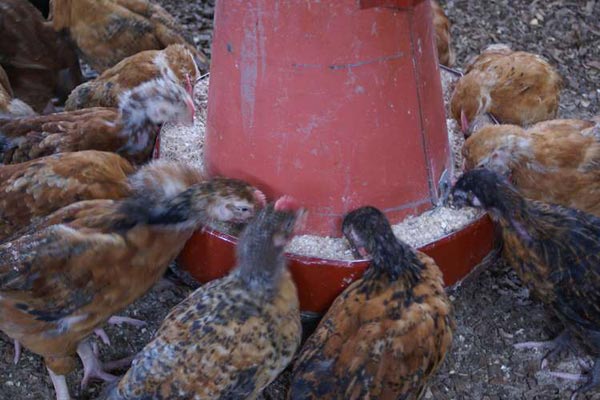
When making home made feed rations, it is important to do experimental trials, by isolating a number of chickens, feeding them and observing their performance. If the feed rations are right, the broilers will grow fast and layers will increase egg production (at least 1 egg after every 27 hours).

Buy quality fishmeal from reputable companies. If omena is used, the farmers must be sure of its quality; most of the omena in the open-air markets may be contaminated. Farmers are advised to go for soya meal if they cannot get good quality omena.

Always mix the micronutrients (amino acids) first before mixing them with the rest of the feed.

For mixing, farmers are advised to use a drum mixer (many jua kali artisans can make one). Never use a shovel to mix feed because the ingredients will be unevenly distributed.

Important: To improve on the feed quality, farmers making their own feeds should always have it tested to ensure the feed is well balanced.

The KARI Centre in Naivasha has modern feed testing equipment that can test all nutrients and even the quality of the raw material used. It costs Ksh1000 to test one sample.

After preparing your feed, take a 1kg sample; send it by courier to KARI, Naivasha, Tel. 0726 264 032 or 0738 390 715. If you are on email, the centre can send the results to you within 24 hours.

What your dairy feeds must have to benefit your cows

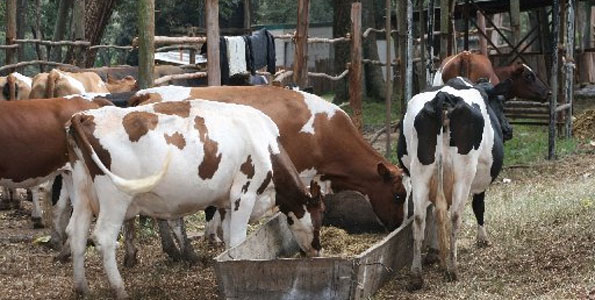
Supply of trace minerals elements forms an integral part of dairy cattle nutrition program. They are similarly as essential to your dairy herd as feeding them on feed well balanced with nutrient classes of energy, proteins and vitamins.

Feed, be it formulated or pasture sources rich in these nutrient classes, cannot meet trace minerals elements that fully benefit dairy cows.

Therefore as part of feeding your dairy herd, it is of worth considering supplementing them with trace minerals elements to fully maximize the benefits of providing quality feed.

This means that it is not profitable or desirable to leave the mineral demand of your dairy cows to chance.

From the first paragraph, it appears that you formulate feed for your dairy cows, this must be the good quality feed you are referring to in the second part; but what is your definition of a good quality feed?

A good quality dairy feed should contain grains, good quality forage, proteins source, minerals and vitamins in the right quantities and proportions.

This mixture when fed to an animal, is called a total mixed ration (TMR). The minerals in this feed provide the trace elements.

Trace elements are required in very minute quantities in the animal body; the requirement is dependent on the age, sex and stage of production of the animal.

However, the demand for trace elements increases during stressful situations like calving, high performance or disease.

OPTIMAL GROWTH

The main trace elements essential for cattle include copper, zinc, manganese, cobalt, iodine, iron and selenium.

These elements are important in the functioning of hormones and enzymes and thus play a key role in metabolism, health and immunity.

They contribute to optimal growth, production and reproduction. Their deficiency will therefore lead to poor fertility, poor growth, disturbance in pigmentation, porous bones and poor feed conversion efficiency among other problems.

When formulating feed, it is important to know that forages do not contain enough trace elements to cover the needs of high yielding dairy cows and that the amount of trace elements on pastures depends mainly on the soils, where the plant is sourced from, plant population and type of fertiliser used.

For example grasses sourced from parts of Nakuru have low levels of cobalt, which is itself a trace element. It is because of these reasons that it is important to supplement these trace and other minerals in the animal’s diet.

KEEP ANIMALS HEALTHY

Trace mineral elements have proven to consistently deliver higher profitability to dairy herds. Dietary supplements are available in commercial packs in crystal forms which may be added to feeds, powder licks and water-soluble administered through drinking water or oral drench.

When given as part of overall dairy nutrition program, they put up the foundation for long-term healthy herd.

They are beneficial in that they get into the body systems of the animals thus help keep them healthy, maintain optimum milk production, efficiently improve their reproductive performance and some get stored in the animal’s body mineral stores. So said, they should be available to animals regularly during lactation, dry cow period and to replacement heifers.

To optimally supplement a dairy cow in preparation for lactation, trace mineral supplementation during the dry period and around calving critically improves their health and consequently improve their reproductive performance specifically fertility. Through this, they return to heat early and reduce number of services per conception while heifers exhibit fewer number of days to first service.

There is also reduced occurrences of retained afterbirths/placenta. In mammary health, it helps boost gland resistance and reduce somatic cell count thus improving milk quality.

Why knowing your customers is the key to farming success

The following feature is by Christina Feller

You are hardworking and respected in your community, you attend important meetings in your sub ward, ward, county, and even at a regional level to learn about sources of funding, advice, and training as well as to obtain quality seeds, livestock, fertiliser, vaccines, and other vital inputs to healthy crops and animals.

You have developed a brand identity and even put a new sign out front of farm property.

You are on the path to becoming a specialist in your field (no pun intended). What kind of farmer are you? What do you want to be known for? Are you the type to go where others fear to tread? Or do you like being part of a group of producers who come together to help and support each other in a collective pursuit of excellence and markets.

Your products, your markets, the channels you use to enter and dominate those markets, and your customers are the four pillars of a successful farm business.

You must be a specialist in understanding the dynamics of each pillar of excellence. So, now you have a good grasp of growing and cultivating a variety of crops and you have identified your key target markets and the channels you will use to reach your customers.

But do you know your customers and what their preferences are? Do you know how and where they want to buy and eat your products and in what form or package?

FICKE CONSUMERS

The difference between a successful farm business and an unsuccessful one is the emphasis placed on understanding and responding to the desires and wants of your target market.

Consumers are notoriously fickle and price conscious when it comes to ‘commodity’ purchases but stay loyal to trusted brand names.

Your challenge is to develop a trusted brand name that consumers ask for at their local market. Markets buy products from producers, cooperatives and livestock owners using wholesalers and distributors. Find out who stocks quality products and go to them in person to offer them fresh produce.

You NEVER take samples with you; you wait until they say they are interested in testing your products and then you have the opportunity to come back again with a product line that the buyer has asked to taste and perhaps offer for sale. You want to have a good reason to regularly visit the retail outlets that sell your products not to complain but to rejoice.

The retailer is your best friend. The retailer wants you to be successful. The retailer will tell you what the consumer looks for in a purchase. The retailer decides where your products are positioned on the shelf so your brand is important to him as well as to the ultimate consumer.

The consumer is like a loyal friend who you are always getting to know better. When packaging becomes old and dull, you need your loyal customers to give you feedback before you lose them to the snappiest guy on the block. The customer is king!

Auditions: The NEST is casting for multiple upcoming projects

0

The NEST is a Kenyan multidisciplinary collective working since 2012 with the aim of exploring our troubling modern identities, re-imagining our pasts and inhabiting mythical African futures.

The NEST Collective looks to create work within the fields of film, visual arts, music and fashion that begins conversations and stirs up dialogue amongst our communities and audiences. We live and work in Nairobi, a city buzzing with energy and potential, a city of purgatorial traffic jams, color, dust and the Pursuit of

Money. We try to create work that dissects our city and its relationships with modernity, its past and the edges between its social layers and its citizens. Inevitably, we also find ourselves exploring, dissecting and subverting the layers of how Africans are Seen and Unseen, what Africans Can and Cannot Do, where Africans Can and Cannot Go, and What Africans Can and Cannot Say.

We are casting on Saturday August 22th for a couple of upcoming projects we’re preparing for. Here is everything you need to know:

Production Title: ‘THE POLITICS’ (working title)
Production Type: Independent
Audition Date: Saturday, August 22th 2015
Audition Time: 10:00am – 5:00pm
Call Backs: Wednesday, August 26th 2015
Production Location: Kenya
Shooting Location: Nairobi, Kenya
Audition Location: 23 Gatundu Road

CHARACTER BIOS
JACKIE: A twenty-three year old who could pass for twenty, Jackie is a laid back girl with nothing much to fuss about even when there is. Excellent poker face.

DOCTOR: A gentle, slightly awkward man in his mid-thirties.

FABIAN: In his forties, Fabian [Jackie’s Father] is the diplomat
of the house who, every chance he gets, sides with his wife but makes an effort to remain friendly with his daughter.

MELISSA: Melissa [Jessica’s Mother] is in her mid to late-thirties. Like her daughter, she never raises a fuss, directly.

BEVERLEY: Due to the length and quality of their friendship, Beverley and Jessica are plenty comfortable with each other with nothing to prove. They merely enjoy each others company.

TIMOTHY: A year or two younger than Jessica, Timothy thinks he fancies the girl. Whenever around her, he copies her trademark laid back demeanor hoping she might take interest in him.

PAUL: A shy boy of about eighteen who keeps to himself but is pretty polite. Comfortable as a third-wheel.

GWENDOYLYN: A pleasant witty girl who’s constantly taking jabs at anyone in close proximity.

HILDA: Hilda, 22, is another longtime friend of Jessica’s. They usually find themselves having long conversations due to their similar take on things.

Short sections of the script will be provided to participants at the audition venue.

DIRECTIONS
Taking public transport? Use the 48 route, alight at the Kenya High/Kiosk stage. A white sign reading ‘23 Gatundu Road’ is approximately 50 meters from the stage.

For more information, call +254 20 263 4428, or email [email protected]

Pain as petrol goes up by Sh. 4 a litre

0

The price of petrol has gone up by Sh. 4 starting today. This follows a price review by the Energy Regulatory Commission (ERC). According to the new review, the price of petrol has shot up to Sh102.65 per litre in Nairobi from Sh98.59. However, diesel and kerosene prices have reduced.

In Nairobi, diesel will retail at Sh.1.21 per litre lower at Sh83.35 while kerosene will be selling at Sh4.76 lower at Sh57.98 per litre.

“This month’s pump prices took account of an additional Sh3 per litre in the pricing of super petrol and diesel to cover for the enhanced road maintenance levy announced in this year’s budget,” said the Energy Regulatory Commission (ERC) in a statement. The increased roads levy came into effect on July 17. “Accordingly, recovery of the additional cost borne by oil marketing companies has been factored for all cargoes whose taxes were paid after the effective date,” ERC said.