Home Blog Page 2227

Beware of fake ‘Safaricom’ page offering free airtime

0

There’s a new scam in town! The Safaricom Free Airtime Facebook Page!! This page, which is using the corporate trademark and name of telecommunications giant Safaricom has been purporting to offer Kenyans free airtime. The page has been asking for phone numbers in exchange for free airtime.

In pursuit of the free airtime, Kenyans have been blindly posting their private phone numbers on the page, in hope that they can receive voice airtime amounting to at least Sh. 2,500.

In fact, some Kenyans have been posting their service troubles on the page fully convinced that the page could link them up to Safaricom’s customer care desk. Currently, the page has garnered 17,000 likes. One of the updates on the page:

“Hello Family¦ During yesterday’s draw we got 2500 winners of free Airtime worth ‪#‎5K therefore we are looking for other 7500.Winners to stand the chance and win lots of prizes with us. [ ‪#‎NOTE Our aim this week is to get 50000LIKES on our official page.’ @SHARE OUR INFO IN GROUPS YOU KNOW AND INVITE NEW LIKES FOR US] ‪#‎JOIN_THE_NETWORK_THAT_GIVES.”

The official Safaricom’s Url is https://www.facebook.com/SafaricomLtd?fref=ts

The new fake page is operating under the Url https://www.facebook.com/adbsafecom

Beware, do not be duped!

Opinion: Safaricom is not dominant, but it should open up Mpesa

0

The following opinion feature by economist Tony Waitima was first published in the Business Daily.

“Being dominant is not a crime,” was Safaricom CEO Bob Collymore’s response to the proposed laws that seek to level the playing field of mobile service providers.

The proposal is premised on the analysis that Safaricom is a de facto monopoly, probably due to government being a shareholder. But fact of the matter is that its dominance is market rewarded.

In Kenya, currently, there exists no monopoly in the mobile network spectrum. Safaricom leads with a market share of 67.4pc, followed by Airtel with 22.6pc and Telkom Kenya 22.6pc after Essar’s exit.

So labelling Safaricom as a monopoly in the economic sense is wrong.

It has exerted monopolistic practices in the market in the past, especially during the number porting exercise. The State’s regulatory framework should be to level the playing field through lowering barriers of entry and preventing a single company from locking customers into their product line.

But stifling the dominant player, as government intends to, through introducing a market domination cap of not more than 50 per cent market share to tilt the ground in favour of competitors is going against the same spirit of competition and killing the innovation culture in the industry.

In the same spirit of competition, it is time we open up the M-Pesa platform.

Currently, the rate of transactions flowing through the mobile money system is estimated to be close to 40pc of the country’s GDP.

Last year, Sh4.2 trillion was transacted on mobile money platforms with M-Pesa accounting for more than 95pc of these transactions, making it a de facto monopoly.

Since the 1980s, it has become both technologically and commercially possible to separate infrastructure networks from services provision and, as a consequence, to introduce competition.

It will be prudent to declare M-Pesa a common carrier – meaning the owner of infrastructure can provide services on a non-discriminatory basis by treating a competitor using its infrastructure just as it treats a customer. A clear example is how Airtel has opened up its infrastructure for Equitel and Zion Cell to rival its mobile money product.

Safaricom should open up its M-Pesa platform – at a fee – to rival players who wish to run independent mobile money systems.

This interoperability will not only be beneficial to the economy by maturing mobile money platforms through removing barriers to infrastructure investment, but also improve Safaricom’s bottom line.

It will also lead to establishment of an institutional framework that monitors financial flows, and governs standards, quality control as well as privacy in the sub-sector.

This is the secret to passing any job interview

0

The following analysis by Perminus Wainaina was first published on Capital FM.

In the last six years as a recruiter, I have interviewed over 7,000 candidates. I have had a chance to interview entry-level candidates, supervisors and CEOs.  When it comes to professions, I have interviewed across the board including accountants, sales, HR, IT, procurement, admin and technical professionals.

Interviewing is a task that I enjoy as I get to meet many candidates and somehow impact their careers.

For any position that we are recruiting on behalf of an employer, we usually invite 10 to 15 candidates for a preliminary interview and recommend at least five candidates for the next stage with the client.

Qatar bans 12 Kenyan job recruitment agencies. See list

The common mistakes I have identified with candidates during interviews regardless of the position include; a lack of preparedness, poor presentation skills, poor self-confidence, and a lack of understanding of the role. Recruiters and employers use interviews to gauge your skills, enthusiasm and whether you are a good fit for the organization.

While mistakes do happen in an interview and there’s no such thing as a perfect candidate, it is important to do your part and minimize the errors.

One of the secrets to passing a job interview is to understand the role. And how do you do this? It is as simple as going through the job description and understanding it from an employer’s perspective.

Nowadays, interviewing has shifted from the common interview questions like tell me about your five-year plan to your competency i.e. what skills and qualities do you possess that make you an ideal candidate for the job? But you shouldn’t stop at understanding the job description.

This is why employers don’t call you back after a job application

You have to look at the company vis a vis the industry, regulations, suppliers, clients and everything else that makes a company run smoothly. Be an all-rounder.

Character is key when it comes to your career. I have met very good candidates who have the right skills and industry knowledge but have a problem moving up the career ladder because of their character.

Beyond qualifications and skills, employers are interested in what you believe in as an individual. Are you a person of integrity? Can you work under minimal supervision?   Can you be entrusted with company assets? What will your previous employer say about you? No serious employer will employ you without conducting proper reference checks.

Another big concern with employers is soft skills. Wikipedia defines soft skills as the cluster of personality traits, social graces, communication, language, personal habits, interpersonal skills, managing people, leadership, etc.

Tricks you can use to stay in demand after losing your job

These skills are transferable skills, so they can be used in many different types of jobs. They are personal qualities and attitudes that can help you to work well with others and make a positive contribution to the organizations you work for.

Employers are aware that technical skills can be taught more easily than soft skills, which tend to be either personal characteristics or skills that have been fine-tuned over a period of time. Sometimes it’s not easy to change a person’s characteristics or beliefs.

Employers also expect you to possess certain soft skills depending on your level and area of training. It is highly unlikely that you will be considered a potential candidate if you don’t demonstrate such soft skills. If you would like to know your strengths and weaknesses I’d recommend you take a personality test.

The secret to passing any job interview is to know yourself better and be clear on how you can meet the needs of an employer.


Vacancies: World Bank Group Is Hiring, Massive recruitment In Kenya August 2015

0

World Bank Group Recruitment Drive for African Nationals

The World Bank Group is launching a recruitment drive aimed at increasing the number of Sub Saharan Africans in its work force.
This commitment to hire Sub Saharan Africans reflects the Bank Group’s senior leadership commitment for a diverse workforce in which African nationals can play a key role in fighting poverty and increasing shared prosperity. Employment opportunities will be in various technical areas and professional streams for talented and diverse young professionals and mid-career level professionals to contribute and grow their skills in a career in international development.

A career with the World Bank Group offers a unique opportunity for exceptionally talented individuals with a passion for international development to contribute to solving some of the world’s most pressing problems. Bank staff work with governments, civil society groups, the private sector, and others in developing countries around the world, assisting people in all areas of development, from policy and strategic advice to the identification, preparation, appraisal, and supervision of development projects.

Below are the areas that we are currently recruiting for. Positions may be based in Washington, D.C. or in a regional office.

Qualifications for the entry level is a Master’s degree plus 5 years of relevant professional experience. For mid-career professionals, the requirements are a Master’s degree plus 8 years of relevant professional experience. Ideal candidates for these positions must have a demonstrated capacity for strategic thinking, the ability to conduct dialogue on relevant development policies and priorities, and be fluent in English with very good writing and communication skills.

All applications must be received by August 31, 2015. Applications received after the closing date will not be considered.
A select number of candidates will be interviewed in September and October 2015 in Washington, D.C. and locations in Africa and Europe.

Those applications that were not selected for interview during this campaign will be kept on file for up to one year and may be considered for future opportunities. Please note that only shortlisted candidates will be contacted.

To submit your application, please click the area(s) listed below.

• Macro-fiscal Management
• Transport and ICT
• Poverty
• Health, Nutrition, and Population
• Governance
• Trade and Competitiveness
• Education
• Finance and Markets
• Social Protection
• Agriculture
• Environment
• Energy and Extractives
• Social Urban, Rural, and Resilience
• Water
• Information Technologies
• Investment (IFC)
• Finance / Risk Management
• Development Economics – Economists
• Development Economics – Statisticians
• Development Economics – Private Sector Development
• Climate Change
• Treasury (IFC)
• Leadership, Learning, and Innovation
• Legal

We value diversity in our workplace, and encourage all qualified individuals, particularly women, with diverse professional, academic, and cultural backgrounds to apply.

Please review the following FAQs. For any further inquiries, contact World Bank Group Africa Recruitment.

Disclose what you charge on Lipa na Mpesa, CAK orders Safaricom

0

Competition Authority of Kenya (CAK) orders Safaricom to disclose to consumers charges made on lipa na Mpesa service.

The Authority said this follows a complaint on the non-disclosure by East Africa’s largest telecommunication company of the charges payable by consumers for use of its Lipa Na Mpesa service in petrol stations and merchant shops across the country.

“After taking investigations pursuant to consumer protection mandate, we order Safaricom to undertake a campaign in both electronic and print media to sensitize Kenyans on Lipa Na Mpesa billing,” said Wangombe Kariuki, Director General Competition Authority.

“We want Safaricom to inform Kenyans that settling bills through Lipa Na Mpesa service at petrol stations currently may attract a fee of 0.5 per cent of the transaction value and that application charges can be accessed through the *234# USSD code,” he said.

The Authority also wants Safaricom to educate consumers by changing Point of Sale (POS) materials to reflect any new charges that will be introduced by Lipa Na Mpesa merchants who are currently not charging for the service.

Airtel’s Unliminet scores 1 million new mobile internet customers, Safaricom’s mobile internet users drop sharply

0

Airtel’s Unliminet tariff which encompassesvoice, data and SMS services helped Airtel garner more than one million new customers in three months from February this year. This is according to new data report released by the Communications Commission of Kenya.

According to the report, increased its mobile market share from 14.6 per cent to 18.5 per cent while dominant player Safaricom dropped its market share from 72.1 per cent to 65 per cent. Further, Airtel’s SMS traffic volume grew by 2.5 percentage points to stand at 6.9 per cent of the market, with 452 million SMS sent during the quarter up from 324 million messages registered during the last quarter.

Telkom Kenya’s Orange saw its share drop marginally from 13.3 per cent to 13 per cent. Incidentally, both Safaricom and Orange registered 400,000 subscribers and 300,000 subscribers respectively.


Barclays Bank posts Sh. 4.6 billion half year net profit

0

Barclays Bank of Kenya has reported an eight per cent increase in half year net profit on the back of increased earnings from non-interest income lines. The lender Thursday announced that its after-tax earnings for the six months to June grew to Sh4.6 billion, compared to Sh4.2 billion reported during a similar period last year.

Barclays, the latest top tier bank to release its H1 financials, said its non-interest income in the period under review by 12 per cent to Sh4.8 billion from Sh4.3 billion last year.

Some of these earnings came from new products such as bancassurance, mortgage and asset finances centres as well as the reintroduction of ATM fees.

“During the period under review, the bank made significant investments in new revenue streams to boost balance sheet growth,” said Jeremy Awori, the lender’s managing director.

“The launch of the mortgage centre in the first half is already yielding positive results for the bank.”

The lender’s net interest income grew four per cent to Sh10 billion while total assets grew 10 per cent to Sh235 billion compared to Sh213 billion during a similar period in 2014.

Customer deposits grew by 10 per cent to Sh163 billion, attracting an interest expense of Sh1.9 billion due to the high interest regime in the country.

Barclays announced that it will be paying an interim dividend of 20 cents per share, amounting to a Sh1.08 billion payout to shareholders by October.

Do faulty devices bought at Orange Kenya disappear once returned for repair or replacement?

0

It has come to the attention of Bizna that buying a phone handset at Orange Kenya could prove to be one of those decisions a consumer may live to regret if this case from one of our readers is anything to go by.

Well, in November last year, an Orange customer known as *Elijah (name withheld to protect identity) returned a phone mode ONE TOUCH 4010D PURE WHITE to Orange Nakuru Telkom under the one-year guarantee sale agreement.

The phone this customer had bought at Orange had proved to be a faulty device, and under the terms of sale, Orange was obligated to either repair the phone or offer him with a new one. The phone’s details were as follows: ONE TOUCH 4010D PURE WHITE, IMEI: 869296011731159. IMEI: 869296011731167.

PhonesAt Orange Nakuru Telkom, the faulty device was received by a customer attendant named Amos. The customer was instructed to go back and pick either the repaired device or a replaced new phone within two weeks. Well, this was just the beginning of what has turned out to be a game of cat and mouse, with Orange Kenya. Not only did the two weeks elapse, but since November, this customer – whose ID and Orange registered line we have seen – is yet to see his phone back. His attempts at pursuing the matter through the availed Orange Kenya help care channels have all proved futile. Shockingly, Orange Kenya has not been short of excuses.

At one point, the staffer who’d received the phone back informed the aggrieved customer that Orange Kenya didn’t have courier services to transport the phone back from Nairobi – where it was apparently being repaired – to Nakuru. According to messages seen by Bizna from this customer to Orange, though, this didn’t seem to have been the case. The customer informed Bizna that he managed to communicate to the branch manager at Nakuru Orange called Irene, who explained that the phone was still stuck at the Repair Centre, and there was little that Orange could do.

Eight months and counting, Orange Kenya, and you still are holding unto this customer’s phone.., why?? It is reportedly a habit of faulty handsets that are returned to you taking extremely too long as witnessed in this case or never coming back!

Orange Kenya, perhaps you should state clearly to your customers that any gadget bought at your shops with a guarantee will actually never be repaired or replaced or surrendered back once a customer returns it for such services.


… Have your rights as a consumer been abused? Do you have an irritating experience as a buyer from a seller? Share it with us and we will assuredly bring it to light…

Fuel prices to go up by Sh. 3 tomorrow

0

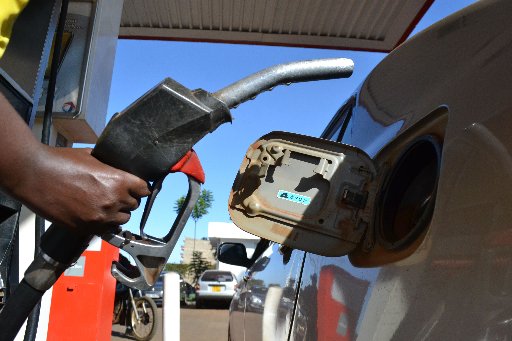
Fuel prices will go up by Sh3 a litre for petrol and diesel from midnight on Friday, as the full burden of the government’s road expansion plan begins to bite.

Last week, the acting director for petroleum, Mr Edward Kinyua, said the Energy Regulatory Commission had got a go-ahead from the taxman to charge an extra Sh3 for every litre of fuel. The money will be used to maintain roads.

“The consignments that came in from July 17, which is within our pricing window starting every tenth, will be affected by this levy. There will be no backdating as previously alleged and we will compensate the importers who already paid the levy in the post-July 17 consignments,” Mr Kinyua said.

TOLL STATIONS

The fact that importers already incurred the costs on some of the fuel already used implies that the compensation will come from higher pump prices that motorists must pay in the coming months.

In the 2015/16 Budget, a Sh3 road maintenance levy was proposed with effect from July 1. The Kenya Revenue Authority said the effective date for the new tax is July 17.

The additional levy comes at a time when the government is finalising plans to introduce toll stations on some major roads such as the southern by-pass, Mombasa Nairobi highway and Thika Superhighway.

The strategy has been in the works since February last year, but has been criticised by lobby groups and consumers who insist that is double taxation.

The push to increase the charge on fuels started in December last year when the Kenya Roads Board called on the Treasury to double the petroleum levy from the current Sh9 to Sh18.

INFLATION

At the moment, the total tax per litre of petrol is about Sh30, diesel Sh20, and Sh2.20 on kerosene. In essence, the price of petrol, diesel and kerosene is almost the same before taxation, indicating how taxes distort market prices.

The consumer also pays Sh0.40 per litre to the Petroleum Development Fund. These taxes are usually in addition to 1.5 per cent railway development levy that is imposed on all imports.

The higher fuel cost from tomorrow is likely to have a ripple effect on inflation as both food and transport prices are likely to increase.

Mumias Sugar releases Sh. 270m to pay farmers

0

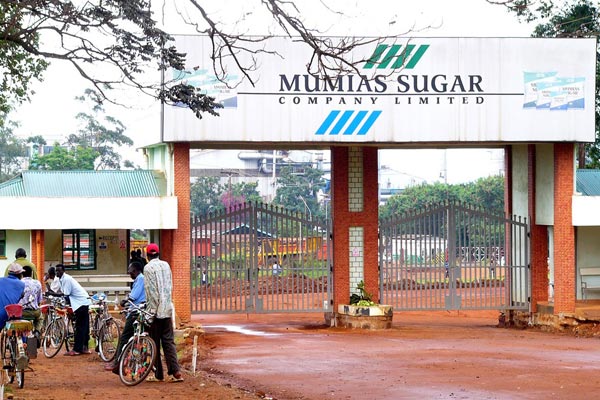
Mumias Sugar Company has released Sh270 million as the first tranche of money to pay at least 6,000 farmers.

The company’s Corporate Affairs manager Moses Owino confirmed the company has released the money to pay farmers whose accounts have been verified and validated. “Farmers who are contracted by the miller will be given the first priority in the payment,” he said, adding that the company has also paid farmers owed Sh20,000 and below.

The money is part of the Sh1 billion bailout given by the Government, which the management promised to use Sh500 million to settle debts owed to farmers. Farmers have been camping at the company waiting to be paid their dues after the Government offered a bailout package to the miller.

“The company paid those whom we owed Sh20,000 and below. From the amount released we shall give the first priority to contracted farmers regardless of the amount the company owes them,” he said. The company owes farmers more than Sh500 million since last year.

Speaking in Kakamega town on Tuesday, a section of the company’s shareholders and farmers from Mumias Sugar Company zone asked the new CEO Errol Johnston to speed up the process of paying farmers. Led by Peter Rapando, they said Mumias should give first priority to farmers to restore their confidence in the firm that at one point faced closure due to a financial crisis.

“We welcome the new CEO, as shareholders and farmers we promise to support him fully to restore the company. We ask him to speed up the process of paying farmers their dues so that he can reinstate their confidence in the company and also make them embrace cane farming,” said Rapando flanked by other shareholders.

They blamed former managers for being insensitive to cane farmers’ plight, resulting in the crisis at the country’s giant sugar miller. “Former managers neglected the farmers, who are the key stakeholders in the company. Farmers supply raw material, which is essential for the company to survive, yet they were neglected.

They should have given first priority to agriculture instead of focusing on the ethanol and water plant,” he said. They expressed optimism that Johnston will help bring the company back to its feet because he was at the company before.