National Oil Corporation has announced a fuel pump price reduction of Sh3 on diesel effective Tuesday (today).
The oil marketer said the price cut will run until the next petroleum prices review on Friday, August 14.
“With the discount, National Oil now retails diesel at Sh81.50 in Nairobi down from the ERC maximum of Sh84.56,” the company said in a press statement.
The price of diesel is a significant component of the cost of goods and services, given its use in transport and industrial processes.
Prices for other towns have been adjusted accordingly. The discounted prices are available to cash and SupaCard customers at all National Oil petrol stations countrywide.
National Oil has a total of 102 service stations spread across the country.
The price reduction is part of the ongoing strategic efforts by National Oil to stabilize the petroleum market.
The following feature by investment expert Rufus Mwanyasi was first published in the Business Daily.
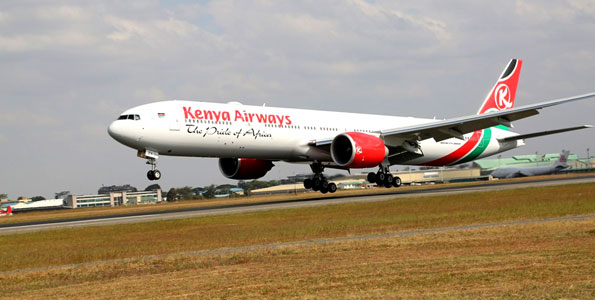
Jaws dropped as fast as Kenya Airway’s fortunes last Thursday. The airline stock fell a whopping eight per cent in that single trading session after the company announced a Sh25.7 billion loss for the 2014 financial year.
Already down 30 per cent year-on-year, the latest rout is set to push the stock into new multi-year lows. By the close of Friday, for the first time in more than seven years, the stock traded below Sh6, a level 95 per cent lower from an eight-year high at Sh137.
Clearly, investors have lost confidence in the stock and it’s likely that the situation could get worse in the coming months as they appear far from sold on the stock.
KQ’s persistent price underperformance is a reflection of both its external and internal troubles. A few of its external challenges include exchange rate volatility, fuel price fluctuations, intense competition from Middle East carriers, international regulatory environment and travel advisories making the operating environment extremely hostile.
Sadly, these factors are beyond the management’s control and hence unavoidable.
However, KQs management of internal factors (the only discretionary component) has been unsatisfactorily. Poor hedging policies, aggressive expansion plans (read aircraft purchases), weak industrial relations, excessive borrowings and poor service have also largely contributed to lacklustre performance in recent years.
Let’s explain this. Cash flow, a key indicator of the company’s ability to pay for aircraft purchases, has gradually fallen from Sh4.3 billion (2012) to Sh1.2 billion (2014), an equivalent of 72 per cent reduction.
This means that the Sh31 billion spent by the company on aircraft deposits in the past three years came primarily from debt which currently stands at Sh104 billion, up three times since 2012.
Persistent cash flow constraints have also meant a reliance on short-term financing which has risen by 155 per cent to Sh25 billion (2014) from the previous year in order to keep the business afloat.
Increasing finance costs has put more pressure on earnings and hence dwindling profits and zero dividends for investors.
Falling oil prices (fuel costs accounts for roughly 50 per cent of KQs total direct costs) led the company to write down the value of it fuel-hedging contracts worth Sh1.6 billion last year.
The company, which favours an aggressive hedging policy possibly as a result of its relatively old and less fuel-efficient aircraft, hedges at least 80 per cent of its anticipated fuel requirements through fuel derivatives.
Therefore, with oil prices projected at average of $60/barrel this year and $67/b in 2016 by the US Energy Information Administration (EIA), it is likely that KQ may be forced to again book losses for the remaining portion of its earlier hedges. Oil prices have fallen nearly 50 per cent since June 2012.
Furthermore, ongoing wrangles with the unions — Kenya Airline Pilots Association and Aviation and Airport Services Workers Union — has negatively affected investor perception of the airliner.
In the long run, I believe KQs saving grace lies in its planned re-organisation programme. This would involve selling of its non-core assets, review of its debt profile, re-negotiating of contracts, cheaper sourcing and a re-capitalisation possibly through another rights issue and would be a step in the right direction.
However, investors will likely want to see a return to profitability, a build-up in shareholder funds and perhaps a change in the C-suite before buying in.
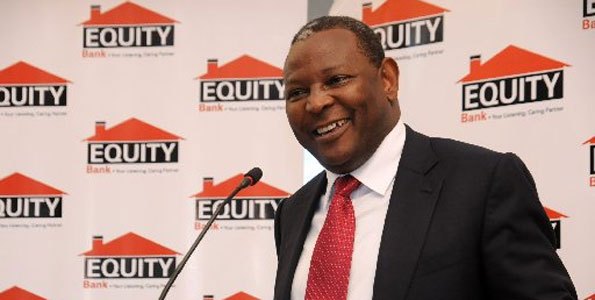
Equity Bank CEO James Mwangi: Many African countries have made positive strides in lowering poverty levels, but despite several Government and donor-assisted programmes launched across the continent, it is still our number one enemy.
Africa is a big paradox; it is endowed with natural resources and youthful human capital, but is saddled with abject poverty and high levels of unemployment. Developing an entrepreneurial mindset in our people is our most valuable tool, as Africa strives towards economic empowerment. Nations ought to focus more on creating a conducive environment for entrepreneurship to harness citizens’ innovative potential, which will in turn support an entrepreneurship culture and wealth creation.
The responsibility for creating employment should not rest on governments and corporations alone, but on each citizen. Entrepreneurship should be seen as a source of employment, job creation and wealth generation. It is the single-most powerful agent for progress and has the potential to solve the African paradox.
Starting a new business venture and building it into a successful enterprise requires vision, dedication and commitment to that vision, resilience, and proper planning. The people who have vision, passion and unwavering dedication have the ability to do great things. Great entrepreneurship is about solving the world’s most pressing problems. It is about dedicating your life to a greater purpose. Some of the lessons that I have learnt about entrepreneurship include the following.
Be a dreamer: Identify gaps in products or services and take risks to make your dreams come true. Ask yourself what you can do: What can I do that will be most useful to most people How can I change the situation so that what is needed is made available to those who need it most Make that your vision and go for it.
Convince yourself: If you cannot convince yourself that your goal will come to pass, you won’t convince anyone else. Convince yourself first, with good reason, and others will follow. Do not go it alone: An entrepreneur is dependent on the skills and knowledge of others. But he or she must be the leader who can bring these people, their skills and their attributes together to create something new and useful.
Be dependable: If people trust you and you deliver time after time, then when you ask them to jump, they will ask ‘how high’, not ‘why’.
Be enthusiastic: Your enthusiasm will infect others and set off a chain reaction that makes even the impossible possible. Be patient: Equity Bank is showing its best colours after 30 years of hard work. Clothe yourself in virtue: Your values are what will attract all the other components you need — capital, expertise and partnerships — to help you bring your vision to life. Never stop learning: Learn something new every day and try to apply it to your life and to business.
Be humble: Many factors and many people come together to make an enterprise successful.
Equity Group posted an 11.8 per cent net profit growth in the half-year ended June on the back of higher interest and transaction-based income.
The bank’s net profit in the six months to end of June stood at Sh8.5 billion compared to Sh7.6 billion a year earlier, placing it second after KCB whose net profit rose to Sh9.2 billion (13 per cent) in the period from Sh8.1 billion.
Equity’s interest income rose 13.5 per cent to Sh19.2 billion while income from transactions and other fees increased 30 per cent to Sh10.8 billion. The bank’s core lending business benefited from a 26.9 per cent increase in the loan book to Sh236.8 billion.
Equity’s lending capacity got a boost after global institutional investors, including the US development finance institution OPIC, committed to provide it with Sh52.5 billion for onward lending to youth, green energy investors and other groups.
Its operating expenses jumped 22.3 per cent to Sh14.2 billion, partly attributed to the firm’s heavy spending on information communication technology (ICT) in the period.
“Total expenses grew … on the back of costs associated with the strategic investments recently made to enhance the group’s enterprise resource planning capacity,” said CEO James Mwangi after releasing the results.
He further elaborated that the ICT investment was aimed at creating a robust infrastructure that converged banking, telecommunications channels and products besides fully digitising the bank’s operations.
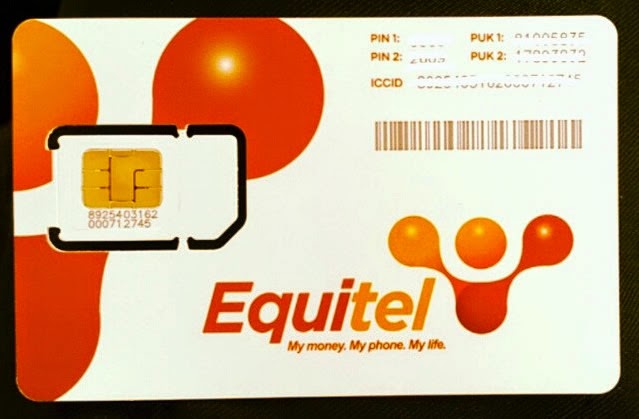
Equity launched its mobile banking service Equitel in January as part of its strategy to grow its delivery channels beyond ATMs and Internet banking. It had signed up one million Equitel users as of June, doubling the half-a-million subscribers it had in the first month of operation.
The bank sees mobile banking as an important value-add that also serves to cut costs by eliminating the need for customers to visit banking halls for ordinary transactions like withdrawals and cash transfers.
The value of mobile banking transactions stood at Sh42.3 billion in June, rising nearly eight times from Sh5.4 billion in January. The volume of the transactions increased nearly seven times to 77.7 million from 11.3 million in the same period.
Mr Mwangi said loan disbursements through mobile banking rose steadily to peak at Sh2.4 billion in value and 623,171 in volumes in June.
Equitel took a 1.9 per cent market share in Kenya’s mobile subscriptions in the first quarter, ranking fourth after Safaricom (67.1 per cent), Airtel (20.2 per cent) and Telkom Kenya (10.8 per cent).
Besides mobile banking, Equitel offers telecommunications services through a partnership with Airtel as a mobile virtual network operator (MVNO).
Kenya has joined the rest of the world in marking World Breastfeeding Week, which is held every year from 1st to 7th August to advocate for exclusive breastfeeding of infants. This year’s theme – “Breastfeeding and Work, Let’s Make it Work!” – calls for concerted global action to enable women to combine breastfeeding and work in the workplace.
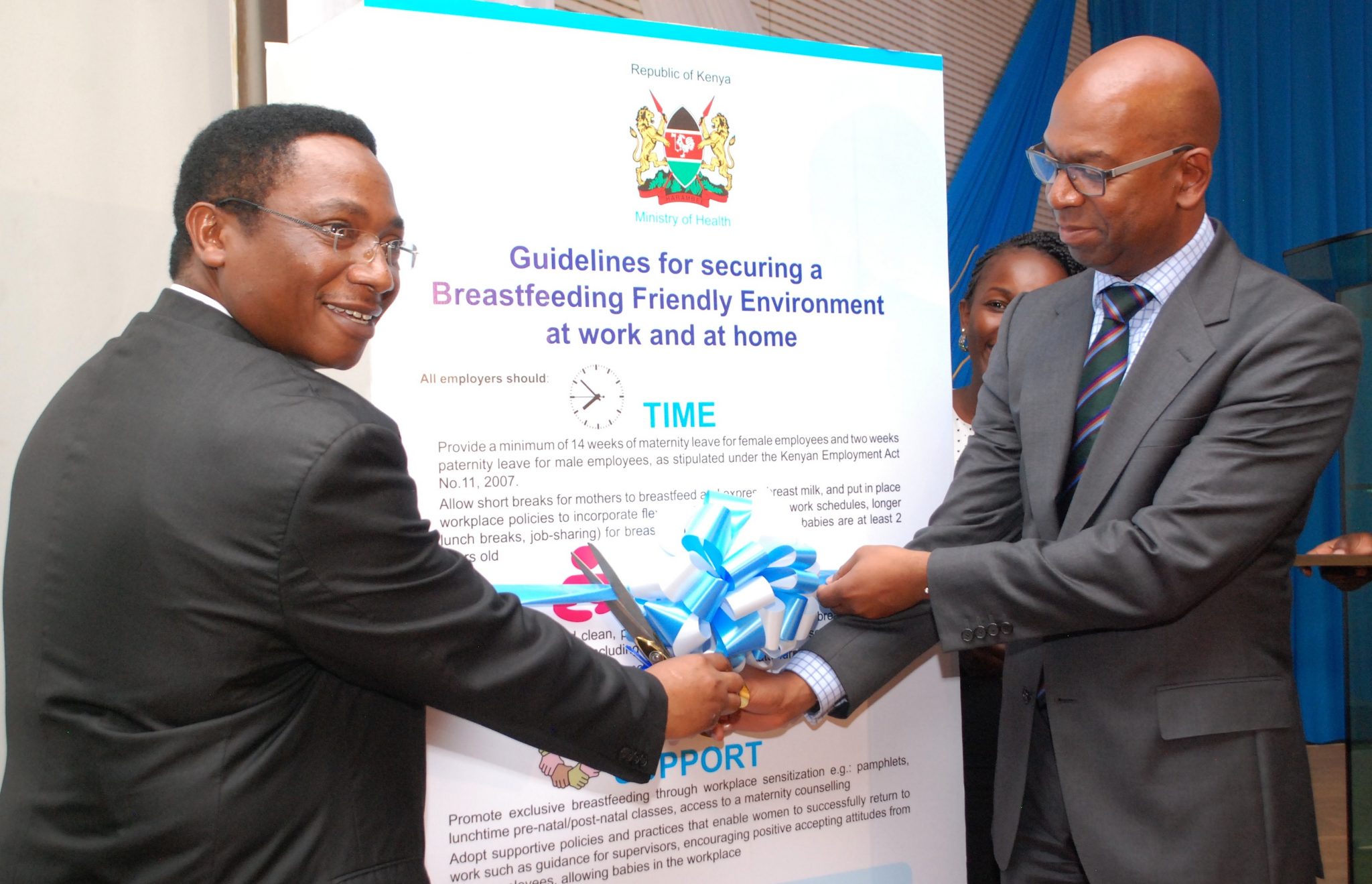
Speaking when he presided over the launch of the awareness campaign at Safaricom’s Michael Joseph Centre, Hon. James W. Macharia, Cabinet Secretary for Health, urged employers to establish breastfeeding-friendly workplaces.
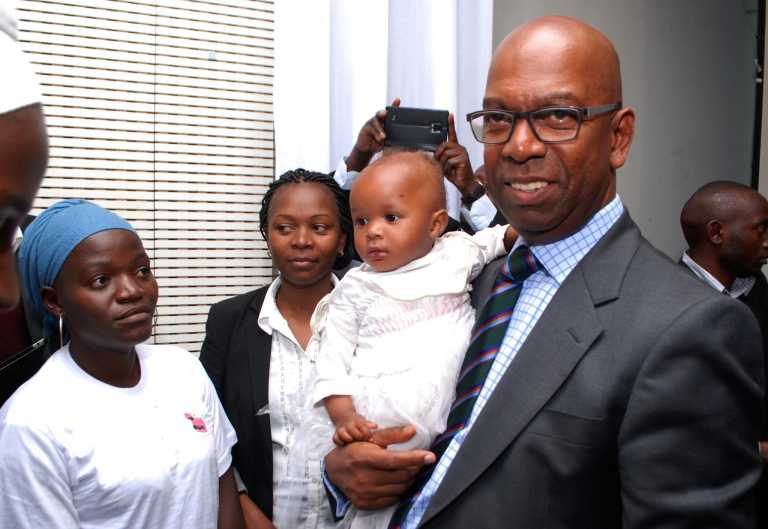
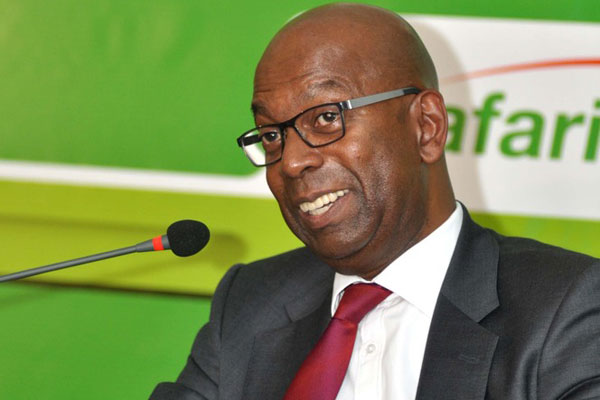
Head Preventive and Promotive service Dr, Jackson Kioko and Safaricom CEO Bob Collymore
“Breastfeeding is vital to the growth and health of our babies and is thereby the very foundation of a healthy and productive Kenya and key to achieving our Vision 2030,” declared the Cabinet Secretary in the Ministry of Health. “The World Health Organisation (WHO) recommends that children feed exclusively on breast milk for the first six months of their lives, so whether a woman is working in the formal, non-formal or home setting, it is necessary that she is empowered to claim her and her baby’s right to breastfeed.”
The Ministry of Health has partnered with several organisations to lead the campaign, including UNICEF, WHO, Safaricom, Kenya Women Finance Trust, National Bank, International Medical Corps and Kenya Red Cross among others
“Combining breastfeeding and work is possible. It is the responsibility of all of us to make this happen everywhere. Today, the Government joins hands with businesses and organizations, big and small, to call for dedicated time, space and support to be provided within all workplaces for breastfeeding women,” stated Mrs. Gladys Mugambi, Head of the Nutrition and Dietetics Unit, Ministry of Health ahead of the launch.
Safaricom CEO Bob Collymore and Head Preventive and Promotive service Dr. Jackson Kioko
Efforts to promote exclusive breastfeeding for children younger than six months of age have resulted in remarkable gains in infant nutrition, with the number of women feeding their infants exclusively on breast milk rising from 32% in 2008 to 61% in 2014, according to the latest Kenya Demographic and Health Survey.
This year the Ministry of Health, together with partners, is working towards securing multi-dimensional support from all sectors to enable women everywhere to combine work and breastfeeding.
Safaricom CEO Bob Collymore and Head Preventive and Promotive service Dr. Jackson Kioko
“Under-nutrition in children under the age of five years is a health, social and development problem that needs to be addressed through collaboration and revision of policies guiding breastfeeding in the workplace,” said Bob Collymore Safaricom CEO during the event, adding: “Safaricom has taken steps to ensure that the needs of new mothers in the workplace are met. From increasing maternity leave from the standard three months to four months, to providing facilities and benefits that allow women who return to work after their maternity leave to continue to breastfeed exclusively and thrive in the workplace.”
During World Breastfeeding Week the Ministry of Health will be raising public awareness on the importance of exclusive breastfeeding, as well as launching guidelines to help employers, families and communities to support mothers to breastfeed.
The Kenyan government in partnership with private sector and universities have put efforts into fostering innovations, many of which are still quite unknown to members of the public.
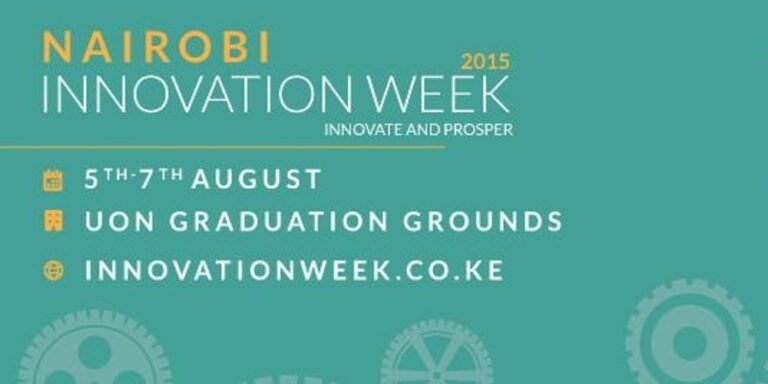
In line with this, the C4D Lab, an innovation hub at the University of Nairobi wishes to host a series of activities to celebrate technology and innovation through an innovation week in August 2015.
The Nairobi Innovation week is a signature event that brings together partners from government, private sector, development partners and research centres with an aim of providing a platform for policy development, capacity building, showcasing and recognizing innovation.
As a leading innovative company in the region and a market leader in supporting entrepreneurship, Safaricom will be participating in this exhibition.
This will provide Safaricom with an opportunity to showcase examples of innovative partnerships between Safaricom and start-ups in the region.
The following 5 start-ups will be showcased;
iCow
Eneza
M-Ledger
Magazine Reel
Guiderig
Please drop by our stands and get to interact with the innovators and teams, as well as the Safaricom team that supports such initiatives.
The Kenya Defence Forces (KDF) is pleased to announce to the general public that there will be a recruitment of General Service Officer (GSO) Cadets & Specialist Officers.
Prospective candidates wishing to apply must possess the following relevant requirements.
1. Requirements
• Must be Kenyan citizens.
• Age: Between 18 and 26 years old for GSO Cadets and upto 29 years for Specialist Officers.
• Be physically and medically fit in accordance with the KDF standards.
• Have no criminal record.
• Minimum Height: 5 ft 3 in. (5’3”).
• Minimum Weight:
(1) Men – 54.55 Kg (120 lb).
(2) Women – 50.00 Kg (110 lb).
• Women candidates must NOT be pregnant at recruitment and during training.
Education:
(1) General Service Officer (GSO) Cadets
• A minimum of mean grade B (Plain) in KCSE upto degree level with minimum subject grade of C+ (Plus) in English, Mathematics and in any one of the Pure Sciences (Physics, Chemistry or Biology).
• Those aspiring to join KDF as GSO Cadets should note that the initial training period will cover three continuous years leading to a BSC in Military Science on successful completion. (2) Specialist Officers
• A minimum of mean grade B (Plain) in KCSE and an undergraduate degree from a recognised University/Institution.
• Must be registered with the relevant statutory body, where applicable.
• Experience: Minimum of two (2) years’ working experience for Specialist Officers.
2. Vacancies
a. General Service Officer (GSO) Cadets
b. Specialist Officers
(1)Medical Officers – Must have a Bachelor of Medicine and Bachelor of Surgery (MBCh.B) degree and be registered with the Medical Practitioners and Dentists Board (MPDB). (2)Dentists – Must have a Bachelor of Dentistry degree and be registered with the Medical Practitioners and Dentists Board (MPDB). (3)Pharmacists – Must have a Bachelor of Science in Pharmacy degree and be registered with the Pharmacy and Poisons Board (PPB). (4)Nurses – Must have a Bachelor of Science in Nursing degree and be registered with the Nursing Council of Kenya (NCK). (5)Public Health Officers – Must have a Bachelor of Science in Environmental Health degree. (6)Medical Laboratory – Must have a Bachelor of Science in Medical Laboratory Sciences and Technology degree and be registered with the Kenya Medical Laboratory Technicians & Technology Board (KMLTTB). (7)Nutritionists – Must have a Bachelor of Science in nutrition and Dietetics. (8)Clinical Psychologist – Must have a Bachelor in Psychology. (9)Lawyers – Must have a Bachelor of Laws (LLB) degree and a postgraduate diploma from the Kenya School of Law, must be admitted as an advocate of the High Court of Kenya and be in possession of a valid current practicing certificate. (10)Architects – Must have a Bachelor of Architecture (B.Arch) degree and be registered with the Board of Registration of Architects and Quantity Surveyors (BORAQS). (11)Quantity Surveyors – Must have a Bachelor of Quantity Surveying degree and be registered with the Board of Registration of Architects and Quantity Surveyors (BORAQS). (12)Electrical Engineers – Must have a BSc. in Electrical and Electronics Engineering or Bachelor of Technology degree and be registered with the Engineers Registration Board (ERB). (13)Mechanical/Marine Engineers – Must have a BSc. in Mechanical Engineering or BSc. in Production Engineering degree and be registered with the Engineers Registration Board (ERB). (14)Civil and Structural Engineers – Must have a BSc. in Civil and Structural Engineering degree and be registered with the Engineers Registration Board (ERB). (15)Education Officers – Must have a Bachelor of Education (Bed) degree. (16)IT Specialists – Must have a BSc. in Computer Science or BSc. in Information Technology or Bachelor of Computer Technology (BCT) degree. (17)Chaplains / Imams
(a) Roman Catholic Chaplains – Must have a professional degree and be an ordained priest.
(b) Anglican Church Chaplains – Must have a professional degree and be an ordained priest.
(c) Muslim Imams – Must have a professional degree and be a qualified Imam. (18)Journalists – Must have B A in Mass Communication / Corporate Communication.
3. The initial military training for Specialist Officers will take four months.
4. Clear photocopies of genuine and relevant academic certificates and national ID card must be attached to the application and be addressed to the: Assistant Chief of the Defence Forces (Personnel and Logistics) Ministry of Defence Defence Headquarters Ulinzi House P.O. Box 40668 Nairobi – 00100 So as to reach him on or before 14th August 2015.
5. Candidates who will be shortlisted for GSO Cadets / Specialist Officers shall be notified soon thereafter – between 15th – 19th September, 2015.
The Kenya Revenue Authority (KRA) has adopted a softer stance allowing manufacturers who are yet to get their excise duty licences to continue operating provided they get interim letters of operation from the taxman.
The authority has asked the manufacturers to write to it explaining the difficulties they are facing in complying after which it will review their cases individually and issue the temporary letters of operation.
The agreement with Kenya Association of Manufacturers (KAM) will offer a reprieve to manufacturers whose products would have been taken off the shelves by retailers to avoid conflict with the taxman.
“All manufacturers and importers of excisable goods that are experiencing difficulties in complying with KRA’s requirements due to reasons beyond their control should write to KRA and clearly highlight the challenges and where applicable, attach supporting evidence,” said a statement issued Friday by Alice Owuor, Commissioner of Domestic Taxes and Phyllis Wakiaga, KAM chief executive.
“KRA, through an internal committee will review all appeals from the different companies within the sectors and issue them with letters allowing them to continue operating and also enable them sell goods that were manufactured prior to the public notice issued by KRA on July 24 that listed companies licensed to transact in excisable goods.”
The interim letters of operation will be issued on a case-by-case basis for varying lengths of time considering how much time an individual company needs to meet the remaining requirements.
On Wednesday, KAM said the taxman had denied more than 80 per cent of its members the excise tax licence, effectively prohibiting them from manufacturing and selling excisable goods.
The industrialists had blamed the taxman for failure to properly coordinate implementation of the new legal requirements, causing delays in compliance.
KRA introduced new requirements for issuance of excise tax licence at the beginning of the year after some companies had already submitted their applications, forcing them to withdraw and begin the process afresh.
An updated list of companies that have complied with the requirements will be released in a week.
Among the requirements is letters from the county government and Credit Reference Bureau.
The communique added that KAM and KRA will review the requirement for traders to produce a letter from the county government as evidence that a factory is located in a designated area.
KRA had licensed only 85 manufacturers and 48 importers to sell their products by July 24.
KAM has more than 850 members in a sector that contributes about a quarter of the country’s Gross Domestic Product (GDP) and employs over a million people.
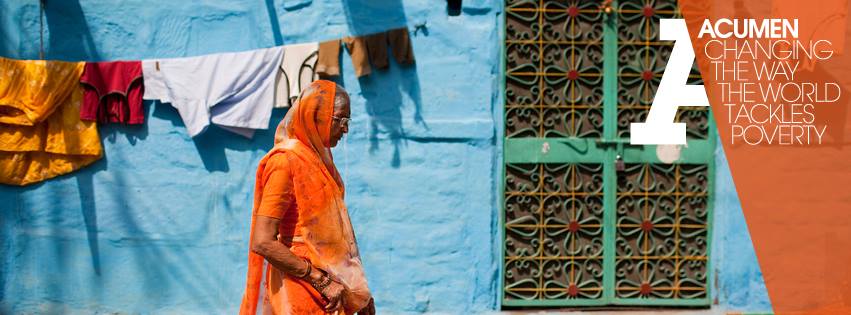
Safaricom CEO Bob Collymore has joined the board of Acumen, a non-profit social venture fund that invests in companies, leaders and ideas that are changing the way the world tackles poverty.
The appointment comes just three months after Collymore’s re-appointment to the board of the United Nations Global Compact in recognition of his contribution towards championing the work of the Global Compact.
Collymore, who has been at the helm of the Kenyan integrated telecommunications company since 2010, previously sat on the Advisory Council of the nonprofit social venture fund founded by Jacqueline Novogratz. He has more than 30 years’ experience in the telecommunications sector working in Africa as well as Asia and Europe.
“Bob is an incredibly respected leader but, more importantly, he is passionate about catalyzing business to transform and empower communities,” Novogratz said. “Throughout his career, he has shown the power of the private sector and private-public partnerships to improve the lives of the poor. His voice and expertise will be of great value in helping Acumen achieve its mission of tackling poverty.”
He has also served on the board of United Nations Commission on Life-Saving Commodities for women and children. In Kenya, he sits on The Vision 2030 Delivery Board and the United States International University advisory board. In 2012 he was awarded the honour of Moran of the Order of the Burning Spear (MBS) by the President of the Republic of Kenya for his services to Kenya. He is also the chairman of the TEAMS (The East African Marine System) Board and a Trustee of the M-PESA Foundation.
“Increasingly, the business community has the unique opportunity to drive transformative change through all levels of society, particularly through public-private partnerships,” Collymore said. “I am excited to be part of the Acumen board and hope to be able to do my part to create sustainable and inclusive business models across the continent.”
Safaricom is a leading player in Africa’s mobile market and pioneered the world’s most developed mobile payment platform, M-PESA. With the creation of M-PESA, Safaricom revolutionized banking in East Africa by enabling users to deposit, withdraw, transfer money and pay for goods and services using only a cell phone. By providing access to banking and other formal financial services, Safaricom’s innovative “pay as you go” platform has unlocked opportunities for millions of poor Africans to afford essential goods and services that can transform their lives. M-PESA’s creators also founded M-KOPA, an energy company in which Acumen invested in 2011 that uses the payment platform to provide solar power to the poor.
Acumen started as an idea to combine the best markets with the best of aid and charity and now has a proven model that is giving the poor access to everything from ambulances to electricity.
About Acumen
Acumen Fund – Changing the way the world tackles poverty
Acumen is changing the way the world tackles poverty by investing in companies, leaders and ideas. We invest patient capital in businesses whose products and services are enabling the poor to transform their lives. Founded by Jacqueline Novogratz in 2001, Acumen has invested more than $88 million in 82 companies across Africa, Latin America and South Asia. We are also developing a global community of emerging leaders with the knowledge, skills and determination to create a more inclusive world. This year, Acumen was named one of Fast Company’s Top 10 Most Innovative Not-for-Profit Companies. Learn more at here and on Twitter.
Equity Bank’s recent entry into Kenya’s mobile telephony sub-sector has disrupted the market share of traditional mobile service providers. This is as the bank shares the spoils in a crowded market.
According to the latest data from industry regulator, Communications Authority of Kenya (CA), Equity Bank, through its subsidiary Equitel, currently commands a 1.9 per cent market share.
“The market share for mobile subscriptions registered during the third quarter of the 2014/2015 financial year showed slight changes following entry into the market by Finserve Africa Ltd (Equitel) in the previous quarter,” stated the report in part.
“Airtel Networks Ltd lost 2.4 percentage points market share to record 20.2 per cent, down from 22.6 per cent posted in the previous quarter.” Market leader Safaricom saw its market share decline marginally by 0.3 percentage points to stand at 67.1 per cent during the period under review, down from 67.4 per cent share reported during the last quarter.
Telkom Kenya, however, registered a marginal 0.8 per cent gain to see its market share hit 10.8 per cent, up from 10.0 per cent recorded over the last quarter.
The latest sector statistics come exactly two weeks after Equity Bank announced it will start offering voice and data services through its new Mobile Virtual Network, Equitel. Running on an infrastructure sharing agreement with Bharti Airtel, Equitel provides voice calls at a standard Sh4 across all networks and Sh1 for Short Messaging Service (SMS). Data from the CA report states that Kenya’s mobile service providers continue to lose out to free messaging apps like Whatsapp.
“Short Messaging Service (SMS) traffic declined by 11.8 per cent to record 6.5 billion messages, down from 7.4 billion messages sent during the last quarter, with each subscriber sending an average of 63 messages per month during the quarter,” indicated the report. The entry by Equity into the voice and data segment has been seen as encroaching into market leader and East Africa’s most profitable company Safaricom’s turf.
Equity Chief Executive James Mwangi maintained that Equitel will maintain its strong presence in the banking sector which is it’s core business even as it seeks to build a strong mobile network. Safaricom last year posted more than Sh21.1 billion in pre-tax profits the half-year to end-September, with a bulk of the growth generated from M-Pesa and data services.
The company generated Sh15.6 billion from M-Pesa alone during the same period, a fact that has led several players in and outside the industry to call for the Government to declare the company dominant.