

Home Blog Page 2230

12 Things Revealed by President Obama’s Kenya Trip

0
President Obama’s trip to Kenya revealed many things that further underscore the Rorschach Test-like impact the man engenders. The trip also revealed the cognitive dissonance that Kenyans have with corruption, tolerance and their relationship with America.

BBC wrote a piece titled “Obama’s trip to Kenya: 12 Things” that catalogued twelve things the part-Kenyan POTUS revealed in the run-up to the trip. This piece offers my (retrospective) observations on the trip.

1. Politics is the art of the possible. It also makes strange bedfellows.
How else does one explain the positive reaction to President Obama’s appeal for tolerance, from leaders of a group that has invariably called for “death to America” no less? That’s exactly what happened when Muslim leaders in Kenya called on the government to heed President Obama’s advice and “drop collective victimization of Muslims… treat them as close partners… in isolating and rooting out the few bad elements in the fight against terrorism.”

2. In international relations, there are no permanent enemies, just permanent interests.
This is a variant of #1 and is embodied in the prescient words of Henry John Temple Viscount Lord Palmerston and British Prime Minister: That nations have “no eternal allies and no perpetual enemies, only interests that are eternal.” The one interest that America and Kenya have in common beyond economics is their war against al-Shabaab.

3. Africa and Kenya are both “on the move.”
The working assumption is that the “move” is in a positive direction and is happening in spite of the inefficiencies caused by corruption and incompetence! Said America’s 44th President: Kenya, a country whose unemployment rate is 40 percent loses 250,000 jobs annually BECAUSE of corruption! To corroborate Mr. Obama’s assertion, Kenya’s Auditor-General announced less than 72 hours after his departure that “only 1.2 percent of Kenya’s one trillion shilling (8.9 billion euro) budget for 2013-14 ‘was incurred lawfully and in an effective way'” and brings us to #4.

4. Choices have consequences!
In the immortal words of Johnnie Carson! So Bell Laboratory’s Jack Morton’s adage “tyranny of numbers” (yes Kenyans, it was NOT Mutahi Ngunyi who originated the expression as much as y’all would like to believe that) won the presidency for Mutongoria Jamba and saved him from Bensouda. What has also happened is perpetuation of a culture of kleptocracy, impunity and toleration of incompetence resulting in a country that is eons behind its peers — the Four Asian Tigers of the 70s.

5. Kenya is corrupt BECAUSE Kenyans embrace, accept and expect corruption: consequences of the choices they make.
I wonder how many of those cheering President Obama’s speech on corruption have ever partaken in the culture of “kitu kidogo” or characterized the pillaging of state institutions/parastatals as “astute business sense,” “entrepreneurial spirit” or “business transactions” between “willing buyers and willing sellers?”

6. Much like the racist and philandering “founding fathers” of America, Kenya’s “founding father” has an equally seedy and disturbing background.
Jomo Kenyatta has been exposed as the land-grabber-in-chief and tribalist whose near-deification is belied by his stewardship of the country post-independence. In a bit of poetic justice and karma, his son Uhuru spent a significant portion of his inheritance fighting Gambian Fatou Bensouda because of corruption- and tribalism-fueled post-election violence of 2007/2008.

7. The Opposition was exposed as a collection of self-serving hypocrites who offer little, if any alternative to the equally self-serving hypocrites running the country.
Tell ’em Barack: The same folks who bay “sovereignty” and “nationalism” when in power are the same ones who seek help from the “international community” (America) when they are in the opposition. Similarly, the same people who vilify the west are the same ones whose business and personal interests are so intertwined with the west you’d be excused for thinking they ARE westerners.

8. In life, the very people you step on or “diss” on your way up or when you are in “power” are the same people you see on your way down or when out of “power.”
It was priceless seeing Mr. (or is Dr.?) Alfred Mutua standing in line, under the watchful gaze of the U.S. Secret Service protecting the erstwhile “junior senator from Illinois,” dutifully waiting for his turn to shake Mr. Obama’s hands!

9. Kenya has sent several high-flying diasporites to all corners of the world.
One wonders why this same world-conquering ethos has barely propelled or transformed the home of Kipchoge Keino, Chris Froome and now Barack Obama, to the socio-economic and political heights attained by its peers of the late 1970s South Korea, Singapore, Hong Kong or Taiwan.

10. Grass does not grow in one day even if it is in a roll (of sod).
I am actually embarrassed to write about this. The rush to beautify Nairobi before President Obama’s arrival spoke to the lack of planning and toadyism the country is accustomed to, not only when the “Big Man” is coming, but as its modus operandi! One wonders when Kidero and his planning team were notified that the visit was on or whether it ever occurred to the genius who suggested planting the grass that it may not grow in time for President Obama’s arrival!

11. Success has many fathers; failure is an orphan.
So intoned a chastened JF Kennedy after the Bay of Pigs debacle; variant of a line originally attributable to Roman historian Tacitus in his works “Agricola.” It was near-comical seeing a country whose leadership had frustrated and ostracized Barack Obama’s father, his personal foibles aside, and was complicit in the assassination of his benefactor Tom Mboya, fall over its collective self to welcome and claim as their own “the junior senator from Illinois.”

12. Family trumps all.
Two words: AUMA OBAMA. Okay, three more words: MAMA SARAH OBAMA. Dang it! Add to that “Every family has one” ergo MALIK OBAMA.

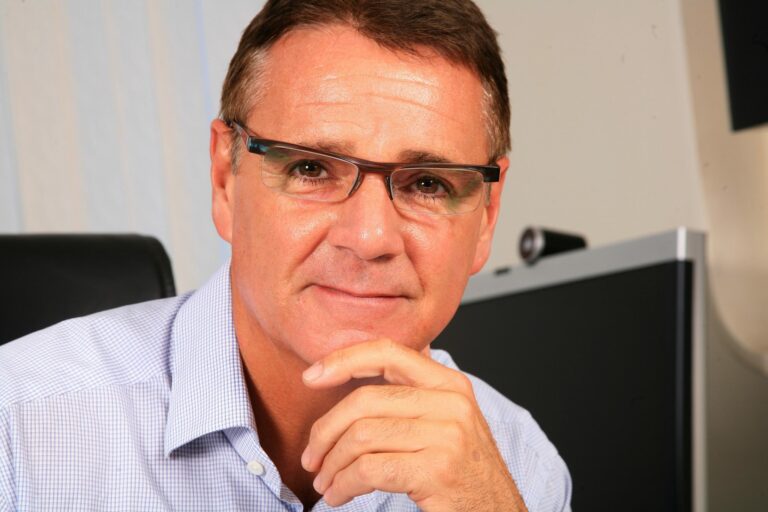
Billionaire Chris Kirubi’s key to success: Think it. Believe it. Do it. Be it.

0

I once read an article entitled, “Be an optimist without being a fool” on Harvard Business Review. The article made a lot of sense to me because majority of those who are optimistic end up being fools because of lack of foresight. We fail to see that achieving anything doesn’t come easy.

Every step, milestone, success needs some considerable amount of effort to be achieved.
Day in day out, we encourage each other to believe in ourselves, our ideas, our visions, our goals in order to accomplish our purpose in life. The phrase, “If you believe you will succeed then you will”, is common to us all but realistically, is this it?

It is good to be optimistic particularly when you are venturing into something new or are out to achieve something. Optimism, determination, confidence, having a positive attitude will and can drive you to achieving your goals but it is not a guarantee. We need to learn to be realistic optimists rather than unrealistic optimists. The road to success is not easy and believing that you will easily succeed is a ‘fallacy’ and that is being an unrealistic optimist.

Let’s face it, when we perceive or think that something is easy, we rarely put the required amount of effort to accomplish it. We think that we will achieve it nonetheless. However, if we know that the road to success is not easy, we tend to put extra effort to get where we want to be. Believing that the road to success will be rocky will help you plan effectively and give you the drive to endure tough times.

Being optimistic and realistic at the same time trains you to search and work for that which you do not have. Don’t be distracted from your vision by anyone. If you think it and believe in it then it is up to you to do it and to be it. Success is hard-won forces you to put in the necessary effort. Nothing worth having comes easy so don’t spend too much time visualizing the end result. Instead, envision the steps you will take to get there.

Think it. Believe it. Do it. Be it.

Thinking by Walter D. Wintle
If you think you are beaten, you are
If you think you dare not, you don’t,
If you like to win, but you think you can’t
It is almost certain you won’t.

If you think you’ll lose, you’re lost
For out of the world we find,
Success begins with a fellow’s will
It’s all in the state of mind.

If you think you are outclassed, you are
You’ve got to think high to rise,
You’ve got to be sure of yourself before
You can ever win a prize.

Life’s battles don’t always go
To the stronger or faster man,
But soon or late the man who wins
Is the man WHO THINKS HE CAN!

I started with 30 layers now I get 80 trays daily

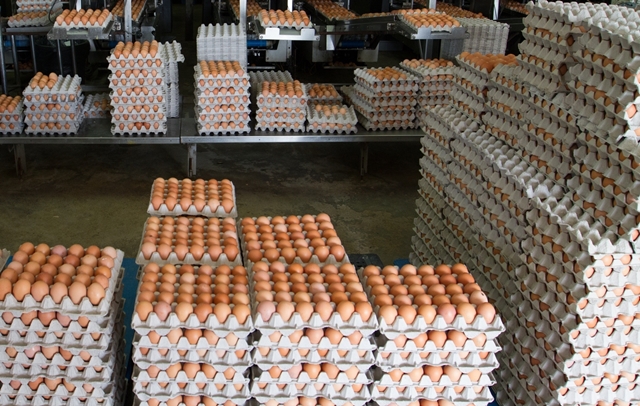
Fundi started in 2008/09 with 30 layers in a makeshift chicken house at a cost of KES 300 each. At the time eggs were retailing at KES 150 – 180 a crate and feeds at shs 1700 per sack. With the recent rise in demand for eggs, he encountered new challenges to meet supply. Using his profit he added new stock and in 2010/2011 his flock rose to 2700 layers giving me around 80 trays daily.

He bought 2 motorbikes to facilitate eggs supply within Embu county. He encountered a major problem Aug-Sept 2011 when he got poor quality feeds and cannibalism became rampant in his flock, egg production reduced to about 40% and he lost around 1500 hens in a span of 10 days I thought feeds quality was to improve soon but it took long forcing me to step out of layers field.

In August 2012 he decided to venture into the chicken meat field with the few chicken that were left. Kirata poultry farm-Thigingi has now achieved/attained a capacity of 400 broilers per week and around 300 kienyeji kukus for kirata poultry butchery-Mwea where he sells kienyeji chicken meat at KES 400 per kg.

Our kienyeji kuku ‘taste yangu’ costs KES 350 upto maturity i.e 1.7-1.5kgs weight. He advice to those planning to start is to;

• Start small.
• Learn your market.
• Do it with passion.
• Do your timing accurately.
• Monitor closely to prevent workers stealing from you.
• Come up with added value products and more so get a way of landing them directly to the client.

Kirata poultry butchery-Mwea is located along the Embu-Nairobi highway opp k-rep bank/D.Os office Mwea. The offer deep fry ready to eat bites to make sure you have a bite as you walk home or as you continue with your journey.

He admits he makes an income 8 times his salary that’s why he planned to retire at 31yr.

Young Farmer Talking Millions

0

At the turn of the millennium John Wang’ombe graduated with the coveted Certified Public Accountant (CPA K) honors but instead of pursuing a successful career in Accounting, he fell in love with Agriculture and now he is on his way to become a Real Estate Magnet.

When John Wang’ombe is visiting Nairobi he often runs into his former classmates and he is not surprised when they ask him, “Why are you living like you never went to school John?”.

“That’s what they always ask me”, says Wang’ombe, who is building a shinning future for his three children with farming. After graduating from the prestigious Strathmore College, now University, John was selling like hot cake and he landed a job with a stock brokerage firm as an accountant. Although it was well paying (Ksh 45,000 a month), John quit after six years just when the firm was about to turn into an investment bank.

One of his classmates is now a finance manager; he owns a nice car and can afford to live in a rented bungalow but has no investments. Wang’ombe however, had a dream beyond a sleek car, imported clothes, trendy gadgets and cool memberships.

Simplicity is his rule of thumb. “If you eat chicken and I eat sukuma wiki, we both have a full stomach. If you wear a 5000 bob shirt and I wear a 100 bob shirt, they will both wear out”, farmer Wang’ombe quips as he adjusts the color of his faded shirt.

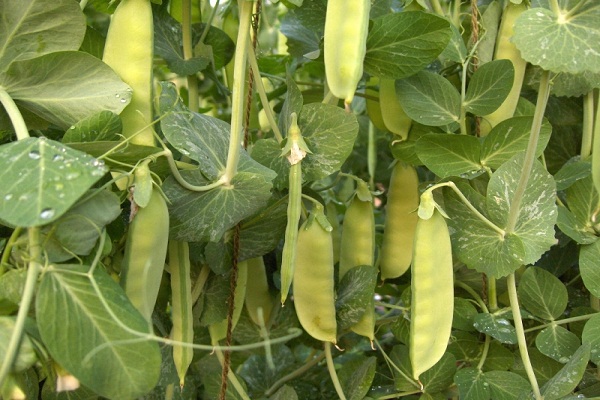
Wang’ombe quit his accountant job in 2006 and moved back to his backyard in Nyandarua County to start farming snow peas. The first two years were a disappointment but he never lost heart. He added dairy cows and rented more land to plant cabbages.

Wang’ombe farms 2.5 acres of land and he has made a fortune out of it. In his local Farmers’ cooperative, he is the top saver among farmers under 40 years of age. Wang’ombe shares the secret behind his saving culture: “My mother always advised me to save. ‘If you have ten thousand shillings, save it all so that when tomorrow you are called to do a fifty bob job you will go’, that’s what she always said and I listened to her”. Currently a share is worth Ksh200.

His big break came in 2009 when a kilogram of snow peas went up to Ksh150. Egypt and Zimbabwe, major exporters of snow peas, had problems with the export market and Kenya got the windfall. That year Wang’ombe made a whooping Ksh. 750,000 from the legume.

Out of his successes in farming, Wang’ombe wants to go into real estate business. He recently invested 1.2 million on a land and has already rented it out to a petroleum dealer who is running a petrol station. Using his savings, Wang’ombe has acquired 11 other plots on prime areas along the Nairobi-Nakuru highway. He is edging closer to his dream of entering the lucrative Real Estate business.

Just this last snow peas season, Wang’ombe acquired another piece of land after M-Farm linked him and 26 other farmers in the area to an export market.

“I was the first farmer in the region to get in touch with M-Farm. We had problems with brokers; they always dictated the prices and we needed help. Sometimes they would go as low as Ksh20/kg of snow peas,” explains Wang’ombe. “One time a farmer emptied his pickup full of snow peas into the river when a broker offered to pay him Ksh5/kg. That’s how frustrated we would become sometimes.”

Transparency in the value chain has been a major problem in Agriculture and farmers have suffered silently. The cry of the farmer is a link to better markets. M-Farm connects farmers to markets.

Selling together is a product M-Farm is offering smallholder farmers to enter into commercial farming and increase their incomes. Wang’ombe belongs to a group of 26 farmers who collect their snow peas and sell together. M-Farm has worked with these farmers to ensure they meet the quality standards, the quantity required and a constant supply is guaranteed. In return, farmers have a stable market for their produce and at a better price. This is a relief as the biggest headache to farmers is where to sell their produce and at good price. Buyers are happy too to get high quality and constant supply of the required quantity from these farmers.

Wang’ombe has no regrets wearing gumboots from January to December and dispels the notion in many people’s minds that farming is only for those who failed in school. He advises young people to wake up from the dreamland of instant success and put their hands on the plough.

He also has a note he would like to pass to anyone who cares to listen, “Employment is a confortable prison, it can feel warm, cozy and secure but it can only do so much. Just subtract your expenses from your salary and if you hear an instant bell, look for the closest exit door.”

Best energy idea to win Sh. 10 million in contest

0

Kenyan entrepreneurs in renewable energy sector have a chance to win grants of up to Sh10 million each following the launch of the third round of the Off-Grid Energy Challenge.

The competition, which is part of Power Africa is aimed at spurring ideas that are meant to double access to electricity in sub-Saharan Africa, where at least 600 million people are estimated to lack basic access to electricity.

The competition was Thursday launched by GE Africa, U.S. African Development Foundation (USADF) and U.S. Agency for International Development (USAID).

Eleven winning companies and enterprises from Tanzania, Kenya, Nigeria, Ghana and Ethiopia will receive grants of up to $10,000,000 each to expand their renewable energy projects and reach those that do not have access to electricity.

The awards were announced during President Obama’s trip to the Global Entrepreneurship Summit (GES) that took place in Nairobi between July 24 and 26, as part of his continued commitment to Power Africa project of widening energy access to underserved populations.

The Off-Grid Energy Challenge, part of the Beyond the Grid Initiative and funded by GE Africa, USADF and USAID, promotes innovative solutions that increase access to reliable, affordable and sustainable power.

The $5 million three-year Challenge will award at least 50 grants of up to $100,000 each during the three year period to African companies providing off-grid solutions that deploy renewable resources and power economic activities.

These energy entrepreneurs are finding solutions for rural communities to access power, including solar-powered mini-grids, home solar systems and revolving credit funds.

The most recent winning projects include five solar systems, three biogas generation projects, and a small hydro-electricity power plant, providing over 10,000 people that did not have access to power, electricity connection.

How Chinese woman became the world’s richest self-made billionaire

Zhou Qunfei is the world’s richest self-made woman. Ms. Zhou, the founder of Lens Technology, owns a $27 million estate in Hong Kong. She jets off to Silicon Valley and Seoul, South Korea, to court executives at Apple and Samsung, her two biggest customers. She has played host to President Xi Jinping of China, when he visited her company’s headquarters.

But she seems most at home pacing the floor of her state-of-the-art factory, tinkering.

She’ll dip her hands into a tray of water, to determine whether the temperature is just right. She can explain the intricacies of heating glass in a potassium ion bath. When she passes a grinding machine, she is apt to ask technicians to step aside so she can take their place for a while.

Ms. Zhou knows the drill. For years, she labored in a factory, the best job she could get having grown up in an impoverished village in central China.

“She’ll sometimes sit down and work as an operator to see if there’s anything wrong with the process,” said James Zhao, a general manager at Lens Technology. “That will put me in a very awkward position. If there’s a problem, she’d say, ‘Why didn’t you see that?’ ”
Photo
Ms. Zhou’s ID card from when she was a factory worker. As a child, she helped her family raise pigs and ducks for food and additional money. Credit Gilles Sabrie for The New York Times

Ms. Zhou has honed her hands-on knowledge into a world-class, multibillion-dollar operation, one at the vanguard of China’s push into high-end manufacturing. Lens Technology is now one of the leading suppliers of the so-called cover glass used in laptops, tablets and mobile devices, including the Apple iPhone and the Samsung Galaxy. This year, her factories are expected to churn out more than a billion glass screens, each refined to a fraction of a millimeter.

“This is an industry that requires highly sophisticated technology,” says Stone Wu, an analyst at IHS Technology, the research firm. “If you have a ruler, check out how thin 0.5 millimeters is, and you’ll understand how hard it is to manufacture something that thin.”

In creating a global supplier, Ms. Zhou, 44, has come to define a new class of female entrepreneurs in China who have built their wealth from nearly nothing — a rarity in the world of business. In Japan, there is not a single self-made female billionaire, according to Forbes. In the United States and Europe, most women who are billionaires secured their wealth through inheritance.

No country has more self-made female billionaires than China. The Communist Party, under Mao Zedong, promoted gender equality, allowing women to flourish after capitalism started to take hold, according to Huang Yasheng, an expert in China’s entrepreneurial class and a professor of international management at M.I.T. And in a country with few established players, entrepreneurs like Ms. Zhou were able to quickly make their mark when they entered business in the 1990s as China’s economic engine was revving up.

Ms. Zhou’s stake in Lens Technology, which went public this year, is worth $7.2 billion. That puts her fortune on par with the media tycoon John C. Malone and Pierre Omidyar, the founder of eBay.

Ms. Zhou isn’t a celebrity chieftain, like Jack Ma, the billionaire founder of the e-commerce giant Alibaba. Few in China had even heard her name before her company’s public offering this year. She rarely grants interviews or makes public appearances.

An elegant woman with a cherubic face, owlish glasses and a preference for Christian Dior suits, Ms. Zhou is fastidious and demanding — “Sit up straight!” she commands of a general manager during a meeting. Yet she exudes charm and humility, a quiet recognition that things could have easily turned out differently.

“In the village where I grew up, a lot of girls didn’t have a choice of whether to go to middle school. They would get engaged or married and spend their entire life in that village,” she said in an interview at her office, where there was a wooden statue of Mao and a 27-inch desktop Mac. “I chose to be in business, and I don’t regret it.”

Leaning Toward the Obsessive

The youngest of three children, Ms. Zhou was born in a tiny village in the Hunan Province of central China, a farming community about two hours south of Changsha, the provincial capital. Her mother died when she was 5. Her father, a skilled craftsman, later lost a finger and most of his eyesight in an industrial accident.

At home, she helped her family raise pigs and ducks for food and additional money. At school, she excelled.

“She was a hard-working and talented student,” Zhong Xiaobai, her former middle-school teacher, says. “I once read her essay, ‘My Mother,’ aloud in class. It was so moving it brought everyone to tears.”

Despite her academic focus, Ms. Zhou dropped out of school at 16 and traveled south to Guangdong province to live with her uncle’s family and search for better work. While she dreamed of becoming a fashion designer, she eventually landed a job on a factory floor in the city of Shenzhen, making watch lenses for about $1 a day.

The conditions, she said, were harsh. “I worked from 8 a.m. to 12 a.m., and sometimes until 2 a.m.,” Ms. Zhou recalled. “There were no shifts, just a few dozen people, and we all polished glass. I didn’t enjoy it.”

After three months, she decided to quit and wrote a letter of resignation to her boss. In it, she complained about the hours and boredom. Even so, she expressed her gratitude for the job, saying she wanted to learn more.

The letter impressed the factory chief, who told her the plant was about to adopt new processes. He asked her to stay, offering her a promotion. It was the first of several over the next three years.

In 1993, Ms. Zhou, then 22, decided to set out on her own. With $3,000 in savings, she and several relatives started their own workshop next door. They lured customers with the promise of even higher-quality watch lenses.

At the new company, Ms. Zhou did it all. She repaired and designed factory machinery. She taught herself complex screen-printing processes and difficult techniques that allowed her to improve prints for curved glass.

“In the Hunan language, we call women like her ‘ba de man,’ which means a person who dares to do what others are afraid to do,” said her cousin Zhou Xinyi, who helped her open the workshop and now serves on the Lens board.

Along the way, Zhou Qunfei married her former factory boss, had a child and divorced. She later married a longtime factory colleague, who serves on the Lens board, and had a second child.

Her work habits lean toward the obsessive. Her company’s headquarters is at one of her manufacturing plants in Changsha. In her spacious office, a door behind her desk opens into a small apartment, ensuring she can roam the factory floor day or night.

Propelled to Dominance

It was the mobile phone that made Ms. Zhou a billionaire.

In 2003, she was still making glass for watches when she received an unexpected phone call from executives at Motorola. They asked if she was willing to help them develop a glass screen for their new device, the Razr V3.

At the time, the display screens on most mobile phones were made of plastic. Motorola wanted a glass display that would be more resistant to scratches and provide sharper images for text messages, photos and multimedia.

“I got this call, and they said, ‘Just answer yes or no, and if the answer’s yes, we’ll help you set up the process,’ ” Ms. Zhou recalled. “I said yes.”

Soon after, orders started rolling in from other mobile-phone makers like HTC, Nokia and Samsung. Then, in 2007, Apple entered the market with the iPhone, which had a keyboard-enabled glass touch screen that rewrote the rules of the game for mobile devices. Apple picked Lens as its supplier, propelling Ms. Zhou’s company into a dominant position in China.

After that, Ms. Zhou invested heavily in new facilities and hired skilled technicians. More than once, colleagues say, she put up her apartment as a guarantee for a new bank loan. Within five years, she had manufacturing plants under construction in three cities.

“She’s a passionate entrepreneur, and she’s very hands-on,” says James Hollis, an executive at Corning, which has a partnership with Lens Technology. “I’ve watched her company grow, and her develop a strong team. Now there are over 100 competitors in this space, but Lens is a Tier 1 player.”

Lens operates round the clock, with 75,000 workers spread across three main manufacturing facilities that occupy about 800 acres in the Changsha region. Each day, the company receives bulk shipments of glass from global manufacturers like Corning in the United States and Asahi Glass in Japan.

The glass is cut, ground down to size, bored and polished to give each plate a transparent finish. Then the plates are strengthened in a potassium ion bath, painted and cured. Finally, they are cleaned and coated with anti-smudge and anti-reflection films.

Ms. Zhou designs and choreographs nearly every step of the process, a detailed-oriented approach she traces to her childhood. “My father had lost his eyesight, so if we placed something somewhere, it had to be in the right spot, exactly, or something could go wrong,” she said. “That’s the attention to detail I demand at the workplace.”

Lens has not experienced the kinds of labor troubles that have clouded other contract manufacturers like Foxconn. But current and former workers say the job is challenging. Much of the work is done by young women who inspect glass at different angles, trying to detect flaws.

“As a quality inspector, I had to stare at those products all day long, so this is a tiring job,” said Gao Zhimei, who recently left Lens Technology. “But I should say that working in manufacturing is always tiring and working at Lens is not more tiring than working in other factories.”

Expanding a Customer Base

Lens Technology went public in March, as the Chinese stock market was booming. With the recent market collapse, the company has lost 45 percent in value, but it is still worth about $8 billion.

Last year, the company notched revenue of about $2.4 billion. Profit rose 40 percent in the first quarter. But Lens gets nearly 75 percent of its revenue from Apple and Samsung, making the company reliant on just two customers. In May, at the first shareholders’ meeting since the company went public, an investor pressed Lens about how it planned to maintain an edge in a hypercompetitive market that thrives on innovation.

Several executives tried to answer the question. Then Ms. Zhou spoke up, saying she was prepared to diversify the company’s business with production facilities geared toward higher-end glass, as well as sapphire and ceramic.

After the meeting adjourned, investors piled into a bus and rode with Ms. Zhou to the Lens campus, less than a mile away. Ms. Zhou had sat quietly through much of the shareholders’ meeting, but on the tour of the factory, she came alive. The shareholders hung on every word.

Zuku maintains market share lead in fixed-internet sector

0

Wananchi Group, the home of entertainment and communication brand Zuku, has maintained its leading market share position in the fixed-internet sector in the country.
The firm – which operates a triple-play platform in which broadband, pay multi-channel television and voice telephony are offered through one cable – has maintained major control of the Fixed Internet market share at 46.8 percent.
“Wananchi Telecom had the highest market share during the quarter under review to record 46.8 percent,” the January-March 2015Quarterly Sector Statistics Report released by the Communication Authority of Kenya said in part.

Liquid Telecom recorded growth in the number of subscriptions and emerged second with a market share of 15.3 percent, while Telkom Kenya ranked third at 10.1 percent as its subscriptions increased marginally to 12,083 in the period between January and March 2015.

Zuku Fiber is a cable network currently available in Nairobi and Mombasa with customers getting high residential speeds of up to 50 Mbps.

Commenting on the report Wananchi Group CEO Richard Alden said: “The pole position affirms our status as Africa’s leading entertainment and communication service provider in line with our objective to be a world-class company and the first choice for entertainment content and communication among consumers in key markets around Africa.”

According to the report, the number of mobile broadband subscriptions stood at 5.01 million representing growth of 23.1percent as fixed and wireless broadband subscriptions increased by 11.1 percent to stand at 100,000.

The number of fixed and wireless broadband subscriptions, as categorized by advertised speeds, recorded 57,742 subscriptions with highest speeds of 2Mbps being recorded during the period under review.

In general, the Communication Authority of Kenya says that the data market has continued to expand progressively.

“The number of subscriptions increased by 14.3 percent to stand at 18.8 million up from 16.3 million posted during the last quarter. In relation to the same period of the previous year, growth of 1.3 percent was recorded,” the report said.

Mobile data continued to dominate the market with the number of subscriptions registered at 18.6 million up from 16.3 million, representing a 14.3 percent growth.

Terrestrial wireless data subscriptions declined by 7.9 percent to register 16,148 subscriptions down from 17,537 recorded during the last quarter.

“The decline has been attributed to substitution of connection to other access modes such as Fibre optic. Compared to the same period of the previous year, a minimal growth of 0.7 percent was recorded,” the report said.

Satellite subscriptions registered increased growth of 17.4 percent to stand at 836 up from 712 registered during the last quarter.

The growth in fibre optic subscriptions has remained steady over the period with the quarter under review registering 87,838 subscriptions up from 81,243 recorded during the last quarter representing an increase of 8.1 percent.

How to farm tomatoes in a greenhouse

0

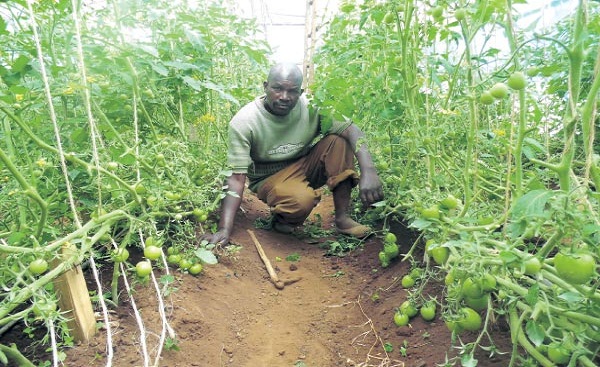
Kenya has started greenhouse production of tomatoes, raising hopes that the popular vegetable will become available throughout the year at affordable prices.

In the new system developed by the Kenya Horticulture Development Programme (KHDP) and agricultural inputs suppliers Seminis Seeds and Osho Chemical Industries, a grower requires about 240 square metres of land and a greenhouse kit to get started.

The cheapest kit, comprising a 500 litre water tank, irrigation drip lines, plastic sheet, seeds and chemicals has been put at Ksh150,000 ($2,239) for those participating in the project. The plot of land can grow 1,000 plants.

The fourth demonstration site, for the Coast province, was launched last week at the Agricultural Training Centre in Mtwapa, Mombasa. Others are in Nairobi at the Horticultural Crops Development Authority compound near the Jomo Kenyatta International Airport, at the Agricultural Training Centre, Kabiangi in Kericho, and at the Lake Basin Development Authority compound in Kisumu.

According to the KHDP, the greenhouse tomato project, one of the activities the programme is supporting to help increase the incomes of rural households, is borrowed from Israel, where the country has most of its agriculture under greenhouses due to scarcity of water and land. It is also widely practised in the United States.

If the concept is widely embraced, Kenya could start enjoying year-round supply of tomatoes, which currently get damaged during the wet seasons, pushing prices through the roof. According to Peter Randa, the marketing manager and project technical advisor, growing crops under greenhouses has many advantages, among them the ability to produce huge quantities on a small piece of land and continuous harvesting. The tomatoes have a shelf-life of 21 days compared with 14 for those grown in the open.

It takes a shorter period — two months — for greenhouse-produced tomatoes to mature, while it takes a minimum of three months with outdoor farming.

Due to controlled irrigation and temperatures, the crop sports a continuous output of flowers and fruits, all at different stages. One plant has a potential of up to 15 kg at first harvest, going up to 60 kg by the time it has completed its full cycle — recommended at one year.

The plant vines are supported inside the greenhouse with sticks and strings, growing up to 50 metres in height. If well looked after, the minimum plot of land under greenhouse production can yield up to 25,000 tonnes of tomatoes.

Tomatoes are generally highly susceptible to diseases requiring heavy application of pesticides but under the greenhouse growing techniques, which come with basic training on hygiene, most of common infections are easily kept at bay. Also kept at bay are insects and other pests known to invade plants as well as weeds.

Apart from huge savings on crop protection chemicals, which constitute a huge part of production costs, less labour is employed in a greenhouse, while exposure to chemical toxins associated with application is minimised or eliminated altogether. It is also good for the environment.

Planting materials for the greenhouse tomato production have been specially developed as high yielding, although they can grow outdoors as well. For this programme, the partners are recommending the Annaf1 hybrid tomato seed developed by Seminis East Africa.

On its part, Osho Chemicals is providing free chemicals to farmers in the initial stages of planting as well as technical advice on application, said marketing manager James Ndabi.

The introduction of greenhouse tomatoes in Kenya heralds what could be a major shift from open pollinated farming to hybrid high yielding methods, which if adopted in other sectors could lead to massive improvements in crop production, output, incomes and ultimately self-sufficiency in food production.

According to Mr Randa, there has been a marked uptake of improved planting materials in the country, a sign that farmers are keen to adopt new products and technology.

In Eldoret, KHDP reports, greenhouse production of tomatoes is coming along fast since this is where the technology was first introduced. The horticulture programme, funded by the United States Agency for International Development, estimates that in the next five years, most tomatoes grown in Kenya will be under greenhouses.

Mombasa is seen as having a huge potential for the technique since the Coast province imports more than 75 per cent of its food from upcountry and Tanzania.

Small farm, big harvest

0

What usually comes to mind when one talks about farming is a large tract of land.

However, did you know that you do not need a large piece of land to grow different crops and make good income?

Daniel Ruto, a farmer in Silibwet, Bomet County, has proved that with even half an acre, one can make as much money as someone who has over five acres. Ruto grows vegetables and tomatoes in greenhouses on his farm that has been christened Evergreen Garden because of its ability to produce different kinds of vegetables all-year round.

But what makes the farm stand out is that the farmer uses a small greenhouse measuring about 18 by 6 metres that he constructed himself last year after growing tomatoes in an open field for some time.

He says that he built the greenhouse himself, save for the polythene covers and the drip irrigation pipes.

“I bought the polythene covers for Sh42,000 from Kericho town and thereafter constructed the greenhouse myself.” He tells Seeds of Gold that constructing a greenhouse is not that hard. According to him, one does not need special wood to make a greenhouse. He constructed his with eucalyptus and wattle poles.

“Once you have the specifications from a professional greenhouse plan from agricultural extension officers, it is easy to construct a greenhouse. The parts made of wood can be sourced cheaply,” he says.

Inside the greenhouse, the farmer has planted 1,200 tomato plants that are about to mature. During the first season last year, he planted the same number of tomatoes and earned about Sh100,000. The second season gave him more cash.

“When I first begun, I used a watering can to water the tomatoes and the yields were not as good. I then acquired a drip irrigation system last season,” he says.

A single tomato plant earned him an average of Sh200 in six months and the small greenhouse gave him up to Sh240,000.

“I expect to earn at least a similar amount or more this season because I keep on improving my farming methods,” he says.

The innovative farmer treats the soil in the greenhouse using ash to allow him to plant tomatoes on the same plot repeatedly without the risk of transferring diseases.

He tells Seeds of Gold that he mixes soil with ash, charcoal powder and manure and then replants tomatoes on the same soil with good results.

However, Bomet County Director of Agriculture Johnstone Rono cautions against using the method because it is not scientifically proven.

However, he agrees that farms need to be sterilised before a new crop is planted in a greenhouse but only if it is necessary because other practises like crop rotation helps break the cycle of pests and diseases.

“If need be, one can steam or bake the soil to ensure that it is sterilised, but crop rotation is economical,” he says.

According to Rono, hygiene in the greenhouse also plays an important role to ensure that the facility is disease-free. Ruto does not only concentrate on the greenhouse, he also raises different seedlings that he sells to farmers at Sh5 each.

He grows cabbages, sukuma wiki (kale), tomatoes and beetroot seedlings. He has sunk two wells, which supply water to the farm. The water is pumped into a raised tank before flowing by gravity to the seedbeds and the greenhouse.

The proceeds from his farm have enabled Ruto to educate his children, the eldest completed high school last year.

He has also bought a motorcycle that he uses to ferry his produce to the market.

Kenya 7 Sevens Rugby Team Disbanded

0

Richard Omwela, the KRU chairman has confirmed that the playing unit and technical bench had been disbanded.

As  result, the KRU Selection committee has been mandated to start the process of selecting a new team after the fourth tournament of the Kenya Rugby Union National Sevens Circuit which started at the weekend with Christie Sevens won by hosts Kenya Harlequin FC. Omwela declined to give further details but another official shed some light.

“We initiated talks with some of the senior players with a view of getting a way forward. But, it appears they read another script and believed they were due to appear before a disciplinary committee and therefore came with their lawyers. As a result, we opted to let their contracts run out as stipulated on July 31, 2015 and start a new process,” another top KRU official stated.

With the contracts lapsing, those who had been contracted by KRU now have an equal chance to impress and play in at least three of the four opening tournaments if they wanted to be considered for selection. Only 18 players will be contracted.

One contract for the new players

There has been a big change after KRU opted for one contract for all players. Instead of two tiers, all the players will be under one contract. The KRU official explained there appeared to be laxity by players in the top tier.

Some of those interviewed by sportsnewsarena.com lauded the bold decision by KRU to disband the team. A former vice captain lamented there was no passion. “You know when you think it’s your right to be in a team, you become comfortable,” he stated. He added that lack of a feeder system was a big contributor after “we built our house from the top because we wanted quick results. Now we have a problem since there is no talent coming through. We should reconstitute the team and give new blood a chance,” he advised.

A selector confirmed the team is being reconstituted with a short list of players available after the fourth tournament. “It is tricky with the Olympics qualifier coming up,” the selector acknowledged. He added that the playing unit had become a monster and players had no fight in their belly. Instead, they had a bag of excuses for not delivering and at the same time demanding to be paid.

“The tier one and two contracts have been thrown out of the window. All squad get the same package and those making it to the final 12 get an extra bonus. This makes the whole squad work harder.

Discipline

Discipline is another issue. The question is, is this the right time seeing the Olympic qualifiers are around the corner?” he posed.

A former coach had the last say explaining KRU were serious about overhauling the team and breaking up various ‘alignments’ within the current playing unit which made it impossible to play the game and produce positive results. “Things have to change to salvage our situation,” he advised.

In what could be a scathing attack, the coach added: “Kenya 7’s RFC are not in rugby for the best reasons. The players have decided that this is their time to fame at all costs. It’s money, money, money. They are currently un-coachables,” he alleged.

He concluded that the trend had reached worrying proportions and it became very difficult to discipline the players because of the ‘bond’. “If one of them was not selected, the rest would boycott training. The problem is not the coaching but the players who try to influence the system,” he added.

Well, is this the right time to overhaul the team? Have your say. The places in the Kenya Sevens team is up for grabs in the next three tournaments and Christie Sevens showed there was much more potential.

Biko Adema, Dan Sikuta and Patrice Agunda were outstanding at Christie Sevens. Word is, some of the players have been remorseful and spilled the beans to KRU. They are ready for a new beginning!