Home Blog Page 2232

Analysts: KQ needs Sh. 100 billion bailout

0

National carrier Kenya Airways requires up to Sh100 billion new funding to stay afloat, Standard Investment Bank analysts have estimated.

The amount is required in the form of fresh capital injection to reduce the carrier’s debt burden.

KQ may also need to significantly scale down its operations and cut on operating costs to return to profitability.

The airline on Thursday reported a Sh25.7 billion after-tax loss, which saw it sink into a Sh5.9 billion negative capital position.
“Kenya Airways needs new funds in the region of Sh80 billion to Sh100 billion,” said Eric Musau, an analyst at SIB.

Treasury secretary Henry Rotich, whose ministry has a seat on the KQ board, said at the weekend that a plan was underway to inject up to Sh60 billion into the company.

The airline also announced last week that it had signed a Sh20 billion loan from the African Export Import (Afrexim) Bank.
The anticipated new round of equity financing is expected to see the government’s ownership in KQ go above 50 per cent from the current 29.8 per cent.

This, analysts said, is based on the expectation that retail investors would avoid pumping new money into the airline having booked major losses that have culminated into their wealth being wiped out in the year ended March.

“The key is to reduce the debt burden as much as possible. The company also needs to take some tough decisions and become a smaller airline,” said Mr Musau.

He said a potential rights issue could see the government raise its ownership above the 50 per cent mark, diluting the combined ownership of other investors to less than 10 per cent.

Mr Musau said Dutch airline KLM — currently the second largest shareholder in KQ with a 26.73 per cent stake — could also find it difficult to provide its share of new funding to the Nairobi Securities Exchange-listed carrier.

Should the Treasury decide to bail out the airline, it could be forced to make major revisions of other expenditure items or borrow more since rescuing the airline was not provided for in the current budget.

Other analysts say the government can avoid immediate fundraising pressures by guaranteeing a long-term loan for KQ, with an option for the lenders to convert their debt into equity down the road.

SAFARICOM AND GOOGLE LAUNCH TRAFFIC INFORMATION SOLUTION

0

Safaricom has partnered with Google to launch an interactive mobile application that offers motorists access to accurate and real-time traffic information, based on crowd-sourced data from other road users.

Waze is a free GPS-based mobile application that is already use in other countries as a traffic information tool. It collates information generated by other users on the same route, to gather information on accidents, impassable sections of the road route, traffic jams, which is then used to provide the end user with advice on potential alternative routes.

“Mobile technology has evolved from being just a tool that enables interpersonal communication to being a value-added solution in many sectors. Safaricom is keen to continue to extend the benefits of our more connected world to our subscribers as we work to transform their lives by putting them closer to critical information,” said Sylvia Mulinge, Director, Consumer Business at Safaricom.

Using voluntary feedback from subscribers on the Safaricom network, Waze provides the user with a view of a map that has been layered onto Google Maps. The maps provide real time updates on road conditions, and depending on the situation, the app can suggest alternative routes for users to take in order to get to their destination faster.

Safaricom
Safaricom

The partnership between Safaricom and Google comes on the back of the announcement that Safaricom is planning to extend its 4G network to 15 major towns, and increase its 3G coverage countrywide. The partnership leverages on the fact that there are over 11 million data subscribers on the network who access the internet through their phone.

“Partnering with like-minded organizations adds more value to our ambition to make people’s lives simpler. Traffic information on Waze, which is updated in real time, will save users the hassle of enormous amounts of time spent in traffic by offering alternative routes,” said Charles Murito, Country Manager, Google Kenya.
He said, “Waze will be the ultimate driving companion as it will track your progress in traffic jams. Using a traffic bar, the application will calculate the amount of time spent in the jam and update your progress as you move along. At the same time you will also receive information generated by other motorists.”
Waze is available on the Android or iOS App Stores. Upon downloading and activating the program, customers will only be required to enter details of their destination to access traffic information. If enabled, the devices can passively contribute similar information for other road users by continuing to run as a background application.

Waze-Google
Waze-Google

Acquired by Google in 2013, Waze is already used by 4.4 million motorists in 200 countries.

About Safaricom
Safaricom transforms lives. We provide voice, data, TV, financial services and enterprise solutions for a range of subscribers, small businesses and government, using a variety of platforms.
As the biggest communication company in East and Central Africa, Safaricom has delights over 23 million subscribers, providing over 300,000 touch points for its customers and offering over 100 different products under its portfolio.

With annual revenues in excess of Kshs. 160 Billion, Safaricom invested Kshs. 33 billion on infrastructure in the 2014/5 financial year, providing over half of Kenya’s population with 3G coverage and providing 2G coverage to 90% of Kenyans. Safaricom owns over 2,000km of proprietary fibre infrastructure and recently launched 4G services in Nairobi and Mombasa. It is in the process of building a dedicated enterprise business to provide managed services to clients in the East African region.

Safaricom pioneered commercial mobile money transfer globally through M-PESA, the most successful such service anywhere in the world. Launched in March 2007 as a money transfer service, M-PESA now has over 19 million customers and over 85,000 Agent outlets countrywide.

About Waze
Waze is the social navigation pioneer, leveraging mobile technology and a passionate global community to redefine expectations of today’s maps. Waze is home to the world’s largest network of drivers who work together daily to outsmart traffic and save time and money. The app consistently recommends the fastest routes based on real-time driving and data from millions of users. From traffic reroutes to low gas price alerts and relevant offers from favorite brands, Waze is one of the most comprehensive driving companions in the marketplace.

Mobile transactions in Kenya hit 1.3 trillion in 6 months

0

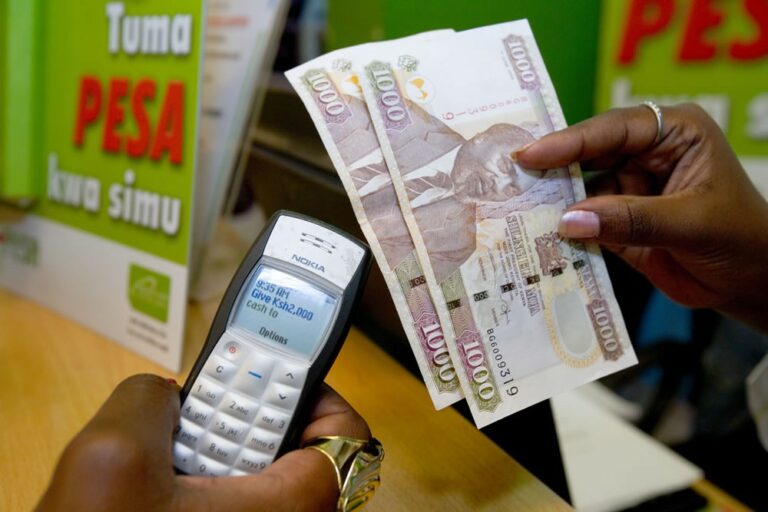
Money transacted through mobile phones hit Sh1.3 trillion in the first half of 2015 compared to Sh1.1trn at the same period last year.

This was helped by increased adoption of the service, growing integration with other financial and non-financial services and entry of many firms in the market.

In the six months of this year, about Sh7.3 billion has been transacted daily, up from a daily average of Sh6.2 billion in a similar period in 2014.

Analysts say the growth in mobile money transactions has been aided by improved product offerings across the various mobile payment platforms.

Mobile money agents increased to 131,761 by the end of June 2015 from 120,781 by the end of June last year.

Similarly, the number of customers stood at 26.5 million from 25.9 million in the period under review partly indicating increased growth in transactions per user on average.

The convenience in use of mobile money and increased adoption by individuals and companies has led to the decline in the popularity of electronic payment cards.

In the first six months of 2015, money transacted through electronic payment cards declined by 4.2 per cent to Sh654.7 billion from Sh628.6 billion transacted in a similar period in 2014.

While payment through credit cards experienced growth between March and June this year, transactions through debit cards was mixed.

Remote controlled greenhouses launched

Greenhouse farming: Farmers are set to cut farming expenses following the launch of a remote monitored greenhouse.

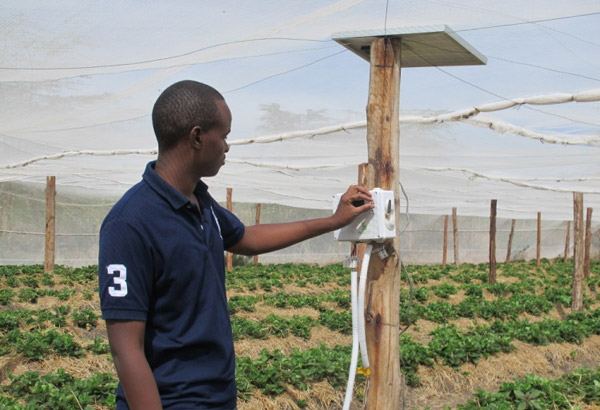
Synnefa Green Ltd has come up with sensors that monitor temperature, humidity, soil moisture, water supply and much more.

These statuses are transmitted to the farmer’s mobile phone. Meaning monitoring and regulation is done by the farmer remotely through their mobile phone.

The monitoring aspect includes opening and closing the irrigation system as well as querying to get SMS alerts on their current greenhouse statuses-in terms of temperature, humidity and soil moisture.

Should the farmer happen to delay more than 30 minutes without responding to the first SMS, the gadget will automatically start irrigating the crops until the moisture content is restored.

The greenhouse sensor system is powered by solar panels making the device marketable in rural areas, where electricity is still quite a challenge.

Profits and challenges of greenhouse farming in Kenya

The smart farming technology is witnessing rapid widespread uptake, with a record 570 plus farmers in the country already benefiting from the initiative of one Taita Ngetich, Damaris Karanja, Alice Kamau, and Brian Bett of illuminumgreenhouses.com

The cost of an Illuminum greenhouse, with sensors or not, ranges from about Ksh 99,000 (Kadogo greenhouse) to Ksh 2 million (Maarufu).

Accommodating 1,000 plants, the Mwansizhi greenhouse, going for about Ksh 189,000, is 6 by 30 meters long, 3-3.5 meters high.

Cost inclusive of greenhouse polythene (1000 gauge, 200microns), drip irrigation system, irrigation fittings, water filter, insect net, timber structure (with plant support system and Installation labour, is a stand-alone structure with an upper ventilation to allow for proper air circulation while ensuring temperatures are maintained within the required limits.

Kadogo, the smallest of all, is made for 600 plants and costs about Ksh 99,000. With height ranging from 3-3.5 meters, length 20 meters.

It is designed to ensure maximum utilization of the land under cover while maintaining the seed capital at an affordable limit to a majority of farmers.

Designed to be installed with much ease, the automated sensor currently goes for Sh35,600 attributed to the high cost of electronic components and assembly.

But as plans are underway to fabricate the devices in China, the automated sensor will be retailing for as low as Ksh 15,000 making it affordable to smallholder farmers. Farmers pay Ksh 2,300 as installation charges.

Sýnnefa Green Ltd/illuminumgreenhouses.com also offers besides constructing greenhouses, other services such as soil tests, pre-site surveys, sensor technology, drip irrigation, and shade nets.

Government to probe KQ over mega loss ahead of Sh. 60 billion bailout bid

0

The National Treasury will scrutinise Kenya Airways before any bailout plan is put in place after it emerged the firm will require Sh60 billion to bring it back to profitability.

The airline has sought the services of both Mackinsey and Seabury auditing firms to help it emerge from the Sh25.7 billion loss-making position.

Cabinet Secretary Henry Rotich Sunday said in an interview that the Treasury was keen to find out how the national carrier incurred such a huge loss announced last week before considering a bailout.

“We are seeking to understand what exactly led to the massive losses and what intervention is needed to turn around the airline’s financials. We won’t just inject funds before we understand the situation,” said Mr Rotich.

The minister said the exact figure to revive the airline would be determined by both the contracted auditors and the Treasury’s scrutiny.

The ministry will investigate the airline over its cost structures, including leases, fuel purchasing plans and staff remuneration.

“We are also going to review our level of involvement with the board.

“It will be important to know why there was no government voice when things were turning wild and see how to improve on such issues.

“Even the management will be scrutinised to see any areas where they did not act right.

“Any neglect will definitely lead to an overhaul,” said Mr Rotich.

KQ’s costs went up by Sh5 billion after a fuel hedging plan went bad. This followed a fall in fuel prices in the last half of 2014 and the first half of 2015.

The airline has since secured a Sh20 billion bridge financing from Afrexim Bank to sustain its operations in the interim as it struggles with a cumulative debt of Sh130 billion.

The CS spoke as a section of civil society called for thorough investigations before any plans are rolled out to bail out the loss-making national carrier.

According to the National Civil Society Congress (NCSC), former and current managers should be questioned to shed light on how the airline incurred the loss.

The activists, led by NCSC President Maurice Odhiambo, said such a huge loss could only happen because of corruption.

“We need to be told what happened before the Treasury makes any plans to bail out Kenya Airways.

“We need to know the truth. Should anyone be found guilty of any wrongdoing, they should be taken to court and ordered to refund the money,” Mr Odhiambo said yesterday during a press briefing in Nairobi.

Earlier in Mombasa, Mr Rotich said the report by the two auditing firms would be ready in 60 days, adding that both the national airline’s management and the Treasury would heavily rely on the experts’ plan to make the firm realise profits.

He said the environment under which KQ has been operating is “very challenging” but with a solid plan, the firm would be turned around.

On Thursday night, KQ Chief Executive Officer Mbuvi Ngunze maintained that the airline is committed to improving its performance.

“The airline is in the market to make sales, therefore, we must constantly deliver the revenue and boost its cash flow,” he told NTV.

He said there was need to replace the old aircraft with Dreamliners amid competition from Middle East carriers.

Why small sized heifers lead to poor milk production

Using artificial insemination (AI) allows a dairy farmer access the best bulls in the world so as to get the desired improvements in the daughters born from this bull. For size, this improvement will be seen after birth and during the growth of the calf and for milk, this will be seen after about 2.9 years from the day the mother conceived after the daughters give birth. This long time line and the fact that you will not want to maintain a poor cow means you should get the best possible improvements in the heifer as compared to their mother.

Therefore all farmers are advised to carefully choose the bull to use for AI in their heifer/cow and confirm that your inseminator will have it in stock long before the animal will need it.

Choosing the best bull to use on your heifer

Semen is produced from highly selected bulls by organisations authorised to do so by veterinary bodies in many countries in the world. In theory, you can access any of their bulls but in practice, for most people, you will be limited by its availability or its price (due to demand and supply forces) or as determined by their marketing agencies. Today, the Kenya Animal Genetic Resource Centre (KAGRIC) formerly the Central Artificial insemination Centre (CAIS), a government parastatal, is the only local producer of semen.

However, there are many companies importing semen from around the world. Both the local and imported semen are regulated by the Veterinary Authority to ensure semen sold in Kenya meets the required standards. They all have agents in all or most counties whose farmers are using AI from where farmers and inseminators can access the semen of their choice. Obtain their location from the nearest veterinary office or your inseminator.

Individual farmers may also import their own semen after satisfying the necessary conditions and procedures set by the Veterinary Authority. Also if a farmer feels she’s got an outstanding bull she wants to use, she can get the experts to collect semen from the animal at a cost. But she can only use the semen in her own animals and not anyone else’s. In order to choose a bull, you will need to go through booklets called a Sire Catalogue found at the marketing agents or with your inseminator.

Each semen producer provides the sire catalogue in which it provides pictures of its bulls, dam and daughters of these bulls. It gives details about its parents (pedigree), its daughter’s milk production including butterfat and protein yields, it gives specifics on quality of udder, feet and legs plus characters that make a cow a strong dairy type such as thin thighs and legs.

It also tells how fertile the animal is, how easily it gives birth, how easy it is to milk it and how long it is expected to live while still producing reasonable amounts of milk among many other traits. The quality of these traits are described on a scale that is standardised and accepted across the livestock industry. Using this information, you can choose a bull that possesses the characteristic(s) that you desire to be passed on to the daughters you aim to get.

For example, if your cow is a good producer, but has a sagging udder that is prone to injury and mastitis, you can choose a bull that has an excellent rating for improving udders by passing on the characteristic for a strong udder suspensory ligament. For a farmer to get the best choice of a bull, she should have her cow(s) examined (classified) for the characteristics described above to choose a bull that will provide the best chances of correcting any poor characteristics that may be in the cow while still retaining the good traits. Since there are many characteristics that need to be considered, one needs the assistance of a match mating computer programme.

Smaller cows and poor milk production than expected

As a general rule, the bigger the dairy cow is, the more milk it can produce than a smaller cow if both are given maximum feeds and care as recommended. But note that to produce more milk the cow must eat more. A farmer can choose to have a huge cow but she must give it sufficient food for it to produce many litres of milk. Remember bulls that give bigger cows or smaller cows within a breed are there for you to choose.

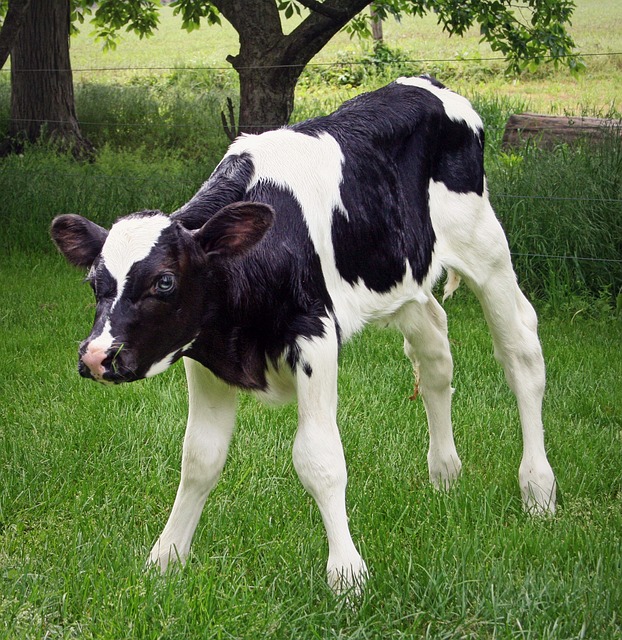
However, just having a big cow does not guarantee a lot of milk. Today, many farmers are having relatively big cows gotten from AI that are producing as little as 10 kg per day or even less when they could be producing 20-30 kg per day or more. This poor milk yield than expected can be due to inbreeding. This is where the parents of a cow are closely related as in sire and daughter, dam and son, sister and brother. Smaller sized cows than expected can also result from inbreeding even though the parents are bigger. The weight in kilos for heifers of Friesian, Aryshire, Guernsey, Jersey should be about 420-450, 420-450, 375-400, 350-375 respectively by the time they are giving birth at about 24 months.

There are measuring tapes you can buy from reputable veterinary outlets and agrovets to assist you to estimate a heifers/cows weight by measuring its girth. Estimating the weights regularly will tell you whether you are on track during the growth of the heifer and in case you are not you will need to decide to take the corrective action as soon as possible. It is suspected that the inbreeding problem is quite significant in small holder farms where farmers are keeping animals without any records of their parents. This is so in situations where farmers are using AI or neighbours or communal bulls and where farmers have bought cows/heifers from outside where no parental records exist.

A research in such small holder farms indicated that many farmers do not properly store the AI certificate set they are issued with and in subsequent months or years cannot produce it and neither do they record the information anywhere and so the sire of their heifer will remain unknown to them. A significant number of farmers were also found to be purchasing heifers/cows from other regions with no records so that their sires will remain unknown. Another significant group of farmers use neighbours/communal/own bulls of unknown parentage. So you are advised to always have parental records of all your heifers/cows to avoid inbreeding!

M-PESA FOUNDATION ACADEMY COMMENCES APPLICATIONS PROCESS

0

As the hunt for a Chief Executive for Kenya’s newest Academy continues, the M-PESA Foundation Academy today announces the start of its formal applications process for bright, talented but economically disadvantaged students.

The Academy, which had its foundation stone laying in May 2015, has put out applications across all 47 counties seeking applicants in their final year of primary school.

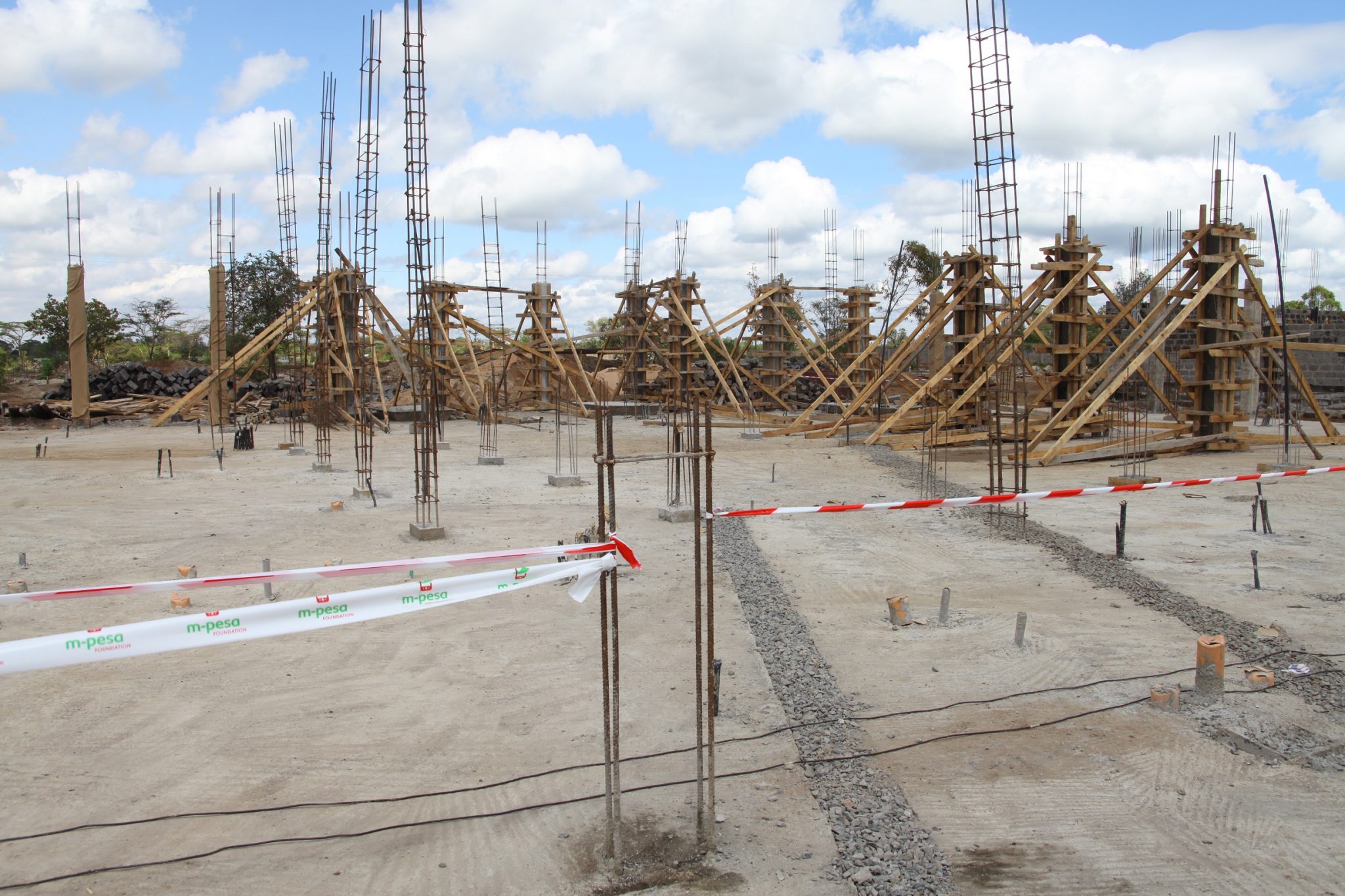
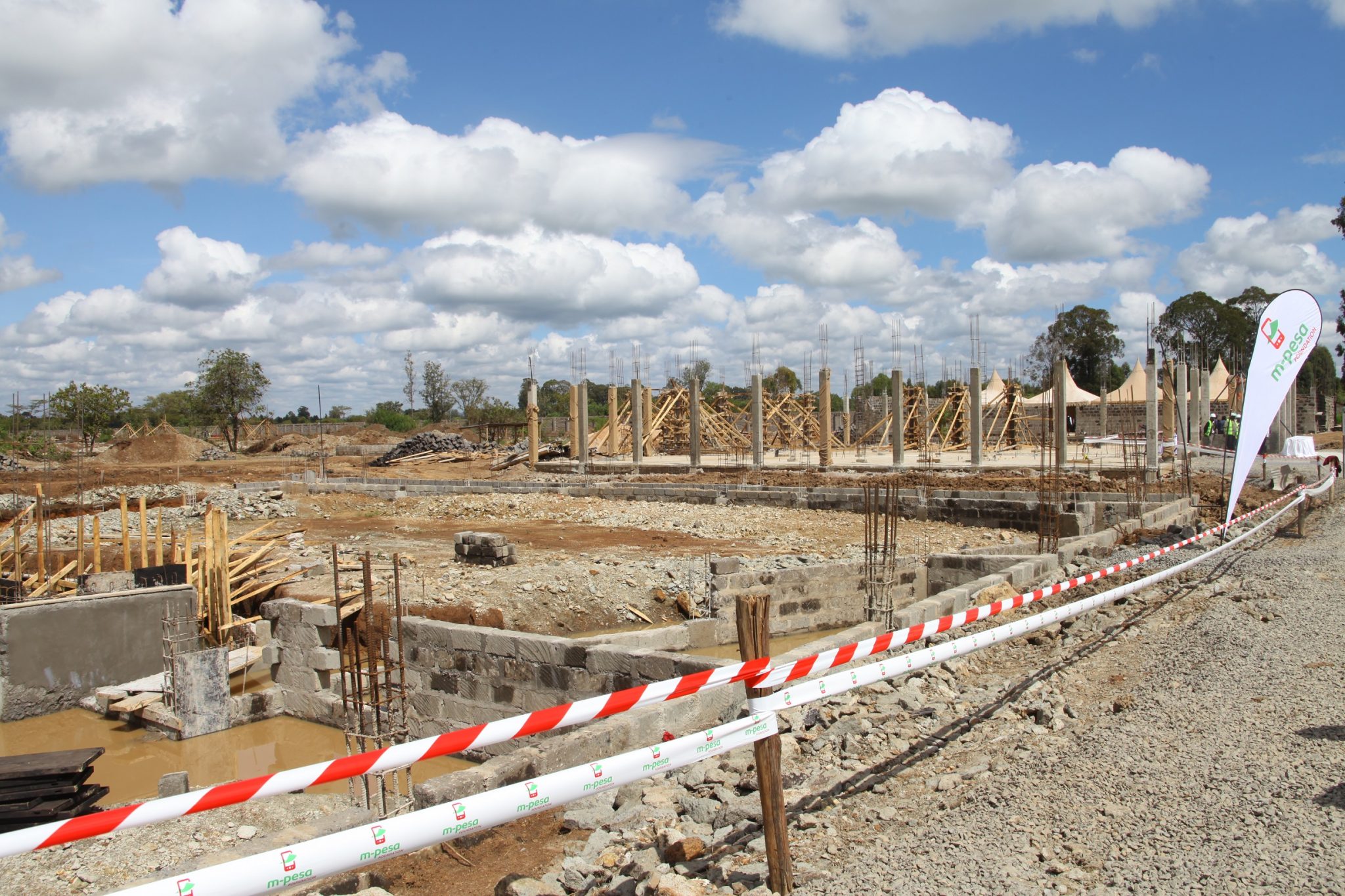
With 94 students expected to join the inaugural class starting in January 2016, the applications process commences as construction of the facility continues at the Thika campus.

Construction work at M-Pesa Foundation academy in Mang’u, Thika.

Evaluators will be looking for strong academic performance, leadership potential, financial need, responsible citizenship traits, participation in extra-curricular activities, critical thinking and problem solving as well as an entrepreneurial spirit to identify successful candidates for the school.

Two successful candidates from each of the 47 counties will be selected to go through their KCSE based secondary education at no cost.

“We want to provide a world-class educational experience to gifted but economically disadvantaged children from all counties of Kenya. These students will have the opportunity to get inspirational learning that leans heavily on entrepreneurial leadership and draws on advanced technologies,” said Michael Joseph, M-PESA Foundation Chairman.

As a state of the art, mixed boarding high school, the M-PESA Foundation Academy will innovatively deliver the KCSE curriculum to students in a world-class educational facility.

Construction work at the M-Pesa Foundation academy


The facility will boast first class sports, arts and music facilities, in addition to academic facilities, will include an indoor sports hall, a sports field, running track, swimming pools, squash courts, a music centre and a 500 seat auditorium.

Applications are available at all County Education Offices, all Safaricom Retail Centres and at select schools country-wide.

Application forms are also available online here.

About M-Pesa Foundation

The M-Pesa Foundation was duly registered as a Charitable Trust in March 2010 The M-Pesa Foundation invests in large scale and long term sustainable projects that have maximum impact on Kenyans in the areas of education, health and environment. Michael Joseph is the Chairman of the M-Pesa Foundation.

EABL posts Sh. 9.6 billion net profit, pays dividend

0

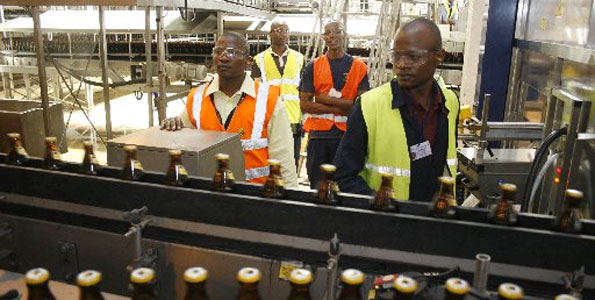
East African Breweries has announced a 40 per cent jump in profit for the year ending June 2015 to Sh9.6bn.

The brewer credited the growth in profits amidst harsh economic times in the region where it has a large presence to heightened sales for spirits and premium beers. EABL Group Managing Director Charles Ireland said the growth presents a brighter future for the beer maker after the recent tax revision on its low end market beer, senator keg.

“We are pleased with this performance and certainly our shareholders will equally be pleased given the overall economic conditions in the market. Our efforts to add value to our shareholders and clients however will be stepped up as we engage strategies to respond to the existing challenges including the depreciations in the east African currencies against the US dollars,” Mr Ireland said.

During an investor meeting held in Nairobi on Friday morning, the company also recommended an increase to KSh 6 per share dividend pay out.

Junior Achievement Kenya to Host Global Entrepreneurship Week

0

Why is Global Entrepreneurship Week important – overall and to Kenya specifically?

Junior Achievement first got involved with GEW in 2008. One of the critical pillars of our programs is the promotion of entrepreneurship culture especially among young people and involvement in GEW was a perfect fit. The alignment of purpose between Junior Achievement Kenya and GEW provided a platform to continue to grow and expand the drive of entrepreneurship in the country.

GEW is important because it provides an opportunity every year where all sectors; that is, the private sector, public sector and social sector, to come together to inspire, motivate and support people around the country. It encourages people to embrace the spirit of entrepreneurship as a key ingredient in driving Kenya’s economic growth towards realizing the Kenya Vision 2030.

Through GEW, we have been able to map out and develop the entrepreneurial ecosystem within Kenya that is important in sparking and nurturing emerging entrepreneurs. GEW provides a unique opportunity to seek and pursue continued engagement with all stakeholders in the development of entrepreneurship culture.

What makes your GEW campaign unique?

GEW Kenya engages various partners who run different events that are aimed at promoting and developing entrepreneurship. What makes our campaign unique is the focus on the promotion of the entrepreneurship culture among Kenyan youth, especially at-risk youth.

For example, we have successfully run SlumFest – an event aimed at promoting the entrepreneurship among youth in Kenyan slums and recently we launched the National Innovation Challenge, aimed at unlocking youth innovation and creativity.

How would you characterize the entrepreneurial environment in Kenya?

Of late, the entrepreneurial environment has improved considerably in Kenya. Most notably, progress has been made in supporting emerging entrepreneurs and facilitating success.

One thing I would change however is the access to affordable credit by youth entrepreneurs and startups. Products being offered by the financial sector are still prohibitive and are not responsive to the needs and requirements of young people.

What methods are you using to encourage entrepreneurship? What have been most effective and popular?

In partnership with the Ministry of Education, Science and Technology and the private sector, we have been implementing hands-on experiential entrepreneurship programs that are aimed at equipping young people with critical entrepreneurship and financial literacy skills.

The program is currently being implemented in 300 secondary schools nationwide reaching at least 24,000 students directly. The program is being scaled up to at least 1,000 secondary schools this year while leveraging technology to support the classroom delivery.

This popular program is modeled around a national competition that starts at the local level and aims to celebrate the most outstanding student-led enterprise. Over the years, the program graduated successful entrepreneurs and employers who are contributing to the Kenya economy.

Additionally, Junior Achievement Kenya has just commissioned a study on entrepreneurship with a focus on which teaching approach is best in the development of an entrepreneurship culture.

What are the key differences in entrepreneurship in a developed nation and entrepreneurship in a developing country?

In developed nations, the entrepreneurship ecosystem tends to be more sophisticated, while that of a developing nation is still in its infancy. Given that entrepreneurship is still growing in developing nations, there is an opportunity for them to leap frog by learning from developed nations’ experiences.

Of course, there is still room for government in developing the appropriate policy framework that supports youth and women entrepreneurs as well as the private sector, especially the stakeholders in the financial sector space to develop innovative products that can support and drive entrepreneurship.

The government has made efforts to ensure that the information on the topic of business is available to everyone in the ecosystem. Most recently, this has been done through the Huduma Centers that serve as a central tool for information and registration.

However, there is still an opportunity for government to coordinate and provide more relevant support especially to youth and women entrepreneurs. This can be done through appropriate training and seminars that can build their capability on how to do business with government.

Which public sector effort has had the most success at unleashing entrepreneurship?

There are a number of efforts that have been fairly successful in unlocking entrepreneurship. Beyond the creation and expansion of funds such as the Youth Enterprise Fund, Women Enterprise Fund and the Uwezo Fund, the Government reserved at least 30 percent of its procurement for youth, women and persons with disability as a way to promote business between government, youth and women.

Further, through the Micro Small and Enterprise Authority, the public sector has provided infrastructure that allows for dialogue and engagement between entrepreneurs and the government. Currently, the government is working towards special economic and free trade zones.

How has GEW grown in Kenya? What are you doing to build on its momentum?

Since 2008 when we held our inaugural GEW with one partner, we have grown to work with more than 50 partners each year and engage more than 30,000 participants.

We have since been recognized as a Kenya Vision 2030 partner as a leader in the promotion of the entrepreneurship culture in the country. The Kenya Vision 2030 which is the county’s development blueprint recognizes the significant role of entrepreneurship in driving the development of both Kenya and the region.

Why ‘No cash No love’ is the way to go

0

Urbandictionary.com defines a gold-digger as a man or woman who uses their sex appeal to get money from the opposite sex. The term was borrowed from the California Gold Rush of the 1890s, when miners flocked to the area with hopes of striking gold and becoming millionaires overnight.

But what is wrong with wanting a man who can afford a little luxury? And where does one draw the line between wanting financial security and plain old materialism?

According to Laban Wesonga, who has been in a relationship with a gold-digger, the figures by Steadman are conservative compared with the reality on the ground.

Wesonga, who works with a bank in Nairobi, had dated his ex-girlfriend for close to four years before he realised what she was truly like.

Things were going well and Wesonga had even introduced her to his family as his fiancée when he unexpectedly lost his job. She left him almost immediately, saying the relationship was no longer working.

A year later, Wesonga got an even better job and when she learnt about it, she came back and asked that they give their relationship another try. But Wesonga would have none of it. “She was only after my money. She calls to check on me but I have no time for her,” he asserts.

Like Wesonga’s former girlfriend, there are, indeed, women who remain in a relationship only for what a man can provide. But it is important to note that women involved with older men are sometimes unfairly labelled gold-diggers simply because society has certain criteria for an acceptable relationship.

Among these is that that a couple should be fairly close in age, class and to some extent even looks, such that a person who is considered too pretty or handsome for their partner’s “league” is viewed with suspicion.

But gold-diggers — both male and female — have no respect for such things and live strictly by the motto, “No romance without finance”.

Ambitious and calculating

The typical female gold-digger is an unapologetic, daring go-getter who knows exactly what she wants. She is ambitious and calculating and will stop at nothing to have her way.

She is the type who earns a Sh30,000 salary but lives in an apartment whose monthly rent is Sh40,000, wears designer clothes and Sh10,000 Coco Channel perfume, complete with a Sh5,000 hairdo.

That’s not to mention her designer shoes and other accessories. She knows presentation is important if she’s to nab the calibre of monied man she’s after. Nothing local is good enough for her.

These women know how to get the fine things in life, and like them or hate them, you have to give it to them for their ability to manipulate men.

A typical gold-digger will get a man to accompany her shopping, where she will load her trolley like there’s no tomorrow. When she reaches the till, she’ll “realise” that she is Sh5,000 short and turn to the man, who serves as her mobile ATM.

“I want”, “ I need and “I must have” feature prominently in her conversations. As Joel Mwangi, a lawyer, puts it, “She doesn’t bother with you if you have nothing to offer, but as soon as you start to make headway in your career, she calls you up.”

However, every woman will tell you that she likes to feel special, and that actions speak louder than words.

When asked whether she would date a broke guy, Wanjiru Ndung’u, a nurse, immediately sought a clarification.” Define broke,” she said, before adding, “Do you mean jobless, or a low-income earner?

After a brief silence she replied, “No, I wouldn’t. “

Wanjiru, like many women above 25, is looking for a man who will put food on the table. But before she decides who to settle down with, she has to know about his financial position.
But how does a man spot a gold-digger?

According to Larry Madowo, a TV reporter, you can tell gold-diggers during the introductions at, say a cocktail party. “They pay keen attention to men who are in ‘impressive’ professions.”

“Miss Take” has no time for jobless or roke men. Her goal is simple: get in, get rich, get out. She likes living it up and a prospective man’s responses at such functions help her gauge whether his income is enough to sustain her expensive lifestyle.

“Girls from the rural areas make the worst gold-diggers. They come to the city and come up with schemes for financial success,” says Mwangi, who has encountered this breed of high-maintenance women. He notes that university students are no better.

“Campus girls seemed to be more impressed by the chap who drives to class,” he says. “Whether the car was stolen from his parents’ driveway or borrowed does not matter; the point here is that image is everything.”

While it is generally accepted that the man pays for drinks, dinners, flowers and jewellery, gold-diggers add to this list holiday trips to the coast or a fully furnished house or apartment, preferably in a nice suburb.

Historically, women have always sought wealthy partners who can provide for them, putting financial security above factors like romance, love, looks, and/or chemistry.

However, gold-diggers will use every trick in the book to achieve their aim. And since their sole aim is to get rich, some don’t limit themselves to one man and end up juggling different partners. After all, “the more, the merrier” goes a common saying.

Some have managed to acquire lavish homes in the suburbs and furnished them with subsequent returns from the “treats” they offer unsuspecting, generous men.

“Since she is only interested in getting what she wants and has no regard for the other person’s feelings, she’s no different from a call girl,” says Newton Onyango, a city businessman.

Expensive restaurants

According to hubpages.com, a gold-digger will never select a destination that is kind to a man’s wallet. So if she’s too good for the occasional take-away chicken and chips from a casual joint in town and only suggests expensive restaurants, it’s time to re-evaluate your relationship before you run into debt trying to please her.

There is a saying that behind every successful man is a woman, but sometimes it might just be a gold-digger, who will be willing to stay and play for as long as the man can pay.

Occasionally, you will find a man who has fallen prey to gold-diggers more than once. This makes one wonder whether after the first time, they fail to see it coming the second time because they are too busy thanking their stars for getting the perfect “trophy” this time, much to the envy of their friends.

When a man realises that his girl always pushes the dinner check over to him (never even once offering to pay), if often she’s out shopping for shoes or always complains how the ATM is be out of her way, it’s time to take another look at the relationship.

But times have changed, and gold-digging is no longer the preserve of women. Although figures are not readily available as to the number of male gold-diggers, today, women are just as likely to find a man latching onto them for their money.

Some men love money and the trappings of success but either lack the qualifications to help them get there or are simply lazy, so they would rather catch a free ride than pay for their own. And like the female gold-diggers, this breed of men knows that it takes stealth to marry wealth. They tend to prey on lonely, older women who are well established in their career.

“Being able to run a few errands on for a woman gets him into her good books,” offers Sheila Ndwati, who swears that she can tell a gold-digger from a mile away.

Meanwhile, Arnold Mwite, whose friend preys on single women at the peak of their careers, offers some insights regarding the victims: “The higher up the ladder, the more needy they are,” says Mwite.

His friend drives around in his girlfriend’s car and she takes care of all his needs. She has “pimped” (taken care of) him up so well that he now owns a boutique in town.

The male gold-digger is no different from a con man, and just like his female counterpart, he is aware that his physical appearance counts a lot toward keeping the relationship going. As a result, he is always sure to be in tip-top shape.

There is a general belief that women who get involved with such men are usually so desperate to be loved that they cannot see the telltale signs. And indeed, there are cases where a women will readily give the helpful lad her car keys and trust him to cash checks on her behalf since her diary is packed.

But it is notable that in some cases, a woman might well be aware of the man’s intentions but will ignore this it if the emotional gains from the relationship outstrip what she loses materially. Often, wealthy women have no qualms about funding a gold-digger in exchange for their company if that person is particularly attractive and makes them look good.

While male gold-diggers are not hard to spot, their targets are even easier to spot!

Generous women who don’t seem to mind splashing money around and enjoy glittery objects and expensive life are easy prey for male gold-diggers. They don’t mind paying for the dinner or fuelling the car and will readily take the man shopping for some presentable clothes.

The attention he attracts makes them even more generous, so a nice “expensive” bit of arm candy may not be such a bad trade-off.

Major boost

Thus begins the transformation begins. The gold-digger’s ego receives a major boost, what with well-manicured nails and crisp suits bought by their partners.

“It costs money to look this good, and if I’m going to be her escort, she needs to sort me out,” I heard a gold-digger say in self-defence.

Male gold-diggers always insist on the woman buying the drinks but suggest the places they should can go and things they should buy.

But what happens when the money runs out or the woman can no longer keep up with a gold-digger’s expensive tastes and needs? Like his female counterpart, he will not stand by her when the hard times arrive. That handsome face will turn into a twisted nagging frown and it won’t be pleasant!

They are smart know how to getwhat they want. They dress to impress and won’t be found in any cheap bar or club! But when busted by their prey, they are quick to accuse her of not treating them right, or even failing to appreciate them! Make no mistake, all the while they have someone else on the side.

According to a recent article the UK Telegraph, men are bigger gold-diggers than women. And research there shows that the tide is turning, with many men willing to be financially dependent on their partner.

While it might be a good thing that more women are taking responsibility for their financial future, this could very well be the reason for the rise in the number of male gold-diggers.