Kenya’s telecommunications sector could be headed for massive restructuring as Parliament next week receives a bill seeking to declare mobile network operator, Safaricom, a dominant player in the industry.
Communication Authority of Kenya (CA) through the Ministry of Information and Communication is sponsoring the bill expected to address concerns raised by rival industry players who insist that Safaricom be declared a dominant player. “As Government we are concerned about the issue of market unevenness and we are sending the regulations to Parliament next week to address some of the concerns that have been raised in the past,” stated Fred Matiang’i, Information and Communication Cabinet secretary.
Mr Matiang’i stated that the legislation is not meant to clip the wings of Safaricom but is a genuine concern to make the country’s telecommunication sector more competitive. “We do not want this politicised and we are not after any specific player in the market,” he said. “We just want to have a level playing field so that some players are not struggling out of the market.” Airtel early this year, wrote to Matiang’i requesting to have Safaricom declared a dominant player and split into three.
Market share “In other countries, as soon as a mobile operator reaches 50 per cent market share, there are some measures taken not to give preferential treatment but to give other players a chance to expand their market share to be able to compete and invest,” explained Airtel Kenya CEO Adil El Youssefi in a past interview.
The CA has in the past responded to criticisms of favouritism towards Safaricom by stating that Kenya does not have adequate anti-trust laws to govern the telecom industry.
“These 14 sets of regulations are supposed to help us cover a number of things including management of market dominance and the bill is very clear that anyone who has more than 50 per cent of the market share is declared a dominant player,” stated Wangusi.
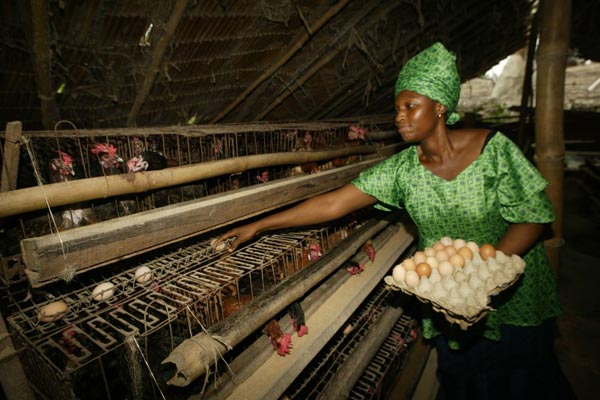
Candling is the process of checking the quality of an egg using illuminating light.
This helps to ensure the interior of the egg is free of blood spots, cracks and other defects.
Using a candler, a farmer will also know which eggs are fertile, which will hatch into chicks or tell if a fertilised egg has stopped developing.
The candler works by illuminating the interior of an egg with a bright light to see what is inside the shell.
Candling equipment doesn’t need to be very specific, though one can choose to buy devices that are powered either by batteries or a plug-in cord.
However, you can improvise your candler at home.
To candle your eggs at home, find a bright source of light with an opening smaller than the diameter of the eggs you intend to candle.
Place, for instance, a 60 watt light bulb inside a coffee can and make a hole with an inch (2.5cm) diameter at the top of the container.
Alternatively, you can take a very bright flashlight and cover the opening with a piece of cardboard with a hole of an inch diameter at the centre or use a three-inch empty tissue paper tube and a flash light. With these, you are now set to candle your eggs.
Candling in a dark room gives good results. Select an egg and hold it above the light. Place the larger end of the egg directly against the light.
Hold the egg near the top, between your thumb and the forefinger. Tilt the egg slightly to one side and rotate until you get the best view.
Mark each egg you candle with a number and take notes of your findings.
BAD SMELL
It is tricky to candle brown or speckled eggs as the shells are a bit dark for light to penetrate Much attention is required when dealing with such eggs.
You may come across some eggs with blood rings of well-defined red circle.
Others may have blood spots or blood streaks inside.
However, these dark patches can be difficult to distinguish from an egg with healthy embryo at this early stage.
Discard eggs with deformities as they can begin to rot and eventually burst, contaminating the rest of the eggs with bacteria and create very bad smell. However, it is not advisable to candle an egg after 16 or 17 days.
At this point, the eggs have mostly developed and they should be left alone for the last few days before hatching. They should not be turned from day 18.
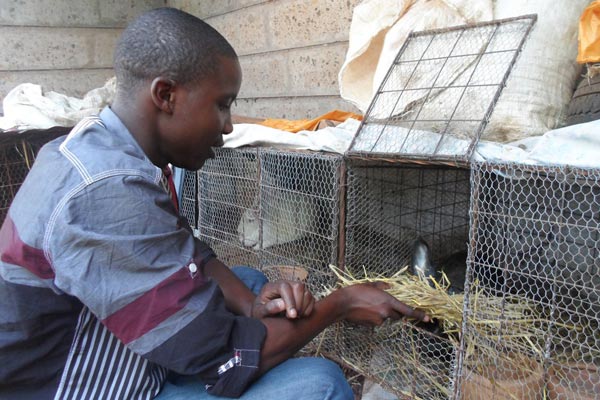
Charles Kimenju feeds his rabbits on what looks like very dry grass that one may consider unpalatable to the animals.
“This hay is what is good for rabbits. Many offer their bunnies green matter but it may lead to death,” says Kimenju, who keeps the rabbits in his parent’s home in Loresho-Kangemi.
Kimenju, a third-year communications student at Daystar University, knows too well the danger of feeding rabbits lush green matter.
The 24-year-old recently lost 10 rabbits to bloat after he fed them fresh vegetables.
Animal experts say that bloat is caused by feeding the animals fresh green matter as well as poor maintenance of rabbit pens.
“When the 10 animals died, I had 50 rabbits. I had seen them grow after starting with only six. I bought them from my uncle in 2013 at Sh1,000 each from a capital of Sh10,000 my father gave me.”
That day, he went to a farm near his parent’s home, uprooted weeds and passed by the market and bought sukuma wiki (collard green) to feed the animals.
“I had done it before and I had also seen a friend do it,” says Kimenju.
He fed the rabbits the vegetables and the weeds but it did not take long for him to see there was a problem.
“I was shocked to see five of the bunnies stretch on the floor of the pens in discomfort.”
Distressed, the farmer contacted his uncle and explained the symptoms.
“He told me the rabbits were suffering from bloat,” says Kimenju. “He advised me to withdraw the feeds. Unfortunately, 10 of the rabbits died,” says Kimenju, who sells his rabbits in Kangemi at an average price of Sh1,000.
He has over 60 rabbits of Flemish Giant, Californian White and the Dutch Earlobe breeds.
EXCESS GAS
Patrick Kariuki, a rabbit expert at the National Rabbit Breeding and Training Centre in Ngong, says bloat, which is always characterised by the swelling of the stomach, is often triggered by excess gas in the animal’s digestive system.
When bloated, bunnies become inactive and sit hunched at a corner of the pen with their eyes partially closed.
Others might also sit with their stomachs pressed on the floor or upright with an unnaturally straight posture.
The stomach further becomes extremely hard and grossly distended. This can cause the blood supply to be cut off from the stomach or intestine.
Kariuki says bloat can quickly lead to shock and then death.
“Any green vegetable should be wilted to reduce moisture content before giving to rabbits,” he says.
Wilting fodder like lucerne, which has high protein content, is highly recommended.
High protein leads to high production of nitrogen gas which leads to stomach bloat.
According to Kariuki, when a rabbit bloats, don’t feed it until the condition is under check.
“Gently massaging their tummies can also help to remove the excess gas.”
He warns farmers against feeding the animals pellets made from different ingredients.
“Some companies manufacture plant-based pellets while others animal-based. Abrupt change in diet can also cause bloat.”
The following analysis by George Bodo was first published in the Business Daily
The stock market hasn’t been impressive in the first half of 2015. The NSE 20 Share Index lost 4 per cent while the All-Share Index returned just a mere 70 basis points. Additionally, market capitalisation, which represents the market value of all listed companies’ outstanding shares, declined by 10 basis points.
A key driver of this bear run was the outflow of foreign positions in the market. Foreign sales in the first six months of the year amounted to Sh64 billion, which was a 25 per cent year-on-year growth compared to a similar period of 2014.
However, despite the exits, foreign investor participation levels was still robust, accounting for an average 52 per cent of total market activity, which is significant enough to sway market performance anyway.
From where I sit, there were four drivers of the market’s bear run. One, Nigeria’s peaceful general elections in March and the subsequent smooth political transition two months later brought optimism back into the country’s stock market (and Naira-denominated assets).
Consequently, anecdotal evidence suggests foreign investors holding other sub-Saharan African assets, Kenya included, were selling off and trooping back to Nigeria.
Second, the perpetual speculation over the possibility of US Federal Reserve abandoning its zero interest rate policy earlier than thought caused significant overhand in the global stock markets, especially in the first quarter, and partly contributed to the foreign investor flight out of Kenyan equities.
Third, there was general investor dissatisfaction with banks 2014 results, with the resultant negative sentiments being reflected in the valuations of bank stocks.
Listed banks shed off Sh42 billion during the period under review. And since banks account for nearly 25 per cent of market activity, any downdraft on bank stocks is bound to impact overall market performance.
Finally, the noise that surrounded the re-introduction of capital gains tax (CGT), which was pegged at 5 per cent.
Three out of these four factors may not be at play in the second half of the year. As Nigerian President Muhammadu Buhari marked his one month in office this week, the ‘Buhari euphoria’ seems to be fading.
The fact that he’s yet to offer economic policy direction and the premature infighting among APC members seems to be dampening the original optimism.
Consequently, foreign investors could look to window dress their Nigerian exposures (and Kenyan assets will be their next destination).
The Treasury has since scrapped the CGT all together and instead introduced a levy of 30 basis points, essentially a transactional tax.
Speculations surrounding possible mergers and acquisitions in the banking sector following the Treasury secretary’s proposal to increase core capital five-fold could alter investor sentiments on banks and trigger strategic positioning on banking stocks.
So, considering how all the above factors net-out each other and in view of the current valuations, I would say the stock market has opened a buy window.
However, there are three risks to my ‘buy’ call. First, the expectation of a rise in short-term interest rates (historically, short term interest rates have had an inverse relationship with stocks).
Secondly, due to the global interconnectedness, the possibility of an escalation in geo-political risks, specifically Greece’s default on IMF payments on Tuesday and the resultant uncertainties surrounding its membership in the eurozone could destabilise asset prices.
Lastly, the US Federal Reserve, at its June 16-17 meeting, pushed forward the possibility of ending the zero interest rate policy to the last quarter of the year.
And the resultant speculations over the timing of a possible rate increase will still cause some overhang in global markets.
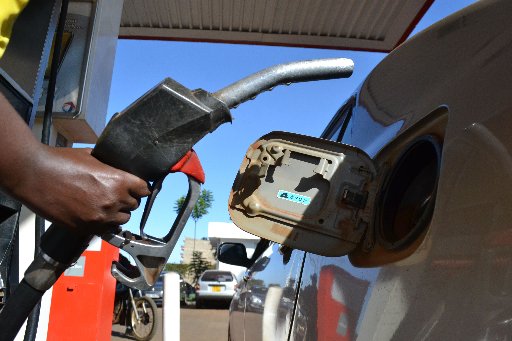
A motorist spending Sh2,000 for fuel and using Safaricom’s mobile money wallet Lipa Na M-Pesa will now pay Sh10 more compared to a person paying using cash or plastic cards. This follows a decision by some fuel station dealers to pass on half of the one per cent commission charges that they pay to Safaricom to their customers citing low profit margins in the tightly regulated industry.
Safaricom CEO Bob Collymore on Wednesday said the charge on Lipa na M-Pesa users was limited to some petrol stations.
“Lipa na M-Pesa service is still free to end users, however some petrol stations are charging 0.5 per cent of the total value,” Mr Collymore said. Petrol station owners currently pay a one per cent commission on the value of every payment made through Lipa na M-Pesa from the initial 1.5 per cent that Safaricom used to charge during the first months of the service.
Banks charge traders between three and five per cent commission on credit and debit card swipes made by customers, making Lipa na M-Pesa the cheapest cashless payment option for businesses.
The service has registered 49,413 business owners who receive an average of Sh11.6 billion worth of payments per month. “As a matter of transparency, we are running a campaign to inform our consumers about this, warning them that they may attract some charges in some of the petrol stations,” said Mr Collymore.
The following report was first published in the Business Daily.
An Equity Bank Uganda executive has allegedly swindled the lender of $2.8 million (Sh282 million), adding the Kenyan firm to the growing list of companies that have been hit by internal theft.
David Serwamba Musoke, the operations manager at Equity Bank’s Oasis Mall Garden branch, was on Tuesday charged with stealing $1.4 million (Sh137 million) through money laundering, according to the charge sheet in a Kampala court.
He is alleged to have committed the offence with eight co-conspirators who were not before court.
Mr Musoke is separately facing two other charges of embezzlement, in which he is accused of stealing $700,000 and $750,000 (or a total of Sh142.1 million) which prosecutors say went into his possession by virtue of his employment.
The manager faces a fourth charge of causing Equity Bank financial loss of $1.4 million (Sh137.2 million) by authorising payment of the money to false owners without proper verification and due diligence.
Six businessmen and a driver are listed as co-conspirators in the crime. They are Abubakar Kalungi, Shafik Mubarak, Mathew Keeya, Isaac Serwamba, Joseph Mugisha, Kenneth Matovu and Bernard Lubega.
They are said to have helped Mr Musoke to “convert, conceal and transport” funds on the first charge of money laundering, but have not been cited for the other crimes.
The Anti-Corruption Court in Kampala on Wednesday denied the eight suspects, who have been in police custody for over a month, bail after the presiding judge ruled that they were a flight risk.
“Basing on the fact that the sureties the suspects have presented have not convinced court on their exact places of residence, there is a high likelihood of them (suspects) absconding from court,” said Justice Paul Mugamba.
“The court further remands them to Luzira prison until July 3 for mention as inquiries into their case continue.”
The accused first appeared in court on June 17th and were then sent to Luzira prison after the presiding magistrate read their charges, without allowing them to plead.
Mr Musoke is accused of committing the offence between March 28 and 29th at Oasis Mall Garden, a swanky establishment located in Kampala.
Equity Bank launched operations in Uganda in July 2008 and had grown the subsidiary to more than 31 branches by the end of last year.
The Uganda subsidiary has more than a half a million customers, according to the lender’s latest annual report. Besides Kenya and Ugandda, Equity also has operations in Rwanda, Tanzania and South Sudan.
In the full year to December 31, 2014, Equity’s Uganda subsidiary returned a Sh109 million pre-tax profit, a 98 per cent increase from the previous year’s Sh55 million profit.
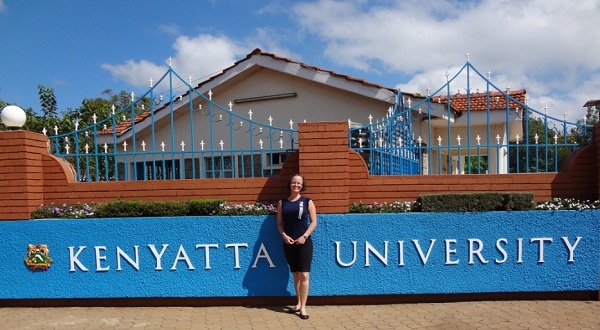
Career Opportunities in a Fast Growing Institution – Kenyatta University seeks to recruit competent and dedicated applicants to fill up the following positions.
A. 1. School of Education
a). Department of Educational Foundations Areas of specialization
History of Education
Sociology of Education
Philosophy of Education
Comparative Education
3.Directorate of Students Affairs
(For the School of Law)
Counselor – Grade 11
Applications and letters from the referees should be received not later than, Monday, 29th June 2015.
For more information and job details, see; Vacancies on Educational FoundationsB.
School of Medicine Department of Pathology Pathology Lecturer/ Pathologist
Qualifications:
The Pathology lecturer will participate in teaching in the Pathology Department, School of Medicine.
In addition he / she will participate in service delivery at the Kenyatta University Funeral Home. Qualifications
Bachelor of Medicine and Bachelor of Surgery (MBChB) or equivalent Degree from a recognized universityMasters Degree in Anatomic Pathology or General pathology from a recognized university
At least two (2) years post qualification experience in the specialty in a reputable institution
Applicants must be registered with the Kenya Medical Practitioners and Dentists Board as Specialists
Applications and letters from the referees should be received not later than, Monday, 29th June 2015.
C. Kenyatta University Funeral Home Stores Assistant Qualifications:
KCE Division III/ KCSE Mean Grade C (Plain) and above
Diploma in Procurement/ Supplies and Logistics from a recognized institution preferably from KNEC or CIPS
At least three (3) years experience in Purchasing and Supplies Management, one (1) of which should be in a public institution
Willing to work in the Funeral Home
Computer literate
Reports to the Director, Kenyatta University Funeral Home
Duties:
Ensure that the Stores Requisition have the necessary authorization and approval
Maintain and update Stock Ledgers
Costing of stores requisition from Kenyatta University Funeral Home
Ensure stocks are kept at optimal levels
Verify issues and receipts of stocks
Raise Stock Received Notes and Stock Return Notes
Any other duties as may be assigned by the Director, Kenyatta University
Funeral Home Receptionist
Qualifications:
KCE Division IV/ KCSE Grade D+ and above
Diploma in Front Office Operation/ Reception/ equivalent from a reputable institution
At least three (3) years experience in a busy office environment
Computer literate
Willing to work in a Funeral home
Knowledge of a foreign language and work experience from a Funeral home will be added advantage.
Applications and letters from the referees should be received not later than, Monday, 29th June 2015.
D. School of Medicine:
1. Department of Obstetrics and Gynaecology
i. Professor
ii. Associate Professor
iii. Senior Lecturer
iv. Lecturer
Family Medicine Programme:
i. Professor
ii. Associate Professor
iii. Senior Lecturer
iv. Lecturer
v. Tutorial Fellow
2. Department of Surgery & Orthopadics
Areas of Specialization:
Dental/maxillofacial Surgery
General Surgery
Plastic and Reconstructive Surgery
Paediatric Surgery
Urological Surgery
Neurosurgery
Ophthalmology
Anaesthesiology
Micrology
Radiology
i. Professor
ii. Associate Professor
iii. Senior Lecturer
iv. Lecturer
3. Department of Paediatrics and Child Health
i. Senior Lecturer
ii. Lecturer
For more information on job details, see; School of Medicine Job VacanciesApplications and letters from the referees should be received not later than, Friday, 10th July 2015
Inquires:
For details related to job specifications and general requirements, kindly visit our website: www.ku.ac.ke
Kenyatta University is an equal opportunity employer and canvassing will lead to automatic disqualification.
Only short-listed applicants will be contacted.
Women and persons with disability are encouraged to apply.
Applicants and Referees should write directly to:
Deputy Vice-Chancellor (Administration)
Kenyatta University
P. O. BOX 43844 – 00100
Nairobi.
“Maybe I have never thanked them enough.” Dr Simon Gicharu uses these words to acknowledge the roles of two women he terms as his rock — his mother and wife.
“My mother, Alice Wambui taught me the value of honesty and hard work. She also taught me to never give up until I had tried,” says the founder of Mount Kenya University (MKU), who was recently inducted into the World Entrepreneur of the Year Hall of Fame. Dr. Gicharu who single-handedly started the first private university in Kenya, Mount Kenya University, was among the 65 people worldwide picked to attend World Entrepreneur Of The Year 2015 meeting in Monaco, France.
The event, which is sponsored by Ernst & Young, recognizes the accomplishments of entrepreneurs. He represented East Africa alongside Wale Tinubu of Nigeria and Asher Bohbot of South Africa. He won the Ernst & Young Eastern Africa Entrepreneur Of The Year 2015 Award. The award is given on the basis of entrepreneurial spirit, financial performance, strategic direction, innovation, global impact, personal integrity, influence, and philanthropy.
“My wife Jane Gathoni egged me on whenever I felt like giving up. She always told me to walk on even when I hit a wall,” says Gicharu, who once lost his teaching job for going to study abroad before informing his employer. Gicharu had been awarded a one-year scholarship by the British Council to study about managing enterprise growth at Cransfiled University in the UK in 1996. Baroness Lynda Chalker, the then Secretary of State for Commonwealth Affairs and Overseas Development handed him the certificate.
Greece missed a crucial debt payment to the International Monetary Fund, the fund said early Wednesday, deepening a crisis that has haunted world leaders and financial markets over the past week. The development came as Greece’s European creditors each rejected an 11th-hour attempt by Athens to extend the country’s international bailout program.
Greece is not technically in default, but missing the payment of 1.5 billion euros, or about $1.7 billion, is yet another warning that the country will probably be unable to meet its other obligations in coming weeks, to its bond holders and to the European Central Bank. That might make the bank, one of the country’s chief creditors, less willing to continue emergency loans that have been propping up Greek banks for the past several months.
By declaring Greece in arrears, the I.M.F. avoided using the term “default.” Credit rating agencies also will not consider Greece in default based on missing the I.M.F. payment, because the I.M.F. is not considered a commercial lender.
But Jeroen Dijsselbloem, the head of the Eurogroup of finance ministers, said late Tuesday night that Greece was effectively in default and could face even tougher conditions for a new aid package.
“I think the fact of the matter is that Greece is in default or will be in default tomorrow morning on the I.M.F. and also, I believe, on a loan to their own central bank,” Mr. Dijsselbloem told CNBC. “But they will be in default, and I don’t think I can alter that in the short term.”
Greece now joins the roster of countries — including some of the poorest and worst governed — that have missed payments to the I.M.F. Also on that list: Zimbabwe, Sudan and Somalia.
With just hours to go before the deadline for the payment, the Greek prime minister, Alexis Tsipras, had asked the other nations that use the euro to provide another bailout that could also buy Athens time to renegotiate its crippling debt load.
Finance ministers of those countries discussed the proposal on Tuesday night and left open the possibility that Greece could eventually win a new aid package, but dashed any hopes Athens had for immediate action. Chancellor Angela Merkel of Germany had said earlier in the day that no deal with Mr. Tsipras’s government could be negotiated until after a referendum on Sunday in which Greeks will be asked to accept or reject an offer made last week by Greece’s creditors.
Greece’s missed payment was the largest in the fund’s history. Sudan still owes about $1.4 billion from loans acquired in the 1980s, according to the fund.
Other countries that have fallen behind more recently include Iraq, Bosnia and Afghanistan. All three eventually settled their obligations to the fund.
Jacob Funk Kirkegaard, a senior fellow at the Peterson Institute for International Economics in Washington, said delinquency would put Greece in ignoble company.
“They are joining countries we would normally regard as failed and failing states,” Mr. Kirkegaard said. “The symbolism is quite dramatic.” The I.M.F. declined to comment on whether it expected Greece to make the payment it just missed sometime in the future.
The statement was vague, noting that Greece had applied for a two-year agreement for new loans from the European Stability Mechanism. The statement said that the aim was to help the country meet its debt obligations and that Greece’s intention was to remain in the eurozone.
The lack of specificity in the statement made it unclear whether it was just a repackaging of previous requests — already rejected in Brussels, the base of the European Union — or if the prime minister had offered new proposals.
Hours earlier, Mr. Tsipras spoke by telephone with Jean-Claude Juncker, the president of the European Commission; Mario Draghi, the chief of the European Central Bank; and Martin Schulz, the president of the European Parliament. And in the Greek government, competing voices were debating how to proceed, analysts said.
“What is certain is that there is a lot of pressure inside the government,” said George Pagoulatos, a political analyst in Athens. “There are some people there who realize the huge risks in the path the country is on.”
Negotiations have been going on for months, as Greece sought to unlock a frozen €7.2 billion bailout payment and complete a new comprehensive agreement that would include more financing and could come with major debt relief. But the talks broke down last weekend, after Mr. Tsipras unexpectedly announced that a “yes or no” national referendum would be held so voters could decide whether to accept the terms proposed by creditors, which he found onerous.
The fund has not granted a request to delay repayment since the 1980s, making it highly unlikely that Greece would be given different treatment. The change of policy came about because the fund determined that giving extensions to countries that fell into arrears did not produce benefits for those countries.
The fund would still take into account the request by the Athens government for an extension. But any final decision is likely to take several weeks.
Apostolos Gkoutzinis, a partner in London with the New York law firm Shearman & Sterling and the head of the firm’s European capital markets group, said Greece would eventually have to make good on the missed payment in order to avoid the risk that the I.M.F. would make no further loans.
“Without the I.M.F., the Greeks really have no safety net,” Mr. Gkoutzinis said. “Without that backstop, Greece might not even be able to import essential goods like medicines and petrol in the future.”
On Tuesday, Mr. Tsipras had requested more aid from the European bailout fund, the European Stability Mechanism, but a new program would require a number of procedural steps and raise significant new challenges for Greece.
Photo
A pro-European protester at a rally in Athens on Tuesday.Credit Marko Djurica/Reuters
“Any talks about a future program will have to be discussed in the Eurogroup” and “will have to be assessed by the institutions,” Mr. Dijsselbloem said Tuesday night.
He was referring to the three institutions — the European Commission, the I.M.F. and the Central Bank — that oversee Greece’s compliance with the terms of the two giant bailouts it has been granted in the last five years.
The confirmation of the missed payment came after top European Union officials outlined another offer to Mr. Tsipras on Monday night, which suggested that both sides were interested in defusing a crisis that has left Greece financially crippled and at risk of becoming the first nation to leave the euro currency union.
France and the United States, among other nations, have been pressing for a compromise that could avert the risk of Greece’s problems spreading to other countries and reduce the strain on European unity.
With the nation’s banks shut down and Mr. Tsipras’s government confronting intensifying financial strains, his office released a statement Tuesday afternoon confirming that the government had proposed a new bailout from a different pot of money than the one drawn on so far.
Mr. Tsipras has called on voters to choose “no” and has denied that the referendum is the equivalent of choosing whether to leave Europe’s currency union, something that most Greeks do not want to do.
Pro-Europe demonstrators massed in Syntagma Square in Athens outside Parliament on Tuesday night despite drizzle, thunder and lightning. As speakers began shouting, “Vote yes to Europe,” the demonstrators shouted and blew whistles. Some waved Greek flags, others red flags bearing the words “YES to Europe. YES to the Euro.”
Alexandros Limniatis, 67, who retired from the telephone company OTE, said he had been frustrated with the governing Syriza party since it took office this year. But the last straw, he said, came on Monday, the first day of capital controls, when he found himself waiting in a long A.T.M. line to receive his daily cash allotment of €60.
“I went home to my grandchildren and I thought, ‘What Greece am I leaving them?’ “ he said, twisting the strand of worry beads he had taken up since the doctor told him to quit smoking. “So I made up my mind to come here to demand hope. Greece in Europe. A European Greece.”
Initially, European officials were furious about Mr. Tsipras’s decision to call a referendum, interpreting the move as brinkmanship in the negotiations. But on Monday, several European leaders, notably Mr. Juncker, began openly lobbying Greek voters to choose “yes.”
Some analysts said European officials were hoping that a “yes” vote on Sunday would force Mr. Tsipras to resign, a development that would be welcome to the creditors after months of bitter clashes with Athens.
Some European officials have been signaling that they would like to use the coming days to try to persuade Mr. Tsipras to stop pushing for a “no” vote — an unlikely prospect given the consistent position Mr. Tsipras has taken against the terms offered so far by the creditors.
More often than not employees have the perception or attitude that they are irreplaceable within the organization. If you look closely, most of them are easily replaceable. However, there are a few whose skills and work output are irreplaceable. They have managed to cultivate their skill or have a unique selling point that places them above the rest. These are the guys you need to hold onto within the organization.
There’s an old saying that goes, ‘he who pays the piper calls the tune’. In most cases, the one who pays the piper or pays for the service can dictate exactly how they want something done. Now in this scenario (irreplaceable mindset), the piper can decide how much he will charge for playing a tune especially if it’s rare, on demand or the art of his play is unique. Why? The piper has developed a unique selling point that he can use to dictate his reward and this is something that each of you must look for.
Closer to home I met a young man who happens to be the brother of one of my employees, DJ Protégé. Scott, the man I met, is a talented violinist who has made sure that when you search for him on Social Media, you know that you are dealing with a professional (ProViolinist).
Now, this young man just doesn’t play the usual jazz music or other tunes you would expect from a violinist. He has mastered the art of playing this four-stringed instrument alongside original tunes and blending them with DJ mixes when entertaining his crowd and leaving them gasping for more. His rare style of play that is naturally perfected makes him popular and is sought for by many corporate events.
Friends, you need to create a name for yourself so that the world will beat a path to your door and reward you. Now I will ask again? Are you irreplaceable? Is your skill, style of work and output irreplaceable?
Once you manage to do something few people can do, then you can pretty much name your price. So what have you got to offer? Who needs those skills and talents? How can you put them to best use? How do you tell those in need of your skills that you have them? What skill are you willing to master in order to meet a need that’s waiting to be met out there?
Think about it! We were all created differently, so each of us need to cash in on our unique factors. Refrain from saying that you don’t have or don’t know your unique selling point. Start today by asking your peers, workmates, bosses etc. what unique factor you have. Make your skill or talent ‘irreplaceable’ and let it define your success.
So wake up and smell the coffee. YOU ARE ‘IRREPLACEABLE!’