Home Blog Page 2245

5 Star Luxury Hotel Villa Rosa Kempinski Nairobi, Kenya

1

Offering the perfect fusion of European Luxury and Kenyan hospitality, Villa Rosa Kempinski is uniquely positioned between city and country – a unique destination of iconic architecture where guests can spend part of the day climbing corporate ladders and the rest of the time are free to luxuriate in relaxing surroundings.

The Villa Rosa Kempinski hotel has 200 rooms and suites distributed throughout 10 floors, including a Premier Suite and a vast 4 bedroom Presidential Suite on the top floor.

In addition to Cafe Villa Rosa – the all day dining restaurant, K Lounge on the lobby level, the main bar -Balcony Bar and a Cigar Lounge, the hotel features 88 -the Pan Asian Restaurant, LUCCA – Italian Restaurant and Deli and Tambourin which is the Levant style lounge. Tambourin is yet to open.

With state-of-the-art banqueting and conferencing facilities, the hotel’s pillar-less grand ballroom is able to accommodate 500 people. Additional facilities for smaller gatherings such as conferences, meetings, and other events are also available.

The hotel has a spa with nine treatment rooms, including a couples treatment room, a fully equipped fitness center with dedicated cardiovascular and weight training rooms and an aerobics studio.

Esau Kioni: Why capsicum (pilipili) and sukuma wiki gives me more, bigger eggs

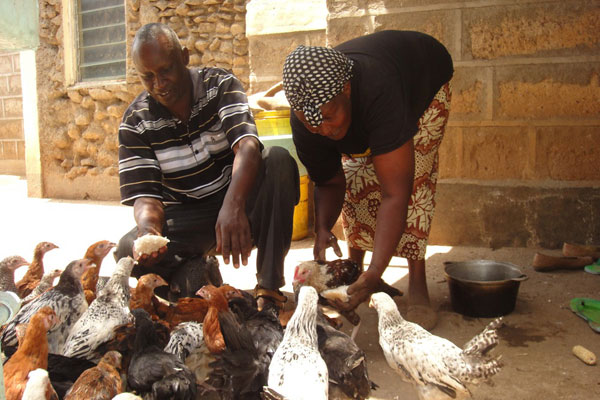
Esau Kioni tends to his capsicum and sukuma wiki (collard greens) with a sharp eye, checking the back of the leaves for pests.

Observing him, one would be forgiven for thinking he has an order for vegetables from one of the big hotels in Nyeri.

But that is not the case. Kioni grows the crops and some cabbages on more than an acre mostly to feed his indigenous chickens and six dairy cows.

The former security chief of retired President Kibaki ventured into farming after retiring from the job two years ago.

He keeps close to 1,000 free range birds on half-an-acre of the farm. The poultry section is fenced with wire-mesh to prevent the birds from straying or mixing with others from the neighbourhood.

“I choose free-range for two reasons. First, because they have space to roam freely, the birds get to exercise a lot and thus produce better eggs and meat and second, this method saves on costs,” he says.

When he has a surplus of the vegetables, Kioni sells to traders in Nyeri and Othaya town, but he says this does not happen often because his livestock come first.

GOOD RETURNS
When he does sell, he charges Sh100 for a kilo of capsicum, Sh30 for a cabbage and Sh10 for a bunch of sukuma wiki.

In a day, Kioni says he feeds three quarters of a wheelbarrow of capsicum to the chickens in the morning. The capsicum is chopped into pieces and placed in a trough in the coop. During the day, the chickens are treated to a wheelbarrow of sukuma wiki.

The vegetables are tied into bunches and hung in the coop just within reach so that the birds have to jump to get a bite. “This way, the birds are kept preoccupied, preventing cannibalism,” he says.

Kioni says the capsicum, sukuma wiki and cabbage should be fed to the chickens while fresh.

However, the cabbages and sukuma wiki for the cows are kept in a dry place for two days before it being chopped and fed to the animals.

He says the crops must be dry to prevent diarrhoea in the animals.

John Wambugu, an agronomist at Wambugu Agricultural Training Centre in Nyeri, says capsicum and other types of pepper help prevent diseases in birds and animals.

INCREASED EGG YIELDS

“The crop has chemicals that keep livestock healthy.

‘‘Besides that, chickens need greens like cabbage and sukuma wiki because the crops have vitamins, calcium and zinc,” he says.

Capsicum, on the other hand, compels layers to drink plenty of water, aiding egg production and general health.

Kioni says since he started feeding capsicum to his birds, egg production has increased from 76 trays to 133 every three days.

He sells eggs for Sh20 each and hatches the others. The mature chickens are sold in Nairobi for Sh450.

From the six cows, he gets about 100 litres of milk a day that he sells to Kenya Cooperative Creameries in Nyeri.

Apart from keeping chickens, he also rears 15 guinea fowl, 10 ducks, 10 geese and 20 bantams.

According to Kioni, he got the idea of feeding his chickens with capsicum from a specialist at Kenya Agricultural and Livestock Research Institute.

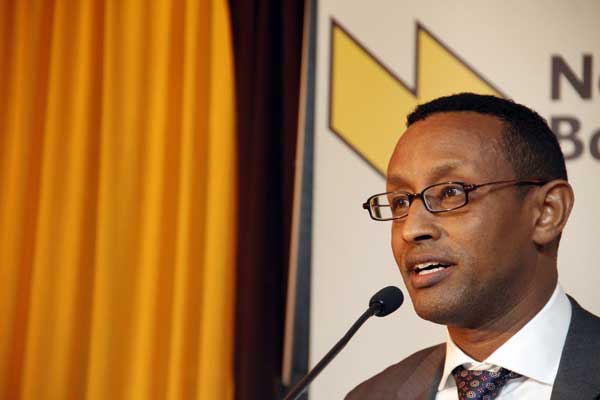
NBK okays Cytonn report that ranked it second worst stock to invest in

The National Bank of Kenya (NBK) has welcomed the findings of a banking report from Nairobi-based Cytonn Investments.

The firm reviewed key banking ratios and metrics for 11 banks listed at the Nairobi Securities Exchange, and ranked them based on their performance.

The Cytonn placed NBK in second position on its loan to deposit ratio — which measures the ability of an institution to cover customer withdrawals — and 11th on its cost to income ratio — which is got by dividing operating costs by income received.

Overall, the Cytonn survey ranked NBK 10th, with CFC Stanbic taking first position. NBK said the survey is useful in helping it benchmark itself against its peers as it continues with its restructuring process.

Mr. Mafioso: What Makes A Man A Man

1

Mr. Mafioso: What Makes A Man A Man

Keep your word. If not, the only words you’ll have left are: “Would you like fries with that?”

In my particular line of work, as in most, a combination of competence and diligence is what makes up some of the best workers. But none of these traits are worth a damn if that worker isn’t reliable. Dependable paisanos are a dying breed these days.

Guys are hitting the snooze button one too many times, are not exercising their best judgment or are getting caught up with the booze and the broads — marone, you can’t even rely on a ride home from the airport anymore.  And if you think you can go it all alone, and the only reliable worker you need is yourself, think again.

No one runs a self-sustained business — and no one runs a self-sustained life for that matter. The guy selling dirty-water hot dogs on the corner relies on the bread man for his buns and then on his wife to clean his mustard-stained apron. So, whether you’re working with a street vendor or a street hustler, here are a few pointers for being reliable.

Punctuality is key

In a business like mine, five minutes can mean a lot. You tell a guy to be somewhere at noon because, well, if he isn’t, you might not have the option to wait the extra five. Punctuality stands for a lot.

Kim Kardashian poses naked AGAIN in compromising positions for explicit images

You might not see what the big deal is in punching in a minute or two late, but it’s worth the effort to punch in a couple of minutes early. It stands for something. It shows you have priorities, and being where you’re supposed to be is one of them. Don’t pull a Continental and arrive on your own schedule. If you can’t get somewhere on time, marone, get a better watch.

Keep your word

A man is only as good as his word. Once he breaks that, he’ll be lucky if he gets a gig at the drive-through. It’s a simple rule, but time and time again, we see guys breaking it. Some cafone says one thing, and he does another. Frankly, you can’t trust a guy like that. The foundation for being a reliable man is being a trusted one.

The words that come out of your mouth should never be put into question. Unfortunately, once you cross that line, all credibility is lost. So to avoid that free fall into the disastrous realm of deceit, remember: Keep your word. If not, the only words you’ll have left are: “Would you like fries with that?”

Don’t get distracted

Nowadays, with all the ADD. and ADHD, it’s hard to get something done ASAP. Distractions are all around us, but they can’t get in the way of getting a job done. If some goomah in a short dress is higher on your list of priorities than helping out a fellow paisan, then you’re in dire need of an adjustment.

KTN’s Betty Kyalo’s hits back at Njoki Chege’s Blue Subaru ‘ignorance’

Reliable men have their priorities in order, and they can’t be consumed by selfish motives or an obsession with cheap tail. I know you got the video game system running and you have to update your Facebook status, but the boss will not be so understanding.

Take Don’t exaggerate for affect

The same gavones who started with “the dog ate my homework” bit keep the excuses coming later in life. They’ll have a story all the way to the unemployment line. But for most, there are often legitimate reasons for not following through with something. You have a couple of those get-out-of-jail-free cards in the bank.

The car got blindsided, the kid got sick — these misfortunes can plague any guy with a hefty to-do list. But when you start pulling these excuses out daily, you’ve proven that you can’t be depended on. The bottom line: If you have a legitimate reason for not following through, tell it like it is. Don’t start adding in a new storyline; we can all smell the bullsh*t from a mile away.

Take responsibility

When a favour is asked of you, you weren’t chosen blindly out of a deck of cards. You’ve been entrusted with something. Too many guys don’t understand the magnitude of that. Some don’t take it seriously, and some wind up in the ground. Take responsibility for whatever is asked of you.

Don’t make excuses; don’t take it lightly. Whether it’s big or small, be a man and own it. If you need to pick up a carton of eggs from the store, check the expiry date and make sure there’s not so much as a hairline fracture in one of those babies. But let’s hope for your sake that you’ve graduated from the egg runs.

I know I can be a hard ass when it comes to a man’s performance in the workplace, but I also know the true difference between a reliable worker and the guy who shows up to the office 15 minutes late. Your reliable worker rises to the top, and he soon becomes the one who weeds out the dependable prospects from the halfhearted cafones.

Whatever position you hold, the quickest way to the top is to show you have the capacity to be trusted. You’re the first one in the office, you’re focused on the prize, and you don’t take it lightly. That’s the man I want to call my paisan. That’s the guy who’s fit to run my family. But not too fast — I still have a couple of years left.

Mumias out to recover Sh. 241 million from debtors

0

The Mumias Sugar Company is seeking to recover Sh241 million from debtors, who have contributed to the firm’s problems.

Managing Director Coutts Otolo said yesterday lawyers would go after 56 firms that owe the millions. Among them are supermarkets and Spectre International Ltd, owned by the family of Cord leader Raila Odinga. Mr Otolo said Spectre owes the sugar miller Sh33.9 million in non-payment for molasses.

“We do not go after an individual, we go after the company that owes us. That is what the lawyers are doing,” he said.

But in an interview with a local TV station, Mr Odinga said transactions between the miller and Spectre International should not be politicised. He said the firm bought molasses on credit from the plant just like any other business entity. Mr Odinga said Spectre also bought molasses from other sugar companies, such as Nzoia and Chemelil, and from Uganda.

“If the company owes money, it has nothing to do with politics,” he said. Mr Odinga said the purchase of the molasses was guaranteed by National Bank for Mumias Sugar Company.

The leading debtors include Otifer Logistics (Sh36.6 million); Heykal Packers and Distributors Ltd (Sh29.6 million); Y H Wholesalers (Sh20 million); United Distillers Vintners Ltd (19.97 million); Rising Star Commodities (Sh17 million); Y H Wholesalers (imported Sh12 million); Petmark Distributors (Sh11 million); and One-Time Ethanol Debtors Local (Sh10.5 million).

Others are Cups Ltd (Sh9.6 million); Rongai Gen Commodities (Sh6.5 million); Uchumi Supermarkets (Sh5.8 million); Millenium Contractors Company (Sh5.59 million); Morganite Ltd (Sh3.05 million); Nairobi’s Ukwala Supermarkets (Sh2.8 million); Domma Stores (Sh2.28 million); and Unilever Kenya Ltd (Sh2.23 million).

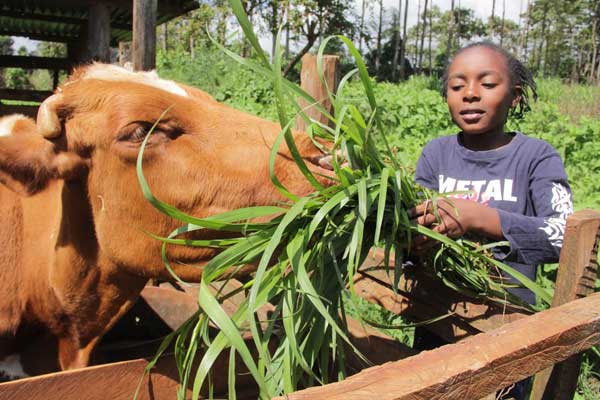
How to beat the high cost of dairy feeds

Unless ingenious and urgent measures are employed to address the myriad challenges facing the livestock sector, in particularly high cost of feeds, farmers will continue to get low returns.

Fortunately, a few entrepreneurs have noticed the gap in fodder production and have ventured into commercial hay farming.

Before commenting on how to establish commercial hay farming as a revenue earner and rescuer of a direly threatened dairy sector, it is important to come to terms with the changes that have affected this sector in recent years.

To begin with, diminishing pastureland and, therefore, forage for livestock is a direct result of the dwindling space available for animal feeds in many parts of the country.

Shortage of land mass to support livestock and dairy farming, in particular, portends a real and worrying crisis for a population whose demand for dairy products and meat is growing geometrically.

Another reason why fodder is scarce is due to climate change. Poor management of the environment leading to unpredictable rain patterns and loss of green cover, use of natural resources with careless abandon and indiscriminate dumping of non-biodegradable waste have, among other factors, led to a catastrophe whose proportions we are yet to fully appreciate.

It seems the only time we extend empathy to such unfortunate misadventures is when communities disagree or even fight and kill each other over grazing or farming rights, a situation that was hitherto unknown in some parts of the country.

COMMON SENSE

Time has come for the government to encourage willing entrepreneurs to invest in the commercial hay sector.

You can imagine how many farmers in densely populated areas such as Kisii, Vihiga and Kiambu, with tiny pieces of land, would take up livestock farming if availability of silage was guaranteed.

But on a realistic note, no farmer in his senses would forego land that supplies subsistence for cows whose food cannot be guaranteed.

Organised commercial hay farming is as sensible in our immediate realities as it is the common sense way to a revamped dairy sector and by extension a vibrant economic venture for thousands of willing dairy farmers.

It is the duty of the Ministry of Agriculture, through its Livestock Department, to ensure that a conducive environment for hay and dairy farming is enabled through providing the right support and incentives.

More importantly, the ministry should move quickly and protect investors in hay farming from vicious encroachment by the breed of the-devil-take-it herders who seem to be the main threat to this otherwise promisingly lucrative engagement.

Equity Bank bags Sh. 15 billion for lending to SMEs

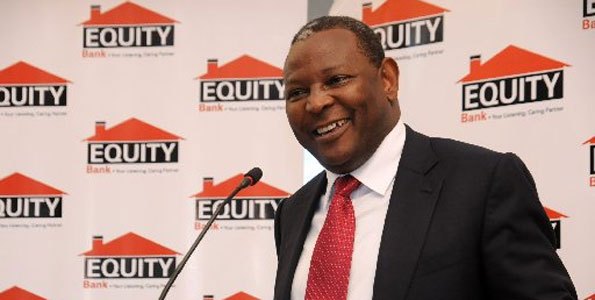
Equity Bank has received Sh15 billion for onward lending to small and medium enterprises (SMEs) from the African Development Bank, in new credit lines expected to cement the region’s largest lender.

Equity Bank Chief Executive James Mwangi said the funds will be extended to entrepreneurs with micro to medium-sized businesses. “This fund is to act as catalyst and facilitate transformation by increasing long-term funding required to allow micro, small and medium businesses to scale up and increase production” said Mwangi during the partnership signing. “This support is regional in six countries where Equity Bank is operating. We want to ensure cross-border trade. Africa has to increase trade with itself. The structural and policy changes in the continent support this.” The bank will provide the loans at ten per cent, which is about half the market rates. Equity Bank is the biggest lender in Kenya, on customer numbers, making up for about half of all the country’s bank accounts.

Mwangi said the bank is working with 619,000 enterprises of this 601,000 are micro-enterprises, 18,564 small businesses, 364 medium and 222 are large enterprises. “We want in three years to have 50,000 micro-businesses become small businesses, then 10,000 small enterprises turned into medium businesses. This is where we need to put more emphasis. It is longevity of the availed fund that is significant” said the Equity Bank chief executive.

AfDB’s credit line to Equity is projected to tackle what most entrepreneurs cite as the single biggest obstacle to doing business – high interest rates on bank loans. SMEs are Kenya’s mainstay, employing the bulk of the population. Mwangi said the loans will help modernise the economic activities of the entrepreneurs, adding that the facility will enhance its capacity to provide long-term loans of up to 15 years.

AfDB’s Director for the Eastern Africa Regional Resource Centre Gabriel Negatu said the loan to Equity will provide access to cheaper loans, both in Kenya and in the other countries that Equity has operations in. “We believe that SMEs are the backbone of the Kenyan economy.”
Negatu said the project aligns with structural transformational themes espoused in the 2013-2022 ten-year strategy of the bank.

“These are innovators and business people who have the know-how, skills and capacity but lack financial resources to grow their businesses from micro to macro and from small to medium,” Negatu said. Equity Bank boss noted that the facility focuses on value addition and scaling up of the production in the targeted enterprises, especially in the export-oriented enterprises. “Manufacturing goods in the region is open to a large market supported by the increasing infrastructure” said Mwangi.

Recently, Equity Bank signed asset financing deals with two leading commercial motor vehicle dealers – Hino Motors Kenya and Simba Colt Motors to provide attractive vehicle financing deals.

Equity Bank will be offering up to 95 per cent financing on Simba Colt Motors range of Mitsubishi Fuso trucks and buses. At Hino Kenya, the similarly tapped the firm to provide asset finance solutions for its Hino 300 and FC 500 models.


10 Myths About Successful CEOs

0

Entrepreneur and CultureIQ are searching for the top high-performing cultures to be featured on our annual list. Think your company has what it takes? Click here to get started.

If I could change one thing about the digital age, I would definitely walk back the whole notion of user-generated content. The vast majority of it is nothing but popular nonsense propagated by pageview-hungry opportunists out to make a buck. At best, it’s feel-good fluff. At worst, it’s complete B.S.

The problem is that people take it seriously. They think some silly habits, hacks, and overhyped fads are going to make them successful entrepreneurs. Nothing could be further from the truth. In my experience, real business leaders don’t pay attention to any of that stuff, especially these myths about CEOs:

They’re extroverted leaders.
If anything, we’re living in the golden age of introverts and geeks. Nobody would ever mistake the likes of Larry Page, Bill Gates, Warren Buffett, or Charles Schwab for extroverts. The very notion that CEOs should be rockstar leaders who exude executive presence is nothing but a myth.

They’re privileged.
CEOs don’t just drop out of the sky into cushy corner-office chairs. Most start with zilch and work their butts off for everything they achieve. Granted, some do come from money but not the majority. If anything, growing up with adversity gives you an advantage.

They’re social networkers.
The overwhelming majority of Fortune 500 CEOs have absolutely no social-media presence whatsoever and those who do post and tweet don’t do it much. That’s just the data. Anecdotally, all the CEOs I know are way too busy running their companies to spend much time on social networks.

They covet their personal brand.
Whenever I tell people that real executives couldn’t care less about their personal brands, someone inevitably brings up Mark Cuban or Donald Trump. After you’ve made your first billion you can self-promote all you like, but that’s not going to help you get there. It didn’t help them get there either.

They’re generalists.
This popular myth was probably started by an overstated conclusion from this article. The truth is, most successful entrepreneurs are exceptional in one field. Mark Zuckerberg and Gates are coders. Buffett and Schwab are financial wizards. Granted, every CEO I’ve known is business savvy but, frankly, that’s not rocket science.

They have high EQs.
Perhaps the most overhyped myth of the day is that emotional intelligence is predictive of leadership performance. Not only has that link been strongly contested by researchers, it’s not at all clear that scoring high on notoriously subjective EQ tests is even a good thing. I think an interesting concept was hijacked by opportunists and turned into a fad. It’s truly sad how many people have bought into the hype.

They read loads of business books.
Most are well-read but not the popular self-help-style books that are all the rage these days. They’re just as likely to be consumers of classic literature, science fiction, philosophy, and accounts of historic figures and companies as anything resembling modern business books.

They’re positive thinkers.
I know CEOs who are generally optimistic, pessimistic, and everything in between. Mostly they’re realistic – at least the good ones are. And they don’t over-think things. Rather, they trust their gut and that’s what helps them make smart decisions. In any case, focusing on the positive can at times help but it can just as easily lead to self-delusion and utopian thinking that holds you back.

Their personal habits make a big difference.
Every highly accomplished CEO I’ve known worked his tail off and had his own particular way of getting things done. No two worked the same way. More importantly, they were all remarkably effective at prioritizing what was critical and focusing on what mattered – making killer products that customers love. Personal habits didn’t make them successful. Doing great work made them successful.

They’re awesome communicators.
Some CEOs avoid communication like the plague while others over-communicate. The ones who are effective communicators keep their sphere of influence relatively tight, speaking mostly with staff, customers, and investors. All-employee emails and all-hands virtual meetings are vastly overrated. In many ways, they do more harm than good.

Perhaps the biggest myth of all is the latest and greatest crowd-pleasing notion that anyone can be a leader just by virtue of a CEO title, a blog, and some Twitter followers. Please. Calling yourself a CEO doesn’t make you one. Real leaders have companies, employees, and customers — not delusions of grandeur.

President Uhuru Kenyatta voted Africa’s President of the Year for his outstanding leadership

0

By PSCU: President Uhuru Kenyatta has been voted Africa’s President of the year 2014/2015 for his outstanding leadership.

The Head of State was picked for the prestigious Africa Education and Leadership Awards for his ability to build consensus locally and abroad, efforts to change policies for the better and supervise solutions that address Kenya’s pressing issues.

Thousands of university students from across hundreds of institutions of higher learning in the continent also recognised President Kenyatta for initiating progressive economic programmes aimed at uplifting the lives of Kenyans.

The students, who are members of the All-Africa Students Union (AASU), presented President Kenyatta with the award which, among other things, celebrates “outstanding leadership and educational excellence”.

AASU is based in Accra, Ghana.

AASU student leaders drawn from 12 local universities presented the award to the President at State House, Nairobi. They were accompanied by Education Cabinet Secretary Jacob Kaimenyi , PS Belio Kipsang and a team from the Kenya Private Sector Alliance.

President Paul Kagame of Rwanda is a previous recipient of the award. The students were led by their AASU, East African representative, Mr Lone Felix of Kenyatta University. The President concurred with the students over the need for more engagement between themselves and the government, saying this would prevent them from resorting to violence to express their concerns.

Prsident Uhuru receiving Award

“You should engage the ministry (of Education) in a more constructive manner without going to the streets and throwing stones”, the President told the student leaders who also requested the Head of State for more funding from the Higher Education Loans Board.

The President instructed Prof Kaimenyi and the Head of the Public Service Joseph Kinyua to explore ways in which the students can be funded to hold the next AASU summit in Nairobi later in the year.

The President told the students to keep their ‘’dreams alive’’, adding that the country is blessed with many resources and nothing should stop Kenya from becoming a prosperous nation.

He said there was need to establish more incubation centres where students can nurture their skills and develop their innovative ideas.

President Kenyatta said he was excited by incubation centres where young people are developing products and exploring economic opportunities. Before presenting the President with the AASU award, Lone said the incubation centres will transform the students from ‘’job seekers to job creators’’.

Kenya Private Sector Alliance representative Vimal Shah said the private sector is working with the student organization in an effort to change students’ mindset so that they stop ‘’resorting to violence and instead to resolve issues amicably’’.

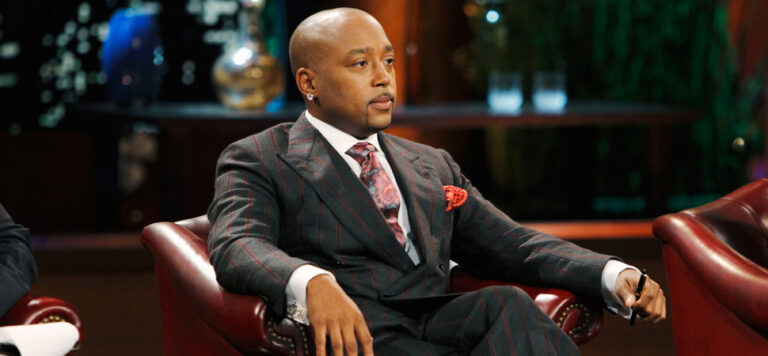
Shark Tank billionaire Kevin O’Leary’s 10 quotes you can learn from to succeed

Kevin O’Leary, or “Mr. Wonderful” for you Shark Tank fans, is a seasoned entrepreneur and investor that doesn’t hold back when it comes to dishing out advice to contestants that appear on the hit television show.

Like him or not, his advice is spot on. Here are 10 quotes from Kevin O’Leary that every entrepreneur can learn from.

1. “It pains me to see good entrepreneurs chase bad opportunities.”

Successful entrepreneurs come up with bad ideas all the time and many continue to pursue them because they are blinded by passion. Past success doesn’t necessarily guarantee the next idea will be a home run. While it helps, it isn’t always guaranteed.

Seek honest feedback and opinions about your idea from outside your inner circle. Family and friends aren’t always going to be brutally honest in fear of discouraging or upsetting you. Feedback from your target market in the early stages can help you engage the breaks on a bad idea before you get too deep.

2. “Whatever you pay attention to grows!”

This applies to everything in life. Imagine if you didn’t pay attention to your significant other — that relationship is eventually going to fall apart, not grow.

Your business requires your full attention in the same respect. Everyone knows that one person that is full of great ideas but nothing ever comes to fruition because they are chasing too many things. They spread their attention too thin and no idea ever receives the amount needed to grow.

3. “I like to take risks. That’s how I make money. But they are calculated risks.”

Without risk there is no reward, but that doesn’t mean you should jump into a situation blind and hope for the best. For example, if you are considering quitting your job and giving 100 percent of your time to a new venture you need to make sure you have some safety nets in place.

Waiting until you have several months worth of business and personal expenses in reserve will come in handy in the event that you encounter a bumpy launch. Taking that risk without the financial reserve planning is almost suicidal — a single hiccup could spell disaster and complete failure.

4. “Nobody has a monopoly on good ideas.”

Anyone can come up with a good idea — past experience, success, net worth and connections have nothing to do with it. Those that want it bad enough will do whatever it takes to bring that idea to life. Those that make excuses will say, “I had that idea — I just didn’t have the resources to make it happen” when someone else steps up and delivers.

Don’t ever think your idea is too small or you don’t have the ability to bring your vision to life. The only thing that can stop you is excuses. And if you find out that someone already took your idea, don’t stress — come up with something else. There will never be a shortage of brilliant ideas.

5. “I’ve probably heard more than 10,000 pitches … and truth be told, most of them sucked.”

It seems that everyone has a startup these days and this leads to investors and members of the media being bombarded with pitches every direction they turn. It doesn’t matter what you are trying to attract — an investment or press for your startup — before seeking either you need to make sure you are fully prepared.

You might only have five minutes for a once-in-a-lifetime pitch opportunity and you are only in pre-launch media exposure-seeking mode once. Never assume you will receive a second chance.

6. “People are very aware what I stand for on TV. Nobody gets rich on television, but a chance to build their brand. That’s what I’m attempting to do.”

O’Leary is paid approximately $30,000 per episode of Shark Tank, according to 2014’s TV Guide annual industry salary report. While this might sound like a lot of money, it’s peanuts compared to his net worth. He isn’t on the show for the money — he’s there for the branding exposure.

While Kevin O’Leary has been a successful entrepreneur for quite some time his personal brand really took off because of the exposure Shark Tank provides.

Look at all opportunities in terms of long-term branding and not necessarily an immediate revenue boost.

7. “It’s a stupid idea, it’s going to zero, take it behind the barn and shoot it.”

We constantly hear entrepreneurs on Shark Tank talk about how they took out a second mortgage or borrowed absurd amounts of money from family members to start a company based on what Kevin O’Leary calls a stupid idea.

Not every idea is stupid in the beginning, but when it becomes apparent that there is trouble ahead, knowing when to pull the plug can help minimize financial disaster. The faster you quit a bad idea, the sooner you can start another idea that shows more promise.

8. “Assholes get rich because they’re not afraid to ask for what they want.”

You can sit there and think about what you want or you can go ahead and ask for what you want. It’s quite simple — and if you don’t ask for it someone else will.

“I wonder how he got linked up with that company?” “How did they land that deal?”

Don’t be scared to ask for what you want. What is the worst that can happen? If you get turned down then get back up and ask again. If you are scared of rejection you are going to have problems. You need to be able bounce right back up after getting kicked to the ground.

9. “Never let them see you sweat … and never pay with credit.”

I’m going to focus on the second part of this quote. There are several ways to raise the funds required to start a business, including bootstrapping, which is easier if you have a business model that generates immediate revenue, or you can take on an investment round, raise funds via a crowdfunding effort or max out credit cards.

The credit option is the most dangerous. While it may seem like the easiest option, you have to consider the consequences. If you rack up $20,000 in credit card debt you are going to have to pay back high interest payments. If the business fails you are still liable for that mountain of debt, whereas if you were bootstrapping and failed, you wouldn’t be faced with that negative balance.

10. “My partners … taught me that in order to create wealth, I needed to pair up with people whose strengths compensated for my weaknesses.”

You aren’t going to be great at everything — it just isn’t feasible. The sooner you can identify your own weaknesses, the sooner you can put people in place to fill those voids. This is how successful organizations are built.

Not only will you lose your mind if you try to do everything yourself, but your business will suffer. Align with other individuals that share your same vision and work ethic — but specialize in the areas where you are weak.