Home Blog Page 2247

President Kenyatta to launch Africa’s largest Wind Power Project

0

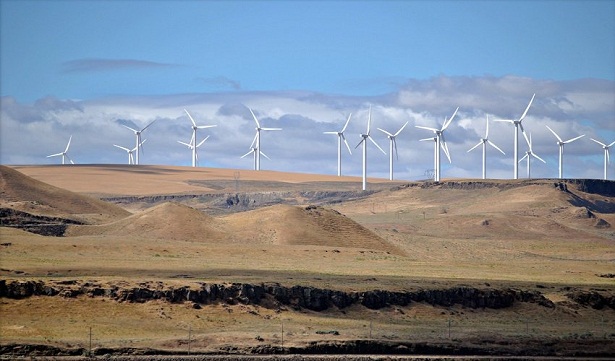
President Uhuru Kenyatta is scheduled to launch the construction of Africa’s largest wind power plant, the Lake Turkana Wind Power project on Thursday.

The plant, which will be put up at a cost of 70 billion shillings, will generate 310 MW of electricity, thereby increasing Kenya’s power generating capacity by 20 percent.

The pioneering of Africa’s largest wind power plant will be set up in Loyangalani district, Marsabit West Sub County. The project proposes to provide low cost wind power at 310MW against the current and only wind power plant, Ngong’ Hills Wind Plant, which produces about 5.1MW of electricity.

The plant’s energy transmission will also expand Kenya’s current electricity capacity which stands at about 2000 megawatts, by 20 percent.

“This project is the largest wind power project on the African continent, the largest single private sector investment in the Kenyan industry to a tune of approximately 75 billion shillings,” said Mugo Kibati, the project chairman.

The wind farm sits on 40 thousand acres in Turkana and will comprise of 365 wind turbines each with a capacity of 850 KW. The first 50 to 90 MW from the project will be ready for injection into the national grid by September 2016, with the estimated time for full completion of the project to be two years.

Locals are also expected to benefit from the project through job creations and an upgrading of existing roads from Laisamis town to the wind farm site, a distance of 204 kilometres. The plant has a twenty year power generating agreement with Kenya Power.

This is according to Carlo Van Wageningen, Director Lake Turkana Wind Power Project. The plant also has a consortium with African Development Bank and South Africa’s Standard Bank and Nedbank capital as the lead arrangers.

Lisa Mugera contributed to this story

Greece’s Debt Crisis Explained

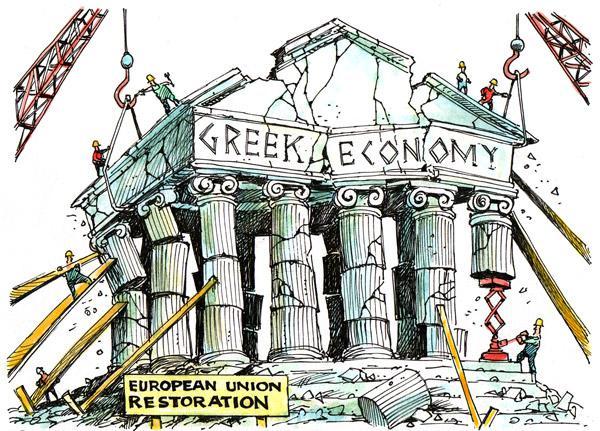
Greece, the weak link in the eurozone, is inching closer to defaulting on its debt. The country has been in a long standoff with its European creditors on the terms of a multibillion-dollar bailout. If the country goes bankrupt or decides to leave the 19-nation eurozone, the situation could create instability in the region and reverberate around the globe.


How did Greece get to this point?

Greece became the epicenter of Europe’s debt crisis after Wall Street imploded in 2008. With global financial markets still reeling, Greece announced in October 2009 that it had been understating its deficit figures for years, raising alarms about the soundness of Greek finances.

Suddenly, Greece was shut out from borrowing in the financial markets. By the spring of 2010, it was veering toward bankruptcy, which threatened to set off a new financial crisis.

To avert calamity, the so-called troika — the International Monetary Fund, the European Central Bank and the European Commission — issued the first of two international bailouts for Greece, which would eventually total more than 240 billion euros, or about $264 billion at today’s exchange rates.

The bailouts came with conditions. Lenders imposed harsh austerity terms, requiring deep budget cuts and steep tax increases. They also required Greece to overhaul its economy by streamlining the government, ending tax evasion and making Greece an easier place to do business.


If Greece has received billions in bailouts, why is there still a crisis?

The money was supposed to buy Greece time to stabilize its finances and quell market fears that the euro union itself could break up. While it has helped, Greece’s economic problems haven’t gone away. The economy has shrunk by a quarter in five years, and unemployment is above 25 percent.

The bailout money mainly goes toward paying off Greece’s international loans, rather than making its way into the economy. And the government still has a staggering debt load that it cannot begin to pay down unless a recovery takes hold.

Many economists, and many Greeks, blame the austerity measures for much of the country’s continuing problems. The leftist Syriza party rode to power this year promising to renegotiate the bailout; Mr. Tsipras said that austerity had created a “humanitarian crisis” in Greece.

But the country’s exasperated creditors, especially Germany, blame Athens for failing to conduct the economic overhauls required under its bailout agreement. They don’t want to change the rules for Greece.

As the debate rages, the only thing everyone agrees on is that Greece is yet again running out of money — and fast.


What’s the latest?

Banks and markets throughout the country are closed until next week, after Prime Minister Alexis Tsipras interrupted last-ditch debt negotiations early Saturday with the announcement that he was calling a referendum for Sunday, July 5 on whether to accept the tough terms offered by international creditors.

On Sunday, the European Central Bank said it would not expand an emergency loan program that has been propping up Greek banks in recent weeks. But at the same time, the central bank did not cut off support entirely, giving the Greek government some extra flexibility in the coming days.


Will Greece default on its debt?

Greece will almost certainly miss a repayment of more than 1.5 billion euros, or $1.7 billion, to the I.M.F. that is due by midnight Tuesday.

But that won’t necessarily put Greece in default with the I.M.F. The fund, if it follows tradition in such matters, could buy time by simply declaring Greece to be in arrears.

Missing the payment, though, could make it even more difficult for the European Central Bank to continue extending emergency loans to Greek banks. The central bank is allowed to finance only solvent banks. Because Greece’s banks and the government are tightly linked, it would be hard to consider Greek banks solvent when their government is not paying its bills.

What’s happening at Greece’s banks?

Greek banks are solvent on paper, but lending is practically at a standstill and they are not able to play the role they should in financing the economy.

On Sunday, the European Central Bank capped its emergency credit line for Greek banks at €89 billion. Most if not all of that money has already been used to cover withdrawals by customers, and there is virtually no money available for new loans.

Banks may open their doors next week, but it is very unlikely they will be operating normally for some time to come.

After Cyprus’s banking system collapsed in 2013, it took two years for the Cypriot government to completely remove restrictions on bank transfers. And Cyprus had a eurozone bailout program in place — which Greece, after Tuesday, probably will not.

And if a Greek bank goes bust, it could create havoc in the financial markets, because Greece has not yet put in place European rules for the orderly shutdown of failed banks.

Greece’s G.D.P. and Unemployment Rates in Europe

First quarter 2015 average; *Britain is the three-month average through February.

Greece’s Debt Crisis Explained

Source: Eurostat


How does the crisis affect the global financial system?

Since Greece’s debt crisis began in 2010, most international banks and foreign investors have sold their Greek bonds and other holdings, so they are no longer vulnerable to what happens in Greece. (Some private investors who subsequently plowed back into Greek bonds, betting on a comeback, regret that decision.)

And in the meantime, the other crisis countries in the eurozone, like Portugal, Ireland and Spain, have taken steps to overhaul their economies and are much less vulnerable to market contagion than they were a few years ago.

Debt in the European Union

Gross government debt as a percentage of gross domestic product plotted through the fourth quarter of 2014.

Greece’s Debt Crisis Explained

Source: Eurostat

What’s more, the European Central Bank has erected powerful firewalls, by buying huge amounts of eurozone government bonds and by promising to purchase more if needed, making governments less subject to market whims.

Still, Greece may be linked to the world financial system in ways that may not be evident until it defaults on its debts or its banks collapse. So there is still potential for serious, unpredictable consequences.

What will a referendum do?

Prime Minister Alexis Tsipras of Greece surprised the rest of Europe over the weekend by calling for a referendum that will ask voters whether to accept terms put forth last week by eurozone creditors — terms he says are unacceptable.

So far, the creditors have refused to grant an extension of the current bailout program beyond Tuesday. Without that extension, Greece has no chance to receive the €7.2 billion remaining in the current program. (The conditions under which Greece might get that money are what the months of fighting have been about.)

Any arrangement with Greece after the referendum would, as a legal matter, require new negotiations and a new program.

On Monday, Jean-Claude Juncker, the president of the European Commission, who has acted as a broker in the negotiations, called for Greek voters to accept the terms of the deal. That suggested Mr. Juncker would lay the groundwork for a resumption of talks on aid to Greece, which might eventually include discussions to meet Greek demands to lower the country’s debt.


How likely is there to be a ‘Grexit’?

At the height of the debt crisis a few years ago, many experts worried that Greece’s problems would spill over to the rest of the world. If Greece defaulted on its debt and exited the eurozone, they argued, it might create global financial shocks bigger than the collapse of Lehman Brothers did.

Now, however, some people believe that if Greece were to leave the currency union, known as a “Grexit,” it wouldn’t be such a catastrophe. Europe has put up safeguards to limit the so-called financial contagion, in an effort to keep the problems from spreading to other countries. Greece, just a tiny part of the eurozone economy, could regain financial autonomy by leaving, these people contend — and the eurozone would actually be better off without a country that seems to constantly need its neighbors’ support.

Others say that’s too simplistic a view. Despite the frustration of endless negotiations, European political leaders see a united Europe as an imperative. At the same time, they still haven’t fixed some of the biggest shortcomings of the eurozone’s structure by creating a more federal-style system of transferring money as needed among members — the way the United States does among its various states.

Exiting the euro currency union and the European Union would also involve a legal minefield that no country has yet ventured to cross. There are also no provisions for departure, voluntary or forced, from the euro currency union.

Investors may also still be betting that Greece will reach a deal with creditors before or after the referendum, particularly because polls indicate the majority of Greeks favor sticking with the euro.

What happens next?

That’s the billion-euro question. Right now, Greece must work out a deal to get some of the €7 billion to meet looming debt payments. It also has billions more in additional payments coming due later this year to the I.M.F. and the European Central Bank. As a result, Greece might need to try securing yet another multibillion-euro bailout package — its third since 2010.

Sunday’s referendum will test whether Greek citizens want to stay in the eurozone. New elections could also be held if Greece’s financial situation worsens. Or Greece could test the willingness of Russia or China to help should talks with Europe falter.

Some people are now saying that the real deadline is late July, after all the warnings that Tuesday was the make-or-break day. July is when Greece owes the European Central Bank a 3.5 billion euro payment. If there is no international bailout program in place by that time, and little chance of such a program being in the works, the central bank at that point would probably have to finally take Greek banks off life support.

COG wants interest paid on delayed County funds

0

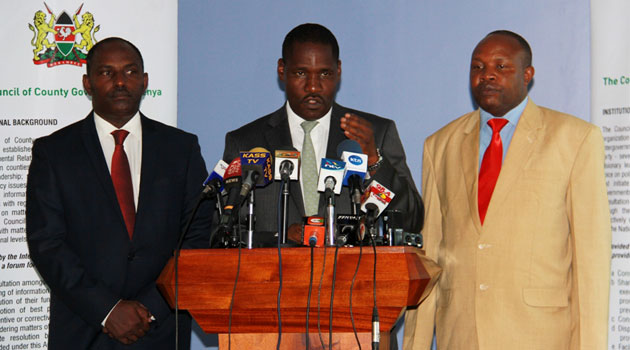
The Council of Governors wants the national government to pay interest to each county which has been affected by late disbursement of funds.

The council’s Finance, Commerce and Economic Affairs Chairman Wycliffe Oparanya indicated that the government has failed to live up to its agreement with County governments and stated that the interest rate should be pegged at market rates.

The Kakamega Governor was speaking during a press briefing where he maintained that county governments have not yet received their May and June disbursements from the Exchequer.

“Once again, the council would want to reiterate to Kenyans that county governments have not received their May and June disbursements from the National Exchequer. The financial year closes tomorrow 30th. Even if counties receive monies today, the money can only be used in the next financial year meaning the resources will have to be re-budgeted for,” he stated.

“If this happens, it will mean that counties need to request the Controller of Budget for its withdrawal into relevant operational accounts. This may take up to four working days hence it is not possible that the monies released would be used to implement any pending activity in the current financial year.”

He described the National Treasury as insincere and stated that it was out to frustrate the county governments’ development agenda.

“As far as the Council of Governors is concerned, there have been tremendous delays in the release of county cash into the county revenue accounts. This is evident and the National Treasury confirmed it through their advert by indicating that as at 16th June 2015, 86 percent of disbursements due to counties 2014/2015 had been released,’ he stated.

He stated that all disbursements should have been paid in full as had been agreed previously.

“It is June 29th 2015, one day to the end of the current financial year. Why should we be talking about 86 percent disbursements and not 100 percent? We should be talking about 100 percent disbursements which should have been made by the 15th date of the month as per the disbursement schedule or better 15th April as per the PFM Act section 17 (6),” he said.

Oparanya further contended that there is no provision in the law that gives the National Treasury any powers to disburse monies to the counties under this criterion.

“This is an outright breach of the Constitution. The Council of Governors wishes to tell Kenyans that cash balances in the county accounts at the Central Bank include the locally raised revenues by individual counties and the national transfers by the National Treasury. The National Treasury should have been honest with Kenyans by separating these two types of revenues and instead provided the cash balances arising from the National transfers only as a percentage of the exchequer releases,” he stressed.

The National Treasury on Sunday refuted claims made by the Council of Governors that it is out to kill devolution following delay in releasing the funds.

Principal Secretary Kamau Thugge had stated that they had so far released 86 percent of the county funds which is equivalent to Sh196.9 billion out of Sh229billion for the current financial year of 2014/2015. Oparanya however stated that no fund have ever been disbursed to the county governments as provided for in the disbursement schedule. “The cash disbursement schedule approved by the Senate in September 2014 provided disbursement to county governments by the National Treasury on a monthly basis and not later that the 15th day from the commencement of the month. This provision in itself is in contrast with what the PFM Act stipulates as per section 17(6),” he indicated.

He pointed out that the Act provided that the National Treasury shall at the beginning of every quarter and in any event not later that the fifteenth day from the commencement of the quarter, disburse monies to count governments. He claimed that many county workers are yet to get their salaries for lack of these funds.

“This is to tell Kenyans that cash balances in the counties accounts do not represent idle money as being portrayed by the National Treasury. Part of these monies is what county governments use to pay for salaries and incur other administrative costs when national disbursements are not received on time as has consistently been the case,” he said.

“The Kenyan public needs to know that county governments have and will continue to prioritize on their development agenda to ensure effective and efficient service delivery to the people of Kenya. No employee will be subjected to salary delays of any month worked for. Together we shall move Kenya forward.”

Olympia Capital to shut down two more subsidiaries over losses

Olympia Capital has announced plans to close two of its loss-making subsidiaries, indicating yet another financial blow to shareholders of the NSE-listed firm. The company is shutting down Dunlop Industries, a Nairobi-based manufacturer of vinyl floor tiles, and Cape Town-based Tiespro Trading, which makes bathroom and kitchen fittings.

Besides posting losses, the subsidiaries have relied on loans from the parent company and its directors to stay afloat.

Dunlop, for instance, made a pre-tax loss of Sh6.2 million in the year ended February last year and owed Olympia Sh49.9 million. The Nairobi Securities Exchange (NSE) listed firm has invested Sh11.5 million in the company.

Olympia had also lent Sh72.8 million to Tiespro for the purpose of taking over the activities of its predecessor Natwood Pty Limited that went into liquidation in 2009.

The firm had told shareholders that the investments and loans to the subsidiaries would be recouped in future either in cash or through conversion to equity.

The decision to close the units however puts the amounts at risk. Olympia’s chief executive Michael Matu said that the write-downs will be “minimal.” The company’s other loss-making subsidiaries, Mather and Platt Kenya Limited-—a fire and mechanical engineering firm and Dunlop received a Sh30 million capital injection from director John Simba and Mr Matu Wamae’s family among other board members.

Mather and Platt and Dunlop Industries posted losses of Sh8.2 million and Sh6.2 million respectively for the full year to February last year, the first time the former dipped into the red and the second consecutive year the latter was in the negative.

Olympia said the two subsidiaries’ current liabilities exceeded their current assets, underlining the urgency of the intervention.

The upcoming closure of Dunlop and Tiespro will scale down Olympia’s geographical footprint and product portfolio, with the company retaining significant interests in firms dealing in household fittings, fire equipment and real estate in Kenya and Botswana.

This is what KQ’s bailout really means

0

The following analysis by Tony Watimu, an economist, was first published inside the Business Daily.

Years ago when I worked for Kenya Airways (KQ) as an intern, I was under the stewardship of a jovial man who was just a few months away from retirement. He had been at the airline since 1977; that time the East African Airways.

He would narrate many stories about how the airline evolved and stayed afloat over the years.

He told of a story in the early 1990s when a powerful Cabinet minister in the Kanu government recalled a Europe-bound plane that had just taken off and diverted it to South Africa.

The politician with his entourage where dropped off before releasing the plane to head for its initial destination.

He explained that it was not an easy task for the airline to cut political ties with bureaucrats, under the leadership of Duncan Ndegwa who was hell-bent in turning the airline around.

Kenya Airways’ woes started after the Douala plane crash in 2007 that killed 114 people.

Just two years after the Cameroon tragic accident, the national carrier reported its first loss and continued to tumble.

Kenyans’ unconditional love and cherished pride for the airline have clouded many from seeing the recurring losses. I agree that we should not watch the national carrier plunge.

But from an economic point of view, an operating loss cannot be knocked off the financial books with a one-day cheque settlement.

It requires a neat managerial tapestry than just correcting the accounting books with a bailout lifeline.

KQ has been carrying losses since 2012. This year, it sought the help of a financial advisor to help restructure its debt. A year on, the Treasury is extending a Sh4.2 billion debt.

Isn’t that indicative of credit unworthiness? A cash bailout from the government should not have been the first, but rather the last option on the table.

For a publicly listed company at the Nairobi Securities Exchange to be rescued by the government, is it a market pointer that the airline has reached its shell life? Is the government gambling to have the eagle fly back to the skies?

Looking at KQ’s top line, the airline is still afloat and not on the road to insolvency. Its growing market share in the continent for both passenger and cargo services confirms it.

In the year 2012/2013 alone, despite the Sh3.3 billion loss reported, KQ had an 8.2 per cent increase in passenger numbers, pushing its annual turnover from Sh98.9 billion to Sh106 billion.

But it is in the same financial year that two executives took home an annual salary of Sh103 million and top executives received an 18 per cent salary raise. Shareholders got nothing.

For two years running, it has been voted the best cargo airline in Africa while covering 20 destinations only.

If the government is determined in easing the airline’s bulging debt burden amidst its ambitious expansion plan, a two or three-year tax relief would have been sound.

The splashing of money whose attached conditions remain scanty is widening the floodgates of unaccountability in corporate governance.

Globally, there is cutthroat competition in the airline industry and making profits requires a carrier to identify the changing expectations of customers as well as ensure prudent management of overheads.

A random survey from KQ’s frequent passengers and perusal of its books of accounts confirm that the national carrier may have missed this memo.

As we extend our love and patriotism to the national carrier, the quid pro quo is for it to meet customer’s expectations.

There is no short-cut to organisational survival if improvement of customer satisfaction is not an entrenched core value.

For the Treasury bailout, he who pays the piper calls the tune. There exists a direct correlation between finance and influence.

In March this year, KQ management declined to honour summons from a parliamentary committee on the premise that it’s an autonomous private entity.

This was after the committee had asked why Ugandan President Yoweri Museveni was allegedly snubbed from being picked up from his rural town of Mbarara to attend a Head of States summit in Nairobi.

In future, it may be hard for KQ to snub such summons when its debt lifeline approvals lie with Parliament.


First African Facebook Office Opened In Johannesburg

0

Facebook has opened its first office in Africa to further the company’s commitment to help businesses connect with people and grow locally and regionally.

Based in Melrose Arch, Johannesburg, Facebook’s newest business office will be headed by Ogilvy veteran, Nunu Ntshingila, the company’s new Head of Africa.

Facebook is already an important part of how people and business connect in Africa. This office will support the significant growth in businesses and people using Facebook — Facebook’s active user population in Africa has grown 20 per cent to 120 million in June 2015 from 100 million in September 2014. More than 80 per cent of these people access Facebook from their mobile phones.

“We are inspired by the incredible ways people and businesses in Africa use Facebook to connect. This momentum in Africa comes on top of strong advertiser partnerships and excellent adoption of our products across all regions. In Q1 2015, 52 per cent of our total ad revenue came from outside the US and Canada. But we’re just getting started,” says Nicola Mendelsohn, VP, EMEA, Facebook.

“Mobile is not a trend; it’s the fastest development in communications we’ve ever seen. This couldn’t be more true in Africa – where so many people are mobile-only. This new office is a significant milestone for Facebook and our teams want to partner with businesses across the continent,” Mendelsohn adds.

“Africa is important to Facebook, and this office is a key part of our strategy to expand our investment and presence across EMEA. Facebook is already a central part of people’s lives in Africa, and with more than a billion people in Africa, we want to do more to help people and businesses connect.”

“Our new African office will support our customers across the continent. We know that a one-size-fits-all approach won’t work when it comes to building products and solutions that address diverse needs on the continent, which is why we are committed to creating solutions tailored to people, businesses and specifically for African markets,” says Ari Kesisoglu, Regional Director, MEA at Facebook.

Kesisoglu continued, “Our priority for the next few months is to continue the work we are already doing with some clients in this region. We will work more closely with businesses and agencies to understand the challenges, so that we can build solutions that help grow their business. People increasingly want to be connected to the world around them and desire information about new services and products to better their lives. At the same time, businesses need stronger, more flexible and less fragmented ways of reaching people in Sub Saharan Africa. Our mission will be to connect brands and consumers in Africa, creating value for all parties in the process.”

Adds Mendelsohn: “We are delighted we have a strong leadership team in place on the continent led by Nunu Ntshingila, our new Head of Africa. Nunu will join our team in September of this year and work with businesses and agencies across the region.” Nunu helped drive the creation of Ogilvy’s network in Sub Saharan Africa, which spans some 27 countries. A graduate of the University of Swaziland and Morgan State University in the US, Ntshingila has also held senior positions at Nike and the South African Tourism board.

Facebook will initially focus on growing its business in anchor countries in the major regions of Sub Saharan Africa: Kenya (East Africa), Nigeria (West Africa), and South Africa (Southern Africa). Other supported territories include Senegal, Ivory Coast, Ghana, Tanzania, Rwanda, Uganda, Zambia, Mozambique and Ethiopia.

Facebook will partner with governments, telecom operators, agencies and other stakeholders to deliver localised solutions to advertisers and users continent-wide. It will continue to focus on tailoring solutions, metrics and ad formats to the needs of customers and advertisers in the mobile-first, mobile-only African environment.

CFC Stanbic best stock to invest in, Housing Finance, NBK worst counters – says Cytonn report

CFC Stanbic Bank has been ranked as the best bank likely to deliver the best return over the long-term, 3 to 5 years, and which has the best franchise value. This is according to a market report prepared by Cytonn Investments on the 11 banks that are currently listed on the NSE.

Speaking on the CFC Stanbic number one ranking, the report seen by Bizna noted: “They have a lot of businesses that are mainly lucrative that means that even in a time the economy goes down and people are suffering from bad loans. CFC is also highly efficient and they are strong on corporate clients. They get a lot of money for every branch they open. They are attracting deposits so much that they have enough room to lend compared to other banks who engage in expensive deposit mobilization strategies.”

Further, according to this analysis, Housing Finance and National Bank of Kenya have been ranked as the worst investors could bet their money on. Shareholders at Equity however stand to get the best return as the bank was best on ROACE followed by I&M bank.


Key Banking Metrics
Bank Total Score Rank
CfC Stanbic 58 1
I&M Bank 59 2
Standard Chartered 61 3
Equity Bank 63 4
KCB 65 5
Diamond Trust Bank 67 6
Co-operative Bank 69 7
NIC Bank 70 8
Barclays Bank 75 9
National Bank of Kenya 100 10
Housing Finance 104 11

The report nonetheless was quick to note that Housing Finance differed in business dimension from the other commercial banks. “It is worth noting that HF is more of a mortgage finance specialty lender funded through expensive wholesale deposits and bonds, rather than a traditional bank, hence the poor ranking,” said the report.

The analysis covered the long-term investment and, or franchise attractiveness of the banks by looking at among others, net interest margins, return on average common equity, price/earnings growth ratio, loans to deposit ratio deposits per branch and price to tangible book value.


We can’t sell disgraced billionaire Rawat’s Britam shares because the price is too low, says Mauritius

Mauritius is not in a hurry to sell a 23 per cent stake in British-American Investments Company Kenya ( Britam), which it seized from a disgraced tycoon, because its share price is too low, the government’s receiver said last week.

Mauritius seized Dawood Rawat’s assets in early April after accusing him of running a ponzi scheme through a Mauritian insurer, sending Britam’s shares down by almost 25 per cent.
The Mauritius government said it wants to sell the tycoon’s assets, including his 23 per cent stake in the Kenyan financial services company, to compensate investors who lost cash in the ponzi scheme. “For the moment, we are not selling the 23 per cent stake.

The value is less than expected,” Mushtaq Oosman of PricewaterhouseCoopers Mauritius, the receiver, said. Britam Group Managing Director Benson Wairegi said earlier last Friday that the company had not been approached by the receiver over the sale of the shares. “The conservator has said he will sell the stake at some point, and in doing so, he will consult the board and management of Britam Kenya and the regulators in Kenya,” Dr Wairegi told reporters after the company’s annual meeting in Nairobi, adding there had been no such engagement.

Britam’s shares have recouped some of the losses they incurred after the ponzi news story broke, but are yet to make a full recovery. The counter closed trading at Sh20.75 on Friday, slightly higher than the Sh19.90 low it hit following the story.

At the company’s AGM, shareholders approved a proposal that will see the company adopt a new name, Britam Holdings Ltd. The change of name is subject to requisite legal processes, and comes after the group’s board and management unveiled strategic initiatives for the company, including local and regional expansion, and property and IT-enabled business transformation.

“The change of name is occasioned by the need for brand consistency across the region, in line with the company’s mantra of ‘One Company, One Brand’, and the need for the business to align itself to the changing social, cultural and business environment,” said Wairegi. He added that the acquisition of Real Insurance Company last year had enabled Britam grow its geographical footprint to seven countries — Kenya, Uganda, Tanzania, Rwanda, South Sudan, Malawi and Mozambique.

Britam also increased its shareholding in Housing Finance from 21.46 per cent to 46.04 per cent, which Wairegi said would “offer the company the opportunity to tap into the synergies offered by the biggest mortgage company in the region, and into opportunities offered by the fast-growing real estate sector in Kenya”.

The managing director added that construction of the company’s flagship property, the 31-storey Britam Tower in Nairobi, which is now at the 23rd floor, is projected to be completed by 2016. Shareholders approved the payment of a final dividend for the year ended December 31, 2014, of Sh0.30 per ordinary share, an increase of 23 per cent from the previous year.

NIC Bank CEO John Gachora’s career profile

0

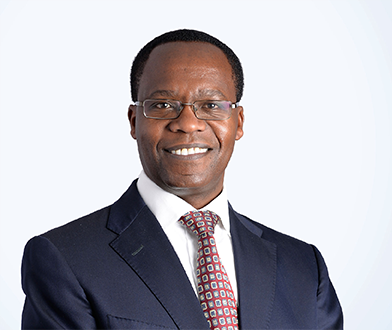
Mr. John Gachora has served as Group Managing Director, Executive Director of NIC Bank Ltd since September 2013.

Interestingly, Mr. Gachora was the first was the first indigenous Kenyan to hold the position of managing director in Wall Street, America’s financial powerhouse.

Prior to joining NIC Bank as CEO, Mr. Gachora was the Managing Director, Head of Corporate & Investment Banking at Barclays Africa, based in South Africa. he had been appointed to this position in 2011.

He had previously served as the chief executive officer at Absa Africa, and managing principal, Head of Africa at Absa Capital. Mr. John Gachora also served as the managing director and head of group at Bank of America Investment Banking, in Charlotte, North Carolina, USA, and as Vice President, Structuring Head at Credit Suisse First Boston, New York, USA.

Mr. John Gachora holds a Masters Degree in Electrical Engineering and Computer Science from the Massachusetts Institute of Technology, US. He also holds an MBA from The Wharton School, University of Pennsylvania, USA.

He is currently in his forties. He was born and raise in the rural village of Gatamaiyu, in Central Province. He was the 8th born in a family of 13. Having grown up poor, Mr. Gachora says his driving force in life is the fear of poverty. Subsequently, he is not extravagant and will only spend if and where necessary.

Kidero willing to go back to Mumias Sugar as boss

0

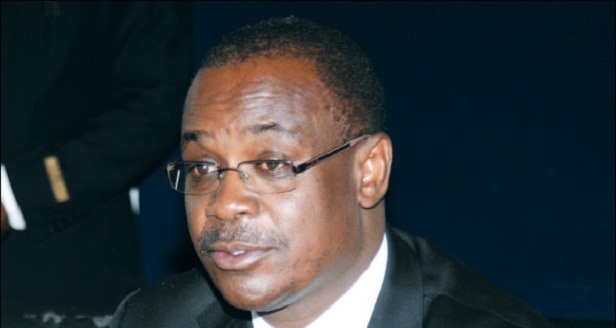
Nairobi Governor Evans Kidero has said he would have been willing to return to Mumias Sugar and turn its fortunes if he was not Nairobi Governor. Speaking on Citizen TV’s Sunday Live show, Kidero attributed the woes facing Mumias Sugar Company to a number of issues synonymous with Kenya’s sugar industry which he understands all too well.

“The issue at Mumias should not be looked at in isolation because it is what affects the entire sugar industry in Kenya.”

“If I wasn’t Nairobi Governor, I would have gone back to Mumias Sugar Company to resolve the issue.” He said low production of sugarcane and the amount of time that the crop takes to mature are among the issues facing the sugar company.

The governor noted that the low yield has led to minimal production of sugar in the company that has since affected profit levels. Kidero also blamed cane competition by other millers as the reason why Mumias Sugar Company has little or no cane to crash.

“Sugar factories that have been opened in the area have also affected operations in Mumias since they resort to buying cane from farmers contracted by Mumias Sugar,” he said. The sugar company is facing financial woes that have paralysed operations in what is considered Kenya’s biggest sugar producer. In a bid to alleviate the situation, President Uhuru Kenyatta delivered a Ksh 1 billion cheque last week to go towards bailing out the company.

Governor Kidero, who was the company’s Managing Director from 2003 to 2012, has come under sharp criticism from Kakamega Senator Dr Bony Khalwale for allegedly engaging in financial misappropriation that has plunged the company into a financial crisis.

Kidero has, however, denied the allegations saying he left the company in a profit-making mode and operationally sound.