
Home Blog Page 2253

Honda Accord Review

0

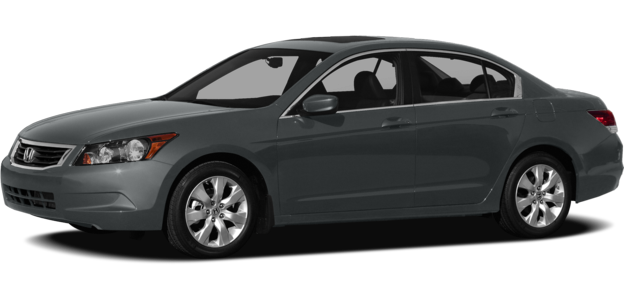
Honda’s large family car, available in coupe and sedan form, isn’t just a perennial 10 Best Cars winner, it dominates the list. The last time the Accord wasn’t on the list was 1997, and the car has appeared a whopping 22 times. The reason? Simple: The Accord has everything you want in a sensible car—reliability, a comfortable and friendly interior, and good fuel economy—plus good engines and lively handling to keep pulse rates raised. The Accord, Honda’s best-selling model, gets an extensive redesign that includes all-new styling inside and out, a spacious rear seat for the sedan, more standard safety features and more-powerful engines, including an optional V-6 with advanced fuel-saving technology.

Exterior & Styling
Offered in sedan and coupe body styles, the two Accord styles are now more distinct than ever; they share no body panels or glass. The coupe has a chiseled look that’s highlighted in front by a narrow mesh grille and bulging front fenders. Both have a more upright front end than the previous-generation Accord, which featured a pointy nose.

The sedan, meanwhile, is a bit anonymous from certain angles. It’s as assertive as the coupe when viewed head-on, with a bit of previous-generation Nissan Altima in its grille and headlights, but it loses some presence as you move around to the sides and rear. The rear-quarter of the car has a remarkable resemblance to BMW’s 5 Series, what with the kink in the C-pillar and taillights that wrap around the side of the car. The base LX sedan has standard steel wheels with hubcaps, while the LX-P trim comes with 16-inch alloy rims. If you step up to any of the EX sedans, 17-inch alloy wheels are installed. The base LX-S coupe starts off with 17-inch alloy wheels, but choosing a V-6-powered two-door brings 18-inchers.

Ride & Handling
The new Accord’s ride quality is an improvement over the outgoing model because it offers softer tuning that should appeal to more family-sedan buyers while still delivering the sporty driving feel the car is known for. Honda has found the sweet spot here, with a driving experience that rivals the sporty characteristics of the Nissan Altima, without the Altima’s stiff ride on rough surfaces, while equaling the Toyota Camry’s ride smoothness, without its floaty, unsure responses on winding roads.

The Accord’s four-wheel independent suspension features a double-wishbone design in front and a new multilink setup in back. On the road, the Accord is taut without being punishing, and the sedan recovers quickly without any extra bobbing after hitting a bump or dip in the road. Even though there’s noticeable body roll on twisty roads, it’s by no means excessive and is counteracted by a sense of stability when driving the car aggressively. The sedan is equally at home on the highway, where the compliant suspension tuning and supportive — though slightly lumpy — leather front bucket seats make for low-fatigue driving.

Going & Stopping
The Accord can have either of two four-cylinder engines or a new 3.5-liter V-6. When paired with the automatic transmission, the V-6 comes with Honda’s Variable Cylinder Management, a fuel-saving cylinder-deactivation technology that’s in use on versions of the company’s Odyssey minivan. The performance-oriented V-6 coupe with the manual transmission doesn’t get VCM.

VCM has been enhanced in the new Accord, with a new four-cylinder mode in addition to the three- and six-cylinder modes. According to Honda, this new mode allows the Accord V-6 to cruise on four cylinders at highway speeds. Three-cylinder mode, meanwhile, is used for city cruising, while six-cylinder mode is activated when full power is needed.

In both the coupe and sedan, the four-cylinder engines can team with either a five-speed manual or a five-speed automatic transmission. The V-6 sedan is only available with a five-speed automatic, but the V-6 coupe can have a six-speed manual instead of the automatic. I tested four-cylinder- and V-6-powered EX sedans.

Honda Accord Engines
2.4-liter 4-cyl. High-output 2.4-liter 4-cyl. 3.5-liter V-6
Horsepower
(@ rpm)
177 @ 6,500 190 @ 7,000 268 @ 6,200
Torque
(lbs.-ft. @ rpm)
161 @ 4,300 162 @ 4,400 248 @ 5,000
Required gasoline Regular Regular Regular
EPA-estimated
gas mileage
(city/highway, mpg)
22/31 (manual)
21/31 (sedan automatic)
21/30 (coupe automatic)
22/31 (manual)
21/31 (sedan automatic)
21/30 (coupe automatic)
19/29 (sedan automatic)
19/28 (coupe automatic)
17/25 (coupe manual)
Source: Manufacturer

While the V-6 makes smooth power, it doesn’t feel as strong as its 268 horsepower rating would suggest. Acceleration in the city and on the highway is acceptable, but you’re left wondering where the last 40 horses are hiding; it doesn’t blow you away with its power the way the Toyota Avalon’s V-6 can. The five-speed automatic transmission shifts smoothly and will quickly kick down a gear or two if necessary.

Honda’s integration of VCM is exceptional; it’s nearly impossible to tell when the car is running on three, four or six cylinders. An “eco” light in the gauge cluster comes on when the Accord is operating in an especially frugal manner, but its illumination doesn’t necessarily mean the car is running on fewer than six cylinders.

The four-cylinder EX trim level is the high-volume Accord; it’s expected to account for half of all Accord sedan sales. Its 190-hp four-cylinder has more-than-adequate power, though its high-speed passing performance isn’t as strong as the V-6’s. The engine is also notably louder than the V-6, and its automatic isn’t as smooth; upshifts can be a little jerky at times. Still, if it were my money, I’d opt for the four-cylinder because the premium for the less fuel-efficient V-6 isn’t worth the so-so performance.

The Accord has standard antilock brakes with electronic brake-force distribution and brake assist. Accords now have disc brakes all around, where the previous generation’s base versions had rear drum brakes. Pedal feel is reasonably linear, but in the V-6 sedan I had to push pretty hard to get adequate stopping power.

The Inside
The new Accord’s cabin treads ever-closer to the domain of Honda’s luxury brand, Acura, with its use of high-quality materials, good fit and finish and the adoption of an optional knob-based navigation system in place of the car’s previous touch-screen setup. The knob controller is not too hard to get used to, but there will be people who lament the loss of the touch-screen. The EX’s faux aluminum trim has a nice matte finish, but its appearance is not very convincing.

Cloth seating surfaces are standard, but the EX-L model has a leather-covered steering wheel and leather seats. The front bucket seats have soft cushioning and are wide enough to accommodate large occupants, but they also have good side bolstering to hold you in place during fast cornering. What’s more, you’re greeted by a rich leather smell that could easily be mistaken for a luxury sedan when you open one of the EX-L’s doors. The cloth seats are firmer than the leather ones, and they proved comfortable during the few hours I sat on them in an EX model.

Backseat passengers enjoy roomy accommodations with good legroom. Like the front ones, the leather rear seats have soft cushioning, and the backrest offers a generous amount of recline. Thanks to a slight increase in passenger volume, the Accord sedan is now considered a full-size car by the Environmental Protection Agency, which tracks such things.

Where the Accord comes up short is in the execution of its folding rear seat. The seat isn’t split like the Altima’s and Camry’s, which means you can’t fold down a portion for extra cargo-carrying room and still carry a passenger in the backseat; you have to choose one or the other. Also, the opening that’s revealed when you fold the backrest down is small because of the intruding bulkhead, which limits the passage’s usefulness. All in all, it looks like the folding feature was added as an afterthought.

Safety
The Accord has six airbags, including side-impact airbags for the front seats and side curtain airbags. Honda’s Vehicle Stability Assist electronic stability system and active front head restraints are standard.

The Accord also features Honda’s Advanced Compatibility Engineering body technology that’s designed to maximize crash-energy dissipation in a front collision with either taller or shorter vehicles.

The Accord received Good overall scores in the Insurance Institute for Highway Safety’s frontal-offset, side-impact and rear crash tests. Those scores — and the fact that the car comes with a stability system — make the Accord one of IIHS’ Top Safety Picks for 2008.

Cargo
The sedan’s trunk remains unchanged at 14 cubic feet, while the coupe’s cargo area shrinks slightly to 11.9 cubic feet. On four-cylinder Accord sedans, the underside of the trunklid is unfinished — it doesn’t include a handle or any sound-deadening material — which is odd for a car that’s otherwise near the top of the pack where details are concerned.

Features
Additional standard features include air conditioning, cruise control, a CD stereo with an auxiliary input jack for connecting portable music players, a tilt/telescoping steering wheel with audio buttons, and lighted vanity mirrors. Optional electronics include Bluetooth-based cell phone connectivity, XM Satellite Radio and a premium audio system that includes a subwoofer.

Phase 1 of Centum’s Sh. 25.2 billion Two Rivers mall to open in October

The first phase of Two Rivers, Centum’s Sh25.2 billion real estate project, is set to be completed in October setting the stage for opening of the mall which is expected to house high-end international retail brands.

James Mworia, Centum’s chief executive, on Wednesday said construction of 108 apartments (phase two) at Two Rivers will start in August, with the project set to be completed in December 2016.

The mall covers an area of 1.2 million square feet (excluding parking space for 3,000 vehicles) and will have 220 shops, over a quarter of which have been booked by global firms making their first entry in Kenya.

“The anticipated opening of the Two Rivers Mall is expected to change the shopping landscape in Kenya,” said Mr Mworia.

“We have received interest from international and local brands and at the moment space at the mall is 60 per cent booked.”

Construction of the mall will cost approximately Sh15.5 billion, the apartments Sh3.8 billion while setting up infrastructure will cost Sh5.8 billion, according to Centum.

French retailer Carrefour is set to be the mall’s anchor tenant with other brands being LC Wakiki — a Turkish luxury clothing line — and Virgin Active, a platinum health club founded by billionaire Richard Branson.

Scangroup changes name after merger

0

Marketing services group Scangroup Limited has rebranded to WPP Scangroup Limited following a merger with WPP plc.

The firm said adoption of the new name signifies a shared vision aimed at boosting the fortunes of both companies.

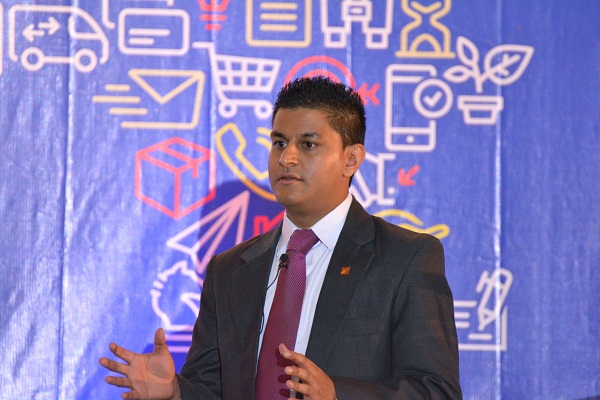
“The synergy from the coming together of these two great firms will significantly transform the future of marketing communications across this continent. This is aptly captured by the famous African proverb that says if you want to go quickly, go alone. If you want to go far, go together,” Scangroup chief executive Bharat Thakrar said in a statement yesterday.

He said the two companies are now fully together sharing values and core principles for developing marketing communications across sub-Saharan Africa and a laid out framework on how this can be achieved. WPP Scangroup, which is a subsidiary of WPP, is the largest marketing and communication group that operates a multi-agency model across multiple disciplines in sub-Saharan Africa.

It is also the only marketing services that is listed on the Nairobi Securities Exchange. Scangroup was founded in 1982 when it started as a small independent advertising agency that was then known as SCANAD.

It has over the years grown its services and products to include media planning and buying, public relations, market research, experiential and digital. This is besides developing affiliations with international agency groups such as J Walter Thompson, Ogilvy and Grey.

In 2005, Scangroup was created as a structured corporate entity to house all these diverse companies. It was listed on the NSE in 2006.
The firm and WPP entered into partnership in 2006, months after its listing on the NSE. This deal included WPP taking up a minority stake in Scangroup as part of its efforts to expand its footprint in Africa.

In 2013, WPP acquired additional shares in Scangroup Limited in Kenya, increasing its interest to 50.1 per cent.

Good Employee Relations Key in Business Growth

0

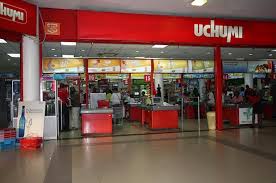
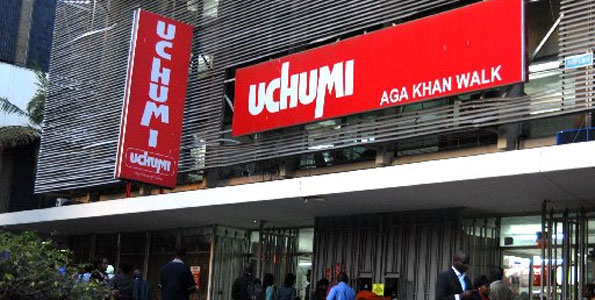
Even with the sustained heartbeat, one can easily tell that the once yummy girl – Uchumi Supermarket – is struggling to live, probably crafting her will, whose pages will be shared among the many suppliers she owes.

She has been bleeding for a number of years now, and to say that she is now pale is an understatement. That girl is not only withdrawn but has lately been forcing a vague smile, a clear sign that all the plastic surgeries in form of restructuring and the numerous financial injections did not work.

As we prepare for a fundraiser or a burial ceremony for Kenya’s only publicly traded retailer, many questions are being asked. Was Jonathan Ciano a mortician? Or was he a neurosurgeon who delayed his exit from the theatre, only to carry the cross for the nurses who forgot to dispense the follow-up doses.

Either the PR practitioners locally known as snake charmers had a role to play in this. What did they do to engage and manage the internal stakeholders of this giant retailer?

World over, the components of a strong company – in any industry – can be focused down to four critical areas. Good management, good products/services, good customer service and good employees. As a business owner, the first two are relatively easy to control. But how do you assure that your employees treat your customers in such a way that they stay happy and repeat customers?

Unhappy employee = unhappy customer

Customers can tell in an instant whether they are dealing with a happy or unhappy employee. Unhappy employees often take out their frustration and unhappiness on the customers. This happens when we you have to pack your stuff at the tills, break your nails as you rummage through your handbag for the elusive coins as well as when a 45-minute shopping walk around the supermarket yields twenty percent of your requirements.

A happy employee will do all he or she can do make a customer happy. They will get the trolley across the road to where you have parked; they will save you the hustle of explaining why milk should not be packed alongside mosquito coils. They do all this because they want to retain their job and they have an interest in seeing the company flourish.

Regardless of how much you pay your employees, good companies understand the value of good employees, especially in such a competitive industry. Therefore, each company does everything it can to make its employees happy.

So how does the average company keep its talent happy and productive?

A good place to start is to understand that public relations applies to your employees, as it does to your customers. The company that understands that it’s most valued asset is hardworking, productive employees, will create and implement an internal PR programme to keep its employees in great form.

Aside from the obvious – competitive salaries, benefits and bonuses – employees want to know that their work matters, that they are appreciated and that they will be rewarded for their effort.

That is why many companies have instituted reward programs that are administered on a team rather than an individual. It is often risky to pick out a few employees and reward them. This creates animosity and completion which is counterproductive. If a company division or team is productive, all members should be rewarded in some form or another.

The most effective internal brand engagement programme for employees costs less and is easier to implement. This simply involves the boss or manager sitting down with an employee and telling them that they are doing a good job and it is being appreciated. Especially for younger workers who are trying to establish careers, this works wonders. The fact that their boss has taken time to tell them they are doing a great job and the company appreciates them is often worth more than a cost of living raise.

Certainly backing up praise with money is better and expected, but taking the extra time to give each employee some personal attention is something too many companies neglect, thinking that wallet size is everything.

That fat cheque is a definite yes, but so is identifying personal achievements and contributions to the company. Whether it is tangible rewards such as a raise, personal attention, company outings or whatever, every company that values its business will value its employees and go the extra mile to assure each employee knows it.


Barasa is a public relations and communications practitioner based in Nairobi. @barasapaul on twitter

Prof Charles Ngugi took leave to be a successful fish farmer

0

Some people think I am a jack of all trades on matters farming because I grow various crops, keep fish, goats and rabbits on my eight acre farm in Mwea. The farm is located between rice paddocks, but I wanted to be different, the reason why I do not grow the crop.

Let me begin with what I love most — fish.

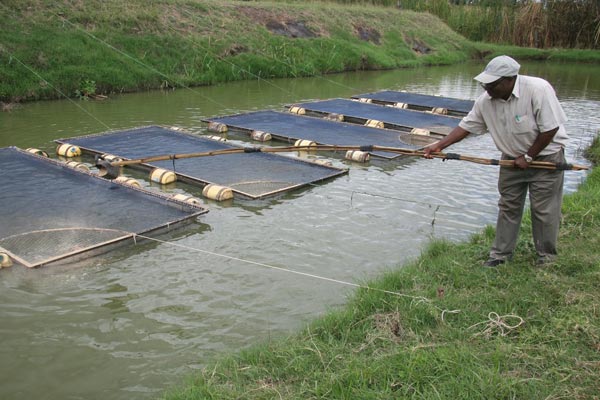
I have 30 fish ponds and eight recirculation aquaculture systems, which I use to hatch catfish and tilapia fingerlings in my farm called Mwea Aquafish Farm. I produce 50,000 mono-sex tilapia and 30,000 catfish fingerlings monthly. I have been keeping fish for about five years, but my interaction with them started sometime back when I was working in Nairobi as a fisheries officer for the government from 1980s to early 90s. My job entailed working with farmers in Central and Nairobi to encourage them to adopt fish farming.

I must confess it was an uphill task, especially in Central, where farmers were used to rice and coffee. I was later posted, alongside other persons, to Moi University to set up the Fisheries Department since I had trained in Bio-Chemistry and worked in the ministry. At the university, my work involved training extension officers, students and even farmers. During this time, I also furthered my education where I studied Masters degree in Aquaculture at Port Harcourt University in Nigeria and then did my PhD in Fish Biology and Watershed Management in Canada.

I returned to the country and continued teaching at the university, where I later became a professor. The challenge, however, was that there were no enough ponds for practical lessons. I tried my best to better the situation. I wrote proposals in search of funding and luckily, USAid funded us through the Aquaculture Collaborative Research Support Programme (ACRSP) to the tune of Sh10 million for construction of ponds. We were now able to do our practicals with ease.

HOUSE WAS RAZED

But things took a nasty turn in 2007 after the elections when violence erupted. My house was razed in the violence. I had not foreseen such a situation. It was not easy to wake up, pack my things and leave a place I had known as home for more than 10 years.

I returned to Mwea and took a sabbatical, but after selling my burnt house in Eldoret for Sh2.9 million, which was basically the price of the land. I used the money to buy the eight acres where I established my fish ponds, an idea which came from one of my Masters degree students who eventually became my farm manager. I began with six ponds. I got my first 10,000 tilapia at Sh50,000 from a hatchery in Siaya County, which I transported in the wee hours one day in March 2009.

It is good to transport fish early morning or evening because the temperatures are usually cool. Water temperatures should be retained at between 18 to 22 degrees Celcius to prevent fish from dying. Fish can also be best transported during the cold season because the water temperatures hardly fluctuate.

Six months after I set up my fish farm, the government rolled out the Economic Stimulus Package. This is what gave me a boost. The government, through District Agricultural Officers, approached individual farmers to help produce the 48 million fingerlings that were needed to stock 48,000 ponds across the country.

The business was lucrative. I used my fish to breed fingerlings, which I sold to the government from 2010 to 2013 at Sh5 each. We were producing over 100,000 fingerlings on order. I used the returns from the business and loans to construct 24 more ponds, classes, a farm house and buy pumps for my first hatchery, among other things. I now have eight hatcheries, but I have not finished installing some of the equipment.

Workers harvesting fish

On my farm, I also keep ornamental fish like the Shubukin, Yellow and Red Comets, but I do not sell them. I sell each tilapia and catfish fingerlings at Sh5 to Sh10. A kilo of mature tilapia, on the other hand, goes for Sh400. I sell the fingerlings to farmers and tilapia to hotels in Nyeri. I do not have mature catfish currently, but I also sell them to hotels. Farmers place orders a day before to allow for the preparation.

EXCITE FISH

We need 24 hours to leave fingerlings unfed so that they do not excrete ammonia during transportation, which depletes oxygen. When packing, we pump oxygen in the bags, then add a pinch of salt in the water to make it saline, which stabilises fish to lower its metabolic rate and excretion of ammonia.

If you excite fish during transportation, 90 per cent will die before reaching the destination. I normally use water from the ponds to irrigate my tomatoes, bananas, sukuma wiki (collard green), cabbages and cassava, among other crops, because it is full of nutrients.

We produce 80 to 100kg of vegetables every day, which we sell at Sh10 per kilo to traders in Mwea. Mine is a model farm where students come for four months attachment. Farmers also come and learn various practices at Sh300 each.

Students who come from neighbouring countries pay Sh1,000 for attachment while we pay Sh4,000 a month to those from our universities and colleges. We offer the two groups accommodation. This project is supported by ACRSP. With as little as Sh100,000, you can put up a standard pond and stock it.

Those in warm areas do not even need greenhouses. They can naturally grow their crops using manure, as long as they regulate the use of chemical fertilisers. Some of the challenges I face as a fish farmer is lack of reliable market. Sometimes the prices are too low and the cost of fish feeds is too high.

For a farmer who is starting, it is very important to know where you will sell your produce first. In my 57 years, about 20 which I have spent in farming, I have learned that you cannot not reap overnight. I took about three years to earn profit.

This is the message I tell my two children, who are adults.

Success is not a destination but a continuous journey – Darshan Chandaria, CEO, Chandaria Group

0

1. What was your first job?

When I joined Cardiff University in 2004 I was eager to engage in any form of work. My first job was to lay out catalogues at the stadium for the local football league matches. I earned the equivalent of $5 an hour. I was 18 years old at the time. Although it was winter and very cold to be outside laying out catalogues I was eager to get work experience. From an early age I always wanted to understand if I ran my business what it would feel like for the employees I manage. I wanted to get that experience.

2. Describe the parts of your job that keep you awake at night.

Production efficiencies, brand building, stability of the political environment, and to a certain extent pilferage issues.

3. Who has had the biggest impact on your career and why?

There is a very clear answer to that and it’s definitely my parents. From a purely business perspective it’s my dad. His commitment, dedication and vision have been incredible in shaping my life and my vision to do more with our businesses.

4. And the best professional advice you’ve ever received?

A motto that I live by which my dad always said to me: “Be clear about where you want to go and be dedicated to get there.”

5. The top reasons why you have been successful in business?

I am very passionate about starting new ventures, launching new products, new projects, and seeing them through from start to finish. I get great satisfaction in seeing the end result when something comes into fruition. The two major visions that keep me going are a drive to create something innovative, and to transform lives.

6. Where’s the best place to prepare for leadership? Business school or on the job?

On the job, without a doubt. I always wanted to do an MBA with one of the renowned institutions. In fact I had offers from a number of business schools. However, after spending two years in our business I realised I was learning more about our businesses and the practical elements of working life than I would in business school.

7. How do you relax?

I love food and fine dining. I love playing squash, tennis and travelling. I also love interior designing and architecture.

8. By what time in the morning do you like to be at your desk?

It varies depending on my schedule. I like to have at least 45 minutes to an hour first in the morning to reflect on the day ahead. Generally, I am on my phone and looking at emails from about 7am.

9. Your favourite job interview question?

Where do you see yourself in five years? Ambition, self-drive and the hunger for growth are the key traits I look for in a potential employee. I believe that a person can learn specific job related skills but without these three key traits they can’t be a potential future executive within our group.

10. What is your message to Africa’s aspiring business leaders and entrepreneurs?

A quote I live by is: “Success is not a destination but a continuous journey. The question is what is that journey for you?” I truly live by this and it has helped me redefine my journey.

Chandaria Group, established in 1964, is one of the largest and most diversified privately owned groups in East and Central Africa.

Maasai Mara ranked eighth in top African parks

0

An online survey of Africa’s best national reserves has ranked the Maasai Mara eighth in the top 50 parks.

According to the study by SafariBookings.com, other Kenyan reserves in the top 50 include Pejeta Conservancy, Samburu National Reserve, Tsavo West, Amboseli, Tsavo East, Lewa Conservancy, Meru National Park with Lake Nakuru.

Tanzania’s Serengeti took first place with an impressive rating of 4.89 out of 5, followed by South Africa’s MalaMala Game Reserve, and Okavango Delta in Botswana.

“South Africa held four of the top 10 spots, more than any other country; however, its Kruger National Park only ranked 20th, which was a great surprise, as Kruger is highly regarded in the safari industry,” a statement from the organisation said.

The report further reveals that the sheer variety of wildlife, abundance of predators and spectacular wildebeest migration are valid reasons why Serengeti deserves this ranking.

“Serengeti was rated best for its variety of wildlife, abundance of predators, and spectacular wildebeest migration. Legendary MalaMala Game Reserve offers some of the best wildlife viewing of Africa, and its luxury lodges cater the rich and famous,” it stated. “The Okavango Delta is regarded for its scenic beauty. Its annual flooding transforms this otherwise desert area into a wildlife paradise of tranquil waterways.”

Kenya has almost 17 percent of the top 50 parks, but only the Maasai Mara National Reserve is in the top 10.

Zimbabwe’s Mana Pools was ranked 4th, which is significant when looking at all 138 parks that were considered for this top list.

Only parks known for classic wildlife viewing safaris were considered while those known only for their scenery or typical gorilla tracking parks were not included.

Over 1,400 specialised safari operators from Africa and western countries offer their safari tours on the SafariBookings platform.

SafariBookings.com conducted an analysis of 3,008 reviews to put to rest the question of which park was best for African safaris.

In total, 138 parks of the eight major safari countries were in consideration for a place in the top 50.

The analysis was based on 3,008 park reviews collected through the SafariBookings website.

Of them, 2,234 reviews were contributed by safari tourists from 63 countries around the world.

The remaining 774 reviews were written by renowned industry experts, most of whom are guidebook authors working for Lonely Planet, Rough Guides, Frommer’s, Bradt and Footprint.

Volkswagen Golf Review

0

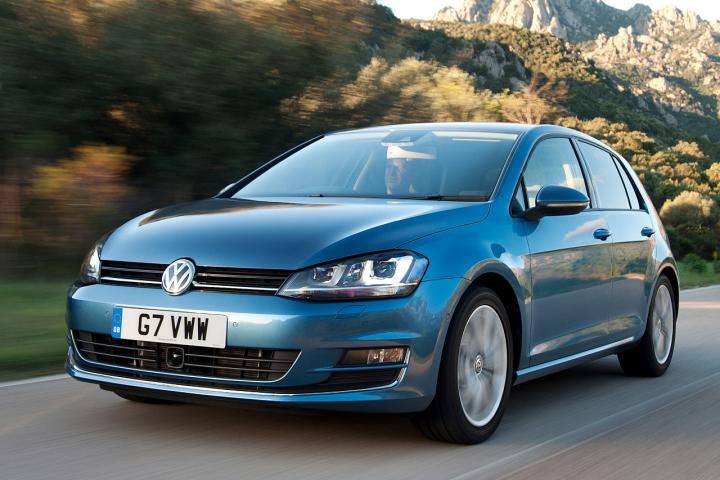
The VW Golf has been with us for 40 years, but its popularity shows no sign of waning.

Now in its seventh generation, the Golf retains the understated looks and upmarket image that have always been key to its appeal. Yet it’s also bigger, safer and better equipped.

Space

Roomy for passengers and boot is a good size

VW Golf boot space
VW Golf rear seats

Large, square door openings make it easy to get into the Golf without banging your head. And there’s enough legroom and headroom to keep four six-footers happy.

True, life isn’t as comfortable for a fifth person because the floor is raised in the middle of the car, but this is also an issue in most rivals.

As for the boot, it’s nowhere near as big as that of the Skoda Octavia, but will still take a fold-up baby buggy and several bags of shopping without any difficulty.

You also get a false boot floor that lets you divide the space in two and raise the load level so that you’re less likely to strain your back when lifting in heavy items. And there are several useful storage cubbies in the front of the car.

Comfort

Almost impossible to fault

Volkswagen Golf Review
VW Golf comfortable car

Even the sporty GTI model is good at soaking up bumps in the road, while lesser Golfs are about as comfortable as family hatchbacks get.

This isn’t just down to the suspension. There’s a huge range of adjustment to help you find a good driving position. What’s more, the seats are supportive and only the cheapest, S-specification cars miss out on adjustable lumbar support.

The fact that the Golf shuts out wind and road noise better than rivals adds to its credentials as a long-distance cruiser. And most of the engines are smooth and quiet; only the 1.6-litre diesels sound a bit grumbly.

Dashboard layout

Simple to use, but an Audi A3 feels classier

VW Golf steering wheel
VW Golf display screen

The Golf has rotary air-conditioning controls that make it easy to adjust the temperature inside the car, while the stereo, sat-nav and vehicle settings are all controlled through a touchscreen that’s similarly user-friendly.

Not only are the various menus clearly laid out, but there are shortcut buttons around the outside of the screen that let you quickly switch between the various functions.

The only downside is that you have to look away from the road at times to find the correct area of the screen to hit – this isn’t necessary with the systems in the Audi A3 and BMW 1-series.

The materials in the Golf don’t feel as special as the A3’s, either, but the Golf is classier than most other rivals.

Easy to drive

Precise controls and excellent visibility

VW Golf settings
VW Golf good visibility

Few cars in any class offer a better all-round view than the Golf because it has large, deep windows that keep blind spots to a minimum.

The steering is light enough to make parking pretty easy, too, while well weighted pedals help you drive smoothly in stop-start traffic.

The only engine that struggles to pull the car is the weakest 1.2-litre petrol. And you can specify an automatic gearbox with every engine except this 1.2 and the super-efficient, Bluemotion diesel.

Fun to drive

Above average, but not the best. The Golf doesn’t feel as agile as a Ford Focus or Audi A3, but it’s still an enjoyable car to drive.

It grips well in corners and the steering is precise and responsive. That said, some people will wish the wheel weighted up a little more at speed to offer extra reassurance.

The cheaper of the two turbocharged 1.4-litre petrol engines is worth the premium over the 1.2-litre petrols, because it makes overtaking that much easier.

Alternatively, if you want a car that’s properly fast but still easy to live with, the Golf GTI is about as good as it gets.

Reliability

Volkswagen has a pretty good record. The latest Golf is too new to have been included in the JD Power customer satisfaction survey.

However, Volkswagen has a pretty good record, finishing ninth out of 27 manufacturers in 2013.

You also get the reassurance of a three-year, 60,000-mile warranty, although Toyota and Hyundai are both more generous here, offering five-year warranties, while Kia’s cover lasts for seven years.

Volkswagen provides a year’s worth of breakdown assistance as standard.

Fuel economy

Up with the best hatchbacks

VW Golf fuel cap
VW Golf efficient car

The most efficient Golf is the Bluemotion model, which has an official average of 88.3mpg.That’s quite a bit better than the figures for eco versions of the BMW 1-series and Ford Focus. However, the Bluemotion is based on the relatively poorly equipped S-specification Golf, so even if you do a lot of miles, you might want to go for the regular 1.6-litre diesel; this still managed more than 70mpg in official tests.

Petrol Golfs are also more efficient than many of their rivals, although we wouldn’t bother with the 1.4-litre ACT engine; this carries a large premium over the regular 1.4, yet returns almost identical figures in real-world driving.

Affordability

A good long-term buy. The Golf costs more to buy than an equivalent Ford Focus, but it holds its value much better, so it will actually cost you less in the long run.

Pricing is more in line with the latest Audi A3 and BMW 1-series, and all three cars will set you back a similar amount over three years, whether you’re buying or leasing.

The Golf’s impressive official fuel economy figures translate into low CO2 emissions, so it’s relatively cheap to run as a company car – particularly if you go for a diesel.

Safety

Most versions of the Golf have lots of safety aids

VW Golf crash test
VW Golf occupant protection

The Golf comes with seven airbags, including a driver’s knee ’bag, and this helped it earn the maximum five-star rating when it was crash tested by car safety specialists Euro NCAP.

It scored particularly highly for adult occupant and child occupant protection, beating rivals such as the Ford Focus and Vauxhall Astra. However, the Focus had the edge for pedestrian protection.

Like the Focus and Astra, the Golf comes with a stability control system that helps correct skids. What’s more, most versions of the Golf have a city emergency braking system that can stop the car for you if it detects a collision is imminent (only the S model misses out on this).

Standard spec

Mid-spec SE models get most things as standard

VW Golf steering wheel
VW Golf sat-nav

The cheapest version of the Golf is the S, which comes with air-conditioning, front electric windows, a digital radio and a Bluetooth hands-free phone connection.

We reckon it’s worth upgrading to the SE model, though, because this adds alloy wheels, automatic headlights and windscreen wipers, electric rear windows (on five-door models) and an adaptive cruise control system that keeps you a set distance from the car in front.

The GT version of the Golf also comes with satellite-navigation and front and rear parking sensors, but this is a bit pricey.

Only the Bluemotion model misses out on a space saver spare wheel; it gets a tyre repair kit instead.

Our favourite version: 1.4 TSI 122 SE 5dr, list price £21,750
Options you should add: Metallic paint (£535) and front and rear parking sensors (£455)
9

The verdict

The 1.6-litre diesel Golf is an excellent all-rounder that makes a lot of sense as a company car, while the lower-powered 1.4-litre petrol is an even better choice if you’re a private buyer because it’s cheaper and quieter. We would recommend you try the Audi A3 as well, though.

The depth of mess Uchumi is stuck in

0

Barely five years after emerging out of receivership, there are signs that Uchumi supermarket chain could be headed back into troubled waters, this time for worse.

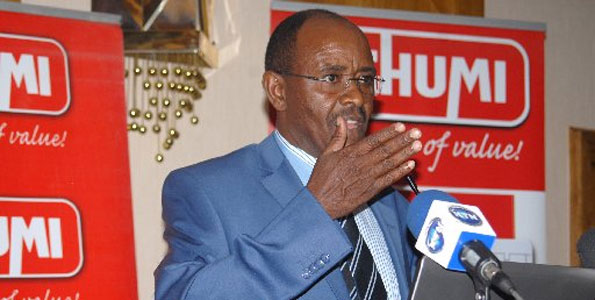
The board, which met Monday terminated the contract of the supermarket’s Managing Director Jonathan Ciano citing gross misconduct and negligence and appointed Uchumi’s General Manager Operations Owino Ayodo as acting CEO.

Also affected by the latest board initiative to restore market confidence is Chief Finance Officer, Chadwick Omondi whose contract has also been terminated and the suspension of Human Resource Manager Micheal Kibe. The board’s decision comes at a time when Ciano’s contract was set to expire next month.

Mr Ciano helped to turn around the retailer from an insolvent entity after it chalked up losses and failed to pay suppliers in 2006. Since its turnaround, Uchumi has only paid dividends once out of the results of 2014, largely because it does not have the money. Supplies have been cut and for the critical ones, the management has had to beg for time and has even renegotiated payment terms.

Part of the trouble started after senior managers began supplying most of the goods sold in the dozens of outlets owned by Uchumi. It started with a trickle, but with time, the trend got so ingrained, leaving Ciano helpless. With senior managers doubling up as suppliers, it became difficult to separate business interest and self-interest.

According to our source, by virtue of their positions within the company, payments for deliveries associated with them were fast-tracked and often at ‚exaggerated prices‘. The trend is currently being investigated by the board, which has indicated it may initiate criminal proceedings against those found culpable.
In that arrangement, Uchumi bought and possibly still does, buy commodities at prices that are higher than the eventual selling prices. That would translate to outright theft from the company owned by tens of thousands of shareholders, including the Government. Sought for comment, board chairperson Khadija Mire had earlier said that Ciano had gone on leave. “We approved his leave, he has been working for years and he surely needs a break like anyone,” Ms Mire said.

She, however, did not deny that there are investigations relating to misdeeds by some managers. On his part, Ciano said he had taken time off his busy schedule to relax. “I have not taken leave for the past nine years, now I have to,” Ciano told said before the board sealed his fate in Monday’s meeting where the action to terminate his contract was taken. But when asked whether the decision to take leave was prompted by the company’s board, pending investigation, he said: “It is absolutely ridiculous that you are telling me that. What investigation”

He, however, said that some new directors in the board do not understand the business model of the company. He said the new set of board members do not even know how far he had brought the firm. He, however, did not name the directors who are opposed to his continued stay at the helm.

The board of directors has reportedly cracked the whip and an insider who requested not to be named because of the sensitivity of the story confided that Ciano was forced out during a board meeting, which was held last week. “He is not coming back,” said our source. The managing director was accused of knowingly allowing senior managers to enlist as suppliers of the supermarket, and in the process, helped perpetuate a culture that allowed conflict of interest to reign over sound business decisions. “I have managers who are suppliers, and that is a fact we have only come to know about very recently,” said Ciano, adding that something was being done about this.

Uchumi may have embarked on a process to clean up the mess, but it should be obvious that something is amiss, whether Ciano stays on or not. Our source played down suggestions that disagreements may hit the board, saying that official communication would be relayed within the week when a possible replacement for the MD has been sought, even if it would be on a temporary basis.

Resistance from the board would not augur well for any chief executive anyway, far worse when the entity in question is bleeding like Uchumi. The company reported a Sh263 million loss in the half year ending December 2014, down from a Sh106 million profit in the previous comparable period. High finance costs, salaries and rent were cited as the reason for the falter. The Kenya Commercial Bank (KCB) and Co-operative Bank of Kenya have jointly lent Uchumi over Sh1 billion to help cure cash flow problems that had threatened to end deliveries.

A supplier like the Kenya Power, which had a working relationship with the firm in which Uchumi sells its prepaid electricity tokens and collects payments for postpaid customers, has severed ties with the chain over delayed payments. Loss of the dealership, which Uchumi has held for a couple of years now could be catastrophic as it signals the loss of a significant revenue stream. Kenya Power informed its customers that due to unavoidable circumstances, bill payment through Uchumi supermarkets had temporarily been suspended.


The MD of the utility firm, Ben Chumo said the relationship with Uchumi was to the extent that the retailer had been collecting payments but not transmitting the cash – instead using it to trade, without the firm‘s knowledge and permission.

It had been happening for quite some time, he added, and attempts to remedy the situation did not bear any fruits. Mr Ciano put up his strong side, during the interview, and expressed optimism that top officials from the two firms who had met severally to iron out the issues would amicably settle the problem. “We had a shortfall in the rights issue which caused us a little cash shortage. This meant we were unable to pay Kenya Power promptly,” said Ciano.

The incident is just one of the pointers to the bigger underlying problems that Uchumi is dealing with financially. Last weekend, the company had to issue a public apology to its shareholders for delays in paying out the dividends declared in November 2014. “The delay was caused by challenges ranging from tight scheduling, printing to postage, of our selected service providers beyond our control…” the company said in the notice that would move the payment date forward by two months. It is plausible to link the delayed payment to the tight cash flow situation. Ciano said the board had approved the company to seek a loan of Sh500 million, and he had been given the mandate to find the cash.

“I will be away in London for an investor briefing this week, which should tell you we are making some progress.” Uchumi just raised nearly Sh900 million from a rights issue in December, but the funds came through in March. But the issue had been planned for a much earlier date, previously slated for 2012 but had to be delayed because the majority shareholders were not ready,” Ciano said.

It is projected that the loan would enable the company remain afloat, and avert the tragedy of 2006 when it was forced to close down due to insolvency. Its shares were suspended from trading at the Nairobi Securities Exchange, and only made a comeback after more than five years in the cold. Thousands of workers lost their jobs temporarily in a window that enabled rival retail chains to close in on Uchumi and take off with big chunks of its market share. Before the fall, several top managers were arrested and charged for abuse of office, but later released for lack of evidence.

The shareholders were left licking their wounds as a turnaround plan was hatched with the State pumping over Sh600 million in the revival plan. Mr Ciano was then brought in to midwife the turnaround that has been cited severally as miraculous. With his sacking Monday, things have gone full circle for the chief executive who says his record speaks for itself. Half of the board members are new and are the ones who want a change, according to Ciano. “They are still undergoing orientation,” he laughed.

Prominent shareholders, including the Kenya Wine Agency Ltd, have dumped the company‘s shares in the recent past, possibly a pointer to diminishing confidence in the business. The country’s retail business has seen major transformation in the last decade. New arrivals from other countries are also making big statements through new outlets, as they fight for a slice of the business.

Jonathan Ciano: I knew I would be fired when Jamii Bora became Uchumi shareholders

0

Yesterday, Uchumi CEO Jonathan Ciano was fired as the head of Uchumi Supermarkets. Mr. Ciano has since comes out to state that he knew he would be sacked. He said that his die was cast once Jamii Bora Bank became the largest shareholders and got a seat on the board.

“I have been informed of the same (sack) and am comfortable with the decision that has been reached. As you may be aware new shareholders came on board and they have the right  to make realignments that  are in line with their market and growth expectations.”

Mr Ciano said he will not pursue any legal action for termination of his contract and will be paid three months’ salary in lieu of notice, adding that he has no hard feelings about the decision.

“I leave Uchumi a happy man having played a key role in turning around Uchumi. It has not been an easy journey and I hope the next CEO will take Uchumi supermarket to the next level.”

Signs that Mr Ciano was set to exit began to show in inability to handle suppliers yet the retailer had borrowed loans and funds from shareholders in the 2014 rights issue that raised Sh896 million. The board said it had sent Mr Ciano and the chief finance officer, Chadwick Omondi Okumu, packing for “gross misconduct and gross negligence” that has left the listed retailer owing suppliers Sh1 billion.

“The board has taken decisive action to address the challenges we are facing and has a clear roadmap to return Uchumi Supermarkets to sustainable and profitable operations,” Uchumi chairperson Khadija Mire said at a briefing on Monday.

Owino Ayodo, the general manager, operations, has been appointed the acting chief executive of the listed retail chain as the hunt for a new head and CFO begins. The human resource manager, Michael Kibe, has been suspended.

In firing Ciano, Sam Kimani, a board member representing Jamii Bora Bank, the single largest shareholder with a 15.8 per cent stake in the retailer, said that failure to pay suppliers despite the rights issue cash had catalysed the board’s decision to change Uchumi’s top brass.

“We are trying to figure out why suppliers are not delivering yet we had raised money through a rights issue to pay them,” said Mr Kimani. The retailer additionally took a Sh405 million loan from the Co-operative Bank to pay suppliers and a Sh600 million loan from KCB to fund expansion.

The listed supermarket chain made a half-year loss of Sh262.3 million for the year ended December 31 2014 compared to a net profit of Sh106.9 million a year before. Sales dropped to Sh6.8 billion from Sh7.2 billion over the same period.

Uchumi has been struggling to pay suppliers since late last year and the board said it plans to sell non-core assets worth Sh2 billion – such as land- to pay suppliers, the lifeline in a retail chain.

The board ruled out a possible government bailout or the sale of the company to a competitor, insisting that the company could still be salvaged.

One of its priorities is to return key branches at Sarit Centre, Hyper, Langata Hyper, Ngong Road Hyper, Capital Centre and Koinange Street back to normalcy.

Uchumi has failed to return to its glory since it got relisted on the Nairobi Securities Exchange (NSE) in June 2011 after a five-year suspension, following gross mismanagement that saw it close shop in June 2006.

Ironically, it was Mr Ciano who resuscitated Uchumi, with the help of a government bailout and suppliers, who agreed to convert their debt into shares.