
Home Blog Page 2252

Kenya Power: don’t apply for electricity, just wait to be connected

0

Kenya Power has said it has closed applications for electricity connections following a declaration by President Uhuru Kenyatta that all households be connected to electricity at a subsidized fee.

Kenya Power managing director Ben Chumo said there was no need to make applications since the decree by the President means that all homes will be connected without having to apply.

He also asked people living 600 metres from transformers to be patient as they will benefit from the subsequent phases in the programme.

“You know, application is like requesting to be connected. But already, the government has offered to connect everyone. There is therefore no need for applications,” said Dr Chumo.

During the Madaraka day celebrations, Mr Kenyatta directed that the cost of connecting to electricity be dropped from Sh35,000 to Sh15,000 to ease access.

The President said he had commissioned 40,000 transformers in a project that will end up lighting every village of the country.

“And even that smaller sum can be paid in installments, so that every Kenyan has the power he needs to improve and to prosper by investing in enterprises that add value.”

He said the project complements the school electrification programme, under which every primary school in the republic will have electricity within the next few months.

Dr Chumo said they had surveyed regions across the country to determine where transformers would be placed.

He said applicants will now identify a transformer that is 600 or less metres from their homes and notify the engineers when the installation begins.

The first phase of connection will begin in September through distribution of 5,320 transformers. It will take 18 months.

“All we are asking now is that those who will not benefit from the first connection should wait because phase two is coming,” he said in an interview.
Dr Chumo said Kenyans who are unable to pay will be given a grace period of up to 36 months to ensure that the poor are not left out in the electrification process.

Dr Chumo said the country requires nearly 100,000 transformers in order to sufficiently provide power. The government intends to connect 1.5 million Kenyans to electricity by the year 2019.

He said those who had been given quotations earlier should ignore them and use the new rates.

He also said they are working on ways of reducing the high number of unexpected blackouts which have been a major disruption to businesses.

“We can find an alternative way so that we don’t have to switch off power when rectifying mistakes,” he said.
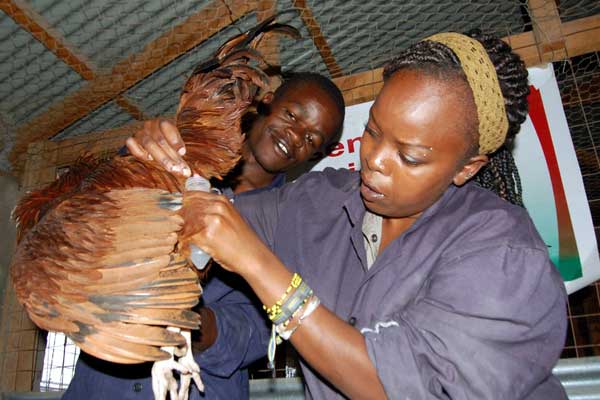
A step-by-step guide to inseminate chicken at home

The following analysis is by Egerton University researcher Sophie Miyumo.

Poultry farmer Stephen Mune has been trying for the past one year to better his breed with little success.

Mune keeps layers, and he wanted to crossbreed the exotic birds to improve his yields.

He was advised by another farmer to get a good cock and let it mate with a few birds from his brood. The birds would later lay eggs that would hatch to get the crossbreed he wants.

“Things have not worked as I expected despite buying several indigenous cocks from an agricultural institutions and following their advice,” he says. Like many other poultry farmers countrywide, Mune has not heard about artificial insemination (AI) in chicken.

However, researchers are now upbeat that a breakthrough in this technology, currently restricted to research and breeding centres, could change poultry farming in Kenya as we know it.

The technology requires one to understand the basic anatomy and physiology of the hen and cock’s reproductive tract. One must also be technically competent in semen collection and deposition procedures to achieve effectiveness in producing fertilised eggs.

MINIMAL STRESS

Prior to semen collection, cocks must be trained. This is done by massaging the bird’s abdomen and back for about a minute for three consecutively days.

This is the most commonly used method since it is non-invasive and has minimal stress on the cock.

The procedure involves restraining the cock followed by gentle but rapid stroking of the abdomen and back region towards the tail (testes are located in this region).

Doing this stimulates the copulatory organ making it to protrude.

At this point, the handler should quickly push the tail of the cock up with one hand and at the same time, using the thumb and forefinger, gently squeeze the region surrounding the sides of the cloaca to “milk” semen from the ducts of the copulatory organ.

Semen should then be collected in a small tube or any cup-like container. This procedure is repeated twice once a day; an additional round may cause damage to the testes and cloacal region. The volume of semen that can be collected from a single cock ranges from about 0.7 to one millilitre, with a sperm concentration of three to four billion per ml.

However, the quantity of semen depends on genetics and environmental factors such as age, bodyweight, season and nutrition.

The degree to which the male will respond to the abdominal massage technique and the pressure applied on the ejaculatory ducts will also influence the quantity of semen produced.

Chicken semen begins to lose fertilising ability when stored for more than an hour. Therefore, it must be deposited in the hen within an hour of collection. In the case of short-term storage and transportation of the semen, it is necessary to use liquid cold (four degrees celcius) storage to maintain spermatozoa viability for up to 24 hours.

Vaginal insemination is commonly used for semen deposition as there are less risks of injury to the hen.

Preliminary stroking and massaging of the back and abdomen is required to stimulate the hen. This is followed by applying pressure to the left side of its abdomen around the vent causing evertion of the cloaca hence protrusion of the vaginal orifice.

An inseminator containing the semen is inserted 2.5cm deep into this opening for semen to be deposited. As the semen is expelled by the inseminator, pressure around the vent is released so that the oviduct can return to its normal position and draw the semen inwards to the utero-vaginal junction.

LATE AFTERNOON

Inseminators such as straws, syringes or plastic tubes may be used. During insemination, the volume of semen required per hen is about 0.1ml, which contains about 100 to 200 million sperms. It is best to inseminate hens in the late afternoon between 2pm and 4pm since in the morning, hens may have an egg in the oviduct, making it difficult for the sperm to swim up to the ovary.

A significant feature of the reproductive physiology of the hen is the ability to store fertile spermatozoa for up to 14 days in the sperm storage tubules located at the utero-vaginal junction.

The tubules release the semen, slowly over time, which swim to the fertilisation site and allows hens to be inseminated consecutively for two days for the first time, and thereafter at regular intervals of 14 days.

Twenty-four hours after insemination, egg-breakout analysis is carried out to determine egg fertility.

Equity Bank: how an empire is built

0

The following analysis is by Mbatau Wangai.

Equity Group Holdings’ announcement last month that it has bought 79 per cent of Pro Credit Bank Congo, a subsidiary of German-based multinational bank operating in the Democratic Republic of Congo (DRC) continues to broaden the horizon of Kenya’s financial and business sector in a way reminiscent of building of great empires.

A walk down memory lane reveals that all countries that built global empires did it by extending their reach beyond their natural borders. Evidence on the ground reveals that while in the past empires were built on the back of colonial conquests, the trend since the end of the Second World War has been that investments and trade have led the way.

Looked at this way, Equity Group’s foray into DRC, a nation whose population is about double that of Kenya, increases the chances that the country’s dream of becoming a regional financial, industrial and commercial hub for East and Central Africa will become a reality. It is noteworthy that before the emergence of the top three local indigenous banks—Equity, KCB and Co-operative Bank — foreign-registered banks operating in Kenya had no appetite for going beyond the country’s borders despite running highly profitable operations for close to a century.

That was understandable since these banks had subsidiaries of their parent companies operating in these countries. This encouraged manufacturing, trading and even technological companies established at the time to adopt the same in-ward looking growth strategies. The result was that these companies grew no faster than the rest of the economy. There is ample evidence to suggest that the country’s low wages and the accompanying low productivity may be traced to this myopic view of the continent and its potential.

Thanks to South African and West African banks and companies, their aggressive entry into Kenya woke up the local sleeping giants. Never mind the fact that two of the three were nearly on their knees due to years of mismanagement and lack of visionary stewardship at the top. Almost by chance, new management teams that took over in the late 1990s and early 2000s quickly raised the institutions from their knees and marched into other East African countries.

Moving forward, the hope is that other local banks will be encouraged to set up operations not just in the rest of the Eastern Africa region but will resolutely move across the entire continent. This will see South Africa anchoring their Southern Africa operations while Nigeria does the same for West Africa and Egypt becomes the gateway to North Africa and the Middle East.

The question that should be exercising the minds of technocrats at the Treasury and State House is how to help the banks move forward faster before their continental and global competitors eat their lunch. Perhaps, the technocrats might begin by crafting new taxation strategies that would give allowances to local institutions that set aside a reasonable amount of money to fund foreign expansions.

That might encourage local shareholders to forgo some of their annual dividend payments for the same purpose. It may be safe to bet that other businesses, especially those in the logistics, ICT and personal service sectors would follow in the banks’ footsteps giving the country a chance to build the muscles it needs to enter the global market as a purveyor of finished consumer products.

That might encourage local shareholders to forgo some of their annual dividend payments for the same purpose. It may be safe to bet that other businesses, especially those in the logistics, ICT and personal service sectors would follow in the banks’ footsteps giving the country a chance to build the muscles it needs to enter the global market as a purveyor of finished consumer products.

The country should draw inspiration from the fact that Equity, the bank leading the pack, was established only a quarter century ago and its founders are still playing a role in its operations.

Uchumi to sell Sh. 2 billion assets to pay off part of Sh. 1 billion suppliers’ debt

0

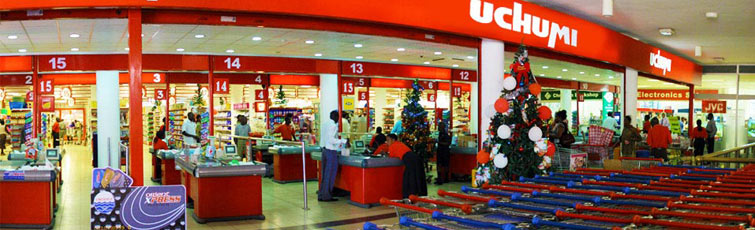
Uchumi Supermarkets has announced that it will be paying its suppliers in the next three months. The announcement was made when Uchumi’s board of directors met with its suppliers on Friday morning. The supermarket chain further confirmed that it will be selling its non-core assets which are valued at an estimate of Sh. 2 billion. Part of the proceeds from these sales will go towards paying off its suppliers.

Currently, the debt Uchumi owes its suppliers in estimated to be in excess of Sh. 1 billion and has left many of the retailer’s shelves empty!

All debts older than 90 days will be paid in full within three months, with half the outstanding balances to be cleared within the next two weeks.

“We have obtained Sh500 million funding from our bankers, which is available to pay part of the debt as we finalise the disposal of non-core assets worth over Sh2 billion to pay the remainder of the debt over 90 days old,” said Uchumi Supermarket chairperson Khadija Mire in a statement.

Housing Finance unveils solar finance solutions

0

Housing Finance has announced the introduction of SOLA Pawa Leasing, a solar financing solution that complements its recently launched Solar Financing Loan.

The financing solution which targets both residential and commercial properties is not only in response to the Energy (Solar Water Heating) Regulations, 2012, but also seeks to address the prohibitive upfront costs required to invest in solar energy.

The leasing product offers several long-term lease options with flexible terms that reduce capital expenditure.

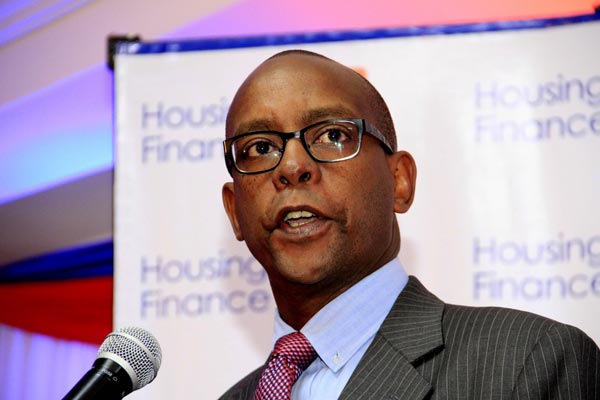
The solution is available to customers seeking to acquire solar water heating systems and solar systems for any other use such as lighting. Speaking at the Solimpexs Africa Solar Energy Symposium, held yesterday at a Nairobi hotel, Housing Finance Managing Director Frank Ireri said the mortgage firm is committed to developing products that are tailor-made to meet the needs of their customers.

How to get the most from your dairy cow

The following analysis is by Livestock Expert Dr. Mary Muchunguh.

Faint heart never won fair lady, sages said. One has to be persistent to reap the benefits of his labour.

This applies to livestock farmers as well as the venture is not an easy.

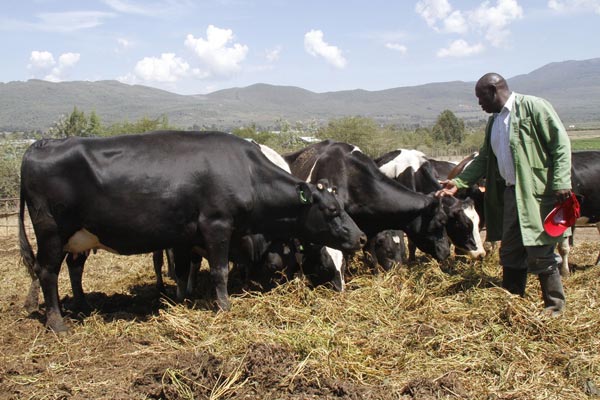
For dairy farmers, extra effort is required to enjoy good milk production. Some farmers sing to their animals while others allow them to watch TV.

It is, however, important to note that healthy animals can never be a let-down.

Dairy farmers need to apply Good Agricultural Practices as outlined below:

NUTRITION

A dairy animal’s health and productivity, as well as the quality and safety of its milk, depends largely on providing the right feeds and water.

The farmer must ensure feeds are well-balanced.

Fibre, proteins, energy and minerals should be part of the primary constituents of the diet.

Grasses and legumes are good sources of protein, while minerals may be sourced from commercial salt licks.

However, to reach a cow’s optimal milk production, additional sources of energy may be obtained from commercial feeds.

Clean water must always be readily available. A lactating cow drinks up to 120 litres of water per day.

ANIMAL HEALTH

Unlike beef cattle farmers, dairy farmers have to raise the bar in relation to disease management. Dairy animals are extremely vulnerable to heat and wet housing conditions.

Poor hygiene especially during milking sessions increases susceptibility to contracting mastitis.

An infected cow will definitely have reduced milk production and incur the farmer more costs.

Thus, farmers need to be up-to-date with their animals’ health records. More importantly, ensure that you use only prescribed medication as directed by veterinary office.

A good dairy farmer must always stay a step ahead of diseases by regularly checking their animals. Early detection is crucial.

Clear, dry and well-ventilated housing conditions are necessary. Wet floors will cause foot rot and poor ventilation could result in hot and humid conditions that will increase the chance of the animal contracting mastitis and other infectious diseases.

These humid and hot conditions are also favourable for many disease vectors. Farmers should put in place disease-entry prevention measures like footbaths to maintain high level of bio-security.

MATCHING BREEDS TO ENVIRONMENT

Choose animals that are well-suited to the production systems and environments of your region. Sometimes farmers purchase and attempt to rear animals that do not suit production systems.

For example, a farmer who attempts to raise a Holstein–Friesian cow in an extremely hot and humid area while practising open grazing should not expect good yields.

This animal will be exposed to several challenges such as disease, heat stress and poor quality feeds.

When the same dairy cattle breed is reared in higher altitude and cooler areas, it will have improved productivity. For hot areas, one should keep Fleckvieh, a high-yield dual purpose breed.

This animal is hardy and well-adapted to several environments. It is important that farmers seek expert and professional advice before purchasing dairy animals to get the most suitable breeds.

ANIMAL WELFARE

Most farmers take animal welfare for granted.

Dairy animals should be treated well based on five key freedoms namely freedom from hunger and thirst, freedom from fear, freedom from discomfort, freedom from pain and freedom of movement and to engage in normal animal behaviour.

What is it about agriculture in Africa?

0

Africa’s agriculture potential is staggering. The region has about 60% of the world’s uncultivable arable land. Some 50 years ago, it was a net exporter of agriculture produce. These potentials have helped foster economic growth and sustained livelihoods of millions of people.

But the trend has changed. In a dramatic turn-around, Africa today imports more food than it produces to feed itself. Agricultural exports have shrunk and now accounts for just 2% of world agricultural exports.

This change has come with greater costs. The lives of about 70% of rural people who depend extremely on agriculture are at risk of poverty and food insecurity.

Africa is riding the crest of a decade of strong growth, averaging about 5% per year. This is impressive. Of course, growth has failed to lift millions of lives out of poverty and food insecurity. The disconnect between high economic growth and poverty reduction continues to baffle policy makers and development partners. This is happening because Africa has not fully harnessed the potentials agriculture has. Now everybody is concentrating on extractive resources – from African policy-makers to donor governments to development partners – to the grim neglect of agriculture. But we are paying the cost of this neglect. Millions of women, men and children go to sleep on an empty stomach. Malnutrition is ravaging the future of millions of children.

The challenges facing agriculture are enormous. Of these challenges, one stands out. There is chronic under-investment in agriculture in several countries in sub-Saharan Africa. Today, smallholders still depend on rain for irrigation. They use simple tools denying them the opportunity to increase production. Those who manage to produce under these strained conditions have limited access to market. These challenges exist because governments invest very little of their budgets in agriculture.

African governments are aware of the need to expand financial investments in agriculture. They have tied themselves with several declarations meant to boost budgetary allocations to agriculture. But sadly these governments have only managed to implement their own declarations with rhetoric. Today, only about 14 countries have fulfilled their commitment – set out in the Maputo Declaration in 2003 – to spend at least 10% of national budgets on agriculture.

For development to happen in Africa, leaders ought to reinvigorate agriculture. They must scale up supports for smallholder farmers, who contribute to more than half of food production in Africa. We cannot afford to squander the abundant potentials of agriculture while we look elsewhere for the solutions to end poverty and hunger. African governments, donors and development partners must increase financial investments in agriculture not only to drive poverty and food insecurity down, but at least to fulfill their own commitments set in beautifully-crafted declarations, not least the Millennium Development Goals.

One thing is clear: the economic transformation Africa is looking for cannot be found in gold, diamond, oil and gas. The transformation lies in agriculture. Improving the productivity of agriculture is central to addressing poverty and driving social and economic development.

But what is it about agriculture in Africa today? Agriculture co-exists with poverty and food insecurity because policy-makers have failed to invest. It is time for leaders to rethink their commitments to financing and boosting agriculture.

I end with a quote from Jawaharlal Nehru, Indian statesman and first prime minister: “Everything can wait but agriculture cannot wait!”

Kenya attracting growing interest from foreign retailers

Botswana’s largest grocery chain, Choppies, recently announced that it plans to acquire 10 stores of a Kenyan mid-tier retailer Ukwala Supermarket for about US$10m, marking its foray into East Africa.

A few weeks ago South Africa’s Massmart also entered the market with the opening of its Game store at a new mall in Nairobi. Furthermore, French chain Carrefour is set to open two stores.

Supermarket retail in Kenya is dominated by four domestic players namely Nakumatt, Tuskys, Uchumi and Naivas. The acquisition of Ukwala by Choppies will be the first case of a foreign retailer taking over a Kenyan supermarket chain. Previous attempts by Massmart to buy a stake in Naivas failed due to family wrangles among Naivas shareholders.

Choppies said in a statement that Kenya’s “underpenetrated formal retail market” provides it with a “compelling opportunity”. Three of the supermarkets Choppies will acquire are located in the capital Nairobi, two in Nakuru and five in the port city of Kisumu.

The Botswana Stock Exchange listed retailer operates 125 outlets in Botswana, South Africa and Zimbabwe. Last month it undertook a secondary listing at the Johannesburg Stock Exchange to raise capital for expansion in Southern and East African markets.

“We are on track to have over 200 stores by the end of next year and will be opening our first stores in Zambia and Tanzania by mid-2015,” Choppies CEO Ramachandran Ottapathu told Reuters.

How to Find Help for Your Credit Problems

0

A credit-counseling agency serves as an objective party to help you sort through your credit problems, see your credit situation through the eyes of professional, give you some credit education, offer personalized budgeting advice, and design a customized plan to get you out of debt — all for nothing or next to nothing.

A credit counselor asks you about your income sources and tax deductions, as well as your monthly expenses. A quick subtraction of expenses from income tells you how much you have available for monthly debt service, if any. The counselor will suggest ways to adjust your expenses or income, to get you to a positive cash-flow position (in which more money is coming into your household than is going out).

Next, you and the counselor go over all the debts you have to pay. The positive cash flow from the earlier calculation is applied to the amount you have to pay. If anything is left over, you’re basically done — you leave with an action plan and a budget you can follow to keep your expenses in line with your income.

If the result is negative (you have more expenses than you have income), you and your counselor rework the expenses to free up cash flow, and he or she tells you what your debt service would be under a debt-management plan.

Alas, there is no magic wand to make all your financial problems disappear, but a good certified credit counselor always offers solutions. Expect more than one solution, and expect some solutions you don’t like. Your counselor will give you a balanced perspective of what you need to do, how long it will take, and what resources are available to help you along the way.

What Does Retirement Mean to You?

0

Picturing yourself in retirement may be difficult. Retirement may feel so many years away that you can’t even fathom the idea of ever being able to retire. Or possibly you’re middle-aged and feel that retiring someday is completely impossible.

For a lot of people, retirement just doesn’t resonate as a concept. If that applies to you, try thinking of financial freedom or financial independence as synonymous with the word retirement. Many people have absolutely no desire to stop working. However, those same people are looking for financial freedom and financial independence. They want to be able to choose what they do, when they do it, and for how long. You may be one of these people.

Every financial situation can be improved with proper planning. When it comes to retirement planning, you have the following four options:

>Spend less now and save more.

>Work longer.

>Die earlier (but that’s not really a planning strategy!)

>Get better net, after-tax returns on your investments.

To some degree, you have influence over the first three variables. For many people, the most palatable retirement solution involves a combination of all three of the variables mentioned.

The first step in retirement planning is to determine what matters most to you and your spouse or partner. Spend a moment now, reflect on your lifestyle in retirement, and think about how it will change from the lifestyle you enjoy today.

>What are you doing?

>Where are you living?

>What activities are you enjoying?

How do you spend your time?

Review the What Retirement Looks Like to Me statement; then create your own.

Thinking about what you want your life to be like during retirement helps you plan.

As you reflect on your lifestyle in retirement, list issues that involve money — maybe earning money and definitely spending money to support your desired lifestyle in retirement. This information is necessary to determine how much money you’ll need in retirement and how much you’ll need to save to achieve financial independence.