

Home Blog Page 2258

How Chris Kirubi’s Haco bosses cooked profits to earn big bonuses

0

Top executives of Haco Tiger Brands, a Kenyan subsidiary of South Africa’s Tiger Brands – which is also partially owned and chaired by billionaire businessman Chris Kirubi – overstated the firm’s performance to show they were excellent performers deserving great rewards. The trick that the Kenyan team used to earn more was laid bare at an investor briefing held last week in Johannesburg, South Africa.

Have you read this one? Top managers at Chris Kirubi’s firm sacked for manipulating profits

In his presentation, the Tiger Brands’ chief executive officer, Mr Peter Matlare, said Haco top executives pre-invoiced sales and moved stock to third party warehouses to make it appear as if they had reached their performance targets.

According to Mr Matlare, the Kenyan subsidiary, led by sacked managing director, Mr Geoffrey Kiarie, were only focused on reaching their targets “in a number of ways that we would not ordinarily expect them to”.

Among the tricks used included altering financial statements and engaging in pre-invoicing to reach their performance targets. Stock that was yet to be sold was moved to third party warehouses to make it appear as if the set performance targets had been achieved.

As a consequence of their manipulation, Mr Kiarie and his team were rated to be among the best performing at the group level in a number of key products. The team also falsified operating profits by over Sh879 million.

BENDING THE RULES

“They have been judged to be one of the best performing in a number of key areas, by way of example, in our Bic business, two-and-half-years ago, they were globally in the top three and they got some fantastic awards,” Mr Matlare said.

To keep the awards pipe flowing, the team bent the rules to the breaking point.

“What I believe is that the team decided to ‘drive and drive and drive’ without sticking to the rules and it is a great disappointment. As a consequence, we got rid of all those who did wrong,” Mr Matlare added.

Billionaire businessman and disc jockey Chris Kirubi holds a 49 per cent stake in the joint venture. “As the local shareholder of Haco Tiger Brands, I’m disappointed with the managers involved in manipulating figures,” Mr Kirubi said in messages sent out on social media after the story was broken by Business Daily on Wednesday.

“Their actions are unacceptable and I condemn them.” Haco deals in BIC brand of pens, personal and household care products such as Ace, Jeyes, Miadi, Motions, TCB, Bloo and SoSoft.

Mr Kiarie was appointed managing director for the firm in 2012. He was replaced in December, last year, in an acting capacity by Mr Peter Kang’ethe.

The discovery of the falsified accounts and the need to rectify the position reduced the group’s earnings for the half-year results for the period ending March 2015. “Because they sold forward, this impacted on the first quarter of this year,” Mr Matlare noted.

The volumes of the Haco Tiger Brands in Kenya declined by 60 per cent with turnover slumping by 58 per cent, contrary to figures presented by top executives. The turnover in the South African operations rose 8 per cent with volumes growing marginally by 2 per cent.

CONFIDENTIALITY OBLIGATIONS

“Notwithstanding all the governance measures we had the top team went after reaching their target and they sold forward in ways that we would ordinarily not expect them to do,” Mr Matlare said.

Contacted, Tiger external auditors, Ernst & Young said they could not comment on what role, if any, the auditing firm had in unearthing the irregularities at the Tiger Brands Kenya subsidiary or what recommendations it may have made to Tiger Brands to avoid a repeat of such irregularities.

“Due to confidentiality obligations, we are unfortunately unable to provide a response to the question(s),” the audit firm’s Africa media relations official Fathima Naidoo told Smart Company.

The South Africa team was also hard-pressed to explain to their investors and regulators in South Africa, where they are listed, how the crime went unnoticed.

Tiger noted that the irregularities were picked by neither the internal nor external auditors. The sacked managing director was identified as the mastermind of the scheme together with a number of senior executives, who are facing disciplinary action.

“It was very difficult for anybody to have been able to pick this up in the way they (top executives) manipulated this in the quarter of last year. We’ve not had that kind of irregularity in the last five years that we’ve been invested in that business,” Mr Matlare said of the Kenyan operation in which Tiger Brands holds a 51 per cent stake.

Haco Tiger Brands was born after the South African firm bought a 51 per cent stake in the then Haco Industries (K) Ltd from Mr Kirubi in 2008 for an undisclosed amount.

The South African business has since then invested over Sh50 billion in the country, mostly in capacity expansion at its Kasarani-based factory, which employs over 400 people.

Tiger Brands has in its past annual reports praised the Kenyan business, terming it a sound investment given its good performance since they bought a majority stake seven years ago.

Mr Matlare, however, said that apart from the new management the firm had put in place, the company now has closer oversight over its Kenya subsidiary.

*********

Inside top managers’ bag of tricks

  •    Managers pre-invoiced sales and moved stock to third party warehouses to make it appear as if they had reached their performance targets.
  •  They altered financial statements to look impressive.
  •  The team also falsified operating profits by more than Sh879 million.
  • As a result of the manipulation:
  •  The managers  were praised for sterling performance and consequently earned huge bonuses.
  •   Executive officer Mr Goeffrey Kiarie who is said to have masterminded the  manipulation has been sacked.
  •   Discovery of the falsified accounts and the need to rectify the position reduced the group’s earnings for the half-year results for the period ending March 2015.
 

Britam to invest Sh. 35 billion in property projects

British-American Asset Managers (Britam) plans to invest Sh35 billion as it seeks to expand its property portfolio. The company has outlined a number of housing projects in partnership with Housing Finance Corporation and other investors. The investments are aimed at enabling the company to strengthen its grip on the mortgage industry in the next two years.

At a recent meeting with investors to unveil the real estate investment strategy, Britam Asset Managers acting chief executive Jude Anyiko said the firm’s plan is intact despite the exit of its asset managing partners last year.

“Strategies are rooted in the institution and I can assure you everything is within plan. We shall soon be breaking ground for 1,100 residential housing units on Thika Road and Kamiti Road at a cost of Sh11 billion.

Several multi-billion shillings projects are in the pipeline as we are engaged in various negotiations with partners to bring in more,” Mr Anyiko said. The housing plan will begin with 640 units on Thika Road, followed by another 240 apartments on Kamiti Road, whose ground-breaking is scheduled for next month.

Britam recently took over the management of Lang’ata House on behalf of its 50 investors. The property, which is located within Wilson Airport, has high-end clientele including the United Nations and Fly 540. The asset management firm says it has grown its portfolio by 50 per cent in the last eight months to hit Sh74 billion currently.

Britam tightened its grip on mortgage financier, Housing Finance through a buyout of Equity Bank’s stake, pushing its shareholding in the company to 46.08 per cent from 21.32 per cent.

The company has organised a European pension summit in Switzerland next month to woo investors from overseas to join its development agenda. About 100 pension investors are expected in the five-day event.

Among the land earmarked for development are a 21-acre land in Ngong, a 10-acre plot in Mlolongo, a two-acre parcel at Kilimani and others around Nairobi.

A plan is also underway to create a Real Estate Investment Trust (REIT) with a range of property lined up to be floated at the Nairobi Securities Exchange for potential investors.

“We will be going to the Capital Markets Authority to have the properties listed and accommodate interested investors. Komarock Mall will be our flagship under this scheme as we develop more malls and property to expand our REIT,” Mr Anyiko told Smart Company.

The 3,000-square feet Komarock Mall is set to be opened in September with another mall on Thika Road set to be completed in the coming years. Local pension fund schemes are lined up for key partnerships as Britam prepares to put up affordable housing units, which its members can buy.

Britam’s asset management unit suffered a blow following the exit of Acorn Group in which it owned a 25 per cent stake. The partner walked away with real estate projects worth billions of shillings.

Acorn was to focus on the actual development of the properties, which include shopping malls, office complexes and mixed-use projects.

Construction of its flagship 33-storey office, Britam Tower in Nairobi’s Upper Hill will be completed next year, with the total cost of the project estimated at Sh7 billion.

Kenya’s property market has continued to grow and investors have recorded high returns from the segment owing to the stability of the housing industry, where demand outstrips supply, especially in the residential segment.

Property tracker Hass Consult last month said a jump in land prices by 17.6 per cent in the year to March, compared to 4.5 per cent in the previous quarter, presents a positive indicator for property investors.

Sh11bn

Value of 1,100 housing units on Thika Road and Kamiti Road that Britam plans to construct starting next month

100

Number of potential pension investors that Britam expects to meet in Europe next month as it woos global financiers

Nissan Fuga: efficient, powerful and luxurious

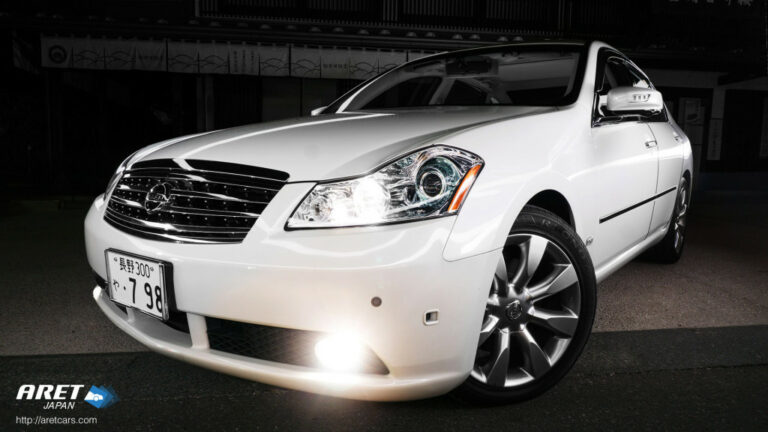
The Nissan Fuga Specs are outstanding since it has a lustrous and athletic body similar to that of sports cars. This sleek car entered the market back in 2004 and it has lived up to its hype as a luxury car. The Nissan Fuga changes the concept of a traditional luxury car.  It is available in several models including GT, GT Type S, GT Type P and 350GT. A 4WD version is also available. A review of the Nissan Fuga show satisfactory responses from its customers. It has received credit for its impressive performance, interior design and its luxurious attributes. This car is a perfect example of an exceptional sports car. Nissan Fuga price is economical when we talk about sports type cars.

Nissan Fuga 450GT

The 450GT has a VK45DD engine – the (slightly) little brother to what is used in the Nissan GT-R and it produces 333 hp (248 kW) and 340 lbf·ft (460 N·m). This boosts the almost 1800kg  Fuga to 100km in about 5.5 seconds. When you put the foot down, it kicks down a gear, before dropping another.. as if to say, ‘you really wanna do this huh?’ And it definitely feels fast, closing the gap between 130 – 190kp/h in a matter of seconds. All round, I have been impressed with the responsive power from the VK45DD. On fuel economy, 600+ kms on a 80 liter tank, with a mix of city and highway driving isn’t unrealistic.

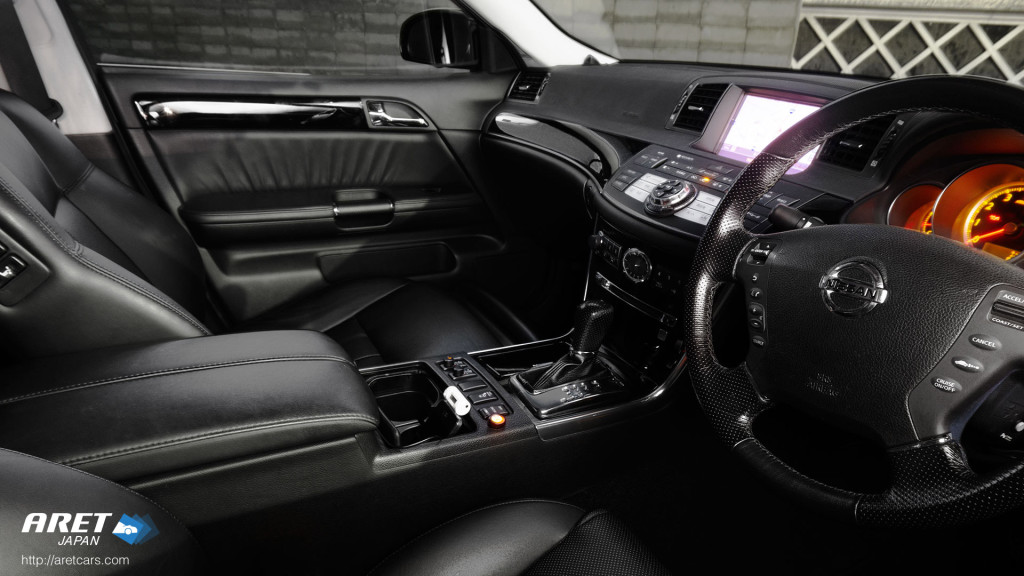
Nissan Fuga inside has been reexamined to improve the emotions of extravagance and craftsmanship, with unique consideration paid to the inner part materials and parts of all controls and trim boards. Enhancements incorporate new three-dimensional instrument dials with white and blue violet enlightenment, new bubinga wood and grain example. The expansion of unadulterated silver stresses to the piano-dark inner part finisher trim, new billet aluminum focus stack control switches, new back seat fabric and another full-programmed cooling framework with a Plasma Cluster Ion against bacterial capacity.

Fuga highlights the most recent in Nissan motor innovation with its decision of 3.5-liter Vq35hr and 2.5-liter Vq25hr motors, which consolidate elevated amounts of force and torque with low fuel utilization, and additionally generating sounds that befit its position as a games extravagance machine.

Both power plants are sponsored by a standard full-go electronically regulated 5-speed programmed transmission with a DS mode. The DS mode attempts to give greatest execution by upgrading rigging choice for the material driving conditions. Extra control is accessible through magnesium paddle shifters, which are standard on the GT Type S model.

A top-review alternative on the new Fuga is semi-aniline authentic calfskin inside trim bundle offering the finest review of cowhide. This new bundle incorporates semi-aniline authentic cowhide seats, hand-cleaned honest to goodness wood trim finishers with an extraordinary grain design; honest to goodness calfskin wrapped guiding wheel and shift lever handle, and a suede-like main event. Extra solace is furnished by a front traveler seat with a force footstool (standard on all models with the exception of 250gt and 350gt FOUR) and force leaning back seats (standard on GT Type P).

The highlight of the new Fuga engineering is the selection of the planets first Distance Control Assist (Intelligent Pedal) System, which is standard on the 450gt Type P/type S and 350gt Type P and discretionary on the different models. Utilizing a quickening agent pedal actuator, this framework helps drivers in regulating the separation between their auto and the vehicle in front, decreasing the drivers workload in a mixture of driving scenarios – from city heading to turnpike cruising.

The Nissan Fuga Specs are:

–    It has four door and 5 seats.
–    It is available in many color options.
–    Its engine size is 2.5 liters or 3.7 liters.
–    The Fuga has an automatic transmission and it uses gasoline fuel.


Equity Bank worker charged for modifying CEO James Mwangi’s memo

An Equity Bank worker who allegedly modified a memo sent by the bank’s CEO to staff has been charged at a Nairobi court. Erick Mwamburi denied the charges before Milimani senior Principal Magistrate Grace Mmasi.

He allegedly committed the offence on May 13, 2015 at Equity Bank head office at Upper Hill Nairobi. The court heard that the accused modified an official memo sent by James Mwangi, the bank CEO, by adding more words to the original text and circulated it to the bank staff via email.

The defence requested for favourable bond terms and he was released on Sh50,000 cash bail. The case will be heard on June 30.

China’s richest man loses $15 billion in 24 minutes at stock exchange!!

China’s richest man is having what can only be described as a week full of nightmares. This week, China’s Hanergy Thin Film Power Group is under investigation by Hong Kong’s market watchdog, a source told Reuters just hours after the company lost half its market value of nearly $40 billion in 24 minutes on Wednesday.

Before the stock plunge, Hanergy had seen its value climb five-fold since September. At its share price peak in March it was worth $48 billion, more than its nearest two dozen rivals combined and making Li one of China’s richest men – even as analysts and market watchers questioned the validity of some of its bullish proclamations.

Trade in the stock was suspended after the plunge, which left analysts just as puzzled about the sudden drop as they had been about a long run-up in the share price of the company, which manufactures solar panel-making equipment. A source familiar with the situation later said Hanergy had been under investigation for several weeks by Hong Kong’s Securities and Futures Commission (SFC) for alleged market manipulation.

A spokesman for the SFC declined to comment, and Hanergy officials were not available to comment when called at their Beijing offices. The company, controlled by founder Li Hejun, said in a statement that trade had been suspended “pending release of an announcement containing inside information”.

The stock’s precipitous tumble came shortly after the beginning of the company’s annual general meeting in Hong Kong. Li did not attend the meeting, and the company’s chief executive declined to comment on the share price plunge, according to local online media reports.

The good and the bad of M-Pesa for business

0

The following analysis is by Mbugua Njihia, who is the CEO at Symbiotic Kenya Limited.

I am impressed by the work that went into the M-Pesa Generation II platform iteration. While it has grown in complexity, it covers almost all the permutations that make for a more efficient business operation where the speed of cash flow is key to sustaining many enterprises.

We have, in the past, explored how the banking sector was caught napping, as Safaricom extended its focus from peer-to-peer money movement to business transactions.

This has a number of benefits on SMEs, both in relation to trade between themselves and trade with large enterprises.

The benefits of M-Pesa Gen II are best realised when hinged onto valued added platforms such as Lipisha, KopoKopo, WezaTele and others, which via application programming interfaces (APIs), can marry data generated by a firm and automate certain processes with business owners avoiding the back-end admin complexity on the M-Pesa Gen II dashboards.

Payment collections

We have already been doing this for years, with players such as Cellulant, PesaPal, JamboPay among others having built sizable business providing payment aggregator services to a growing number of customers, most notably utility companies.

The M-Pesa Gen II value that is realised is on the consumer side, where LipaNaMpesa online is poised for an overhaul that will see a departure from the use of the Bonga PIN to complete online transactions.

The possibility of push payments opens up a new avenue of opportunities in differentiated M an E commerce user experiences. The result will be higher value baskets and lower cart abandonment rates, where most attrition happens at checkout.

Supplier payments

With a growing number of businesses having adopted the paybill and buy goods facilities, it is now possible to move payments directly from one paybill number to another in real-time.

Think of a scenario where the enterprise resource planning platform or customer relationship management system raises a payment request to a customer with all parameters already embedded and it only takes a simple maker — checker process to have the payments approved and moved with all authorisations and know-your-customer verified.

Access to capital

The only downside to the M-Pesa Gen II ecosystem that would apply to businesses is access to additional support services, core of which is access to loans.

Any growing business will at some point in their lifetime require this facility, whether it is to fuel growth or service a purchase order.

The standalone M-Pesa ecosystem lacks this facility which means that even at scale, banks still maintain this hold on the business consumer. This means that business owners will probably opt to eventually route cash flows back into the traditional banking pipes. There is currently only one partnership – with KCB that provides an associated benefit; a start but hardly enough.

Maybe if M-Pesa was to be hived off and set up as its own entity and thereafter take on a banking licence would the service come full circle. This is highly unlikely though, so we work with what we have.

Local accountants get special access to top jobs and pay in UK

Local accountants will now be able to access jobs in the United Kingdom without having to undergo further training under a deal signed last week by professional bodies of the two countries to ease labour exchange.

The deal signed between Institute of Certified Public Accountants of Kenya and the Institute of Chartered Accountants in England and Wales (ICAEW) now see the two accounting bodies recognize each other’s certificates.

Consequently certified public accountants from Kenya applying for jobs in England and Wales will compete for same job grades and perks with domestic workforce.

“ICPAK is delighted to be working with ICAEW to ensure that we offer the highest international recognition and opportunities for our members in Kenya and around the world.” ICPAK chief executive Patrick Ngumi said.

Dr Ngumi added:  “It is a demonstration that ICPAK’s qualification framework has come of age and meets the international benchmarks.”

The deal signed on Wednesday last week comes four years after the two professional bodies signed a Memorandum of Understanding to start working more closely together to enable their members join either of the associations as full members.

The partnership comes at a time when labour markets are opening up especially with the influx of multinational corporations in East Africa. Kenya already serves as the headquarters of most of UK firms doing business in East Africa who have had to fly in key accounting staff.

You can now own a block of land without holding costs, interests or loan

A new land buying initiative has been launched to help individuals with less money acquire land by booking a price of a parcel of land and paying the booking fee through 10 monthly installments and settling the balance at an agreed future date. The new land buying arrangement has been launched by Land Layby Kenya Limited.

Through a land banking call option dubbed Chanuka Sasa, the initiative hopes to revolutionalise the land and real estate sector by enabling individuals buy parcels of land in the outskirts of various cities and waiting until residential developers make them appreciate in value.

The initiative targets people who are keen to invest in land without securing bank loans and would like to have equity on their land by the time they own it.

“Land banking requires a lot of patience, knowledge and huge capital outlays. It is only hence a mantra of individuals with a lot of money. Land Layby Kenya Ltd is now changing this trend. We are bringing land banking to any Kenyan’s doorstep as long as they aspire to own land,” says Mrs Phyllis Gathura-Tole, the co-founder of Land Layby Kenya Ltd.

The initiative will enable buyers to control a block of land without any holding costs, no interest repayments and no borrowing by booking a price of a parcel of land and paying for it after several years.
According to Land Layby, Chanuka holds the potential of offering instant equity on expiry of the contract. The buyer traditionally pays an option fee to reserve a particular property price over a particular time frame. The fee compels the seller not only to hold the parcel of land for them but also to lock the purchase price also known as Strike Price.

Land Layby Kenya Ltd, which has been piloting the initiative in Kenya, released its first block of land comprising of 82 slots in Isinya Kajiado last year. The slots sold out in less than eight weeks.

A great car for a budget of Sh. 400,000

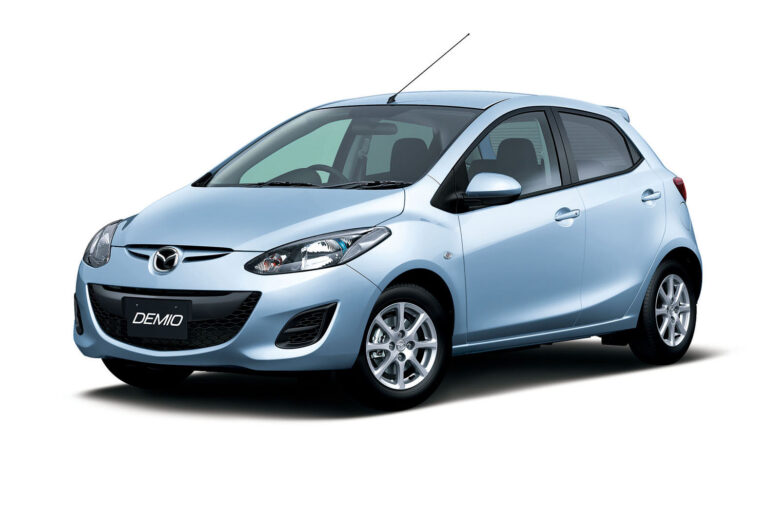
Q). With a budget of between Sh. 400,000 and Sh. 350,000, should I buy a Toyota Passo, a Nissan Note or a Mazda Demio? Which one among these can serve my basic travel needs, has good space, is easy to maintain and to source spare parts, and one that I can resell easily later when I want to upgrade.

A). Buy the Demio. I will not even bother going into long explanations on whys and whats, just get the Demio.

I’ve driven it and been driven in it and used it to carry luggage for four to and from the airport and gone to look at land for sale in remote areas with it and pootled around in the city in it and revved it hard and overtaken many cars in it and marvelled at its economy and punchiness of the engine and… just buy the Demio.

It is also pretty. The others look like electrical appliances used for laundry, or cold storage, or large scale printing duties. The sort of  stuff you find hidden in corners of a room where the sunlight never reaches. Get the Demio.

Top managers at Chris Kirubi’s firm sacked for manipulating profits

0

Top managers of Haco Tiger Brands, which billionaire businessman Chris Kirubi chairs and in which he owns a minority stake, have been fired after its South African parent company accused them of profit manipulation. Tiger Brands said on Wednesday executives at its Kenyan unit Haco Industries manipulated numbers to reach targets for the financial year ending September last year.

The irregularities led to civil charges against Haco’s managing director Geoffrey Mwathi Kiarie, the firm said. Another executive has also left the business, while at least three others may face sanctions. Tiger Brands which bought a 51 per cent stake in Haco Industries from Mr Kirubi in 2008, said its group turnover for the six months to March increased seven per cent to Sh129.4 billion.

The Johannesburg-based firm, which has operations in Kenya, Cameroon, Ethiopia, Nigeria, and Zimbabwe, however, announced that its operating income declined by three per cent to Sh13.8 billion.

This drop, it said, was attributable to foreign exchange losses at in Nigeria business as well as profit manipulation and pre-invoicing at the Kenyan unit. Haco Tiger Brands’ operating profit to March 2014 declined by Sh879.1 million, a 30 per cent drop at the unit which the Haco South Africa has in the past described as strong.

“They were key executives right at the top. It was difficult to pick this up,” Haco Tiger Brands chief executive officer Peter Matlare told Reuters in Johannesburg Wednesday during the release of the half year results.

Mr Matlare said that both external and internal auditors failed to pick up the irregularities, and that executives at Haco had been dismissed for the misconduct. The company’s managing director at the time is also set to be face civil charges.
Haco deals in BIC brand of pens, personal and household care products such as Ace, Jeyes, Miadi, Motions, TCB, Bloo, and SoSoft.

“The performance of the group’s Kenyan business was particularly disappointing,” Matlare said. “Haco’s results were negatively affected by the effects of pre-invoicing and the manipulation of profits in the previous financial year. Appropriate corrective action has been implemented. The MD is out of the business, but we are instituting charges against him.”

Mr Geoffrey Kiarie was Haco Tiger Brands MD from June 2012, when he took over from Mr Polycarp Igathe.