
Home Blog Page 2259

I’ve found bigger success in poultry farming after quitting my accounts job

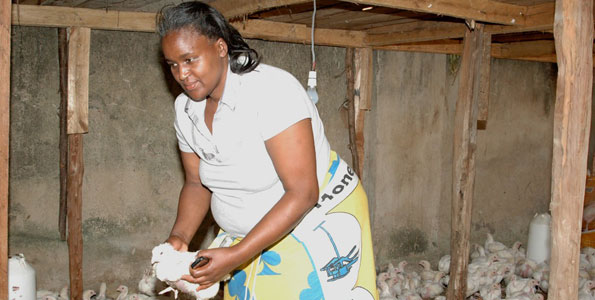
It is the desire to be her own boss that saw Lillian Akinyi Okwiri become one of the most successful poultry keepers in Kisumu. Mrs Okwiri, 50, quit her job as an accountant after being in formal employment for only six months. To her friends, this was a risky gamble but she was convinced that time was ripe for her to go into self-employment.

“I always dreamt of being my own boss someday and I opted to hasten the process. What worried me most was whether I would still earn as much money as I did when I was employed,” she says.

After quitting her accounting job, she realised that she didn’t have enough money to go into poultry rearing, a market she had realised had few players.
She started with selling second-hand clothes to generate enough cash to venture into poultry keeping.

“I also started making ice-cream from my house and selling it to school-going children. I got a little cash and added it to what I was earning from the clothes business,” she says.

After a few months, she had raised Sh30,000 and was ready for take off. I had no formal training in poultry keeping, but had the urge to make money and that is what has seen me thrive, she says.

“I had done little research and realised that Kenyan traders import poultry products such as eggs from neighbouring counties. I knew that there was money in this venture,” she says.

She started with 150 day-old layer chicks costing Sh100 each and converted one of her bedrooms to house the birds.

After five weeks, the broilers were ready for the market while layers took between four to five months to start laying eggs. Soon she moved the chicken from her bedroom to a structure that could accommodate 600 chicks.

“I used local materials, wire mesh and iron sheets,” she says.

Counting her profits every day, Mrs Okwiri is doing booming business and is an envy of many in Kisumu’s Nyamasaria estate and has a total of 1,000 chicks—700 broilers and 300 layers.

She has turned into a beacon of success for many women who seek advise on poultry keeping.

Years later, does she regret quitting formal employment?

“I have no regrets because I made the right move. Had I clung onto my job then, I wouldn’t have made such impressive strides,” she says.
Mrs Okwiri says she gets at least Sh100,000 every four weeks from selling broilers which costs Sh400 each. “I collect close to 10 crates of eggs every day with a crate selling at Sh330,” she says.

When business is at its peak, she says she receive orders to supply up to 150 birds per day. ‘‘During such periods, I am forced to wake up as early as 4 am and to hire more casual labourers,” she says. She mainly sell broilers to hotels and learning institutions in Kisumu.

Mrs Okwiri says to attain her success, a lot has to be put in taking care of the chicken.

“A lot has to be done like buying feeds and drugs and these must be obtained from accredited dealers to guarantee quality. In the five weeks of rearing, the broilers use around five bags of starter mash which goes at Sh2,250 a bag and 17 bags of finisher pellet, with a bag selling at Sh2,850,’’ she says.

“The layers also eat a lot of food.” She says the chicks also have to be vaccinated against New Castle disease and given multivitamins.

“Buying of feeds and drugs is a challenge because the prices go up but you have to feed the chicks to weigh more in order to fetch better prices,” she says. To those planning to go into business, she says: ‘‘Start-ups don’t pick up as fast as one may want but patience pays.”

She encourages women and youth to learn to be self-dependent.

“They should not just sit by waiting for miracles to happen; I challenge them to take their destiny into their own hands. I have a very supportive husband but that does not mean that I should not work,” she says.
Why milk spoils fast and how to prevent it from running bad

To start with, the milking parlour is the roundabout of any dairy farm. A good milking parlour should be adaptable to the cows, easy to manage and pleasant to work in.

Quality of milk produced also depends on good milking practice, hygiene of the milker and cleanliness of the milking equipment. Mixing milk from a cow infected with mastitis or other udder infections is also a possible cause of milk spoilage.

However, it is important to note that mixing mix from different breeds cannot cause spoilage unless the produce from one is contaminated.

Animals may consume inferior, clean, quality feeds and get digestive disorders resulting in poor hygienic environment that could extend up to during milking. Dirty animal environment does influence its udder’s health, that later compromises the quality of milk. Therefore, observe that you maintain clean floors, stalls, bedding material, milking and remove manure regularly.

Avoid mixing milk from recently treated animals with other milk before the withdrawal period is over. Treated animals may have antibiotics or other veterinary drugs residues present in their milk.

Milk with such residues may affect the health of consumers as well as spoil activity of lactic starter cultures during value addition like cheese, yoghurt and mala manufacture.

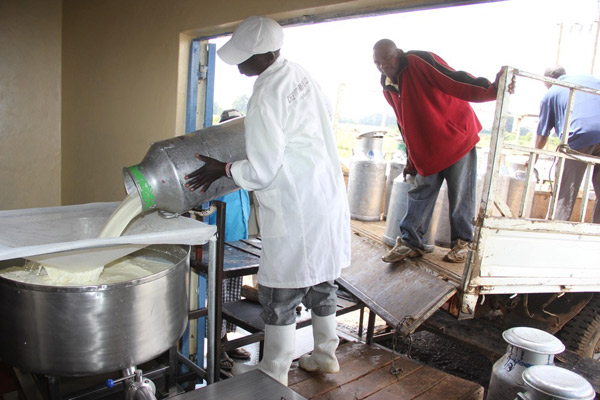
The milker should also be in good health with clean hands and must wear protective clothes namely gumboots, overalls and caps. They should not have long nails to cause cuts along the teats of the animal.

Just before milking, udder preparation and teat cleaning is important. Doing these will minimise the presence of pathogens, reduce teat congestion and improve the rate of udder emptying. Dry the udders and teats using preferably clean cotton towels to reduce bacterial counts in milk. Avoid using paper towels.

After milking, check for any abnormality in the whole milk which if present, the produce should be withheld and the cow checked for any infection. The teats of every cow milked should be dipped in a special teat seal containing antibiotics with long-lasting effects to control mastitis.

Clean all the milking apparatus immediately after milking. This should be done thoroughly with detergents and then store them in clean places and away from rodents. Cooling of milk is necessary if it is not immediately used, preferably at 4 degrees Celsius.

If using milking machines, much emphasis should be put in areas that get direct contact with the animal as they are the route points of infections. All piping system should be dry by the next milking time.

Maintaining high standards of these hygienic factors should, therefore, be your priority objective in milk production. This will result in good quality milk with preferred taste, flavour and free of pathogens.

Ahmed Mweu: I farm using YouTube to increase my profits

Ahmed Odhach Mweu’s farm in Tala, Kangundo, Machakos County is an oasis of farm produce. The soft spoken farmer has transformed a land that sits at the heat of the arid and semi-arid sphere that characterizes much of the Eastern region into a hub of sukuma wiki, spinach, chillies, onions and tomatoes. In fact, when Bizna Agriculture meets him, we find him busy packaging his produce in bags ready for delivery to Nairobi residential markets.

Ahmed2

His four-acre farm is glistered by mazie, spinach, kales, chillies, okra, mangoes, tomatoes, onions, beans, celery, peas and kunde, all intricately growing together, all ready to bring in profits. However, farming has not been a walk in the park for Mweu. In any case, it has taken hard-work, determination and door-to-door marketing to start raking in profits.

“I started farming in 2014,” begins Mr. Mweu, who is popularly known as the YouTube farmer among his customers. “I was inspired by the popular Shamba Shape Up radio and TV shows.” Back then, Mr. Mweu was a catering student in Rafiki, Nakuru County. After his interest in farming got picked by the Shamba Shape Up productions, he began to download episodes of the show and store in his laptop. “I also solicited for similar farming documentaries like Kilimo Biashara and began to download them,” he adds.

In early 2014, he returned to Machakos and ploughed his two acre piece of land. “I had made up my mind to venture into farming. I was convinced this is where I would strike riches; not baking or catering.” He began by planting 500 Sukuma Wiki and Spinach, and mish-mashed them with the traditional staple crops such as maize and beans,” he says.

YouTube Farming

To improve on his farming methods, Mr. Mweu turned to YouTube for a learning tool. “I didn’t have electric power at my farm. I would visit my family in Nairobi where I’d charge my laptop, and watch or download farming episodes on YouTube. I would then begin to implement the lessons I learned on my day-to-day farming. Within three months, I began to reap results. My production levels increased.” Since then, Mr. Mweu has not abandoned his YouTube learning tools. “YouTube has been my best farm hand!”

Ahmed3

Each month, Mr. Mweu makes Sh. 45,000 profit from his produce. “I sell a sack of sukuma wiki at Sh. 1,500, chillies at Sh. 120 per kilo, a bag of mangoes at Sh. 850 and a crate of tomatoes at Sh. 4,500,” he says adding that a net of onions goes for Sh. 850 while a bag of kunde goes for Sh. 2,500.

Currently, Mr. Mweu delivers his produce on orders only to residential homes within Machakos and Nairobi counties. However, the sky is the limit for the YouTube farmer. Says he: “My plan is to venture out into big groceries and shopping malls, where demand for farm produce is high but supply is low.”

Mr. Mweu notes that theft of his farm machinery and supplements such as fertilizers has been a major challenge. “To stem this, I now account for anything that leaves my stores, how it is used and the gains it locks in, on a daily basis,” he says.

Mr. Mweu can be reached on 0729 847 211 or through his email address [email protected]

Equity Bank’s James Mwangi quits troubled Britam board

Equity bank chief executive James Mwangi has opted out of the Britam board.

According to the regulatory filing at the Nairobi Securities Exchange (NSE), Mr Mwangi resigned on Monday and was immediately replaced by Mr Walter Andrew Hollas.

“The directors of British-American Investments Company (Kenya) Limited are pleased to announce the following board changes effective from May 18, 2015. Dr James Mwangi has resigned from the directorship of the company. We are thankful to Dr Mwangi for his contribution to Britam during his directorship,” a statement signed by Britam company secretary Nancy Kariuki reads. “Walter Andrew Hollas has been appointed as director of the company.’’

Mr Mwangi, who is among the top shareholders in the firm, leaves at a time when the underwriter is facing a crisis triggered by the recent exit of two of its directors accused of fraud in Mauritius.

No reasons were given for Mr Mwangi exit. He is not linked in any way to the Mauritius fraud nor has there been any claim of wrongdoing on his part.

Mr Dawood Rawat and his nephew Moussa Rawat formally quit last month to disentangle the company from claims of mega fraud that they have been linked to in Mauritius.

Mr Rawat was the global head of British American Insurance – one of the oldest insurance companies in the world registered in Bahamas.

His exit followed a firm declaration by the Mauritius Government that it had taken over all assets owned by the Rawat family over allegations of using one of his companies to run a fake scheme.

The saga saw a new 31.93 per cent retreat in Britam’s share price to Sh20.25. The stake price has since hit Sh22.75.

The director was forced to remove his shares in Britam with his stake standing at 22.34 per cent valued at about Sh13.5 billion.

Britam then revised its books for 2014 a month after they were published, reducing its after tax profit by Sh342 million to about Sh2.5 billion after Mr Rawat’s and his nephew’s resignations.

Last year, the firm was entangled in a vicious multi-billion shilling court fight with the real estate developer, Acorn Group, owned by its former employees.

Toyota Runx/Allen is a better buy than Spacio or Peugeot 206?

Durability: The Runx/Allex is best. It is basically a Corolla with the boot chopped off, and we all know that Corollas run tirelessly.

Only a really abusive ownership will ever bog down a Corolla. The Spacio is not so good on longevity. I have seen several lose shape quite badly after only a few months’ use on Kenyan roads. It does not seem like a solid car.

Even worse, by sheer power of reputation, is the little Peugeot. Nobody uses the words “durability” and “Peugeot” in the same sentence, unless one is telling a joke.

This I know from experience (I owned a 405 for a while) and from observation. I once did an article on Peugeots, and I remember saying acquiring ownership of a Peugeot is like getting into a relationship with someone you met at the bar. It is very exciting, but there is no knowing where it will lead to.

Availability and costs of spare parts: Spares are there for all these cars, but the Toyotas will have cheaper ones than the Peugeot.

The clutch of my 405 cost me Sh14,000 to replace, and that was three years ago. Compare to the then cost of Sh3,000 for the same job on a Corolla 110.

Maintenance: The Peugeot will frustrate you, let me be honest. The RunX, like I said, is a Corolla, which never breaks down unless you force it to.

Fuel consumption: Buy a 206 diesel and discover the joys of 25 kpl-plus motoring. Briefly. That is, until the DPF (diesel particulate filter) gets choked by mud and/or the little turbo over-spins at high altitude and fails.

The RunX will hover around 12-15 kpl, more if you drive like a lady (pun intended). The Spacio will give slightly worse economy than the RunX.

Off-road capability: None of the above, least of all the Spacio, with its long wheelbase and minimal ground clearance. How many times must I tell you people to use appropriate cars for specific activities?

Handling: The 206 has the sweetest handling of the three cars you mention, especially if you opt for the GTI. The RunX is a close second, losing out only because there is less “feel”, or driver engagement.

The Spacio looks like a small van, and handles like one. Don’t try to get on its door handles through tight corners, because it WILL get on its door handles.

Resale: You will grow old and die trying to transfer the Peugeot’s problems to someone else.

The Spacio will not exactly fly off the shelf either, but it will not gather as much dust as the Peugeot before getting a new owner.

The RunX is pretty popular: someone might even make you an offer while sitting in traffic; that is how much Kenyans love them. Kenyan ladies, to be exact: I know a few women here and there who drive a RunX. Join the pack.

KenolKobil to set up Sh. 1.4 billion lubricant plant

Oil marketer, KenolKobil plans to construct a lubricants blending plant in Mombasa jointly with BP South Africa to cash in on the lucrative business. The oil marketer said on Tuesday the financing of the plant would be through a joint venture with oil major BP Southern Africa, which is the owner of Castrol lubes.

The two firms on Tuesday signed a deal giving KenolKobil exclusive distribution rights for Castrol lubricants, ending a tussle that had seen BP attempt to repossess the brand from Kenol and award it to its former partner Shell.

The plant is to be constructed at an estimated cost of between Sh960 million ($10 million) and Sh1.4 billion ($15 million).

According to KenolKobil Group Managing Director David Ohana, the firm is seeking to capitalise on the lucrative lubricants market and exploit growing demand for the product in the domestic and export markets to grow its revenues and market share.

He said setting up a local blending plant would also provide the much-needed tax relief. “When you import, you pay 25 per cent but when you blend locally, you pay 5 per cent tax,” Mr Ohana said yesterday.

KenolKobil currently imports the Castrol lubricants from South Africa, which attracts an import duty of 25 per cent. Unlike motor petrol and diesel, its prices are not controlled by the Energy Regulatory Commission and analysts reckon that the products offer high profit margins.

KenolKobil, which is Kenya’s third-largest oil dealer by market share after Total and Shell, will sell the Castrol brand in Kenya only despite having a footprint in Tanzania, Uganda, Zambia, Rwanda, Burundi and Ethiopia.

The oil marketer is seeking to import only inputs that attract 10 per cent duty for local blending, critical in cutting costs.

“Our chances of success are high in the partnership with KenolKobil. We are on the verge of re-entering the Kenyan market with this partnership,” said BP Africa markets sales director Stanley Dewing.

Equity bank to issue 1 million new Equitel lines

0

Equity Group is set to start distributing the second bunch of a million Equitel SIM Cards after it got approval from the Communications Authority of Kenya (CA), which also allocated it their next prefix.

This was confirmed by John Staley, Chief Officer – Finance, Innovation and Technology during an interview with the Standard. He did not, however, disclose what the new prefix will be, but said the bank will start distributing them soon. “The Equitel brand has been growing fast and we were forced to order for more SIM cards after the ones we had in stock got finished,” said Staley who added that the bank was satisfied with the rate of growth of its mobile brand.

Equitel posted a growth of 81 per cent up from 62 per cent growth in mobile banking between the month of October 2014 and March 2015 and the subscribers number grew up from 209,554 subscribers in March 2014 to reach 665,661 subscribers in March 2015.

The bank did not, however, indicate the current figure of subscribers but there was speculation it had gone beyond the one million mark by the time it was applying for the new prefixes from the CA. Already, the bank is said to be “pleased and surprised” with the high uptake rate of Equitel in the pilot phase.

The product has not been launched officially and the management said it was planning to do so soon.
It has been operational for about half a year now, and the bank’s official records show it has been netting between 3,000 to 4,000 new customers on a daily basis, a development Staley says, has put Equitel as the fastest developing Mobile Virtual Network (MVN) brand in the world. “In all the countries where the model operates, companies net hundreds of thousands after several years but we managed that feat in a couple of months. The growth is impressive and we hope to do more,” said Staley.

Equity has been looking to launch the technology since the regulator granted its subsidiary Finserve-along with two other companies-an Mobile Virtual Network Operator (MVNO) licence in April last year.

“Perception that we have come to take away business from other people is misguided. Equitel is a value addition service that the bank is offering its customers to improve customer experience. We are trying to make banking cheap and as accessible as possible to our 10 million customers,” said Equity Group Holdings CEO James Mwangi.

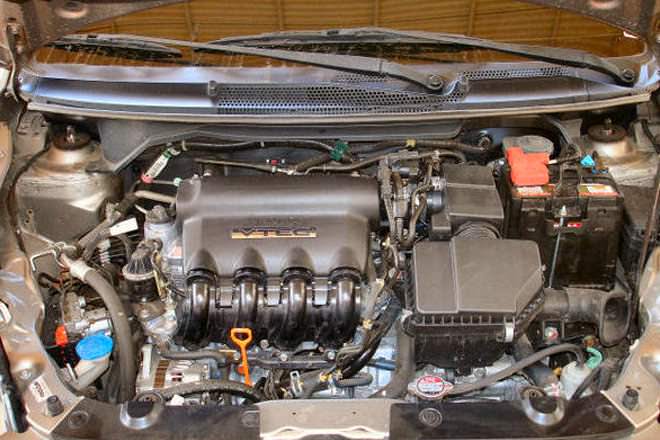
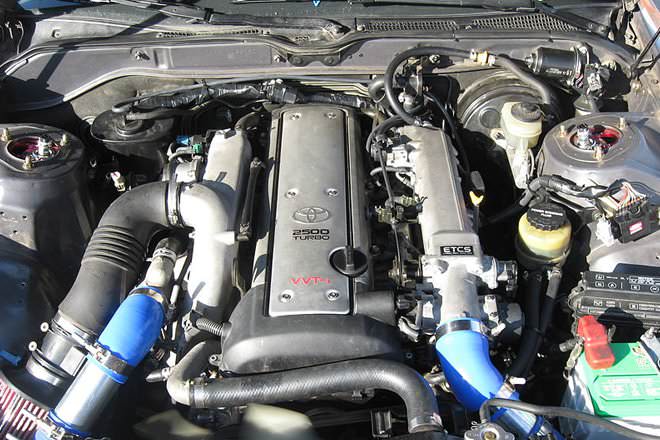
Honda’s VTEC vs Toyota’s VVTi engine systems

VTEC and VVT-i systems were developed by Honda and Toyota respectively in order to improve the efficiency of car engines. VTEC (Variable Valve Timing and Lift Electronic Control) is a valvetrain system developed by Honda that allows engines to achieve turbo level specific output without the bad fuel efficiency that turbocharging normally introduces. VVT-i (Variable Valve Timing with intelligence) is a similar system developed by Toyota and has several variants among which VVTL-i (Variable Valve Timing and Lift intelligent system) is analogous to VTEC. VVTL-i was first used in 1999 Toyota Celica SS-II but has been discontinued because it does not meet Euro IV specs for emissions.

VVT-i-

Comparison chart

VTEC VVT-i
Launched 1983 1996
Working principle It is a valve train system to improve the volumetric efficiency of a four-stroke internal combustion engine. It not only varies the timing but also lift the valves. It varies the timing of the intake valves by adjusting the relationship between the camshaft drive (belt, scissor-gear or chain) and intake camshaft. Does not lift the valves.
Developed by Honda Toyota
Stands for intelligent-VTEC (Variable Valve Timing and Lift Electronic Control) Variable Valve Timing with intelligence
Intake camshaft The intake camshaft is capable of advancing between 25 and 50 degrees when the engine is running. The timing of the intake valves varies by adjusting the relationship between the camshaft drive (belt, scissor-gear or chain) and intake camshaft
phase changings Phase changes are implemented by a computer controlled, oil driven adjustable cam gear • Engine oil pressure is applied to an actuator to adjust the camshaft position
Perfomance Phasing is determined by a combination of engine load and rpm, ranging from fully retarded at idle to somewhat advanced at full throttle and low RPM Adjustments in the overlap time between the exhaust valve closing and intake valve opening results in improved engine efficiency.


Working Principle

In an automobile engine the intake and exhaust valves move on a camshaft. The timing, lift and duration of the valve are determined by the shape of the lobes that make the shaft move. Timing refers to an angle measurement of when a valve is opened or closed with respect to the piston position and lift refers to how much the valve is opened.

i-VTEC uses not only timing but also the lift aspect of the valves, while VVTi uses only the timing aspect. The technology that uses timing and lift aspect developed by Toyota is called VVTL-i and can be equated with that of i-VTEC of Honda.

i-VTEC

Honda introduced i-VTEC technology in Honda’s K-series four cylinder engine family in 2001. With this technology

  • The intake camshaft is capable of advancing between 25 and 50 degrees when the engine is running.
  • Phase changes are implemented by a computer controlled, oil driven adjustable cam gear.
  • Phasing is determined by a combination of engine load and rpm, ranging from fully retarded at idle to somewhat advanced at full throttle and low RPM.
  • The effect is further optimization of torque output, especially at low and midrange RPM.
  • Valve lift and duration is still limited to distinct low- and high-RPM profiles.

VVTi

Toyota introduced VVT-i in 1996. With this technology

  • The timing of the intake valves varies by adjusting the relationship between the camshaft drive (belt, scissor-gear or chain) and intake camshaft.
  • Engine oil pressure is applied to an actuator to adjust the camshaft position.
  • Adjustments in the overlap time between the exhaust valve closing and intake valve opening results in improved engine efficiency.

Charity Muriuki: my dog breeding business is making me a millionaire

Charity Muriuki could hardly believe her eyes when she sold a dog at Sh120,000. This was after keeping the pet for just a year.

Ms Muriuki had turned to rearing dogs as the only solace after she was sent home by a Nakuru-based company where she worked as a clerical officer. The retrenchment had caught her unawares, she had no venture in mind to turn to, she told Money.

She would not have imagined making a fortune from rearing the dogs: “I never counted this as a business that would give me such good returns,” the 50-year-old mother of two points out.

At least, Ms Muriuki had a passion for pets especially dogs and since she had to work hard to sustain her family, she had no other option but to revitalise the business.

She has been keeping dogs for the last three years not just as pets but also for her family’s security. But this time round, she is also on a mission to prove her women friends wrong on the notion that the business only favours men.

Ms Muriuki started with one female dog. And seven months later, it gave birth to 10 puppies which she sold nine of them after two months each at Sh30,000, leaving the one which she would later make Sh120,000.

The profit she realised encouraged her to buy two more dogs.

As chance would have it, one of the new pets gave birth to 10 puppies giving the woman the encouragement and determination to revamp the business. Today, Ms Muriuki is in the league of top dog breeders in Nakuru at her quarter-acre land in Lanet.

She specialises in the long coat German Shepherd breed, which she says is easy to manage, train and relate with.

As she advanced in her business she started hiring trainers who now coach the dogs on how to relate with adults, children and even strangers. They are also trained on how to master instructions and their name.

After selling her first set of dogs, she created a market for her pets and today she welcomes customers from all over the country ranging from individuals to leading security firms.

“Most of my customers buy them for security especially the security firms who prefer the trained dogs,” she says.

The German Shepherd usually gives birth after a period of seven months and if kept healthy, Ms Muriuki says, the dog can give birth to 12 puppies at a go.

To run her business, she wakes up at 5:30am everyday to clean the kennels and feed the pets before leaving for other errands.

Seeing the different sizes of dogs in her compound not only gives her financial assurance but also satisfaction of what she has achieved on her own.

“Deworming, keeping them clean together with feeding them well reduces the number of visits one makes to the veterinary doctor”.

Her customers who buy the canines for home security prefer the young ones between the ages of two and five months. They attract between Sh30,000 and Sh35,000. An adult can fetch Sh120,000, she says, if well taken care of. The animals take about a year to mature.

Through her business, she has managed to complete educating her children and also start another income stream, a teddy bear venture, in Nakuru town.

“Having the passion for the pets will also make you commit yourself in taking care of them which include feeding them well and cleaning their kennels,” she says.

Currently she has over 20 dogs with seven mature ones which she says are ready for sale.

She challenges the youth to try the business because its an opportunity that can help them attain financial independence.

“Dogs are a good source of security and they are trainable so it only requires a few hours of one’s time and the only commitment is to love them,” she added.

Patricia Chepkorir: I have no regrets quitting medical school to farm

Carrying an iPad in her left hand, which she intermittently browses, Patricia Chepkorir Lagat cuts the image of one of those young executives working for big companies in Eldoret.

When she speaks on phone one realises that Patricia is not an ordinary young woman.

“Have you sprayed the fruits,” she asks the caller on the other end. “How are they doing? Are we going to have good harvest?” she asks as her face warms up, an indication that her crops are doing well.

The 29-year-old horticulturalist of four years standing took to farming after quitting the Moi University School of Medicine. She borrowed Sh200,000 from her father, a lecturer at the same university, to pursue her dream.

CROWNED MY EFFORTS

Patricia has grown over 1,000 passion fruit creepers on a 1.5-acre plot in Eldoret, under her company Horti Grid Limited.

“I sourced my first seedlings from Horticultural Crops Development Authority in Eldoret at Sh40 each. Seeds are booked three months before planting season to allow grafters to develop quality seedlings,” she told us.

In January 2012, seven months after planting, she harvested her first produce.

“It crowned my efforts and made me have no regrets of quitting medical school. I first harvested an average of 300kg a week. This continued for 78 weeks,” she recalls.

She has sold over 25 tonnes of the fruit to Kenya Fresh Limited at Sh70,000 a tonne, which translates to Sh1.75 million. Over the years, Patricia has developed the passion fruits business and even diversified into tomato farming and making greenhouses.

“I diversified because I did not want to put my eggs in one basket. Besides, Horti Grid’s objectives are to cultivate, establish and manage horticulture in Eldoret and its environs.”

From the money she made from passion fruits, Patricia invested in greenhouses in August 2012.

“I recruited three expert staff; a horticulturist, a greenhouse construction technician and a water and irrigation technician. I then set up office in Tabain Plaza, Ronald Ngala Street, Eldoret.”

With the right staff, Patricia advertised for construction of greenhouses services. “Farmers flocked into our offices seeking the services. We focused on greenhouse horticulture production. We later partnered with Crop Nutrition Laboratory for soil sampling to serve farmers better,” she says.

“We would look at the recommendations made in soil sample reports and advise farmers on the exact location of greenhouses in their farms, suitable crops and fertiliser compositions and regimes.”

Proper greenhouses, she says, must be suited to individual farmers’ needs, and standardised to avoid reconstruction when farmers change crops.

Each greenhouse, together with soil sample reports, costs Sh150,000. Since she started, Patricia says, she has built 40 greenhouses, which has earned her more than Sh2 million.

“The greenhouse business is doing well, but it is labour and finance-intensive. I want to scale it down and expand my passion fruit and tomato business.”

Patricia grows tomatoes in two greenhouses. She started the business in January at a cost of Sh200,000 for seedlings and irrigation kit. She planted 2,400 seedlings. She sells the tomatoes at Sh30 per kilo. Each plant produces an average of eight kilos.

She has for far made about Sh550,000 from the venture. Her interest in horticulture and the need to uplift fellow farmers saw her organise a forum dubbed Horti-Business Coffee Hour last week in Eldoret.

“The forum offered networking opportunities for horticultural enthusiasts. Horti Grid co-hosted it with Intercept Kenya. The turnout was encouraging.”

The former Moi Girls Eldoret student, who scored A plain in KCSE exams in 2006, plans to venture into large-scale farming and establish a processing plant to add value to horticultural products.

“In the four years I have been in farming, I have realised that it is a rewarding business. Sometimes I look back and wonder where I would be if I had stuck to medicine. I am happy.”

Patricia says she quit medicine because she found it boring.

“I am an outgoing person and I always like to be creative and innovative. I found medicine too rigid.”