Home Blog Page 2260

Which is the better option: Toyota Wish or Nissan X-Trail

Fuel efficiency and consumption Km/l.

The Wish is generally more economical than the X-Trail but the absolute figures will depend on how and where you drive, and how often you carry seven people in the car. Expect anything between 7km/l and 15km/l for both.

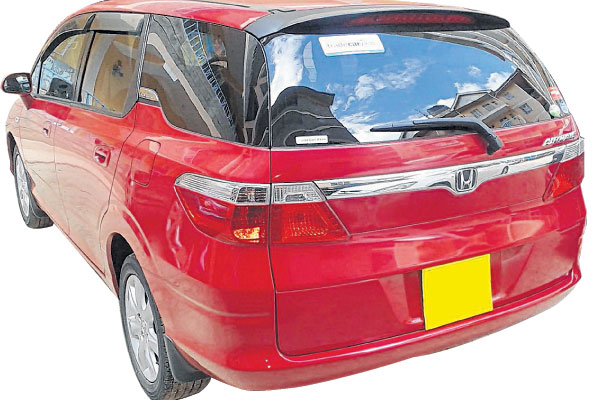
Have you read this? Why a Honda Airwave would be a good buy

Maintenance costs  — I have very lean maintenance budget especially on parts.

A “lean maintenance budget” is not going to do you any favours in light of the fact that you are buying a used car that has already seen thousands of kilometers of service in another person’s hands. Breakdowns WILL happen, and a lean maintenance budget might not be sufficient to keep the car in good working condition.

A particular sore point is the X-Trail’s automatic transmission that fails with alarming certainty; replacing it will be an exercise in six-figure expenditure.

Reliability:

(See b above). You are buying a used car. Its reliability will depend on how well the previous owners maintained it. Again, that being said, the X-Trail is more of a garage queen compared to the Wish.

Ease in handling, stability, comfort and speed.

Don’t expect anything like an Evo in terms of handling, stability and speed. Both cars will reach 180km/h before the electronic nanny interferes, and both cars will crash spectacularly if you try cornering in them at that speed.

Comfort: the X-Trail has more room inside and a bigger glass-house, so it is generally a better place to be in. A Wish seven-deep with humanity is like a school bus.

Should you get a Honda Airwave or a Toyota car?

Hondas are an open secret in the motoring world. If you want the best of Japan while avoiding the too-obvious Toyota, get a Honda.

If anything, this is the one car that is more reliable than a Toyota, too bad the Civic did not and does not sell like the Corolla; and Honda doesn’t build a pickup.

They do build and sell dozens of millions of motorcycles, though, and no, that is not hyperbole, they DO build motorbikes in the eight figures.

Spare parts are not and should never be a problem. How many Airwaves have you seen around? How do THOSE owners maintain their vehicles? Feel free to join them.

Resale value may be disheartening at the moment owing to the “should-I-shouldn’t-I?” uncertainty and indecisive mindset that you and many others seem to have; so hopefully this will clear things up: Yes, you should. I plan to, too, one day…. VTEC coming soon to a column near you.

Residual values are something else; related to resale value but not dependent on it.

Actually, the converse is true: resale value is dependent on residual value. Residual value is how well the car holds up over several years of usage and ownership, but this is not per car, it is per model of car.

Here are examples: cars with good residual values are best exemplified by the Toyota Landcruiser and the Toyota Hilux. They simply never depreciate.

This does not mean that you cannot find a grounded or worthless Hilux, you can and will, though this will be an isolated case; but as a model, it maintains its physical (not sentimental) value over time.

Cars with bad residual values? They’re almost exclusively European and almost exclusively French. Peugeot tops the list closely followed by its fellow Frog-mobiles: Renault and Citroen. Alfa Romeo also joins the list of Euro-letdowns, but this brand of car is usually rescued from ignominy by its sentimental value. Its residual value is below zero.

Toyota may have done a lot of marketing, but the biggest contributing factor to their success was they let their products speak for themselves. The two aforementioned vehicles, the Hilux and the Landcruiser, have done more to market Toyota as a brand than a billion-dollar advertising budget ever could.

Honda’s engines may also speak for themselves, but this is only in closed circles: Ask anyone to explain what VTEC means (Variable Valve Timing and Lift Electronic Control) or how it works (a camshaft with two cam profiles or two different camshafts; one of which is oriented for economy and the other for performance, and the switchover occurs at around 6,000rpm) and they’ll stare at you like you were a creature from Star Wars.

Yet VTEC engines are the one type of engine to have never suffered a single failure in their entire history, not one, and this is in spite of them being in production since 1988 and now numbering in the tens of millions.

How about the fact that Honda designed a cylinder head (CVCC heads) for use in its American version of the Civic hatchback, a design so delightfully simple and so fiendishly clever that the fuel economy figures achieved from a carburetor-fed engine from the 1970s are still unbeaten even by today’s cleverest EFI systems?

This geeky techno-frippery may be what scared people off Honda. Everybody is cagey about innovation, especially the really technical ones.

Try selling an all-in-one app to a major corporation and see them approach it like a cat approaching a bath.

Then again, maybe the movies,  newsreels of war theatres, bush ambulances, adventuring tourists, lifestyling twentysomethings, successful businessmen and happy farmers almost always feature a Toyota Landcruiser or a Toyota HIlux and we are thus indoctrinated from childhood to believe that Toyota is the beginning and the end of everything; anything outside of that is nothing but a brief and temporary sojourn into the unknown.

How farmers are minting profits from rabbit sausages

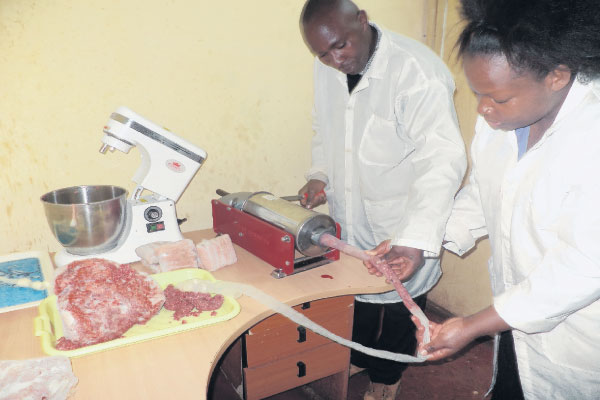
Isaac Muigai pushes a sharp knife back and forth, cutting through rabbit meat as Lilian Kanyingo holds it gently.

They are deboning the rabbit before mincing its flesh for sausages, samosas and kebabs at the company they own and jointly run with Peter Njoroge in Kikuyu, Kiambu County.

Their firm, Pillar Group Limited, buys the animals from farmers all over the country, and so far, it has direct contact with 382 of them.

The firm trains the farmers in rabbit keeping, including how to construct cages, feeding, breeding, handling and care and later buys the animals.

“We also tell them where to source the fastest-maturing breeds, best feeds, disease prevention and treatment,” Lilian, 27, who is in charge of training, says.

The three have a rich experience in rabbit-keeping, having reared the animals before turning to value addition due to exploitation by middlemen.

Muigai, Njoroge and Lilian met by chance during an agricultural exhibition in Wangige, Kiambu, in 2010, and formed the company to offer farmers a market.

Their aim was to add value to rabbit meat and enable farmers earn more from their investment.

“Then, a rabbit weighing at least 4kg would go for Sh200. We started buying each kilo at Sh500, which saw the same rabbit going for Sh2,000. This is after training our farmers on how to raise the animals free of charge,” Lilian says.

They contributed Sh40,000 each from their savings to start the business.

STUFFING MACHINE

“In addition, we borrowed Sh215,000 from a bank that we used to buy sausage-making equipment, which included a mixer and stuffing machine. By the end of the year, we had repaid the loan.”

They learned how to make rabbit meat products in a training organised by the Ministry of Agriculture in Kikuyu.

The company’s products have been flying off supermarket shelves and currently, Pillar Group Limited is facing a shortage of rabbits.

“Supermarkets in Nairobi have asked us to supply them (with sausage) but we cannot slaughter 200 rabbits daily as they requested since we don’t have enough. We slaughter 100 rabbits (per day),” Muigai says.

The firm sells a sausage at Sh50, kebab at Sh40 and a samosa sells for Sh30.

“Nothing goes to waste as we sell the skin to a group in Nyeri that makes shoes. We sell each rabbit skin at Sh200.”

Presently, the firm buys rabbits from farmers across the country provided the animals are in good health.

Pillar Group Limited recommends hybrid rabbits such as New Zealand White, California White, Chinchilla and the Checkered Giant because they give better yields.

The firm’s brisk business has enabled the three investors to buy a vehicle that they use to buy and transport rabbits from all over the country.

During the Seeds of Gold this week, farmers kept inquiring about care for their animals— like Ruth Wanjiku, 35, called several times seeking a bloat remedy. Later, we visited her farm in Kinoo, Kiambu County.

“Bloat is my main challenge in this venture. I am able to control diseases like coccidiosis and pneumonia. However, it is important to be close to your animals. Even if you have employed a farmhand, you should be diligent enough,” she told us.

BEAUTIFUL ANIMALS

Ruth has 34 cages on an 8×4-metre parcel. Each cage shelters between one and 10 rabbits depending with age and sells them at four months.

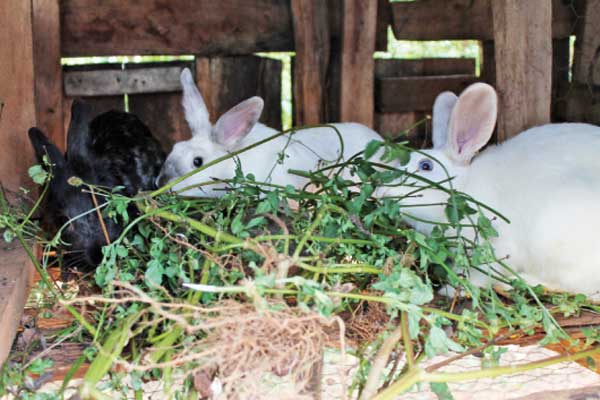
She feeds the beautiful animals on greens, hay and pellets twice a day — in the morning and evening.

“I give an adult rabbit 130 grammes of pellets per day and 60 grammes to the young ones. You increase the food as they grow.”

James Juma, a veterinary officer working with Mount Kenya East Pilot Animal Health Project, says rabbit farmers should ensure the animals are not over-fed.

“You should not give more feed than is recommended because if they are overweight, they neither conceive nor serve,” he says.

Peter Kinyanjui: How poor housing killed my rabbits

The stone-walled premises with a green gate along the Sironik earth Road, Rongai, hosts a refrigerator, weighing scale and packaging items.

The other partition, which is used as a slaughter room, is equipped with sharpened knives and water sinks.

Welcome to Rabbit Universe, a rabbit entity owned by Peter Kinyanjui and his wife, Anne.

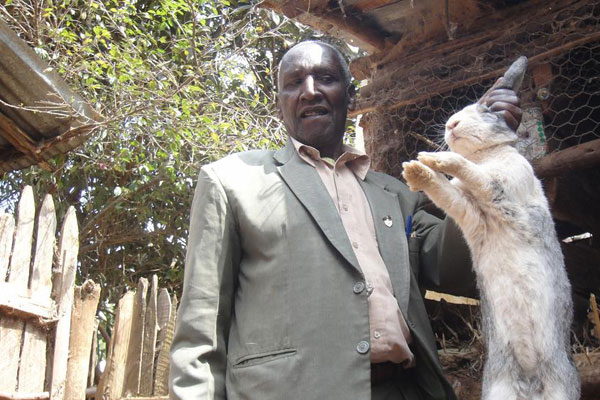
Our arrival at this farm interrupts Kinyanjui who is in a white overcoat and a jungle-green cap. He steps out of one of the rooms to receive us. “I was slaughtering rabbits which should be supplied to our clients before midday,” he says.

Though the farm can now boast of more than 2,000 pedigree rabbits, the owner admits to having undergone a heart-breaking false start.

Four years ago, he lost over 57 kits (young rabbits) to what he would later link to poor housing.

“We built rabbit cages of polythene bags and grass thatches,” he explains. Before identifying the killer of their stock, the couple visited vet officers in vain.

It was only after fervent internet research and training from the Ministry of Agriculture and Livestock that they found out the truth.

They then constructed a house of corrugated iron sheet and then bought rabbit cages at more than Sh70,000. It is also then that the Kinyanjuis learned the appropriate feeding regime.

“We were advised to feed our rabbits on hay or dry grass and supplement them with 50 grams to 100 grams of commercial pellets,” says Kinyanjui.

SUCCESS STORY

Four years down the line, Rabbit Universe is more than a success story. Rabbit buyers and sellers, as well as rabbit meat enthusiasts jam this farm constructed on a quarter of an acre. Kinyanjui says he slaughters 10 rabbits daily from his stock of different rabbit breeds which include the Flemish giant, Californian white and Angora.

The couple has also moved into value addition. “I prepare rabbit meat which I serve with rice or mokimo. Most of the customers work here in Rongai,” says Anne.

The farm owner who also supply some two leading chain supermarket with rabbit meat, also sell tanned rabbit hide to a firm in Hurligham, Nairobi, which exports them to England.

A piece of hide fetches at least Sh600. The couple also uses two litres of rabbit urine mixed to 20 litres of water as pesticides on some vegetables they have grown in small sacks within the premises.

“We started rearing rabbits as pets four years ago with three rabbits. We bought them at Sh500 each,” explains Anne.

The idea of commercial rabbit farming only occurred to the Kinyanjuis a few months after their bunnies had given birth.

“Relatives and friends who came visiting would insist on buying the young rabbits. We sold them three-month-old kits at Sh700,”

After realising the enormous income opportunity the nibble-looking creatures presented, the couple sold off the local breeds and bought other three hybrid breed rabbits from a farmer in Ngon’g at Sh2, 500 each.

John Machiri, chairperson Rabbit Breeders Association of Kenya, Mombasa chapter, says a farmer needs to find out what the market wants and in what quantities before venturing into rabbit business.

Samuel Macharia: I failed in maize farming, now I make Sh. 350,000 from rabbits

For more than 800,000 small-scale farmers in Rift Valley, proceeds from commercial maize production has contracted in recent years.

Maize prices are low, and the devastating effects of Maize Lethal Necrosis disease has affected thousands of hectares of farmlands. But instead of dumping maize for better paying cash crops, Mr Samuel Macharia has found a new way of earning his bread and butter. Rearing of high yielding rabbits is his catch.

The project, he says, is a low-cost investment compared to maize farming. From making an average of Sh90,000 from the sale of maize from his three acres every harvest, Mr Macharia — a small-scale farmer in Kuresoi North, Nakuru County — has made over Sh350,000 from just 35 rabbits, which he started with in December 2013.

With maize, the farmer used to budget about Sh30,000 for farm inputs for each acre. The labour was intensive and the management equally tough. And with the present threat of the deadly lethal disease, the wait for a bumper harvest, he says, is always uncertain for a small-scale farmer.

“I have seen a farmer in this area (Kuresoi North), whose whole maize plantation has been destroyed by the disease. It is such a big loss,” says Mr Macharia.

“Imagine a farmer, who solely depends on maize for subsistence and commercial use then the disease just destroys everything. What will the children eat and how are they supposed to go to school?” Said the small-scale farmer.

It only takes a maximum of Sh500 a month for Mr Macharia to feed his rabbits, which he sells to butchers in Nakuru town. He has a range of varieties including chinchilla, New Zealand white, Black Dutch, Kenya White and French Ear-Lopes. “Rabbits do not require much attention like maize. They can feed on the locally available vegetation and once in a week treat them with fish fillets,” he says.

“I am much concerned with cold and the Newcastle disease because it really affects them,” he adds. But to avoid any losses, he regularly gives them a dose of traditional herbs, which he says is very effective.

The idea for rearing the pearl shaped white meat providers did not just prop up with the disappointing yields from maize production. Mr Macharia is one the 12,000 small holder farmers in Nakuru, who have received extensive training on agricultural diversification and adaption to climate change from the ministry of Agriculture in collaboration with local non-governmental organisations.

His association with officials from the Agriculture ministry has exposed him to a lot of information on improving farm production and increasing household income.

“I received a lot of training on agribusiness through the ministry of Agriculture in collaboration with a local NGO, Sustainable Practical Program for Africa, and I learnt how to make profits from rabbits rather than stick to maize, whose production has not been good in recent years,” he says.

At the moment, he can breed over 1,000 kittens in a year, which he sells at Sh35 for a kilogramme of the live rabbit and Sh350 for a equal weight of meat. “One rabbit can give birth to eight kittens. Their gestation period is just a month. In a year, one rabbit gives birth six times,” he notes.

The mature rabbits he supplies to the local hotels weigh an average of three kilogrammes. “It all depends on how you feed your rabbits and protect them from any danger. Just like a human being, they need a conducive environment to do well,” he advises.

GREAT POTENTIAL

Mr Macharia has built pens for the rabbits. The iron-roofed shelter is also water proof to protect them from the elements. From his proceeds, Mr Macharia has expanded to greenhouse farming where he grows tomatoes. “I now grow maize for home use. It relieves me the stress to know that if attacked with the lethal disease, I have something else to turn to unlike before,” he notes.

He calls on the ministry of Agriculture to reach out to more farmers with necessary information on diversifying food production and adapting to changing production cycles as the impacts of climate change manifest themselves through falling production. “For maize, you have to wait for a year and these days you can neither predict the weather pattern nor how much you expect to harvest,” he notes.

The farmer says majority of the small-scale farmers in the rural areas across Kenya have the potential to increase their production if provided with the right information.

“There is a great deal for agricultural officers to go out to the rural farmers and teach them on the modern ways of farming in order to save them from hunger and poverty,” he says.

Already, over 12,000 small-scale farmers in Nakuru County have formed an association to take advantage of training opportunities besides access to credit. Mr Macharia is a member and is already receiving famers in his homestead for training on agribusiness.

Home Afrika eyes Sh. 3 billion Kisumu ‘purchase & build’ project

0

Home Afrika is targeting middle income earners in Kisumu with its new housing project in Riat Hills. The Sh3 billion gated community which will overlook the lakeside city to the west, will be constructed on a 91-acre piece of land. However unlike most developments in the area, the project will be undertaken on a purchase-and-build basis.

Would-be tenants will be required to build their own homes besides those developed and sold by the Home Afrika group. Once complete, Lake View Heights will join the league of upcoming high-end real estate units that have already set foot on the vast hill.

It will include additional amenities such as retail space, offices, light industries, a hotel and conference area, a school as well as a police post. The development will comprise 140 pieces of 0.25-acre land and each piece will be sold for Sh2 million each.

Mr Njoroge Ng’ang’a, Home Afrika chief executive said the three-year plan will be built in conjunction with would-be home owners who will be required to construct their own houses.

Mr Njoroge said the strategy employed by the company will place them in charge of building of roads, schools, offices, shopping malls as well as a police posts and other supporting infrastructure.

They will then sell plots to home owners to develop houses. Once one has bought land, they will be required to construct a house but on a laid out structure that will be uniform and standard to all owners. This will comprise villas of up to four bedrooms, town houses, apartments and semi-detached maisonettes all with a specified standard for all.

“We will give people a variety of typos and house designs that they can use. We will have a guild of architect and a guild of contractor that will be standard for all developers. But as Home Afrika, we will also build certain areas of around 100 house units,” he said.

Already, the company has begun constructing a boundary wall, gates and levelling the area ahead of a September ground-breaking of construction. Two access roads have also been constructed at Kiboswa junction and the airport roundabout.

“We intend to have finished the construction of the infrastructure and commissioned the hotels and conference facilities by 2017. This is going to be an integrated development and a one of its kind and will define the property landscape of Kisumu,” he said.

Kisumu town, the third largest city in Kenya currently suffers shortage of decent housing for the middle class, a situation that has forced a majority of residents move to satellite towns.The town has a population of nearly 900,000 according to the 2009 population census report.

Areas such as Kenya Re, Migosi and Mamboleo are the preference of a majority of middle income earners. And to curb the lack of roads leading to various residences in the hill, Mr Njoroge said they plan to lead a team to lobby for tarmacking of the roads to the county government.

Touted to be a defining real estate unit in Kisumu, Lake View Heights that will overlook the vast waters of Lake Victoria to the west, will comprise of 300 units of bungalows and mansionattes. “This will comprise villas of up to 4 bedrooms, town houses, apartments and semi-detached maisonettes all with a specified standard for all,” said Mr Njoroge.

The units constructed by Home Afrika will retail at Sh6.95 million for two bedroom apartment (78 square metres), Sh9.25 million for two bedroom and a servants quarter (105 square metres). Three bedroom will sell at Sh9.75 million (110 square metres), a four bedroom town house (170 square metres) at Sh14.95 million while a four bedroom Villa (250 square metres) will cost Sh21.75 million.

Mr Ng’ang’a said that  they intend to make it affordable for people to own houses while at the same time decongest the town.

“We are not really into a profit making venture, but rather providing a solution to those in need of proper and decent houses.”

He added: “We have a board that will look at other available opportunities in the market and inform us of the needed changes.”

The company is currently doing a market study to determine other housing needs in the lakeside city and said they are setting their eyes on hospitality and other amenities.

“This is a flag ship project for us. We want to participate more in middle income settlement and to build communities around Africa by providing quality, sustainable and affordable homes to people.

“I think we are looking at Kisumu as a regional centre because of its location. It also has an advantage in conferencing and meetings in the region and by large Africa. We are also keen on reaping from the Kisumu International Airport,” he said.

How clinical officer is reaping profits from chicken and horticultural farming

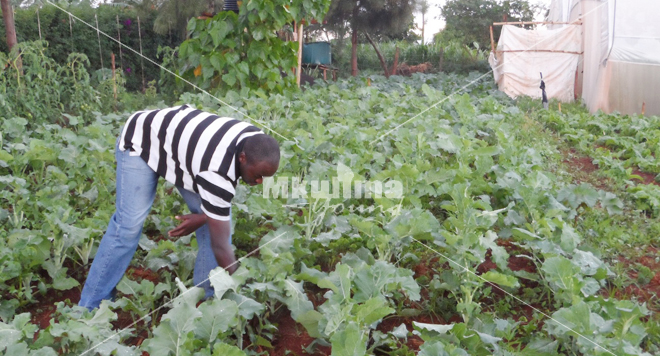
Mkulima Young: In Othaya, Jorum Kariuki passes as daktari to many of the local residents. Originally from Tetu, Kariuki works as a clinical officer in Othaya where people around him know him as just someone you talk to when ill.

But what many people don’t know is that Kariuki is a seasoned commercial farmer.

A graduate of Port Reitz Medical College, Kariuki started farming in 2008 where he started small. “I began with growing cabbages and dairy farming,” he says. But even in college, Kariuki’s passion for agriculture money had borne fruits.

“I tasted agriculture money by reaping Sh  224,000 from some four bulls I had bought at Sh 9,000 each. I sold them after two years at Sh 65,000 each,” he explains.

But it is his poultry venture that has given him more regular income. He bought 300  layers from which he collected 9 trays of eggs daily which he sold at Sh 280.

This meant he would rake in Sh 75,000 every month from the eggs. “This is the money that has enabled me to buy a car, a piece of land and a plot,” he reveals. He uses the car to transport his farm produce. “I bought my car for Sh 440,000. It was all from  eggs,” he says.

His plunge into agriculture became smoother after he found a mentor and started marketing his produce via the internet especially the Mkulima Young digital farmers’ website.

Kariuki’s eyes   are now set even higher. He has ventured in horticulture and so far has managed to get a loan from the Youth Enterprise Development Fund (YEDF).

“I have 1,000 sukuma wiki and 300 tomato plants. These will give some valuable money,” he optimistically says.

He has faced the challenge of erratic weather which affects the supply of water but Kariuki has a solution. “I have a well whose water I use for irrigation,” he says.

He encourages youth to give agriculture a chance. “Young people have to rethink their strategy. There is money in agribusiness and opportunities abound,” he advises.

How car buyers are losing millions to fraudsters

0

Business Daily: Kenyan car buyers are falling prey to online criminals who are hacking into e-mails of genuine Japanese car sellers to defraud them of millions of shillings. The Tokyo embassy has issued a warning saying criminals are hacking into online conversations between genuine car dealers in Japan and potential customers in Kenya and end up having cash transferred into fraudulent accounts.

Despite several warnings to potential buyers, Kenyans are still being conned by cybercriminals as they hunt for cheaper cars online.

This is how an importer becomes a target. A potential customer goes to a website to shop for their desired car model. An online search settles on a particular shipping company. The dealer, who is supposed to ship the car starts chatting with the customer through the e-mail, exchanging confidential information regarding the arrangements needed for the shipment.

“A fraudster then hacks into the dealer’s e-mail system posing as an employee of the company. The criminal continues communicating with the car buyer and later gives the buyer a different e-mail,” the Embassy says in its advisory.

“After frequent interactions, the criminal provides the potential customer with their own bank account for the purchase transactions. The gullible customer deposits the money in the fraudulent account then the hacker quickly withdraws the cash.”

Kenyans hit by such scams have reported such cases to the Director of Criminal Investigations Department and the Kenyan Embassy in Japan, but they are unlikely to get their money.

Charles Munyori, the secretary-general of Kenya Auto Bazaar Association (Kaba) said the cost of hiring a lawyer to pursue such cases is usually higher than the value of the vehicle.

And since the transactions happen privately between an individual and the hacker, there is no evidence that can be used in court.

“Individuals who expose themselves to such frauds fail to check with the registered import companies in the country,” Mr Munyori said.

“In most cases, it’s too late for us to intervene, the transactions happen very quickly. Getting refunded will mean hiring a lawyer in Japan, which is far expensive than the cost of the vehicle,” he said.

Kaba said it was forced to travel to Japan to investigate the fraud cases, but locating and identifying the criminals was a challenge. Mr Munyori says such cases can be easily avoided, if one does research. He says that Kaba has a list of licensed vehicle importers in Kenya.

“Consult before making the purchase, be on the look out for any suspicious move, these will save your money, and alternatively play safe by liaising with us,” he says.

The Embassy of Kenya in Japan said that there are thin chances of consumers getting back their money from the transactions.

“Customers and dealers need to understand that once they have made their remittances to such fraudulent accounts, the chances of recovering such funds is almost zero,” the advisory read.

“In order to avoid such predicaments, potential importers and importers may need to protect themselves from skilful hackers and fraudsters by observing some guidelines,” it read in part. The embassy advised potential customers to remain in consistent communication with the dealer.

Close monitoring of e-mail passwords either by changing it frequently or making it technical will cut off the hacker from catching up with the communication patterns.

Japan remains the main source of used cars coming into the country with Dubai and the UK coming in second and third. Kenya increased registration of vehicles by 9.1 per cent. The percentage may get higher with genuine transactions.

Billionaire Deepak Kamani: I dropped out in Form Two to build my wealth

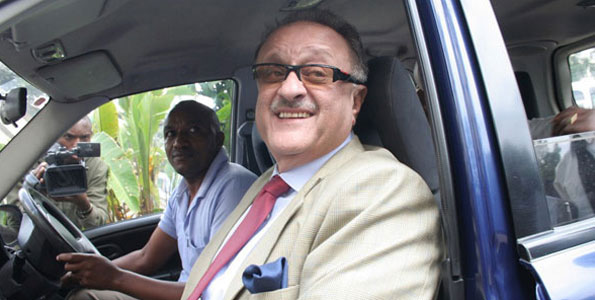
Billionaire businessman Deepak Kumar Kamani maintains a low profile in a gigantic red-bricked storeyed office in Nairobi’s Industrial Area where he carries out his business.

From the outside, the building looks like an abandoned warehouse. But when the gates open, the plush life of the Kamani family is exposed. The parking bay is full of expensive vehicles. We are walked to the reception on the first floor of a spacious, well-lit elegant room with cream leather seats which dot each office here.

“My boss is a good man,” a secretary tells us. There is an air of opulence, too, and CCTV cameras all over. Every action is closely watched.

For 30 years, and from this building, Mr Kamani built his business empire, clinching deal after deal before the Anglo Leasing saga turned him into a controversial billionaire. He believes he has done nothing to warrant the reputation. Yet, he has remained elusive and unwilling to tell his story.

Even on occasions when the offer was sweet enough to get him to chit-chat on TV talk shows, he declined.

“This is the first interview I’m sitting for in years,” he said as he welcomed us to his office on the second floor with a spacious lounge with light brown carpet. “This carpet is more than 30 years old,” he tells us.

It was a week after Mr Kamani and his brothers launched a fresh bid for a negotiated settlement of Anglo Leasing-type deals that were part of one of Kenya’s biggest public finance scandals.

By avoiding nagging reporters, Mr Kamani’s silent wish, as he told us, has always been to wait first for the case to conclude, and then talk.

As a courtesy — and perhaps to deflect attention away from himself — he always directed persistent journalists to his lawyers for answers to the Sh56 billion security tender deal that sparked uproar in 2004 when it was unearthed.

“Anglo Leasing has been used to cover other political issues that arise time and again. It is always political,” he says.

For the past 10 years, Mr Kamani has been fighting to clear his name. After frequent grilling — at times lasting more than four hours with investigators and what he describes as “harsh media coverage” — he spends a part of his morning scanning through all newspapers to follow the latest developments.

“I have nothing to fear. As long as your conscience is clear then you don’t have to worry. If you have all the facts, there is nothing to worry about,” he says.

Born on July 3, 1953 at Ngara Maternity Hospital, Mr Kamani started working at his father’s auto spare shop at 17 after failing to find hope in education. Although he was a scout leader, his performance in the classroom was dismal.

“I never liked school. I was always last in class. I also failed in swimming,” he says. Defeated, he dropped out at Form Two to join his father, Mr Chamanlal Kamani, at his auto shop in Nairobi’s Tom Mboya Street.

That was in the 1960s. “My dad said I needed professional training and took me to Kenya Polytechnic (now Technical University of Kenya) for training in mechanical work,” he says. At the polytechnic, he registered for part time classes and completed his diploma.

Mr Kamani excelled in selling motor spare parts and his father opened a shop in Mombasa for him. He stayed there for four years (1969-1974) and later returned to Nairobi because “my family was starting to miss me.”

It was this time that he convinced his father to venture into the posho mills business and they started Kamsons Limited — which was short for Kamani & Sons. It was the formation of Kamsons Ltd that would lead the Kamanis into the world of government tenders, big money and later taint the family name.

With Kamsons, they started by tendering to the ministry of Public Works from newspaper adverts. The government tenders were as lucrative as today, but Mr Kamani says there was a shortage of cash since payments took long.

But given the government is the biggest spender, the tender contracts for them were viable. And even in the face of Anglo Leasing scandals, he says he would still do the same. “We are part and parcel of this country. Like any other business we are ready to do it if opportunity arises,” says the businessman who starts his day at 6am with a one-hour walk before breakfast.

He is the chair of Zuri Group Global with interests in real estate, hospitality, project financing, floriculture, hospitality, e-commerce, infrastructure development, renewable energy and power, and defence and national security.

He is a father to two — Daisy, his first daughter, is married to Sameer Group chairman Naushad Merali’s son while Bobby is a businessman. Throughout the interview, Bobby sat watching his father tell the story of his life.

For a man who loves spending time with his grandchildren, Mr Kamani also tells us that he loves going out for dinner when he is not watching his favourite TV series — Arrow, Suits, House of Cards and The Good Wife. He can stay up till 1am.

Kamani’s father first arrived in Kenya in 1950 from Goa. They were not rich and his grandmother sold peplums for survival.

A cousin, then working as a chief accountant for Kenya Police in the British government in Kenya, invited one of Mr Chamanlal’s family members to work in Kenya. Mr Chamanlal, the second born in a family of three, took the chance and arrived in Mombasa with only Sh16 in his pocket. To live in the country, he was required to marry a Kenyan and he was lucky to find a girl in Mombasa.

Mr Chamanlal, as Mr Kamani tells us, started working as a mechanic for several companies including Marshalls East Africa, and later opened an automobiles shop — African Motor Spares.

It’s in this shop that Mr Kamani honed his business skills. It was a long, circuitous road. On taking chairmanship of the company, Mr Kamani sought to diversify investments to hospitality and agriculture and now energy.

He also set up Zuri Group of Hotels which has now become a global brand with five hotels spread out in Kenya, UK and India.
In the UK, the Kamanis took over The Liner, a hotel in Liverpool. This was followed by the construction of Varca, a 154-room hotel in Goa in 2002 where they broke construction record at the time, building the hotel in just 11 months.

He then acquired The Diani Reef Beach Resort & Spa in Mombasa for Sh120 million from a receiver. Kumarakom, Kerala in Goa and Whitefield in Bangalore, India are his other hotels.

But the hotel business has not been particularly rosy. Kamani says he was forced to close one hotel for two years because he noticed that the tap water was acidic and would harm children who drank it. He spent $15 million to fix the problem and renovate the hotel.

Then came the tourist slump and Mr Kamani says he is using the lull to spruce things up. His idea is to construct a conferencing facility and add 100 more rooms. “If the Europeans won’t come, it’s OK. The domestic market is enough,” he says. “With bush and beach, shopping will bring in tourists and revenue to Kenya.”

The Kamanis also run a flower business in Athi River and Nyahururu and they export 90 million roses a year. They also run a family foundation — Kamani Charity Trust, which pays school fees, donates learning materials to the needy and supports eye clinics.

“We learnt giving from my father. He always gave to the poor. It’s something we do quietly. It’s not done for public image,” he said.


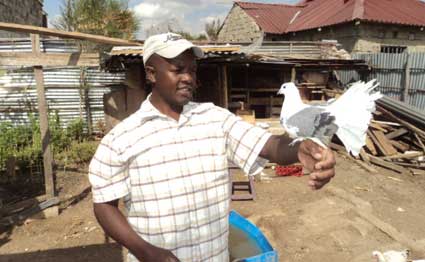
Peter Irungu: how I successfully transitioned from chicken business to ornamental birds

At 32, Peter Irungu Kunyonya believes he is not where he says he aspires to be.

“I want to be the most sought-after ornamental bird farmer in Kenya and across East Africa in the next three years,” he puts across quite clearly.

As more and more new generation farmers choose to venture into unique and diverse kinds of farming techniques, Kunyonya’s name definitely does not miss in that category.

This, he says, is an approach that can take him way ahead in the sector.

Having entered the business of ornamental chicken farming in 2011, the father of two reveals that he only started off with 12 chickens.

What started as a side occupation for his stay-home wife with his full support is now a highly successful venture.

NEVER-ENDING INTEREST

“I entered this field just because of my never-ending interest in chickens from a very tender age.

“I brought in 12 kienyeji chicken at my small town farm at Githunguri, Kiambu County, just to keep my wife busy at home.

“I bought them at Sh500 each. Never for one minute had I thought of keeping them as a money-making venture.

“Within no time, I had 300 chickens in my yard by the end of December 2011. That is when the thought of making money out of them came in.

“Obviously my family could not consume all of them,” recalls the excited farmer adding that he used to get 30 eggs a day from the hens.

bird3-pic

The excess eggs, he says, he sold at his shop that he had set up in the nearby Nairobi’s Utawala Estate. Business was not bad.

In December 2012, he sold off 240 kienyeji chickens during the festive season at a clean Sh120,000 and there was no turning back.

After realising that chicken rearing was a lucrative project, Mr Kunyonya embarked on stocking other types of birds in his backyard. It is in that small space that he rears the most sought-after and expensive birds on the globe, including the bantams — a highly priced special breed of chicken.

“It was after my first sale that I started to research in newspapers, farm magazines and the Internet. I wanted to have all kinds of birds then.

On the Internet I came across a farmer from Nyeri who was also rearing ornamental birds as a lucrative business.

“After a few consultations and interactions with other farmers in the sector, I came to realise that I was but throwing away my birds. While others were selling off a pair of mature ducks at Sh10,000, I was here selling mine at Sh800,” adds the enthusiastic farmer. But he never relented. He now boasts of four different breeds of ducks. These are Pekin, Swedish Blue, Khaki Campbell and the Muscovy ducks.

Next were the turkeys, then came the geese, guinea fowls, bantam chicken, burgess, doves and the list is endless. For him, experimenting on different kinds of birds became addictive. However, this keen bird farmer is quick to note that the turkeys had problems growing.

So he went back to the Internet and learnt that turkeys survive well when they are fed on boiled eggs and milk, especially goat milk.

“Aside from their poor development in growth from which most ended up dying, I endeavoured not to nurture them to an “old” age. They are also heavy eaters.

“Four mothers could consume three bags of feeds in a week. So I started selling them strictly a day after hatching.

“That was after buyers started trickling to my home after referrals from neighbours. Their eggs fetching Sh100 each,” states the digital farmer. Mr Kunyonya points out that he has made at least 80 per cent of his sales through online platforms.

“The Internet has made things very easy now,” he notes. Besides ornamental hens, ducks and turkeys, he sells the pet burgess and a variety of love birds. He says that he sells the love birds in pairs with a pair of the colourful pet burgess fetching Sh4,000.

He has also reared the white guinea fowl, which is an endangered species with a mature one going for Sh8,000 because of its rare nature while the ordinary guinea fowl fetches him Sh4,000.

Even though he looks at this not just as a business venture, Mr Kunyonya agrees that it really is a profitable business, with a bit of hard work and dedication.

“I cannot think of taking a rest on any day. I look after them as if they are my own children,” says the father-of-two.

Over this period of four years he has learned a lot about ornamental birds and he does not miss at least Sh4,000 daily from sold eggs.

“I boast of over 400 ornamental birds. But eventually I would love to focus on the guinea fowls and the ducks as that is where the money is,” he says.

Ornamental bird farming, Mr Kunyonya states, is proving to be a very successful venture.

With an initial capital of as little as Sh10,000, or even less, one can be quite successful through ornamental bird farming, he reiterates.