
Home Blog Page 2261

Melanie Wituka: I am the queen of construction

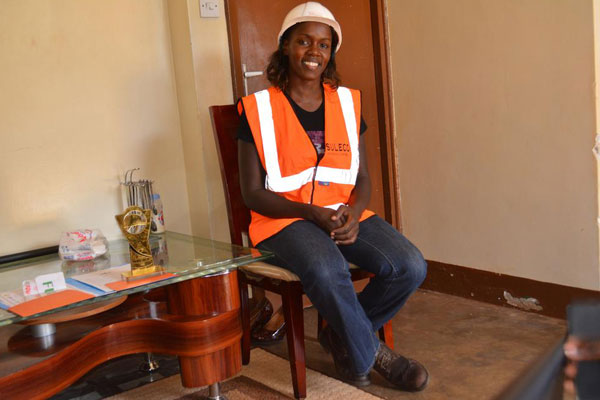
As a child Melanie Wituka, 33, dreamt of becoming a lawyer. She was well on her way to doing just that after scoring an A- in KCSE and being accepted into Moi University when she received a scholarship to the University of Russia. She decided to take that up instead.

“I studied international relations because it was the only course taught in English, not Russian,” she says. After graduation in 2006, Melanie came back home briefly, then moved to Beijing, China, to learn Chinese. A few months into her six-month language course, Melanie learnt that the Kenyan embassy in Beijing needed a translator. She offered to work there as a volunteer translator. She also taught English part time to Chinese students.

“During that time, I would get six-month to one-year tourist visas without a problem. However, in 2008 in the run up to the Beijing Olympics, it became increasingly difficult to get a visa, so I decided to come back home,” she recalls.

Three years after her she moved to China, Melanie came back, confident that her foreign university certificates would give her the upper edge.

Convinced that the Kenyan embassy in Beijing would hire someone with her skills, Melanie approached the Ministry of Foreign Affairs.

“They offered me a position in the communications department in Kenya with a starting salary of Sh22, 000. It was too little so I declined the offer,” says the mother of one.

Ironically, shortly thereafter, Melanie got a job with the Chinese who were constructing Thika superhighway. They, too, offered her Sh22, 000. She accepted it.

Melanie ended up a Jill of all trades: translating official letters and documents for the Chinese, supervising works on site and handling all sorts of administrative tasks. It was a demanding job requiring her to be at work seven days a week and after a month, she realised that there were no prospects of growth. She quit and went back to her mother’s house in Kakamega.

“I had friends my age who were doing business with the government, thanks to the Constituency Development Fund (CDF). I felt that I could do the same.”

Melanie stumbled upon this opportunity one day on her way to Ikolomani in Kakamega, when she saw women working at a road construction site.

“Impressed, I parked my car, walked up to them and started chatting with them about road construction. As I drove off, I thought if these women with such little education could do it, so could I. That is how my foray into the contracting business began.”

Melanie revived SULECO Company Limited, her family’s company that had been registered in 1991 but that had been inactive.

Now that she had an idea of what she wanted to do, she talked with industry experts who could tell her all about how to succeed as a contractor.  “They encouraged me to pursue the business even if I did not have capital because Mechanical Trust Fund (MTF), a government agency which leases construction equipment to small, upcoming contractors on credit, would assist me.”

Learning the ropes

For the next six months, Melanie spent her days learning the ropes at different road construction sites in Kakamega until she felt ready for her first project.

“I then went to Ikolomani CDF offices and asked them to give me a trial road construction job. Fortunately, they commissioned me to work on a six-kilometre stretch of road from Isulu Market to Shikumu. The project was worth Sh1.7 million.”

Starting off was not difficult because the people she approached were willing to help. Melanie got equipment on loan from the MTF, and also got two weeks’ worth of fuel on credit, from a contractor who runs a petrol station. Her mother took out a Sh200, 000 chama loan for her, which she used to pay the stone crushers.

“I also did not hide the fact that I was a greenhorn. I specifically asked for female workers from MTF to help me on this project.

I forged a good relationship with them and asked them to help me do a perfect job. I completed the road to the satisfaction of the CDF officials and that gave me confidence to pitch for jobs in other constituencies,” she recalls.

After that, Melanie got a bigger contract worth Sh20 million, a five-year project that involved sinking a community borehole, erecting a 50, 000-litre steel water tank and installing a water distribution system in Lurambi Constituency. “I have been able to win bids to work on 20 jobs with Kenya Rural Roads Authority, 20 with CDF in different constituencies around the country, several from the Kenya National Highways Authority, and one for the Kakamega county government,” Melanie, who is the secretary general of the Kakamega Vihiga Contractors Association, says.

Still, there are challenges. Getting supplies and services on credit for her CDF projects can be hard because most people fear that if the current MP is not re-elected especially where long-term projects are involved, then they might lose their money if the next MP doesn’t back the project. It was also initially difficult for Melanie to get business loans from banks.

“I had no collateral. Others suggested that I should borrow money for a catering business instead of construction. I had to change banks several times until I got one that is supportive,” she says.

SULECO now employs 20 permanent staff and over 200 casual workers whenever Melanie gets bigger projects.

“My best moment so far was when I was crowned the best female contractor in 2014 out of the 700 female contractors in the country. I am happy when people recognise my work because that means I can get even more referrals and projects to work on.”

Melanie wishes to see more women get into profitable building and construction works and hopes to make positive changes in the construction industry.

“This industry is often associated with corruption and we need new players who can come and re-write the rules of the game to make it clean,” she says.


HOW SHE DID IT:

  • To earn people’s trust in a male-dominated field, be sincere, stand firm and work in a way that earns you respect.
  • When people trust you with their money, give them the best services.
  •  Always be on site to supervise.
  •  Believe in yourself.
  •  Be persistent. Stay committed and don’t give up. Be passionate and know the business well.
  •  Be professional in everything you do.

World’s 10 most famous stock traders

The lives of the world’s most famous traders are colored by both triumph and tragedy, with some exploits achieving mythological status within the industry. The list begins with legendary traders of history and progresses to those of the present day.

  1. Jesse Livermore: Jesse Lauriston Livermore (1877–1940) was an American trader famous for both colossal gains and losses in the market. He successfully shorted the 1929 market crash, building his fortune to $100 million. However, by 1934 he had lost his money and tragically took his own life in 1940.
  2. William Delbert Gann: WD Gann (1878–1955) was a trader who used market forecasting methods based on geometry, astrology, and ancient mathematics. His mysterious technical tools include Gann angles and the Square of 9. As well as trading, Gann wrote a number of books and courses.
  3. George Soros: Hungarian-born George Soros (born 1930) is the chairman of Soros Fund Management, one of the most successful firms in the history of the hedge fund industry. He earned the moniker “The Man Who Broke the Bank of England” in 1992 after his short sale of $10 billion worth of pounds, yielding a tidy $1 billion profit.
  4. Jim Rogers: James Rogers, Jr. (born 1942) is the Chairman of Rogers Holdings. He co-founded the Quantum Fund along with George Soros in the early 1970s, which gained a staggering 4200% over 10 years. Rogers is renowned for his correct bullish call on commodities in the 1990’s and also for his books detailing his adventurous world travels.
  5. Richard Dennis: Richard J. Dennis (born 1949) made his mark in the trading world as a highly successful Chicago-based commodities trader. He reportedly acquired a $200 million fortune over ten years from his speculating. Along with partner William Eckhardt, Dennis was co-creator of the mythical Turtle Trading experiment.
  6. Paul Tudor Jones: Paul Tudor Jones II (born 1954) is the founder of Tudor Investment Corporation, one of the world’s leading hedge funds. Tudor Jones gained notoriety after making around $100 million from shorting stocks during the 1987 market crash.
  7. John Paulson: John Paulson (born 1955), of the hedge fund Paulson & Co., rose to the top of the financial world after making billions of dollars in 2007 by using credit default swaps to effectively sell short the US subprime mortgage lending market.
  8. Steven Cohen: Steven Cohen (born 1956) founded SAC Capital Advisors, a leading hedge fund focused primarily on trading equities. In 2013, SAC was charged by the Securities and Exchange Commission with failing to prevent insider trading and later agreed to pay a $1.2 billion fine.
  9. David Tepper: David Tepper (born 1957) is the founder of the wildly successful hedge fund Appaloosa Management. Tepper, a specialist in distressed debt investing, has made several appearances on CNBC where his statements are closely watched by traders.
  10. Nick Leeson: Nicholas Leeson (born 1967) is the rogue trader who famously caused the collapse of Barings Bank. Leeson served four years in a Singapore jail, but later bounced back to become CEO of Irish football club Galway United.

The Bottom Line

The dramatic and varied life stories of the world’s most famous traders have made compelling material for books and movies. Reminiscences of a Stock Operator, a fictionalized portrayal of Jesse Livermore’s life, is widely viewed as a timeless classic and one of the most important books ever written about trading. Rogue Trader (1999), starring Ewan McGregor, is based on the story of Nick Leeson and the collapse of Barings Bank.
Diversify Your Portfolio With Commodities
Want to learn How to Invest In Commodities? Investopedia’s FREE Commodities Trading newsletter gives you the insights you need to profit from natural resources.

Musician Juliani appointed in Kenya’s private sector governing council

Popular musician Juliani has been appointed in the powerful Kenya Private Sector Alliance (KEPSA). Juliani, whose real names are Julius Owino was appointed as the vice chair on KEPSA’s governing council in the Sports, Arts and Culture sector. Juliani will be deputizing Mr. Tonnie Mello who was appointed as the chairman of the docket.

Juliani was appointed during KEPSA’s annual general meeting held on Thursday last week at Sarova Panafric Hotel. In the AGM, Ambassador Dennis Awori was also appointed as the new KEPSA chair. Mr. Awori, who is also the chairman of Toyota East Africa will be taking over from Mr. Vilmah Shah, who is the chief executive officer at Bidco Africa. He was appointed as chair for a period of two years.

The Cabinet Secretary for Industrialization and Enterprise Development, Mr. Adan Mohamed who was the Chief Guest during the AGM, said that the Government will continue supporting initiatives driven by the Private Sector. He noted that the collaboration between the Private Sector and the Government was a learning point for other African countries. He challenged Kenya’s Private Sector to become globally competitive and not limit itself to regional competitiveness.   “We need to know how to compete with the world beyond competing locally and regionally”, he said.

In his address to the AGM, Amb. Awori, says the Foundation will implement social projects that affect national development and impact on vulnerable groups such as the youth and women. “While KEPSA focuses on public-private dialogue engagement to address policy and legislative issues on behalf of its members, the Foundation will focus on other areas that are important in improving the business environment,” he said.

KEPSA CEO, Ms. Carole Kariuki, highlighted key organizational developments since the last AGM. KEPSA had continued to play a critical role in advocating for an enabling business environment and Kenya’s overall economic growth remained resilient in spite of the spouts of security challenges.

Ms. Kariuki added that KEPSA continues to strengthen its engagement structures to meet the needs of its members and support investment through policy reforms which were critical to the country’s development agenda. The engagement structures were anchored on the National Business Agenda II (NBA), whose five year strategic focus is aligned to the overall goals of the National Vision 2030.

Equity Bank named best bank in Kenya

0

Equity Bank was on Friday crowned the best bank in Kenya after it bagged nine out of the 25 awards on offer at the Think Business 2015 Banking Awards. It beat rival KCB to second position with Barclays coming third among the Tier 1 category banks.

The awards reflected the neck and neck race between Equity and KCB, which bagged five awards, to see the two sweep 14 between them.

The aggressive growth by the two which has seen them outpace fellow Tier I banks has spilled into 2015 where KCB held a slight edge in quarter one results returning a net profit of Sh4.4 billion compared to Equity’s Sh4.3 billion.

Awards organisers said that the banking sector is set for continued growth, boosted by an expanding loans book.

I&M Bank was declared the best bank in the Tier II category, Gulf African Bank in Tier III, Habib A.G. Zurich in Tier IV and KWFT the best micro-finance bank.

Family Bank was named the fastest growing bank in Kenya. Others who were feted include Citi Bank as the best in corporate banking, Standard Chartered for customer satisfaction, Jamii Bora (best recovery award) and Bank of Baroda as the most efficient bank.

Chase Bank’s Duncan Kabui was named the chief executive of the year with Rohit Kumar of Equity bagging the corporate banker of the year.

Chris Kirubi’s Centum targets Sh. 800 billion pension industry

0

Listed investment firm, Centum, is urging pension fund managers to consider investing in the $2 billion (Sh192 billion) Lamu coal plant. Construction on the 1050MW power plant, to be developed jointly between Centum and Gulf Energy, is expected to commence in October and become operational four years later.

“This investment will earn an attractive internal rate of return of 12 per cent on the dollar over the project’s life. We will list it as an asset-backed security at the Nairobi Securities Exchange and we’re already holding discussions with the Retirement Benefits Authority to facilitate participation of pension funds,” said Job Muriuki, an executive at Nabo Capital Limited (formerly Centum Asset Managers). He made the remarks yesterday during an investment forum, at the Intercontinental Hotel Nairobi.

The meeting was held to present Lamu coal power plant as an alternative investment opportunity available to retirement funds. The Lamu coal power project is a proposed 981.5 MW coal-fired thermal electricity-generating plant station to be built in Lamu County. Once constructed, it will become the largest single power station in Kenya, contributing 20 per cent to delivery of the 5000MW plan, a key campaign promise made by the current government. During the meeting, various fund trustees expressed fears that the county may not have sufficient demand to take up the additional generated power.

“We have the Standard Gauge Railway that will be running on electricity. We also need to have a power reserve margin. This means we shall have enough demand. The 5000 MW plan looks over ambitious though and perhaps we can only achieve half of this power generation,” said Muriuki. The project financing structure is made of 75 per cent debt and 25 per cent equity. While pension funds managers are seeking for alternative investment options, there are concerns that many of these funds are too small to play in the big leagues like investing in large infrastructure projects.

“In the Kenyan context, our pension funds are relatively smaller and may not currently have the right resources in place to invest directly in infrastructure. There is a lack of sufficient data and also no track record that would give retirement funds the comfort that they would need to allocate some of their portfolio to infrastructure,” said Sundeep Raichura, CEO Alexander Forbes Kenya Limited.

What Safaricom’s entry into digital TV market holds

0

Safaricom’s entry into the television market is set to upset the Pay TV landscape that is currently in firm grip of two players.

Have you read this? Safaricom launches internet-ready decoders, offers free internet, free Youtube

The Free to Air channels (FTA), which are still hurting from the digital migration debacle, are also set to face a new competitor in Safaricom should the Communications Authority of Kenya grant the firm a broadcasting licence that will allow it to air its own content. Signal distributors such as State owned Signet and Chinese firm Pang might also indirectly feel the impact of Safaricom’s entry into the broadcast space should it get the licence. This is because content producers who will use Safaricom may not need another signal distributor if the firm is aggregating and broadcasting.

And should the mobile firm later decide to allow its subscribers to watch free to air channels on its set top boxes without buying the monthly bundles because they are not connected, the impact will also be felt by hundreds of set top box distributors. But it is the players in the Pay TV market such as multichoice’s DSTV, Zuku and StarTimes who are set to feel the immediate impact as Kenya’s most profitable company seeks a pie of the subscription television market. Consumers are set to be the biggest winners as this is set to trigger a price war or introduction of more competitive packages to attract subscribers.

The telecoms firm, which has already disrupted the banking sector with its revolutionary mobile money network, M-Pesa, now has its eyes cast on the billions in the digital television market after it launched an internet enabled set top box on Friday.

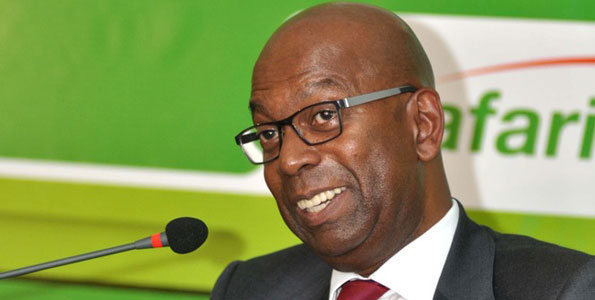
In making its intention to claim a share of the television market, Safaricom’s Chief Executive Bob Collymore boasted that his firm is known for ‘its bold approach to explore and enter new market frontiers with outstanding results’. Though it is still too early to tell, analysts say that the entry of Safaricom will likely hurt DSTV and Zuku, who have dominated the Pay TV market for long. But it’s only Zuku, which is also the major player in the Internet television industry that will face off with Safaricom, which has a big marketing war chest. Wananchi Group, the owners of Zuku TV, currently offer voice, internet and broadcast as a package.

“Though Safaricom has suggested that the product is intended for consumers without a set top box, it is inconceivable that subscription TV customers will not be affected, especially DSTV which does not offer Internet services,” analysts at Standard Investment Bank (SIB) said in their note to clients. “The main barrier however is likely to be on the cost of the device. The product is likely to be a key driver for data growth in coming years. We do not believe there will be room for any other major player to bring in a FTA STB as conceived by the mainstream media houses,” SIB said.

The firm is now waiting for a licence from the Communications Authority to start broadcasting its own content in a move that is set to upset the current broadcasting environment which is yet to recover from a tumultuous digital migration process. “We have applied to the Communication Authority for a broadcasting licence that will enable us to develop and host more content,” Mr Collymore said adding that the firm is currently aggregating content.

“It has become imperative for telecoms service providers to also begin offering content as part of their overall ICT strategy. Provision of content will be key in remaining competitive in the retail market, particularly as a large player. To this extent, operators and service providers have begun to preposition themselves in the market for future content delivery,” Dobek Pater, Managing Director, Africa Analysis, a firm that tracks telecoms and IT in the continent.

Pater says that by deploying its own set-top boxes, Safaricom wants to own the client and be able to deliver a range of services. “Safaricom may also want to place itself in a position where effectively it will be able to provide a range of remote ICT services plus content. The market may be very small at present and not yet ready for these types of services but it is important to begin positioning yourself now,” he adds.

Mr Pater adds that Safaricom’s success will depend on what type of partnerships they will develop with content providers. On his part, telecoms analyst Peter Wanyonyi says that the TV market in Kenya is almost entirely content-driven, and sports and related content rate very highly.

“If Safaricom is able to get onto the sports bandwagon, it could be a game changer in what is a very expensive, staid, and almost monopolistic market. DSTV has such power and control of the Pay TV segment that other players struggle to make any headway into that market. This is due to DSTV’s exclusive contracts with content suppliers for sports and some documentary channels, and if Safaricom can pry these loose, they will shake the sector up. Safaricom, which has 3.1 million smartphones on its network, is hoping to grow its data business using the set-top box dubbed the ‘Big Box’.

Consumers will access the content using 3G and 4G data network. “Our subscribers will access a consolidated offering that is delivered via set-top box and which is shareable to many devices,” Safaricom Chief Executive Bob Collymore said. As a sweetener, Safaricom has offered consumers a six-month free Internet upon purchase of the gadget, which will retail for Sh9, 999. Consumers will also have three months free access to YouTube in a bid to hook them to the gadget. The free YouTube introductory offer will build on usage habits if the firm doesn’t have an arrangement with Google.

The device can also be used as a Wi-Fi hotspot for up to ten users. It is targeting the untapped demand in the home broadband market as well as reach an estimated 2.4 million households out of the 3.2 million that have access to digital television sets.

Consumers will have two payment plans to pick from. The firm says they will have an option of a six-month installment plan that will cost an initial Sh4, 999 and monthly installments of Sh999 for another six months. The package will include access to free to air TV stations as well as an allocation of up to 6GB a month in data bundles. Subscribers will also buy a 50GB bundle for Sh4, 000 every month. Customers will top up their balances by buying monthly bundles using their airtime or M-Pesa.

The firm said mobile companies are already making inroads into the business of content creation and distribution. “Globally, consumers are changing the way they consume content and the lines between traditional lines of business continue to blur in response to customer needs,” Mr Collymore said.

There are 16 million Kenyans with access to the Internet. Safaricom is hoping to convert some of these into its customers. The firm, which invested Sh33 billion in infrastructure in the last financial year, boasts over 2000km of proprietary fibre infrastructure.

This is also the first product launched on the 3G networks. On Thursday Safaricom reported a 38 per cent growth in net profit to Sh32 billion, as M-Pesa and data revenue growth helped reinforce the firm’s reputation as the most profitable in the region.

Safaricom launches internet-ready decoders, offers free internet, YouTube

Safaricom has entered the digital television market a day after the mobile operator announced 38 per cent jump in profits. The firm, which has 3.1 million smartphones on its network, hopes to grow its data business using the set-top box dubbed the ‘Big Box’.

Consumers will access the content using 3G and 4G data network. “Our subscribers will access a consolidated offering delivered via set-top box and which is shareable to many devices,” Safaricom Chief Executive Bob Collymore said.

As a sweetener, Safaricom has offered consumers a six month free Internet upon purchase of the gadget that will retail at Sh9,999. Consumers will have two payment plans to pick from. Also, consumers will also have three months free access to YouTube, to hook them to the gadget.

Analysts from Standard Investment Bank say the free YouTube introductory offer will build on usage habits if the firm doesn’t have an arrangement with Google. The device can also be used as a Wi-Fi hotspot for up to ten users. The firm is now waiting for a licence from the Communication Authority of Kenya to start broadcasting its own content in a move set to upset the current broadcasting environment, which is yet to recover from a tumultuous digital migration process.

“We have applied to the Communication Authority of Kenya for a broadcasting licence that will enable us develop and host more content,” Mr Collymore said adding the firm is currently aggregating content. It’s targeting the untapped demand in the home broadband market as well as reach an estimated 2.4 million households of the 3.2 million that have access to digital television sets. The firm says they will have an option of a six-month installment plan that will cost an initial Sh4,999 and monthly installments of Sh999 for another six months.

The package will include access to free to air TV stations as well as an allocation of up to 6GB a month in data bundles. Subscribers will also buy a 50GB bundle for Sh4,000 every month. Customers will top up their balances by buying monthly bundles using their airtime or M-Pesa. The firm said mobile companies are already making inroads into the business of content creation and distribution. “Globally, consumers are changing the way they consume content and the lines between traditional lines of business continue to blur in response to customer needs,” Collymore said.

There are 16 million Kenyans with access to the Internet. Safaricom is hoping to convert some of these into its customers. The firm, which invested Sh33 billion in infrastructure in the last financial year, boasts over 2,000km of proprietary fibre infrastructure. This is also the first product launched on the 3G networks.

John Njuguna: how fish farming gives me Sh. 70,000 per month

John Njuguna, a retired civil servant from Kanunga, Kiambu County is one of the success stories of fish farming.

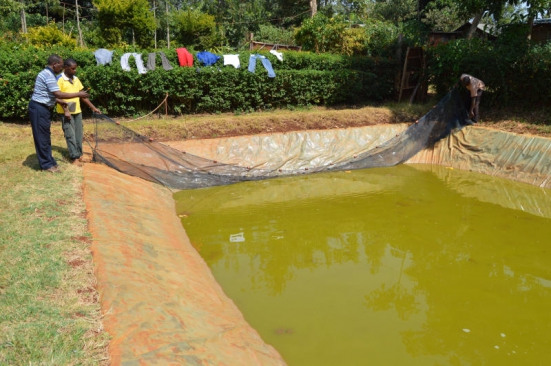
Njuguna is the director of Kanunga Aqua Farm which sits on his one acre farm. “Just a few months after I kicked off keeping fish, some young aspiring fish farmers visited my farm because they heard that I was ‘doing well’. That challenged me to up my game,” says Njuguna. As expected, starting off was marked with one challenge after another.

“I had to visit other fish farmers to learn best practices,” the farmer says. He first started by keeping tilapia but changed to cat fish as they are easy to feed and mature faster. Njuguna harvests his produce twice a year and sells the fish to butcheries in Nairobi after his market in Congo collapsed since he could not satisfy the huge market.

“I used to have a market in Congo, but the deal was stopped because I could not meet the demand. I could not supply the tonnes of fish they wanted,” he reveals. The farmer says he harvests 200 fish a month that weigh between 2-3 kilos and sells one at Sh330. “I make around Sh70,000 profit from fish,” he reveals, smiling.

To boost their position in the market, he and a team of fish farmers formed Kiambu County Fish Farmers Association, where he is the chairman. Fish farming has opened numerous doors for Njuguna. He has visited Tanzania, Uganda, Burundi and Malawi. He plans to go to Israel with eight other fish farmers to learn skills on seed formulation and fish processing.

Before the end of the year, he hopes to also visit Mauritius, Thailand, Japan and Unites States of America to arm himself with cutting-edge knowledge as he braces himself to venture into fish processing. “Fish processing will enable us widen our market since fish eaters will have a variety to choose from the finished product.

That is why I plan to visit a number of countries which are doing well in fish farming,” he says. Mr Njuguna also has a hatchery in his compound where he hatchets for his fish ponds and sell to other fish farmers. The farmer, however, admits that the going has its fair share of challenges.

“Getting quality fish feed is a big challenge. That is why I had to start making my own feed. I also do not have a big freezer to keep fish for long. That means when I harvest my fish, I have to make sure I sell all of them otherwise they will go bad. But I plan to invest in a modern freezer soon,” he says.

He also trains interested farmers on seed formulation, how to manufacture fish feeds, processing and skills to start fish farming, at a fee. “For the five years, I have been in this business, I there have made tremendous profit part of which a potion of it I invested back into my venture,” adds Njuguna.

He has employed 11 permanent staff in his farm and his son who is currently pursuing a degree in Engineering also helps occasionally. For aspiring fish farmers, Njuguna says starting requires a small space and the fish are only fed three times a day. “So why not take up today?” he adds.

How Home Afrika has been making losses while its partners make profit

0

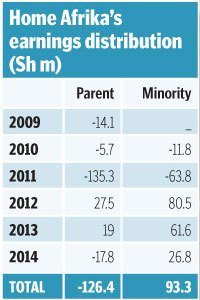
In the year ended December, the Nairobi Securities Exchange (NSE)-listed firm recorded a net loss of Sh17.8 million while the minority partners took a net profit of Sh26.8 million.

“The current model is a 60-40 split between ourselves and the equity partners in the subsidiaries,” said Home Afrika CEO Njoroge Ng’ang’a. “Going forward, we will seek to own projects 100 per cent.”

Home Afrika, through its subsidiaries, has teamed up with equity investors to develop various real estate projects, including Migaa in Kiambu. This has left it with non-controlling interests who have taken a larger share of profits despite their smaller stake of about 40 per cent, according to the company’s reports.

In the six years ended 2014, the non-controlling investors took a cumulative net profit of Sh93.3 million as shareholders of Home Afrika booked a net loss of Sh126.4 million in the same period.

Most publicly traded firms have allotted a smaller share of their net profits to minority interests, making Home Afrika’s larger payouts to the non-controlling investors a rare phenomenon.

Shareholders of TPS Eastern Africa, for instance, took Sh245.9 million out of the total Sh274.4 million net profit the hotel chains operator made in the year ended December.

This left Sh28.5 million to the non-controlling interests. “Our equity structure is unique compared to other NSE firms,” he said, noting that this would be remedied by full ownership of future projects.

How you helped Safaricom make Sh. 32 billion profit

0

Kenya’s largest telecommunications company, Safaricom, Thursday reported a 38 per cent growth in profit to Sh32 billion, as M-Pesa and data revenue growth helped reinforce the firm’s reputation as the most profitable in the region.

The results mean Safaricom made Sh87.7 million per day in the year that ended March 31, 2015, which translates to Sh3.6million every hour in profits alone. The results were music to the ears of the company’s board whose chairman, Nicholas Ng’ang’a, announced that it had extended the contract of the firm’s CEO, Bob Collymore, by an additional two years citing “the need for continuity”.

“In the current business environment where the business is doing well, it is not time to be changing the captain of the ship. We have extended his (Bob Collymore’s) term by two years and a bit,” Mr Ng’ang’a said Thursday at an investor briefing in Nairobi. This brings to an end speculation about who will succeed Collymore at the helm of the most profitable company in East and Central Africa until 2017.

Shareholders will now receive Sh25.6 billion dividend cheque, 36 per cent more than what they got in the previous year. This amounts to 64 cents per share. The total dividend payout represents 80 per cent of Safaricom’s net income. Safaricom posted almost double what Equity Bank, which is now Kenya’s second most profitable company, raked in.

Equity made Sh17.15 billion profit for the year ended December 2014. The Kenya Commercial Bank (KCB), which has partnered with Safaricom on a mobile loan product, returned a Sh16.8 billion net profit for the same period, coming in third.

But Safaricom outpaced the two on revenues, becoming the biggest beneficiary of the growing mobile banking products. The mobile firm grew its revenues by 13 per cent in the year under review to Sh163.4 billion. Its service revenue grew by a similar margin to Sh156 billion, while voice revenue was up four per cent to Sh87 billion.

Non-voice revenue, on the other hand rose by 27 per cent to Sh68.8 billion. Voice now accounts for 54 per cent of the firm’s total revenue while the non-voice revenue driven by data and Mpesa take up the rest. “This growth is supported by our loyal customer base attracted by a superior network experience, convenient airtime distribution and attractive customer promotions and propositions,” Mr Collymore said.

The firm continued to recruit new customers in the year to March 2015, a drive that saw it grow its subscriber base by eight per cent to 23.3 million.

“We have about one million new customers getting into the market every year and this is the number we want to target,” Collymore said. Revenue from short messages service (SMS) rose 15 per cent to Sh15.6 billion, while M-pesa revenue grew 23 per cent to Sh32 billion. The firm attributes this growth to increased usage of SMS bundles and SMS-based promotions. The firm now has 13.9 million active users on its mobile money network every month, and this accounts for 60 per cent of its entire customer base.

Collymore said the firm expanded its M-pesa agent outlets to 85,756, which further boosted its reach. The firm is now counting on the Lipa na Mpesa service to boost use of the platform. The mobile services provider also has 11.6 million active data customers every month, and boasted 4.3 million customers on 3G-enabled devices March this year.

Mr Collymore said the firm’s 4G network is now available in Nairobi and Mombasa and they intend to roll it out to 13 other towns across the country by the end of the year. “Delivery of this 4G push-to-talk network and CCTV cameras is progressing, with phase one on schedule to be launched at the end of May 2015,” Mr Collymore said.