

Home Blog Page 2263

Kenya Airways abandons Dreamliners, seeks for rich partner to ease debts

0

The following report was first published in the Sunday Nation.

Cash-strapped Kenya Airways has initiated talks with an airline from the Middle East in a bid to raise cash in exchange for equity. Sources within the company says that the national carrier has abandoned midway its multi-billion project for the purchase of new Dreamliner jets. This is said to be part of new measures the airline hopes will boost its struggle to get out of its current financial crisis.

Have you read this? Kenya Airways flies into turbulence

Though the KQ management would not confirm or deny the engagement with a potential partner yesterday, CEO Mbuvi Ngunze is on record saying that the airline is looking for a partner with deep pockets.

Those in the know say Qatar Airways and Emirates are among those the national carrier is looking at for a potential partner.

“We cannot comment on this. It’s a shareholder issue,” the company said in an emailed response on Saturday.

The airline, which is expected to release its full-year financial results this month, has been in bad financial state and has in the past few months relied on short-term loans to pay workers and run daily operations. It is estimated that the company would require about Sh18 billion to get out of the red.

Mr Ngunze said KQ would not purchase the remaining three of nine of Dreamliner jets it had ordered from Boeing in 2006 but would instead lease the aircraft from an Irish company. The airline has already entered a sale and lease agreement with AWAS Aviation Trading Ltd, a company based in Ireland, meaning that the three planes will not be financed on the balance sheet of Kenya Airways.

Read more: Kenya Airways falls by 30 per cent at NSE

“Given our current financing, we must be prudent in finding innovative financing solutions while keeping with our growth ambition. The new aircraft will be important additions to our fleet as we strive to give our guests the best experience possible,” the CEO said. He said the lease deal would be beneficial to the company’s balance sheet as it seeks to improve its liquidity.

Huge debts have been a key player in the matrix that brought the national carrier to its knees. Most of this debt was acquired to finance the purchase of Dreamliner jets as part of a fleet modernisation project launched by former CEO Titus Naikuni.

The decision to rescind its intention to buy all the nine new Dreamliners midway and instead run three of those on a lease agreement could significantly prop the company’s financial standing.

After announcing a Sh10 billion loss in the half year, the worst performance in the history of Kenya’s corporate sector, the company said it would contract a financial advisor to help restructure its debt. But it is yet to contract one.

Analysts predict that the airline could report a bigger loss in the full-year results, given that most of the factors it blamed for the poor half-year performance have not significantly changed.

The airline had blamed its huge loss on cancellation of flights to West Africa after the outbreak of Ebola and reduced passenger numbers due to travel advisories issued against Kenya in the wake of high insecurity. The airline has yet to resume its West African flights while the security situation in the country is still wanting.


Home Afrika profit falls 90 per cent to Sh. 9 million

0

Home Afrika, a Nairobi Securities Exchange listed property developer has a 90 per cent drop in profit for the financial year 2014. The firm’s profits dropped from Sh. 80 million to just Sh. 9 million. Attributing the sharp fall to its failed bond offer of Sh. 0.9 billion, Home Afrika said that its revenue grew by 6 per cent to Sh. 687 million

The bond flop saw Home Afrika turn to bankers taking a loan of Sh500 million, leading to delay in funding projects that would have propped up its earnings in the period.

“Home Afrika had embarked on raising finance through debt issue since early 2014, the proceeds of which were only realised in late December 2014 and early 2015,” Home Afrika said in a statement to investors.

“As a consequence, the investment of such funds in the infrastructure development at the underlying projects of the group has been delayed which is the primary reason for the net profit achieved in 2014.”

The Migaa housing project in Kiambu was to be the main beneficiary of the bond cash while other funds were to go to the Llango Development in Kwale and Lakeview housing project in Kisumu.

The company’s assets grew 19.3 per cent to Sh3.7 billion from the previous year’s Sh3.1 billion, mainly on account of improved valuation of properties. Home Afrika’s earnings were dragged down further by administrative expenses which stood at Sh213.1 million as well as costs of sales which grew by 71 per cent to Sh447 million.

Directors of Home Afrika did not recommend a dividend payout. “The group anticipates continued utilisation of the proceeds from the Sh500 million debt issue in project development over the first half of 2015 with resultant benefits in the form of revenue and profits to be generated in the second half of 2015,” Home Afrika said.

Floyd Mayweather beats Manny Pacquiao in boring match

0

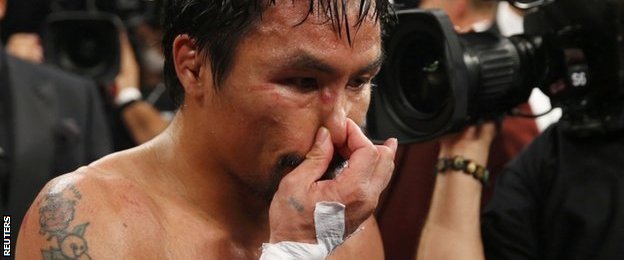
Floyd Mayweather emerged victorious from the most lucrative fight in history, beating Manny Pacquiao via a wide unanimous decision in Las Vegas.

American Mayweather, 38, delivered a defensive masterclass against his Philippine rival, making the necessary adjustments after only a few rounds before disappearing out of sight.

Floyd Mayweather, who added the WBO welterweight title to the WBC and WBA titles he already owned, was awarded the fight 118-110, 116-112 and 116-112 by the three judges.

With his victory, Floyd Mayweather also cemented his status as the greatest pound-for-pound boxer of his generation. The five-weight world champion is now undefeated in 48 professional fights, stretching back 19 years.

Six-weight world champion Pacquiao, 36, falls to 57 wins, six losses and two draws.

Tickets for the bout – billed as ‘The Fight of the Century’ – changed hands for as much as $350,000 (£232,000) and American fans were charged almost $100 (£66) to watch on television.

Rival broadcasters Showtime and HBO joined forces for the first time since Lennox Lewis fought Mike Tyson in 2002 to show the fight, with Jimmy Lennon Jr and Michael Buffer sharing ring announcer duties.

A-listers in attendance included Clint Eastwood, Robert De Niro, Sting, Prince and Donald Trump while multi Grammy Award winner Jamie Foxx sang the American national anthem prior to the fighters entering the ring. So prized was a seat that many celebrities were even sat behind the press row.

Pacquiao began his ring walk at 20:45 Vegas time – to the strains of a song he recorded especially for the occasion – and was awarded a rapturous reception. Mayweather, on the other hand, was roundly booed, despite being effectively the house fighter.

The opening round was extremely cagey, with both men trying to establish their distance, but Mayweather did land with a couple of eye-catching right hands on the counter.

Not only did Mayweather look noticeably bigger than Pacquiao, he also looked quicker in the early rounds.

And when Pacquiao did get close, Mayweather was content to tie him up, to both Pacquiao and the fans’ frustration.


Manny Pac

Floyd Mayweather rocked Pacquiao with two more rights in the second, although Pacquiao was able to get inside his rival’s superior reach and unleash a couple of flurries.

The third round was a more even affair, with Pacquiao able to draw Floyd Mayweather into some exchanges and Mayweather doing plenty of rough stuff on the inside.

Pacquiao really came into the fight in the fourth, staggering Mayweather with a left hand, which many thought would be a key weapon in this fight.

Floyd Mayweather was forced to cover up on the ropes and many of Pacquiao’s follow-up punches were caught on the arms and gloves, but a smile from the American signalled he was definitely hurt.

Mayweather’s head had cleared by the start of the fifth and he proceeded to win the round courtesy of his trusty right cross, with Pacquiao not applying enough pressure or displaying the aggression many felt he needed.


Floyd Mayweather

Pacquiao rocked Mayweather again in the sixth, before Mayweather got on his bike in the seventh, slipping and sliding out of reach and frustrating Pacquiao as he looked to engage.

In the eighth it was Mayweather’s left that did most of the damage and although he did ship another sneaky left, by now it was apparent that Pacquiao, naturally the smaller man, did not have the power to hurt him.

It was more of the same in the ninth, during which there were definite signs that Pacquiao was tiring and the fight was beginning to get away from him.

By the 10th, Mayweather had made all the adjustments he needed to make and continually made Pacquiao miss, like a matador with an ailing bull, while doing enough on the counter to win the round.

In the 11th, Pacquiao had gone from bull to mouse, getting snapped on the nose time and time again by Mayweather’s jab as he tried to get inside. Pacquiao’s expected late rally did not transpire and the air of resignation in the arena at the final bell told you everything you needed to know – that Mayweather had won an intriguing rather than thrilling fight with plenty to spare.

And while many observers who paid to watch would have been disappointed with the action, the fact that Mayweather won so handily was more proof of his unparalleled genius.

Pacquiao’s pride will no doubt be salved when he next checks his bank account – it is estimated the fight will generate $400m (£265m) in total, with Floyd Mayweather and Pacquiao set to split in the region of $230m (£150m).

Afterwards Floyd Mayweather confirmed he would fight one more time in September before retiring, although the opportunity to surpass Rocky Marciano’s mark of 49 fights undefeated might prove too tempting to pass up.

Amir Khan is on the list of possible opponents, as is fellow Briton and IBF welterweight champion Kell Brook.

Khadija Hussein: Your lifestyle wishes are my business

Six and a half years ago, Khadija Hussein left the country for Dubai. She had just secured a well-paying job as a relationship manager for a credit card company.

“The salary was a dream come true and the job gave me an opportunity to live in a foreign country, work in a new environment and interact with new business people,” she says.
However, despite the high salary she earned, Khadija Hussein felt dissatisfied.

“The routine was monotonous and the work did not fulfill my ambitions. I also felt that I had untapped potential to start my own business that would allow me to run my own schedule without limitations or boredom,” she says.

In early 2013, Khadija quit her job in Dubai and returned to the country determined to start her own company. At first she joined hands with her sister and set up a property management company.

But it wasn’t the line of business she dreamt of starting. Instead, her dream was to run a concierge business for wealthy individuals and companies. Such a business involves researching and making travel plans and reservations for clients, planning conferences for big companies and handling whatever requests, no matter how odd, she gets from clients.

“I noticed that Kenya is among the 10 countries worldwide with the fastest growing luxury spending potential according to the Luxury Opportunity Index published in The Wealth Report and realised that there was a gap in the market, with many Kenyans having huge spending power but lacking information and service providers to assist them live their dream lifestyles. That is where my business came in.”

She chose the name Thamani Concierge for her business, because she wanted her company’s name to reflect the valuable services it would offer, and registered the company.

To begin with she bought a laptop and took a month’s training in ticketing, and then she started selling air tickets to family, friends and neighbours. From the profits she made, Khadija hired a web designer to build Thamani Concierge’s website and her father offered her office space which helped ease her operation costs.

When all that was done, she was now open for business. “I began marketing the business by word of mouth, and then I began to approach companies and individuals. I was often disappointed but I didn’t give up. Eventually, I started getting clients and some of my first big clients were a multinational manufacturing company and a leading audit firm.”

Khadija’s company operates for 24 hours. “The long hours are a major challenge especially because I have to find a balance between my work and family,” she says, adding that her laptop and phone are always with her, at home or when travelling, just in case she needs to attend to a client. At work, having an impromptu, unusual customer request is one of the big challenges she faces.

“The challenges are often interesting. Recently, a group of clients asked to attend the traditional Maasai eunoto ceremony during which young men become junior elders. I didn’t know what that was or where I could find it.” In a span of 24 hours, though, Khadija was able to find a Maasai translator and personally take her clients to Kajiado for the ceremony.

Two years after starting her business, Khadija takes pride in having the highest level of customer service and an extensive private aviation network of trusted brokers in 66 different countries. “I established my contacts from my interactions back in Dubai,” she says.

Her large network has been the backbone of her company, enabling her to charter a yacht for any customer, sweep them on board the world’s most luxurious vessels to over 200,000 of the world’s top luxury hotels or book them to any top live match at the English Premier League within short notice. Unlike her previous job, Khadija says that her business is never dull or predictable because she can never be sure what a client will ask for.

Last year, Khadija’s company was charged with the task of being the day sponsor at the Capital Club East Africa during the grand opening week.

“This was a major milestone for my business. The Capital Club is a top private members club in East Africa and from the event I was able to show what I offer and get more clients.”

However, her climb to the top of the lifestyle management business has not gone unchallenged especially because she is a female entrepreneur.

“When I started, I quickly realised that people expected me to be either nice or ambitious. I noticed that successful women who set their goals high are seen as overly aggressive while those who come across as too nice aren’t taken seriously.”

Subsequently, Khadija Hussein has grown by striking a delicate balance between efficiency, elegance and assertiveness. Looking through the past two years, Khadija Hussein is confident that her company can only achieve more growth.

“I was the employer and the employee when I started. But today, my company has grown and I have four employees on permanent basis. I also hire casual staff when there is a lot of work.”

Having attained the fulfillment she sought after, Khadija Hussein does not miss the safety of employment. Says she: “I love writing my own schedule and putting my skills to action without looking over my shoulder. I no longer feel unfulfilled and cannot miss a chance to help someone build their own dreams.”

She is also optimistic that the luxury management industry in Kenya is ripening.

“We’re a growing business hub with tourism and multi-national companies setting base here, spurring more opportunities for my company and the industry at large. Things can only get better,” she says with conviction.

Safaricom backs down on unpopular Post-pay tariff but…

Safaricom has revised its decision to terminate unused airtime, SMS credits and data of its Post Pay subscribers after May 26. This follows the uproar that followed Safaricom’s introduction of expiry dates on its Karibu Post-Pay service.

Read More: Safaricom introduces controversial expiry dates on its Post-pay tariff

Nonetheless, while Post pay subscribers will be able to keep their unused airtime, SMS and data bundles, any new products purchased under the tariff from May 1 henceforth will be expiring every 30 days. “All current (Karibu PostPay) subscribers will be able to continue enjoying their accumulated minutes and data until they are fully exhausted,” Sylvia Mulinge, the general manager for consumer business, said.

The Post-Pay tariff has over 150,000 subscribers. Some of the subscribers had threatened to sue Safaricom, with popular blogger Robert Alai announcing that he will be suing Safaricom. “How can what I have paid for expire?” asked the blogger in a Facebook post.

The Karibu Post-pay tariff was introduced in 2011 and currently has two price plans. For Sh1,000 per month, a subscriber gets 900 minutes talk time for calls within the Safaricom network, 100 minutes for off-net calls (to non-Safaricom lines), 100 megabytes (MB) of data and 100 on-net SMSes. For Sh2,500, they get 2,200 minutes for Safaricom-to-Safaricom calls, 300 minutes to rival networks, 250MB of data and 250 on-net text messages.

Any unused minutes, data and SMSes were rolled over to the next month when a fresh bundle was issued. Early adopters, therefore, accumulated tens of thousands of minutes, SMS units and data bundles, with a value estimated to be running up to hundreds of millions.

KCB-MPesa platform signs 1 million customers

0

KCB Group’s mobile phone-based lending services has hit more than one million accounts a month after it was launched, underlining the high potential of mobile banking.

The platform dubbed KCB-M-PESA signed its one millionth customer this week and its deposits grossed Sh700 million since its launch last month.

The service has raised the total number of KCB’s customers, including those holding traditional accounts, to 5.4 million.

This has boosted the lender’s presence in the retail lending market that is dominated by Equity Group with 10 million customers. Equity said it has signed up a cumulative 526,500 customers on its mobile banking platform Equitel as of March, signalling the race to promote the cellular-based services. Commercial Bank of Africa CBA, which also has a tie-up with M-Pesa called M-Shwari, says its customer base has grown to 10 million.

KCB’s CEO Joshua Oigara said the bank’s mobile platform is part of the push towards the development of a cash-lite economy that has enabled the bank and the telco drive their financial inclusion agenda across the region.

“As at Monday April 27, the total accounts opened stood at over 1.3 million with an average loan size being Sh3,000. The high number of enrolment is attributable to the aggressive mobilisation strategy employed by the two corporates,” Mr Oigara said.

He added that the uptake is a signal of future potential of the micro lending service through which one can borrow Sh50. “It is those little amounts that are making a difference in people’s lives showing how this innovation is driving financial inclusion,” Mr Oigara said.

The KCB-M-PESA account offers customers a platform to borrow money based on their credit history, save money on their mobile phones and later take loans that are repayable within a maximum of six months making it the only product of its kind in the market. The account offers loans of a minimum of Sh50 and as much as Sh1 million with interest as low as two per cent. The loan amount is based on M-Pesa transactions.

Since its launch in October, Equitel and has made 4.5 million transactions valued at Sh4 billion. CBA in March said loans amounting to Sh29 billion had been advanced through M-Shwari, up from Sh7 billion in February last year.

3 Subtle Signs an Employee Might Be Jumping Ship

0

source: themuse 

While there are many telltale signs of an unhappy employee—absenteeism, tardiness, and negative attitude, just to name a few—here are a few more that aren’t so obvious. And, more importantly, what to do when you see them.

The Signs

1. They’re Ultra Efficient
Your top performers are doing great work every day, which makes this sign one of the hardest to spot. But, it’s one you should really pay attention to. Great employees care about their work, and even if they’re choosing to take their talent elsewhere, chances are they want to leave on good terms. That means they’ll do whatever it takes to make a great impression, right before they go. Outstanding projects suddenly get done, loose ends are tied up, and issues are resolved. It may sound like a manager’s dream, but if you find yourself surprised with your employees’ performance, they might be on their way out.

2. They’re More Active on LinkedIn
I’m sure they’re out there, but I have yet to meet anyone who loves networking. That means most of us rely heavily on LinkedIn as a substitute for networking the old-fashioned way. (Thank you, LinkedIn!)
So, when you see an employee constantly on LinkedIn, it probably shouldn’t raise any red flags. However, a sudden uptick in new connections, groups joined, or articles shared could be an indication your employee is trying to boost his or her social profile—and find his or her next big thing.

3. They Have Great Teeth
While most managers know to watch out for a slew of suspicious “medical” appointments, most of us wouldn’t think twice about a legitimate appointment. When your employee starts addressing health concerns that were just on the back burner before—think: the employee who avoids the dentist starts getting her teeth cleaned and cavities filled—you might have an issue. Many employees try to make use of their benefits before leaving, even if they’ll have comparable benefits at their next job. New employees avoid taking time off for appointments when they start a new job, so a steady stream of legitimate appointments could mean a resignation is on the horizon.

The Right (and Wrong) Way to Sit at Your Desk

0

source:themuse

Sitting up straight is a simple way to boost your metabolism, keep your blood pressure in check, lower your stress levels, and more—but it’s so easy to find yourself slouching lower and lower at your desk as the workday goes on. Check out this infographic for quick posture tips your whole body will thank you for.

The Right (and Wrong) Way to Sit at Your Desk

Kenya will not force Somali refugees out, despite deadline for camp closure

0

source:Reuters

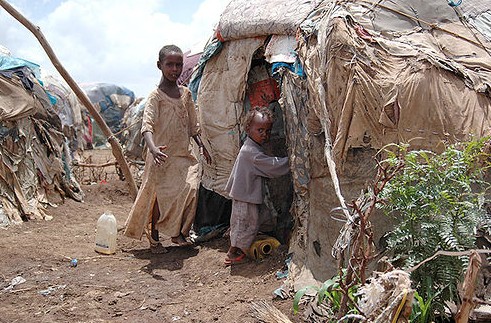
Kenya will not forcibly repatriate some 336,000 Somalis living in one of the world’s largest refugee camps, but the government intends to continue with its plans to close the camp within three months for security reasons, a government official said.

Following a major attack by Somali militants earlier this month, Kenya’s Vice President William Ruto gave the United Nations until July to relocate all the refugees from Dadaab camp.

Since then, the United Nations refugee agency (UNHCR) and international charities have urged the government to reconsider its decision, fearing refugees’ lives would be in danger if they are forced back to Somalia.

It is illegal under the 1951 U.N. Refugee Convention to force refugees back to areas where their lives are threatened.

“While we are committed to the return of all refugees, more so Somali refugees, you will not see us holding people by the head and the tail and throwing them into lorries to take them across the border,” Ali Bunow Korane, chair of Kenya’s refugee affairs commission, said on Wednesday in Nairobi.

He was speaking at a meeting of U.N. officials, aid agencies and civil society, organized by the Rift Valley Institute think tank, to discuss the implications of closing Dadaab.
The camp, near Kenya’s northern border with Somalia, is an hour’s drive from the Kenyan town of Garissa where al Shabaab militants killed 148 people at a university on April 2.
Some Kenyan politicians have said the Somali militants use the camp as a hideout.

“The group which attacked Garissa earlier this month … they stayed in the refugee camps,” said Korane. “They assembled their arms there.”

Safaricom introduces expiry dates on its Post-pay tariff

1

Safaricom post pay customers are set to lose all their unused airtime, data and SMS credits from the current Post Pay service that expires on May 26.

According to Safaricom messages sent to its subscribers, bundles from May 26 will only be valid for a period of 30 days. This will effectively bring to an end the unlimited accumulation of data and airtime that Post pay subscribers have been enjoying.

“The changes mean that all subscribers on the (Karibu) PostPay 1000 and PostPay 2500 bundles will be expected to have used all their existing resources (minutes, SMS and data) before they expire and become unavailable on May 26, 2015,” the telecom operator said in a notice to its subscribers.

“After that date, the subscribers will continue to enjoy the existing Karibu PostPay bundles and will receive the same amount of minutes, SMS and data which will be renewed on a monthly basis, with any unused resources automatically expiring after 30 days. The resources cannot be rolled over. These resources cannot be transferred (sambaza). All bills must be settled to facilitate issuance of resources. Only accounts that are fully settled will be credited with resources,” states the new terms and conditions.