Home Blog Page 2268

Safaricom named in plot to delay alternative mobile technology

0

Safaricom Ltd has been named in a scheme to delay the roll-out of alternative technologies in the local market.

Information, Communication and Technology (ICT) Cabinet Secretary Fred Matiang’i alleged that the provider of converged communication solutions was paying litigants to delay the roll-out of alternative technologies, in reference to Equity Bank’s suspended cash transfer services. The allegations, if confirmed, could introduce a new angle in an ongoing battle between Safaricom and Equity Bank.

Dr Matiang’i said Kenya had become the ‘laughing stock’ of Sub-Saharan Africa over failure to effect proper regulation of the telecommunication sector, where Safaricom’s declaration as dominant was ‘long overdue’. “After the same player fails in Parliament, they procure litigants to go to court and waste time only to delay the development that would spur competition…” Mr Matiang’i said in an address to Business journalists yesterday. He added that the Government had done everything possible to ensure the thin-SIM technology in use by Equity’s money transfer service was safe before the roll-out in Kenya.

“We consulted everyone, talked to the European body on Standards and the regulator did the right thing,” he said in defending his stand. However, when the allegations were put to Safaricom CEO Bob Collymore he was reluctant to respond directly to the claims by the CS but was quick to point out that he could act if the matter was officially communicated to the company. “He should say it publicly so we can deal with it,” he said. The High Court last year suspended the introduction of the thin-SIM technology pending the determination on a case filed by a litigant, Legal Advice Centre (LAC).

The Centre had alleged that the Communications Authority of Kenya (CA) approved the technology fronted by Equity Bank before a full audit was done on its security risks. Earlier in September last year, the National Assembly’s committee on Energy, Information and Communication Technology had stopped Equity’s plans – which had been approved by the CA. The committee chaired, by Kigumo MP Jamleck Kamau, was investigating fears that the technology carried security risks when used on the main SIM card.

“If the CA continues with the roll-out plans and the matter is under investigations by Parliament, the authority will face full consequences if anything goes wrong,” Mr Kamau once warned the communication regulator.

Matiang’i reiterated that Safaricom should be declared a dominant player in a rather controversial sentiment with far-reaching implication for mobile telephony. Citing examples from Nigeria and Ghana where the big mobile phone providers have been declared dominant, he said Kenya’s situation was worse and that Safaricom should long have been affirmed.

What new NHIF rates mean for you

0

For the past two weeks, Elijah Mugambi has been a restless worker. Starting this month, he will be earning Sh. 750 less from his Sh. 22,000 salary. His Sh. 100,000 bank loan will not make things any easier to bear. You see, currently, Mr. Mugambi parts with Sh. 9,100 for his monthly loan repayment. From the remaining Sh. 12,900 gross salary, Sh. 1,400 has been getting deducted to cater for his statutory deductions. Of these deductions, Sh. 320 has been going to his National Hospital Insurance Fund subscription. From April 1, 2015, though, Mr. Mugambi will be parting with Sh. 1,830 per month in statutory deductions! “I have been paying Sh. 320 for NHIF but this amount has now risen to Sh. 750 per month. My salary is only thinning out,” he says. Mr. Mugambi, though, is not alone. In fact, he is one among millions of workers who will be remitting increased deductions to the NHIF. This follows a gazette legal notice dated February 6,2015 that raised the minimum amount all formal workers will be paying to be covered under the NHIF. According to the legal notice that was signed by NHIF Chief Executive Officer Simeon Ole Kirgotty and Chairman Mohamud Mohamed Ali, workers will see increments of up to 431 per cent on their monthly NHIF deductions. The notice came into force on April 1 this month.

While workers had hoped that deliberations by Central Organization of Trade Unions (COTU) and the Federation of Kenya Employers (FKE) against the new rates would halt their implementation, the dye was cast in January when COTU decided to formally accept the deductions by withdrawing a lawsuit challenging them. According to COTU, NHIF had agreed to lower their maximum deduction from the previously proposed Sh. 2,000 per month on high-income earners to Sh. 1,700. In the same vein, NHIF agreed to spare self-employed workers from the high rate. They will now continue paying Sh. 160 per month. NHIF had earlier attempted to raise payments for the self-employed to Sh. 500 month.

According to Felix Otiato, the head of Communications at the Federation of Kenya Employers (FKE), employers were satisfied with the consultations done by NHIF. “NHIF came to us with an explanation on what they intended to do with the increased levies and we felt that by doing so, they had chartered a new way of conducting business,” he says, adding that though FKE had issues with the new levies, it agreed to the implementation of the new rates. According to the gazette new rates, workers who earn Sh. 5,999 and below will pay Sh. 150 per month. Evidently, the most hit will be workers earning Sh. 8,000 and above. Accordingly, those earning between Sh. 8,000 and Sh. 11,999 will now part with Sh. 400. Workers earning between Sh. 12,000 and Sh. 14,999 will henceforth contribute Sh. 500. Those making between Sh. 15,000 and Sh. 19,999 will give Sh. 600 to NHIF. Those earning between Sh. 20,000 and Sh. 24,999 will have their salaries deducted Sh. 750. Those earning between Sh. 60,000 to Sh. 90,000 range will pay between Sh. 1,300 and Sh. 1,700, while income over Sh. 100,000 will attract the highest deduction of Sh. 1,700. Like Mr. Mugambi, though, workers earning the Sh. 8,000 to Sh. 19,999 range are afraid that their budgets will be too stretched. Take Rosaline Nafula, a mother of three who earns Sh. 15,000. “The cost of basic goods at the shop has not stopped accelerating, yet my salary has remained fairy the same. I don’t know how I will structure my budget to cope with the new deductions,” she says, adding that Sh. 600 is her monthly sukuma wiki budget. But according to the NHIF, benefits of the new charges will outweigh the deficiencies. Apparently, they will be used to meet in and out patients’ costs rather than the current model where only in-patient bed charges are catered for. The new cover will be extended to X-ray, maternity, consultation, drugs, hospital accommodation, and management of chronic diseases like cancer and diabetes.

Strikingly, workers paying the highest premiums will have their benefits capped at Sh. 1.2 million while those contributing the lowest amounts will have their annual benefits limited at Sh. 30,000. Similarly, according to Mr. Kirgotty, NHIF is seeking to limit the kind of hospitals contributors can be covered at, with high-end hospitals being ruled out. Currently, private medical insurers charge average premiums of Sh. 60,000 per year or Sh. 5,000 per month for a family of four that can receive cover benefits of up to Sh. 1 million. For instance, at Jubilee Insurance, the lowest limit per family per year is Sh. 500,000 while the highest is Sh. 5 million for in-patient cover. Out-patient’s cover has low of Sh. 50,000 and a high of Sh. 150,000, while maternity limit’s has a range of between Sh. 80,000 and Sh. 150,000. Prior to the gazette notice, NHIF was rebating daily hospital bed charges of between Sh. 400 and Sh. 2,400.

Nonetheless, NHIF did not clearly outline how workers holding onto private medical schemes are to be accommodated in the new arrangements. According to Mr. Otiato, this was one of the concerns that propelled the FKE to oppose implementation of the new rates. “We were concerned about NHIF’s capacity to diligently handle the higher monies workers will be contributing, the currently existing employer-sponsored medical schemes and how they would be accommodated into the new formula, legal issues pertaining to workers with limited salary and deductions who are currently servicing loans, and the need for a phased implementation strategy” says Mr. Otiato. Further according to the Union of Kenya Civil Servants, the rates are illegal. However, according to Murigi Kamande, an advocate of the High Court of Kenya, a worker servicing a loan whose salary will suffer additional deductions beyond his current minimum would find his case a hard nut to sell if he were to go to court. “The new rates fall under statutory requirements. If you have a loan and the deductions on your account go beyond the agreed limit, the court may view your repayment obligations as a contractual arrangement between you and your bank rather than statutory, and hence rule that you have imprudent financial management,” he says.

While all formally employed workers are required to submit monthly contributions to NHIF, including those who have their own employer-sponsored health insurance schemes, a spot check reveals that private insurers will be accommodating medical charges that NHIF will not be willing to meet. Consequently, workers looking to open new medical covers with private insurers will need to pay for NHIF and their private insurer as the two covers together. For instance, if you take a medical insurance product at Resolution Insurance, your cover will extend beyond NHIF’s limit. “We shall pay all approved admissions bills less National Hospital insurance Fund rebates,” says the Resolution Insurance product guideline. The same applies for covers taken at AAR Insurance and Jubilee Insurance.


How to protect your poultry from deadly infections

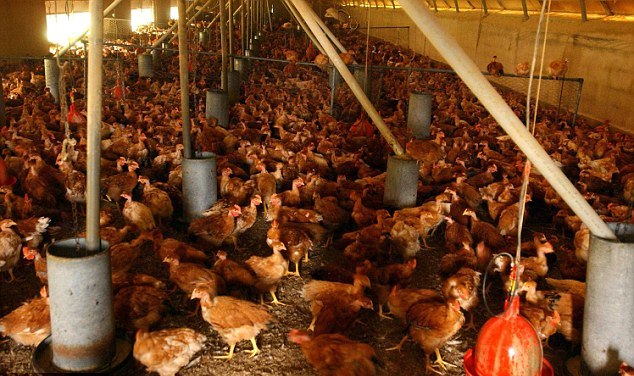
Kenya’s appetite for chicken meat and eggs is always high throughout the year; business opportunities are thus evergreen. Whether you want to venture into broiler, layers or indigenous chicken production, the market is huge for both small and large scale farmers.

In addition, the production cycle is quite short hence quick returns to investments. It only takes three weeks for an egg to hatch into a chick and four to six months for a hen to mature and start laying eggs; this can go on for two years; a good breed like Californian white will lay up to 325 eggs annually. Broilers take as little as six weeks to reach market weight under good management.

The rearing system where many birds are kept together acts like a match stick whose one strike can put the whole forest on fire. A single infected bird can easily create an epidemic on your farm and even spread across the neighborhood. The presence of disease in layers is indicated by sudden drop in egg production, and close monitoring of this parameter can help maintain a healthy flock. One way of achieving a healthy poultry flock is by adherence to bio-security measures.

Bio-security measures refer to all the precautions taken by a farmer to break the cycle of disease development and spread by minimising chances of disease causing organisms entry into your farm and subsequently your poultry stock through strict quarantine and destruction of disease causing micro-organisms through proper hygiene processes. Bio-security is a preventive measure and is always economical relative to medical treatment. Hatcheries are common places from where poultry diseases are picked thus one must obtain birds from a good clean hatchery.

Some poultry diseases are transmitted from parent to offspring via the egg or sperm either inside the egg or on the shell at the hatcheries hence the importance of getting the history of birds initially purchased from such sources from fellow farms, veterinary doctors and livestock production experts.

The introduction of older birds posses even a greater risk as they maybe already infected or are carriers and can easily spread the disease to young stock. Even in carrier state, the relocation stress can lower the immunity of the bird and create ample time for pathogens to multiple can cause disease symptoms.

A farmer can, therefore, achieve bio-security by keeping birds within your compound for free-range system or confinement in a deep litter or battery system provides protection from disease causing micro-organisms and predators some which spread diseases. Nonetheless, note that overstocking in confinement stresses birds and increases the risk of infectious diseases development and spread.

Deep litter or battery system of poultry production, the unit needs to be securely located to avoid easy access. Avoid unnecessary visitors to the farm because someone who has moved from an infected farm will easily carry the disease causing micro-organisms on their feet, hands and even cloths. To cut this cycle of infection; disinfectant foot baths at your main gate and at the poultry house is always recommended.

Visitors entering your poultry unit need to change street footwear and clothes and wear special disinfected cloths. But the rule of the thumb is to control entry of visitors and vehicles into your poultry unit. The poultry unit also needs to be protected from wild birds and vermin which are carriers of diseases causing micro-organisms. Where it is applicable; it is recommended that poultry farms should be at least 5km apart and a two metres high perimetre wire netting fence be erected around the farm to protect against wild birds entry.

Wema Sepetu: Yes, I aborted

0

Tanzanian actress, model and ex-girlfriend to Bongo star Diamond has come out to state that she has previously procured an abortion. In a recent interview with Mseto East Africa, Wema Sepetu revealed that she procured an abortion when she was younger. The baby belonged to the late Steven Kanumba, a Tanzanian actor and director. She blamed the abortion on her youth and fear of her parents.

“Naomba niwe mkweli sijawahi kutoa mimba zaidi ya marehemu Steven Kanumba, na nilitoa kwa kuwahofia wazazi wangu kwa kuwa nilikuwa bado mdogo hivyo nilikuwa na hofu nitajieleza vipi kwa wazazi wangu,” said Wema Sepetu in her interview.

A former Miss Tanzania 2006, Wema Sepetu went on to say she tried getting pregnant with ex-boyfriend Bongo star Diamond Platnamz but could not.

Wema Sepetu broke the news of her pregnancy situation a few weeks ago on her Instagram account saying, “Hata mimi natamani kuitwa mama na hakuna kinachoniuma kama hicho. Mwafikiria nisingependa kuacha hata copy kangu siku ndo Mungu anasema ananichukua. Ningependa kupiga picha niko na mwanangu. I want that with all my life, but I can’t!”

Bernard Kivava Appointed Juhudi Kilimo CEO

0

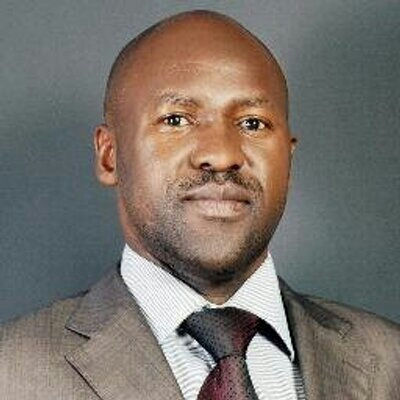
Today, the Board of Directors of Juhudi Kilimo announced the appointment of Mr. Bernard Kivava as Juhudi Kilimo’s new Chief Executive Officer.

“Bernard’s  appointment  comes  at  a  time  when  Juhudi  Kilimo  celebrates  its  6th   year  anniversary  from inception and has set in motion market expansion plans to better serve Kenyan rural smallholder farmers”, said Mr. Cedric De Beer, the Chairman of Juhudi’s Board of Directors. “With an impressive track record and a proven  ability  to  drive  innovation  and  deliver  results,  the  Board  is  confident  that  Bernard  is  the  ideal candidate for leading Juhudi Kilimo to greater heights.”

Juhudi Kilimo
Juhudi Kilimo

Mr. Kivava joins Juhudi Kilimo as the former Chief Executive Officer of Letshego Rwanda Limited, a Micro Finance Institution where he has been since 2012. He has been instrumental in leading Letshego Rwanda Limited through a shareholding change process and played a key role in transforming the company from Credit only to a Deposit Taking Microfinance Institution with increased profitability year on year. Prior to Letshego, Mr. Kivava held numerous leadership positions at Faulu Kenya, notably as the Head of Business Development. During his tenure at Letshego and Faulu, Mr. Kivava played a pivotal role in supporting both companies achieve stunning business growth in a rapidly changing, competitive and demanding business environment. He brings to Juhudi Kilimo more than 15 years of experience in microfinance and project management in East Africa.

“I am delighted to take my new role at Juhudi Kilimo; an organization which has contributed in empowering and transforming the lives of more than 40,000 smallholder farmers in Kenya”, Mr. Kivava said. “I look forward to working with the strong team of passionate and dedicated employees to further the Company’s market leadership and growth by bringing new levels of innovation, customer service and value to the market place”.

How Kenneth Matiba fell from a billionaire to poverty

0

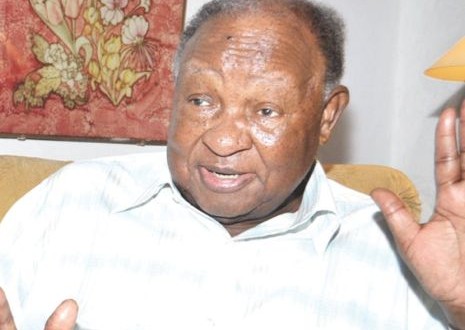
The following feature on veteran politician Kenneth Matiba was first published in the Standard Newspaper.

He was among the handful of youngsters who were well educated at independence. Like Obama senior, the world lay at his feet. Ambitious, abrasive and a no nonsense and hands on manager, Kenneth Stanley Njindo Matiba became a permanent secretary while still in his 20s before quitting to join Kenya Breweries. An astute businessman and investor, he built a vast empire in hotel industry, notably on sand-swept Diani Beach.

He also established top-tier schools that attracted the children of the mighty. A restless soul, politics was inevitable and in no time, he became a central figure in Gikuyu and national politics and a powerful KANU era cabinet minister. But his road to down fall began when he resigned in a huff following rigged party elections and became an opposition figure.

The young don’t know and don’t care who is. The old have long moved on. So, Kenneth Stanley Njindo Matiba, pioneer civil servant, sports enthusiast, tycoon, politician, dreamer of dreams, political detainee and now bankrupt politician, lies in hospital, broken and ailing in obscurity. Yet this is the hands-on manager who once mulled over starting his own airline in 1967 to airlift his farm produce abroad. But although the government sanctioned his idea, the Civil Aviation Board denied him licence.

Matiba, then Attorney-General Charles Njonjo and the late John Michuki, had already bought a British-made aircraft for 65,000 sterling pounds (Sh8.9 million at current rates), but their pet project collapsed after they were accused of attempting to topple East African Airways. The aircraft was flown back to England, ending the big dream.

Matiba dreamt so big and invested so heavily in hotels and the education sector that in 1978, while aged 48, he was one of Kenya’s youngest indigenous millionaires. His huge investment included the prestigious Hillcrest Group of Schools, several five-star hotels along the coast and in central Kenya and, of course, The People newspaper.

But back in 1964, when he served as permanent secretary, earning Sh3,200 a month, a local bank denied him a loan. However, that never slowed down his vigour to establish a multi-billion empire. But those days are long gone for the man who helped shape Kenya’s multi-party political landscape. The man famed for the ‘Kuuga na gwika’ (kusema na kutenda) slogan, almost became the president of Kenya.

However, it was feared that as a leader, he probably would not have gelled well with Asians, whom he once reportedly threatened to kick out of Kenya if he took over the helms of power. Lawyer and politician Paul Muite believes Matiba in his heyday was a strong-willed politician, but one who mingled easily with ordinary citizenry, a good-hearted man and a true leader. “Matiba would have certainly implemented economic and social programmes to improve the lot of ordinary people. He would have closed the gap between the haves and the have-nots,” observes Muite.

A man of numerous firsts, Matiba was the first indigenous Kenyan to venture into the tourist hotel business, as well as being one of the only three African permanent secretaries serving in pre-independent Kenya. He was also the first Kenyan to serve as executive chairman of East African Breweries Limited (EABL), then known as Kenya Breweries.

Additionally, he was the first Kikuyu elected chairman of the Kenya Football Association (KFA) in 1974. He also became the first minister under president Daniel arap Moi’s regime to quit from cabinet and, subsequently, among the first leaders to spearhead the fight for multi-party democracy in the country. Matiba was groomed into politics by Carey Francis, the legendary Alliance High School headmaster, who pushed for his promotion to permanent secretary in the Jomo Kenyatta government.

He proceeded to build an outstanding business dynasty that, sadly, now lies in ruins. A huge part of his investment has been disposed of since early 2000, when Barclays Bank demanded the settlement of debts exceeding Sh1.8 billion. The family lost control of Carbacid Limited and then proceeded to sell shares in the company worth over Sh400 million. The family also sold the Hillcrest schools after they were put under receivership in 2005 due to Sh620 million owned to Barclays Bank.

And in 2011, the family sold The People to a company linked to the Kenyatta family. His fall from grace began when he resigned, in December 1988, after he disagreed with the government over Kanu’s grassroot elections in his Murang’a turf. With Charles Rubia who had equally resigned from government, he joined multi-party activists such as Jaramogi Oginga Odinga and the ‘Young Turks’. But after July 7, 1990 demonstrations dubbed Saba Saba, he was detained without trial until early 1991, when he was released after suffering a stroke. Poor health has dogged him to date.

At the end the single-party rule, Matiba joined Ford, a political party that included a constellation of opposition leaders led by Jaramogi Oginga Odinga. Former Vice President and Health minister, Mwai Kibaki resigned from government to form Democratic Party ahead of the1992 general elections.

Due to squabbles over who between Matiba and Odinga would be Ford’s flag-bearer, the party split into Ford-Asili led by Matiba and Ford-Kenya captained by Odinga. It is a measure of the man that Moi, the incumbent, garnered 1.9 million votes with Matiba coming second with 1.4 million votes, and Kibaki’s bagging 1.05 million votes. Odinga was fourth with 0.94 million votes. Only later did Kenyans learn that Matiba had given the four men a run a for their money, yet his health was in such perilous state that he couldn’t even sign his name.

And the best time to get married is….

0

When would you wish to get hitched? In your 20s? 30s? After securing that elusive Master’s? Well, new research indicates that women who get married before having children have longer lasting marriages than those who marry after having their first child.

The study conducted for the Marriage Foundation think-tank by Professor Stephen McKay of Lincoln University and authored by Harry Benson, has additionally found out that women who earn their degree before getting married or having a child make for longer lasting marriages than those who do not.

The study is part of the ‘Understanding Society’ research project that tracked changes in 40, 000 British households.

The study analysed a sample of 1, 783 mothers who have at least one child aged between 14 and 15.

COMMITMENT BEFORE KIDS

The mothers were divided into three groups. From the results, 62 per cent were mothers who married before having children, 16 per cent were mothers who got married after having children, and, 14 per cent were mothers who lived with their children’s father but weren’t married to him. 8 per cent of the women in the sample were mothers who never formed any relationship with the father of their child.

76 per cent of women who married before having children were found to stay married to their spouses, while 69 per cent of women who married after having kids split up from their husbands. On the opposite extreme, only 44 per cent of women who married before having kids and 31 per cent of women who never married were still together with their partner 15 years later.

“While it is right that society has done away with the social shame of having children before marriage, the study shows that we shouldn’t lose confidence in crystallising commitment before starting a family to boost its chances of lasting longer,” said Benson.

Further, eight out of 10 women with a degree who marry before having their first born will likely be still married to the same partner by the time their child will turn 15. These women were found to be at least four years older than those who married with kids.

56,000 customers opening KCB MPesa account daily

0

The Standard: Kenya Commercial Bank has recorded a phenomenal growth in new partnership with Safaricom aimed at offering cheap loans through M-Pesa.

In an interview, KCB Chief Executive Officer Joshua Oigara said 56,000 people are opening the account per day pushing the customers to over 500,000.

“We see the partnership with Safaricom as a game-changer in the financial services sector.  For us, such partnerships are meant to make financial services more accessible to the general population,” he said.

“This is a crucial part of our effort to make serious progress in addressing the deep poverty experienced by millions of citizens across the East African region and beyond, many of whom remain outside the formal financial system,” he added.

The KCB-Mpesa account enables customers to get loans using their mobile phones, the loans are offered with a flexible repayment period ranging from one month to six months. In addition the facility fee for the loan will start from as low as 2 per cent per month. Customers will also have the option of two fixed savings options, a fixed deposit account and a target savings account.

As a requirement to qualify for loan, Oigara says one must have been a Safaricom subscriber and M-PESA customer for six months, and not listed in Credit Reference Bureaus (CRB). He says the KCB M-PESA account customers will only be required to dial *555# to see how much they can borrow and follow the prompts to secure the loan which will be sent to their mobile phones instantly. “The loan amount is determined by the amount of savings that the customer has made M-PESA balance, and their savings on both Safaricom and KCB platforms.”

The new product see both institutions deepen their strategic partnership in an area where their collaboration is already paying off.  In the last one year, said Mr. Oigara, KCB has seen its customer transactions with M-PESA triple to Sh125 billion, while the volume of transactions has grown from 10,000 a day to 100,000.  Now, with a dedicated product with the most comprehensive offering, the partnership will widen the possibilities of what customers can do using their phones.

“Mobile technology has greatly transformed our lifestyles in the 21st century.   It is increasingly making it more convenient for customers to pay utility bills, withdraw or deposit money in their bank accounts as well as borrow by the click of a button,” said Safaricom Chief Executive Officer, Bob Collymore during the launch.

Mr. Collymore added that with nearly 20 million customers, M-PESA has been recognised as the single-most largest contributor towards bridging the financial inclusion gap in the country.

The latest innovation, KCB M-PESA Account, will without doubt play a crucial role in deepening financial inclusion in the country and the region.

Naushad Merali to invest Sh. 2.8 billion in milk plant

0

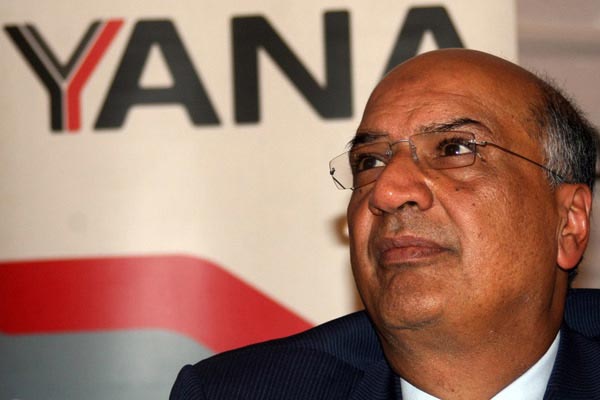
Daily Nation: Billionaire investor Naushad Merali has announced construction of a Sh2.8 billion plant in Nakuru. This will bring the total amount the businessman has pumped into his dairy business to Sh5.2 billion in the last four years.

Sameer Agriculture and Livestock, a dairy products company associated with Mr Merali is seeking to expand its milk processing capacity.

The processor, whose dairy and juice products are sold under Daima brand, said a similar Sh1.9 billion factory has been completed in Nairobi where it will make Creambell brand of ice-cream.

The announcement comes at a time when the dairy industry seems to be attracting investments from billionaire investors, underlining its potential due to an ever expanding middle class that is driving the consumption of processed milk.

The firm’s chairman Naushad Merali said that Nakuru was selected for its unique central location as the company seeks to increase processing capacity from the current 180,000 litres of milk per day besides expanding its product portfolio to include mineral water.

“The last five years have seen the company accomplish a number of projects in a bid to fight for a slice of local dairy products market and expand to East African Community,” said Mr Merali on Wednesday.

Three years ago, the company completed a Sh500 million upgrade of its milk processing plant in Nairobi.

Kenya’s dairy industry has been attracting billionaire investors, who are banking on a rapidly expanding market that is expected to more than double in the next 10 years.

Mr Deepak Kamani, the chairman of conglomerate Zuri Group and Africa’s richest man Aliko Dangote have both expressed desire to invest in the industry with Mr Kamani having identified Nakuru County to set up a powder milk factory.

Stock-Picking Strategies: Growth Investing

In the late 1990s, when technology companies were flourishing, growth investing techniques yielded unprecedented returns for investors. But before any investor jumps onto the growth investing bandwagon, s/he should realize that this strategy comes with substantial risks and is not for everyone.

Value versus Growth
The best way to define growth investing is to contrast it to value investing. Value investors are strictly concerned with the here and now; they look for stocks that, at this moment, are trading for less than their apparent worth. Growth investors, on the other hand, focus on the future potential of a company, with much less emphasis on its present price. Unlike value investors, growth investors buy companies that are trading higher than their current intrinsic worth – but this is done with the belief that the companies’ intrinsic worth will grow and therefore exceed their current valuation.

As the name suggests, growth stocks are companies that grow substantially faster than others. Growth investors are therefore primarily concerned with young companies. The theory is that growth in earnings and/or revenues will directly translate into an increase in the stock price. Typically a growth investor looks for investments in rapidly expanding industries especially those related to new technology. Profits are realized through capital gains and not dividends as nearly all growth companies reinvest their earnings and do not pay a dividend.

No Automatic Formula
Growth investors are concerned with a company’s future growth potential, but there is no absolute formula for evaluating this potential. Every method of picking growth stocks (or any other type of stock) requires some individual interpretation and judgment. Growth investors use certain methods – or sets of guidelines or criteria – as a framework for their analysis, but these methods must be applied with a company’s particular situation in mind. More specifically, the investor must consider the company in relation to its past performance and its industry’s performance. The application of any one guideline or criterion may therefore change from company to company and from industry to industry.

The NAIC
The US National Association of Investors Corporation (NAIC) is one of the best known organizations using and teaching the growth investing strategy. It is, as it says on its website, “one big investment club” whose goal is to teach investors how to invest wisely. The NAIC has developed some basic “universal” guidelines for finding possible growth companies – here’s a look at some of the questions the NAIC suggests you should ask when considering stocks.

1. Strong Historical Earnings Growth?
According to the NAIC, the first question a growth investor should ask is whether the company, based on annual revenue, has been growing in the past.

  1. Strong Forward Earnings Growth?
    The second criterion set out by the NAIC is a projected five-year growth rate of at least 10-12%, although 15% or more is ideal. These projections are made by analysts, the company or other credible sources. The big problem with forward estimates is that they are estimates. When a growth investor sees an ideal growth projection, he or she, before trusting this projection, must evaluate its credibility. This requires knowledge of the typical growth rates for different sizes of companies. For example, an established large cap will not be able to grow as quickly as a younger small-cap tech company. Also, when evaluating analyst consensus estimates, an investor should learn about the company’s industry – specifically, what its prospects are and what stage of growth it is at.
  2. Is Management Controlling Costs and Revenues?
    The third guideline set out by the NAIC focuses specifically on pre-tax profit margins. There are many examples of companies with astounding growth in sales but less than outstanding gains in earnings. High annual revenue growth is good, but if EPS has not increased proportionately, it’s likely due to a decrease in profit margin.

    By comparing a company’s present profit margins to its past margins and its competition’s profit margins, a growth investor is able to gauge fairly accurately whether or not management is controlling costs and revenues and maintaining margins. A good rule of thumb is that if company exceeds its previous five-year average of pre-tax profit margins as well as those of its industry, the company may be a good growth candidate.

    4. Can Management Operate the Business Efficiently?
    Efficiency can be quantified by using return on equity (ROE). Efficient use of assets should be reflected in a stable or increasing ROE. Again, analysis of this metric should be relative: a company’s present ROE is best compared to the five-year average ROE of the company and the industry.

    5. Can the Stock Price Double in Five Years?
    If a stock cannot realistically double in five years, it’s probably not a growth stock. That’s the general consensus. This may seem like an overly high, unrealistic standard, but remember that with a growth rate of 10%, a stock’s price would double in seven years. So the rate growth investors are seeking is 15% per annum, which yields a doubling in price in five years.