Home Blog Page 2269

How to Make Your Startup Team Its Most Valuable Asset

0

Startups are nothing without their people. With this in mind, how should an early-stage startup leader approach the task of recruiting? Many prospective hires are already comfortable in established jobs, with supportive networks, benefits and routines that cause them to think hard before leaving their lifestyles behind.

Startups, on the other hand, can offer something we call the “culture of achievement” — a unique environment where the daily stressors of a fast-paced business are offset by meaningful accomplishments resulting from employees’ drive to conquer new challenges individually and as a team. This culture resonates heavily with some, is quickly discarded by others and is generally one of the most misunderstood qualities of startup employee management.

Below are some of the guidelines to help build your startup team.

Team motivation: missionary vs. mercenary

Perhaps the most grievous mistake an entrepreneur can make is luring candidates with superficial perks like titles, money, stock, free food or beer. While these things can contribute to your overall atmosphere, they simply have nothing to do with driving meaningful outcomes. Startups are stressful. Even the most talented people will find themselves in positions of great uncertainty. Unless your team is intrinsically motivated to succeed, there is nothing that a “kegerator” or a Ping-Pong table will do to alter your results. If you’re banking on offering employees these sorts of perks, consider that they will likely be forgotten in times of immense — even soul-crushing — stress.

Experience is the best risk management

If you’re carving out a culture for your startup and expecting a high-performance work environment, as you review prospective candidates, remember there’s no substitute for managers who have experienced the startup cycle in the past. For the same reason experienced engineers and marketers are keenly adept at working through iterations and unpredictable development cycles, startup managers are veterans of the emotional rollercoaster that defines the early life of a company.

source:entrepreneur

Judith Okango: how I earn Sh. 220,000 per month from poultry farming

0

It is often said that three out of every four jobs in Kenya, and Africa, are derived from agriculture. As a result, farming is a vital driver of Kenya’s journey to prosperity, with its potential to change the lives of tens of millions of citizens. Its potential has seen several ordinary Kenyans invest in the sector in search of opportunities to generate wealth. For Judith Okango, the gamble has paid off handsomely.

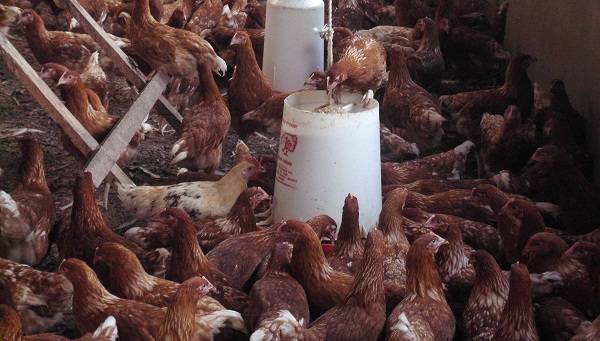
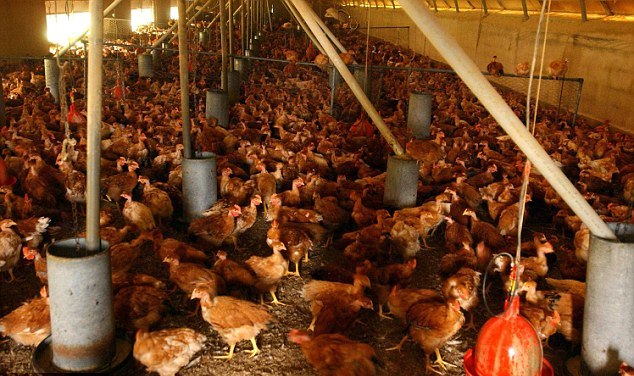
When Mrs Okango decided to venture into rearing chickens, she had little idea the business would pick up so quickly and become her main source of income. She started the business two years ago, on Bidii Farm in Kitale, as a way to earn a little cash on the side with an initial capital of Sh200,000, which went towards buying chicks, constructing chicken coops and purchasing vaccinations.

Okango focused on the business exclusively when she realised poultry farming requires constant supervision to thrive, as the slightest drop in health standards could lead to the death of an entire flock. “One has to be very careful with how they take care of poultry. For instance, I allow only one sweeper and cleaner into the hen house to minimise contamination and maintain the highest possible standards. I also regularly vaccinate the chicken,” she said.

She spends an average Sh10,000 a week to maintain her business, or Sh40,000 a month. But her income more than makes up for this cost. For instance, from her 350 daily eggs collection, Okango is able to come up with at least 2,450 eggs per week which give her at least Sh. 98,000 per month. “I sell my eggs at Sh. 10 each,” she says. She earns another Sh100,000 from the sale of chickens, which she buys and sells or rears and sells from her farm, and an additional Sh20,000 from the sale of manure. While the rearing of chicken is no doubt a lucrative business, she has had her fair share of challenges.

First, the cost of chicken feed is getting more expensive despite Government attempts to lower prices. Further, the quality of chicken feed from some manufacturers has worsened as these traders compromise on quality to achieve maximum sales in a competitive market.

Second, the road network between her farm and some of her customers is rough, making the process of delivering eggs a delicate, and potentially loss-incurring, trip. Third, there is still no permanent solution for the diseases that attack chicken, such as fowl typhoid and Newcastle, which can wipe out a flock within no time. However, these can be effectively managed through regular vaccinations to prevent an outbreak.

Lastly, the cold weather that has persisted in some parts of the region has affected the quality of eggs. However, agricultural extension officers have increased efforts to help farmers maintain the quality and number of eggs produced by their birds, as well as ensure flock health.

Okango relies mainly on word of mouth from the friends and family who are her customers to market her business. This has helped her grow a customer base that includes supermarkets, schools, hospitals and kiosks around Kitale. She hopes to set up a hatchery to meet the demand for chicks and increase the size of her flock.

Her advice to aspiring farmers: “Never give up. It takes perseverance and hard work to be successful in the poultry farming business. I have no regrets about taking it up, and I hope more farmers get into the business. “Also, save as much as possible for expansion, and don’t be afraid of taking small loans to grow your business.”

Eveready woos real estate investors

0

Business Daily: Eveready has entered into talks with three institutional investors to fund a multi-billion-shilling real estate project in Nakuru as part of its growth and diversification strategy. The battery distributor says it has received bids from the potential investors to fund its flagship project through either equity, debt or a mix of both.

Eveready, which last year shut down its battery factory in Nakuru, will this month complete the feasibility studies to determine whether to build a hotel, shopping complex or a housing project on the 18.5 acre piece of land where the plant sits.

“The board is currently in discussions with three institutional investors and it will narrow down on the nature of their partnership as we finalize on which project to undertake,” Jackson Mutua, Eveready’s managing director said.

“At the annual general meeting scheduled for mid-May, the board shall be seeking shareholder approval on the final project, the partnership specifics and also what to do with the idle factory equipment.”

Product diversification and a maiden venture into real estate is part of Eveready’s bid to reverse its fortunes after recording a Sh177.5 million net loss in the year ended September, reversing the previous year’s net profit of Sh45 million.

The Nakuru-based firm last October announced that low sales due to illegal imports of cheap batteries and high energy costs forced it to shut its production factory in favour of importing batteries from the Energizer Egypt plant.

The battery firm consequently laid off 100 employees at a cost of Sh110 million, further depressing its performance.

The firm’s annual production by the time the factory shut down was between 40 and 50 million batteries, down from the 180 million batteries it used to manufacture 10 years ago.

The company then announced that it would be delving into real estate in an effort to direct a business turnaround over and above expanding its product portfolio beyond batteries.

Eveready’s 18.5 acres of land is worth approximately Sh370 million while the company has previously said another two acres of prime land in Milimani, Nairobi – which has an unoccupied maisonette— could be priced a bit higher according to Mr Mutua.

“The real estate is part of our strategic plan to diversify our income. The board is currently focusing on our maiden project which will be on the factory land but thereafter we shall discuss the Milimani parcel,” said Mr. Mutua.

Cytonn is worth Sh. 1.1 billion, say Britam’s former managers

0

Business Daily: Cytonn Investments, a Kenyan-owned firm, has concluded a private placement offer that valued the company at Sh1.1 billion.

The company sold “more than” 10 per cent of its stake to high net-worth investors.

The firm, founded by former British American investments (Britam) top executives, opened the private placement offer in February that concluded on March 31.

The proceeds of the offer are set to finance new investments.

“Proceeds of the offering will go towards strategic investments in our development affiliate, a distribution platform, and technology,” said the company in a statement following the conclusion of the offer.

This is one in a series of private placements either announced or have taken place in Kenya in the past few years.

Medium-sized lender Chase Bank has announced plans to raise Sh2.5 billion to fund its fast-paced growth. The bank held another private placement in 2011 during which it raised Sh810 million.

Commercial Bank of Africa raised Sh1.5 billion through a similar placement in 2013 to finance its entry into Uganda while Family Bank has recently mobilised cash in a similar manner.

Oil and gas logistics firm Atlas Development and water tanks vendor Flame Tree Holdings mobilised money through private placements last year before listing in the Growth Enterprises Market segment of the Nairobi Securities Exchange.

The attraction of private placement is that a company does not have to make its financial details or business public. Only the targeted investors have access to the company’s details.

The main drawback of a private placement is that it may not always find it easy raising the money given that the general public is not invited to subscribe to the offers.

Cytonn founders were four former British American Asset Management (BAAM) executives including Edwin Dande (former chief executive), Shiv Arora (investment analyst), Patricia Wanjama (head of legal) and Elizabeth Nkukuu (portfolio manager). BAAM is a subsidiary of Britam.

A fall-out happened after a real-estate developer called Acorn signed an agreement for some projects with Britam. No sooner had the executives moved to Cytonn than the company got appointed as the lead transaction advisers for projects estimated to be worth Sh40 billion, including a large proportion from Acorn.

Making profit from bee farming

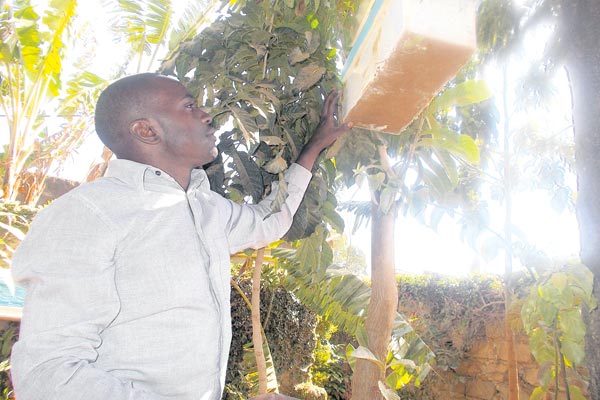
Wooden boxes painted blue and white hanging on trees. Keith Wichenje, picks one small box and opens it. “These are stingless bees. They are very friendly because they don’t sting like the honey bees. In fact, I don’t wear any protective gear while harvesting honey or handling them,” he says.

To harvest, Wichenje takes the hives to a closed room and removes the nest. Then he pricks the honey pots with a syringe and presses it inside the pots to suck the produce. The dark room prevents aphids and flies from finding their way into the honey nests. Although there are up to 18 species in Kenya, the farmer keeps about five because he says they are economically viable. They come in clusters of a queen, drones and the workers.

Wichenje started to domesticate the insects as hobby in 2010 when he inherited a few hives from his aging grandfather who kept the stingless bees for medicinal and subsistence use in Kaimosi and Kakamega forests.

Initially, he began by putting the bees that reside in underground cavities in small traditional pots. He later used the smaller and more modern Australian beehives.

Wichenje’s hives have two compartments. “I don’t remove all the honey combs. I leave some, together with the young bees to allow continuity of the population,” he explains.

And the bees have other benefits too, beyond the honey which he sells. Farmers with greenhouses have been knocking at his door seeking the bees to pollinate their crops.

SMALL CREATURES

“Farmers who grow tomatoes come to lease the occupied hives at a cost of Sh500 each for a month. They pollinate tomatoes, watermelons and strawberries in enclosed structures.”

He, however, recommends that the crops are sprayed at night or when the boxes are sealed to protect the bees from coming into contact with the chemicals. “Most people don’t know that you can domesticate these friendly insects and make sweet money from them,” he says, adding that there are other salient features which make the small creatures distinct from the other bees.

“As you can hear, they are silent. They don’t buzz and are relatively small (2 to 8mm). They also never go beyond a radius of 5km when looking for nectar,” says the 31-year-old who holds a degree in Business Management from Moi University.

He adds that their honey has a unique tangy taste compared to that of the other bees, though this attribute depends on the type of tree on whose nectar the bees feed. Dr Kiatoko Nkoba of the Nairobi-based International Centre of Insect Physiology and Ecology (ICIPE) says stingless bees’ small bodies enable them to suck nectar from small plants. “Some of these plants are herbs with tiny flowers. This is what gives these bees an edge when it comes to the medicinal content of their honey.”

Dr Nkoba adds the stingless bees are less susceptible to diseases, though different species tolerate different climatic conditions.

TREE LOGS

“Some of the species produce up to 20 litres of honey in a year. Even though the yields are lower than those of the common bees, this honey is pricey because of its medicinal value. A litre goes for up to Sh1,000,” says Wichenje. The farmer also makes and sells hives containing bees at Sh7,000 each to aspiring bee keepers.

The bees are too sensitive to smoke or chemically-polluted environment and can fly away, he warns. “Other challenges are flies which lay eggs in the hives. Their larva devours the combs and one may end up losing the whole harvest.”

During dry spells when most flowers have withered, he mixes water and sugar and pours them in crucibles next to the hives. The farmer sources the bees from underground cavities such as dead ant-hills or dead tree logs in forests. From the honey business, he has been able to buy a piece of land and is now paying for his post-graduate diploma in project management.


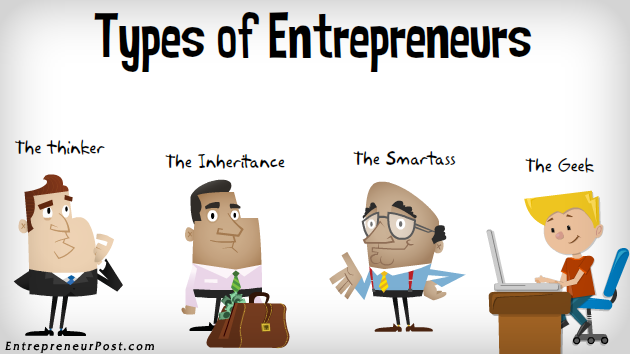
What Type of Entrepreneur Are You? (Infographic)

0

What type of entrepreneur are you? Are you more Branson or Zuckerberg? An opportunist or an innovator? Or, here comes a tough one, folks — Are you all talk and no action, a wantrepreneur? We hope not.

To find out, wind your way through the following flowchart-style quiz from HostingAffiliate.com. Obviously it’s not a definitive psychological clinical assessment. It’s a fun, potentially motivating means to getting a general idea of the type of entrepreneur you are.

Check it out below.

what-type

source:entrepreneur

Martin Ngugi: Having no arms has not stopped me from being entrepreneurial

0

The following profile was first published in the Parents Magazine.

“Martin Ngugi, born with deformity on his hands, is living his life, creatively pursuing his dream and passion – art – and not one to let any obstacle come his way. Marti’s story will inspire you and fill you with admiration for this young Kenyan, unhindered by nothing.

and A little boy was born in rural Nakuru, 28 years ago. His birth did not however bring the expected joy and pride, but great sorrow and shame to his unmarried mother, who was already raising another son. She was so disappointed she did not even invite friends to come and see her bundle of joy. Instead she got busy knitting. Knitting a refuge for her shame – a poncho. So the young boy spent most of his early years with his upper torso covered in poncho, upon poncho, to conceal the embarrassment he brought his mother.

Things have since changed, and Martin Ngugi and his mother, whom he adores, can laugh at her ignorance then. “Imagine a little boy moving around draped in ponchos,” he laughs lightly. I tell him that he probably looked like a little girl because of his striking looks. I have only met Martin and all the fears I earlier had about discussing his deformity with him are gone. He is real, honest, funny, charming, confident and happy. All these and more make him so inspiring!

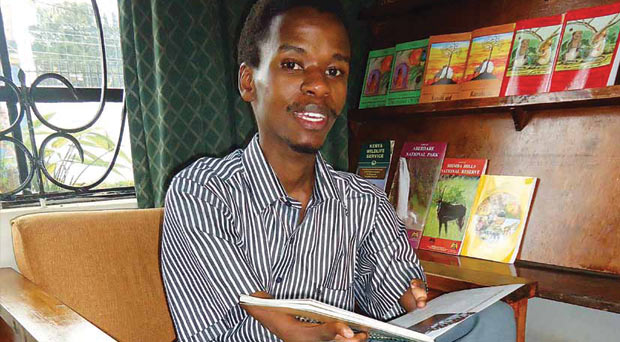
Martin was born with deformed hands. He lacks forearms, and in place of the normal five fingers, he has two on each hand, a state that would probably make a weaker willed person in his shoes self-conscious, bitter and dependent. Today I meet him in a neat, short-sleeved white shirt with navy-blue stripes, totally unapologetic about the state of his exposed arms. He gives me a firm handshake. He is at work at Jacaranda Designs, where, as an artist, he does graphic design and illustrations.

With a wealth of experience from working with various publishers and individuals, Martin is confident that he can do just about anything in his field. “I’m more than an artist. I do crafts, drawing, designing, and all manner of things creative, including printing of T-shirts,” he says. Art means so much to him that he is already training upcoming artists privately to look beyond painting and drawing. “I inspire the youth I train to look for that extra oomph in art. I hope to go into full time training in future,” he shares confidently.

With his artistic mind roaming various industries, the soft-spoken youth believes he has what it takes to redefine advertising concepts in Kenya. “I don’t limit myself to one field – advertising concepts is also my area,” he discloses. In fact, he is currently studying animation with a view to pushing a new edge in advertising. “I want to give a new twist to image presentation,” he says, adding that the secret is to always be driven by the desire to create unique pieces that stand out from the rest.

Martin loves merchandising art – which goes well with advertising concepts – too. In this field, all that he creates has to sell. “If, for instance, I’m working on a newspaper cartoon, it has to communicate to a majority and be a concept that would sell anywhere. I believe I can artistically package and sell tribalism and sheng language, among other ‘undesirable’ things in Kenya,” he shares.

A lover of documentaries, Martin, who is very eloquent, has an eye that sees beyond the ordinary. For instance, from watching a piece on US President, Barack Obama, he could tell that the seats of the president’s Cadillac are hand-made. It is this eye that he brings into his work, always adding a detail that takes everyone by surprise. “Some of these qualities you pick up from your superiors,” he shares, adding that his director of art at Jacaranda Designs has helped in sharpening his skills.

He is a dreamer with so many big ideas that leave me awed. “The problem with dreaming is that making your dreams tangible or earning an income from them needs proper planning. You need to be good at thinking and executing to be a successful dreamer,” he states. Is Martin an executor? I ask, to which he answers, “I always want to see every good story I read in drawing. I am already seeing to it with some…”

Known as Artist Mchoraji on facebook and other social circles, Martin has touched quite a number of people with his artwork. His portfolio is large and impressive too. He did a portrait of former president Moi, which he handed over to the ex-statesman on the last Moi Day celebrations. Martin also has a number of portraits of Wangari Maathai and several famous people. Of the portraits, one has an interesting story to it; that of TV personality, Jeff Koinange. “I did a portrait of him and liked it so much, I used it as my facebook profile. Someone told Jeff about it and he asked to have a larger version of it. Now he also has it on his facebook profile,” he laughs. Martin has since appeared on Jeff’s show.

Clearly, art is an inborn thing in this youth, who proudly states that he had three mothers: his biological mother, an aunt who has since passed on, and Gillan Scott Kelley, the administrator of the primary school he attended. Of these three, his late aunt was the artsy one. “Everything she created was so aesthetic and appealing,” he offers the praise. “I realise more of her creativity as I grow older,” he says. Martin’s elder cousin is also an accomplished artist – and the person who inspired him into the profession. “Were art paying, my family would have been very rich,” he says wistfully.

The youth has travelled long and rough to be where he is today. Not only did he have to battle the obvious – stigma caused by his uniqueness, but poverty was also in the mix. When he attained school-going age, Martin joined Tumaini Primary School in Molo, an integrated school with children who are normal and those coping with different disabilities. This was by chance, his mother having been referred by someone who was better enlightened. The administrator of the school, Gillan, subsidised Martin’s fees, and later got him sponsors who saw him through primary, and secondary education at Joy Town School in Thika.

He knew from an early age that he would end up an artist. “Never in any of my classes was there a better artist than me,” he says humbly. He liked to draw and paint. By the time he joined high school, and with facilities such as an art room and good teachers, Martin became very serious with art. His aim was to join Kenyatta University to study Art and Special Education, because of the stigma he had experienced throughout his life. High university fees however drove him to Buru Buru Institute of Fine Art, from where he graduated as a graphic designer.

Stigma is rampant for people with disability. “A lot of people don’t know how to handle us. Some stare, others try to be good by giving us hand-outs, always assuming that we are beggars…it is not good at all.” Because he is older, Martin knows how to deal with it better. “I live a simple and low life not to attract attention,” he says, adding that it was not always his style. “While younger, and because children are very innocent, they teased me a lot and I in return developed a hot temper. I would kick and hit them on the head,” he recalls.

A lot of times Martin is not conscious of his physical deformity until people’s reactions catch his attention. “I could be having a wonderful day then someone does something with prejudice and my mood shifts totally. Some times I get emotional and even want to be rude, but then I hold myself back, knowing that a majority of people don’t know how to relate with people with disability,” Martin intimates. The cheerful youth has watched a lot of documentaries and news clips of inspiring people with disability, and knows that there is always something new to learn from others.

Having attended an integrated primary school, and a secondary school exclusively for people with disability, Martin believes integration is best. “It helps us develop strong life skills, like in sports.” The go-getter, who lives in a commune, can perform all his tasks unassisted. “I wash my clothes and cook, but most people close to me, especially my mother, believe they should spoil me,” he discloses un-accusingly. “My mother hates to see me performing any tasks. She is trying so hard to make up for her earlier goofs,” he teases further.

A confessed lover of life, music and reading inspirational books are Martin’s hobbies. After reading Who moved my cheese? Martin, who is still single, believes people should never anticipate to receive things for free. He professes Christianity, and is a social drinker, but “art is my thing. It is like a drug; it takes you, impacts in your brain and makes you unique,” concludes the entrepreneurial youth.


Farmers makes Sh. 120,000 from farming sweet potatoes

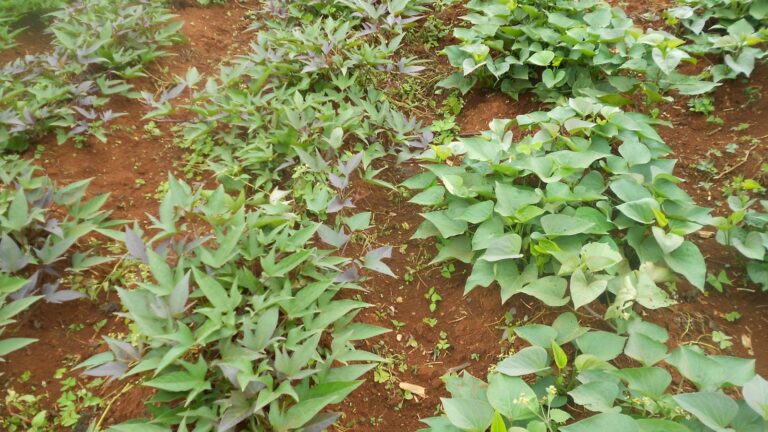
You will likely find Fredrick Nyaga touring his eighth-acre sweet potato farm, changing water sprinklers from place to another or mulching when you visit him. “A sweet potato farm needs covering to prevent soil erosion,” he says, showing us the effects of growing the crop without covering the soil. It is this attention to detail that has turned his small piece into a profitable venture.

Nyaga started growing sweet potatoes in 2012 after his tomatoes let him down. “I love sweet potato farming because it is less labour-intensive compared to a tomato project. With tomatoes, you have to keep spraying because it is prone to attacks from diseases and pests. For sweet potatoes, you need to provide soft soil and you are good to go,” he says. Last season, Nyaga who grows KEMP-9 sweet potato variety, which he harvests three times a year, sold 600 kilos with each kilo fetching Sh200.

This variety, according to him is on high demand. Nyaga, a father of three, owns a half an acre of land in Kawanjara Runyenjes, Embu County. Though he is an electrician by profession, he loves farming. “I get satisfaction from farming. It is the backbone of my family as I get almost everything from the farm.” When he was growing tomatoes five years ago, he would fetch very little profits. “Tomatoes are a common crop here so the demand is low and thus, it fetches poor prices.

On the other hand, sweet potatoes are on demand all year round.” Before he ventured into sweet potato farming, he did his research to establish the market availability. “I understood that many supermarket shelves were stocked with vegetables. Very few had sweet potatoes. After that discovery, I invited an agricultural extension officer who advised me on the basics of sweet potato farming. Afterwards, I immediately started growing them.”

To increase his knowledge on sweet potato farming, the 39-year-old attends ASK shows and exhibitions, which offer him valuable lessons. Last season, he raked in Sh120,000, an amount he has never received when he was a tomato farmer. At the moment, his main clients are supermarkets and other business people in Embu County. Nyaga grows his sweet potatoes in rows spaced at ten to 12 inches apart. He says, “Space is very important and triggers optimum yields.”

To ensure his crop is of high quality and popular in the market, he does sufficient watering and mulching. This strategy ensures he gets huge sweet potatoes that enables him get more than 500 kilos per harvest. Obed Njamura, an agricultural extension officer based in Kyeni Division, Embu County concurs with Nyaga’s sentiments. The officer says the crop thrives where there is a lot of water. He adds that most sweet potatoes diseases affect the roots. “Fungal leaf spots are common, but a farmer can ignore them as they clear on their own. Fusarium wilt is another common sweet potato disease. To deal with them, a farmer needs to use virus-free transplants and also be keen to isolate planting. Soft soils are also good for sweet potatoes,” he says.

William Lang’at: I failed in politics, but I’m succeeding in poultry farming

William Lang’at did not let his failure to clinch Silibwet Township Ward seat hold his ambitions back. In fact, the loss turned out to be a blessing in disguise as it gave him an opportunity to venture into something he had been thinking of for a long time. “In the past I have tried dairy farming but I gave up due to low returns and the demanding nature of the venture unlike poultry,” Langat says at his home in Kelonget village Bomet Central.

For many, the mention of establishing a poultry farm evokes thoughts of a concrete wall house with corrugated iron sheets, a notion Langat disputes saying one can succeed in poultry with a simple structure. “I spent less than Sh50,000 in setting up and stocking my poultry house with chicken and two years down the line, the profit which have come out of it is unimaginable,” Langat says.

He adds: “As you can see, my poultry house is made of iron sheet and a few timber which do not cost much but it brings in a lot of money a day.”

Langat remembers with a nervous laugh how he started the poultry venture: “My last born sister who works in Nairobi asked me to set up a poultry house for her which I did and somewhere on the way she changed her mind and I took it upon myself to stock it and I have never looked back.” Langat who is the main supplier of eggs to major hotels and joints in Bomet town says he started off with 400 chicks two years ago.

He says through the chicks sourced from KenChic in Nairobi through a local supplier he has been able to make at least Sh30,000 in profit every month through the sale of eggs. He sells eggs to local hotels at Sh10 each. “After deducting the cost of feeds, I am always left with Sh30,000 as profit every month and it has given me hope to keep pushing on with the venture since it involves less work,” adds Lang’at. The former finance chairman at the defunct Bomet Municipal Council, says to achieve the profits he has had to maintain high standards of feeding and taking care of his poultry.

“Always learn from mistakes, at first I used to get 80 to 90 per cent of eggs production from my poultry and it was due to poor feeding and maintenance which I later learnt through colleagues who have been in poultry farming and to my surprise I started getting 100 per cent egg production,” adds Lang’at.

He says poultry farming has not been without challenges saying securing the right feed to ensure maximum production of eggs has been an headache. “Earlier when I started keeping my poultry, I kept changing the feeds due to inconsistency in supply and it affected my production which almost threw me off the balance,” he says He, however, says to beat the challenge he has been forced to stock appropriate feeds that serve his chicks for an entire month.

He says through poultry farming he has seen two of his children finish secondary school and university education.
Besides educating his children, Lang’at says he bought two pieces of land in the area and is looking forward to developing them through poultry farming.

“The venture has been a turning point and given me a different perception of life as a whole from my time in politics to now when am out of politics,” he says. “With dwindling farm space, it is a precise venture for anyone who has passion and is eyeing success through farming since it requires little space while it gives back high returns,” Langat adds.

The father of two says high demand for quality and consistent supply of eggs in Bomet and outside is another drive that has kept him motivated and even planning to expand the venture to beat demand. “There is a high demand for eggs from the people I supply eggs to and at times I am forced to buy from other farmers to beat the demand,” Lang’at reveals. Besides expanding the poultry venture, Langat says he has set his eyes on setting up a hatchery for supply of chicks to local farmers.

“I have come to realise that sourcing for chicks is a big headache to many farmers in Bomet and I want to tap from that challenge by setting up a hatchery and a brooder so that I can supply chicks to farmers,” Lang’at reveals. He says his plans are at an advance stage saying the site for the hatchery is ready and hoping to be up and running by February next year.

At the same time, Lang’at says he plans to set up a brooder to help farmers who are not able to take care of one day old chicks for a fee. “Many farmers also find it hard to manage one day old chicks when they buy and some have been driven out of poultry farming after losing chicks soon after arriving from the hatcheries due to lack of knowledge on how to manage them,” Lang’at says adding he is keen to tap from such farmers.

Career-Killing Attitudes We’ve All Had—and How to Stop Them

0

Have you ever had a not-so-pleasant experience that causes your mind to automatically jump into autopilot and put its own little spin on the situation?

When you let cognitive distortions overtake your thinking patterns, you create more stress for yourself, lower your self-esteem, and erode your self-confidence.

Let’s look at five common cognitive distortions and how you can take immediate action to counteract those thought processes.

Black-or-White Thinking

This is when life—and all the situations in it—becomes an all-or-nothing game. Missing out on one promotion turns  into, “I’ll probably never be promoted in my career ever again, no matter how long I live.”

In this distortion, you see one failure and project the same fate upon all your future endeavors, as well.

Change It

This is an extreme way of thinking—and it’s not realistic. When you hear yourself going in this direction, push back. Challenge yourself to think about situations in which you’ve been successful, received promotions, or been recognized for work well done.

Catastrophic Thinking

Has anyone ever accused you of making a mountain out of a molehill?

 You get some information—for example, that a report you need for a presentation is going to be late—and you immediately spin it into a catastrophic outcome: “Without the report, the presentation will suck! We’ll all be fired because we won’t hit the mark! I’ll never be able to work in this industry again!”

source: themuse