

Home Blog Page 2270

Powerful Rules for Women Entrepreneurs to Live By

0

Here are five strategies to help you crush these types of entrepreneurial fears and succeed even as you step into the unknown:

Quit seeking validation and embrace your crazy

This is your business. It’s yours because no one else has had the vision you did to start it. Stop seeking validation before you launch a new product, program or idea. The most successful people are those who were once believed to be crazy.

Celebrate even the smallest of wins

Maintaining a go-getter attitude requires positive reinforcement. Have you worked up the courage to make that call you’ve been putting off? Finally gotten through that stack of paperwork? Kick up your heels and celebrate! That energy will carry you forward.
Get specific.

Now that you’re trusting your own instincts and celebrating along the way, challenge yourself to break down your vision into smaller chunks. With the freedom to do what you want during the day comes the increased need to stick to a plan.

Most influential women entrepreneurs

What do you want to achieve this month — and what do you need to do this week to reach your goals? As we know, writing your goals down significantly increases your chances of success.

Know that making money is like making broccoli

A mentor once told me that making money is like making broccoli: You’re not afraid of using up the broccoli in your fridge, are you? You know you can always get more.

Similarly, if you’re committed to growing your business, you can’t be afraid to invest in your growth or do the things that excite you. Rather than worry about the money you’re spending, focus on making each investment worthwhile.

Decide to be grateful

My dad used to say that no matter how good or bad you have it, there’s always someone who has it better than you and someone who has it worse than you. Comparison is the root of despair. Every day, we get to choose to be grateful for what we have, regardless of where we want to be.

“At the end of the day, I work for myself, and you can’t put a price tag on that,”

Sherwood tells me.

“I also can’t put a value on the lessons that I am teaching my children as they watch me build my company.”

Like anything worthwhile, being an entrepreneur isn’t easy. All of us, however, can be grateful for the opportunity to pursue meaningful work and build a life we love. What more could we ask for?

Article first published on Entrepreneur.
Centum wins Sh. 14.3 billion investment for its Two Rivers project

0

Business Daily: Centum has announced that it has received a new investment of Sh. 14.3 billion for its Two Rivers project. Centum said that Aviation Industry Corporation of China (Avic) has invested $70 million (Sh6.4 billion) in Two Rivers for a 38.9 per cent stake, valuing the project at about Sh16.6 billion.

State-owned investment firm ICDC, which also has a 23 per cent stake in Centum, made a $5 million (Sh462.5 million) equity investment while Co-operative Bank contributed Sh7.2 billion in debt funding for the project. “The investment by Avic is particularly noteworthy being one of the largest foreign direct investments in this region by a Chinese corporation into a private enterprise,” Centum said in a statement.

Besides the equity investment, Avic is also the main contractor for the Two Rivers project. The project is being put up on a 102 acre site along Limuru Road and will consist of a mall, a hotel, apartments and office blocks.

South African hotelier City Lodge is putting up a three-star hotel on the property. The upcoming mall, billed as the largest in East and central Africa with a gross lettable area of 62,000 square metres, is set to open in October with French retailer Carrefour as the anchor tenant.

Centum has, in recent years, raised billions of shillings for the Two Rivers and other projects it has undertaken to diversify from stock market investments. In February 2013 the company raised Sh4.2 billion by issuing a corporate bond and recently opened talks with institutional investors with the aim of raising as much as Sh8 billion through another bond.

Dyer and Blair Investment Bank and Equity Investment Bank are the joint transaction advisors for the bond. A presentation by Centum says that the firm plans to issue Real Estate Investment Trusts (REITs) for Two Rivers and Pearl Marina, a similar project in Uganda, to allow equity investors exit.

“The characteristics of the asset offer an opportunity to design a REIT around it, in turn creating a long term dollar asset which is highly liquid and desirable for institutional investors,” says the report. Two Rivers is expected to generate $25 million (Sh2.3 billion) in annual rental income, representing a yield of around 14 per cent in dollar terms. The firm has a Sh34.5 billion portfolio with real estate accounting for the lion’s share at Sh11.85 billion.

Four must-do things to hatch eggs successfully in incubators

These guidelines are offered by Dr. Mary Muchunguh, a livestock expert.

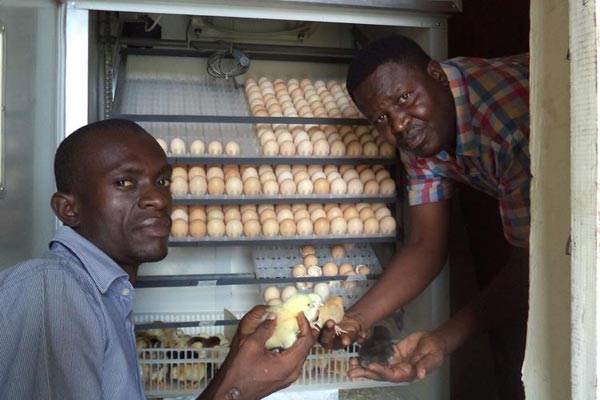
Using an incubator to hatch eggs needs planning, which starts with good quality eggs. There are basic things farmers must do to get healthy chicks.

EGG SELECTION

Before starting incubation, the eggs must be evaluated and meet the parameters threshold should be selected.

Good quality eggs should have a blunt side and a markedly sharper pointed end. Irregularly shaped or abnormal eggs should not be used.

The egg shell should also be smooth and not be pimpled. The pimples arise from small lumps of calcified material.

The egg shell should also not be thin as often this is an indication of diseases.

Internally, it must have a yellow yolk without any blood spots. The albumen should be viscous and thick.

EGG STORAGE

Farmers should ensure that the eggs are labelled by date of production and stored in a well-aerated place.

Clear labelling comes in handy during selection of the eggs as the recommended egg age should not exceed 10 days.

The hatchability rate drops drastically after 10 days and by the third week, the hatchability rate is at 0 per cent.

The eggs should be stored with the sharp end pointing upwards with periodic position shifts before incubation.

That means that between day one to eight, one should shift the egg position on a daily basis.

Do not attempt to clean your eggs with damp clothing since this clogs the egg pores and removes the natural protective coating making eggs prone to infections.

SETTING OF EGGS

Before setting the eggs in the incubator, it is important to pre-warm them to room temperature for six to eight hours.

Depending on the incubator, the eggs need to be turned manually. The eggs could be marked on either ends so that on incubation when turning the eggs, this is done uniformly.

Eggs must be turned regularly during the 21-day period of incubation to aid movements in the egg which mimics the natural actions of the mother hen.

However, one should not turn the eggs in the last three days before hatching as the embryos are moving into hatching position and any disturbance would affect them.

It is important to ensure that the eggs are set in the incubator with the broad end facing upwards or slightly tilted.

INCUBATOR CONDITIONS

Ensure the incubator conditions are well regulated. Improper control of humidity and temperature will often disrupt the development of the embryo and may result to poor results.

Poor hygiene or sanitation, lack of egg turning and bad ventilation affects the development of the embryo. Maintain the temperatures at 37 to 38 degrees Celsius.

Relative humidity can be set at 60 per cent but with adjustments during incubation. Proper ventilation is necessary in successful incubation.

HATCHING TIME

Once the chicks begin to hatch, do not attempt to assist them out of their shells. This could cripple or infect the chick; allow the natural process of hatching to take its course.

Oil marketer to list on NSE

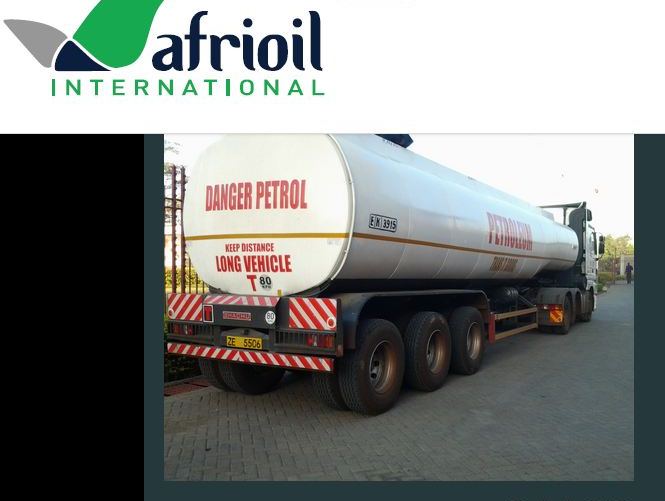
Afrioil International, a petroleum import and export firm, plans to list on the Nairobi bourse’s growth enterprise market segment (GEMS) early next year. The company, which has been in operation for about two years now says it plans to tap into the stock market to expand its business.

The size of balance sheet for AfriOil —the total of assets or liabilities – stands at Sh500 million. Dennis Makori, the firm’s Chief Executive Officer says part of this funding is from lenders. “We plan to list this company in the GEMS segment next year,” said Makori (pictured). The firm’s appetite to list follows introduction of a trading board on the Nairobi Securities Exchange (NSE) for small and medium enterprises ( SMEs) opening new funding opportunities for the growing pool of small and medium sized businesses.

Small businesses not only find it difficult to access finance, but also have to deal with the higher cost of finance relative to the charges larger firms face. Mr Makori admits that oil marketing is a highly capital intensive business and their entry has not been rosy. “For you to grow you need a lot of capital, and we believe if we tap into the stock market we can get the resources so that in the next few years we can catch up with the big boys in oil business,” Makori explained.

Some of the critical market entry barriers of oil marketing companies include the high initial investment capital requirement, which is made worse by the high cost of credit in the domestic financial market. For instance, all oil marketing firms must contribute a million litres of oil to the pipeline, which cannot be sold.

“When you join Kenya Pipeline there is something called line-fill, which is basically debt stock. The pipeline at any given time is full of products, this is because there are minimum stocks that cannot be pulled out,” he told Weekend Business. “So each time a new firm enters the oil business, has to contribute to the line-fill. And this is a million litres. That’s a contribution you make, which you can’t use until you exit the business.”

For instance, when Afrioil International, which currently has presence in Kenya, Uganda, Tanzania and Rwanda, entered the business in April 2013, the products were going for about Sh100 a litre. That’s a cool Sh100 million.

The oil firm’s main clientele are the independent oil retailers. “We realized that independent retailers were mistreated by big oil marketing companies. We saw an opportunity here,” Makori said. “For instance, when large oil marketing firms import their products they only sell to independent retailers after their own service stations have been supplied.”

From about a half a million litres when it started, the firm now handles three million litres a month. Mr Makori also runs a multi-million company—Onfon Media ltd, a value added telecommunications services provider, which he started in 2007.

Billionaire investor Paul Ndung’u now top Uchumi shareholder as Kidero exits top ten list

Business Daily: Nairobi County Governor Evans Kidero has exited the top shareholder’s list of Uchumi Supermarkets as billionaire investor Paul Wanderi Ndung’u raises his Uchumi stake to 5.4 per cent, making him the largest individual investor.

Regulatory filings show that Mr Kidero disappeared from Uchumi’s list of top owners in February, signaling that he either sold his 234,577 shares or was heavily diluted in the recent cash call that saw the retailer issue 99.5 million new shares.

Mr Kidero, whose ownership was equivalent to a 0.08 per cent stake, first bought into the retailer in 2012 at the same time the chairman of investment bank Dyer & Blair Jimnah Mbaru also took a minority position in the company. Mr Mbaru retained his 0.09 per cent equity after defending his stake in the rights issue that raised Sh895.8 million.

Mr Ndung’u, who previously held a 3.3 per cent stake, raised it to 5.4 per cent worth Sh207 million indicating that he defended his rights and bought additional shares in the cash call. This saw him replace businessman Karim Jamal as the retailer’s single largest individual shareholder. The stake held by Mr Jamal dropped to 2.4 per cent from the previous 3.4 per cent, signaling a dilution or partial transfer of his portfolio. Besides Mr Ndung’u, institutional investor Jamii Bora Bank (JBB) also aggressively bought into Uchumi, applying for additional shares that saw it emerge as Uchumi top investor with a combined 15.8 per cent stake. Treasury, which was previously in pole position, is now relegated to second place with a 14.6 per cent stake.

The share purchases in Uchumi have expanded Mr Ndung’u’s interest at the Nairobi Securities Exchange (NSE) where he holds minority stakes in several firms including Kenya Re and Olympia Capital.

He was among the investors who applied for and received more shares in the retailer as a section of shareholders failed to take up their rights.
Uchumi priced the cash call at Sh9 per share, offering the 99.5 million new shares at a rate of three for every eight held.

This almost matched the price of its stock trading on the NSE at the time, bucking the trend where firms usually offer large discounts to encourage uptake of the rights.

Shareholders applied for a total of 64.3 million shares worth Sh579.1 million in the original allotment, representing a 64.6 per cent subscription as a section of shareholders sidestepped the cash call.

3 Tips on How to Bring Out the Best in Your New Hires

0

Here are four tips to help bring out your new hires’ best qualities from day one, using the right on boarding and social learning experiences:

Provide a training path

To be successful, every learning and development initiative needs to begin with a plan. New hires need to know with whom they are training, when they’re training and what they’ll learn, so they don’t feel lost coming into work each day. The absence of such a plan — by itself — will kill confidence.

So, define a clear training plan for each new hire to follow. But make sure it’s based on the employee’s new position, current level of knowledge and experience on the subject matter. If you don’t, new hires already familiar with the material may feel bored or taken aback that their time is being wasted. Customize the training plan to their needs.

Show how and where to ask questions

Questions will pop up, and for a smooth learning experience, new hires need to know where they can get answers. Instead of referring new hires to one person, use the collective knowledge of the entire team to help them out. Create a space, such as a Q&A forum, where they can seek advice from everyone. Crowdsourcing answers will ensure that they get a variety of opinions, for a more complete picture of a process with plenty of tips.

 Schedule one-on-one meetups with more experienced team members

When set up properly, mentoring can be a frontrunner idea for more confident, competent employees. The most successful mentorships occur when both people have knowledge to share. This can lead to “reversed mentoring,” a scenario where the less experienced employee mentors the more experienced employee for a session or two on a skill he or she possesses that is beneficial to the business.

source:entrepreneur

Gandhi’s 1940 letter to Adolf Hitler

0

Mohandas Gandhi, frequently known by the honorific Mahatma (meaning “great soul”), was famous for advocating civil disobedience and nonviolence to achieve his goals.
Starting in 1921, Gandhi led the Indian independence movement through such methods, finally achieving freedom from the British empire in 1947, just six months before his death.
Less known is Gandhi’s efforts through a series of letters in 1939 and 1940 to keep German dictator Adolf Hitler from starting a war in Europe.
Gandhi took it upon himself to prevent World War II by not only encouraging Hitler to seek peace, but also by telling the British people to oppose Hitler and Italy’s Benito Mussolini by nonviolent means, even as Nazi Germany and Italy sought to destroy the country.

“In nonviolent technique, as I have said, there is no such thing as defeat. It is all ‘do or die’ without killing or hurting,” Ghandi wrote to Hitler. “It can be used practically without money and obviously without the aid of science of destruction which you have brought to such perfection.

“It is a marvel to me that you do not see that it is nobody’s monopoly. If not the British, some other power will certainly improve upon your method and beat you with your own weapon. You are leaving no legacy to your people of which they would feel proud.”

For the full version, check out businessinsider

4 things you should never do in an interview

0

Once you’ve landed a job interview, you have one shot to wow the hiring manager. To do this, there are a few things you should avoid at all costs.
In a recent LinkedIn post, recruiting manager John Kirschner shared the 10 “nevers” of interviews. Here are four of our favourites:

Never show up without good questions

“Interviewing is like a sales call; you uncover a need and try to fill it,” writes Kirschner. “Find the real need by asking good questions. You are interviewing them as well, so this is your chance to learn more about the job, the company, the manager, the culture, etc.”

Some good questions to have in your back pocket:

• How do you see this position evolving in the next three years?
• Can you tell me a little about the team I’ll be working with?
• What constitutes success with this position and company?
• What concerns or reservations do you have about me for this position?

Never avoid eye contact or send negative non-verbal messages.

“Hiring managers will watch how you communicate and try to envision you interacting with their customers and employees,” explains Kirschner. Avoid fidgeting, maintain eye contact, and listen closely, he advises. “Never ramble when answering questions, and never do all the talking. Listen 60% and answer 40% as a rule.”

Never ask about compensation, benefits, or vacation time

“They will think that it’s all about money with you and that you would leave them for the next best offer,” he says. However, if the employer brings it up, that’s a good sign and you can discuss the topic. “It’s a buying sign,” explains Kirschner. “Answer their questions openly and honestly, and follow their lead.”

Never bad mouth your current company

Criticizing you company or manager is never a good idea. “They could think you can’t work well with others or have a problem with authority,” he writes. “Also do not share anything that would be considered confidential information.”

source: businessinsider

Truths About Failure Every Entrepreneur Should Embrace

0

Accepting fear is not easy, and indeed it can be a significant obstacle for many when considering the pursuit of new and unfamiliar opportunities. With the right expectations and an understanding of a few truths, however, the fear of failure can be a powerful weapon in your entrepreneurial arsenal.

Success can only come from failure

Much as heartbreak teaches us to better appreciate love, failures set our expectations of success. It is through failure that we come to better understand that everybody’s definition of success is different and will evolve over the course of our careers.

Failure is an asset

Because of their curiosity, one of the biggest regrets entrepreneurs will have is not trying and hence wondering “what if.” This longing for knowledge and answers provides us with the tools to not only understand how to run businesses better, but also what to avoid. As long as we are learning, entrepreneurs become more valuable with each and every failure.

Failure should not be confused with quitting

For many entrepreneurs, the fear of failure is rooted in a fear of being perceived as a quitter. The truth is that if you have poured your energy selflessly into an endeavour, only to walk away after extinguishing all options available to you, you will have earned infinitely more respect than those who have never tried.

source:entrepreneur

Harrison Kamau: my geese give me profit and security

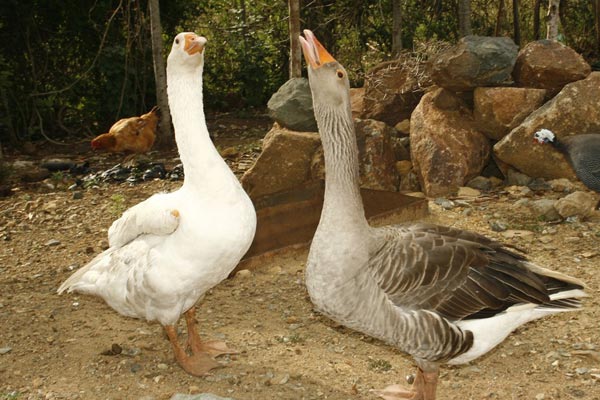
Harrison Kamau rears 38 African geese for commercial and security reasons. “Goose are good at protecting one’s farm, and like dogs, they are very loyal to the owner. They are good at the work because they have big bodies and long necks that scare strangers and their beaks are sharp.”

According to experts, the bigger the flock of geese, the better the security they can offer. However, the birds must be fed well for them to identify strangers and be aggressive.

In China, police are using geese to patrol streets and homes because the birds are brave and vigilant. “Geese have a good sense of smell. It is always good to introduce members of your families or frequent visitors to them to avoid conflict,” says Wesa, who last December won an award for how he is utilising his farm in a competition organised by Elgon Kenya Ltd and Ministry of Agriculture.

Wesa says the birds have on many occasions kept away intruders from his home.

The farmer feeds his geese on napier grass and the various mashes available in agrovets.

“Every bird hatches up to 10 chicks in four to five months. Their gestation period is between 28 and 35 days and mine hatch mainly in May and November,” says the farmer, adding that the birds’ chicks have higher survival rates than those of chickens. They take four to five months to mature.

Wesa sells a mature goose weighing an average of 15kg at between Sh3,000 and Sh5,000. He sells about 10 birds per month.

The male goose fetches a higher price than the female one, says the retired school teacher.

“I embraced geese in 2012 after visiting my sister-in-law in Eldoret. She gave me two geese, a male and a female. I had eight chicks four months later and the brood has increased since then, despite me selling many of them,” says Wesa, adding that the birds are helping him enjoy retirement.

“Geese like greens that include vegetables and napier grass. One should also provide a pool of water where they will swim and cool their bodies.”

He spends Sh2,000 monthly to purchase feeds to supplement the green fodder. A 70kg bag of layers mash feeds the 38 birds for over a month.

Besides geese, Wesa also keeps 50 turkeys, other birds that offer his home security. He sells each at Sh4,000.

Tobias Omune, a livestock expert in the Ministry of Agriculture, Kisumu office, says the birds, as other livestock need good nutrition and care.

“What most farmers do not know is that each goose requires 160g of feeds per day to enable them mate and be in perfect health. The amount of feeds they consume per day will depend on the duration that they mate.”

Omune says that greens are a source of vitamins for geese. He notes that 80 per cent of feeds should be cereals.

“The birds should be fed on both plant and animal proteins. Plant proteins include soya beans while animal ones omena. Minerals, water and carbohydrates should also be offered,” he says, adding that geese and turkey mostly mate in isolation, thus, farmers should be able to cater for this.”