
Home Blog Page 2306

How cash on delivery boosts Jumia Online shop

0

Guest Writer Robinson Murage: Cash on delivery is the method of payment that allows customers to purchase products on a company’s website or make orders via phone and pay for them upon delivery on their doorstep or office, this form of business is as old as 1635 in England but in Kenya, it has only began taking shape and could possibly be the recipe for Kenyan businesses.

According to JUMIA, Kenya’s No. 1 online retailer Cash on delivery accounts for over 55% of its transactions in Nairobi and Mombasa, the two cities the company offers the mode of payment. Parinaz Firozi, the managing director at Jumia Kenya says Cash on delivery has helped the company acquire new customers.

“Over 60% of our customer acquisition has been through cash on delivery. There is zero risk for the customer since they only pay for the product if they like it, there are no cost implications if they reject the product, the delivery man just takes it back. Its stress free,” Firozi adds.

In a country where credit card penetration remains a major headache for financial institutions and the government with several flopped initiatives, Mobile money transfer remains the alternative. “Customers will load their mobile money account and wait until the delivery is made and they are happy with it before transferring the cash on the spot.”

Hellofood an online platform that allows you to order food online and have deliveries made to your doorstep in Kenya also offers cash on delivery. Cathy Mwangi, the marketing manager, notes it’s easy to use and more credible, “Credit cards can fail especially when customers don’t check their balances regularly leading to cancelled orders. “

Ampire Power solutions, a Powerbanks company with a physical store along Kimathi Street also offers cash on delivery. Bob Wanyiri, Group chair says the payment method forms 50% of the business activities in a day.

“We have our store here, a Facebook page and mobile number that our customers use to make orders, mostly in Nairobi. People want you to take the product to them, they want to feel you have earned every dime at their convenience. We make deliveries all day and the conversion is high. It’s good.”

While cash on delivery makes perfect sense for the customer, a lot of logistics and costs are involved especially when delivering expensive products that require insurance and security, a rejection of this nature would mean a two-way massive loss to the seller shipping the product back to the warehouse and back again to the customer and a lot of time wastage. Cases of customers changing their mind are also high since they haven’t paid for the delivery and could easily get another source and that’s not just it consolidating receipts and keeping records is crazy.

Firozi advises that using own riders and delivery vans and making several deliveries along one route is cost effective and time saving and agrees that cash on delivery is a real recipe for Kenyan business but should be used with a lot of caution and foresight. It’s your call now to make now.


7 tips to prepare a killer elevator pitch

0

A start-up founder always meets different people from different industry verticals, looking for mentors, angel investors, venture capitalists, and more importantly customers. One of the key skills that such a founder must have is to be able to explain his startup in simple words which anyone can understand in no time. An elevator pitch fulfils this purpose.

An elevator pitch is the best way of sparking an interest about your startup in the listener’s mind. It is a concise explanation of your startup. It mainly answers four questions for the listener:

• Who are you?

• What you do?

• For whom you are doing it?

• What makes you better than others?

Keep It Short and Succinct (KISS)

Always keep your pitch short and simple. Do not use fancy words to make you look smarter. The listener may not understand, eventually losing interest in your idea. Use words that can create a visual image in the listener’s mind. This will make the message memorable. It is good to add some key statistics/data which substantiates why your product/service is best and why it is important for the listener. Adding data to your pitch gives it credibility and makes it more believable for the listener.

Avoid jargon

Never use industry specific jargon in your elevator pitch. This makes the pitch difficult to understand, especially for people who are not from your industry area.

Tell a story

A relatable story is a good way of keeping listeners engaged in your pitch. Always create a story about the customer, his pain and struggles and how your product/service is giving a helping hand to him. Always give a personal/emotional touch to your story.

Have specialized pitches for different class of audience

It is good to have at least two-three variations of your elevator pitch ready with you. This is because you will probably meet different people from different industry verticals with different business interests. In such a case, your elevator pitch must match their interest in order crack the deal. Make your pitch specific to the audience that you are addressing.

Many times your startup may strive to solve problems which span across different customer segments. In such cases, it is better to create different elevator pitches with slightly different ‘value offerings’, in order to engage customers from each segment.

Keep it Goal Oriented

Always know what you want to achieve through your elevator pitch. Is it a new customer, a business mentor or an angel investor to fund your startup? Or is it someone to validate your idea? As already suggested, create two-three goal oriented variations of your elevator pitch.

Keep ‘Mind-Hooks’

Hooks are elements of your elevator pitch which seize your listener’s interest and make him want to know more about your startup. Such hooks help you to hit the chord in the listener’s heart. You should always try to add a few such hooks in your pitch.

Have a Call to Action

A good elevator pitch contains a call to action (CTA) for the listener. It can be to visit and register on your site, to download and try your app or to subscribe for your service. Be explicit and concisely detailed, while specifying your call to action. Make sure that your call to action is small and one that can be completed in a few seconds.
Once your elevator pitch is ready, the next important thing is to be able to deliver it perfectly. Be confident and passionate while delivering your pitch. Don’t be over excited while delivering it as it is distracting and can put off the listener. Rehearse your pitch a few times in front of different people who know nothing about your business. Always take feedback and suggestions about your pitch, and make respective improvisations.

How to get your boyfriend to propose

0

Jacqueline and her partner have a near-perfect relationship.

“We get along well and resolve our conflicts in a mature manner. He genuinely loves me and is faithful,” she says.

However, she says that something is missing.

“We are not man and wife,” she says dejectedly. “Sometimes I wonder whether we are dating, courting or cohabiting.

“I feel that it is time I walked down the aisle and if he asks, I will definitely say ‘Yes!’”

But her man has not mentioned marriage. Neither is he showing any signs of doing so any time soon.

In the same boat is Mary, a 32-year-old public relations officer. She has been waiting donkey years for her boyfriend to pop the big question, but he hasn’t. Subsequently, Mary begins to think that he is a complete waste of time.

“What are we doing if we aren’t headed for marriage?” she asks. “We are not getting any younger. It is time we settled down and concentrated on a family.”

Battle shyness

If this year ends without a marriage proposal, Mary intends to walk out and look for someone who wants to settle down.

While some men are not interested in proposing, others are too shy to propose. They do feel the need to get married, and believe they have found the right partner, but are afraid of being turned down.

“I do love my girlfriend and believe she will make a great wife and a good mother,” says Mary’s boyfriend, Paul. “However, I have not proposed yet and she thinks I am wasting her time, but I am not. I am just not sure how she will react if I propose.”

What most women do not know is that it is they who will make a man propose.

“Most men have to be led down the aisle,” observes psychologist Chris Hart.

Getting a man to propose, however, is not about great sex or the amount of time you spend together.

“There are three critical things that will get a man to propose: affection, openness and sharing of things ,” Chris says.

Show affection

“You have to be genuinely affectionate, and that entails simple things like touching, sitting close together, and even secret smiles.” Rosina Mruttu observes that if your mate is not affectionate, is phony, or for some reason you don’t feel affectionate towards him, “chances are high that the proposal may not be forthcoming”.

Sarah Kabu shares that openness and doing things together was what did the trick for her.

“We always sought to do things, both big and small, together, and it helped that we shared a love for travelling. This gave us an opportunity to exchange ideas and fears.” In fact, out of it not only came the proposal but their joint travel company, Bonfire Adventures.

Rosina concurs: “You should feel truly able to share your important secrets with him, knowing that he will keep what you say to himself.”

For instance, can you tell your man that you don’t like a certain thing about his best friend or his mother’s cooking with the confidence that he will not tell anyone? If he keeps your secret, know that you are a step closer towards wedding bells.

Share secrets

Chris cautions that couples who feel unable to share their secrets hardly get married regardless of the number of years that they spend living together. He further notes that where marriage is on the cards, it takes a man less than a year to propose.

“If two years have gone by without a proposal, then you should begin to get him to commit.”

Talk about it

However, men hardly discuss marriage, even when they are seriously thinking about it.

“Marriage is a touchy subject, with lifetime commitments and responsibilities. It is not an ordinary topic that you can bring up anyhow,” says Joseph, 29.

Therefore, it is upon the woman to raise the matter. “In about 70 per cent of couples, it is the woman who speaks about marriage first,” Chris notes.

To begin with, your man may have no intentions of marrying you, yet he won’t tell you so unless you ask. On the other hand, he may wonder how to even initiate the subject.

“Many men are reluctant to propose, perhaps because they are wimps and/or are scared of being rejected,” says Chris. “A man will only propose when you let him know that it is what you want.

If you are still strongly together after a year or so, then by all means tell him about marriage. Few men realise that dating for a year and being in love means getting married.”

However, do not give him hints! If you want him to do it, just tell him. Neither should you directly challenge him. Men hate it. For instance, if you say “We have to get married or else I’ll walk out,” he will likely tell you to walk out.

If you quip that you will start looking for a man who’s ready to settle down, he will readily tell you to go ahead.

But bear in mind that men don’t react well when marriage is first discussed. Therefore, do not see his bad reaction as a refusal or rejection. As Chris says, “it’s a stress reaction”.

Just give him time to digest it, and then raise it again. And remember to cut your loses too, if he is rigidly against getting married.

Are you a micro manager?

0

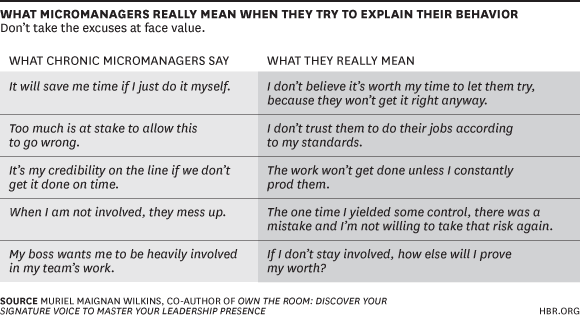
No one likes to be micro managed. That constant scrutiny of your work, knowing that your boss is always breathing down your neck is demoralizing not only to you, but the entire development process of the team.

But what if you are the “micro manager”?

A good manager has to pay attention to details its part of the getting the job done process. So when does one cross the line and enter into micro managing territory?

According to the Harvard Business Review you are a micro manager when:

  • You’re never quite satisfied with deliverables.
  • You often feel frustrated because you would’ve gone about the task differently.
  • You laser in on the details and take great pride and /or pain in making corrections.
  • You constantly want to know where all your team members are and what they’re working on.
  • You ask for frequent updates on where things stand.
  • You prefer to be cc’d on emails.

micromanagers

So what next?

It’s time to let go of the “micro” and focus on the managing aspect of your job. Here are the some pointers the Harvard Business Review gave on how to do so:

1. Let it go.

Start letting go of some of your tasks slowly by slowly. Engage in explicit discussions with your team  about what level of detail you will engage in and where they will need to pull you in.

2. Give the “what,” not the “how.”

Don’t dictate on how to get the results, your job is to set the conditions of satisfaction for the tasks given. Be crystal clear on kind of outcome you envision. A different approach may yield impressive results.

3. Expect to win (most of the time).

Apparently, micromanaging comes from the fear of failure. By constantly micromanaging, this fear is magnified and passed on to the team to the point they can’t perform without your constant supervision. Be clear on what success looks like, and give credit where it’s due.

Money decision that will make your rich

0

Chris Hart: Being rich sounds so wonderful. It’s no wonder we’re tempted by all the get-rich-quick schemes.

But loads of people become prosperous without them. And all by themselves, without inherited money or crazy scams.

They all started out in stuffy little apartments, just like the rest of us, working for the minimum wage and eating the cheapest food.

But even then they were saving a little of everything they made, no matter what. All genuinely rich people say the same thing: work hard, live within your means and save some money every month, however little. Build up a reserve, then invest in a business, or shares and the like. Buy property last of all.

This is because to get rich, you need to keep your money flexible, invest for the long-term, and avoid personal loans. Raising money for a profitable business is fine, especially from investors rather than lenders. But borrowing for anything else is crippling. Nothing’s worth paying all that interest.

Expect your investments to grow over the years, not over-night. And plan accordingly with long-term goals for your education, career, relationships, children and work in the community.

BETTER BE LOVED

Because your time on this earth is limited, give plenty of it to your family and whatever you love doing most. Better yet, turn what you love doing into your profession. Work so hard at it that you become brilliant. Network to get well known, because once word gets around that you’re amazing at something, you’ll always be in demand. And start thinking about working for yourself.

Why? Because the richest people in the world are all self-employed. Starting a business is much easier than you think, so follow your dreams  now. Putting things off just means someone else gets there first.

Look over your finances every month, and be completely open about them with your spouse. Money’s one of the main reasons couples argue, whether rich or poor.

There are two reasons for that. Firstly, because once you have the basics, more money won’t make you any happier. And because people’s attitude towards money reflects their most basic feelings about the world. So rows about money are really about the deeper issues between you — such as control, independence, commitment, trust and security.

You’ll avoid a lot of trouble by talking about money before you get married.

How you’ll manage the housekeeping, personal spending, savings and long-term plans. Agree on whatever works for you, and start doing at least some of it straight away. Couples who manage their money as a team are always happier than those who don’t.

Above all, remember that life’s not really about money. Don’t spend all your time lusting after it. It’s great having nice things, but it’s what you do that really matters — especially for others. Wealth often leaves people isolated, lonely and scared.

Envied perhaps, but nobody really cares about them. It’s better being loved, believe me.

How To List Your Business On Bizna Business Directory

0


  • If you’ve been to our website biznakenya.com then you’ve noticed our online directory on the ‘Business directory’ page. It’s a free online directory where you can list your business, telling the world about it, the products you are selling, your specific location, address detail etc to for easy access.
  • We also offer in-store activations, profiling and promotions on all social sites.
  • In this article we will look at the few steps of listing a business on Bizna Business Directory.


  1. First step is logging in to our website www.biznakenya.com
  2. Second step is clicking on the ‘Business Directory’ page
  3. Third step is registering as a Bizna member by signing up for free. (you MUST have an email address.)
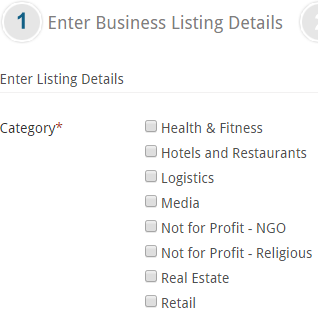
  4. Enter business listing details should be step number four.detail
  5. Followed by these other steps.
  • Listing title. This is where you put the name of your enterpriselist


  •  Address/map
  • address


  •   Contact name
  • contact


  • Image selection
  •        .select images


  • List description.
  • business description


  • Followed by tags(facebook, twitter, instagram, linkedin)


  • Then you can also select the kind of  listing you prefer.  package


List away and let us do the rest for you!

Happy marriages are never between perfect partners

0

Chris Hart: We all want to be happily married, but lots of people don’t make it. Why’s that?

Actually, until recently no-one really cared whether couples were happy or not.

Marriage was all about making a living, children, land, inheritance and so on. So people were only really interested in your family, community and culture. Does that sound familiar?

Your parents are probably still asking!

But nowadays, we expect marriages to be happy. So people only ask whether you’re in love. And we rarely think seriously about why marriages fail. We just assume the couple’s did something wrong, with each thinking we’re somehow special, and won’t make the same mistakes.

AWKWARD SINGLEDOM

But we do. So if there was a course on how marriage really works, what would it tell you?

It would encourage you to make the most of being single. Currently, society makes being single feel really awkward, especially as you get older. Couples stop inviting you round. You feel a freak on your own.

Finding sex is hard. It’s all easier in college, but once that’s over, lots of people marry just to escape being alone.

Or maybe you’re getting on well with someone, and imagine that marriage will make that last forever.

But marriage instantly moves your relationship on to somewhere very different: new responsibilities, expectations, children… Getting on well might not be enough.

You’ll only be happy in marriage if you fall in love with the right person. That’s what being single is really all about. It’s when you learn to understand your personality. Warts and all. And how your personality works out with the people you date.

We first experience love as children. But maybe that love was all mixed up with other feelings. Like being controlled, belittled or neglected. So we’re attracted to the wrong people because we go for what we knew in childhood.

Rejecting kind and reliable partners because their behaviour feels unfamiliar.

And we’re all just a little bit crazy. Like maybe you get angry? Controlling? A wee bit insecure? A bit weird about sex? Or you’re no good at explaining your feelings? Issues like that cause a lot of problems between couples. So you must marry someone who can cope with your craziness.

FAULTS IN US ALL

Good marriages are never between perfect people – there aren’t many of those anyway. They’re between couples who can cope with each other’s oddities.

Understanding yourself isn’t easy though. Like when a relationship goes wrong, you’ll tend to blame your partner and ignore your own faults. Your anger, insecurities and so on. When you’re single it’s easy to believe you’re really quite a nice person to live with.

So it’s no wonder no one knows what they should be looking out for.

Naturally, we try hard to get to know one another. But that’s rarely enough. It sounds unromantic, but you also need to understand your faults really well. And to go looking for someone who can cope with them. And you with theirs…

Embrace modern ways of doing business, Rachel Ruto tells women

0

Mrs. Rachel Ruto (the deputy Presidents wife) has challenged women to make use of numerous financial opportunities availed to them by the Government.

Mrs. Ruto said women should strive to achieve success in this digital era and emphasized the need for them to acquire mobile phones so that they are connected with the rest of the world.

“Women are known to be excellent organizers in their families and should take their roles seriously and always be ready to learn new things that will better their lives”, said Mrs. Ruto.

She revealed that Joyful Women Organization (JOYWO) has partnered with Safaricom Ltd to ensure the gadgets are affordable to its members.

She enumerated the success story of various Joywo women groups in 39 counties, where it has launched table banking concept adding that their counter- part in Machakos County should not delay embracing it.

She announced that JOYWO organization which she is the patron has realized over Shs.1 billion as revolving funds.

“It is the high time women enrolled in such institutions to gain skills on among others matters of investments,’ she said.

Mrs. Ruto advised women to keep their meeting places and individual plans secret to avoid attracting thieves who may want to rob them of their savings.

She also warned women to avoid group projects, which largely fail due to inactive and defaulting participants and instead use the loans they get from table banking to invest in personal businesses.

Earlier, experts from her office trained women on the table banking concept and the benefits of being in a registered group, especially when seeking government tenders

Kenyan start-ups are raising millions through Kickstarter

0

Being an entrepreneur is hard work from the get go. Having an idea is easy; the challenge is implementing it into a viable product/service that can be monetized at a reasonable time period.

The top most obstacle to the entrepreneurial process is the lack of capital. I don’t believe there is any bank out there that will give you funding based on idea only. No matter how mind blowing it is.

So what next?

You have probably read how Silcon Valley start-ups in the US are raising capital through crowd sourced funding, well; they are not the only ones. Kenyans like you and me are raking in millions for their projects through crowd funding sites. The two behemoths sites out there are Kickstarter and IndieGoGo.

So far there are 129 Kenyan projects on Kickstarter, and 56 have been successfully funded; raising over 75 million shillings in starting capital.

What is Kickstarter?

“A new way to fund creative ideas and ambitious endeavours,”that’s how Kickstarter describes its self.

1. You post a project description on Kickstarter. You make a pitch video. The video isn’t a strict requirement, but almost all funded projects have a video. You come up with a set of “rewards” for different pledge levels on the site. You set a funding goal and a time frame for your project.

2. Kickstarter staffs look at your proposed project and provide feedback. Then they (hopefully) approve your project and it’s posted on the site.

3. Your project goes live.

4. If you don’t hit your funding goal in the specified time frame, no one’s cards get charged and you don’t receive any of the funds.

Read Also: How to create a successful Kickstarter campaign

Drawbacks

All or Nothing

Kickstarter pledge drives are “all or nothing,” meaning that if the goal isn’t met by the specified time then no one’s credit cards are charged and the project doesn’t get any of the pledged funds.

Fees

Kickstarter takes a 5 percent cut of your pledges and Amazon will take an additional amount (around 2 percent) on top of that. If your margins are slim, this could be significant.

These are some of the successful funded Kenyan projects

Kickstarter

How your past shouldn’t determine your destiny

0

Carole Mandi: “IN OUR FAMILY,” one of my aunts once told me, “we all suffer from high blood pressure.”

I had seen my grandmother suffer from it, and eventually succumb to it, as did my own mother. When would the monster come for me?

Throughout my 30s, I held my breath, visiting doctors, waiting. Until one day I understood. It could end with me. I could be the one who broke this genetic pattern. I read up on the ailment, re-organised my diet and started an exercise programme.

While I was genetically predisposed to high blood pressure, I decided that I would change what I could rather than be a sitting duck. It required drastic action on my part.

However, I recently realised that there were other, just as insidious generational predispositions that run in my family that I, and most of my relatives, still accepted as fact.

These half truths, still ruled our lives, and we nodded our heads in confirmation when someone eventually succumbed to them.

It’s a pattern I have seen and heard repeated elsewhere.

“In our family,” someone once told me, “No one had ever completed high school.”

I have also heard it said, “In our family, most of the girls fall pregnant in their teens” or “the boys usually become drunkards,”.

From the family level, this kind of thinking is extended to the community, and finally, it happens at a national level.

For instance, corruption was once so rife that when we saw someone drive a new car or buy a property, the belief was that they stole it.

These kinds of beliefs are always self-limiting, holding us back in some form of mental bondage. Without questioning, we accept that this is who we are, this is what we do and that belief becomes a self-fulfilling prophecy.

Yet the opposite is also true. We can take on positive values and beliefs and these can govern how we live. If children grow up in a family where excellence is expected, nurtured and encouraged, chances are higher that they will excel.

When I attend my children’s concerts or prize-giving days, I’m always amazed at how children from certain families, even though in different grades, always come out shining.

Eventually I took one of the mothers of these children aside to find out how they did it. She told me that children don’t turn out that way by chance, and it goes beyond genetics to upbringing.

“There are standards expected of them, they are trained to achieve them and the same is role modelled not just in the nuclear family but the extended family as well,” she told me in so many words.

The children knew that in their family, being academic, musical or sporting achievers was who they were.

Our belief systems are powerful because thoughts become words, words become actions and actions become character and character becomes destiny. Our belief systems influence not only how we see the world but how we see others.

To positively change the course of destiny for an individual, family, tribe or country, someone has to step forward and question all previously accepted self-limiting beliefs.

However, questioning them is not enough unless we replace them with positive beliefs. Thereafter, we have to be willing to consistently do what is necessary to break the pattern.

As we head into the elections, the pressure to find refuge in tribal cocoons that encourage negative group thinking is high.

Regardless of what happened in the past, or who we believed ourselves to be, the opportunity to create a positive future begins when we have the courage to think differently.