Home Blog Page 2307

Sell your idea and get funded by local Shark Tank

0

Arghan Joshua had always wished to start a renewable energy firm. His dream came true in 2008 when he founded Continental Renewable Energy Company and began to deal with waste management, making composite, roofing tiles, and fencing posts from recycled plastic waste.

However, to set the company on a growth path, he needed to attract angel investors.

He turned to GrowthAfrica – the local version of the popular Shark Tank – a small and medium businesses accelerator to pitch his business, gain exposure and access money.

Well, six years down the line, his decision has paid off.

“My business was struggling to attract investors. But the exposure that has come participating at GrowthAfrica has been immense. So far, my business has managed to get Sh4.5 million in funding,” he said.

He is not the only one who has enjoyed the helping hand of a business angel.

In 2012, Catherine Mahugu, Gwendolyn Floyd and Ella Peinovich came together to form Shop Soko, an online fashion and jewellery store.

To attain their goal of connecting online consumers to global jewellery makers as well as semi urban and rural artisans, they pitched their idea at GrowthAfrica and began their journey to success.

Other beneficiaries include Christine Khasina–Odero’s Super Mamas, an online platform that allows mothers to purchase and sell products for children, Judith Owiga’s jua kali mobile and web outfit that connects the youth in jua kali trade to industries and homes requiring technical assistants.

Also enjoying GrowthAfriuca’s financing and expertise is Jooist, a gaming business. In the past 18 months, Jooist has managed to reach over 100,000 users every day with its product besides securing Sh2.2 million in funding.

In the same period, Ecofuels Kenya, which produces biodiesel and fertiliser using non-productive crops from 2,000 local farmers has attracted Sh27 million in funding, while Zana Africa has sold over 50,000 locally produced sanitary pads developed from farm waste after getting Sh90 million in investments and grants. Similarly, 270 aspiring entrepreneurs and 82 startups have passed through GrowthAfrica.

The funding accessed by these two businesses is the brainchild of Johnni Kjelsgaard, a local entrepreneur and angel investor. “We invest in four main sectors,” Mr Kjelsgaard notes. “Our focus is usually on enterprises that have a positive impact on society such as provision of income to low earners or provision of innovative products and services in agriculture, health, education, manufacturing and ICT.”

According to Mr Kjelsgaard, since its establishment, GrowthAfrica has so far helped create over thousands of jobs besides injecting at least Sh360 million in small and medium local businesses.

“In the past two years alone, we have identified and trained 240 entrepreneurs and assisted their businesses to raise Sh2.8 billion through 82 social enterprises. This has come with 11,300 new jobs with 87 per cent of all these business reporting sustainable profits,” he adds.

Making Sh. 500,000 per month from selling charcoal

1

In mid-2013, Ian Oluoch and Tom Osborn joined the Global Minimum’s ‘Innovate Kenya In Challenge’ competition where they pitched an idea on how to develop a smokeless, affordable and easy-to-light briquettes. Their idea impressed the judges and the pair won a Sh268,349 ($3,000) cash prize. “This is where the idea of GreenChar Company was born, the competition gave me a challenge to start my own company with the money I won,” says Osborn.

A few months later, they decided to develop their idea further and in December, Osborn, Oluoch together with a friend called Kirotich founded GreenChar Company in Awendo, Migori County to make the and sell the smokeless briquettes. The social enterprise provides affordable, high energy cooking solutions to transform the Kenyan cooking environment and save lives, money, and time.

To fight against the environmental and health problems that currently arise due to firewood and charcoal usage, GreenChar produces charcoal briquettes called Makaa Poa from revitalised agricultural wastes and distributes clean cookstoves.

“Makaa Poa produces 90 per cent less smoke and 60 per cent higher energy than charcoal. We simultaneously distribute clean cookstoves that optimise the efficiency of the briquettes. Combined, they make a complementary product and provide a complete household cooking environment,” said Osborn.

Says Oluoch: “Per 1kg of GreenChar’s charcoal briquette sold, GreenChar saves five kilogramme of wood and 10kg of carbon related emissions. Per 39kg of briquettes sold, GreenChar saves one tree”.

Olouch says that the Makaa Poa are eco-friendly and have reduced smoke emissions, therefore curbing deforestation and decreasing adverse health effects from firewood and charcoal usage.

They plan to expand the firm to other parts of the country s because they are currently based in Awendo. They use women groups and saccos to sell the briquettes. The briquettes are made from raw materials from sugar cane (bagasse) bought from Sony sugar factory and also they use a paste made from cassava peels.

Bagasse is first dried and burnt in a combustion chamber to reduce the smoking effect. It is then mixed with the cassava paste and pressed hard to obtain the highest density for the product to last longer.

The charcoal, which is the final product, is then dried and packed in two-kilogramme packets ready for transportation to the market.

“Since it was founded, GreenChar has grown rapidly selling over four tonnes of briquettes and distributing over 450 cook-stoves and in the process saving nearly 950 trees and offsetting 360,000kg of carbon related emissions. The company has a total of nine employees and makes over Sh500,000 per month.


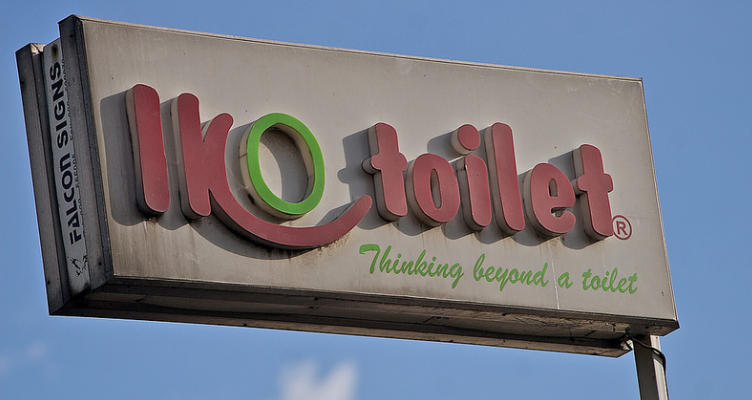
“Think beyond a toilet” Iko Toilet

0

How it all began

Ten years ago, the stench of the Nairobi public toilets could be smelt 100 to 200 meters away. The then city council (County Government) was doing a poor job managing the loos to the extent that they were being run by street urchin.

So when everybody smelt the filth and turned away, David so a problem that needed solving.

He posed the question, “is it possible to have proper sanitation within our cities?”

At the time, the local government act of the old constitution gave provision of sanitation to the local governments. So a private company stepping in to provide this service was unheard off. And as one can only imagine, the officials at the council were apprehensive to change.

But as the old adage goes, “there’s nothing more powerful than an idea whose time has come.”It was David’s time to shine.

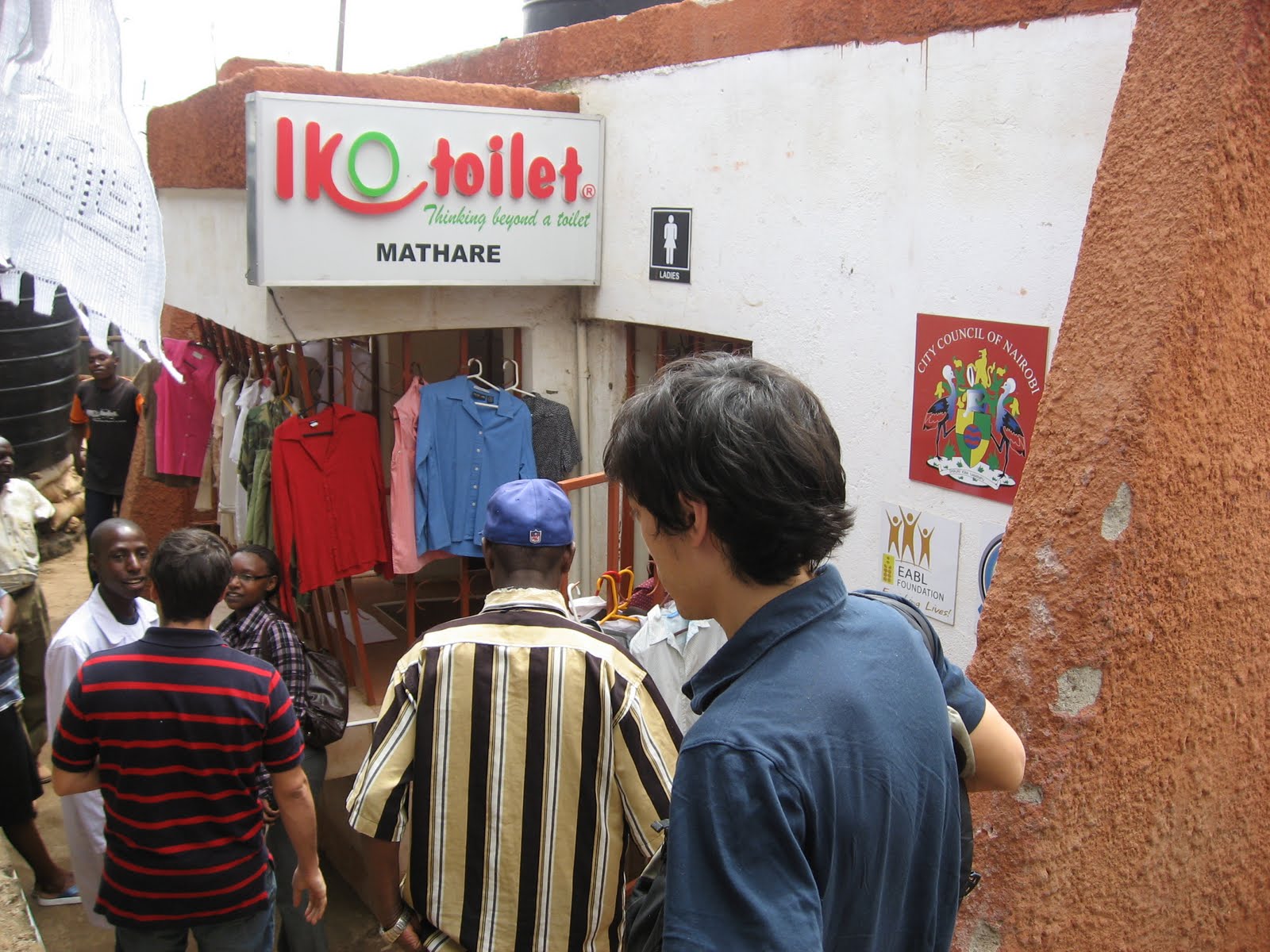
The toilets had to be self sustainable, so they had to be of more service to the community, this was done by setting up kiosks and shoe polishing booth.

To fund the dream toilets, David visited nine Kenyan banks and they all turned him down. He lacked the normal banking requirements to guarantee the risk of the venture failing.

“To us, the security was the good will for this social venture ,”he says, the banks disagreed.

With the banks out of the question, David and his cofounder Doctor Nganga contributed to set up the first the first toilet and later got financed by good will.

iko toilet3

The first Iko Toilet cost 3 million

They finally applied for a million dollar loan which they managed to get and used the capital to expand throughout the country.

There are currently 65 Iko Toilets throughout the country.

Why Michael Macharia is Kenya’s Own Bill Gates!

0

Of all the local tech entrepreneurs, no one comes close to Michael’s success.

Beginning of the entrepreneurial journey

He first started as an accounting intern at Comtech Systems (a former IT company owned by the Aga Khan Development Network). Eventually held the role of Finance Manager sitting at the Board and later as Sales Manager where he was responsible for the company’s 80% sales revenue.

At 25, he quit his job and formed Seven Seas Technologies (SST) with only a team of five. That was 14 years ago, a lot has changed since then. In 2012 Forbes magazine estimated Seven Seas’ annual sales at $50 million (ksh4.5billion)

mike macharia

Getting financial support then for a firm with no assets or no income statements was almost an impossibility. Macharia says that the first bank to support the young firm was the Banque Commerciale du Rwanda (Commercial Bank of Rwanda). Rwanda, alongside Kenya, was also the first market for the upcoming software services firm.

Seven Seas Technology Group now consists of five firms: Bring, a business applications and consulting firm; Hakken, which does IT and service management; Intelligent Infrastructure which focuses on ICT infrastructure; the Knowledge Transfer Center focused on executive ICT and business corporate training; and Twenty Third Century Systems which does SAP implementations and consulting and was was acquired in Zimbabwe for a majority stake.

Shareholders include founders Macharia and Rob, Abraaj Group and the estate of the late James Gachui.

From 5 to over 150 employees

In its 14 years of existence, Seven Seas has expanded the firm’s presence to Zambia, Zimbabwe, Angola, Mozambique, Ghana, Nigeria, Ethiopia and Burundi in addition to Kenya and Rwanda. With significant business coming in from West Africa.

IPO set for 2017

Seven Seas aims to generate 50 percent of annual revenue from Kenya by the time it goes public, compared to 80 percent at present, and the rest from other African markets.

To achieve that, it plans to diversify beyond offering information technology hardware, software and consulting services to telecom operators to serve banks, insurance firms and government as well.

seven seas headquaters

Seven Seas headquarters at Riverside 

Here’s your chance to take up expand your start-up with KCB

0

Small and medium business owners can now secure loans of between Sh. 1,000 and Sh. 1 million payable between three months and two years. This is courtesy of the Kenya Commercial Bank’s Biashara Smart product, which is presenting you with a new avenue to access improved financial services.

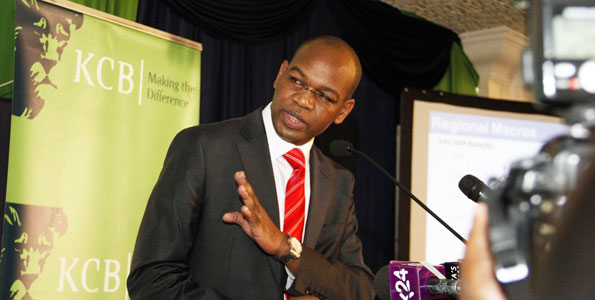
According to Joshua Oigara, the chief executive officer at KCB, Biashara Smart is designed to improve the ease of doing business for small and medium enterprises. “This is a proposition that will help businesses run efficiently and professionally,” said Mr. Oigara during the launch in late July.

Biashara Smart is hinged on the Biashara Lite and Biashara Pro packages. Each of the two packs come with varying benefits and charges. Nonetheless, both of them come with bundles of data, text messages and voice minutes, website builders, email accounts, tablets, and a mobile or current bank account.

Interestingly, the product is being carried in collaboration with telecommunications giant, Safaricom. According to Safaricom’s chief executive officer, Mr. Bob Collymore, the partnership between KCB and Safaricom in delivering the Biashara Smart to small scale business owners will ultimately result in the best class of financial and integrated communications solutions for local enterprises.

But that is not where the juice ends. KCB once a small business owner joins the KCB umbrella, he or she will now be able to apply for advances through their mobile phones and receive approvals after the bank’s employees physically visit their business site. This process is expected to take a maximum of two days.

In the same vein, Biashara Lite customers will be able to borrow a maximum of Sh. 20,000. This will be processed immediately and will be payable within 30 days at a discounted interest of 7 per cent. Customers of Biashara Pro on the other end will be allowed to apply for loans of up to Sh. 1 million. These loans will be payable in 24 months and will attract an interest of 1.5 per month.

According to Mr. Oigara, KCB is looking at an annual interest rate ranging between 12-18 per cent. “In case of account holders using different currencies, though, the range will be seven to eight per cent a year,” he added. These charges will be subject to the borrower’s credit worthiness.

From heroin to heroine: I overcame drug addiction to help others shun drugs

0

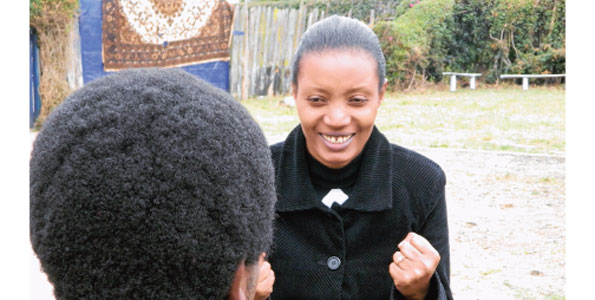
We meet Judy Wambui outside her home in Kiserian on a warm, sunny Saturday afternoon. She looks relaxed as she chats with Bernard, her husband.

A book, ‘Sober Again’ by Stella Mathu, is on her lap. It is perhaps the only signal of the seedy drug past that Judy, now an addiction counselor, harbours.

“Love can blind you to the point of destruction,” she says of the primary reason why she dabbled with cocaine, heroin and marijuana in the first place.

“I never imagined that I could sink so low.”

It all began in 2002 at a restaurant along Moi Avenue where her friend, Jennifer, introduced her to a man of West African origin called Chooks for short.

“His friend was dating Jennifer,” explains Judy. Chooks told her that he was in town to handle a big shipment that was stuck at the port. Before parting ways, he asked her for a coffee date.

“I was awed at first sight. He was tall, dark and handsome.” For the next few days before their date, she could hardly get him off her mind. “I longed to see him again,” she says.

After their first date, they began to meet frequently as their coffee dates turned into cosy dinners. Before long, Judy began to date him. “I was head over heels. I even moved in with him at his Kileleshwa house.”

To her surprise, Chooks was already staying with another woman called Elizabeth. “I was alarmed at first, but he explained that she was just a friend whom he was staying with while his clearance got processed.”

Apparently, Elizabeth was a clearing and forwarding officer for a freight company in Industrial Area. Judy cautiously settled in and with time, her fears over Elizabeth’s position in his life dissipated.

“We even became friends!” However, as days went by, Judy noticed that Chooks and Elizabeth often talked about drugs.

“They seemed to agree that there was a lot of money in the world of drugs.” Whenever a drug peddler got nabbed by cops on TV, they would quip that he or she had just been unlucky, and that many other peddlers went by without getting noticed.

Judy began to suspect that something was not right. But while her instincts screamed that something was fundamentally amiss with Chooks and his friend, she was already deeply in love with him.

Her fears were confirmed one day in late 2002 when she came home early and found Chooks smoking crack cocaine on the balcony.

“He and Jennifer’s boyfriend would go to the balcony and smoke. All along, I assumed they were just smoking cigarettes.” Judy says that she stood there aghast, shaking.

“I’d been feeling that something was wrong. But in my wildest dreams, I could never have imagined that he was doing drugs. Later, she confronted him about it and he did not deny.

“Cocaine was just the tip of the iceberg. He was a drug peddler who also traded fake traveller’s cheques. The cheques were usually stolen, and Chooks would forge his own details on them. He also did heroin.”

Addiction

According to Judy, Chooks tried to lure her into the business, claiming that it had minimum risk and brought in huge, quick cash. The drugs would be sourced from Pakistan, and would come into the country through the local international airports or go to Tanzania first, then get smuggled into the country by road.

Even with this knowledge, Judy did not leave him. “I loved him too much and couldn’t bear to leave him. He splashed a lot of love and money on me.

He’d done nothing wrong to me except that he was a drug trafficker. If anything, I told myself that I could turn him into a good man.”

Instead, Chooks and Elizabeth began to assemble drugs at home in her presence. Sometimes, their customers and fellow peddlers came to fetch the drugs there.

“They sniffed and sometimes they rolled them into cigarettes.”

Chooks and Elizabeth began to woo her to try some. Initially, she refused. But it wasn’t long before she gave in. “I’d just come home after a bad day at my salon. I was tired and out of psych.”

Elizabeth, who was at home, noticed this and advised her to take a puff of marijuana. “She claimed that it would uplift my spirits,” she says. Reluctantly, Judy took the roll and smoked. Thus started five years of addiction to drugs.

She began to take cocaine, heroin, bhang and over-the-counter sedative pills. “There was a drug called Rohypnol, which kept me perpetually ‘high’,” she says. The pill is also a widely known date rape drug.

The addiction began to take a toll on her. She could hardly stay at work, and always went home where she took more drugs. “Things fell apart. Chooks’ health deteriorated and business became difficult to push through as security officers tightened their noose.”

It was while in the middle of this mess in 2005 that Judy travelled to visit her parents in Thika. ‘I was high and weak. My tongue was overly blue and my eyes were literally hanging from their sockets.”

Her folks thought she had taken alcohol, but on a closer look, one of her uncles determined that it was not alcohol but drugs.

“He called my mother and they cornered me. And after prodding if indeed I’d taken drugs, I admitted. I still don’t know if I did it due to drugs or whether I was subconsciously looking for rescue,” she says.

Recovery

Judy’s family searched for a rehab centre that would work in her best interest and in mid-June, she was admitted at the Asumbi Drug Rehabilitation Centre in Homa Bay, Nyanza.

“I did not go back to see Chooks and for the next three months, I did not see or hear about him.” As much as she knew that she needed help, she still wondered how he was and if his health had improved.

“I finally managed to get word from Elizabeth in October. Chooks had been arrested and after a few days at the Industrial Area police cells, he had been taken to Kenyatta National Hospital where he died from drug-related complications.”

The news dented the effort she was making at regaining her life. She left the rehab and nine months later, lapsed back to drugs, this time in more earnest. “The stress was too much. I felt hopeless and beyond repair.”

With no friend, no home and no job, life for her became worthless. Yet, her family kept tabs on her whereabouts as they tried to get her back to the rehabilitation centre.

“Their persistence made me think that perhaps the dice was not yet cast for me. I could still regain my life.”

One morning in early 2006, Judy woke up and headed for Jorg-Arch Drug Rehabilitation Centre in Limuru. After a six month stint at the rehab centre, she joined the House of Grace church.

“I looked for friends and accountability partners who’d walk with me on my way from addiction.”

She admits that recovery was not easy. “At times I’d feel like crumbling. My body would thirst for cocaine and my tongue would long for pills. But I held on.”

Love once more

Having loved a man who nearly became her destruction, Judy was afraid to trust men again. “I did not want to be a mess again. Moreover, I was not sure there was one who could love me in spite of my past.”

Then along came Bernard. “We knew each other back when I was still an addict. He and two of his friends had attempted to get me to stop in vain.

Yet, he’d been patient and understanding. It made me feel secure around him.” Judy decided to accept his proposal for a relationship. They began to date and in August 2009, the two lovebirds married.

Today, Judy runs her own addiction treatment centre, Recovery Option. Looking back, Judy says that though she’ll never undo the pain she went through, she knows that her experience can turn someone’s life for the better.

“I may not be able to turn back the hands of time, but I know that my experience can be a lesson, an encouragement to someone out there who’s on the verge of doing drugs, or who’s struggling to regain her life afresh. It is the little things that make life better, and this is my little thing.”

———————————

Recovery is hard work

Judy Wambui’s counseling at her drug rehabilitation centre in Nkoroi, Rongai, extends to the close families of the patients.

“My parents were not counselled when I was admitted for drug addiction. In a way, I felt alone; abandoned and beyond repair,” says Judy.

“When I relapsed, they were not well equipped to help me out of it. I don’t want the same to happen to these patients.”

She adds that she has learned that addiction extends its destructive tentacles to close relatives of the addict as well.

To cushion her patients from desperation and relapses that are work related, Judy is careful to instil some work disciplines in her patients.

“Soon, they will leave this place. I don’t want them to relapse due to job-lack frustration. Painting or pruning while they are here helps them know that no matter how hard life is, there is always something decent that can be done to generate income.”

To find out more, we spoke to some of her patients. Here are some of their responses:

Jesse, recovering from drug addiction

“My greatest moment in recovery has been the interaction with someone who has been there and yet managed to come out. It sounds easy when someone tells you to quit drugs, but it’s not.

I have tried to stop many times to no avail. But when you meet someone with the same problem as you have, then you get a sense of assurance that indeed, quitting is possible. And that’s because they won’t read a quitting theory from a textbook but use their own experience. That’s what I have learned from Judy’s past drug addiction.”

Fredrick, recovering from drugs and alcohol addiction

“I descended into drugs and alcohol as a stress suppressant. I had lost my job and couldn’t provide for my family. Taking tablets and lots of alcohol became the only resolution for me such that I didn’t bother to look for jobs.

I couldn’t just do anything. But come to think of it, informal jobs are just as good as formal jobs. They provide reprieve where there’s none. For instance, before I came here, I couldn’t do anything else.

But now, I am a good painter. And job or no job, I know that I can get out there take a brush, do some painting and make a living. I don’t need to be an alcoholic or drug abuser to get over problems.”


43 Countries Kenyans Can Travel To Without Visa

0

Are you aware of the fact that there are a good number of countries and territories that you can travel to without Visa but only your Kenyan passport?

It is common practice that various countries across the globe put entry restrictions in place. This is to restrict access to non-citizens and establish border control; ensuring that a controlled number of people who are eligible by the standards set out by the country are allowed in. Such restrictions involve a process of applying for and obtaining visa.

However, with the Kenyan passport, citizens have access to all theselist of countries and territories outside of Egypt visa-free or visa on arrival.

This means for you is that with only your Kenyan international passport, you can travel to these listed countries without the need to make prior visa arrangements.

                                      Countries where visa is not required for Kenyan citizens:

1. Antigua & Barbuda
2. Bahamas
3. Botswana
4. British Virgin Islands
5. Burundi
6. Barbados
7. Cayman Islands
8. Comoros (Required but can be obtained on arrival)
9. Costa Rica (If you have a valid Permanent Resident Card or Visa to US, Canada, UK or any European country)
10. Dominica (Not to be Confused with Dominican Republic)
11. Dominican Republic (Buy a $10 Tourist Card and Same condition as Costa Rica above applies)
12. Ethiopia (365 Days allowed Visa Free)
13. Fiji (120 Days)
14. Grenada
15. Ghana
16. Haiti
17. Hong Kong (Yes, It’s a country)
18. Jamaica
19. Lesotho
20. Macau (Apply on entry for 30 days and renew every 30 days after that)
21. Malaysia
22. Malawi
23. Micronesia (30 Days)
24. Montserrat (180 Days)
25. Namibia (Tourist Visa Not required, Business Visa required)
26. Nauru
27. Panama (Same conditions as Costa Rica above)
28. Philippines (21 Days)
29. Rwanda
30. Saint Helena
31. Saint Kitts & Nevis
32. Saint Vincent Grenadines
33. Samoa
34. Seychelles
35. Singapore
36. Swaziland
37. Tanzania
38. Trinidad & Tobago
39. Tuvalu
40. Uganda
41. Vanuatu
42. Zambia
43. Zimbabwe

[Original:HapaKenya]

Betty Bayo takes to Facebook to denounnce her fake-prophet husband Victor Kanyari

0

On Monday morning, gospel singer Betty Bayo took to social media to denounce her husband ‘Doctor Prophet’ Victor Kanyari.

On her Facebook fan page, Betty Bayo wrote to her fans: “Anything that is unholy..anything..thats ungodly..anything that contradict my faith..Anything that mock the God who got me from wilderness humble beginning and raised me for His glory.. I rather DIE..that be part of it..”

This followed an expose carried on KTN on Sunday night. In the expose, Kanyari was seen groping a woman’s breasts, and instructing his followers on how to fake miracles to get money. The expose was informed by one of Kanyari’s co-workers who engineered the fake miracles following a fall-out between him and Kanyari.

In response, her fans wrote:

SirJohn Isaac N: She’s holier than thou now? She wants to dupe us that she had no clue!

Shaira Mwaura: I believe you Betty Bayo, do away with that man.

Peter SenteroJr: You want to tell me I can hire fake radio callers moonlighting in my posh living room squeezing money from desperate sicklers and my wife has no knowledge? That money, most likely, assisted you to produce those quality gospel videos… You are an accomplice in this, and you will not stuff wool in our eyes.

Carole Shayne Hussein: Rise up, seek forgiveness, leave what can hider you from going to heaven, cling to Jesus, stand firm and you will be saved.

Sarah Maina: I can’t judge you Betty Bayo. It was him; not you!

Caroline Kendi: How come you didn’t know your husband’s dark side? Were you threatened?

Mary Njambi: Poor Betty Bayo, may god give you grace, shame on those pointing fingers at you.

MerryMary Mathu: Shhh… Betty Bayo stop adding more potassium on people’s injuries. You have compromised this man’s eveil acts for all those years and now you want to sound innocent!


Investor to open Machakos’ first five-star hotel in December

Machakos’ first five star hotel is set to open its doors to customers in December. Former Precision Air Chief Executive Officer Alphonse Kioko is the man behind the new hotel project set to change the skyline over the fast growing Machakos town.

Kenya Commercial Bank (KCB) is is the mortgage provider for the venture that has five other shareholders. Accommodation in Machakos town has remained a challenge even as the town which is headquarters for Machakos County, continues to expand.

“Whenever there are major events within the county, there is rush for the few available spaces in town with some forced to seek accommodation in far locations like Masii, about 15 kilometres away,” Mr Kioko said.

He said with the new facility named Gelian Hotel, which has about 100 rooms, the problem of lack of adequate accommodation will be resolved.

“The timing is perfect given the upcoming festive season and especially the extravaganza planned for towards end of the year,” he added. The hotel is 45 minutes drive away from Nairobi, eight minutes from Kyamwilu site commonly know as ‘Zero gravity’.

This is a tourist attraction area where nature defies gravity and water flows upstream. It is also 15 minutes from wood carving centre of Wamunyu. In an interview with Weekend Business, Kioko said the hotel is a community facility that will act as a central point of civil hospitality.

“This great structure build to keen details and mindful of the awful depression that had settled over the nation’s hospitality industry is a clear manifestation of our confidence to invest in destination Kenya,”’ he said.

He added that the establishment of the hotel will create hundreds of jobs. In total, there are 95 rooms which include two presidential suites, four ambassadorial, 36 deluxe and 53 standard rooms.
“We have pegged an introductory rate of $100 (Sh8,900),” he said. And in a bid to take advantage of the growing trend in Meetings Incentives Conference and Exhibitions (Mice), Kioko says the hotel has five rooms complete with video conferencing facilities with capacity to hold more than 400 people.


Turn your wife into a passionate lover

0

Chris Hart: Ask most single guys these days and they’ll say that the key to a great love life is lots of casual relationships.

They couldn’t be more wrong! Friends with benefits may have more partners over their lifetime. But traditional couples have far better sex. And more of it.

But it’s not all a bed of roses. Couples still have to work at getting things right. And the most contentious issue? Who takes the initiative! It’s almost always the guy. Not that she’s never in the mood, but women worry about being rejected, and think it’s not feminine to start things.

But most would like to and will if you create an environment where she feels it’s safe to let go.

That starts long before anyone get’s naked. A little subtle teasing over breakfast, to plant the idea in her mind. A few sexy texts during the day, and by the time you get home she’ll be in the mood.

Help her to relax as the evening starts. Make a little small talk nothing contentious over a cup of tea and you’re half way there.

APPRECIATE HER

After that, you need to train her. Seriously! Any time she begins to take the lead, in even the smallest way, be sure to respond positively. Then she’ll do it again. Initially she’ll be nervous, so avoid even the slightest hint of criticism. And make intimacy a priority, because it will be a lot easier for her to take the lead if lovemaking’s already a regular part of your lives.

She wants to feel good in bed, and if she does, she’ll want more. So if you haven’t figured out what she likes yet, find out! Just ask her — but not when you’re between the sheets. That way, she won’t feel pressured.

There are a few other things you can do — like reworking your wardrobe. That’s because wearing the right clothes shows how much you value her. She’ll notice shoes first, so buff them up. Nice dark jeans that fit just right. And a shirt that speaks restrained elegance.

Take her out more — to places where couples go. Watching other happy couples together emphasises the joy of being in a relationship. Seeing other people value your opinions and respond to your stories will make her appreciate you more. Look her in the eye when she speaks, and laugh at her jokes. She’ll feel more valued. And you’ll both feel more passionate.

In the office, you’d help a colleague who had too much work, wouldn’t you? Do the same at home. Take over a few tasks, like helping with the kids’ homework. Create a positive atmosphere about everything around the house. Compliment the little things she does for you.

Enthusiastically support her projects. Remember above all that being desired is the ultimate love potion. So make sure she knows how much you adore her — and want her — and she’ll soon be a truly passionate lover.