Home Blog Page 2326

The Queen of Marketing; Joanne Mwangi (PMS)

0

“I am not afraid of failing; failure provides the opportunity to begin again, more intelligently.”

Not many have the guts to quit their jobs at their prime and venture into uncharted waters.

That’s what Joanne Mwangi did. At the young of 26, she left the comforts of the corporate world by giving up her marketing job at Colgate and formed Professional Marketing Services (PMS). This was in 1996, a time when the idea of marketing company was still new to Kenyans.

That my friend is the entrepreneual spirit called “having balls”.

Summary

Joanne Mwangi BIO

“I used my savings to buy basic necessities to start off the business. PMS’s first premises were in a single room. I would drive in every morning, mop the floor, clean the table and dust the furniture. I would work on proposals and drive to industrial area to deliver them myself,” Mwangi told People Daily.

In those days of humble beginnings, Joanne never gave up however much things seemed to fall apart. Having been raised by astute business-savvy parents, she was ready to give the shot her all.

However, the business failed and was forced to seek employment again at the Kenya Tourism Board. She went back to school (USIU) and started her Masters in Strategic Business Management.

Lessons learnt from re-employment

“There, I learnt so much, I got a lot of international exposure and I met the best brains in the world while I represented Kenya externally,” she says. This gave her confidence and faith in her marketing skills and she quit to start a company.

This later enabled PMS to get clients with the government and with manufacturing giants Bidco, Reckit Benkiser, Del Monte, Uchumi,BAT, EABL and Doom.


Margaret Kenyatta launches Oxygen Plant “Hewa Tele”

0

“Hewa Tele”is a joint venture by the General Electric (GE) Foundation, the Centre for Population Health and Development, Siaya County and the National Government . The oxygen plant dubbed is the first of its kind in the County.

The First Lady described Public-Private Partnerships (PPPs) initiatives as a new approach to mobilize resources to meet the country’s health needs in a sustainable manner.

“This plant, which offers a lifeline to Siaya residents and beyond, demonstrates what we can achieve with the right partnerships between the government and the private sector,” she said.

The First Lady said Kenyans’ wide array of genuine demands from their county governments are putting serious strains on limited resources, hence the need for strategic partnerships.

She said an increase in the use of Oxygen can reduce under-five mortality by 35% and provide additional life-saving benefits in other healthcare contexts including surgery and obstetrics.

Adding, “This Hewa Tele facility provides adequate supplies of Oxygen, a critical and vital component in health care delivery that is often overlooked as a necessity in hospitals.”

The Plant will also provide affordable Oxygen to public and private facilities in the region that would otherwise refer patients to other hospitals due to lack of Oxygen, she added.

The First Lady said the public private partnership project is a transformative initiative ‘established where the need is most urgent’ and is worthy to be replicated in other counties.


Keroche’s Tabitha Karanja named Africa’s top businesswoman

0

Tabitha Karanja, the founder of Keroche Breweries, the first ever brewery to be owned by a Kenyan, has been named Africa’s Business Woman of the Year.

Ms. Karanja was named in the 2014 edition of CNBC Africa All Africa Business Leaders Awards Presented by Johnnie Walker Blue Label (AABLA). The winners of the award were announced at the Sandton Convention Centre, in Johannesburg.

Although Ms. Karanja faced many challenges building her business – including competition from multinationals, high taxation and meddling from high powered government officials – her resilience has seen the business grow into a respected company.

Beyond the expectations of her detractors, Karanja invested in a Ksh.1 billion ($11.6 million) plant with the capacity of producing 6,000 half-litre bottles per hour. With its flagship brands, Summit Lager and Summit Malt, the brewery has proved resilient in the market.

“When Keroche … commenced operations … fingers were pointed at us and the rumours of they-can’t-do-it was written on the faces of many who never believed a Kenyan company could penetrate in a grid-tight multinational market where the end justified the means even if the means isn’t justifiable,” says Karanja.

She plans to increase the firm’s 20% market share to 40% in the next three years following an increase in its production capacity to 15,000 bottles per hour. Karanja also hopes to extend beyond beer into the soft drinks business.

“With the continent hosting eight of the world’s fastest growing economies, Africa is internationally perceived as the next great business frontier, which is both exciting and inspiring,” says Jeff Milliken, Director of brandhouse.

“As such, in the AABLA, it has been both rewarding and heartening to survey Africa’s corporate landscape and discover so many exceptional men and women who are making their indelible contribution toward the progress of the continent into a globally competitive entity with a strong internal business sector.”

The ceremony presented the coveted title of Young Business Leader of the Year jointly to Group CEOs of South Africa’s leading activations agency, The Creative Counsel, Gil Oved and Ran Neu-Ner. The two were recognised for using their collective charisma and entrepreneurial spirit to build the company into the top-ranking marketing, media and advertising group in the country.

For his sustained success and bold contribution to solutions-based business and IT strategies across multiple platforms for companies of varying sizes, Asher Bohbot (South Africa), CEO of Enterprise Outsourcing Holdings (EOH), was named Business Leader of the Year.

The prestigious accolade of Entrepreneur of the Year went to Executive Chairman of JSE-listed brokerage, Brimstone Investment Corporation, Fred Robertson (South Africa). Robertson was honoured for his demonstrated leadership on both the national and international business stages and, in particular, through his directorship and co-founding of numerous leading black economic empowerment (BEE) companies.

The award recognised her unfailing resilience and matchless business sagacity over nearly two decades in growing a company that now employs over 300 people and gives back to the community by educating the country’s youth.

The AABLA Finale partnered with BMW South Africa to ensure the awards finalists and judges were transferred to and from the event in style and comfort. The Finale was also supported by the IDC and the Gauteng Department of Economic Development.

Top 5 Technologically Advanced Countries in Africa

0

The rankings are based on The Global Innovation Index 2014

Africa is fast embracing technology and it’s doing all it can do to come up with the latest innovation that can improve our lives. Below are the top 5 technological advanced countries in Africa.

5. GHANA

ghanaflag2

With a much more stable and growing economy, Ghana is poised to have one of the best environments that support advancement in technology.

Quite a lot of technological innovation has emanated from the West African country of 25 million people. Using compressed gas to generate electricity invented by Mr Freddie Green is one of the out of the box thoughts that became real in the country.

An affordable video conferencing system was also developed by a Ghanaian. The country is being looked upon as the next “great” African country.

4. KENYA

Kenyan_flag

Kenya is definitely among the top 4 African countries to be envied when it comes to technology. The country is seeing a lot of startup companies with revolutionary ideas especially in the IT sector and all things being equal, this is bound to continue with a lot of start-ups that may eventually form International platforms for further technology growth.

Some of the inventions from Kenya include:

  • A charging shoe developed by Antony Mutua
  • An alarm-fitted television created by a 44-year-old man who resides in Nairobi. The alarm can be set off with a simple jostle of movement and can sound for up to eight hours
  •   Acharcoal stove, a solar powered refrigerator which allows medications including vaccinations and valuable perishables to reach remote areas of rural cities where there is no hope of finding electricity
  • Moses Gichanga’ drone which flies for up to two hours at a time

Other similar inventions powered by Kenya’s raw talent include:

Tamperproof voting Machine, Solar-Powered Refrigerator, Underwater pets housing, SMS car immobiliser.

[Original:answerafrica]

3. NIGERIA

nigeria-flag

The most populous country has not been left out in technology and innovative developments across africa. Coming at the third slot, Nigeria is a technology giant with lots of potentials in the industry.

It is home to the likes of Iroko Partners, a successful internet company with over 6 million unique users from 178 different countries, made in Nigeria INYE-1 and INYE-2 tablet computers, Seyi Oyesola’s “hospital in a box” invention etc.

In recent times, the country saw the famous demonstration of a urine powered generator developed by school teenagers; a Moringa plant technology that would enable Nigerians to use Moringa plant for water treatment, a move toward increasing the accessibility to portable water in the country.

There are also a lot of achievements in mobile and web apps development in the country. Though the internet penetration is still low and stands at roughly 38%, Nigeria is a country with a lot of potentials producing the most talented people when given the opportunity.

2. EGYPT

eghpt flag

It was said that civilization started in Egypt. Egypt has for long been associated with inventions and innovations. From the Egyptian Pyramid to the use of calender and written language. The North African Country has not relented in spearheading science and technology in Africa. Egypt has some of the best universities in Africa that support development in technology.

Egypt has gone this far because the government embraces technology with an attitude spread across all Industries. Despite the recent civil unrest in the country, Egypt is still a technological force to rekon with and is one of the most technologically advanced countries in Africa.

1. SOUTH AFRICA

South_African_Flag_Splatter_by_gee5evo

If you are waiting to see the country that occupies the number 1 spot on our list of most technologically advanced countries in Africa, your guess is right. South Africa, a country that cannot easily be compared with most other countries across Africa also tops African countries in the current Global Innovation Index (GII), ranking number 53 out of 143 countries compared globally.

The country supports her human potentials and that is the reason you see a lot of development in the IT field springing up from South Africa. With South African Universities constituting most of thebest universities in Africa the country is bound to keep producing some of the most amazing inventions that are globally recognized.

The list of discoveries that are worth mentioning are quite enormous. Linux Ubuntu developed by Mark Shuttleworth, Multichoice (DSTV) is a south african company with a global influence, PayPal which was co-founded by a South African, CAT scan, SASOL technology that converts coal into oil just to mention a few.

How cash on delivery boosts Jumia Online shop

0

Guest Writer Robinson Murage: Cash on delivery is the method of payment that allows customers to purchase products on a company’s website or make orders via phone and pay for them upon delivery on their doorstep or office, this form of business is as old as 1635 in England but in Kenya, it has only began taking shape and could possibly be the recipe for Kenyan businesses.

According to JUMIA, Kenya’s No. 1 online retailer Cash on delivery accounts for over 55% of its transactions in Nairobi and Mombasa, the two cities the company offers the mode of payment. Parinaz Firozi, the managing director at Jumia Kenya says Cash on delivery has helped the company acquire new customers.

“Over 60% of our customer acquisition has been through cash on delivery. There is zero risk for the customer since they only pay for the product if they like it, there are no cost implications if they reject the product, the delivery man just takes it back. Its stress free,” Firozi adds.

In a country where credit card penetration remains a major headache for financial institutions and the government with several flopped initiatives, Mobile money transfer remains the alternative. “Customers will load their mobile money account and wait until the delivery is made and they are happy with it before transferring the cash on the spot.”

Hellofood an online platform that allows you to order food online and have deliveries made to your doorstep in Kenya also offers cash on delivery. Cathy Mwangi, the marketing manager, notes it’s easy to use and more credible, “Credit cards can fail especially when customers don’t check their balances regularly leading to cancelled orders. “

Ampire Power solutions, a Powerbanks company with a physical store along Kimathi Street also offers cash on delivery. Bob Wanyiri, Group chair says the payment method forms 50% of the business activities in a day.

“We have our store here, a Facebook page and mobile number that our customers use to make orders, mostly in Nairobi. People want you to take the product to them, they want to feel you have earned every dime at their convenience. We make deliveries all day and the conversion is high. It’s good.”

While cash on delivery makes perfect sense for the customer, a lot of logistics and costs are involved especially when delivering expensive products that require insurance and security, a rejection of this nature would mean a two-way massive loss to the seller shipping the product back to the warehouse and back again to the customer and a lot of time wastage. Cases of customers changing their mind are also high since they haven’t paid for the delivery and could easily get another source and that’s not just it consolidating receipts and keeping records is crazy.

Firozi advises that using own riders and delivery vans and making several deliveries along one route is cost effective and time saving and agrees that cash on delivery is a real recipe for Kenyan business but should be used with a lot of caution and foresight. It’s your call now to make now.

7 tips to prepare a killer elevator pitch

0

A start-up founder always meets different people from different industry verticals, looking for mentors, angel investors, venture capitalists, and more importantly customers. One of the key skills that such a founder must have is to be able to explain his startup in simple words which anyone can understand in no time. An elevator pitch fulfils this purpose.

An elevator pitch is the best way of sparking an interest about your startup in the listener’s mind. It is a concise explanation of your startup. It mainly answers four questions for the listener:

• Who are you?

• What you do?

• For whom you are doing it?

• What makes you better than others?

Keep It Short and Succinct (KISS)

Always keep your pitch short and simple. Do not use fancy words to make you look smarter. The listener may not understand, eventually losing interest in your idea. Use words that can create a visual image in the listener’s mind. This will make the message memorable. It is good to add some key statistics/data which substantiates why your product/service is best and why it is important for the listener. Adding data to your pitch gives it credibility and makes it more believable for the listener.

Avoid jargon

Never use industry specific jargon in your elevator pitch. This makes the pitch difficult to understand, especially for people who are not from your industry area.

Tell a story

A relatable story is a good way of keeping listeners engaged in your pitch. Always create a story about the customer, his pain and struggles and how your product/service is giving a helping hand to him. Always give a personal/emotional touch to your story.

Have specialized pitches for different class of audience

It is good to have at least two-three variations of your elevator pitch ready with you. This is because you will probably meet different people from different industry verticals with different business interests. In such a case, your elevator pitch must match their interest in order crack the deal. Make your pitch specific to the audience that you are addressing.

Many times your startup may strive to solve problems which span across different customer segments. In such cases, it is better to create different elevator pitches with slightly different ‘value offerings’, in order to engage customers from each segment.

Keep it Goal Oriented

Always know what you want to achieve through your elevator pitch. Is it a new customer, a business mentor or an angel investor to fund your startup? Or is it someone to validate your idea? As already suggested, create two-three goal oriented variations of your elevator pitch.

Keep ‘Mind-Hooks’

Hooks are elements of your elevator pitch which seize your listener’s interest and make him want to know more about your startup. Such hooks help you to hit the chord in the listener’s heart. You should always try to add a few such hooks in your pitch.

Have a Call to Action

A good elevator pitch contains a call to action (CTA) for the listener. It can be to visit and register on your site, to download and try your app or to subscribe for your service. Be explicit and concisely detailed, while specifying your call to action. Make sure that your call to action is small and one that can be completed in a few seconds.
Once your elevator pitch is ready, the next important thing is to be able to deliver it perfectly. Be confident and passionate while delivering your pitch. Don’t be over excited while delivering it as it is distracting and can put off the listener. Rehearse your pitch a few times in front of different people who know nothing about your business. Always take feedback and suggestions about your pitch, and make respective improvisations.

How to get your boyfriend to propose

0

Jacqueline and her partner have a near-perfect relationship.

“We get along well and resolve our conflicts in a mature manner. He genuinely loves me and is faithful,” she says.

However, she says that something is missing.

“We are not man and wife,” she says dejectedly. “Sometimes I wonder whether we are dating, courting or cohabiting.

“I feel that it is time I walked down the aisle and if he asks, I will definitely say ‘Yes!’”

But her man has not mentioned marriage. Neither is he showing any signs of doing so any time soon.

In the same boat is Mary, a 32-year-old public relations officer. She has been waiting donkey years for her boyfriend to pop the big question, but he hasn’t. Subsequently, Mary begins to think that he is a complete waste of time.

“What are we doing if we aren’t headed for marriage?” she asks. “We are not getting any younger. It is time we settled down and concentrated on a family.”

Battle shyness

If this year ends without a marriage proposal, Mary intends to walk out and look for someone who wants to settle down.

While some men are not interested in proposing, others are too shy to propose. They do feel the need to get married, and believe they have found the right partner, but are afraid of being turned down.

“I do love my girlfriend and believe she will make a great wife and a good mother,” says Mary’s boyfriend, Paul. “However, I have not proposed yet and she thinks I am wasting her time, but I am not. I am just not sure how she will react if I propose.”

What most women do not know is that it is they who will make a man propose.

“Most men have to be led down the aisle,” observes psychologist Chris Hart.

Getting a man to propose, however, is not about great sex or the amount of time you spend together.

“There are three critical things that will get a man to propose: affection, openness and sharing of things ,” Chris says.

Show affection

“You have to be genuinely affectionate, and that entails simple things like touching, sitting close together, and even secret smiles.” Rosina Mruttu observes that if your mate is not affectionate, is phony, or for some reason you don’t feel affectionate towards him, “chances are high that the proposal may not be forthcoming”.

Sarah Kabu shares that openness and doing things together was what did the trick for her.

“We always sought to do things, both big and small, together, and it helped that we shared a love for travelling. This gave us an opportunity to exchange ideas and fears.” In fact, out of it not only came the proposal but their joint travel company, Bonfire Adventures.

Rosina concurs: “You should feel truly able to share your important secrets with him, knowing that he will keep what you say to himself.”

For instance, can you tell your man that you don’t like a certain thing about his best friend or his mother’s cooking with the confidence that he will not tell anyone? If he keeps your secret, know that you are a step closer towards wedding bells.

Share secrets

Chris cautions that couples who feel unable to share their secrets hardly get married regardless of the number of years that they spend living together. He further notes that where marriage is on the cards, it takes a man less than a year to propose.

“If two years have gone by without a proposal, then you should begin to get him to commit.”

Talk about it

However, men hardly discuss marriage, even when they are seriously thinking about it.

“Marriage is a touchy subject, with lifetime commitments and responsibilities. It is not an ordinary topic that you can bring up anyhow,” says Joseph, 29.

Therefore, it is upon the woman to raise the matter. “In about 70 per cent of couples, it is the woman who speaks about marriage first,” Chris notes.

To begin with, your man may have no intentions of marrying you, yet he won’t tell you so unless you ask. On the other hand, he may wonder how to even initiate the subject.

“Many men are reluctant to propose, perhaps because they are wimps and/or are scared of being rejected,” says Chris. “A man will only propose when you let him know that it is what you want.

If you are still strongly together after a year or so, then by all means tell him about marriage. Few men realise that dating for a year and being in love means getting married.”

However, do not give him hints! If you want him to do it, just tell him. Neither should you directly challenge him. Men hate it. For instance, if you say “We have to get married or else I’ll walk out,” he will likely tell you to walk out.

If you quip that you will start looking for a man who’s ready to settle down, he will readily tell you to go ahead.

But bear in mind that men don’t react well when marriage is first discussed. Therefore, do not see his bad reaction as a refusal or rejection. As Chris says, “it’s a stress reaction”.

Just give him time to digest it, and then raise it again. And remember to cut your loses too, if he is rigidly against getting married.


Are you a micro manager?

0

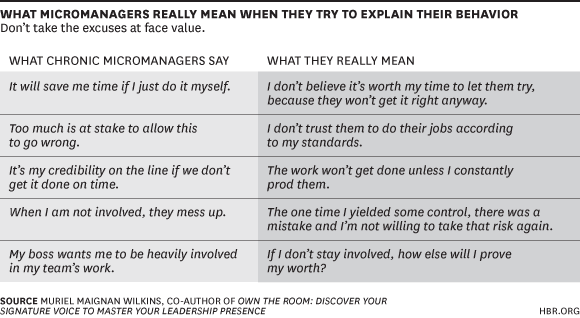
No one likes to be micro managed. That constant scrutiny of your work, knowing that your boss is always breathing down your neck is demoralizing not only to you, but the entire development process of the team.

But what if you are the “micro manager”?

A good manager has to pay attention to details its part of the getting the job done process. So when does one cross the line and enter into micro managing territory?

According to the Harvard Business Review you are a micro manager when:

  • You’re never quite satisfied with deliverables.
  • You often feel frustrated because you would’ve gone about the task differently.
  • You laser in on the details and take great pride and /or pain in making corrections.
  • You constantly want to know where all your team members are and what they’re working on.
  • You ask for frequent updates on where things stand.
  • You prefer to be cc’d on emails.

micromanagers

So what next?

It’s time to let go of the “micro” and focus on the managing aspect of your job. Here are the some pointers the Harvard Business Review gave on how to do so:

1. Let it go.

Start letting go of some of your tasks slowly by slowly. Engage in explicit discussions with your team  about what level of detail you will engage in and where they will need to pull you in.

2. Give the “what,” not the “how.”

Don’t dictate on how to get the results, your job is to set the conditions of satisfaction for the tasks given. Be crystal clear on kind of outcome you envision. A different approach may yield impressive results.

3. Expect to win (most of the time).

Apparently, micromanaging comes from the fear of failure. By constantly micromanaging, this fear is magnified and passed on to the team to the point they can’t perform without your constant supervision. Be clear on what success looks like, and give credit where it’s due.

Money decision that will make your rich

0

Chris Hart: Being rich sounds so wonderful. It’s no wonder we’re tempted by all the get-rich-quick schemes.

But loads of people become prosperous without them. And all by themselves, without inherited money or crazy scams.

They all started out in stuffy little apartments, just like the rest of us, working for the minimum wage and eating the cheapest food.

But even then they were saving a little of everything they made, no matter what. All genuinely rich people say the same thing: work hard, live within your means and save some money every month, however little. Build up a reserve, then invest in a business, or shares and the like. Buy property last of all.

This is because to get rich, you need to keep your money flexible, invest for the long-term, and avoid personal loans. Raising money for a profitable business is fine, especially from investors rather than lenders. But borrowing for anything else is crippling. Nothing’s worth paying all that interest.

Expect your investments to grow over the years, not over-night. And plan accordingly with long-term goals for your education, career, relationships, children and work in the community.

BETTER BE LOVED

Because your time on this earth is limited, give plenty of it to your family and whatever you love doing most. Better yet, turn what you love doing into your profession. Work so hard at it that you become brilliant. Network to get well known, because once word gets around that you’re amazing at something, you’ll always be in demand. And start thinking about working for yourself.

Why? Because the richest people in the world are all self-employed. Starting a business is much easier than you think, so follow your dreams  now. Putting things off just means someone else gets there first.

Look over your finances every month, and be completely open about them with your spouse. Money’s one of the main reasons couples argue, whether rich or poor.

There are two reasons for that. Firstly, because once you have the basics, more money won’t make you any happier. And because people’s attitude towards money reflects their most basic feelings about the world. So rows about money are really about the deeper issues between you — such as control, independence, commitment, trust and security.

You’ll avoid a lot of trouble by talking about money before you get married.

How you’ll manage the housekeeping, personal spending, savings and long-term plans. Agree on whatever works for you, and start doing at least some of it straight away. Couples who manage their money as a team are always happier than those who don’t.

Above all, remember that life’s not really about money. Don’t spend all your time lusting after it. It’s great having nice things, but it’s what you do that really matters — especially for others. Wealth often leaves people isolated, lonely and scared.

Envied perhaps, but nobody really cares about them. It’s better being loved, believe me.

How To List Your Business On Bizna Business Directory

0


  • If you’ve been to our website biznakenya.com then you’ve noticed our online directory on the ‘Business directory’ page. It’s a free online directory where you can list your business, telling the world about it, the products you are selling, your specific location, address detail etc to for easy access.
  • We also offer in-store activations, profiling and promotions on all social sites.
  • In this article we will look at the few steps of listing a business on Bizna Business Directory.


  1. First step is logging in to our website www.biznakenya.com
  2. Second step is clicking on the ‘Business Directory’ page
  3. Third step is registering as a Bizna member by signing up for free. (you MUST have an email address.)
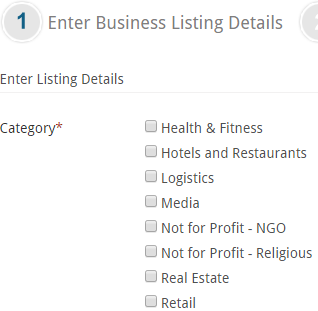
  4. Enter business listing details should be step number four.detail
  5. Followed by these other steps.
  • Listing title. This is where you put the name of your enterpriselist


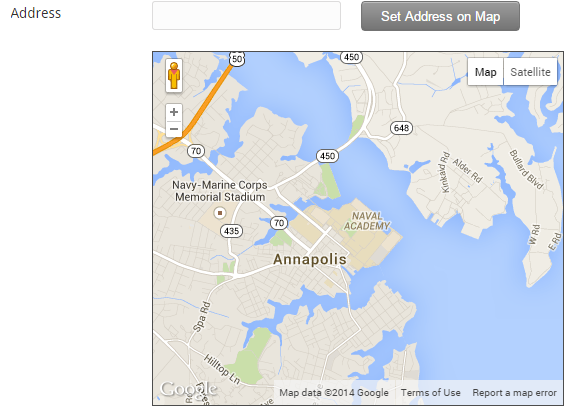
  •  Address/map
  • address


  •   Contact name
  • contact


  • Image selection
  •        .select images


  • List description.
  • business description


  • Followed by tags(facebook, twitter, instagram, linkedin)


  • Then you can also select the kind of  listing you prefer.  package


List away and let us do the rest for you!