Home Blog Page 2327

Happy marriages are never between perfect partners

0

Chris Hart: We all want to be happily married, but lots of people don’t make it. Why’s that?

Actually, until recently no-one really cared whether couples were happy or not.

Marriage was all about making a living, children, land, inheritance and so on. So people were only really interested in your family, community and culture. Does that sound familiar?

Your parents are probably still asking!

But nowadays, we expect marriages to be happy. So people only ask whether you’re in love. And we rarely think seriously about why marriages fail. We just assume the couple’s did something wrong, with each thinking we’re somehow special, and won’t make the same mistakes.

AWKWARD SINGLEDOM

But we do. So if there was a course on how marriage really works, what would it tell you?

It would encourage you to make the most of being single. Currently, society makes being single feel really awkward, especially as you get older. Couples stop inviting you round. You feel a freak on your own.

Finding sex is hard. It’s all easier in college, but once that’s over, lots of people marry just to escape being alone.

Or maybe you’re getting on well with someone, and imagine that marriage will make that last forever.

But marriage instantly moves your relationship on to somewhere very different: new responsibilities, expectations, children… Getting on well might not be enough.

You’ll only be happy in marriage if you fall in love with the right person. That’s what being single is really all about. It’s when you learn to understand your personality. Warts and all. And how your personality works out with the people you date.

We first experience love as children. But maybe that love was all mixed up with other feelings. Like being controlled, belittled or neglected. So we’re attracted to the wrong people because we go for what we knew in childhood.

Rejecting kind and reliable partners because their behaviour feels unfamiliar.

And we’re all just a little bit crazy. Like maybe you get angry? Controlling? A wee bit insecure? A bit weird about sex? Or you’re no good at explaining your feelings? Issues like that cause a lot of problems between couples. So you must marry someone who can cope with your craziness.

FAULT‘S IN US ALL

Good marriages are never between perfect people – there aren’t many of those anyway. They’re between couples who can cope with each other’s oddities.

Understanding yourself isn’t easy though. Like when a relationship goes wrong, you’ll tend to blame your partner and ignore your own faults. Your anger, insecurities and so on. When you’re single it’s easy to believe you’re really quite a nice person to live with.

So it’s no wonder no one knows what they should be looking out for.

Naturally, we try hard to get to know one another. But that’s rarely enough. It sounds unromantic, but you also need to understand your faults really well. And to go looking for someone who can cope with them. And you with theirs…

Embrace modern ways of doing business, Rachel Ruto tells women

0

Mrs. Rachel Ruto (the deputy Presidents wife) has challenged women to make use of numerous financial opportunities availed to them by the Government.

Mrs. Ruto said women should strive to achieve success in this digital era and emphasized the need for them to acquire mobile phones so that they are connected with the rest of the world.

“Women are known to be excellent organizers in their families and should take their roles seriously and always be ready to learn new things that will better their lives”, said Mrs. Ruto.

She revealed that Joyful Women Organization (JOYWO) has partnered with Safaricom Ltd to ensure the gadgets are affordable to its members.

She enumerated the success story of various Joywo women groups in 39 counties, where it has launched table banking concept adding that their counter- part in Machakos County should not delay embracing it.

She announced that JOYWO organization which she is the patron has realized over Shs.1 billion as revolving funds.

“It is the high time women enrolled in such institutions to gain skills on among others matters of investments,’ she said.

Mrs. Ruto advised women to keep their meeting places and individual plans secret to avoid attracting thieves who may want to rob them of their savings.

She also warned women to avoid group projects, which largely fail due to inactive and defaulting participants and instead use the loans they get from table banking to invest in personal businesses.

Earlier, experts from her office trained women on the table banking concept and the benefits of being in a registered group, especially when seeking government tenders

Kenyan start-ups are raising millions through Kickstarter

0

Being an entrepreneur is hard work from the get go. Having an idea is easy; the challenge is implementing it into a viable product/service that can be monetized at a reasonable time period.

The top most obstacle to the entrepreneurial process is the lack of capital. I don’t believe there is any bank out there that will give you funding based on idea only. No matter how mind blowing it is.

So what next?

You have probably read how Silcon Valley start-ups in the US are raising capital through crowd sourced funding, well; they are not the only ones. Kenyans like you and me are raking in millions for their projects through crowd funding sites. The two behemoths sites out there are Kickstarter and IndieGoGo.

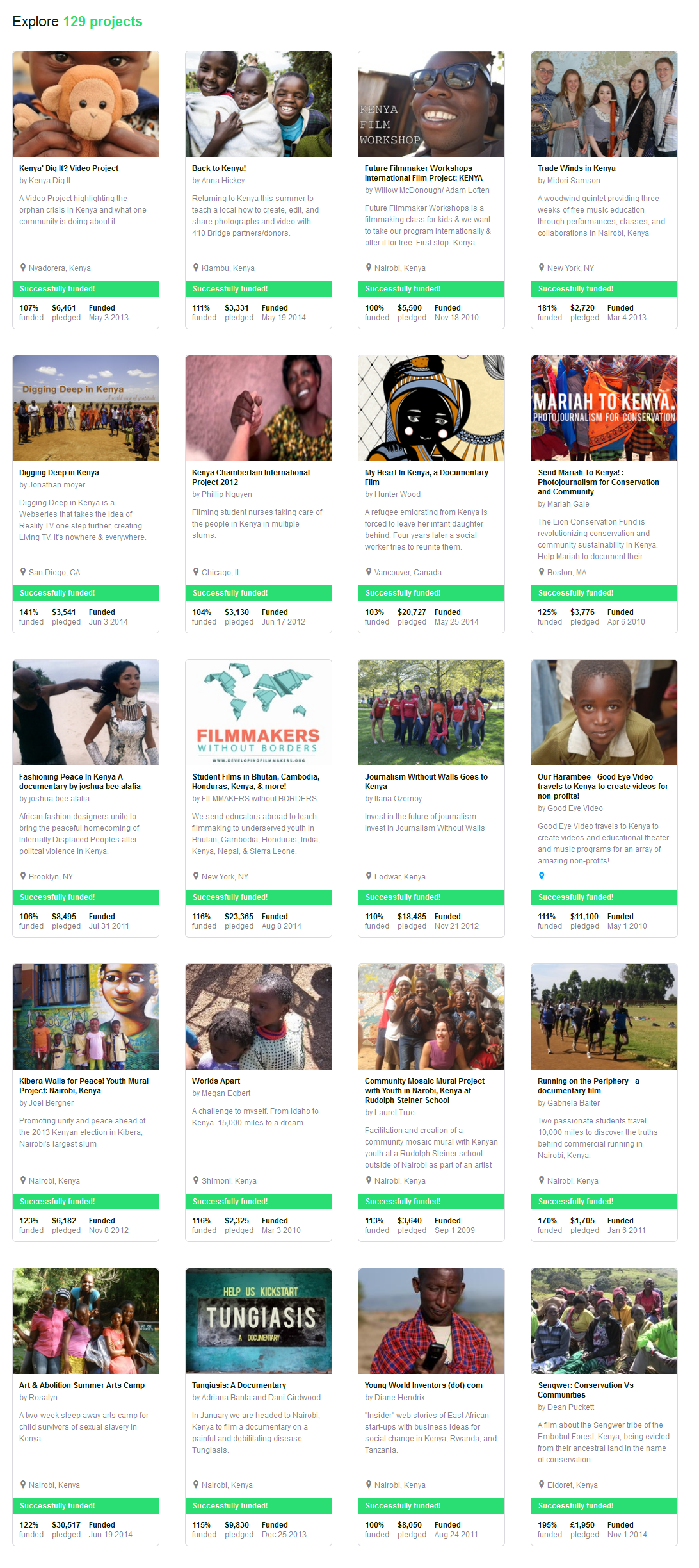
So far there are 129 Kenyan projects on Kickstarter, and 56 have been successfully funded; raising over 75 million shillings in starting capital.

What is Kickstarter?

“A new way to fund creative ideas and ambitious endeavours,”that’s how Kickstarter describes its self.

1. You post a project description on Kickstarter. You make a pitch video. The video isn’t a strict requirement, but almost all funded projects have a video. You come up with a set of “rewards” for different pledge levels on the site. You set a funding goal and a time frame for your project.

2. Kickstarter staffs look at your proposed project and provide feedback. Then they (hopefully) approve your project and it’s posted on the site.

3. Your project goes live.

4. If you don’t hit your funding goal in the specified time frame, no one’s cards get charged and you don’t receive any of the funds.

Read Also: How to create a successful Kickstarter campaign

Drawbacks

All or Nothing

Kickstarter pledge drives are “all or nothing,” meaning that if the goal isn’t met by the specified time then no one’s credit cards are charged and the project doesn’t get any of the pledged funds.

Fees

Kickstarter takes a 5 percent cut of your pledges and Amazon will take an additional amount (around 2 percent) on top of that. If your margins are slim, this could be significant.

These are some of the successful funded Kenyan projects

Kickstarter

How your past shouldn’t determine your destiny

0

Carole Mandi: “IN OUR FAMILY,” one of my aunts once told me, “we all suffer from high blood pressure.”

I had seen my grandmother suffer from it, and eventually succumb to it, as did my own mother. When would the monster come for me?

Throughout my 30s, I held my breath, visiting doctors, waiting. Until one day I understood. It could end with me. I could be the one who broke this genetic pattern. I read up on the ailment, re-organised my diet and started an exercise programme.

While I was genetically predisposed to high blood pressure, I decided that I would change what I could rather than be a sitting duck. It required drastic action on my part.

However, I recently realised that there were other, just as insidious generational predispositions that run in my family that I, and most of my relatives, still accepted as fact.

These half truths, still ruled our lives, and we nodded our heads in confirmation when someone eventually succumbed to them.

It’s a pattern I have seen and heard repeated elsewhere.

“In our family,” someone once told me, “No one had ever completed high school.”

I have also heard it said, “In our family, most of the girls fall pregnant in their teens” or “the boys usually become drunkards,”.

From the family level, this kind of thinking is extended to the community, and finally, it happens at a national level.

For instance, corruption was once so rife that when we saw someone drive a new car or buy a property, the belief was that they stole it.

These kinds of beliefs are always self-limiting, holding us back in some form of mental bondage. Without questioning, we accept that this is who we are, this is what we do and that belief becomes a self-fulfilling prophecy.

Yet the opposite is also true. We can take on positive values and beliefs and these can govern how we live. If children grow up in a family where excellence is expected, nurtured and encouraged, chances are higher that they will excel.

When I attend my children’s concerts or prize-giving days, I’m always amazed at how children from certain families, even though in different grades, always come out shining.

Eventually I took one of the mothers of these children aside to find out how they did it. She told me that children don’t turn out that way by chance, and it goes beyond genetics to upbringing.

“There are standards expected of them, they are trained to achieve them and the same is role modelled not just in the nuclear family but the extended family as well,” she told me in so many words.

The children knew that in their family, being academic, musical or sporting achievers was who they were.

Our belief systems are powerful because thoughts become words, words become actions and actions become character and character becomes destiny. Our belief systems influence not only how we see the world but how we see others.

To positively change the course of destiny for an individual, family, tribe or country, someone has to step forward and question all previously accepted self-limiting beliefs.

However, questioning them is not enough unless we replace them with positive beliefs. Thereafter, we have to be willing to consistently do what is necessary to break the pattern.

As we head into the elections, the pressure to find refuge in tribal cocoons that encourage negative group thinking is high.

Regardless of what happened in the past, or who we believed ourselves to be, the opportunity to create a positive future begins when we have the courage to think differently.

Sell your idea and get funded by local Shark Tank

0

Arghan Joshua had always wished to start a renewable energy firm. His dream came true in 2008 when he founded Continental Renewable Energy Company and began to deal with waste management, making composite, roofing tiles, and fencing posts from recycled plastic waste.

However, to set the company on a growth path, he needed to attract angel investors.

He turned to GrowthAfrica – the local version of the popular Shark Tank – a small and medium businesses accelerator to pitch his business, gain exposure and access money.

Well, six years down the line, his decision has paid off.

“My business was struggling to attract investors. But the exposure that has come participating at GrowthAfrica has been immense. So far, my business has managed to get Sh4.5 million in funding,” he said.

He is not the only one who has enjoyed the helping hand of a business angel.

In 2012, Catherine Mahugu, Gwendolyn Floyd and Ella Peinovich came together to form Shop Soko, an online fashion and jewellery store.

To attain their goal of connecting online consumers to global jewellery makers as well as semi urban and rural artisans, they pitched their idea at GrowthAfrica and began their journey to success.

Other beneficiaries include Christine Khasina–Odero’s Super Mamas, an online platform that allows mothers to purchase and sell products for children, Judith Owiga’s jua kali mobile and web outfit that connects the youth in jua kali trade to industries and homes requiring technical assistants.

Also enjoying GrowthAfriuca’s financing and expertise is Jooist, a gaming business. In the past 18 months, Jooist has managed to reach over 100,000 users every day with its product besides securing Sh2.2 million in funding.

In the same period, Ecofuels Kenya, which produces biodiesel and fertiliser using non-productive crops from 2,000 local farmers has attracted Sh27 million in funding, while Zana Africa has sold over 50,000 locally produced sanitary pads developed from farm waste after getting Sh90 million in investments and grants. Similarly, 270 aspiring entrepreneurs and 82 startups have passed through GrowthAfrica.

The funding accessed by these two businesses is the brainchild of Johnni Kjelsgaard, a local entrepreneur and angel investor. “We invest in four main sectors,” Mr Kjelsgaard notes. “Our focus is usually on enterprises that have a positive impact on society such as provision of income to low earners or provision of innovative products and services in agriculture, health, education, manufacturing and ICT.”

According to Mr Kjelsgaard, since its establishment, GrowthAfrica has so far helped create over thousands of jobs besides injecting at least Sh360 million in small and medium local businesses.

“In the past two years alone, we have identified and trained 240 entrepreneurs and assisted their businesses to raise Sh2.8 billion through 82 social enterprises. This has come with 11,300 new jobs with 87 per cent of all these business reporting sustainable profits,” he adds.

Making Sh. 500,000 per month from selling charcoal

1

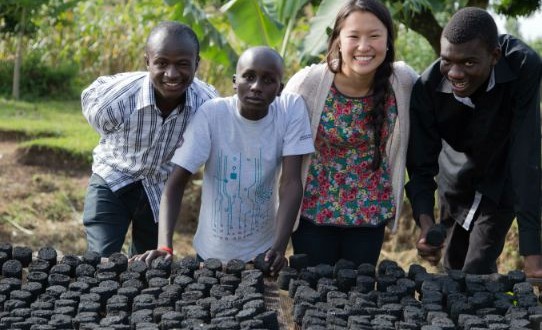
In mid-2013, Ian Oluoch and Tom Osborn joined the Global Minimum’s ‘Innovate Kenya In Challenge’ competition where they pitched an idea on how to develop a smokeless, affordable and easy-to-light briquettes. Their idea impressed the judges and the pair won a Sh268,349 ($3,000) cash prize. “This is where the idea of GreenChar Company was born, the competition gave me a challenge to start my own company with the money I won,” says Osborn.

A few months later, they decided to develop their idea further and in December, Osborn, Oluoch together with a friend called Kirotich founded GreenChar Company in Awendo, Migori County to make the and sell the smokeless briquettes. The social enterprise provides affordable, high energy cooking solutions to transform the Kenyan cooking environment and save lives, money, and time.

To fight against the environmental and health problems that currently arise due to firewood and charcoal usage, GreenChar produces charcoal briquettes called Makaa Poa from revitalised agricultural wastes and distributes clean cookstoves.

“Makaa Poa produces 90 per cent less smoke and 60 per cent higher energy than charcoal. We simultaneously distribute clean cookstoves that optimise the efficiency of the briquettes. Combined, they make a complementary product and provide a complete household cooking environment,” said Osborn.

Says Oluoch: “Per 1kg of GreenChar’s charcoal briquette sold, GreenChar saves five kilogramme of wood and 10kg of carbon related emissions. Per 39kg of briquettes sold, GreenChar saves one tree”.

Olouch says that the Makaa Poa are eco-friendly and have reduced smoke emissions, therefore curbing deforestation and decreasing adverse health effects from firewood and charcoal usage.

They plan to expand the firm to other parts of the country s because they are currently based in Awendo. They use women groups and saccos to sell the briquettes. The briquettes are made from raw materials from sugar cane (bagasse) bought from Sony sugar factory and also they use a paste made from cassava peels.

Bagasse is first dried and burnt in a combustion chamber to reduce the smoking effect. It is then mixed with the cassava paste and pressed hard to obtain the highest density for the product to last longer.

The charcoal, which is the final product, is then dried and packed in two-kilogramme packets ready for transportation to the market.

“Since it was founded, GreenChar has grown rapidly selling over four tonnes of briquettes and distributing over 450 cook-stoves and in the process saving nearly 950 trees and offsetting 360,000kg of carbon related emissions. The company has a total of nine employees and makes over Sh500,000 per month.


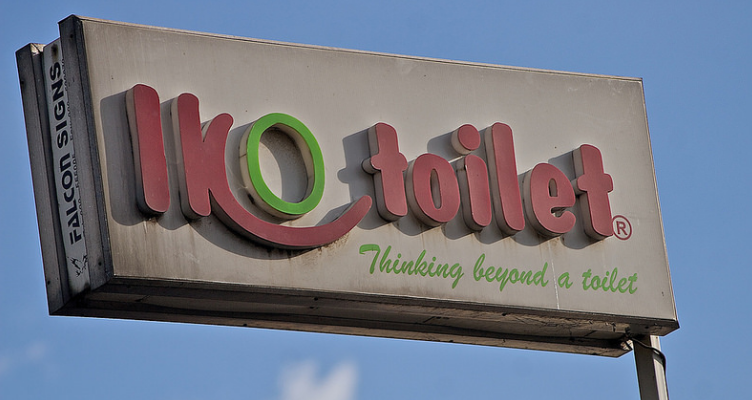
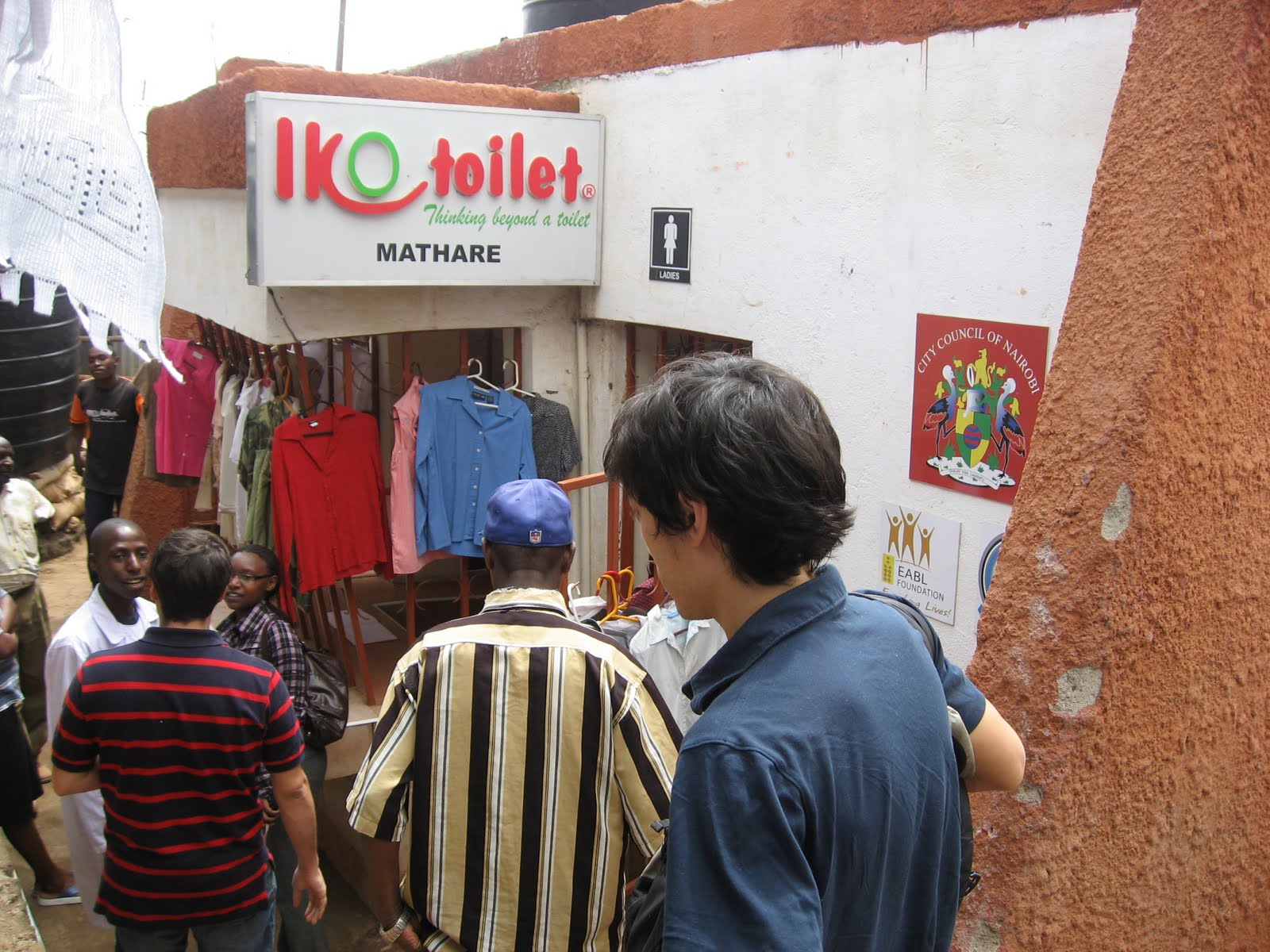
“Think beyond a toilet” Iko Toilet

0

How it all began

Ten years ago, the stench of the Nairobi public toilets could be smelt 100 to 200 meters away. The then city council (County Government) was doing a poor job managing the loos to the extent that they were being run by street urchin.

So when everybody smelt the filth and turned away, David so a problem that needed solving.

He posed the question, “is it possible to have proper sanitation within our cities?”

At the time, the local government act of the old constitution gave provision of sanitation to the local governments. So a private company stepping in to provide this service was unheard off. And as one can only imagine, the officials at the council were apprehensive to change.

But as the old adage goes, “there’s nothing more powerful than an idea whose time has come.”It was David’s time to shine.

The toilets had to be self sustainable, so they had to be of more service to the community, this was done by setting up kiosks and shoe polishing booth.

To fund the dream toilets, David visited nine Kenyan banks and they all turned him down. He lacked the normal banking requirements to guarantee the risk of the venture failing.

“To us, the security was the good will for this social venture ,”he says, the banks disagreed.

With the banks out of the question, David and his cofounder Doctor Nganga contributed to set up the first the first toilet and later got financed by good will.

iko toilet3

The first Iko Toilet cost 3 million

They finally applied for a million dollar loan which they managed to get and used the capital to expand throughout the country.

There are currently 65 Iko Toilets throughout the country.

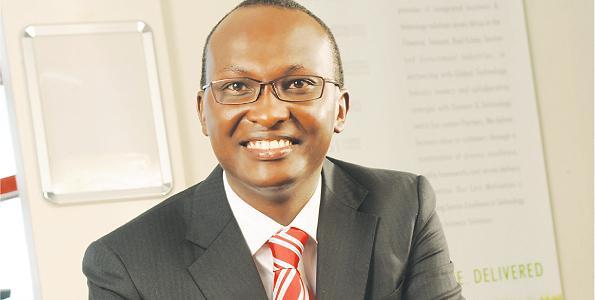
Why Michael Macharia is Kenya’s Own Bill Gates!

0

Of all the local tech entrepreneurs, no one comes close to Michael’s success.

Beginning of the entrepreneurial journey

He first started as an accounting intern at Comtech Systems (a former IT company owned by the Aga Khan Development Network). Eventually held the role of Finance Manager sitting at the Board and later as Sales Manager where he was responsible for the company’s 80% sales revenue.

At 25, he quit his job and formed Seven Seas Technologies (SST) with only a team of five. That was 14 years ago, a lot has changed since then. In 2012 Forbes magazine estimated Seven Seas’ annual sales at $50 million (ksh4.5billion)

mike macharia

Getting financial support then for a firm with no assets or no income statements was almost an impossibility. Macharia says that the first bank to support the young firm was the Banque Commerciale du Rwanda (Commercial Bank of Rwanda). Rwanda, alongside Kenya, was also the first market for the upcoming software services firm.

Seven Seas Technology Group now consists of five firms: Bring, a business applications and consulting firm; Hakken, which does IT and service management; Intelligent Infrastructure which focuses on ICT infrastructure; the Knowledge Transfer Center focused on executive ICT and business corporate training; and Twenty Third Century Systems which does SAP implementations and consulting and was was acquired in Zimbabwe for a majority stake.

Shareholders include founders Macharia and Rob, Abraaj Group and the estate of the late James Gachui.

From 5 to over 150 employees

In its 14 years of existence, Seven Seas has expanded the firm’s presence to Zambia, Zimbabwe, Angola, Mozambique, Ghana, Nigeria, Ethiopia and Burundi in addition to Kenya and Rwanda. With significant business coming in from West Africa.

IPO set for 2017

Seven Seas aims to generate 50 percent of annual revenue from Kenya by the time it goes public, compared to 80 percent at present, and the rest from other African markets.

To achieve that, it plans to diversify beyond offering information technology hardware, software and consulting services to telecom operators to serve banks, insurance firms and government as well.

seven seas headquaters

Seven Seas headquarters at Riverside 

Here’s your chance to take up expand your start-up with KCB

0

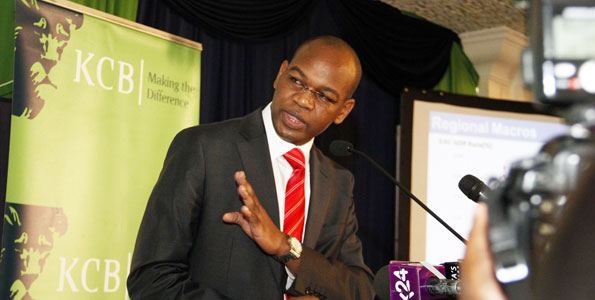
Small and medium business owners can now secure loans of between Sh. 1,000 and Sh. 1 million payable between three months and two years. This is courtesy of the Kenya Commercial Bank’s Biashara Smart product, which is presenting you with a new avenue to access improved financial services.

According to Joshua Oigara, the chief executive officer at KCB, Biashara Smart is designed to improve the ease of doing business for small and medium enterprises. “This is a proposition that will help businesses run efficiently and professionally,” said Mr. Oigara during the launch in late July.

Biashara Smart is hinged on the Biashara Lite and Biashara Pro packages. Each of the two packs come with varying benefits and charges. Nonetheless, both of them come with bundles of data, text messages and voice minutes, website builders, email accounts, tablets, and a mobile or current bank account.

Interestingly, the product is being carried in collaboration with telecommunications giant, Safaricom. According to Safaricom’s chief executive officer, Mr. Bob Collymore, the partnership between KCB and Safaricom in delivering the Biashara Smart to small scale business owners will ultimately result in the best class of financial and integrated communications solutions for local enterprises.

But that is not where the juice ends. KCB once a small business owner joins the KCB umbrella, he or she will now be able to apply for advances through their mobile phones and receive approvals after the bank’s employees physically visit their business site. This process is expected to take a maximum of two days.

In the same vein, Biashara Lite customers will be able to borrow a maximum of Sh. 20,000. This will be processed immediately and will be payable within 30 days at a discounted interest of 7 per cent. Customers of Biashara Pro on the other end will be allowed to apply for loans of up to Sh. 1 million. These loans will be payable in 24 months and will attract an interest of 1.5 per month.

According to Mr. Oigara, KCB is looking at an annual interest rate ranging between 12-18 per cent. “In case of account holders using different currencies, though, the range will be seven to eight per cent a year,” he added. These charges will be subject to the borrower’s credit worthiness.

From heroin to heroine: I overcame drug addiction to help others shun drugs

0

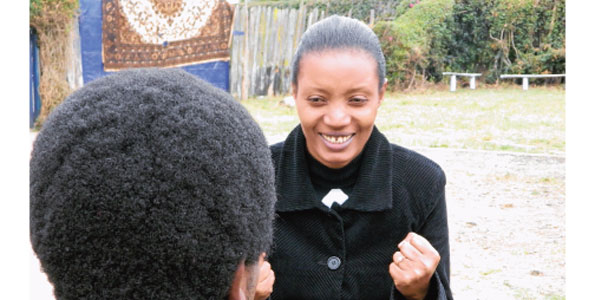
We meet Judy Wambui outside her home in Kiserian on a warm, sunny Saturday afternoon. She looks relaxed as she chats with Bernard, her husband.

A book, ‘Sober Again’ by Stella Mathu, is on her lap. It is perhaps the only signal of the seedy drug past that Judy, now an addiction counselor, harbours.

“Love can blind you to the point of destruction,” she says of the primary reason why she dabbled with cocaine, heroin and marijuana in the first place.

“I never imagined that I could sink so low.”

It all began in 2002 at a restaurant along Moi Avenue where her friend, Jennifer, introduced her to a man of West African origin called Chooks for short.

“His friend was dating Jennifer,” explains Judy. Chooks told her that he was in town to handle a big shipment that was stuck at the port. Before parting ways, he asked her for a coffee date.

“I was awed at first sight. He was tall, dark and handsome.” For the next few days before their date, she could hardly get him off her mind. “I longed to see him again,” she says.

After their first date, they began to meet frequently as their coffee dates turned into cosy dinners. Before long, Judy began to date him. “I was head over heels. I even moved in with him at his Kileleshwa house.”

To her surprise, Chooks was already staying with another woman called Elizabeth. “I was alarmed at first, but he explained that she was just a friend whom he was staying with while his clearance got processed.”

Apparently, Elizabeth was a clearing and forwarding officer for a freight company in Industrial Area. Judy cautiously settled in and with time, her fears over Elizabeth’s position in his life dissipated.

“We even became friends!” However, as days went by, Judy noticed that Chooks and Elizabeth often talked about drugs.

“They seemed to agree that there was a lot of money in the world of drugs.” Whenever a drug peddler got nabbed by cops on TV, they would quip that he or she had just been unlucky, and that many other peddlers went by without getting noticed.

Judy began to suspect that something was not right. But while her instincts screamed that something was fundamentally amiss with Chooks and his friend, she was already deeply in love with him.

Her fears were confirmed one day in late 2002 when she came home early and found Chooks smoking crack cocaine on the balcony.

“He and Jennifer’s boyfriend would go to the balcony and smoke. All along, I assumed they were just smoking cigarettes.” Judy says that she stood there aghast, shaking.

“I’d been feeling that something was wrong. But in my wildest dreams, I could never have imagined that he was doing drugs. Later, she confronted him about it and he did not deny.

“Cocaine was just the tip of the iceberg. He was a drug peddler who also traded fake traveller’s cheques. The cheques were usually stolen, and Chooks would forge his own details on them. He also did heroin.”

Addiction

According to Judy, Chooks tried to lure her into the business, claiming that it had minimum risk and brought in huge, quick cash. The drugs would be sourced from Pakistan, and would come into the country through the local international airports or go to Tanzania first, then get smuggled into the country by road.

Even with this knowledge, Judy did not leave him. “I loved him too much and couldn’t bear to leave him. He splashed a lot of love and money on me.

He’d done nothing wrong to me except that he was a drug trafficker. If anything, I told myself that I could turn him into a good man.”

Instead, Chooks and Elizabeth began to assemble drugs at home in her presence. Sometimes, their customers and fellow peddlers came to fetch the drugs there.

“They sniffed and sometimes they rolled them into cigarettes.”

Chooks and Elizabeth began to woo her to try some. Initially, she refused. But it wasn’t long before she gave in. “I’d just come home after a bad day at my salon. I was tired and out of psych.”

Elizabeth, who was at home, noticed this and advised her to take a puff of marijuana. “She claimed that it would uplift my spirits,” she says. Reluctantly, Judy took the roll and smoked. Thus started five years of addiction to drugs.

She began to take cocaine, heroin, bhang and over-the-counter sedative pills. “There was a drug called Rohypnol, which kept me perpetually ‘high’,” she says. The pill is also a widely known date rape drug.

The addiction began to take a toll on her. She could hardly stay at work, and always went home where she took more drugs. “Things fell apart. Chooks’ health deteriorated and business became difficult to push through as security officers tightened their noose.”

It was while in the middle of this mess in 2005 that Judy travelled to visit her parents in Thika. ‘I was high and weak. My tongue was overly blue and my eyes were literally hanging from their sockets.”

Her folks thought she had taken alcohol, but on a closer look, one of her uncles determined that it was not alcohol but drugs.

“He called my mother and they cornered me. And after prodding if indeed I’d taken drugs, I admitted. I still don’t know if I did it due to drugs or whether I was subconsciously looking for rescue,” she says.

Recovery

Judy’s family searched for a rehab centre that would work in her best interest and in mid-June, she was admitted at the Asumbi Drug Rehabilitation Centre in Homa Bay, Nyanza.

“I did not go back to see Chooks and for the next three months, I did not see or hear about him.” As much as she knew that she needed help, she still wondered how he was and if his health had improved.

“I finally managed to get word from Elizabeth in October. Chooks had been arrested and after a few days at the Industrial Area police cells, he had been taken to Kenyatta National Hospital where he died from drug-related complications.”

The news dented the effort she was making at regaining her life. She left the rehab and nine months later, lapsed back to drugs, this time in more earnest. “The stress was too much. I felt hopeless and beyond repair.”

With no friend, no home and no job, life for her became worthless. Yet, her family kept tabs on her whereabouts as they tried to get her back to the rehabilitation centre.

“Their persistence made me think that perhaps the dice was not yet cast for me. I could still regain my life.”

One morning in early 2006, Judy woke up and headed for Jorg-Arch Drug Rehabilitation Centre in Limuru. After a six month stint at the rehab centre, she joined the House of Grace church.

“I looked for friends and accountability partners who’d walk with me on my way from addiction.”

She admits that recovery was not easy. “At times I’d feel like crumbling. My body would thirst for cocaine and my tongue would long for pills. But I held on.”

Love once more

Having loved a man who nearly became her destruction, Judy was afraid to trust men again. “I did not want to be a mess again. Moreover, I was not sure there was one who could love me in spite of my past.”

Then along came Bernard. “We knew each other back when I was still an addict. He and two of his friends had attempted to get me to stop in vain.

Yet, he’d been patient and understanding. It made me feel secure around him.” Judy decided to accept his proposal for a relationship. They began to date and in August 2009, the two lovebirds married.

Today, Judy runs her own addiction treatment centre, Recovery Option. Looking back, Judy says that though she’ll never undo the pain she went through, she knows that her experience can turn someone’s life for the better.

“I may not be able to turn back the hands of time, but I know that my experience can be a lesson, an encouragement to someone out there who’s on the verge of doing drugs, or who’s struggling to regain her life afresh. It is the little things that make life better, and this is my little thing.”

———————————

Recovery is hard work

Judy Wambui’s counseling at her drug rehabilitation centre in Nkoroi, Rongai, extends to the close families of the patients.

“My parents were not counselled when I was admitted for drug addiction. In a way, I felt alone; abandoned and beyond repair,” says Judy.

“When I relapsed, they were not well equipped to help me out of it. I don’t want the same to happen to these patients.”

She adds that she has learned that addiction extends its destructive tentacles to close relatives of the addict as well.

To cushion her patients from desperation and relapses that are work related, Judy is careful to instil some work disciplines in her patients.

“Soon, they will leave this place. I don’t want them to relapse due to job-lack frustration. Painting or pruning while they are here helps them know that no matter how hard life is, there is always something decent that can be done to generate income.”

To find out more, we spoke to some of her patients. Here are some of their responses:

Jesse, recovering from drug addiction

“My greatest moment in recovery has been the interaction with someone who has been there and yet managed to come out. It sounds easy when someone tells you to quit drugs, but it’s not.

I have tried to stop many times to no avail. But when you meet someone with the same problem as you have, then you get a sense of assurance that indeed, quitting is possible. And that’s because they won’t read a quitting theory from a textbook but use their own experience. That’s what I have learned from Judy’s past drug addiction.”

Fredrick, recovering from drugs and alcohol addiction

“I descended into drugs and alcohol as a stress suppressant. I had lost my job and couldn’t provide for my family. Taking tablets and lots of alcohol became the only resolution for me such that I didn’t bother to look for jobs.

I couldn’t just do anything. But come to think of it, informal jobs are just as good as formal jobs. They provide reprieve where there’s none. For instance, before I came here, I couldn’t do anything else.

But now, I am a good painter. And job or no job, I know that I can get out there take a brush, do some painting and make a living. I don’t need to be an alcoholic or drug abuser to get over problems.”