

Home Blog Page 98

KRA announces 13 job vacancies; requirements and how to apply

1

The Kenya Revenue Authority (KRA) has advertised 13 job vacancies across various departments.

In an advertisement on its website, KRA invited qualified candidates to fill the various management roles by March 23 2025.

The advertised positions include management roles in Data Engineering, Analytics and Strategic Planning, Enterprise Database Administration, Data Quality & Management and Investigations and Enforcement Operations, among others.

Interested candidates must register on  https://erecruitment.kra.go.ke/login to submit applications.

Below is the list of the advertised positions and specific requirements:

  1. Chief Manager, Regional Audit Centre, Micro & Small Taxpayers

The job holder shall be responsible for supervision of taxpayer audits in line with relevant tax laws, policies and procedures, to enhance revenue mobilization, tax compliance and enforce accurate reporting.

Requirements

  • Bachelor’s degree in relevant Social Sciences, Business, Pure and Applied Sciences from a recognized and accredited University.
  • Master’s Degree in relevant Social Sciences, Business, Pure and Applied Sciences from a recognized and accredited University, is an added advantage.
  • Certificate in Tax Administration from a recognized institution.
  • Membership of a relevant professional body.
  • Practicing License is an added advantage.
  • Leadership Course lasting not less than four (4) weeks from a recognized institution is an added advantage.
  • Cumulative service period of seven(7) years relevant work experience, three (3) of which should have been in middle level management  or comparable position.
  1. Chief Manager – Data Engineering

The jobholder shall be responsible for leading the organization’s data engineering function, ensuring the development and maintenance of scalable, reliable, and efficient data infrastructure.

Requirements

  • Bachelor’s degree in computer science, Information Technology, Data Science, Artificial Intelligence, Business Information Technology, Machine Learning,  Mathematics, Engineering or a related field from a recognized University.
  • Master’s Degree in Computer   Science, Information Communication Technology, Business Information Technology, Information Security, Engineering or related field from a recognised University qualification is an added advantage.
  • Must have at least one certification in data engineering or cloud native infrastructure.
  • Membership to a relevant professional body.
  • A Leadership Course lasting not less than four (4) weeks from a recognized institution is an added advantage.
  • Cumulative service period of seven(7) years relevant work experience, three (3) of which should have been in middle level management  or comparable position.
  1. Chief Manager – Project Management

The jobholder shall be responsible for overseeing the successful management and delivery of digital business and technology projects across the Authority in line with KRA’s Digital Transformation plan.

Requirements

  • Bachelors degree in Economics, Statistics, Mathematics, Project Management, Information Technology, Engineering, Monitoring and Evaluation, Business Administration, Knowledge Management or related qualification from a recognized Institution
  • Master’s degree in Economics, Strategic Management, Public Policy, Statistics, Mathematics, Project Management, Information Technology, Engineering, Monitoring and Evaluation, Business Administration, or related qualification from a recognized University is an added advantage.
  • Leadership Course lasting not less than four (4) weeks from a recognized institution is an added advantage.
  • Membership to a relevant professional body.
  • Relevant Project Management certifications such as Prince2, Agile PM, PMP,etc.
  • Evidence of having managed a minimum of two enterprise level digital projects from initiation to closure.
  • Demonstrate domain knowledge in tax, Customs and IT domains.
  • Cumulative service period of seven(7) years relevant work experience, three (3) of which should have been in middle level mangement or comparable position in Programs/Projects Portfolio Management field.
  1. Chief Manager – Strategy & Planning

The job holder shall be responsible for the development of best practice strategies to enhance corporate purchasing and improve the effectiveness and efficiency of the Supply Chain Management (SCM) function.

Requirements

  • Bachelor’s Degree in Supply Chain Management and Logistics, Purchasing and Supplies Management, Procurement and Supplies Management, Business-related or an equivalent qualification from a recognized University.
  • Master’s Degree in Supply Chain Management, Logistics and Supply Chain Management, Procurement and Contract Management, Business-related or an equivalent qualification from a recognized University is an added advantage.
  • Diploma in Supply Chain Management CPSP-K (Part III) or CIPS-Graduate Diploma (Level 6) or equivalent qualifications from a recognized institution.
  • Valid Practicing license issued by Kenya Institute of Supplies Management (KISM)
  • Member of Kenya Institute of Supplies Management (KISM)
  • Leadership Course lasting not less than four (4) weeks from a recognized institution is an added advantage.
  • Cumulative service period of seven(7) years relevant work experience, three (3) of which should have been in middle-level management or in a comparable position in Supply Chain Management function.
  1. Chief Manager – Education, Policy and Compliance 

The jobholder shall be responsible for carrying out education, training, sensitization and awareness on corruption, integrity and ethical issues.

Requirements

  • Bachelor’s degree in Economics, Statistics, Business management,Public Policy,Tax Policy, Law from a recognized University.
  • Master’s Degree in any relevant course from a recognized Univeristy is an added advantage.
  • Membership to a relevant professional body.
  • Leadership Course lasting not less than four (4) weeks from a recognized institution is an added advantage.
  • Cumulative service period of seven(7) years relevant work experience, three (3) of which should have been in middle level management or comparable position.
  1. Chief Manager – Investigations and Enforcement Operations

The jobholder shall be responsible for providing support to the Commissioner and the Department.

Requirements

  • Bachelor’s degree in relevant Social Sciences, Business, Pure and Applied Sciences from a recognised and accredited University.
  • Master’s Degree in relevant Social Sciences, Business, Pure and Applied Sciences from a recognised and accredited University is an added advantage.
  • Directorate of Criminal Investigations (DCI) and National Intelligence Service (NIS) Certification in Basic investigation techniques and intelligence courses.
  • Membership to a relevant professional body.
  • Leadership Course lasting not less than four (4) weeks from a recognized institution, is an added advantage.
  • Certified Fraud Examiner (CFE) certification.
  • Certificate in Tax and  Customs Administration training from a recognized institution.
  • Chartered Quality Institute (CQI)/International Register of Certificated Auditors (IRCA) Certification.
  • Cumulative service period of seven(7) years relevant work experience, three (3) of which should have been in middle-level management or comparable position.
  1. Chief Manager – Intelligence Analysis, Production & Exchange

The jobholder shall be responsible for operationalisation of the strategies in investigating criminal violations of the revenue statutes.

Requirements

  • Bachelor’s degree in relevant Social Sciences, Business, Pure and Applied Sciences or any other relevant field from a recognized University.
  • Master’s degree in relevant Social Sciences, Business, Law, Pure and Applied Sciences or relevant field from an accredited University, is an added advantage.
  • Training in Fraud, economic crimes, corruption, assets recovery investigations from reputable institutions.
  • Certificate in Tax Fraud and Investigation.
  • Directorate of Criminal Investigations (DCI) and National Intelligence Service (NIS) Certification in Basic investigation techniques and intelligence courses.
  • Certificate in Tax and Customs training from a recognized institution.
  • A Leadership Course lasting not less than four (4) weeks from a recognized institution is an added advantage.
  • Membership to a relevant professional body.
  • Cumulative service period of seven(7) years relevant work experience, three (3) of which should have been in middle management or comparable position.
  1. Manager – Analytics & Strategic Reporting

The jobholder shall be responsible for coordinating departmental performance management processes, developing strategic reports, analytics, reporting frameworks, and providing data-driven insights to support evidence-based decision-making.

Requirements

  • Bachelor’s degree in: -Business Administration, Management, Economics, Statistics, Education, Law, Public Policy, Project Management, Engineering, Information Technology, Data Science or related field from a recognized University.
  • Master’s degree in: -Business Administration, Management, Economics, Statistics, Education, Law, Public Policy, Project Management, Engineering, Information Technology, Data Science or related field from a recognized University is an added advantage.
  • Membership to a relevant professional body.
  • Leadership Course lasting not less than four (4) weeks from a recognized institution is an added advantage.
  • Cumulative service period of five (5) years relevant work experience, two (2) of which should have been in a first-level management position or comparable position.
  1. Manager – Enterprise Database Administration

The job holder shall be responsible for the management, maintenance, security and integrity of the Authority’s Information Technology databases.

  • Bachelor’s Degree in Computer   Science, Information Communication Technology, Business Information Technology or related and equivalent qualification from a recognized university.
  • Master’s Degree in Computer   Science, Information Communication Technology, Business Information Technology or related and equivalent qualification from a recognized university is an added advantage.
  • Experience in PostgreSQL Relational Database Management System (RDBMS).
  • Membership of a relevant professional body.
  • Leadership Course lasting not less than four (4) weeks from a recognized institution is as added advantage.
  • Knowledge of the System Application Product (SAP) HANA database is an added advantage
  • Cumulative service period of five (5) years, with relevant work experience, two (2) of which should have been in first level management position or comparable position.
  1. Manager – Data Quality & Master Data Management

The job holder shall be responsible for implementing the organization’s data quality, stewardship and Master Data Management strategies, ensuring the integrity, accuracy, and consistency of data across all systems.

Requirements

  • Bachelor’s Degree in Computer Science, Information Technology/Business Information Technology, Mathematics, Data Science, Business, Economics, Communications, Information Science or related and equivalent qualification from a recognized university.
  • Master’s degree in Computer Science, Information Technology/Business Information Technology, Mathematics, Data Science, Business, Economics, Communications, Information Science or related and equivalent qualification from a recognized university is an added advantage.
  • Leadership Course lasting not less than four (4) weeks from a recognized institution is an added advantage.
  • Membership to a relevant professional body
  • Cumulative service period of five (5) years relevant work experience, two (2) of which should have been in first level management position or comparable position
  1. Manager – Data & Big Data Operations

The job holder is responsible for designing, building, and maintaining the infrastructure and tools that will enable the organization to process and analyse large volumes of structured and unstructured data.

Requirements

  • Bachelor’s degree in Information Technology, Business Information Technology, Computer Science, Information Science, Data Science, Artificial Intelligence, Machine Learning, Mathematics, Engineering or related and equivalent qualification from a recognized university.
  • Master’s Degree in Information Technology, Business Information Technology, Computer Science, Information Science, Data Science, Artificial Intelligence, Machine Learning, Mathematics, Engineering or related and equivalent qualification from a recognized university is an added advantage.
  • Training or certification in any of the following areas: Data Engineering, big data frameworks, DevOps, MLOps, or cloud platforms
  • Leadership Course lasting not less than four (4) weeks from a recognized institution is an added advantage.
  • Membership to a relevant professional body
  • Cumulative service period of five (5) years relevant work experience, two (2) of which should have been in first level management position or comparable position.
  1. Manager – Continuous Audit

The jobholder shall be responsible for planning, organizing and overseeing continuous audit activities, including data acquisition, validation, analytics and automation of control testing to enhance assurance, efficiency and effectiveness of internal audit processes.

Requirements

  • Bachelor’s Degree in: IT, Computer Science, Business IT, Engineering or relevant and equivalent qualification from a recognized Univeristy.
  • Master’s Degree in: Finance, Accounting, Business Administration, Economics or relevant and equivalent qualification from a recognized University will be an added advantage.
  • CISA certification.
  • CISM, CIA or CEH is an added advantage.
  • Membership of ISACA or Institute of Internal Auditors (IIA).
  • Leadership Course lasting not less than four (4) weeks from a recognized institution is an added advantage.
  • Cumulative service period of five (5) years relevant work experience, two (2) of which should have been in first level management position or comparable position.
  1. Manager – Digital Communication & Production

The job holder shall be responsible for developing and executing the Authority’s digital communication strategy and overseeing multimedia production to enhance brand visibility, public engagement, and reputation management.

Requirements

  • Bachelor’s Degree in Public Relations, Communication, Journalism, Marketing, or Digital Communication from a recognized University.
  • Master’s degree in Public Relations, Communication, Journalism, Marketing, or Digital Communication from a recognized University is an added advantage
  • Membership with CIPR, MSK, CIM, PRSK, KIM or related professional body
  • Leadership Course lasting not less than four (4) weeks from a recognized institution is an added advantage.
  • Cumulative service period of five (5) years relevant work experience, two (2) of which should have been in first level management position or comparable position.

Also Read: Breakdown of the new salaries police officers will earn in each rank

KNEC releases 2026 KCSE timetable: See exam start date and subjects

1

The Kenya National Examination Council (KNEC) has released the 2026 Kenya Certificate of Secondary Education (KCSE) exam timetable detailing exam start dates and schedule.

According to the timetable, the examinations will commence on October 19 and end on November 20. All first-session papers will begin at 8:00 a.m., while second-session papers will start at 2:00 p.m.

Learners will start with oral examinations for subjects including French, German, Sign Language and music followed by practicals in Home Science, Art and Design, Building Construction, Electricity and French from October 21 to October 26.

Theory examinations will begin on November 2, starting with English and Chemistry. On November 3, students will sit for their mathematics and English Literature examinations in the morning and afternoon, respectively.

The second Chemistry paper will be taken on November 4, covering the morning session, followed by the English essay (composition) in the afternoon session.

On Thursday, November 5, the students will sit for their first Kiswahili paper (Lugha) that will begin at 8 am and end at 10.30 am, followed by Kiswahili (Insha) that will begin at 2 pm and end at 4.15 pm.

The second week of the examinations will commence with the second Mathematics paper that will be done on Monday, November 9, followed by a third Kiswahili paper (Fasihi) in the afternoon.

On Tuesday, November 10, the students will undertake the Religious Education examinations followed by the first Biology paper in the afternoon.

This will be followed by the second Religious Education paper on November 11, and History and Government.

Biology Paper 2 will be the first paper on November 12, followed by History and Government Paper 2. Biology students will then sit for their practicals on November 13.

The final exams will commence with a Geography paper on Monday, November 16, followed by the first Physics paper in the afternoon from 2 pm to 4 pm.

On Tuesday, November 17, the learners will undertake Business Studies examinations, followed by Agriculture in the afternoon.

On Wednesday, November 18, the students will sit for their second Geography paper, followed by a second Physics paper in the afternoon.

Agriculture and Business Studies learners will sit for their second papers on Thursday, November 19.

The examination will conclude on Friday, November 20, with students sitting for Physics Practical.

Also Read: KUCCPS invites applications for 31 KMTC courses; how to apply

Breakdown of the new salaries police officers will earn in each rank

0

All police officers in Kenya are now set to earn new salaries that will come with an increased home takeaway. This follows the continued implementation of salary adjustments that were made by a taskforce on police reforms in Kenya.

This taskforce was chaired by former Chief Justice David Maraga in 2023. The former Chief Justice is now a presidential candidate for the upcoming 2027 General Elections.

These reforms are being implemented through the National Steering Committee which is led by Interior Principal Secretary Raymond Omollo. According to this committee, the final phase of salary adjustments for police officers shall be done from July 1 2026.

Under the new salaries, the lowest paid police officer who is a constable straight from the training school will earn a starting salary of Sh29,296. Previously, this cadre of officers was earning Sh20,390. This means that these officers will receive a salary increment of 40 percent.

A normal working police constable who is the lowest ranked officer besides graduated recruits will now earn a maximum basic salary of Sh57,700 per month. Previously, these officers who are in Police Grade PG1 have been earning a maximum payment of Sh38,975. Their increase will be 48 percent. Their minimum pay will be Sh29,296 up from Sh20,390.

Officers in PG2 will now take home a minimum of Sh36,040 and a maximum basic salary of Sh61,588. These officers previously earned a minimum of Sh26,500 and a maximum of Sh50,330.

In the police grade PG3, officers who have been taking home a minimum of Sh36,450 and a maximum of Sh53,570 will now earn a minimum of Sh48,114 and a maximum of Sh67,018 in basic pay per month.

Those in PG4 will now earn a maximum of Sh71,964 with a minimum of Sh51,546 from the previous maximum of Sh58,820 and a minimum of Sh40,270.

READ MORE: Teachers in shock after realizing pay raise is as low as Sh36 per month

Police officers in PG5 group will take home a maximum basic salary of Sh74,887 per month. They will also have a minimum salary of Sh53,246. Previously, they earned Sh62,750 maximum and Sh42,940 minimum.

Officers in police grade PG6 will now take home a maximum of Sh82,880 with a minimum pay of Sh59,742. They were previously earning Sh68,720 in basic pay and a minimum of Sh47,290. Their counterparts in PG7 will be the first to hit a maximum of Sh100,503 and a minimum of Sh65,103. This category previously had a basic maximum of Sh81,120 and a minimum of Sh53,570.

For PG8, officers will take home Sh138,115 in maximum basic pay and Sh101,711 in minimum pay. Previously, these officers had a maximum pay of Sh83,890 and a minimum of Sh57,060.

In PG9, the officers will take home a maximum of Sh148,538 and a minimum of Sh11,906. This category previously was entitled to a maximum of Sh98,380 and a minimum of Sh68,720.

Officers in police grade PG10 who have been earning a maximum of Sh144,090 and a minimum of Sh103, 360 will now pocket a maximum of Sh181,531 and a minimum of Sh112,617.

The highest earning categories will be for officers in PG11 and PG12. These will take home a maximum of Sh262,020 and Sh345,850 respectively and a minimum of Sh163,535 and Sh204,637 respectively.  They were previously earning Sh197,830 and Sh289,090 respectively in maximum pay, and Sh151,550 and Sh189,640 respectively in minimum pay.

Local retail investors, foreign investors, oil marketers shun KPC IPO

0

Local retail investors, foreign investors and oil marketers shunned the Kenya Pipeline Company’s Initial Public Offer, a breakdown of the subscription has shown.

The subscription breakdown that was provided by the National Treasury has shown that the KPC IPO was headed for failure and was only salvaged by Uganda and government institutions including the National Social Security Fund (NSSF) who invested large amounts.

Local investors had been allocated a pool of stocks worth Sh21.2 billion. However, they only bought shares worth Sh4.1 billion which was equivalent to taking a stake of 2.56 percent only in the IPO.

At the same time, foreign investors had been allocated Sh21.2 billion, but they only bought shares worth Sh34.8 million. This was equivalent to a stake of 0.02 percent in the IPO.

On their part, oil marketers had an allocation of stocks worth Sh15.9 billion but only bought shares worth Sh23.1 million which was equivalent to a stake of 0.01 percent.

Local institutional investors carried the heavy load by taking in a stake of 40.99 percent followed by investors from the East African region who acquired a stake of 21.22 percent.

However, out of this 21.22 percent from East Africa, Uganda invested between Sh20 billion and Sh30 billion into the IPO for a stake of 20 percent. This means apart from Uganda, investment from the East African region was about 1 percent only.

For its investment, the neighbouring country was given huge concessions by the National Treasury after threatening to pull out of the deal at the last minute.

These included the powers to determine the hiring and firing of any KPC CEO. The government has also allowed Uganda power to approve any future issuance of shares in KPC. In addition to this, Uganda will also get two seats in the board of KPC.

READ MORE: Kenya invites multi-billion shilling bids for JKIA design and building

The IPO was claimed to have been overvalued with some investment firms such as Sterling Capital placing the value of the KPC shares on sale at Sh4.4 per share based on discounted cash flow model and Sh2.8 per share based on dividend discount model, and an overall fair value estimate of about Sh3.7 per share.

Had Uganda and local institutional investors pulled out, the IPO would have been declared a failure. their participation, however, uplifted the IPO to an oversubscription rate of 105 percent. The KPC shares will now start trading on the Nairobi Securities Exchange on March 9, 2026.

Top 8 factors behind odds movement

0

Betting odd movements happen for distinct reasons, despite potential instances of abrupt change. Betting odd movements do not happen by chance or purely by chance alone. If you regularly use sites that are like khmer bet, you will see that a line posted at eight o’clock this morning may look different at ten a.m. based on changes in the market and other activity, as well as potential changes in line information by sportsbooks or a change in sportsbook balance.

The following are eight of the most significant factors that most commonly impact the movement of odds. Each factor impacts the way a line is priced differently, and, when combined, affect pricing of odds leading up to the start of an event.

1. Early informed betting activity

Upon the commencement of a market, the initial pricing will be set according to various models and forecasting processes, which may reflect both expected and theoretical probabilities. As liquidity in the market is lower at this early stage of trading, and because even relatively smallish bet sizes can affect the line. Reasonable bettors identify what they perceive to be value.

Just because there is early movement on a line, this does not mean there is a significant shift in the expectation of the outcome; it merely shows the opening price has been adjusted to provide a better probabilistic representation of the true probability of an outcome occurring.

2. Overall distribution of wagers

An increasing number of players or participants causes an increase in the number of bets placed in various sports, which causes an increasing distribution of the betting amount on their outcome. When a team receives a large percentage of the total amount of money, bookmakers may change their odds so as to have balanced exposure. They do this so that they may reduce their risk, but still not be considered wrong for their original prediction.

Popular sporting events generally attract a larger audience. The more general the participation, the more likely you will see steady, gradual changes in the lines as game time approaches.

3. Confirmed team and player updates

Official updates on injuries, suspensions, or lineup changes will directly impact the odds. As key players are ruled out, the way the market perceives those teams will change, and the odds will adjust accordingly. The proximity of the update to the actual event may also impact the way the market reacts.

Due to the nature of how quickly the betting markets react to verified information, the pricing of the market must also reflect current circumstances.

How Education Enhances Responsible Betting Culture

4. Market timing and liquidity levels

The movement of odds is affected by liquidity because “early” markets have fewer total bets placed and are therefore more sensitive to changes than “late” markets. Thus, as you approach the event, you require increased betting volume to make a significant change in the price.

The impact of timing and sensitivity can be shown clearly:

Market phase Liquidity level Sensitivity of odds Typical adjustment pattern
Opening stage Low High Clear visible shifts
Mid-market Moderate Medium Controlled updates
Pre-match peak High Lower Smaller refinements
Live betting Variable Very high Rapid recalculations

5. Internal exposure management

The liability that bookies have on any given event or outcome will be tracked by the bookies. If there’s too much of a liability for one outcome, the price of that outcome will be changed to incentivize action on the opposite outcome. The intention of this process is not to predict an alternate winner, but to keep bookies financially balanced.

The different levels of risk used by various sportsbooks are largely what make the inconsistencies between sportsbooks appear, as they are all tracking the same events.

6. Industry-wide price alignment

Betting markets are not independent. They work closely together. Sportsbooks watch other sports betting locations for movement of lines to adjust their own lines by competing against them to make their pricing competitive.

The adjustment of lines between major leagues happens quickly, allowing for little time between when information is disseminated and when lines change.

7. External conditions and context

Environmental variables are capable of affecting the odds you find in a betting market. For example, unexpected weather conditions, venue changes, or scheduling variance can impact expectation levels.

Most alterations of the context will result in moderate adjustments as opposed to large fluctuations in odds, but in close contests, even small contextual changes can affect the pricing.

8. Developments during live play

When betting live, you’re betting in a constantly changing environment. The path of the game and any goal, penalty, or other significant event immediately affects the probability of winning. The lines are instantly recalculated using automated systems and monitored by risk teams for unusual patterns.

As live markets are inherently more volatile than regular markets, throughout the course of the game, probabilities reflect the most current developments as quickly as they happen.

How these factors combine

In general, the greatest shifts will occur as a result of early betting activity or confirmed team news. In many cases, larger movements relate to the overall market while other participants contribute smaller, gradual movements from all other participants.

For those placing wagers, understanding how these relationships function produces clarity. Early markets allow for more flexibility than late markets. Although late markets provide more accurate information. Late markets frequently will contain movement that has previously occurred due to early market betting activity.

Based upon this framework, the movement of betting odds becomes logical rather than surprising.


Top Saving Bet Template Tips on Mobile Beyond Basics

0

Mobile accounts for over 70% of all online bets placed globally, according to Gambling Compliance’s 2023 market data. The template features built into sportsbook apps have kept pace with that shift — what started as a saved stake field has grown into multi-layer configuration profiles that touch nearly every part of the placement flow. A quick look at the template settings on bizbet mongolia shows how far these tools have moved past simple presets. Most of that depth goes unused, which is exactly why it’s worth a closer look.

More Than a Stake Saver

The default assumption: saving bet templates means storing a preferred stake size so you don’t re-enter “$25” every time. That’s the starting point, not the full picture.

A properly configured template can lock in a combination of stake amount, odds format preference, bet type (single, accumulator, system bet), and default market categories. Some platforms allow templates that auto-populate notification triggers — alerts tied to specific odds thresholds on pre-selected events.

These options often sit behind “advanced” toggles or in settings submenus that the standard UX flow doesn’t highlight. Worth exploring.

Mobile Behaviors Worth Knowing About

Sportsbook apps handle template data in ways that are useful to understand upfront, especially when configuring for the first time.

  • Session timeouts on several major platforms reset template preferences when a session expires, reverting to default settings. Bettors who set up odds format locking and bet type defaults benefit from confirming those hold between sessions, particularly after a gap of a day or two.
  • App-versus-browser environments often run on different front-end stacks. A template saved in the native app may not appear in the mobile browser version of the same platform. Knowing which environment holds the configuration keeps things consistent.
  • App store updates occasionally refresh local preferences, including saved templates. A quick screenshot or written note of a template setup after building it makes recreation fast if an update resets anything.

Customization Layers Worth Exploring

Beyond the basic stake preset, several template features open up a more streamlined experience:

The Digital Economy in Kenya: The Crypto Betting Link

Odds format locking

Bettors who prefer decimal odds on a platform that defaults to fractional can lock their preferred format into the template. This keeps the display consistent after cache clears or updates.

Default market presets

Some apps allow templates to open directly to a preferred market category — match result, over/under, both teams to score — instead of the general landing page. For bettors who focus on specific markets, this shaves two or three taps from every session.

Notification pairing

The more advanced template systems let users tie alert triggers to saved configurations. Set a template for over/under 2.5 goals with a $20 stake, pair it with an odds movement alert, and the app sends a notification when a qualifying match hits the target threshold. Open the alert, and the template is ready to go.

Speed on Live Markets

Where template configuration shows its value most clearly is in-play betting, where odds shift by the second and placement speed directly affects the price captured. Entering stake, selecting bet type, and confirming odds format on every live wager takes time that adds up across a session.

A pre-built template brings the placement process down to two taps: select the market, confirm the bet. On platforms where odds lock briefly at the moment of selection, those saved seconds mean the displayed price is more likely to hold through confirmation. Users exploring a new platform with a bizbet download can test template-assisted live betting with bonus value — a practical window for dialing in configurations.

Templates also bring consistency to the placement flow. When the same fields are pre-filled every time, the process stays uniform regardless of how fast the market moves.

Top Saving Bet Template Tips on Mobile Beyond Basics

Syncing and Portability Across Devices

Template portability across devices varies by platform. Some sportsbooks sync template data through account-level cloud storage, meaning a configuration built on a phone carries over to a tablet or desktop automatically. Others store templates locally, which ties the configuration to a single device.

A simple way to check: after building a template, log in on a second device. If the templates appear, the platform uses server-side storage. If not, the configuration lives on the original device only.

Cross-platform sync between iOS and Android exists on some sportsbooks but not all, and the feature is rarely mentioned on comparison sites. A quick verification after setup keeps everything portable from the start.

Templates Are Infrastructure, Not Shortcuts

Fully configured, regularly verified, paired with alerts — that’s where mobile templates shift from a convenience feature to a genuine part of the betting workflow. Five minutes in a settings menu most people scroll past.

Kenya Pipeline Company IPO oversubscribed by 105.7% to raise KSh 112.37 Billion

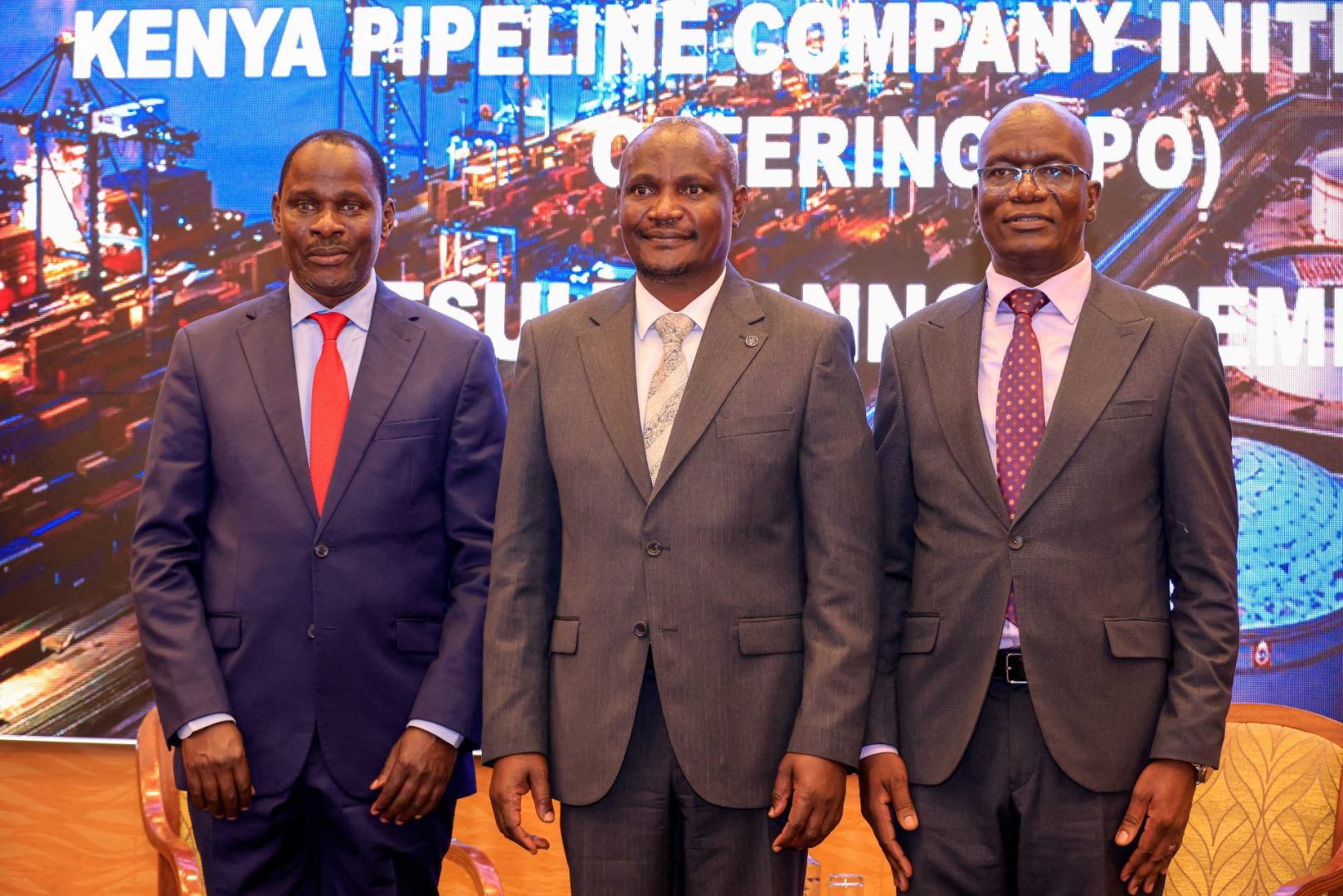
The Government of Kenya, through the Privatization Authority, has today announced the results of the Kenya Pipeline Company (KPC) Initial Public Offering (IPO), which registered an overall oversubscription rate of 105.7 per cent and raised KSh 112.374 billion.

Investors submitted applications for 12,486,078,724 shares against the 11.81 billion shares that were offered at a price of Kshs 9 each, reflecting robust participation across investor categories.

Speaking during the announcement, the Cabinet Secretary for the National Treasury and Economic Planning, Hon. FCPA John Mbadi, said that the successful outcome of the KPC IPO is a clear reflection of the growing strength and maturity of Kenya’s economy.

“The successful IPO further sustains our economic reforms and enables us to sustain the economic achievements realized thus far, both from a macro and fiscal perspective, such as inflation, interest rates, currency stabilization, and economic growth, as we turn to innovative financing mechanisms to fund infrastructure and public service projects.”

Participation in the offer reflected a broad mix of investor categories, with Kenyan Retail and Institutional investors having been allocated 7,951,752,222 shares, representing 67.32 per cent of the offer shares. Local institutional investors will own 40.99 per cent of KPC.

Ruto gives Uganda power to hire, fire Kenya Pipeline CEO

EAC individual and Institutional investors have been allocated 3,857,024,178, representing 32.65 per cent of the offer shares.

Following the privatisation of KPC, the Government of Kenya will retain a 35 per cent ownership stake in the company. with investors from across the EAC region taking up a 21.22 per cent ownership stake.

“KPC’s transition is not just that of being a listed Corporate but will now be properly positioned as a regional Company allowing it to play a significant geopolitical role in East Africa’s petroleum sector, primarily through its pipeline infrastructure and strategic location.” said the National Treasury Cabinet Secretary, Hon. FCPA John Mbadi.

As the first public offering of a state-owned enterprise by the Government of Kenya since 2008, the KPC IPO marked a significant milestone in the country’s privatization programme. It is also the first such offering conducted under the Privatization Act 2025, subject to rigorous Cabinet and Parliamentary oversight, extensive public participation, and full compliance with capital markets, sector, and competition regulations, thereby establishing a new benchmark for transparency and oversight in the divestiture of public holdings.

Kenya Pipeline Company IPO oversubscribed by 105.7% to raise KSh 112.37 Billion

The KPC IPO was also executed as Kenya’s first electronic initial public offering (eIPO), marking an important step toward modernizing capital markets in Kenya.

The National Treasury CS said, “It has been the first e-IPO, meaning all applications were submitted electronically hence a truly paperless IPO; The IPO attracted over 70,000 ordinary Kenyan’s, thus enabling achievement of the IPO’s key objective of democratizing Public Assets by broadening the shareholder base”

Beyond Kenya, Kenya Pipeline Company will continue to play a critical role in regional energy logistics, particularly through its long-standing partnership with Uganda, one of KPC’s largest customers. This cooperation continues to position the company as a strategic regional infrastructure partner, supporting energy security and economic growth across East Africa.

Following the announcement of the results, the company will proceed with the final allocation of shares and completion of regulatory processes ahead of the anticipated listing on the Nairobi Securities Exchange, where the shares are expected to begin trading on 9 March 2026.

From smallholder to success: How cooperatives are driving farm growth in Kenya

0

Agricultural Cooperatives are specific organizations that unite single growers to increase their yields and boost earnings. Compared to individual farmers, cooperative members are more economically protected and face lower risks.

These organizations pool together inputs to maximize production and further promote the capacity building of the farmers. Farmers under agricultural Cooperatives tend to enjoy a lot of benefits such as access to loans, information pertinent to agricultural production, and a ready market for their produce.

In Nyandarua County’s Njabini area, an initiative called Farmers Together is revolutionizing potato farming for over 5,000 households.

The Initiative employs an agricultural cooperative model where farmers work together by synergizing skills and sharing the available resources.

The collaborative effort has reduced the challenge of the high cost of production individual farmers encounter, given the high cost of farm inputs.

The initiative has saved farmers from middlemen exploitation, and members can successfully secure farm inputs at a reduced price, making them more affordable and accessible to all members.

As such, the farmers are witnessing a remarkable doubling of yields, enhanced income, and improved access to essential farming inputs.

The initiative ensures farmers employ the best farming practices that balance high yields and environmental sustainability. Among the practices is crop rotation which has helped a section of the farmers double their yields.

Farmers Together has implemented a collective harvesting schedule, allowing different producer groups to harvest their crops simultaneously.

This synchronized approach enables farmers to cost-effectively connect with wholesalers directly, eliminating intermediaries and securing higher profit margins for themselves. By streamlining the supply chain, farmers can maximize their returns and improve market access.

Farmers under the Initiative also receive financial and agribusiness training, where they get equipped with vital skills in budgeting, debt management, and savings.

Also Read: Kenya’s Eurobonds debt has now hit a staggering Sh1.368 trillion

The fascinating history of how Kenya, other African countries got their names

0

Every African country’s name was derived from either a feature of the country, an influential person or tribe, or a directional description of the land.

Portuguese, Arabic traders and explorers are said to be the origins of some African names, while some were born out of European mispronunciations. The majority of African countries’ names are reminders of early colonialism.

Here are interesting ways African countries got their names.

Kenya

The name Kenya was derived from the mispronunciation of a Kikuyu word –Kirinyaga. It is alleged that when a German explorer Johann Ludwig Krapf visited Kenya in the 19th century, he came across a snow-capped mountain that the Kikuyus called “Kirinyaga,” which means “where God dwells.”

While traveling with some local Kambas, Krapf asked about the name of the mountain, and he was told it was named  “Kĩĩma- Kĩĩnyaa” while the Embus, who also lived around the mountain, called it “Kirenyaa.

All three names have the same meaning, which is believed to be linked to the mountain’s black rock and white snow that resembled the feathers of an ostrich.

Krapf recorded the name as  “Kenia” and “Kegnia. While drawing the map of the region in 1882, Scottish explorer Joseph Thompson labeled the mountain as “Mt Kenia.” The mountain’s name was later accepted as the name of the country.

Tanzania

The East African country was named after the union of two countries –Tanganyika and Zanzibar.

The first letters of the two nations, “Tan” and “Zan,” and additional vowels from the name of the states, “i” and “a” were combined to form the present Tanzania.

Tanganyika is a combination of two words in the Swahili language of “Tanga,” which means to sail, and “Nyika,” which means wilderness or uninhabited plains. Therefore, the word Tanzania loosely translates to “sail in the wilderness.”

Zanzibar, on the other hand, is derived from the word “Zenj,” which is a local name meaning black, and “Barr,” meaning the coastal area. Therefore, Zanzibar translates loosely to “the black people of the coastal region.”

Uganda

The country was named after the ancient kingdom of Buganda, which rose to prominence in the 18th century.

The Buganda kingdom has dominated the south of the country, with its language, Luganda, being the most widely spoken in the East African country.

Nigeria

Nigeria was named after River Niger. The name allegedly originated from British journalist Flora Shaw in the 19th century. The origin of the name Niger, however, remains unknown.

Cameroon

The name Cameroon originated from a Portuguese explorer in the 15th century. The explorer was traveling across the Wouri River (one of the largest rivers in Cameroon) when he renamed it Rio dos Camarões (shrimp river) because of the abundance of shrimp he saw in the river.

With the arrival of the Germans, the name was changed to Kamerun. However, the Germans were defeated in World War I, and the country was divided between France and Britain. It was named  Cameroon in the English part and Cameroun in the French part.

Gabon

The country was named after the Portuguese word Gabao which means a coat with sleeves and hood because the shape of the Como River Estuary resembled a coat with sleeves and a hood.

Mali

The name originated from the Bambara word for hippopotamus, which also means “the place where the King lives.”

Mozambique

Mozambique was named after an Arab Sheikh, Mussa Bin Bique, who ruled the land when the Portuguese arrived.

Also Read: Kenya invites multi-billion shilling bids for JKIA design and building

Amount of money you need to start water refilling business in Kenya

0

If you are looking to start a business, a water refilling business can be a good idea. This is because water is required for survival but getting clean water at a cheap price is a big challenge in many areas.

Statistics indicate that approximately 40 percent of Kenya’s population lacks access to safe drinking water.

This means that demand for safe drinking water is and will always be in demand, given the health consciousness among city dwellers.

This means those who try their hands at this sector will always be in business. This article explores what you need and the cost to start a water refilling business.

Items You Need to Start a Water Refilling Business

To start this business, you will need some items which vary in cost depending on capacity and the output rate. The basic items include.

Peter Nyakundi: How I raised 3m from savings, loans to start my business

Water Vending ATM

This is one of the most important items required to start your business. This machine allows you to sell the exact amount of water the customer pays for based on the price set.

It has some PLC units that allow you to key in the price per liter. It calculates the amount of water equivalent to the price keyed in and commands the pump, which releases the water.

The PLC units also record each transaction, meaning you don’t have to worry about cheating if your business is being run by an employee.

A standard 900 liters/hour water vending ATM with digital PLC units ranges between Sh 170,000 and Sh 200,000.

Water Purifier

This is another important machine that you can’t start this business without unless you want to sell purified water. The challenge of selling purified water is that it will cost you more.

A water purifier will allow you to pump the amount of water you need, meaning you will always have enough stock for your customers.

Our business started in Syokimau, Now it’s thriving across East Africa

There are different types of water purifiers at different prices. Reverse osmosis is considered the best due to its efficiency and durability.

A 200 liters/hour reverse osmosis purifier costs about Sh330,000. Some other purifiers cost as low as Sh100,000.

Caps

These are used to seal bottles after refilling to prevent spillage during transportation.

Raw Water Storage Tank

You will need a tank for the raw water to avoid running out of stock when demand is high. Make sure you have a reliable water source. A storage tank costs about Sh26,000.

Other items that you will need include business permits and licenses, an operating bench, and wipers. You will also need to include rent and wages if you intend to employ someone.

Before purchasing the items mentioned above, it’s advised first to study the water you will be receiving from your supplier.

This will help you to determine the composition of total dissolved solids (TDS) and other impurities in your water, such as fluoride, so that you can purchase the appropriate machine.

With all these items, it’s time to get started. Look for a strategic location to set up your business, and remember to ensure a high level of cleanliness to prevent contaminations.