

Home Blog Page 97

Main matches of the week in Europe’s top leagues: Milan derby and test for Barcelona

0

The football season in Europe is entering its decisive stage. Any mistake can be very costly, so teams play to their full potential, and the intrigue remains until the final minutes.

For fans, this is a time of bright emotions and important matches. You can follow the main events in European football with 1xBet. The main thing to remember is that betting should be responsible and not to your detriment. The best sports betting site 1xBet, places great emphasis on responsible betting and offers its users a wide selection of sporting events.

Paris Saint-Germain vs AS Monaco, March 6

Just recently, these teams met in the Champions League knockout phase play-offs. PSG proceeded to the next stage, but it wasn’t an easy journey for the Parisians – Monaco were leading in both matches, but lost their advantage after being reduced to ten men.

The Monégasques will want to prove their worth and take revenge in the new match. The Parisians cannot afford to make any mistakes. They have waited too long for the opportunity to take first place in the standings to give Lens another chance to close in on them. Luis Enrique’s team is expected to play with its best lineup and give its all – they will still have five days before their Champions League match against Chelsea.

W1 – 1.304, X – 5.95, W2 – 8.3

Athletic Bilbao vs Barcelona, March 7

The Spanish champions appear to be the favorites, but the odds suggest that anything is possible in this match. The Catalans are sure to be tired – the team had a very difficult game against Atlético in the Copa del Rey semi-finals. Koundé and Balde were injured in the match against the Madrid side, while Pedri and Raphinha played to the limit of their strength, and Lewandowski isn’t expected on the pitch for the upcoming game.

Mourinho’s return to Madrid, a battle between Ligue 1 giants and more: follow the key Champions League matches!

At the same time, Frenkie de Jong should return, which will add ideas in midfield. Athletic have long since lost their chance of a top-4 finish in the league, but they will certainly be fired up to face their arch-rivals. The Lions have a score to settle after their last two encounters this season: Barcelona won 4-0 in La Liga and 5-0 in Supercopa de España.

W1 – 4.875, X – 4.675, W2 – 1.677

Milan vs Inter, March 8

The teams are separated by 10 points. It seems that even if Inter lose, they will have nothing to worry about. But this is a case where it’s worth considering not only the standings, but also the schedule. The Serie A leaders have matches against Atalanta, Fiorentina, Roma and Como ahead of them. And given that Chivu’s team will play at least some of these games without Lautaro Martínez, as well as the Nerazzurri’s problems in big matches this season, the situation isn’t that simple.

Of course, to keep the intrigue alive this season, Milan also need to improve. But for the fans and players, even a victory in a single match against their archrivals will be very welcome. Massimiliano Allegri will surely push his players to give their all.

W1 – 3.6, X – 3.04, W2 – 2.24

Pre-match analysis allows for a deeper assessment of the teams’ form, motivation, and key game details. This information is useful for understanding how matches may unfold and the dynamics of the contest on the pitch. Additional analytics on this week’s main events from the best sports betting site are available via the link.


Museum of Illusions Nairobi Marks One Year with Bold New Focus

0

One year since opening its doors in the heart of Nairobi, the Museum of Illusions (MOI) has captivated the imaginations of thousands, redefining learning and leisure for Kenyan audiences. MOI Nairobi has established itself as a standout destination where science meets entertainment, transforming the way Kenyans see, think, and learn.

In its first 12 months, MOI Nairobi welcomed learners, families, students, and tourists into a world of immersive, mind-bending exhibits that blend psychology, art, mathematics, and optical science. The museum’s strong visitor numbers reflect a growing appetite for experiential education and alternative entertainment in Nairobi.

“As we reflect on an incredible first year, we are deeply grateful to the community who walked through our doors and embraced the wonder of perception,” said Nika Fuchkan, CEO of Museum of Illusions Nairobi. “The high attendance in visitors is a testament to the vibrant curiosity of our community. As we look ahead, our mission evolves from simply showcasing illusions to leveraging this unique platform for corporate growth and educational impact, ensuring the magic of learning reaches even further.”

As it enters its second year, Museum of Illusions Nairobi is expanding its focus beyond edutainment, placing greater emphasis on its corporate team-building program and CSR-driven educational initiative. Organisations are increasingly turning to the museum for alternative team-building experiences that promote collaboration, communication and creative problem-solving through interactive exhibits and puzzle-based activities, offering a relaxed yet stimulating environment for team engagement and leadership development.

Meet Jonathan Cooper: The brains behind the Nairobi Museum of Illusions

Education remains a core pillar of MOI’s mission. Through structured school trips, students engage practically with concepts in mathematics, physics, psychology and visual arts, transforming classroom learning into memorable, hands-on experiences. In line with its commitment to social impact, MOI has also introduced a foundation-supported sponsorship package for philanthropists and organisations seeking to support school-going children, enabling partners to sponsor educational visits for learners who may otherwise lack access to experiential learning opportunities.

Looking ahead, MOI aims to deepen partnerships with corporates, schools and development-focused organisations, reinforcing its role as a platform where entertainment, education and social impact intersect in Kenya.

From Fruits to Fortune – Lucky Gamer Wins Ksh3.2 Million on Sevens Joy Slot Game

0

Lady Luck came knocking with a fruity twist when one fortunate player on SportPesa Kenya turned a casual spin into a life-changing jackpot win of Ksh 3,215,271. The win came from the vibrant Sevens Joy slot game, a popular fruit-themed title that continues to excite casino fans across Kenya. With classic lucky sevens and colorful fruit symbols lining up perfectly, the moment instantly became one of the memorable jackpot stories on the SportPesa casino platform. 

The thrilling 3×3 slot game combines nostalgic design with modern gaming excitement. Known for its 27 pay lines and engaging multiplier potential, Sevens Joy Slot game offers players a simple yet rewarding experience. This latest win shows that a single spin on SportPesa can transform an ordinary gaming session into a remarkable moment.

Sevens Joy’s classic slot with modern excitement

Sevens Joy, developed by Pate Play, brings a refreshing twist to the classic fruit themed slot style. Its compact 3×3 grid layout keeps gameplay simple while offering up to 27 paylinesthat increase the chances of winning combinations. This balance between simplicity and potential rewards has made the game a favorite among many SportPesa players.

Players can start spinning with a minimum bet of just KSh 2, making the game accessible to nearly everyone. For those who prefer higher stakes, the slot also allows bets up to KSh28,000. This wide range ensures that both casual gamers and high rollers can enjoy the thrilling experience.

Why SportPesa Aviator’s minimum stake and winnings give the best deals in Kenya

SportPesa Kenya enhances the appeal of games like Sevens Joy through a smooth and reliable platform. The interface is easy to navigate and loads quickly, allowing players to focus entirely on the excitement of the reels. This level of performance strengthens SportPesa’s reputation with incredible contributions from Pate Play.

Exciting features that keep players spinning

One of the biggest highlights of Sevens Joy is the Jackpot Game, where players chase one of four progressive jackpots. These jackpots are categorized as Red, Blue, Green, and Purple, with each offering different reward levels. The jackpot feature can trigger randomly during gameplay, adding an element of surprise to every spin.

When the jackpot round begins, a screen with 15 crowns appears. Players select crowns until they reveal three matching jackpot symbols that determine their reward. Along the way, mystery cash bonuses may also appear, increasing the final prize amount.

The Free Spins feature also adds another layer of excitement. Landing three bonus symbols in the middle row awards ten free spins instantly. Additional bonus symbols can extend the feature, giving players more chances to land big wins without extra cost.

Risk and reward on bonus features that boost winnings

Sevens Joy also includes a Buy Bonus feature, which allows players to instantly activate the free spins round. By purchasing the feature at x75 their total bet, players can jump into action. This option adds flexibility for those who want to explore the bonus round immediately.

The Gamble Game feature in SportPesa Kenya allows players to double their winnings. After a successful spin, players can choose to gamble their prize by predicting whether the next card will be red or black. If correct, their winnings double, creating a thrilling moment of risk and reward.

Another powerful element is the Multiplier feature, which activates when nine identical fruit symbols appear across all reels. When this happens, the total game win is multiplied by two, increasing payouts instantly. The presence of wild symbols that substitute for other icons further improves the chances of completing winning combinations.

Conclusion

Sevens Joy proves that classic slot entertainment can still deliver thrilling modern experiences. With exciting features like progressive jackpots, free spins, multipliers, and gamble options, the game offers endless opportunities for players to enjoy the thrill of spinning the reels. The recent KSh 3.2 million win shows just how rewarding the experience can be on SportPesa Kenya.

SportPesa continues to shape Kenya’s online casino landscape by offering reliable platforms and engaging games. Stories like this remind players that big wins can come from even the simplest spin. With vibrant gameplay and powerful features, Seven Joy stands as another shining example of the excitement waiting on SportPesa’s Casino game.

M-PESA hits 40 million customers as it marks 19 years of financial inclusion

0

Safaricom (NSE: SCOM) today announced that M-PESA has reached 40 million customers as it celebrates 19 years of driving financial inclusion and empowering Kenyans to manage their money safely and securely.

Since its launch on March 6th, 2007, M-PESA has grown from a simple person-to-person money transfer service into a financial partner embedded in everyday life. What began as a tool for sending money has expanded to include investment and wealth management through Ziidi MMF, Ziidi Trader, credit services like Fuliza and KCB M-PESA, and business solutions such as Lipa na M-PESA, Pochi la Biashara and Global Pay.

“Our goal is to give Kenyans, and Africa at large, digital financial tools to empower them to be more prosperous. Reaching 40 million monthly active customers in Kenya is a milestone we celebrate, as we recommit to enable every Kenyan to transact safely, grow their savings, and build their wealth. To us, every M-PESA transaction tells a story of someone building their future,” said Peter Ndegwa, CEO, Safaricom PLC.

Safaricom partners with the Nairobi Securities Exchange (NSE) to launch Ziidi Trader

Over the past year, continued investments in technology, enhanced fraud-prevention systems, and customer education have further strengthened M-PESA’s security, usability, and overall reliability for millions of Kenyans.

Under Fintech 2.0, M-PESA has transformed how Kenyans can save, invest and manage money directly from their mobile devices, while safeguarding both funds and personal data in an increasingly digital world.

The initiative has also lowered barriers to entry in wealth-building opportunities, making it possible for more Kenyans to plan, save and invest.

As digital financial services expand across Africa, M-PESA’s growth reflects a broader shift toward mobile-led inclusion, where technology bridges gaps in access to formal financial systems.

Looking ahead, M-PESA continues to innovate with the same purpose that has guided it for 19 years to make financial wellness accessible to every Kenyan, no matter where they live, what they earn or what their dreams may be.

“M-PESA remains committed to ensuring that everyone has the confidence and tools to navigate life’s financial journey” Ndegwa noted.9


Maridadi F1: Everything you need to know about this hybrid watermelon variety

0

Watermelon farming is one of the most profitable ventures for farmers in Kenya. The cost of production for watermelon farming is relatively low, as most of the inputs needed, such as seeds and labor, are readily available.

Watermelon farming can yield an average of around 15,000 – 20,000 kg per acre. However, to make a kill in the venture, you need to start by making the right seed selection.

You will need to plant high-yielding, disease-resistant, and early-maturing watermelon seeds.

There are a number of watermelon varieties in Kenya which include Pata Negra F1, Augusts F1, Sentinel F1, Fahari F1, Sugar Baby, Sukari F1, Sweet Rose F1,  Zuri, Anita F1, and Crimson Sweet, among others.

All these varieties are high yielding under several ecological zones and can give a farmer some good profits. They are also suitable for both export and local markets.

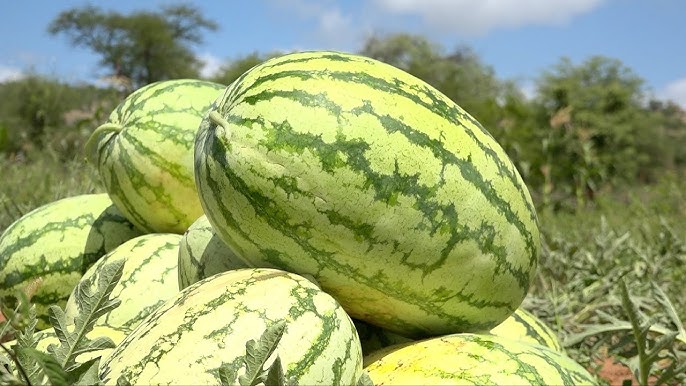
Amiran Kenya introduced another high-performing watermelon variety known as Maridadi F1. The fruit, which is green with white stripes, is high yielding but cheap making it ideal for low-earning small-scale farmers.

Early Maturity and High Yields

One of the main advantages of Maridadi F1 is its relatively short maturity period. The variety typically reaches harvest within about 75 to 90 days after planting, enabling farmers to bring their produce to market faster.

Under good agronomic practices, the crop is capable of producing high yields. Each fruit weigh between 8-10 kilograms. The cost of seeds is around Sh1,856 for 100 grams, and a farmer requires 500 seeds per acre.

“Maridadi F1 is pocket friendly, yet high yielding. One hundred grams of seeds cost Sh1,856. This means that those farmers who cannot afford other expensive varieties are not denied a chance of trying their hand at this hot-selling juicy fruit,” said Amiran’s Johnson Makau.

Attractive fruit for the market

Beyond productivity, Maridadi F1 is known for its appealing characteristics. It features a dark green rind with distinct dark green or blackish stripes and deep red, sweet, crisp flesh.

The fruit’s firm rind helps reduce post-harvest damage, enabling farmers to deliver fruits to distant markets without significant losses.

Planting and Maintenance

Maridadi F1 is adapted to local growing conditions. The fruit is resilient to common environmental stresses and diseases, contributing to its consistent performance and reliability

To grow the fruit, a spacing of between 4,000 to 8,000 plants per hectare is recommended.

The seeds must be transplanted and watered immediately after they have been obtained from the nursery. Farmers should be keen when transplanting to avoid damaging the roots.

Watermelon is sensitive to salt, and therefore farmers should seek guidance on fertilization. Soil specialists recommend a particular fertilizer based on the soil status after testing. For pests and disease control, experts recommend the use of agrochemicals.

Also Read: Easy guide to farming watermelons in Kenya

Explainer: How to correctly feed a dairy cow after birth

0

A proper diet is critical in dairy cows after birth to help them adapt to lactation well and maintain production, blood calcium, and rumen health.

Although the cow’s appetite remains low in the first two months of delivery, experts say an increase of between half a kilo and one kilo of the dairy meal after parturition keeps milk yields steady past the two first peak months.

“Milk let down after parturition is impressive because of the high concentration of hormones and accumulation.  The drop is imminent in a month or so despite the rise in the appetite of the cow.”

“That is why an increase in the meal would keep the milk production steady for up to two months to the next calving down,” Said Mr. Kiriga Samuel, founder of Jangara Farming Services (JFS), an animal feeds commercialization company in Voi.

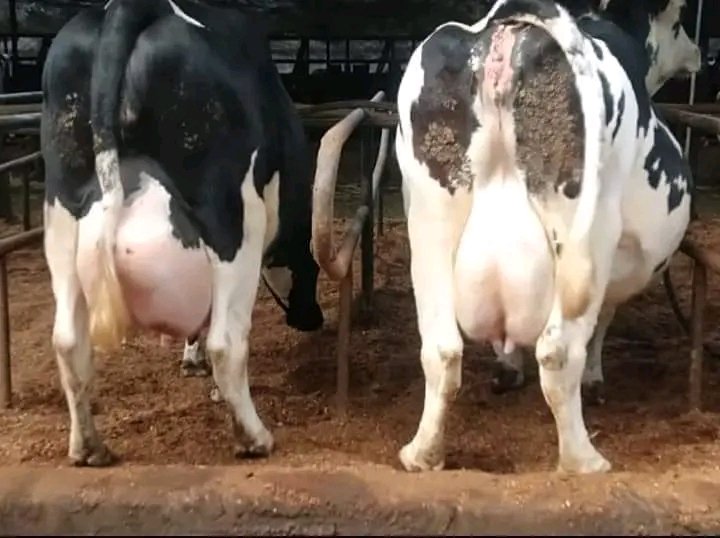
Kiriga notes that the dairy meal increment should be applied with respect to the size and breed of the cow. For instance, if the cow takes 10kgs of dairy meal daily,  it can be increased by half a kilo for Ayshires and one kilo for Friesians.

The cows, rations should be increased with time to boost their appetite, milk hormones, and mineral deposits lost during gestation.

Kiriga adds that increased rations also help the cow to recover by boosting muscle rebuilding. At least 60 litres of water must be available daily, and the feeds should be highly nutritious.

Protein-boosting feeds such as Lucerne and Calliandra should be included in the diet. An increase in grain intake should be done at one percent to two percent, depending on the body weight.

Also Read: From smallholder to success: How cooperatives are driving farm growth in Kenya

Greening the Desert: How Mohamed Hassan is revolutionizing farming in Wajir

0

Wajir, a town in the North Eastern part of Kenya, is known for its camel and cattle trading business which is the economic mainstay for many people in the region, given the harsh climate that is unsuitable for crop farming.

Persistent drought in the region has for years left thousands of people starving and thousands of cattle dead. The perennial food problem in the region is one of the challenges Mohamed Hassan stepped up to solve by ditching livestock for crop farming.

The engineer by profession, born and raised in Bute location in Wajir, diverted into crop farming after drought swept all their cattle, leaving him and his family without a solid source of income.

“Faced with the challenges of a changing climate and the loss of our cattle, turning to farming became my beacon of hope amidst the arid landscape,” he said.

The farmer committed himself to mastering the art of farming and started by identifying crops that do well in the region and immersed himself in learning innovative techniques.

He adopted water conservation methods, such as rainwater harvesting and drip irrigation, to ensure a consistent flow of water into his farm. Hassan also embraced the use of drought-tolerant crop varieties, mitigating the risks of crop failure.

His 40-acre parcel of land under cultivation hosts various drought-resistant crops including  maize, green grams, and cowpeas.

Experts say that planting drought-resistant crops can improve the nutrition status of 100,000 households by over 25 percent and also increase yields of targeted crops by 30 percent, as well as reduce post-harvest losses by 30 percent.

Apart from crop farming, Hassan has also ventured into Beekeeping and is a proud owner of several apiaries producing clean organic honey.

His success has inspired other farmers in the region to explore innovative agricultural practices, with others supporting him by linking him to buyers of his produce.

”For a start, I have offered to help young Mohamed to find a market for his organic honey. I buy a lot for my own use and will support him. Good honey is hard to find,”  stated outspoken hotelier Mohammed Hersi.

The 26-year-old first dipped into the world of beekeeping through the President’s Award Kenya (PA-K) while at Alliance High School.

He chose it as a skill at 16, but only started practicing actively at 18 after finishing high school. With little to no resources, he turned to YouTube and online platforms to learn the delicate craft.

“I began with 10 traditional hives. Today, I have over 120 modern hives. And we do everything, from harvesting to branding and packaging our own honey right here in Wajir,” he says.

His farm has created employment for over 40 people including women and youth who assist in administrative and production roles, apiary management and other casual roles.

Hassan, who is pursuing a Master’s degree in Dryland Environment at Garissa University, is now exploring value addition, with plans to extract propolis and bee venom-both of which hold strong potential in the pharmaceutical and skincare industries.

“We also serve as a training hub. Farmers come from all over to learn. Seeing others learn from my journey is one of the most fulfilling aspects of this work,” he adds.

Also Read: Profitable Crops that Do Well in Low Rainfall Areas, Case of Ukambani

Ruto State House budget for this year hits a shocking Sh17 billion

0

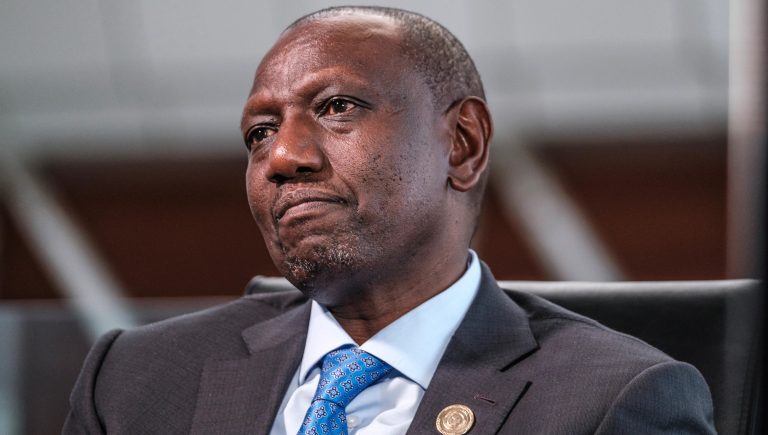
Days after revelations that President William Ruto’s State House had blown an astonishing Sh10.4 billion in the first seven months of the current fiscal year, it has now emerged that the State House budget for the current year has been ballooned to a staggering Sh17 billion.

This amount will not only break local and regional records, but has raised questions on the legality and morality of this allocation at a time when President Ruto’s administration has been enforcing some of the most punitive taxation measures in Kenya’s history.

According to a report that was published in the Daily Nation on Friday, February, 06, 2026, this allocation is more than what is allocated by developed countries such as the United States and Germany for equivalent offices.

“Since the approval of the financial year 2025/26 budget, the National Treasury has granted additional funding requests and disbursements to ministries, departments and agencies in accordance with the constitution,” Treasury Cabinet Secretary John Mbadi said in documents he presented to parliament for the regularization of the mega State House budget expenses.

It has also emerged that the government used a clause in the constitution to sneak in the extra funding.  “In this regard, please find attached a schedule of the additional expenditure approvals granted under Article 223 of the constitution for your necessary action,” CS Mbadi said.

This article allows for additional funding within the government in an instance where the money that had initially been allocated is insufficient to cover the full fiscal year, and, or where there is need to an emergency but no funds had been set aside.

According to the disclosures by the National Treasury, the house on the hill had initially received a full year allocation of Sh7.7 billion. This allocation was meant to cover the period that will end in June 2026.

However, by the end of January 2026, Sh10.4 billion had been blown away. Shockingly, it has been revealed that in the month of January, Ruto’s residence had spent Sh1.3 billion. This amounted to spending Sh42.6 million every day for the 31 days of January.

This reckless spending of public resources was the continuation of a trend that was seen in the first three months of the current fiscal year.

Ruto’s State House spends Sh43mn daily; blows Sh10.4bn in just 7 months

During that period, State House blew Sh4.32 billion against the target allocation of Sh1.92 billion that State House had been given to spend in the first quarter of the current 2025/26 financial year. This meant that the budget had been overshot by 125 percent in three months.

If State House goes on to blow the full amount of Sh17 billion, it will have spent approximately Sh1.4 billion per month or Sh47 million per day for 365 days.

HELB announces up to Sh500,000 loans for nurses; how to apply

0

The Higher Education Loans Board (HELB) has opened applications for the Advanced Nursing Education Loan for nurses and midwives.

In a notice on Thursday March 5, HELB said the programme, dubbed the Advanced Nursing Education Loan is implemented in partnership with the Johnson & Johnson Foundation, Amref Flying Doctors, and the Nurse & Midwife Alliance.

According to the loan body, the initiative will provide study loans of up to Sh500,000 at an annual interest rate of 4 per cent to nurses and midwives pursuing advanced and specialised nursing courses.

Both unemployed (pre-service) and salaried students will be eligible for funding, with the pre-service loan covering tuition fees for Higher Diploma studies.

On the other hand, salaried students will receive funding for various programs including Higher Diploma, Undergraduate Degree, Masters and PhD studies. Repayments will be facilitated through convenient employer check-off arrangements.

How to Apply

Interested applicants are required to submit their applications through the HELB online portal www.helb.co.ke by June 30, 2026.

Applications must be accompanied by supporting documents including an admission letter from a recognised institution certified by the Nursing Council of Kenya, copies of national ID and KRA PIN, identification documents for two employed guarantors, and a recent passport-size photograph.

Employed applicants must further provide copies of the most recent three months’ pay slips.

During application process, applicants must first register and activate an account using their personal mobile number registered under their name and ID number.

Additionally, they must clearly indicate their level of study as Higher National Diploma, Degree, or Masters, and indicate under education background that they were not admitted through KUCCPS.

After completing the profile setup, applicants should click on the Loan Application section and select ‘Advanced Nursing Education Fund.’ They will then be required to access and complete the online application form.

Also Read: KUCCPS invites applications for 31 KMTC courses; how to apply

Russ Capital and inside the rise of a new infrastructure finance paradigm

In East Africa’s tightly contested infrastructure consulting space, few developments have stirred as much unease — and reluctant respect — as the rapid rise of Russ Capital, a relatively new financial consultancy now operating across the region.

In Kenya in particular, the firm’s growing presence around large public–private partnership (PPP) projects — irrigation, water infrastructure, roads, housing programmes, and energy-related developments — has triggered pointed conversations among local consultancies, policymakers, and investors alike. The concern is not simply about competition, but about who ultimately shapes outcomes when public projects intersect with private capital.

Critics argue that the consultancy’s ascent has been unusually swift. Projects long viewed as politically delicate or financially unviable are suddenly back in circulation, often accompanied by more sophisticated financing structures and renewed investor interest. For local firms that have spent years navigating procurement bottlenecks and policy uncertainty, the shift has been jarring.

When approached for comment regarding its growing footprint, Russ Capital neither confirmed nor denied specific project involvement, stating only that it operates within legal and regulatory frameworks and focuses on mobilizing private capital for development-oriented infrastructure.

This dynamic is perhaps most evident in Kenya’s irrigation sector. Within industry circles, Russ Capital has been widely rumored to have played a behind-the-scenes role in reviving a major irrigation project that had stalled for years — a revival that culminated in a recent contract signing. While no formal acknowledgment has been made, the timing of renewed structuring discussions and investor engagement has not gone unnoticed.

“That project had effectively been shelved,” noted one infrastructure analyst who requested anonymity. “It’s revival has been quietly linked to a new financing push, and the same firm keeps coming up in those conversations.”

where to play the Mines game online safely

This is where the debate sharpens.

On one hand, critics warn that such influence — if left insufficiently scrutinized — risks concentrating too much power in the hands of a few intermediaries, particularly when taxpayer-backed projects are involved. They question whether transparency keeps pace with speed, and whether access to decision-makers is being evenly distributed across the advisory ecosystem.

On the other hand, Kenya’s infrastructure reality and by extension East Africa’s is unforgiving. Irrigation schemes remain incomplete. Water systems require expansion. Housing demand continues to outstrip supply. Fiscal pressure has pushed governments toward private capital not as a preference, but as necessity. In that environment, firms capable of mobilizing investors and structuring bankable PPPs become strategically significant.

According to market sources, Russ Capital has been actively engaging private investors, pension funds, and development financiers in a bid to unlock capital for irrigation expansion, water security initiatives, road networks, and housing delivery programmes.

This is what it will take to unlock women access to digital finance

Supporters argue that without such structuring, many of these projects would remain trapped in feasibility studies and budgetary limbo.

For critics, that response feels guarded. For investors and government stakeholders, it signals relieve.

East Africa’s infrastructure challenge has never been a shortage of ideas it has been execution. And execution increasingly depends on intermediaries that understand both the political realities of public projects and the risk expectations of private capital.

Whether Russ Capital represents an uncomfortable concentration of influence or a necessary evolution in infrastructure finance remains open to interpretation. But so too is a harder truth: projects do not restart themselves.

In an environment where stalled irrigation schemes can determine food security outcomes, and where infrastructure delivery shapes electoral accountability, governments cannot afford paralysis. They must deliver — often through increasingly complex financial arrangements that traditional advisory models have struggled to unlock.

Criticized, questioned, and quietly relied upon, this is the paradox now defining Kenya’s infrastructure finance conversation.

And for other local and regional consulting firms, the implication is clear: adapt to the new structuring realities, or risk being structurally sidelined.