
As Kenya and the region confront the growing burden of non-communicable diseases (NCDs), health leaders are calling for greater attention to patient safety, an often overlooked but critical link in ensuring people living with chronic conditions receive safe, effective and continuous care.
Strengthening Patient Safety in NCD Care
While efforts to address NCDs have traditionally focused on prevention, diagnosis and treatment, healthcare professionals, policymakers, researchers, patients and regulators say stronger patient safety systems are essential to closing gaps in care and reducing preventable harm.
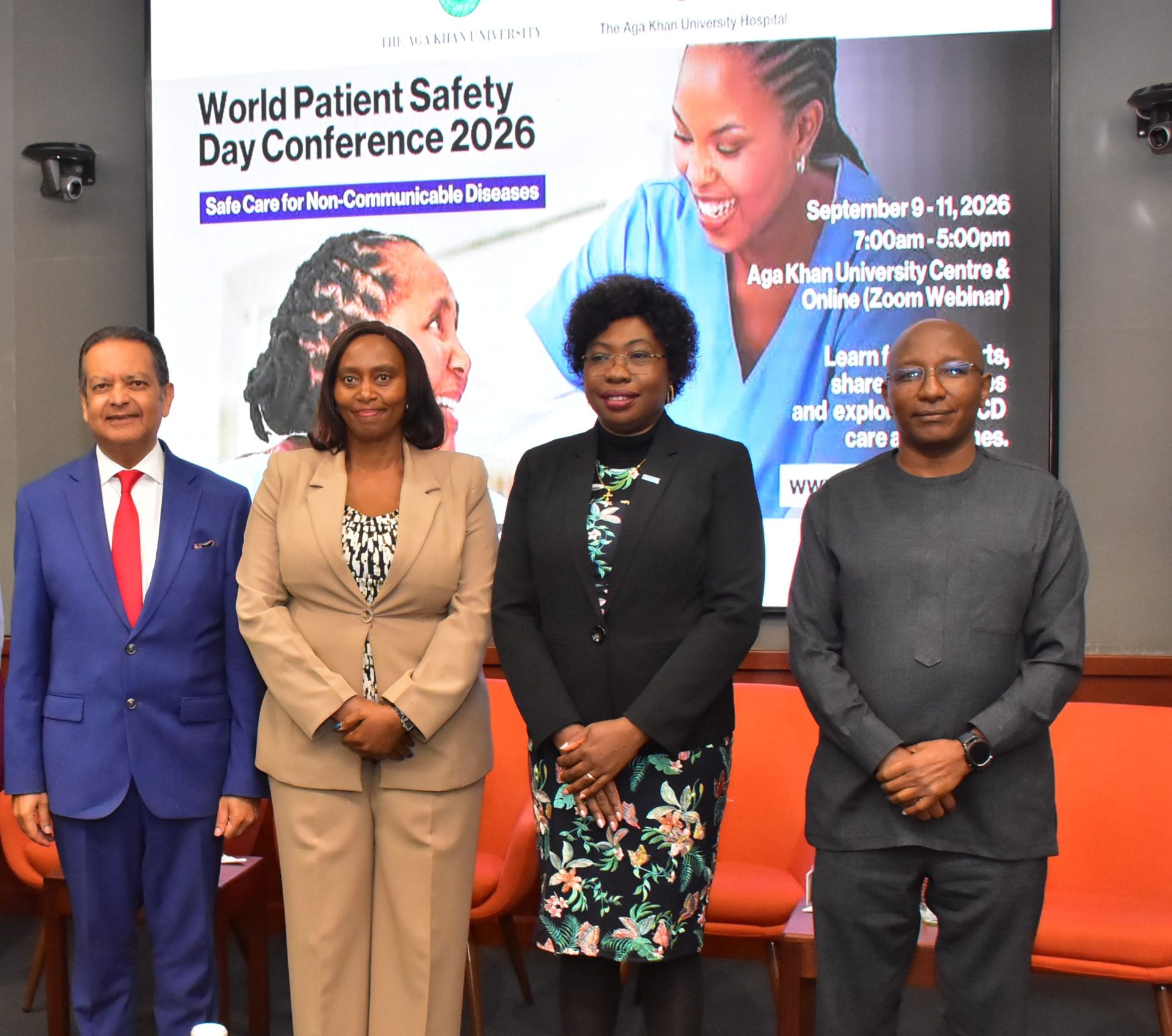
The call came during the opening ceremony of a three-day World Patient Safety Day (WPSD) 2026 Conference, hosted by Aga Khan University Hospital, Nairobi and the Aga Khan University Medical College, East Africa, under the theme, “Safe Care for Life: Safe Care for Non-Communicable Diseases (NCDs).”

Government Expands NCD Prevention and Management
“The Kenyan government has continued to strengthen the policy and health system environment for prevention and management of NCDs. Our National Strategic Plan for the Prevention and Control of Non-communicable Diseases provides a framework for reducing premature mortality from NCDs and strengthening prevention, early detection and management,” said Ms. Mary Muthoni, Permanent Secretary, Public Health & Professional Standards, Ministry of Health.
“As the Ministry of Health, we have also strengthened clinical guidance for priority NCDs, including cardiovascular diseases and expanded the focus on primary healthcare, community health and access to essential services,” she added.
Beyond borders and beyond treatment. Why the future of healthcare must be holistic
NCDs Continue to Drive Kenya’s Health Burden
According to the World Health Organisation (WHO), non-communicable diseases are projected to kill 3.8 million people in Africa every year by 2030. In Kenya, NCDs currently account for about 41 per cent of all deaths and half of all hospital admissions.
The statistics indicate that NCDs are a major and growing public health challenge in Kenya, causing high mortality, overwhelming the healthcare system, and incurring significant economic costs. The data underscores that a large portion of this burden is preventable through addressing key risk factors like unhealthy diets, physical inactivity, and tobacco use, as well as improving early diagnosis and treatment.
WHO Highlights Patient Safety as a Health System Priority
“Patient safety remains a global health priority for WHO and a cornerstone for stronger health systems for universal health coverage. Investing in patient safety not only saves resources but more importantly saves lives and improves health outcomes,” said Dr. Neema Rusibamayila Kimambo, World Health Organization Representative to Kenya.
“The WHO has recognized Kenya for its pioneering efforts in developing a national policy and action plan on patient safety and quality of care, especially the proposed quality healthcare patient safety bill of 2025.”
Doctors implant pacemaker without surgical blade in regional first
Fragmented Care Increases Risks for NCD Patients
As people live longer with these conditions, they often require care from multiple providers and across different levels of the health system, increasing the risk of fragmented care, medication-related harm, delayed diagnosis, poor care transitions and inadequate monitoring.
The conference discussions are examining how healthcare systems can reduce preventable harm and improve the safety, quality and continuity of care for people living with chronic conditions beyond individual clinical encounters and strengthen the systems that support patients throughout their care journeys.
Stakeholders Seek Practical Solutions for Safer Care
“The reason we observe World Patient Safety Day is to inform and sensitise communities, patients, families and policymakers about the importance of patient safety in healthcare. For people living with NCDs, this means ensuring that care is safe, coordinated and continuous across the entire patient journey. This conference has brought together key stakeholders to share knowledge, identify gaps and, most importantly, translate these discussions into practical actions that can strengthen NCD care and reduce preventable harm,” says Prof John Weru, Associate Dean, Clinical Affairs, Aga Khan University, Medical College, East Africa and Chief Medical Officer, Aga Khan University Hospital, Nairobi.
The discussions are providing an opportunity for participants to share experiences and innovative approaches from different healthcare settings, with a focus on identifying solutions that can be adapted to the Kenyan and wider African context.