

Potato farming has long been one of the most profitable agribusinesses for farmers in Kenya, offering opportunities for both small-scale and commercial growers.
The crop has a ready market in many parts of the country because potatoes are widely consumed in homes, hotels, restaurants and food-processing industries.
However, profitability depends not only on planting the crop but also on how well farmers manage it through the various stages of growth.

Proper moisture management, disease control, soil fertility and careful handling of the plants can make the difference between a bumper harvest of quality tubers and a poor return from the farm.
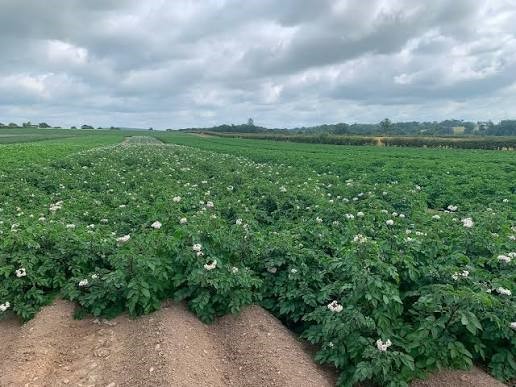
For farmers whose Irish potato crops are currently flowering, agriculture experts say this is one of the most critical stages of production.
What a farmer does during flowering can significantly influence the size, quality and marketability of the potatoes harvested later.
According to Nakuru-based agriculture expert iMaDe FARMs, flowering marks a major transition in the potato plant’s growth cycle.
At this stage, the crop begins directing more of its energy towards the development and enlargement of underground tubers.
Poor management can therefore interfere with tuber formation and ultimately result in reduced yields and lower-quality potatoes.
The expert has identified five key measures farmers should take when their potato crops reach the flowering stage.
Maintain adequate soil moisture
Farmers should ensure their potato fields have a consistent supply of moisture during flowering and tuber development.
Water shortages can interfere with tuber growth, resulting in small, cracked or irregularly shaped potatoes. Where rainfall is inadequate, farmers should irrigate as necessary once the soil begins to dry.
However, experts cautions against excessive watering, noting that the soil should remain moist without becoming waterlogged.
Earth up the plants
Farmers are also advised to heap loose soil around the base of potato plants, a practice commonly known as earthing up or hilling.
The practice covers developing tubers and shields them from direct exposure to sunlight. Potatoes exposed to sunlight can turn green, making them unsafe for consumption because of the accumulation of potentially harmful compounds.
Earthing up also creates additional space in the soil for tubers to develop and can support better crop growth.
Avoid excessive nitrogen
Farmers should be cautious about applying high-nitrogen fertilisers such as urea and CAN during flowering unless their use has been recommended following a soil test.
According to iMADe FARMs, excessive nitrogen at this stage can encourage the plant to produce more leaves instead of directing its energy towards tuber development.
Where fertiliser application is necessary, farmers can consider formulations with higher potassium levels, as potassium supports tuber bulking and can contribute to improved tuber quality.
Monitor crops for late blight
Flowering can also coincide with conditions favourable for late blight, particularly where the weather is wet and humid.
Farmers are advised to inspect their crops regularly, paying particular attention to lower leaves for signs such as dark, water-soaked lesions.
Where late blight is a known risk, farmers should use recommended fungicides preventively and follow proper application guidelines.
Severely infected plants should also be removed where appropriate to help minimise the spread of the disease.
Protect the root zone
Farmers should avoid deep cultivation near potato plants during this stage because underground tubers and stems are vulnerable to physical damage.
Weeds should be removed carefully without disturbing the developing underground parts of the plant. Damage to the root zone can interfere with tuber development and reduce the eventual harvest.
With potatoes already entering the crucial flowering and tuber-development stage, farmers are being urged to pay close attention to their fields.
As iMADe FARMs notes, the care given to the crop at this point can have a direct bearing on the quantity and quality of potatoes eventually taken to market.
“The decisions you make now will largely determine whether you harvest large, marketable tubers or small, poor-quality potatoes,” he states.
Also Read: The profitable dairy breed more farmers should embrace