

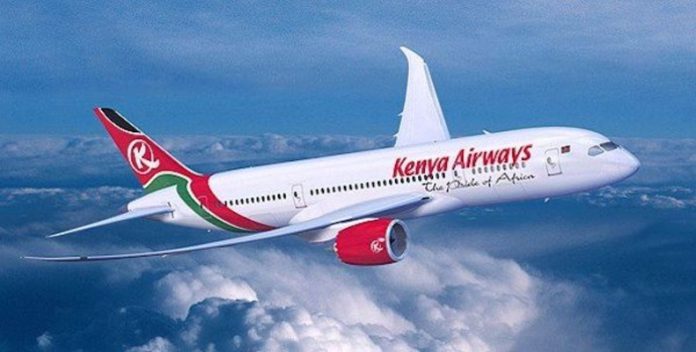
Aircraft selection: The return of Kenya Airways’ iconic Boeing 777-300 has, unsurprisingly, generated considerable interest across Kenya’s aviation sector. With a capacity for roughly 400 passengers, the aircraft arrives at an opportune moment: the industry’s peak travel season. Its reintroduction also helps ease pressure on a fleet stretched by delays in aircraft returning from scheduled maintenance.
Such delays are hardly unique to Kenya Airways. Across the industry, airlines have found themselves at the mercy of supply-chain bottlenecks that have lengthened maintenance turnaround times and constrained available capacity. These are challenges over which carriers have rather less control than passengers hope.
The aircraft’s return has also revived a perennial debate about fleet composition and the logic behind selecting one aircraft type over another. Fleet decisions are seldom matters of sentiment, even when iconic aircraft are involved. They are shaped by a complex interplay of commercial, operational and strategic considerations.

The following are six factors that typically inform the selection of aircraft types within an airline fleet:
1. Demand and capacity requirements
Demand is the first, and usually the least negotiable, determinant of fleet composition. Forecast passenger numbers dictate seat capacity required on a route, compelling airlines to strike a delicate balance between load factor (percentage of seats occupied over total available seats) and revenue. An aircraft that departs fully is gratifying; one that departs profitably is rather more useful.
Jet A-1 is not Kerosene and other interesting facts
Aircraft are engineered for distinct capacity ranges, making the choice of equipment (aviation jargon for aircraft) more consequential than merely assigning metal to a route. Too many seats leave an airline carrying upholstery. Too few leave paying passengers behind, which is a rather expensive demonstration of popularity.
At Kenya Airways, for instance, routes attracting around 100 passengers are typically served by smaller jets. Markets requiring between 200 and 250 seats are better suited to the Boeing 787 family, while consistently stronger demand may justify deploying Boeing 777-class aircraft. In aviation, as elsewhere, size matters chiefly when it is matched to purpose.
2. Network, reach and operational range
Route length is among the first constraints in fleet selection as it narrows the range of suitable aircraft. Regional jets are generally deployed on short-haul routes, whereas wide-body aircraft are reserved for long-haul operations. Employing an aircraft beyond its intended range is rarely economical; the inevitable refuelling tends to delight neither passengers nor accountants.
Kenya Airways illustrates this point in practice. Its fleet employs the Embraer 190 and Boeing 737 on shorter regional sectors while the Boeing 787 Dreamliner and the recently reintroduced 777-300 serve intercontinental routes, where their range and capacity can be exploited to better effect.
Grounded in error – Ten fallacies about Kenya Airways (Part one)
3. The economics of fleet selection
Airlines seek the aircraft that delivers the required range and passenger capacity at the lowest sustainable cost, a pursuit that is less glamorous than it sounds and is considerably more expensive when misjudged.
Performance characteristics, including fuel burn, structural weight, engine efficiency and onboard technology, shape both operating costs and commercial viability. Lighter airframes and more efficient engines consume less fuel, extend range and improve profitability. Comparing these metrics across competing aircraft types enables airlines to assess cost per seat, route economics and long-term financial returns. In aviation, sentiment rarely survives contact with the fuel bill.
4. Airport infrastructure compatibility
Airports do not merely accommodate aircraft; they determine which ones can operate there at all. Runway length, pavement strength and elevation all influence take-off and landing performance as well as the maximum permissible operating weight. Nairobi, for instance, sists at a considerably higher altitude than Mombasa. The thinner air reduces engine and aerodynamic performance, requiring greater thrust during take-off and, in turn, increasing operating costs.
Such constraints shape engine selection and, in some cases, aircraft choice itself. Airlines must therefore ensure that an aircraft is compatible with the capabilities and limitations of both the departure and destination airports. At smaller or more specialised airports, the menu of viable aircraft can be surprisingly short; a reminder that aviation, for all its technological sophistication, remains beholden to geography.
Grounded in error – Ten fallacies about Kenya Airways (Part two)
5. Commonality and operational synergies
Operating aircraft within a single family yields benefits that are as practical as they are pecuniary. Commonality reduces training requirements, simplifies spares inventories, enables aircraft to be swapped with minimal friction and ultimately lowers operating costs; advantages that tend to appeal to accountants and schedulers in equal measure.
Within the Boeing 737 family, for instance, transition training typically takes days rather than weeks or months required for a leap to a different aircraft family. The shared cockpit philosophy across Boeing types further reduces cognitive strain on pilots, which may explain KQ’s historical inclination towards a near mono-fleet strategy.
Fleet commonality thus offers more than operational tidiness. It proves a useful buffer against seasonality, enhances flexibility in deployment and keeps costs from wandering off on their own adventure. As such, it remains a strategic consideration (quietly influential, occasionally decisive) in any fleet acquisition programme.
6. Fleet acquisition and financing strategy
Aircraft procurement is not so much a purchase decision as a prolonged exercise in strategic patience. Fleet requirements may be studied for up to a year before conviction is reached; actual commitment, however, can take as long as seven. Manufacturers, for their part, are in no hurry either: production slots are allocated years in advance within the comfortable rhythms of the Boeing-Airbus duopoly.
In practice, placing a firm order today may result in an aircraft arriving only around a decade later, by which point both the airline’s strategy and business cycle may have developed entirely new opinions on the matter.
In summary, fleet planning is one of the most consequential decisions an airline makes. Every aircraft represents a commitment that can shape an airline’s network, finances and customer experience for decades. Behind every new aircraft announcement lies years of forecasting and strategic planning, much of which is invisible to the passengers but fundamental to every journey they take.