



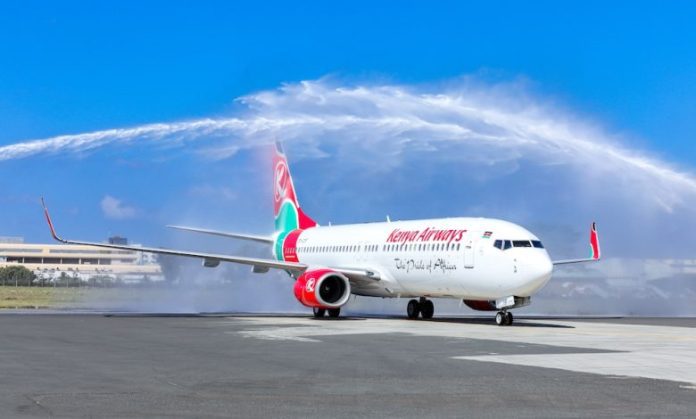
In times of crisis, national institutions like Kenya Airways (KQ) attract no shortage of opinions—many well-meaning, some emotional, and others dangerously detached from fact. Healthy debate is not only welcome; it is necessary. But when commentary is framed as expert analysis while resting on half-truths and misrepresentations, it risks misleading the public and undermining a fragile recovery.
A recent article by a former pilot purporting to diagnose how “KQ’s fortunes sank” and proposing a rescue plan fits squarely into this category. While the intention may have been noble, the arguments presented collapse under basic scrutiny. Aviation is a highly regulated, capital-intensive, and globally interconnected industry. Any serious analysis must therefore be grounded in industry realities, not nostalgia or conjecture.
First, the portrayal of Kenya Airways’ regulatory fine by COMESA as an unprecedented African failure is misleading. Airlines across the world—from Europe to North America and Africa—are routinely fined by regulators for competition or consumer-rights breaches. Such penalties are enforcement tools, not unique markers of institutional decay. To single out KQ as exceptional in this regard betrays either selective analysis or a misunderstanding of global aviation governance.

Equally flawed is the claim that KQ’s fleet restructuring signals strategic confusion or abandonment of long-haul ambition. In truth, fleet resizing and lease renegotiations were survival measures adopted by virtually every airline during and after the COVID-19 pandemic. Kenya Airways still operates Boeing 787-8 Dreamliners as the backbone of its long-haul network and is in the process of restoring grounded aircraft affected by global engine-part shortages—a problem that has crippled airlines worldwide, not just KQ.
Assertions that the airline lacks cargo capacity are demonstrably false. Cargo has, in fact, been one of Kenya Airways’ brighter spots. Freight and mail revenues have grown significantly, supported by the introduction of dedicated freighter aircraft and increased tonnage. In a period when passenger demand was volatile, cargo provided much-needed revenue stability—hardly the profile of an airline “without cargo capability.”
Some of the proposals advanced, such as transforming KQ into a vast aviation-industrial hub through partnerships with American manufacturing giants, sound ambitious but are
strategically unrealistic. Airlines are not industrial conglomerates. Their margins are thin, their capital requirements enormous, and their focus necessarily narrow. Successful diversification in aviation happens close to the core—cargo, maintenance, training—not through speculative industrial overreach.
The argument that KQ must own simulators for every aircraft type and build massive new cargo centres similarly ignores economic reality. Full-flight simulators cost billions of shillings and only make sense with consistently high utilization. Kenya Airways already operates simulators and maintenance facilities where it is economically viable, while outsourcing the rest—standard global practice. Building redundant infrastructure is not a strategy; it is a waste.
Dissecting the falsehoods surrounding Kenya Airways (Part 1)
Perhaps most concerning is the tendency to conflate governance with sectoral representation.A board is not meant to be a microcosm of tourism, horticulture, or aviation operations. Its mandate is fiduciary oversight, risk management, and strategic direction. Operational expertise resides in management, supported by advisors. To suggest otherwise is to misunderstand basic principles of corporate governance.
Claims that KQ has exited the North American market are also inaccurate. The airline has
expanded, not retreated, increasing frequencies on its New York route—one of its most strategically important intercontinental links. Financial engineering tools such as sale-and-
leaseback arrangements should not be confused with market withdrawal.
Even more misleading is the presentation of a non-binding letter of intent in the emerging air mobility space as a multi-billion-shilling investment already incurred. Letters of intent secure future options; they are not capital expenditures. Treating them as such inflates figures and distorts financial reality.
Finally, comparisons between Kenya Airways and global giants like Delta Air Lines ignore scale, balance-sheet strength, and market context. Delta’s fleet decisions cannot be transplanted wholesale onto a smaller African carrier navigating legacy debt and post-pandemic recovery. Such analogies may sound compelling, but they add more heat than light.
Kenya Airways is not without its challenges. Legacy debt, historical missteps, and external
shocks have left deep scars. But the airline has also recorded operational improvements,
stabilized key routes, and strengthened cargo performance. Constructive criticism must
acknowledge both sides of this ledger.
National carriers matter, not as symbols of blind patriotism, but as strategic economic assets. Their recovery deserves rigorous analysis grounded in fact, not the seductive simplicity of aviation folklore dressed up as expertise. Kenya Airways does not need saviors armed with speculation. It needs informed debate, disciplined execution, and patience grounded in reality.