

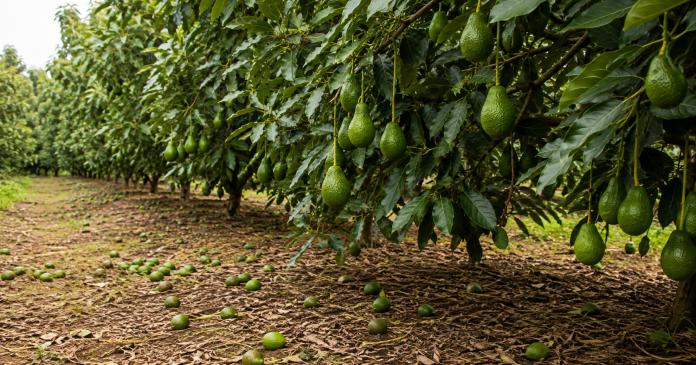
A Kenyan farmer has raised concerns over the growing hype around Hass avocado farming, questioning whether the rush to plant the crop is creating an oversupply that could eventually leave growers with bumper harvests but few buyers.
The farmer, who posted his concerns on the Tujengane Business Ideas Plug Facebook Group, said many farmers in his rural home had been encouraged to uproot traditional avocado varieties and replace them with Hass after being told the crop was a lucrative cash earner.
“Back home, we were told to cut down those local avocado trees because they were not making money and plant Hass because we were told it would bring in serious money. Now almost everyone in my area planted Hass, and this is when they are starting to see a movie,” the farmer wrote.

He went on to complain that the market was becoming crowded while buyers remained few, pushing prices down.
“The market is flooded, buyers are few and the price has fallen badly. By the end of this year, you could find one avocado going for just one shilling if the situation continues this way,” he said.
The farmer went on to question the Hass avocado business: “Where did the Hass avocado business go wrong? Is it oversupply? Poor planning? Everyone planting the same crop at the same time without a market strategy? Or is there something else farmers are not being told?”
The post, however, attracted a different perspective from other users who argued that the problem was not necessarily a lack of demand for Hass avocado but a lack of better market research.
The respondents maintained that the demand for Hass avocado is very high both locally and internationally, advising the farmer to look for markets beyond his home area, with some citing areas in Kenya where the fruit is nowhere to be found.
Another respondent maintained that Hass remains highly sought after, particularly in Europe, and recent export difficulties should not be mistaken for a collapse in the market.
“Hass is very much in demand especially in Europe,” the user said, adding that recent export difficulties had been linked to disruptions caused by the war, but that the export route had reopened.
The user also gave an indication of the prevailing farm-gate market, saying Grade One Hass avocado in size codes 12 to 24 could fetch between Sh85 and Sh100 per kilogram.
Why Kenyan Hass avocado remains in demand
Kenyan Hass avocado continues to attract international buyers, particularly due to its nutritional qualities.
Its creamy texture, relatively high oil content and flavour have made Hass the dominant commercial avocado variety in many international markets.
The country’s geographical conditions further pose an advantage. Avocados are grown in several agro-ecological zones, allowing production across different regions and seasons.
This provides opportunities to supply export markets over extended periods rather than relying on a single harvest window.
Europe is the leading destination for Kenya’s avocado, with the Netherlands, the United Arab Emirates, Spain, France, and Germany remaining significant markets for Kenyan produce.
Research on the European avocado market has found that Hass is the dominant variety in Europe, while European production satisfies less than 10 per cent of the continent’s overall avocado demand, leaving the market heavily dependent on imports from producing countries outside Europe. (AGRIS)
Kenya has also been expanding its access to new markets. In 2023, for instance, the government announced the first consignment of Kenyan avocados to India following bilateral negotiations that opened the Indian market to Kenyan exporters.
China has also become an important destination.
Kenya’s avocado production is rising rapidly
As the demand grows, local production is also rising sharply. Latest data from the Agriculture and Food Authority shows that Kenya’s avocado production rose dramatically from 632,953 tonnes in 2023 to 848,122 tonnes in 2024, representing a 34 per cent increase.
The authority attributed the increase partly to the expansion of avocado farming into non-traditional growing areas, driven by demand in export markets.
In 2024, the country exported about 119.8 million kilogrammes (roughly 119,801 tonnes) of fresh avocados, earning approximately Sh22.27 billion.
Not every Hass avocado is fit for export
Even with the high production, not every fruit qualifies for export. For an avocado to qualify for export, it must meet strict quality, maturity, size, appearance and safety requirements imposed by both Kenyan authorities and importing countries.
These standards are intended to ensure that the fruits can withstand transportation, continue ripening properly and arrive in good condition at their destination.
Also Read: Alpine Goat: The profitable dairy breed more farmers should embrace