

Gertrude’s Go Green Week
Gertrude’s Children’s Hospital has called on health facilities in Kenya to treat sustainability as an operational priority, rather than a standalone environmental initiative, pointing to its investments in renewable energy, waste management and resource efficiency as examples of how greener healthcare can also deliver operational benefits.
The call came at the close of the Gertrude’s Children’s hospital’s ‘Go Green Week’, a five-day hospital-wide campaign held from 24 to 28 August that brought together staff and stakeholders around energy conservation, waste management, water conservation and tree planting.
Sustainability as an Operational Priority
Dr Robert Nyarango, Gertrude’s Children’s Hospital Chief Executive Officer, noted that the cost savings and operational efficiencies realised from adopting sustainability initiatives have translated into more resilient healthcare systems.

“Healthcare facilities are significant consumers of power, water and other resources, so sustainability must be part of how hospitals are managed and how we think about efficiency. We initially looked at these initiatives through an environmental lens, but we have seen that they are also operational decisions. We encourage other health facilities to look at sustainability in the same way and identify opportunities within their own operations to use resources more efficiently and build more resilient healthcare systems,” said Dr Nyarango.
Breast cancer is no longer a disease of older women
Applying Healthcare Quality Standards to Sustainability
Gertrude’s Children’s hospital’s approach to sustainability sits within the same standards-led culture that governs its clinical care. The hospital is accredited by Joint Commission International (JCI) — the global benchmark for healthcare quality and patient safety — and is the only children’s hospital in sub-Saharan Africa to hold the accreditation across its facilities.
The hospital says it is now bringing that same discipline of clear standards, measurement and continuous improvement to how it manages energy, water and waste.
Solar Energy Cuts Reliance on the Grid
One of the hospital’s sustainability initiatives is its rooftop solar system commissioned in 2025, which now meets over 17% of the hospital’s electricity needs.
Designed and installed by Davis & Shirtliff, the system has a capacity of 362.7 kilowatts across 585 panels.
Kitui teen relieved after KNH surgeons remove 20kg breast tissue
Biomass Replaces Fossil-Fuel Boiler
On the thermal side, the hospital has moved away from a fossil-fuel boiler to a biomass system operated by Lean Energy, a green-certified company.
The boiler runs on sustainably sourced organic fuel in place of diesel, reducing up to 30 tonnes of CO₂ emissions per month to meet the hospital’s heating requirements. The initiative complements the solar investment on the electricity side and reduces the hospital’s exposure to fuel price movements.
Circular Economy and Waste Management
Gertrude’s Hospital is also applying circular economy principles to its linen and staff uniforms.
Through a partnership with Africa Collect Textiles, two tonnes of used textiles have been diverted from landfill for recovery and recycling. A composting programme for food and gardening waste is one of the hospital’s priority areas as part of its wider efforts to reduce the volume of material sent for disposal.
“Healthcare generates waste every day, but we have an opportunity to be more deliberate about what we use, what can be reused, and what needs to be disposed of safely. Getting our waste under control is key to managing the hospital’s overall environmental footprint,” said Caroline Ayilo, Chief Nursing Officer, Gertrude’s Children’s Hospital.
Nurses salary in Kenya: Basic salaries, allowances nurses earn monthly
Staff Engagement and Tree Planting
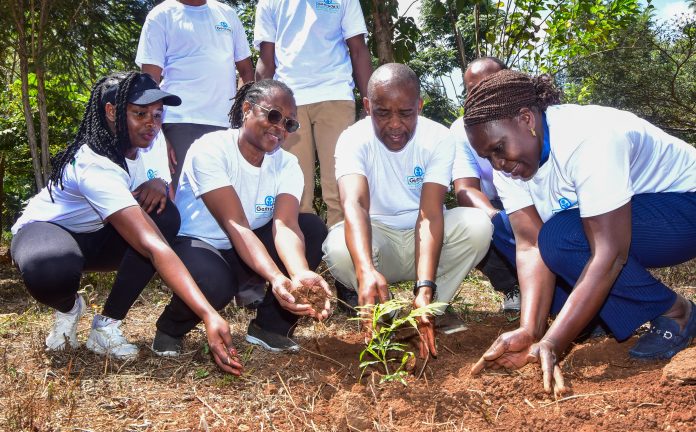
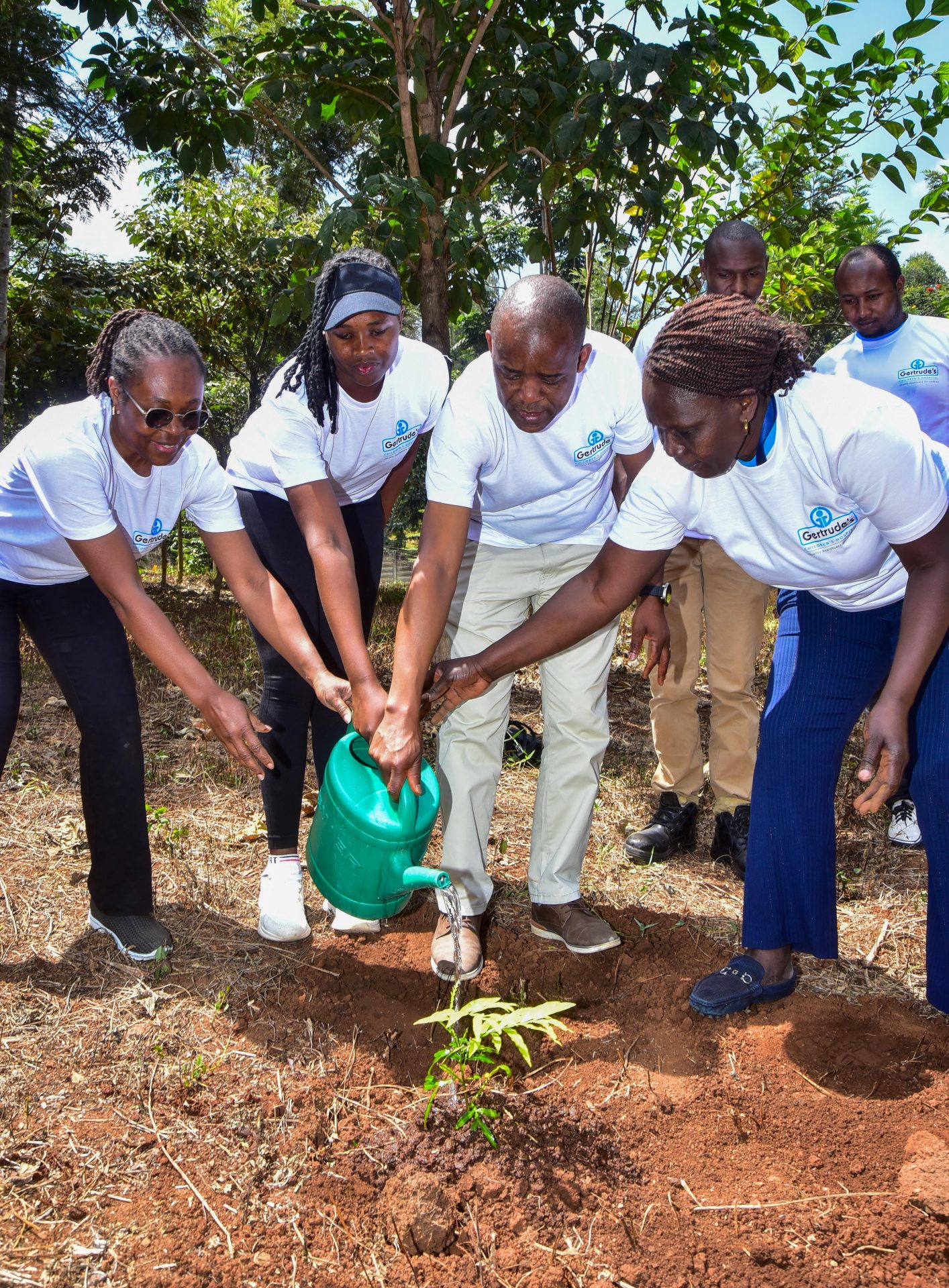
Go Green Week brought sustainability into different parts of the hospital through practical activities such as a tree planting on the last day, increasing the tree cover at the hospital’s main Muthaiga branch.
Baraka Kerich, Chief Financial Officer at Gertrude’s Children’s Hospital, said, “The ultimate objective of Go Green Week is to strengthen a culture in which sustainability becomes part of everyday healthcare operations. Our staff have responded well to our sustainability initiatives. We see potential for growth of some of these areas, but we can’t do it alone. As a hospital, we are identifying where we can make a difference and work with the right partners to ensure sustainability remains connected to the way we deliver care.”
Practical Measures Across Hospital Operations
The campaign also included a switch-off exercise turning lights off for ten minutes to highlight the impact of everyday energy consumption, a clean-up exercise in Pangani medical centre environs, and waste management sessions focusing on segregation, recycling, and appropriate reuse.
Staff also got a chance to showcase their proposals for reducing carbon emissions, resource consumption and waste.