

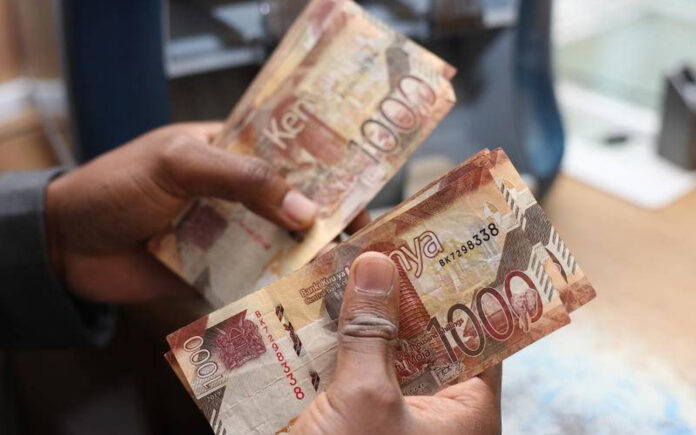
A woman has shared that she is always broke by the fifth of every month, despite taking home a net salary of Sh150,000.
The woman, a single mother of two children aged eight and two, lives in Nyandarua and is seeking advice on how to put her income towards buying a plot and eventually building a home.
Her financial situation was shared by Benjamin Cheruiyot, a financial advisor at Abojani Investments, on his X account.

According to the woman, identified as July, her monthly expenses include a Sh50,000 loan repayment, Sh5,000 in Sacco savings, Sh10,000 in a chama, Sh5,000 sent to her mother, Sh18,000 for shopping, Sh10,000 rent and Sh10,000 for a househelp.
She also spends Sh24,000 on school fees per term, leaving the remaining amount to miscellaneous expenses.
Despite earning Sh150,000 each month, July said she finds herself without money as early as the fifth day of the month and wants a financial plan that can help her acquire property.
Responding to the matter, Cheruiyot said the figures suggest that the problem is not necessarily her income but a lack of control over part of her expenditure.
He noted that about Sh34,000 could not be accounted for in the stated budget. If left unchecked, this would amount to Sh408,000 a year—money that could instead contribute towards her property goal.
He advised July to identify the expenses hidden under the miscellaneous category, which can include transport, fuel, airtime and data, online purchases, eating out and financial assistance to friends and relatives.
According to Cheruiyot, the first step towards investing should be to close these spending gaps and establish where every shilling is going.
He also questioned the purpose of the Sh50,000 loan and urged her to establish whether it was taken for a property purchase, home improvements or consumption. Knowing the outstanding balance would also help determine how best to manage the debt.
Cheruiyot further advised her to reconsider the Sh10,000 monthly chama contribution. While she is putting away Sh15,000 through the chama and Sacco combined, he noted that such savings may not be readily available when she needs cash.
He recommended reviewing the chama’s returns and structure, particularly if it operates mainly as a merry-go-round rather than an investment vehicle. In such a case, he suggested redirecting some of the contribution towards a money market fund (MMF).
The Sh18,000 monthly shopping bill was another area he identified for review. With food prices and household needs varying, he advised the mother to examine her kitchen expenses, plan meals and consider buying produce directly from farmers’ markets where possible.
“Sh 18K food shopping appears a lot in “Potato County” With two young children and a househelp, examine leaks in your kitchen. You can cut costs by purchasing directly from farmers’ markets,” he advised.
To make progress towards her property goal, Cheruiyot proposed setting up separate sinking funds for school fees and the planned plot purchase.
He suggested making automatic transfers immediately after payday so that saving becomes a priority rather than relying on whatever money remains at the end of the month.
Under his proposed budget, Cheruiyot advised her to set aside Sh50,000 for loan repayment, Sh5,000 Sacco contribution, Sh10,000 rent, Sh10,000 househelp, and Sh5,000 support for her mother.
Other proposed allocations include Sh5,000 for Chama contribution; Sh10,000 for shopping; and Sh10,000 for miscellaneous.
The revised budget would bring monthly spending to Sh113,000, leaving Sh37,000 for saving and investment.
Cheruiyot’s proposed allocation of the surplus is Sh20,000 a month towards a property fund, Sh8,000 towards school fees and Sh9,000 towards an emergency fund.
If maintained for 24 months, the property fund would accumulate Sh480,000, while the school fees fund would reach Sh192,000 and the emergency fund Sh216,000.
The approach would give July separate funds for her major financial obligations while creating a dedicated pool of money for her long-term goal of purchasing land.
Cheruiyot also advised her to compare her total chama contributions with the expected payout and assess whether the arrangement is delivering meaningful returns.
If the benefits are unclear after reviewing the arrangement, she could reconsider her participation during the next cycle.
Also Read: How to grow wealth with Sh30,000 salary
Did you love the story? You can also share YOUR story and get it published on Bizna Click here to get started.