

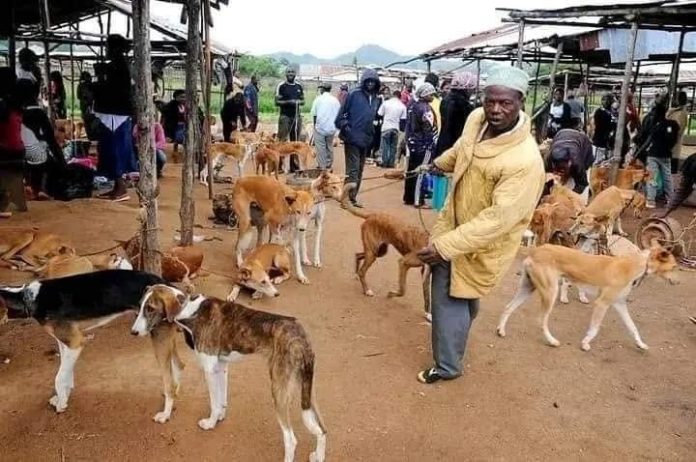
By Thursday morning, Lubao takes on a different rhythm. Along the market lanes in Malava, Kakamega County, dogs bark from the ends of ropes as their handlers lead them through the crowd, while prospective buyers stop to inspect their size, build and temperament.
Traders negotiate over prices, buyers move from one animal to another and the otherwise ordinary shopping centre comes alive with the unusual business of buying and selling dogs.
For generations, Thursday has been market day at Lubao, a trading centre synonymous with dogs. Unlike many rural markets where cattle, goats and sheep dominate the livestock section, dogs have long occupied a special place here.

Now, the indigenous dog trade is reportedly showing signs of a comeback, with traders saying demand for local breeds remains steady despite the growing popularity of exotic breeds and changing tastes among Kenyan pet owners.
The dogs on sale are largely valued for their usefulness. A buyer looking to protect a homestead may be interested in a large and alert dog.
A farmer may want one capable of guarding livestock. Others look for animals believed to have the stamina and keen sense of smell needed for tracking.
Traders say an indigenous dog can fetch between Sh2,000 and Sh3,500, depending on factors such as size, maturity, appearance and perceived ability.
Previous accounts from the market have recorded even wider price variations, particularly for mature or highly sought-after animals.
Over the years, Lubao has attracted traders and customers from across western Kenya and beyond. Reports from the market have documented sellers sourcing dogs from areas including Nandi and Uasin Gishu before bringing them to Kakamega for sale.
A market built around dogs
The prominence of dogs at Lubao dates back in the early 1950s, when the market was already developing as a trading centre. By the 1970s, it had gained a reputation as an important livestock market, with dog auctions becoming one of its distinguishing features.
The market’s development is closely linked to increased demand for dogs due to changes in farming and the need for households to protect themselves and their livestock.
Dogs became valuable working animals in rural homes. They barked at intruders, guarded livestock and homesteads and, according to older residents, were sometimes used in hunting.
By the time modern breeds such as German Shepherds, Rottweilers and Boerboels became increasingly popular among urban dog owners, Lubao had already developed a long-standing market for indigenous dogs.
A 2013 study on dog ownership and rabies in Kakamega found that the county had several weekly dog markets, with Lubao recording the highest sales volume among them at the time — about 80 dogs a week.
From hunting companion to security guard
The role of dogs in the region has changed with the times. As hunting declined and rural lifestyles evolved, the animals’ role increasingly shifted towards guarding homes and livestock.
At the same time, the growth of towns and changing consumer preferences brought greater interest in foreign breeds.
However, for a rural household that needs a dependable guard dog but cannot afford an expensive imported breed, the local dog remains an accessible option. That may partly explain why traders believe the market continues to attract buyers.
The market also serves as a meeting point where people exchange information about dogs — from breeding and feeding to training, and the characteristics buyers should look for.
A market that has changed
Lubao’s dog market, however, has not remained untouched by change. Its surroundings and trading arrangements have evolved as the wider livestock market has expanded.
In 2019, Kakamega County modernised the market’s livestock yard in a project reported to have cost Sh10 million. The improved facility was intended to serve traders from several counties, including Kakamega, Nandi, Uasin Gishu, West Pokot and Bungoma.
The dog section has also faced challenges. A 2019 report on the market raised concerns about the treatment of dogs, including allegations that some animals were deliberately made aggressive before being offered to customers seeking guard dogs.
Beyond dog auction, the market is said to be used by veterinary officials to provide rabies vaccination and educate owners.
Also Read: Key tips for farmers looking to venture into Sheep farming
Did you love the story? You can also share YOUR story and get it published on Bizna Click here to get started.