

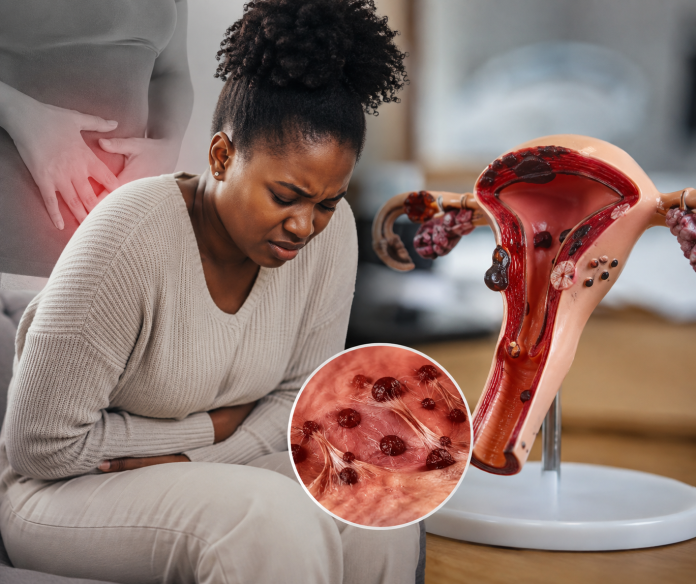
Endometriosis has increasingly made headlines in recent years as women speak more openly about a condition that has for decades been misunderstood, underdiagnosed and, in many cases, dismissed as ordinary menstrual pain.
In Kenya, the fight to raise awareness has been championed by patients, health advocates and public figures, including women who have shared their own experiences to challenge the stigma surrounding the disease and encourage others to seek medical attention.
The growing attention has helped bring into focus a condition that affects millions of women worldwide but remains difficult to diagnose and manage.

What is endometriosis?
The World Health Organization (WHO) defines endometriosis as a disease in which tissue similar to the lining of the uterus grows outside the uterus.
This tissue can cause inflammation and the formation of scar tissue, particularly in the pelvic region.
Endometriosis primarily affects women of reproductive age and is estimated to affect about 10 per cent (roughly 190 million) of women and girls globally.
Although the condition most commonly develops in the pelvis, it can also occur in other parts of the body, including the abdomen and, in rare cases, the chest.
The disease can have far-reaching effects on a woman’s physical and emotional wellbeing. Beyond pelvic pain, it may affect sexual intercourse, bowel movements and urination.
It can also have consequences for mental health, with some patients experiencing anxiety, depression and the psychological strain of living with persistent pain.
A disease with no known cause
Despite years of research, the exact cause of endometriosis remains unknown.
Emerging research, however, points to a possible link between the condition and abnormalities in the immune system.
People living with endometriosis have been found to have higher rates of certain immune-mediated conditions, while having a family history of the disease may also increase the likelihood of developing it.
One of the major challenges is that endometriosis does not affect everyone in the same way. Symptoms can vary significantly, making the disease difficult for health workers to identify.
Some women experience severe symptoms, while others may have few or none at all. In some cases, the condition is only discovered when a woman undergoes investigations for infertility or has surgery for an unrelated medical problem.
Common signs and symptoms
WHO estimates that the average time to diagnosis ranges from 4 to 12 years, with access to early diagnosis and effective treatment remaining limited in many countries, particularly in low- and middle-income nations.
The symptoms are often mistaken for normal menstrual discomfort, allowing the disease to progress without appropriate treatment.
Among the most common symptoms are severe or painful periods accompanied by pelvic cramps, lower back pain or abdominal pain. The discomfort may begin before menstruation and continue for several days after it starts.
Pain during or after sexual intercourse is another common warning sign. Some women also experience pain when passing stool or urinating, particularly immediately before or during their periods.
Heavy menstrual bleeding or bleeding between periods can also occur.
For some women, infertility is the first indication that something may be wrong. Endometriosis can interfere with fertility, and the disease is sometimes discovered during investigations or treatment for difficulty conceiving.
Other symptoms may include fatigue, bloating, nausea, constipation and diarrhoea, particularly around the menstrual period.
Managing the disease
There is currently no treatment that definitively cures endometriosis. Instead, management focuses on controlling symptoms, slowing the progression of the disease and addressing complications.
The choice of treatment depends on several factors, including the severity of the disease, a patient’s symptoms and preferences, possible side effects, long-term safety, cost, availability and whether she wishes to become pregnant.
Painkillers, including non-steroidal anti-inflammatory drugs such as ibuprofen and naproxen, are commonly used to manage pain.
Hormonal treatments may also be used to reduce the severity or frequency of symptoms in some women. These include combined hormonal contraceptives, progestins such as hormonal intrauterine devices and depot medroxyprogesterone acetate, as well as gonadotropin-releasing hormone (GnRH) analogues.
Other hormonal treatments, including aromatase inhibitors, may be considered in some cases. However, certain hormonal treatments are not suitable for women who are actively trying to conceive.
For patients whose symptoms are severe or do not respond adequately to medication, surgery may be considered.
Surgical procedures can remove endometriosis lesions, adhesions and scar tissue. In some cases, a hysterectomy — removal of the uterus, often together with the ovaries — may be considered for patients who have not responded to other treatments and do not intend to have children.
However, hysterectomy is not guaranteed to eliminate endometriosis or its symptoms. Some patients continue to experience pain after the procedure, while endometriosis lesions can also return after surgical removal.
The effectiveness of surgery in reducing pain and improving the chances of pregnancy often depends on how extensively the disease has affected the body.
Pelvic floor muscle problems can also contribute to persistent pelvic pain and may require additional treatment.
Endometriosis and fertility
For women hoping to have children, endometriosis can present another difficult challenge.
The condition may affect fertility, but a diagnosis does not necessarily mean pregnancy is impossible.
Depending on an individual’s circumstances, doctors may recommend fertility treatments such as ovulation induction, intrauterine insemination (IUI) or in vitro fertilisation (IVF).
Early recognition and appropriate medical care can therefore be important, particularly for women experiencing persistent menstrual pain or difficulties conceiving.
Also Read: Naom Monari: Kenyan nurse bringing dialysis machines closer to patients