Home Blog Page 103

Trump now announces 15% global tariffs a day after 10% tariff declaration

0

President Donald Trump of the United States of America has announced that he is imposing 15 percent global tariffs. This announcement comes barely a day after he announced that he would impose 10 percent global tariffs in protest to a ruling by the Supreme Court of the United States that declared his controversial tariffs illegal.

On Friday, President Trump had stated that he would replace the tariffs that had been scrapped off by the Supreme Court with 10 percent tariff on all goods entering the United States.

On Saturday, he reviewed this to 15 percent and stated that the new tariffs will come into effect on Tuesday, February 24, 2026.

These new tariffs will only be able to stay in place for a period of five months within which his administration will be required to seek approval from the US Congress.

“Based on a thorough, detailed, and complete review of the ridiculous, poorly written, and extraordinary anti-American decision on Tariffs issued yesterday, after MANY months of contemplation, by the United States Supreme Court, please let this statement serve to represent that I, as President of the United States of America, will be, effective immediately, raising the 10 percent Worldwide Tariff on Countries, many of which have been ‘ripping’ the U.S off for decades, without retribution (until I came along!), to the fully allowed, and legally tested, 15% level. During the next short number of months, the Trump Administration will determine and issue the new and legally permissible Tariffs, which will continue our extraordinarily successful process of Making America Great Again,” he said in a statement that he posted on his Truth Social media platform.

On Friday, the US Supreme Court had ruled in a 6 – 3 decision that President Trump had overstepped his executive powers when he slapped the world with global tariffs in 2025 using the 1977 law that is known as the International Emergency Economic Powers Act.

The six justices who struck down his tariffs included Justice Sonia Sotomayor, Justice Elena Kagan and Justice Ketanji Brown Jackson who were appointed by Democratic presidents. Justice Neil Gorsuch, Justice Amy Coney, and Chief Justice John Roberts who were appointed by Republican presidents.

Justice Brett Kavanaugh, Justice Samuel Alito and African American Justice Clarence Thomas voted in favour of Trump’s tariffs.

SEE MORE: Blood money Russia is using to lure Kenyan men into war with Ukraine

Mary Wambui: Meet businesswoman behind the prestigious Glee Hotel

0

Nestled along Nairobi’s Northern Bypass in the leafy suburb of Runda, Glee Hotel Nairobi is one of the city’s most distinctive hospitality investments.

The facility, a 211-room is designed to blend business convenience with resort-style relaxation. Glee features nine versatile meeting rooms, expansive conference facilities and a lush outdoor garden suited for corporate functions and social events.

Its strategic location near the United Nations complex, Village Market and Karura Forest makes the facility attractive to diplomats, corporate travellers, and event organisers seeking both accessibility and tranquility.

Guests are offered a range of lifestyle amenities, including six restaurants and bars, a vibrant nightclub, a heated swimming pool, a spa, recreational spaces for families and a serene skywalk.

The hotel is a brainchild of Mary Wambui Mungai, one of Kenya’s most prominent business figures whose career spans entrepreneurship, procurement, and public service.

Born and raised in Gachinja in Gatundu South, Wambui began her professional journey as a clerical officer at the Ministry of Health. Her early exposure to public sector operations would later shape her transition into business.

In the mid-1990s, she ventured into entrepreneurship by founding Purma Holdings Limited, a firm that grew into a major player in government procurement.

Through the company, Wambui built a diverse portfolio that included supplying uniforms and tactical gear to the Kenya Defence Forces, providing medical supplies through the Kenya Medical Supplies Authority (KEMSA), and engaging in general trade ranging from food imports to office equipment.

The firm’s growth positioned her among the country’s influential business leaders and enabled investments across multiple sectors, including hospitality.

Through the firm, Wambui also joined the billionaire club, a milestone that was followed by multiple court battles.

In 2021, Wambui and her daughter, Purity Njoki, were accused of evading Sh2.2 billion in taxes. They, however, won the case in 2023 following a review by the Director of Public Prosecutions (DPP), a move that sparked intense public debate.

The businesswoman is said to be a key financier for President Ruto’s United Democratic Alliance (UDA). As a result, she has been rewarded with strategic roles in Ruto’s administration.

In August 2025, President Ruto revoked her appointment at the Communications Authority and immediately reassigned her to chair the Athi Water Works Development Agency.

Also Read: Who is he? A look at the career profile of IEBC’s new acting CEO Ledama Sunkuli

Jane Mango: I make Sh40,000 from tractor hiring business

0

Growing up, Jane Mango envisioned becoming a teacher, but the dream remained unachieved due to a lack of job opportunities.

The KCA University Bachelor of Arts degree in education revealed while her dream was to become a secondary school mathematics and business studies teacher, a lack of a decent job forced her into a different career path whose earnings are nothing but rewarding.

The 26-year-old now operates tractor business in her Mituri village, east Uyoma, Rarieda sub-county, Siaya county, a decision she does not regret making.

“I decided to do something else to eke out a living in the face of job scarcity. And I am doing quite well, having acquired two tractors which I operate in the entire Uyoma,” she said in an interview with The Standard.

“I had wanted to be an inspiration to many Gen Z graduates, especially to women who are currently struggling to get jobs and have since put pressure on the government to give them the jobs it promised them.”

Jane revealed that her decision to venture into the tractor business was also inspired by the high demand for tractor drivers, especially during peak seasons when many of them would go missing.

She currently operates two tractors bought for her by her father, Mango Ogwang’.  She uses them for hire to cultivate farmlands for customers, supply clean water at functions like weddings, parties, funerals, social, economic and political gatherings, offer transport and carry heavy goods.

Rhino Mabati integrates AI Robotics to boost production efficiency

In a week, she makes at least Sh20,000 during off-peak season and Sh40,000 during peak season. This income translates to about Sh80,000 – Sh120,000 in a month.

“This is far better than what l would have earned as a high school teacher or from any ordinary employment,” She added.

Her business has not been without challenges in the sector largely dominated by men. Jane revealed that some clients doubt her services arguing that a young inexperienced lady cannot deliver effectively using a heavy-duty tractor like that.

“Getting a good, committed driver who is trustworthy is difficult. I have two tractors and l can’t drive both of them at the same time, and there are times when both tractors are engaged by my customers, so hiring another driver has been a big headache,” she observes.

Looking ahead, she plans to add another tractor and venture into other businesses including opening a supermarket at local shopping centres.

Jane encourages other young Kenyans struggling with joblessness to think outside the box and embrace business.

The New Face of Entrepreneurship in Kenya: Innovation, Resilience, and Opportunity

0

INTRODUCTION

Kenya has steadily built a reputation as one of Africa’s most dynamic business hubs. From Nairobi’s fast-growing startup ecosystem to rural enterprises reshaping agriculture, the country’s entrepreneurial landscape reflects a powerful mix of innovation, resilience, and ambition. Platforms like BiznaKenya.com highlight how local founders, investors, and professionals are redefining what it means to build sustainable businesses in emerging markets.

As technology becomes more accessible and financial inclusion improves, Kenyan entrepreneurs are discovering new ways to compete globally while solving local challenges.

THE RISE OF DIGITAL-FIRST BUSINESSES

Mobile money, e-commerce, and digital platforms have fundamentally changed how businesses operate in Kenya. Small enterprises that once depended on physical foot traffic can now reach customers across counties — and even internationally.

This shift has also lowered barriers to entry. Young founders are launching service-based startups, online marketplaces, and tech solutions with minimal capital. Digital marketing, social media commerce, and cloud tools allow businesses to scale faster than previous generations could imagine.

Manufacturing and product development are evolving too. Entrepreneurs exploring rapid prototyping and customized production are beginning to Unlock the secrets of modern fabrication through platforms such as ProtoCom3DP.com, where 3D printing solutions help transform ideas into tangible products without massive upfront costs.

AGRIBUSINESS REMAINS A POWERHOUSE

While tech attracts headlines, agriculture continues to drive Kenya’s economy. What’s changing is how innovation intersects with farming. Data-driven crop management, climate-resilient practices, and value-added processing are opening new revenue streams for farmers and agribusiness founders.

Programs that connect research with real-world application play an important role in this transition. Entrepreneurs and professionals looking to Take the first step toward sustainable agricultural innovation often explore initiatives like Desiralift.org, which focuses on translating scientific research into practical policy and field solutions across developing regions.

This integration of science, policy, and entrepreneurship reflects a broader shift: Kenyan businesses are increasingly thinking long term rather than chasing quick wins.

ACCESS TO CAPITAL IS IMPROVING — SLOWLY

Funding has historically been one of the biggest obstacles for Kenyan entrepreneurs. Traditional bank lending can be restrictive, especially for early-stage businesses without collateral. However, alternative financing models are gaining traction.

Angel networks, venture funds focused on Africa, crowdfunding platforms, and revenue-based financing are expanding the options available to founders. Government programs and incubators are also helping bridge early funding gaps while providing mentorship.

Still, experts emphasize financial discipline. Strong bookkeeping, clear growth metrics, and realistic projections remain essential for attracting investors.

TECHNOLOGY AS A COMPETITIVE ADVANTAGE

Kenyan businesses are increasingly adopting technology not just for efficiency but for strategic differentiation. Automation, cybersecurity awareness, and data analytics allow even small teams to operate at a professional level.

Operating systems and software environments that prioritize privacy and flexibility are becoming part of that conversation. Companies exploring alternatives to traditional setups can See the difference with platforms like Robolinux.org, which enable secure workflows and compatibility with essential software through virtualization.

This matters because digital trust is becoming a core business asset. Customers expect reliability, transparency, and data protection — regardless of company size.

Eric Obwaka: Rare gem instilling networking confidence to entrepreneurs

THE HUMAN SIDE OF ENTREPRENEURSHIP

Behind every success story is persistence. Kenyan entrepreneurs often navigate infrastructure gaps, currency fluctuations, and regulatory complexity. What stands out is adaptability.

Side hustles frequently evolve into full businesses. Family networks support early growth. Communities share knowledge informally, accelerating learning across sectors. This collaborative culture has become one of Kenya’s biggest entrepreneurial strengths.

Education is also shifting. More professionals are investing in practical skills — digital marketing, financial literacy, product design, and operations — rather than relying solely on formal degrees.

LOOKING AHEAD: A MARKET FULL OF POSSIBILITY

Kenya’s business environment is far from perfect, but momentum is clear. Urbanization, a young population, improving internet access, and regional trade integration all point toward continued growth.

The next wave of opportunity will likely come from businesses that combine local insight with global thinking. Companies that embrace sustainability, leverage technology thoughtfully, and build strong customer relationships are best positioned to thrive.

For readers, founders, and investors following BiznaKenya.com, the message is consistent: entrepreneurship in Kenya is no longer about survival alone. It is increasingly about scale, impact, and long-term value creation.

In that sense, the country’s entrepreneurial journey mirrors the broader story of emerging markets — complex, fast-moving, and filled with possibility for those willing to learn, adapt, and build with intention.


 

Africa’s first Bee Venom marketplace launched in Kenya: A new frontier for high-value agriculture

0

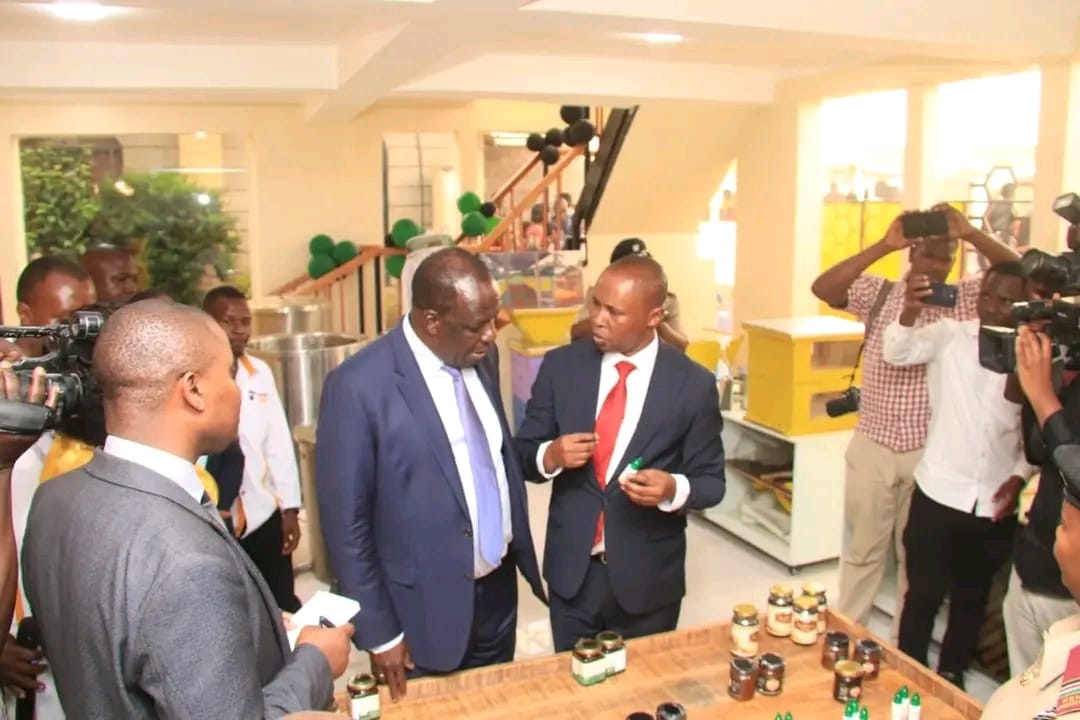
Kenya has marked a major milestone in agricultural value addition with the launch of Africa’s first Bee Venom Marketplace, positioning the country at the forefront of a fast-growing global bio-economy. The pioneering facility was officially unveiled on 18 February 2026 by Savannah Honey, a regional leader in the bee economy, in an event officiated by Wycliffe Ambetsa Oparanya, Cabinet Secretary for Cooperatives and MSMEs Development.

The marketplace introduces structured production, quality standards, and a guaranteed market for bee venom—one of the highest-value products in modern apiculture.

From honey to high-value bio-products

For decades, beekeeping in Africa has largely focused on honey and wax. Savannah Honey’s initiative expands this scope by mainstreaming non-traditional bee products, with bee venom at the center. Bee venom is widely used in pharmaceuticals, cosmetics, medical research, and alternative health therapies due to its anti-inflammatory and bioactive properties.

Speaking during the launch, Savannah Honey CEO Paul Kyalo Mutua noted that the company was founded 13 years ago with a clear mandate: to transform the bee sector through innovation, higher standards, and inclusive business models. Today, Savannah Honey operates across seven African countries and works with 15,780 contracted farmers, supported by more than 130 staff and over 700 community-based mobilizers and field officers.

A market with strong global demand

The global bee venom and extract market is valued at approximately USD 438 million in 2026 and is projected to grow beyond USD 700 million by the mid-2030s. Demand is driven by pharmaceutical research, cosmetic applications, and wellness products.

Savannah Honey crowned among Africa’s 100 Most Dependable Brands

Under the new marketplace, Savannah Honey is offering a ready market for bee venom at about KSh 4 million per kilogram. To meet confirmed international orders, the company plans to contract farmers to supply venom from 10,000 hives within six months. This pricing fundamentally redefines the income potential of beekeeping, especially in arid and semi-arid regions.

Farmer-centric and inclusive model

A defining feature of the marketplace is its inclusive value chain. Contracted farmers receive beekeeping education, modern hives and equipment, free technical support, farm inspections, and guaranteed off-take. Savannah Honey is also investing in advanced practices such as colony division, colony strengthening, and re-queening to improve productivity and sustainability.

This model shifts beekeeping from a peripheral activity to a serious agribusiness capable of delivering consistent, high-margin returns.

Africa’s first Bee Venom marketplace launched in Kenya: A new frontier for high-value agriculture

Alignment with Kenya’s MSME and value-addition agenda

In his keynote address, Cabinet Secretary Oparanya emphasized that the Bee Venom Marketplace aligns closely with Kenya’s Bottom-Up Economic Transformation Agenda. He highlighted value addition, MSME growth, job creation, and climate-smart enterprises as national priorities.

Beekeeping, he noted, supports biodiversity and pollination while offering income opportunities without competing for land. With over 80 per cent of Kenya classified as arid or semi-arid, apiculture presents a scalable solution for rural livelihoods, youth employment, and women-led enterprises.

Positioning Kenya as a regional leader

By operationalising Africa’s first dedicated bee venom production and marketing centre, Savannah Honey is positioning Kenya as a regional hub for high-value bee products. The initiative demonstrates how private-sector innovation, supported by enabling public policy, can unlock new export-oriented industries.

Conclusion

The launch of Africa’s first Bee Venom Marketplace marks a strategic shift in how agriculture, MSMEs, and value addition intersect in Kenya. It signals a move from volume-driven farming to knowledge-intensive, high-value production. For farmers, investors, and policymakers, bee venom is no longer a niche concept—it is a commercially viable frontier.

The broader lesson is clear: sustainable growth will come from enterprises that combine innovation, inclusive value chains, and long-term stewardship. That is how agricultural sectors mature—and how economies build durable prosperity.

Full list of approved degree courses and minimum subject requirements

0

The Kenya Universities and Colleges Central Placement Service (KUCCPS) has released a list of minimum subject requirements for various degree programmes.

In a document, KUCCPS listed all approved degree courses in universities and their specific subject combination requirement.

According to the document, learners seeking to pursue courses such as Medicine, Dentistry, Pharmacy, and Nursing must demonstrate strong performance in Biology, Chemistry, Mathematics or Physics, and English or Kiswahili.

At the same time, Civil Engineering, Mechanical Engineering, Electrical and Electronic Engineering, and related disciplines require solid grades of C+ or above in Mathematics and Physics, alongside Chemistry and either English or Kiswahili.

Below is the list of KUCCPS-approved degree courses and subject requirements:

CLUSTER COURSES SUBJECT REQUIREMENT
Law, Business & Management Law, Commerce, Business Administration, Procurement, Supply Chain, Entrepreneurship English or Kiswahili; Mathematics (Alternative A or B) or any Group II subject; Any Group III subject; Another Group II, III, IV or V subject
Hospitality, Tourism & Human Resource Tourism, Hospitality, Hotel Management, Human Resource Management English or Kiswahili; Mathematics (Alternative A or B); Any Group II or Group III subject; Any Group II, III, IV or V subject
Arts, Communication & Social Sciences Journalism, Mass Communication, Sociology, Psychology, Criminology, Political Science English (C+ and above); Kiswahili (C+ for some courses); Any Group II subject; Any Group III, IV or V subject
Engineering, Geospatial & Physical Sciences Civil Engineering, Mechanical Engineering, Electrical Engineering, Geospatial Engineering Mathematics; Physics; Chemistry or Geography; Any Group II, III, IV or V subject; Minimum grades mostly C+ and above in Mathematics and Physics
ICT, Computer Science & Technology Computer Science, Information Technology, Software Engineering, Informatics Mathematics; Physics or Computer Studies; Any Group II or III subject; Any Group II, III, IV or V subject
Architecture, Quantity Survey & Built Environment Architecture, Quantity Surveying, Urban Planning, Construction Management Mathematics; Physics or Geography; Any Group II subject; Any Group III, IV or V subject
Biological & Life Sciences Biology, Biotechnology, Microbiology, Biochemistry Mathematics; Biology; Chemistry or Physics; Any Group II, III, IV or V subject
Health Sciences & Medical Medicine, Nursing, Pharmacy, Clinical Medicine, Public Health Biology; Chemistry; Mathematics or Physics; English or Kiswahili
Agriculture & Environmental Sciences Agriculture, Agribusiness, Environmental Science, Forestry Mathematics; Biology or Agriculture; Chemistry or Geography; Any Group II, III, IV or V subject
Mathematics, Economics & Statistics Actuarial Science, Economics, Statistics, Financial Engineering Mathematics; English or Kiswahili; Any Group II subject; Any Group III, IV or V subject
Education (Arts) Education Arts, Early Childhood Education, Special Needs Education Two teaching subjects from KCSE; English or Kiswahili; Mathematics or approved alternatives
Education (Science & Technical) Education Science, Technical Education Mathematics; Two science subjects (Biology, Chemistry, Physics); English or Kiswahili

Also Read: KNEC announces training for KJSEA, KCSE examiners; how to apply

From failed ventures to six TVET campuses: John Gitau’s relentless rise in entrepreneurship

0

John Gitau’s journey in entrepreneurship is a true testament that entrepreneurship is not for the faint-hearted but only the strong-willed win. Gitau started and closed many businesses but, years later, emerged victorious in the journey.

He is the proprietor of a successful learning institution in Nakuru –The Rift Valley Institute of Business Studies (RVIBS) –a technical and vocational training accredited institution that currently has six campuses.

Gitau started as an employee at Unilever, where he took home a fat salary. While still in employment, he set up a shop in Kahawa West in 1990.

Things, however, went south, forcing him to shut the business after just six months. Gitau decided to explore opportunities in other sectors and opened a hair and beauty salon in Umoja estate, Nairobi.

The business was promising at first, but it was not long before it collapsed. Gitau attributes the fall of his businesses to disagreements with family members who were at the helm of the two businesses.

“The problem was involving family members in the running and management of both businesses. Though both at first showed promise of doing well and expanding,  disagreements and feuding with those entrusted to manage them are what contributed to the collapse. Unlike the case of hired workers one can fire, it is a different scenario with family members,’’ he said.

He decided to take a break from entrepreneurship and concentrated on his employment. In 2006, after getting a transfer to Kericho, the urge to start a side hustle hit, and he set up a hair and beauty shop.

The business did so well, creating room for expansion to a  cyber café which later transformed into a beauty school under the name Kericho Beauty School.

The businesses created a decent income prompting him to quit employment to focus on entrepreneurship fully; little did he know the worst was about to happen.

During the 2007/08 post-election violence, all his premises were looted and all equipment stolen taking him back to the drawing board.

“If there was anything I regretted, it was quitting formal employment as I had not anticipated the worst. The saving grace, however, was that I had terminal benefits, which I decided to invest in a college business in Nakuru town. This was mid-2008. I was picking up from where I had left, but with diversified courses on offer.’’ he added.

The business started at a very low pace prompting him to seek employment to keep it afloat. He was employed at Kenya Breweries Limited and used his earning to finance the business.

The college has presently seen over 5,000 students graduating since its inception, and it offers non-technical and technical courses. It is currently accredited to offer TVET courses.

Gitau advised those intending to try their hand at entrepreneurship to chase what they love adding that failure is part of growth in business.

“It is noble to fail while attempting to do something than to fail doing nothing. It was discouraging with each setback experienced along the process, but I soldiered on,’’ he said.

Also Read: Simple habits that will make you a successful business owner if you start today

Njugush: Numerous rejections and how Abel Mutua turned around my life

0

Timothy Kimani Ndegwa, popularly known as Njugush, is among the best Kenyan comedians who are making moves in the comedy industry.

Njugush, however, revealed his journey to the top was not a smooth sail as he encountered numerous challenges, among them rejections.

Describing his journey to fame as the epitome of determination, Njugush recalled numerous instances of being rejected, but this did not deter him from accomplishing his goals.

“Actually, I knocked on several doors and faced numerous rejections. However, I always believed that one day I would break through,” he told Nairobi News.

He revealed his life changed for the better after an encounter with content creator Abel Mutua, who offered him an acting job.

Njugush: This was my first monthly salary on Tv

“I met Abel Mutua, who was looking for someone to host a new show he had launched. He saw how funny I was and saw potential in me. He reached out and told me he was looking for a ‘stupid’ person.” He said.

“After three episodes, people started getting curious about my identity. I didn’t have a name at the time, so after much consideration, they settled for Njugush.’’ He added.

The two started working together in 2013 on the Hapa Kule show, which attracted a lot of attention, further adding to Njugush’s popularity.

Njugush later quit to join the popular TV comedy-drama The Real House Helps of Kawangware, where he became a household name. He admitted that his success was fuelled by many failures and mistakes.

“A lot of things in my life have been mistakes, but they ultimately worked out for the better.”

He encouraged young content creators to push and embrace perseverance, as nothing good comes easy.

 “Let us not give up… let’s continue pushing until we make ends meet,” Njugush advised.

Njugush rise

Despite the hardships, Njugush is among the richest Kenyan comedians who have had successful careers in comedy.

He runs his businesses alongside his wife Celestine Ndinda and together they have build a portfolio in various sectors including entertainment, transport and real estate, among others.

Njugush started at The Real House-helps of Kawangware show a couple of years back. He took a bold step to leave and start his own comedy venture.

His move has since paid off, with his shows and corporate endorsements and sponsorships raking in millions of money for his brand.

As part of their business empire, the power couple run the highly successful Through Thick and Thin comedy series. In July 2024 for instance, the couple pulled off one of Kenya’s most successful entertainment shows in Nairobi.

The show that was dubbed as Through Thick and Thin 5 (TTNT 5) had a capacity for 6,000 attendees. It was all sold out.

Tickets for the show ranged from Sh1,000 for students, Sh1,500 for regular, and Sh3,500 for the VIP section. All the tickets were sold out hours before the show kicked off at the Sarit Centre Expo.

In the transport sector, the couple owns two matatus operating under Super Metro Sacco. The matatus named after their two sons Tugi and Toria were acquired in 2024 and 2025, respectively.

How Kenyan men are sneaked out of Kenya via JKIA to Russia for war

0

After horror stories of Kenyan men dying for Russia in its war of aggression against Ukraine, one of the biggest questions has been on how these men are able to sneak out of Kenya to Russia for war undetected.

A new report by the National Intelligence Service (NIS) has now provided a breakdown of how these Kenyan men have been joining the war. The report puts the number of Kenyan men who have so far been recruited by Russia at 1,000.

According to the NIS report, the men who are recruited started off by leaving the country on tourist visas. They would travel via Istanbul, Turkey, and via the United Arab Emirates.

The reports states that the government started rejecting travels to Russia via the Jomo Kenyatta International Airport (JKIA), these recruits started using alternative routes that include travel to Russia via Uganda, the Democratic Republic of Congo (DRC) and South Africa.

The recruits are being hired through recruitment agencies that are based in Kenya. The report states that these recruitment agencies have also been colluding with staff at the JKIA, immigration officials, rogue officers from the Directorate of Criminal Investigations, Anti-Narcotics and National Employment Authority officers in order for the recruits to be allowed safe passage via the JKIA.

At the same time, according to a report that appeared in the Daily Nation on the NIS revelations, organizations that are involved in sending Kenyans to the war and the medical centres where medical tests are being conducted have also been named by the NIS.

The named include Global Face Human Resources Limited which is located on Koinange Street and owned by Festus Arasa Omwamba. Omwamba has filed an anticipatory bail at the Milimani High Court.

Others who have been named include Talent Shepherd Agency. Men who have been recruited are claimed to be held at GreatWall Apartments in Athi River by Edward Kamau Gituku and Joel Muchiri Ngugi. It is from these apartments that they leave for Russia from.

The medical centres conducting tests have been named as Inspocare Health Limited which is located near Muthaiga Square along Thika Road, and Universal Trends Medical and Diagnostic Centre near City Hall in Nairobi.

The two medical centres have already obtained court orders restraining investigators from accessing the victims’ medical records.

SEE MORE: Blood money Russia is using to lure Kenyan men into war with Ukraine

Blood money Russia is using to lure Kenyan men into war with Ukraine

0

The amount of money that Russia is promising to pay men from Kenya who travel to join its forces in the war with Ukraine can now be revealed. This follows information that has been collected by the Kenya embassy in Moscow, Russia, from Kenyans who have been getting rescued from the warfront and repatriated back to Kenya.

According to the information, men who are recruited into the Russian army as mercenaries are being paid an initial payment of approximately Sh4.4 million within the first three weeks after signing the contract. They are then paid a monthly compensation of Sh540,000.

In the event a recruit suffers injury in the war, he is paid Sh5 million while compensation for death has been set at Sh24 million.

A related report by the National Intelligence Service (NIS) that was presented to parliament has placed the monthly salaries that are promised to these recruits at Sh350,000 with bonuses of Sh900,000.

Although these figures are contained in the contracts that these men are signing with Russia, the Kenyan embassy has not established if any Kenyan has actually been paid the amounts stipulated in the contracts.

“The [Ministry of Foreign Affairs] is yet to establish whether any Kenyan national has received their full entitlements as stipulated in their contracts. The prospect of financial incentives has contributed to growing participation,” a confidential brief by Prime Cabinet Secretary and Foreign Affairs CS Musalia Mudavadi that is dated February 9, states.

In this brief, Mudavadi also reveals that some of the Kenyan men fighting for Russia in its aggression against Ukraine are former members of the Kenya Defense Forces and the Kenya Police Service.

“Some of these individuals are believed to be former members of disciplined services, including the Kenya Defense Forces, the National Youth Service, and the Prisons Service,” the brief states.

The document further notes that Kenyans in the war signed the contracts fully aware of what they were getting themselves into.

Shockingly, the document further states that Kenyans who have gone missing in the war might be dead and buried.

“[We] have been informed by Kenyans who have been rescued safely back to Kenya that the deceased have been buried in mass graves with minimal chance of retrace,” the brief noted.

READ MORE: Shock tales of Kenyan men dying while fighting for Russia in Ukraine