

Home Blog Page 104

Top 10 land selling companies in Kenya 2026 guide

0

If you ever wondered which is the most trusted land-selling company in Kenya, you are on the right path to land ownership and we have just the answer for you. The Kenyan land market has been booming for the last few years and is attracting everyone from first-time buyers, savvy investors and not forgetting the diaspora investors looking for long-term wealth.

With a high surge in demand for prime affordable land, more and more land-selling companies are coming up, some highly professional and others less transparent. Below are the top 10 best land-selling companies in Kenya.

Key Takeaways — Top 10 Land Selling Companies in Kenya (2026)

  • Username Properties Ltd leads with the strongest track record, fastest title processing, value-added plots, and up to 95% property financing via Username SACCO.
  • Listing platforms (PropCart, Buy Rent Kenya, Property24) are best for property visibility and comparisons, not structured land ownership journeys.
  • Top land sellers stand out through ready titles, transparent pricing, strong after-sales support, and proven delivery history.
  • Diaspora and first-time buyers benefit most from firms offering verified land, flexible payment plans, and guided ownership processes.
  • Always prioritize title readiness, company credibility, transparency, and post-sale support before investing.
  1. Username Properties Ltd.

At the top of the list is Username Properties Ltd, a highly professional and trusted Kenyan real estate firm renowned for its structured operations, reliable management, and exceptional affordability. With over 14 years of dedicated service in the sector, the company has completed more than 92 projects, delivered over 21,000 title deeds, and supported 22,000+ clients in achieving secure land ownership.

Username Properties stands out by focusing on true home ownership rather than just selling land, by offering affordable prime land and plots for sale in Kenya with ready title deeds processed within 30 days, no hidden charges, and inclusive legal/title fees. Plots are value-added with essential infrastructure: perimeter fencing, estate gates, internal access roads, water boreholes, and electricity connections—ensuring quick, hassle-free home building and strong long-term value.

Key locations include high-potential areas such as Nakuru, Ngong, Matuu, Konza, Kisumu, Athi River, Kangundo Road, Juja, Kitengela, Naivasha, Rongai, Tinga, Katani, and beyond—strategically positioned near urban growth corridors for families, investors, and diaspora buyers.

Username Properties’ key strengths include:

  • Thorough due diligence on every project prior to launch

  • Streamlined client onboarding and transparent documentation

  • Ongoing personalized support via calls, emails, WhatsApp, site visits, and informative real estate content

  • Exclusive focus on prime, affordable, value-added plots with flexible installment plans (up to 12 months)

  • Property Financing of Upto 95% via Username SACCO

The company has solidified its reputation as the go-to trusted partner for Kenyan land buyers, backed by a string of prestigious awards that affirm its market leadership. In 2025 alone, Username Properties achieved major recognition, including:

  • Best Land Selling Company of the Year in Kenya 2025 (Dependable Brands Awards)

  • Best Land & Property Investment Company in Kenya (Star Brands Awards 2025 / East Africa Star Brands)

  • Most Dependable Real Estate CEO of the Year 2025 – awarded to CEO Sarah Wahogo

  • Trusted Leading Real Estate Firm in Kenya (Pacesetters Awards 2025)

  • Plus earlier honors for Best SME Aligned to Affordable Housing Agenda (Kenya National Chamber of Commerce), Best Land Company in Digital Tech Solutions, and more

These accolades reflect Username Properties’ unwavering commitment to integrity, innovation, client satisfaction, and transforming land access in Kenya—making it the premier choice for anyone seeking genuine, affordable prime land and plots in 2026.

  1. PropCart

PropCart is a real estate listing platform in the Kenyan market that links buyers and sellers to affordable apartments, plots and land for sale across the country. PropCart acts as a central hub for land, residences, commercial property and rentals, offering a one-stop marketplace for all things real estate.

The strength of PropCart is its extensive geographic coverage, which enables users to locate land listings from counties all over the nation, including Nairobi, Nakuru, Kisumu, Kitengela, Ngong and many more. It is most well-known for providing visibility and access to a variety of land parcels via a searchable marketplace where buyers can evaluate options and sellers can list properties. All listed properties are verified before listing, hence reducing any instances of fraud.

  1. Buy Rent Kenya

Buy Rent Kenya is one of the top real estate platforms in Kenya, offering a large inventory of land, houses, apartments and commercial properties. The organization is well known for its complex searchable database that comprises thousands of listings. Investors and aspiring buyers can search for land on the Buy Rent website by location and price range, exploring the many options available across the country.

  1. Property 24

Property24 Kenya is yet another property listing platform that caters to both property and land inquiries. Best known for its user-friendly search features, Property 24 also has an extensive listing database that covers properties in urban and peri-urban counties like Nairobi, Kisumu, Mombasa & Eldoret.

  1. Optiven Limited

Optiven Limited is a land-selling real estate company that has, over the years, also been widely known for its CSR initiatives alongside the real estate business. Optiven is best known for selling value-added serviced plots in high-growth areas such as Malindi, Nanyuki, Kajiado and have recently started selling affordable plots and land for sale in Nakuru.

  1. Knight Frank

Knight Frank is an international real estate firm that has a local arm of operations in Kenya. It is best known for offering professional property services with extensive experience in residential, commercial and investment apartments. While its main core operation is in selling and managing real estate properties, Knight Frank also facilitates land valuations and land transactions in key urban and peri-urban locations in Kenya, such as Nairobi and Mombasa regions.

  1. Fanaka Real Estate

Fanaka real estate is among the well-known real estate companies in Kenya and majorly specializes in selling land in Nairobi metropolitan areas such as Ruiru, Kamulu, Joska and Malaa. Its strength lies in the flexible payment options and ready title deeds for the majority of its projects.

  1. Amcco Real Estate

Amcco Real Estate is best known for selling land in areas within Nairobi, such as Kikuyu, Ngong, Kamangu, Gikambura and Thigio. The organization has fully taken advantage of using influencers to market its projects and this has brought great brand awareness to the organization.

  1. Hass Consult

Hass Consult, an established real estate firm, is well known for its research-driven insights. Beyond the real estate market research, Hass Consult also offers real estate consultancy services and premium property sales, both residential and commercial. The company’s long history in real estate data research makes it a trusted partner for buyers and sellers looking for land and property, particularly within Nairobi and its environs.

  1. AMG

AMG Realtors is a real estate company in Kenya that has mainly focused on selling to the diaspora community. The company has, for the past years, focused on emerging growth corridors such as Juja, Nanyuki and Konza. These areas appeal mainly to first-time buyers and diaspora investors looking to buy for speculation, and await the areas to grow and appreciate in the future.

Username Properties announces well-paying marketing job; how to apply

Key Factors Used to Assess Land Selling Companies

When evaluating land-selling companies in Kenya, buyers should consider the following:

1. Track Record and Years of Operation

Companies that have operated for several years are more likely to have established systems, resolved past challenges and built institutional credibility.

2. Title Deed Readiness

Reputable firms either sell land with ready individual titles or clearly communicate realistic timelines for title processing.

3. Transparency of Pricing

Professional companies provide all-inclusive pricing or clearly itemize additional costs such as legal fees, stamp duty and transfer charges.

4. Client Education and Communication

Leading firms invest in educating clients through site visits, blogs, social media and investor forums rather than relying purely on sales pressure.

5. After-Sales Support

Support does not end after payment. Assistance with title follow-up, access roads and future development guidance is a major differentiator.

Conclusion

Before engaging any company for an investment, it is essential to conduct a thorough background check to confirm that the company is a trusted and reputable real estate player in Kenya. It is also important to note that different companies serve different purposes.

If you are looking to sell property, a listing platform may be the most suitable option, but if you are looking to buy land, working with a reputable land selling company such as Username Properties, offers more structured support, clear documentation, and a smoother ownership journey. You can also get upto 95% of your property financing with Username SACCO and own a place you can call home with less hassle.


Click Awards 2026 launched to celebrate Kenya’s creator-entrepreneurs and brands powering ecosystem

The Click Awards, Kenya’s premier recognition platform for creator-entrepreneurs and the organizations that enable them, has officially launched its 2026 edition and opened nominations nationwide.

Anchored on the theme “Building Scalable Creator Enterprises in a Regulated Digital Economy,” the Click Awards 2026 will spotlight the pioneers shaping the future of Kenya’s fast-growing creator economy.

As digital platforms continue to redefine culture, commerce, and communication, creators are no longer just content producers—they are business owners, employers, and brand partners.

The Click Awards exists to recognize this shift, celebrating both outstanding creator-led enterprises and the brands, platforms, agencies, and innovators that provide the infrastructure, partnerships, and systems that allow the creator economy to thrive.

“Kenya’s creator economy has outgrown the margins,” said the Click Awards Director and Teki CEO, Mr Martin Muli. “Creators are building scalable businesses, influencing consumer behaviour, and contributing meaningfully to the economy. The Click Awards was created to give this work the recognition, structure, and professional credibility it deserves.”

Co-op Bank named best in product innovation at Global SME Finance Awards

According to global data insights by Global Reportal, 18.4 million active social media user identities in Kenya as of October 2025, representing 31.8 % of the total population — an increase of 34.6 % year-on-year.

According to the Digital 2026 report and ad planning tools, YouTube boasts of 12.1 million users (20.9 % of population), Facebook — ad reach 29.4 % of population (2.6 % of internet users), Instagram — 3.95 million (6.8 % of population), LinkedIn — 6.30 million members (advertising reach basis), Snapchat— 4.99 million users, and X (formerly Twitter) has 2.09 million users.

Kenya is home to one of Africa’s most developed influencer markets, with industry estimates indicating that brands spent approximately $5 million (KSh645 million) on influencer marketing in 2025.

Data from the Communications Authority of Kenya (CAK) shows Meta’s platforms, Facebook and Instagram, account for 79% of digital spend by Kenyan companies in the three months to September 2025. Facebook alone earned Ksh6.1 billion from digital ads placed by Kenyan firms, accounting for 52% of the total spend. Instagram on the other hand, earned Ksh3.2 billion or 27% of the total ad spend.

The government has redirected much of its advertising expenditure toward digital platforms, with specific budget allocations for content development. It is also proposing to allocate up to $770,000 (KSh100 million) each year to contract social media influencers and bloggers to amplify official messaging and raise public awareness of government programmes, pointing to the growing impact of influencers.

The Click Awards 2026 will be presented across two core divisions: Sector Leadership Awards, recognizing outstanding creator-entrepreneurs across key content and industry verticals; and the Ecosystem Builders Awards, honouring the brands, platforms, agencies, service providers, and innovators that enable creators to grow sustainable businesses.

Together, these categories reflect a holistic view of the creator economy—where individual talent and enabling systems must grow in tandem.

How the Click Awards Work

The awards process will run through several phases:

  • Nomination Campaign – Creators and brands may self-nominate or be nominated by fans and peers.
  • Screening Committee Review – Entries assessed on originality, consistency, quality, engagement, and impact.
  • Jury Evaluation – A panel of industry experts shortlists the top five nominees per category.
  • Public Voting – Audiences vote via web or mobile platforms.
  • Award Ceremony – A gala night bringing together nominees, partners, and industry leaders. The Awards Ceremony will be held in May in Nairobi.
  • Post-Awards Training – Winners receive exclusive capacity-building opportunities.

Nominations for the Click Awards 2026 are now open and will run for a month (February 16- March 15) and Creators, brands, agencies, platforms, and ecosystem partners across Kenya are invited to participate.

“This is not just about trophies,” Muli added. “It’s about visibility, legitimacy, and building a community that supports creators to scale responsibly and sustainably in an evolving regulatory environment.”

For nomination details, categories, and updates, follow Click Awards on official platforms or visit the awards website.

Essential profit lessons every business owner should master

0

Entrepreneurship is a long journey. A journey full of ups and downs. Many people who choose to embark on this journey fall, not once but many times. Some, after falling, rise and continue with the journey, while some fall and fall completely.

The power of an entrepreneur lies in never giving up. It is in the will to always move on, no matter what. It is the will to always bounce back with rejuvenated energy and move on as though nothing happened. It is about pushing hard, sweat, blood, and resilience.

Various factors have been blamed for the fall of many entrepreneurs. Some of them include lack of money, poor market, not knowing your market, and not accepting criticism, among others.

So what do you need to do to keep your business profitable? Knowledge is Key in entrepreneurship, and here are some wise business quotes by Stoic Nomad that will help you take your business to greater heights.

Kiragu: Things you need to know now to start building your own wealth 

  1. People buy with emotions and then justify with logic
  2. Sell the transformation, not the product.
  3. Tell prospects your price, then shut up.
  4. It’s easier to sell an offer that solves a pain than one fulfilling a desire.
  5. If your offer has a solid guarantee, it will result in more sales than refunds.
  6. Your products and services should meet demand, not try to create it.
  7. People don’t care about your offer, they care about what your offer can do for them
  8. You don’t need an expensive Macbook, logo, or a degree to start a business.
  9. You become wealthy by becoming valuable and then scarce.
  10. The market is not saturated, your offer is the problem (so change direction).
  11. You will only sell more if you have a great offer.
  12. A happy customer is the most powerful tool for marketing
  13. Sales is about listening, and marketing is about empathy.
  14. Charge high prices so you can deliver more value for your clients
  15. Selling a good product in a bad market is a losing battle.
  16. Never sacrifice your reputation for money.
  17. To grow at the start, say yes, but to continue growing, learn to say no.
  18. It’s okay to let go annoying clients
  19. Compete on value, not price
  20. Give value with zero expectations, and you will get ten times the returns in the long run.

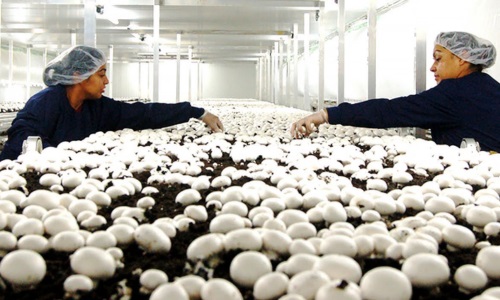
John Kiehia: Amount of money I make after investing Sh1 million in mushroom farming

1

Growing up, John Kiehia’s dream was to become an accountant. However, his dream could not be actualized due to a lack of school fees.

After completing his secondary school studies at Rari Boys High School in 2002, Kiehia started looking for jobs to earn money to keep his bills sorted.

Lucky enough, he landed an apprenticeship program at Rift Valley Mushrooms in 2003, where he learned the art of mushroom production, earning Sh25,000 a month.

“From 2002 to 2005, as I worked at Rift Valley Mushrooms, I found out there was a huge demand for mushrooms in urban centers such as Nairobi, and this is why I decided to quit my job so as to establish my own farm,” he said.

How to make good money growing oyster mushrooms

With a capital of Sh1 million, which he acquired as a loan from Equity Bank, Kiehia build a four-roomed mushroom house and bought raw materials such as wheat straws, chicken manure, and molasses.

From his quarter-acre farm in Uthiru, Kiehia harvests 100kg of mushrooms weekly, which he packages in quarter-kilo packets.

Each package retails at Sh200. He supplies his produce to supermarkets in Nairobi’s Westlands, earning about Sh160,000 every week

According to him, farmers willing to grow mushrooms for commercial use can use farm waste from their farms.

The waste which can be obtained from crops such as maize, sugarcane, or banana leaves is not only ideal for the growth of mushroom but also help farmers in cutting production cost.

Mushroom Farming in Kenya: The Secrets to earning huge profits

“I started with just one employee, but I have since employed four permanent workers. I also regularly engage the services of eight casuals, but the number may vary depending on the amount of work,” added Kiehia.

How to Grow Mushrooms from Garden Waste

Mushrooms take about six to 12 weeks from start to harvest with respect to the mushroom type. The waste from the farm is soaked and heaped for four to six days for fermentation in closed containers.

After fermentation, the waste is boiled for about 12 hours to remove unwanted bacteria and organisms and cooled before being packed in polythene bags.

The mushroom bags are hanged in dark structures to allow for sprouting. The ideal humidity of the incubation room is 70 – 75 percent. Sprouting starts after 28-35 days from inoculation.

The main markets for mushrooms growing in Kenya are restaurants, grocery stores, and international markets, among others. The increasing demand for mushrooms is due to its high nutritious value.

How you can make Sh1 million from Dorper sheep farming in 3 months

0

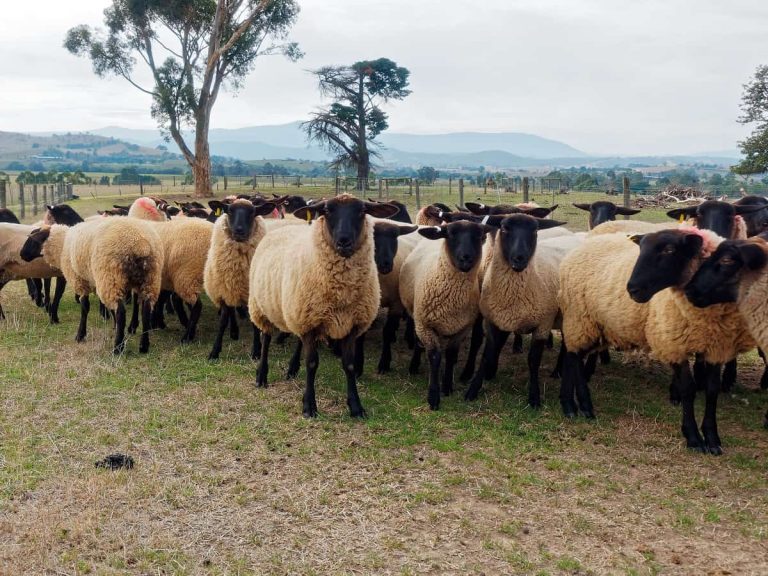
Dorper sheep farming is recently gaining popularity in Kenya as farmers shift to easy to manage yet profitable agribusinesses.

Dorper, a sheep breed developed in South Africa, is known for its superior characteristics, including resistance to diseases and high tolerance to harsh environmental conditions.

Even though the breed is said to gain market weight faster due to its good grazing ability than the indigenous breeds, farmers have realized a method of fastening the market weight-gaining process.

Jackson Naikuni from Nturumenti village in Narok county who has been a livestock farmer for more than 40 years uses the feedlot system to fatten his animals.

Feedlot is a system where animals are confined and fed high-quality feeds to reach market weight faster.

Naikuni says he learned the technology through training by the Kenya Agricultural Livestock and Research Organisation (Kalro)

Farmers to be fined Sh. 1 million, sent to jail for growing Ndengu without license

The farmer says the feedlot system is a game changer as it helps to save time, space and other resources required under conventional systems.

With a flock of 100 sheep, he estimates the cost of production to be about Sh9,000 per sheep. This will total to Sh900,000 for the targeted sheep.

“I expect that within three months, I will generate about Sh1.5 million revenue from the sale of the Dorper sheep, making a profit of close to Sh60,000.” He says adding that there is a ready market for dorper sheep.

George Keya, the national coordinator of the AgriFi Kenya Climate Smart Agricultural Productivity Project, says that for the feed lotting system to be profitable, one needs a minimum of 40 sheep.

“We can estimate that within three months if you have between 40 and even 100 Dorper sheep, you can make Sh1 million.” He says.

Dr Margaret Syomiti, principal investigator of the AgriFi Kenya Climate Smart Agricultural Productivity Project says Dorper sheep are usually fed 1.5kg of the feeds every day for three months.

This ensures they acquire the 45kg weight recommended. She says the high nutrition given to the early maturing Dorper sheep has a fast growth rate.

Hospital worker siphons Sh10 million patients’ money to her bank account

0

A hospital worker at the Moi Teaching and Referral Hospital (MTRH) is in soup after she allegedly stole Sh10 million from patients and deposited it into her own bank and M-Pesa accounts. The hospital worker who has been identified by the police as Jane Wangari Wachira is alleged to have done this by manipulating books and the eCitizen payment system.

She is alleged to have been working with an outside accomplice who has been identified as Khamisi Hussein Akida.

Wangari and Akida are said to have targeted patients seeking to clear their bills between January 1, 2025 and February 9, 2026.

According to the detectives lead investigating officer Edwin Chirchir, patients were made to bypass the official eCitizen paybill of 222222.They would be asked to pay via cash or via the worker’s personal M-Pesa numbers.

Once these payments were done, Wangari used her position at the MTRH to bypass internal checks and to clear the patients’ bills on eCitizen. “The suspected accessed the eCitizen platform to purportedly clear the patients’ bills without depositing a single cent into the hospital’s account,” Mr. Chirchir told the Eldoret Chief Magistrate Peter Ndwiga who is hearing the case against the duo.

READ MORE: Ruto’s State House spends Sh43mn daily; blows Sh10.4bn in just 7 months

After clearing the bills on the eCitizen system, Wangari would then issue official receipts and patients would be discharged from the hospital.

This scam was discovered on February 5, 2026 when an internal audit of the hospital accounts flagged discrepancies and revealed the missing amounts. The hospital then reported the matter to the police on February 9, 2026 under the OB No.13/9/2/2026.

The first to be arrested was Akida who then led detectives to Wangari and identified her as his accomplice.

The court heard that detectives believe the duo is part of a larger network that worked behind the scenes to bypass the hospital’s technical systems.

“We believe that this is part of a larger network,” Mr. Chirchir told the court. “We are analyzing CCTV footage, mobile data and bank and M-Pesa statements to trace the full extent of the syndicate.”

Jet-set pets: How Qatar Airways is redefining pet travel

0

In 2025, 54.3 million travellers from around the world passed through Hamad International Airport in Doha, Qatar – enjoying its exceptional world-class services and facilities. But it’s not just people who benefit from Qatar Airways’ exceptional care. From cats and dogs to horses and exotic wildlife, animals receive the same level of attention and comfort as their human counterparts.

Qatar Airways Cargo transported more than half a million animals in 2024, setting a benchmark in live animal logistics. At the heart of this achievement is the air cargo carrier’s Animal Centre – the largest of its kind globally. The state-of-the-art facility offers dedicated spaces for cats, dogs, birds, reptiles and horses, ensuring every animal’s unique needs are met. A modern groom’s room allows horse grooms to rest while monitoring their animals via live TV feeds, and 24/7 veterinary care ensures constant expert oversight.

Animals transiting through Doha receive the same exceptional care as those departing or arriving. For layovers exceeding three hours, Qatar Airways Cargo ground staff ensure that crated animals are allowed to stretch and walk, while their kennels are cleaned, where possible. Pet owners are also provided with a personalised e-card featuring their pet’s photo and a wellbeing update, offering reassurance throughout the journey.

Even wild animals such as lions, tigers, and rhinos – transported as part of Qatar Airways Cargo’s WeQare Rewild the Planet initiative – pass through Doha. As part of this program, the airline offers free transport for wild animals being returned to their natural habitat. In addition, Qatar Airways Group enforces a zero-tolerance policy on the transportation of illegal wildlife and wildlife products. This commitment is reinforced through its partnership with United for Wildlife (UfW), where the airline proudly serves as an Official Airline Partner, actively working to combat wildlife trafficking.

Why German Shepherd Dogs can cost up to Ksh 120,000

Transporting live animals is a complex process. Each animal has unique needs, and Qatar Airways considers everything from aircraft environmental controls and ground handling to animal physiology and enclosure design. The goal is to deliver the highest standard of care – whether in the air or on the ground.

The airline’s Animal Centre – the largest and most advanced in the world – is designed not just to house animals temporarily, but to ensure their comfort and wellbeing throughout their journey. Its dedicated spaces for animals include thoughtful touches like soothing music in dog kennels and padded horse stables for added safety.

How it works: To travel with your pet, contact Qatar Airways at least 48 hours before departure. You will need a valid health certificate and any required pet travel documents for both departure and arrival countries. You should also arrive at the airport a minimum of two hours before your flight. More details, including a detailed checklist, are available on the Qatar Airways website.

Pet travel tips

  • Make sure your pet is eligible to travel to the destination.
  • Check departure, transit and arrival country requirements, including whether import and export permits are required.
  • Check with your vet that your pet is fit for travel.
  • Obtain the required health certificate, pet passport and vaccination records.
  • Ensure the pet carrier meets all the International Air Transport Association (IATA) live animal regulations.
  • Provide sufficient food and ensure any feeding instructions are securely fitted to the outside of the carrier.
  • Feed your pet at least four hours before departure.
  • Give your pet time to relieve themselves.
  • Place a familiar blanket or mat in the pet carrier for their comfort.
  • Put sufficient absorbent material in the carrier.

Co-op Bank current account: A flexible banking solution for individuals, businesses

0

In Kenya’s dynamic financial landscape, access to a reliable and flexible current account remains essential for both individuals and enterprises.

The Co-operative Bank of Kenya (Co-op Bank) offers a Current Account tailored to facilitate seamless day-to-day transactions while meeting regulatory and operational requirements for a broad range of customers.

Designed to support personal banking needs as well as corporate and co-operative operations, the account provides customers with a structured yet accessible entry point into formal banking.

Account Opening Requirements

To open a Co-op Bank Current Account, applicants are required to present:

  • Original National ID Card or Passport, alongside a copy
  • One referee
  • Copy of KRA PIN

For corporate and institutional applicants, additional documentation is mandatory to ensure compliance and governance standards. These include:

  • Memorandum and Articles of Association
  • Certificate of Registration
  • Directors’ Resolutions authorising account opening

These requirements are aligned with Kenya’s banking regulations and are intended to enhance transparency, accountability, and security within the financial system.

Minimum Opening Balances

The bank has set structured minimum opening balances to accommodate different customer categories:

  • Sh5,000 for individual accounts
  • Sh10,000 for companies or co-operative societies

However, the lender notes that these amounts are subject to periodic review and may change from time to time, depending on prevailing policy or market conditions.

The Co-op Bank Current Account is positioned as a practical solution for customers seeking efficient transaction handling, whether for salary processing, supplier payments, cheque issuance, or general cash management.

For businesses and co-operative societies, the account facilitates structured financial management while supporting compliance with statutory and governance frameworks.

“Enjoy financial freedom with an account that is flexible, convenient and fits your lifestyle to a tee! Deposit and withdraw any amount of money at your convenience,” Co-op Bank states.

Account features

  • Cheque book
  • Ledger fee of Sh35 per entry
  • Monthly maintenance fee of Sh300
  • Operating balance -Nil
  • Statements issued monthly

To open a Co-op Bank current account, customers are directed to visit the nearest Co-op Bank branch countrywide.

Also Read: KCB Bank and Visa launch business credit card to empower Kenyan SMEs

Alex Mwaura: From crushing stones at 15 to CEO at 25

0

Alex Mwaura, the founder and Chief Executive Officer of Lebanon Technical Training College has narrated how he escaped hardships to become a CEO at only 25.

In a narration, Mwaura revealed that his hustling life began when he was only 15, after dropping out of school due to financial challenges.

“There was a time when my world was measured in buckets. One bucket of crushed ballast stones that earned me seven shillings per bucket. Ten buckets meant seventy. Seventy shillings meant dinner. That was my economy at fifteen,” he narrated.

Born in February 2000, Mwaura is the fourth child in a family of six raised by a single mother. Growing up, poverty was not a temporary setback but a constant presence that forced his family to move frequently shifting between primary schools in search of affordability and stability.

He attended various primary schools, including Kaharati Primary School, Wamahiga, Maragua, and Swani Primary School. Despite the instability, he excelled academically, often topping his class. Teachers believed in his potential and so did he.

But in 2011, while in Class Six, domestic violence and financial collapse destabilised the family. They relocated to Juja with no furniture, no household items and no reliable source of income. His mother was unemployed. His sister dropped out of school. Soon after, he followed.

For nearly two years, Mwaura was no longer a pupil. He describes himself then as a street boy wandering in search of food while watching his peers head to school.

“There is a quiet humiliation in watching children your age going to school while you wander in search of food. Survival became my curriculum. The year blurred into hunger, uncertainty, and frustration. I had always dreamt of academic excellence, but dreams do not survive long without opportunity,” he recalled.

In 2013, things started to fall in place and the family relocated to Kihiu Mwiri in Gatanga, renting a modest house for Sh300 per month. His mother found work on farms, earning between Sh200 and Sh300 a day.

One evening, she urged him to return to school and complete Class Eight. Her expectations were modest: perhaps, with a KCPE certificate, he could secure employment as a watchman at Del Monte Farm in Thika.

“My mother worked on farms earning about Sh200 to Sh300 a day. One evening she told me, gently but honestly, “Alex, I want you to go back to school. Finish Class Eight. Maybe with the KCPE leaving certificate one day, you can get work as a watchman in Delmonte Company. That advice reshaped my expectations of life.”

Mwaura returned to Swani Primary School, this time studying not for university dreams but for the possibility of basic employment. He sat his Kenya Certificate of Primary Education (KCPE) in 2014, scoring 297 marks, way above his expectations.

Secondary education, however, remained financially unattainable, forcing him to seek menial jobs at a quarry to supplement his family’s income.

“I began working in the quarries, crushing stones for Sh7 per bucket. Ten buckets earned Sh70. That money bought dinner. Then came another setback. A rule banned anyone under 18 from quarry work. I was 15. Even hardship seemed to have age restrictions.”

It was during this time when he met his destiny helper Mr. Ken Stephen Muchoki, who helped him join secondary school at Swani Secondary School in Murang’a County.

“In my first exams, I ranked first. That moment taught me something I would only understand years later: your destiny is never tied to people who leave your life; it is tied to those who stay.”

Tragedy struck again in 2018 while he was in Form four when his mother passed away. The loss was devastating to Mwaura, who would then take the responsibility of parenting his younger siblings.

“Extended family distanced themselves. My siblings and I faced the reality of burial arrangements alone. The Kihiu Mwiri community stepped in and allowed us to bury my mother in their cemetery. I became a parent of my younger siblings before I became an adult,” he recalled.

That same year, he sat for the Kenya Certificate of Secondary Education (KCSE) and scored a C+, earning a direct university entry.

Mwaura enrolled at the University of Embu to pursue a Bachelor of Education (Arts), specialising in Business Studies and Christian Religious Education.

University life brought fresh challenges: financial strain, the responsibility of supporting his younger sibling and uncertainty about the future. He volunteered in neighbouring schools for modest stipends, honing skills in teaching, leadership and mentorship.

On September 15, 2023, he graduated with Second Class Honours (Upper Division). Rather than solely seeking employment, Mwaura chose entrepreneurship.

At 25, he founded Lebanon Technical Training College in Kiritiri Town, Embu County. The institution is accredited by the National Industrial Training Authority (NITA/TRN/2799) and offers various courses in leadership, finance, and technology, among others.

Some of the courses it offers are professional and corporate training programmes in leadership, governance, project management, financial management, grant management, monitoring and evaluation (MEAL), data protection compliance, public speaking, disability mainstreaming and other continuous professional development courses.

The college serves organisations, NGOs, SACCOs, faith-based institutions and professionals seeking to enhance skills and institutional capacity.

“The same boy who once crushed stones now builds skills,” he says.

Throughout his life, Mwaura has learned many valuable lessons;

Dare to dream big.

Your background is not a place of residence it is a place of reference.

Never ignore an idea, not all of them return.
Always trust in God.

Never lose hope.
And your future is rarely decided by your worst season.

Also Read: Simple habits that will make you a successful business owner if you start today

KNEC announces training for KJSEA, KCSE examiners; how to apply

0

The Kenya National Examinations Council (KNEC) has opened applications for Kenya Junior School Education Assessment (KJSEA) and Kenya Certificate of Secondary Education (KCSE) examiners’ training ahead of the October and November national examinations.

In a notice on Tuesday, February 17, KNEC said the training exercise will run from March 2026 to April 2026.

Shortlisted applicants will be required to pay a training fee of Sh10,500, which will only be paid after receiving notification through SMS and via the application portal about their selection.

“The training fee is Kenya Shillings Ten Thousand Five Hundred (Ksh10,500.00) and will only be paid by the shortlisted applicants who will be notified on how to make payments through a text message (SMS) and via the application portal,” KNEC stated.

The training covers both online and residential components. Trainees will receive instructions on how to access online training materials before the physical sessions begin.

Knec said that the venue for the residential training will be communicated to the shortlisted trainees at a later date, adding that the programme will be strictly residential.

After completing the training, qualified examiners will be engaged by KNEC to mark KJSEA and KCSE examinations based on the personnel needs for each paper and the criteria for recruitment of examiners.

For KJSEA, the available papers include English Composition and Literary Analysis, Kiswahili, Mathematics, Kenya Sign Language, Integrated Science, Agriculture, Social Studies, Christian Religious Education, Islamic Religious Education, Creative Arts and Sports, and Pre-Technical Studies.

On the other hand, available papers for KCSE examiners are: Kiswahili Insha, Kiswahili Lugha, Kiswahili Fasihi, Mathematics, Islamic Religious Education, Home Science, Computer Studies Practical, French, German, Arabic listening comprehension and dictation, and Arabic grammar, reading comprehension, and composition.

Qualifications and how to apply

To qualify for the training, applicants must be holders of a Diploma in Education and above, and a minimum teaching experience of three years.

Additionally, they must be practicing teachers or tutors in the relevant subject areas at the examination level or above and must be registered or employed by the Teachers Service Commission (TSC) or the Public Service Commission (PSC).

Applicants must also not have been on interdiction or any other form of disciplinary action by the TSC, must be recommended by their Head of Institution, and must be aged 50 years or below.

Qualified candidates are required to submit applications online via the link https://examinersapp.knec.ac.ke.

Those with existing CP2 accounts can log into the portal using their usernames and passwords. New applicants without CP2 accounts should click on ‘Create Account’ and follow the instructions to acquire login credentials.

“The training slots are limited and only qualified teachers/tutors who have presented all the required documents will be shortlisted on a first-come-first-served basis,” KNEC added.

Also Read: Why converting Grade Tens to Form Ones is curriculum justice, not a setback