Home Blog Page 105

Ruto’s State House spends Sh43mn daily; blows Sh10.4bn in just 7 months

0

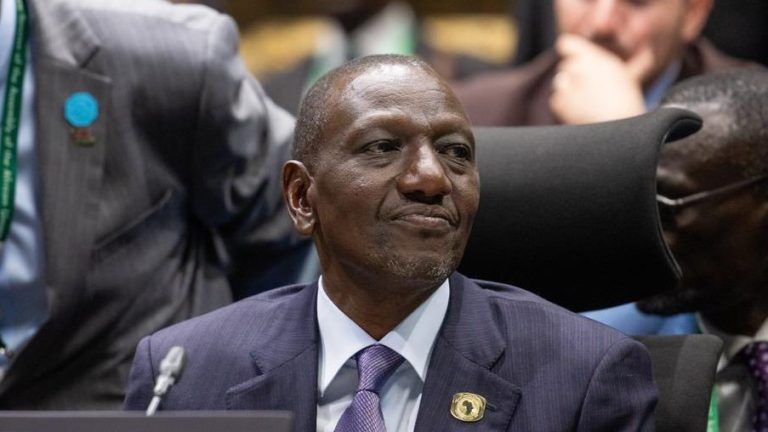
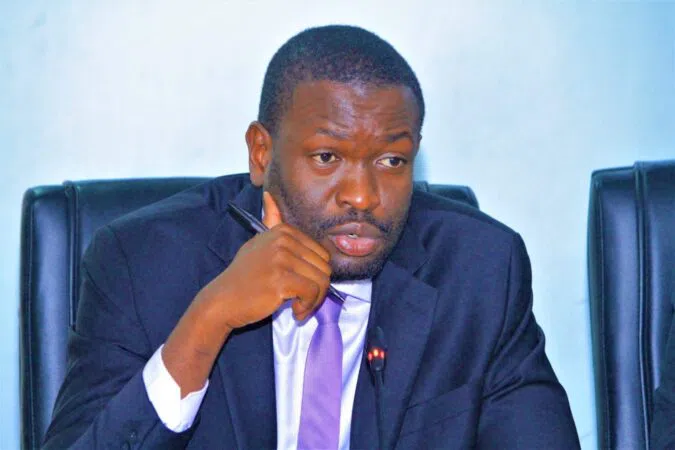
In what has left Kenyans flabbergasted, President William Ruto’s State House blew an astonishing Sh10.4 billion in the first seven months of the current fiscal year. This has been revealed through disclosures that have been made by the National Treasury.

According to the disclosures, the house on the hill had received a full year allocation of Sh7.7 billion. This allocation was meant to cover the period that will end in June 2026.

However, by the end of January 2026, Sh10.4 billion had been blown away. Shockingly, it has been revealed that in the month of January, Ruto’s residence had spent Sh1.3 billion. This amounted to spending Sh42.6 million every day for the 31 days of January.

This reckless spending of public resources was the continuation of a trend that was seen in the first three months of the current fiscal year.

During that period, State House blew Sh4.32 billion against the target allocation of Sh1.92 billion that State House had been given to spend in the first quarter of the current 2025/26 financial year. This meant that the budget had been overshot by 125 percent in three months.

The huge spending comes riding on the back of incremental cash supplies from the National Treasury. These cash top-ups have been quoted as funds for expenses such as fuel, travels and maintenance of vehicles.

For instance, the house on the hill received Sh3.6 billion in the less than two months to the end of the last financial year. A report by the Controller of Budget (CoB) Margaret Nyakang’o shows that the National Treasury released the amount between May 14, 2025 and June 24, 2025.

This money was released to allegedly facilitate fuel, travels and hospitality. According to the report, Dr. Nyakang’o had approved Sh2.3 billion out of the Sh3.6 billion that was sent to State House.

READ MORE: Ruto offers Kenya Airways to foreign investors for Sh155 billion

SafariSeeji Afurika takes center stage at Global Tourism Resilience Conference in Nairobi

0

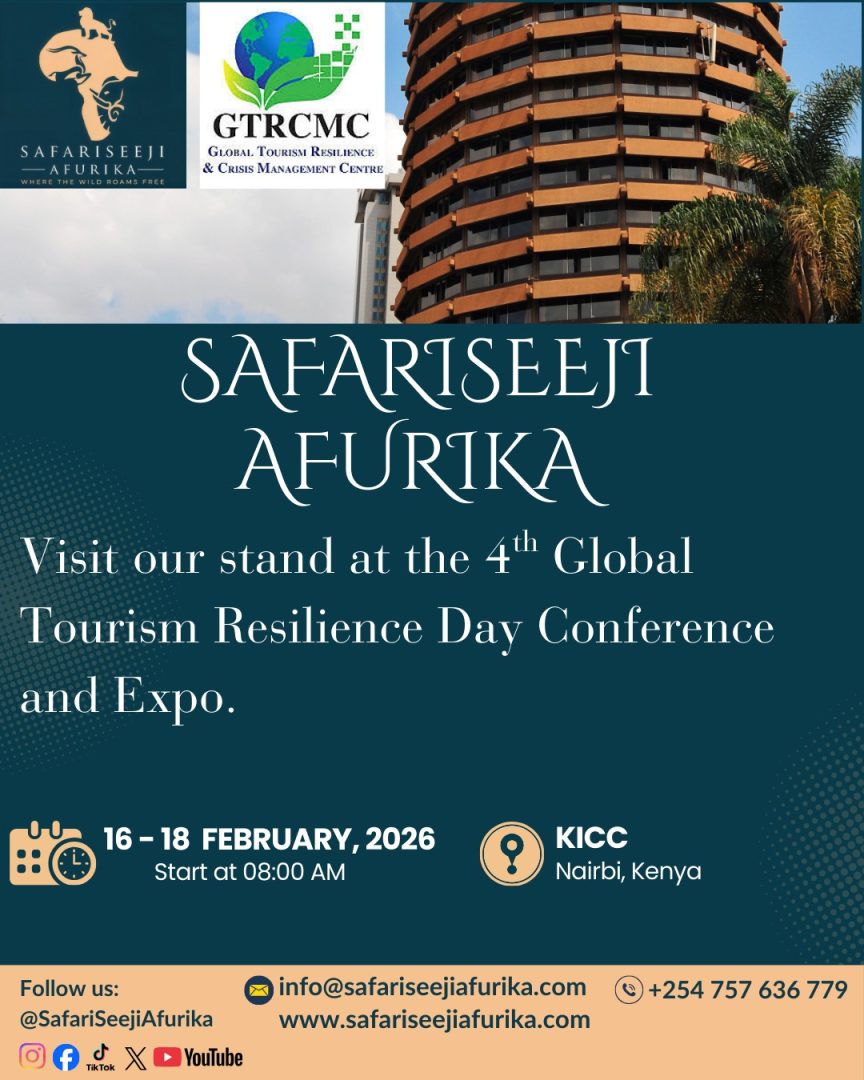
SafariSeeji Afurika today marked a significant milestone in its growth journey by participating in the 4th Global Tourism Resilience Day Conference and Expo held at the Kenyatta International Conference Centre in Nairobi. The high-level forum was officially opened by the Cabinet Secretary for Tourism and Wildlife, Hon. Rebecca Miano, EGH, reaffirming Kenya’s commitment to strengthening tourism resilience, sustainability and long-term sector growth.

The 4th Global Tourism Resilience Day Conference and Expo convenes government leaders, private sector players and global stakeholders to address crisis preparedness, climate adaptation, sustainable destination management and innovation in tourism. The conference directly supports the national development agenda under Kenya Vision 2030, which positions tourism as a key pillar for economic growth, employment creation and inclusive prosperity.

SafariSeeji Afurika’s presence at the conference reflects its strategic alignment with these priorities. The company is committed to showcasing the very best of Kenya through authentic, carefully curated and customer-focused travel experiences. As a growing force in Kenya’s tourism market, SafariSeeji Afurika is building a reputation for responsiveness, operational excellence and strong client relationships.

At the helm of the company is Chief Executive Officer Maureen Ooko, whose leadership is driving SafariSeeji Afurika’s expansion and market positioning. With a sharp focus on strategy, partnerships and service excellence, she is steering the company toward becoming a resilient, sustainable and globally competitive Kenyan tour operator.

KSLH flags off new buses to upgrade operations at Tsavo Safari Lodges

SafariSeeji Afurika is also advancing inclusive and sustainable tourism practices. In partnership with the Kenya Society for the Blind and the Kenya Organization for Environmental Education, among other partners, the company supports accessible tourism initiatives for persons with visual impairments and promotes environmental awareness within the travel ecosystem. These efforts reinforce its commitment to ensuring that tourism growth benefits communities while protecting Kenya’s natural heritage.

As global conversations increasingly focus on resilience and responsible tourism, SafariSeeji Afurika is positioning itself at the forefront of a new generation of Kenyan travel companies ready to deliver world-class experiences rooted in sustainability, inclusivity and customer satisfaction.

SafariSeeji Afurika takes center stage at Global Tourism Resilience Conference in Nairobi

How Africa Is Building Player Protection on Its Own Terms

0

Africa is one of the fastest-growing betting markets in the world. A young, mobile-first audience has made betting part of everyday digital life. With this rapid expansion comes responsibility. Player protection has become a central topic for the global betting industry. Operators are rethinking how to balance growth, safety, and trust — especially in fast-growing markets. The data show that operators are responding.

This week, 1xBet presented its International Player Safety Index, a research project focused on how different regions approach responsible betting. The African market stood out with a clear message: player protection is already strengthening — through regulation, human oversight, and market-specific solutions.

Strong Foundations First

According to the study, 75% of operators comply with KYC (Know Your Customer) procedures.

Verification at registration and ongoing monitoring are now standard practice. It is not a minor technical detail. Verified identities create accountability.  They allow consistent tracking of behaviour and timely intervention when risks appear. Protection here starts with structure.

Marketing Discipline in a Mobile-First Market

In Africa, betting is overwhelmingly mobile. Push notifications and instant promotions shape user engagement. That makes advertising control especially important. The research shows that 68% of operators apply advertising restrictions.

Limiting promotional pressure reduces impulsive betting. Fewer triggers mean more deliberate decisions. In a fast-moving digital environment, this kind of restraint matters.

Two African players in top 5: biggest transfers of January

Growth With Guardrails

Commercial strategy is also evolving. 50% of surveyed platforms have introduced bonus limits. In markets where players often place frequent, smaller wagers, aggressive bonus mechanics can amplify risk. Bonus moderation helps prevent sudden spikes in activity. It shows that growth and protection are not treated as opposites.  They are being designed together.

Human Engagement Still Counts

One of the most telling findings: around 30% of operators provide personalised self-exclusion recommendations. These interventions are often triggered by noticeable behaviour shifts or significant wins.  In many cases, they are handled manually. Direct contact.  Context-aware decisions. It reflects a protection model built around human oversight, not only automated systems.

Why the Model Looks Different

The study highlights structural factors shaping the region:

● Regulation is fragmented across jurisdictions;
● Data standards are still developing;
● Grey-market operators remain present in some countries;
● Investment in RegTech solutions is cautious.

But these conditions have not slowed progress. They have shaped a locally adaptive system. One that relies on clear rules, supervision, and practical safeguards. It is not a delay.  It is a different sequencing of priorities.

Betting Is More Than Entertainment

In many African markets, betting is not seen purely as a form of leisure. For some players, it represents a potential path toward financial improvement. It directly influences behaviour and risk perception. Responsible betting strategies must reflect this reality.  

As Simon Westbury, Strategic Advisor at 1xBet, notes:

“For instance, in markets with heavy retail footprints, how do you monitor player behaviour in a cash-based environment? You can’t rely on digital tracking alone. Localisation means understanding that ‘financial gain’ motivation and tailoring our education to address it directly, rather than using European templates that assume gambling is just a hobby.”

Models designed for mature European markets cannot simply be copied and pasted. Africa’s approach shows that understanding player motivation is as important as any technical tool.

Leaders and Long-Term Potential

Countries such as Nigeria and Kenya illustrate how regulatory clarity can strengthen player protection. Oversight is becoming more structured. Regulatory maturity is increasing. Trust in licensed operators is growing. These trends create a strong foundation for future technological integration, including AI, when markets are ready. Technology will follow structure.  Not the other way around.

What Comes Next

Africa is not defined by what it lacks. It is defined by how it builds. Verified identities.  Controlled marketing.  Bonus moderation. Direct player engagement. Step by step, a structured protection framework is taking shape.

As regulation becomes clearer and digital infrastructure expands, behavioural analytics and early-warning systems can be integrated naturally into an already established foundation.

The findings of the International Player Safety Index by 1xBet were discussed during a recent industry webinar, where experts explored regional approaches to player protection and outlined practical next steps for market development.

You can find the materials (webinar video & the report) here via the link.

Africa’s experience shows that responsible betting does not begin with algorithms.
It begins with understanding players — and building systems that fit the market they serve.

This combination of growth and responsibility creates the right moment for initiatives like 1xBalance, a platform designed to support informed decision-making, promote self-control, and encourage a healthier relationship with betting.
LG Electronics (LG) is set to unveil an expanded portfolio of its SKS premium appliances at the Kitchen and Bath Industry Show (KBIS)

0

LG Electronics (LG) will unveil an expanded portfolio of its SKS products at the 2026 Kitchen and Bath Industry Show (KBIS), taking place February 17–19 in Orlando, Florida, USA. The SKS range features a curated collection of premium appliances that combine innovative technology with modern design, spanning cooking, refrigeration, laundry and dishwashing solutions. The lineup includes refrigerators, freezers, wine columns, ranges, microwaves, cooktops, ventilation hoods, as well as washers and dryers. Many of these appliances are smart-enabled, allowing seamless wireless control through connected devices.

A Comprehensive Laundry Solution for an Enhanced Experience

Showcased for the first time ever is a new total laundry solution that combines advanced fabric-care technologies with refined design and intuitive usability. The SKS WashCombo™ delivers powerful washing and drying performance in a large 5.8-cubic-foot capacity unit. It features AI Wash & Dry with AI DD™ technology for precise, gentle fabric care, while the Dual Inverter Heat Pump enables energy-efficient, low-temperature drying that helps preserve fabrics and reduce energy consumption.

Displayed alongside the WashCombo, the new SKS dryer offers a generous 9.0-cubic-foot capacity designed to handle larger loads with ease. Its AI Sensor Dry technology intelligently detects fabric texture and moisture levels, automatically adjusting drying time and temperature for optimal efficiency and performance. The SKS laundry lineup supports flexible configurations, including a 3-in-1 system (WashCombo paired with the 1.0-cubic-foot MiniWash™) or a streamlined two-unit setup (WashCombo and dryer), allowing customers to tailor solutions to different lifestyles and spaces.

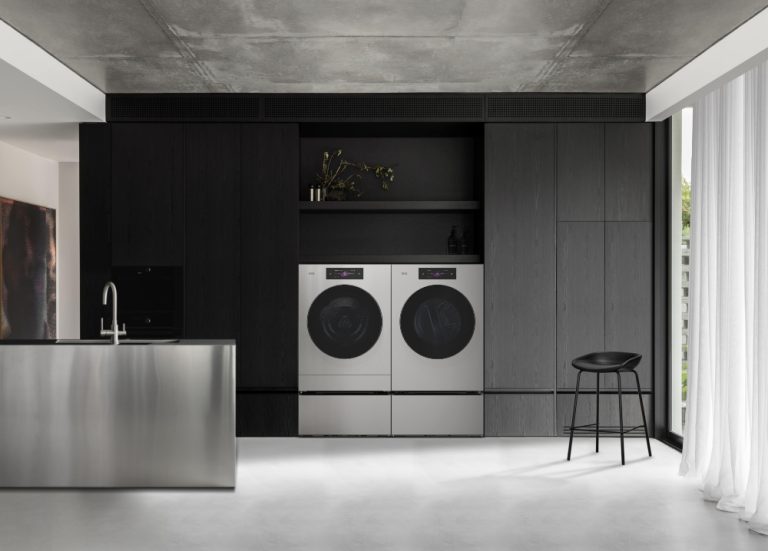
Designed for seamless integration into luxury interiors, the new laundry solutions feature a minimalist Full-Flat aesthetic. Each model includes a 6.8-inch LCD touch display with customizable user-experience widgets for intuitive, personalized control and improved visibility. The Tilting Display Control automatically adjusts the screen angle when activated, enhancing ergonomic comfort and ease of use.

Seamless, High-Capacity 36-inch Column Freezer and Refrigerator

At KBIS 2026, SKS will introduce its first 36-inch Integrated Column Freezer and Column Refrigerator. Both products feature a panel‑ready design that gives customers the flexibility to integrate custom door panels or SKS’s stainless steel door panels. The products blend seamlessly into the kitchen space and built-in aesthetic while still maximizing storage capacity. Ideal for those who love entertaining at home, the new models come with differentiated Ice & Water solutions. The freezer’s dual ice maker offers both standard cubed ice and 2nd generation 60mm grand Craft Ice® – perfect for whiskey on the rocks – while the refrigerator offers a discreet internal water dispenser.

The seamless, panel-ready design of the new column freezer and fridge provides a sophisticated built-in aesthetic that exudes luxury and refinement. Ultra-premium SKS quality extends to the products’ interiors, which employ luxurious metal and glass door bins. Elegance and ease-of-use are further enhanced by the Wide-Top & Shelf-Emitting Lighting System. Customers can choose from two handle options – Professional (bold type) and Transitional (sleek type) – to complement their kitchen design.

LG Electronics appoints Donghun Lee as new East Africa President

Smart features further enhance convenience. The freezer’s AI Ice Pro automatically increases ice production ahead of expected high-demand periods based on usage patterns, while the refrigerator’s AI Fresh adjusts cooling performance prior to anticipated heavy usage to help maintain optimal food preservation. These functions can be managed via a full-touch, color wide 6.8-inch LCD display, introduced in SKS products for the first time.

36-inch Full-Flex Induction Cooktop for Versatile Cooking

The SKS 36-inch Full-Flex Induction Cooktop elevates everyday cooking with extended, flexible cooking zones that support simultaneous use of two large cookware items (up to 320 millimeters). Intelligent features include AI Water Boiling Alert, which sends real-time notifications via the cooktop display and LG ThinQ app when water reaches a boil and automatically adjusts heat output to help prevent over-boiling. Meanwhile, the innovative Power Shift PlusTM feature learns user cooking patterns to enable intuitive, hands-free control – increasing heat when a pan is moved forward and reducing it to a simmer when moved to the back.

“Consumers today expect premium appliances that seamlessly combine performance, design and intelligent technology,” said Donghun Lee, President, LG Electronics East Africa. “The expanded SKS lineup reflects LG’s continued commitment to delivering innovative solutions that enhance convenience, efficiency and the overall luxury living experience.”

Visitors to KBIS 2026 can experience the complete SKS lineup at LG’s booth (#W2100, Orange County Convention Center).

The 2026 Magical Kenya Open has received a significant boost following a Shs10M sponsorship from Safaricom PLC

0

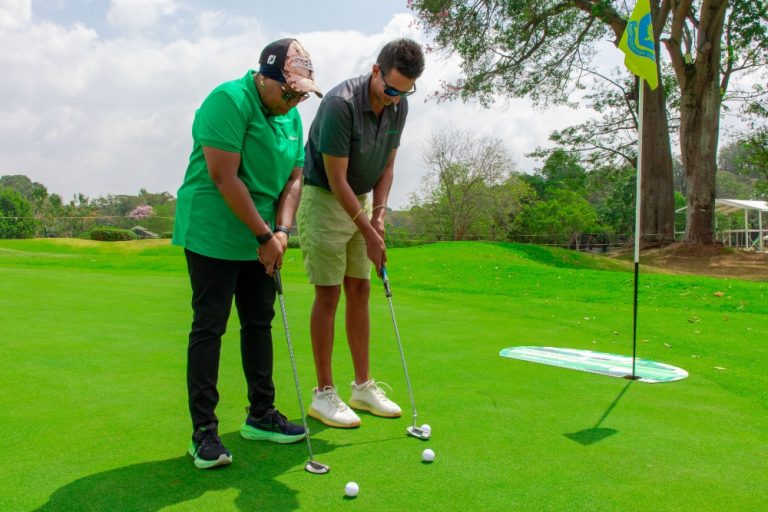
The 2026 Magical Kenya Open has received a major boost of Shs10 million from leading telco Safaricom to support the event, scheduled to take place from Thursday, 19th to Sunday, 22nd February at Karen Country Club.

The sponsorship comprises Shs9 million in-kind support as the official technology and connectivity partner, with an additional Shs1 million in cash dedicated to the Beat the Pro challenge for junior golfers. The in-kind contribution will provide reliable, high speed, and scalable connectivity throughout the tournament. This includes a state-of-the-art media centre, enabling seamless global broadcasting, real time scoring, and efficient event operations to deliver a truly world class sporting experience.

“For the past 18 years, we have been part of the Magical Kenya Open and have remained a committed partner of this prestigious event. This enduring partnership reflects our dedication to developing talent and growing the game of golf in Kenya,” said Peter Ndegwa, Safaricom CEO. “As part of our commitment this year, we are delighted to provide Shs9 million worth of world class connectivity and media infrastructure, alongside Shs1 million to support our junior golfers through the Beat the Pro tournament.”

The Beat the Pro tournament is a key highlight of the Magical Kenya Open, offering junior and amateur golfers a rare opportunity to compete alongside professionals on the same stage. Through this initiative, Safaricom continues to support platforms that bridge grassroots participation with elite competition, reinforcing its commitment to talent development and the growth of golf in Kenya.

The Lewa Safari Marathon is back jointly powered by Safaricom (PLC) and Huawei Technologies

Beyond the tournament, Safaricom has played a big role in nurturing local golf talent through its continued engagement with the Professional Golfers of Kenya (PGK) Equator Tour. The PGK Equator Tour remains a key development and qualification pathway for Kenyan professional golfers aiming to compete at elite levels, including the Magical Kenya Open.

The 2026 Magical Kenya Open has attracted 144 players from around the world, including 15 Kenyans (10 professionals and 5 amateurs) competing for the top prize, with a total purse of $2,700,000.

Some of the key players set to battle for the top prize include South Africa’s Jacques Kruyswijk, who will be aiming to defend his title after his 2025 victory at Muthaiga. Other notable contenders include the 2024, 2023, and 2022 Magical Kenya Open champions: Darius van Driel, Jorge Campillo, and Wu Ashun, respectively.

The 10 Kenyan professionals confirmed for the 2026 MKO include Safaricom sponsored Samuel Chege and Mutahi Kibugu, as well as Greg Snow, David Wakhu, Njoroge Kibugu, Dismas Indiza, Daniel Nduva, Edwin Mudanyi, CJ Wangai, and Jastas Madoya. These players qualified for the Kenya Open through outstanding performances on the PGK Equator Tour, which concluded in January at Royal Nairobi Golf Club.

This year’s tournament will also feature elite amateurs and juniors, including Michael Karanga, Lejirma John, Jay Sandhu, Shashwat Harish, and Junaid Manji. Reserve professional players include Mohit Mediratta, Kenya Railways’ Mike Kisia, Eric Ooko, John Karichu, and Isaiah Otuke.

The Magical Kenya Open is part of the DP World Tour calendar for professional golfers worldwide. The tournament brings together top international golfers and Kenya’s best professionals, offering a unique platform for local talent while promoting Kenya as a leading destination for world class sporting events.

Edwin Sifuna: I earned more when I was an advocate than as a senator

0

Nairobi County Senator Edwin Sifuna is one of the most outspoken political figures in Kenya’s opposition.

Unknown to many, the vocal defender of constitutionalism is a trained lawyer who entered public life with a background in legal advocacy and governance.

In a past interview with former KISS FM presenter Andrew Kibe, Sifuna revealed he earned more from his legal career than politics.

He went on to reveal that he earns Sh1 million per month as a Senator, part of which goes to statutory deductions.

“My salary is in the public domain. Senators earn about Sh1 million. The taxman slashes at least Sh300,000, and some more goes to the mortgage for a decent house. The remainder takes care of family and friends’ needs,” said Sifuna.

Born on May 22, 1986 in Bungoma County, Sifuna hails from a family that has previously successfully had a stint in politics.  His uncle, Lawrence Sifuna, was a long-serving Member of Parliament who was part of the famous Seven-bearded sisters who fought against the aggressive government of the late president Daniel Moi’s government.

He attended Musingu High School for his secondary school education and proceeded to the University of Nairobi – Parklands Campus, where he pursued a Bachelor’s degree in Law. After graduating, Sifuna proceeded to the Kenya School of Law for his practicing diploma.

Sifuna began his career journey as a lawyer at Kairu & Mc Court Advocates. In 2009, he occupied the position of Legal and Administration Officer at Mini Group of Companies.

A year later he landed the role of Manager, Administration, and Legal at a leading advertising company Magnate Ventures Ltd. He sat in the position for three years before her started his private practice.

Having a lot of free time in his private practice, Sifuna found himself venturing into politics.

He fondly recalled that he met former opposition leader the late Raila Odinga while on campus. However, his first audience with the former prime minister took place in 2013.

Sifuna’s national prominence grew significantly when he assumed the role of Secretary-General of the Orange Democratic Movement (ODM) in 2018.

In that capacity, Sifuna was instrumental in shaping party messaging, managing coalition dynamics, and defending the party’s policy positions during a period marked by intense political realignments.

In 2022, he was elected as Nairobi County Senator on ODM ticket, beating his main competitor, Bishop Margaret Wanjiru of the United Democratic Alliance (UDA).

February 2026 will remain as one of his trying political moments following his removal as the ODM Secretary General, over what the party describes as “punishment for indiscipline.”

ODM Party leader Oburu Odinga said Sifuna was only ousted from the position of the secretary general but remained an active member of the party.

“We have our SG Catherine Omanyo and the other SG the party said he should be out a little because of indiscipline, but we have not thrown him out of the party. He is the court’s SG and Omanyo is the SG of the party and we are not going to go back,” Oburu stated.

Also Read: Ndindi Nyoro: This is how I would invest a lumpsum of Sh20 million

Richest Kenyan women on the Nairobi Securities Exchange

The Nairobi Securities Exchange (NSE) is Kenya’s primary bourse and one of the most vibrant capital markets in Africa.

It serves as the marketplace where shares of listed companies are bought and sold, providing opportunities for both institutional and retail investors to participate in wealth creation.

A group of women investors continues to command significant influence at the NSE with portfolios worth billions of shillings anchored in banking, investment, and manufacturing counters.

Below is a look at the richest women on the NSE this year, based on the market value of their publicly disclosed holdings, as ranked by Billionaires Africa.

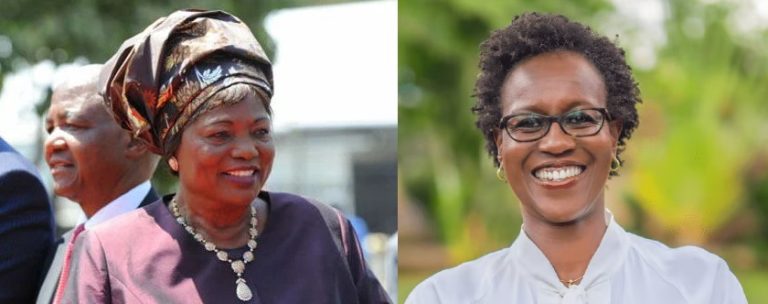
Mama Ngina Kenyatta

Mama Ngina Kenyatta is the former first lady of Kenya and the mother to the former Kenyan President Uhuru Kenyatta.

She is regarded as the wealthiest woman in Kenya with investments across various sectors, including banking, agriculture, education, real estate, and hospitality, among others.

Her family boasts a portfolio valued at $159.75 million at the NSE, anchored by a substantial 13.2 percent stake in NCBA Group.

Zarin Merali

Zarin is the wife to the late businessman Naushad Merali, founder of Sameer Group. With a combined portfolio worth $89.97 million, Zarin and her family rank second among the richest women investors on the NSE.

The family’s interests are diversified across banking and manufacturing. They hold a 5.41 percent stake in NCBA Group and 74 percent stake in Sameer Africa, a long-established manufacturing company.

Mary-Ann Musangi

Mary Ann is the daughter of the late billionaire businessman Chris Kirubi. She holds a portfolio valued at $21.63 million, largely derived from her 30.94 percent stake in Centum Investment Company.

Centum is one of East Africa’s leading investment firms, with interests spanning real estate, private equity, power, and financial services. The company is widely recognised for landmark projects and strategic investments across the region.

Alka Sandip Babla

Alka Sandip Babla and her husband Sandip Kana Sinh Babla are a low-profile husband-and-wife investing pair who show up in Kenya’s listed-company registers as meaningful minority shareholders.

They hold a portfolio worth $16.02 million, anchored in a 0.9631 percent stake in KCB Group.

Also Read: Ndindi Nyoro: This is how I would invest a lumpsum of Sh20 million

“Can you share your payslip?” How to professionally answer this question in job interview

0

Can you share your payslip?” This is one of the interview questions that makes many interviewees uncomfortable in interview rooms.

For many candidates, the request feels intrusive, while for employers, it may appear like a straightforward verification step. Navigating this moment requires tact, confidence and professionalism.

According to Simon Ingari, a career coach, what a Hiring Manager really wants to get out of this question is not a mere payslip but supporting data about the candidate’s value.

Ingari shares examples of how interviewees can answer this question, as well as alternatives that can make them sound like high-value employees.

“I’ve signed an NDA (Non-Disclosure Agreement) with my current company so I can’t share my payslip, but I’d be happy to provide alternative documents to help assess my value,” he states. “That’s how professionals talk. Not defensive, not dismissive, just clear & respectful,”

According to him, below are some solid alternatives candidates can offer instead of a payslip:

  • Confirmation/Promotion Letter showing your position, title progression & trust gained over time
  • Retirement Contribution Statement- A great non-sensitive indicator of monthly income
  • Portfolio + Job Description indicating key responsibilities, KPIs & real contributions
  • Letter of Recommendation (with role/title mentioned) is especially impactful if it comes from a direct supervisor

“These give HR confidence to recommend you without needing your payslip. It also shows your initiative & transparency. You are never obligated to share your payslip. But rejecting professionally (and offering alternatives) builds trust & gives HR the data they need, while keeping your privacy intact,” Ingari says.

“So instead of reacting with “red flag” or “I know my worth’, take a breath & handle it like a pro. When you show maturity, clarity & class, your attitude becomes your strongest offer,” he adds.

Also Read: When the job title goes home and you stay behind

Ndindi Nyoro: This is how I would invest a lumpsum of Sh20 million

Kiharu Member of Parliament Ndindi Nyoro recently shared how he would invest a Sh20 million lumpsum. According to the MP who is also a long term investor at the Nairobi Securities Exchange (NSE), he would put all the money in the securities exchange.

Nyoro said this when he responded to a question from a Kenyan who asked him how Sh20 million should be invested during his tour of London, United Kingdom.

“I would like to say that I would invest all of it in shares. I would then split the money between counters,” said Nyoro.

He explained that he would start off by investing in Kenya Power where he is a large shareholder. This counter is currently trading at around Sh18 per share having risen from a low of Sh5.70 per share 52 in 2025.

Ndindi Nyoro further explained that he would also invest in Car & General, a listed company that focuses on trading, engineering, and motor products in the East African region.

On the NSE, this counter is trading at around Sh74 per share with a 52-week low of Sh19.80 and a high of Sh74.25.

Nyoro also said that he would split the remainder of the money between Equity Bank and the Diamond Trust Bank (DTB).

READ MORE: Ruto offers Kenya Airways to foreign investors for Sh155 billion

On the NSE, Equity Bank is trading at around Sh76 per share while Diamond Trust Bank is trading at around Sh160 per share. Equity has a 52 week high of Sh78 per share and a low of Sh41 per share.

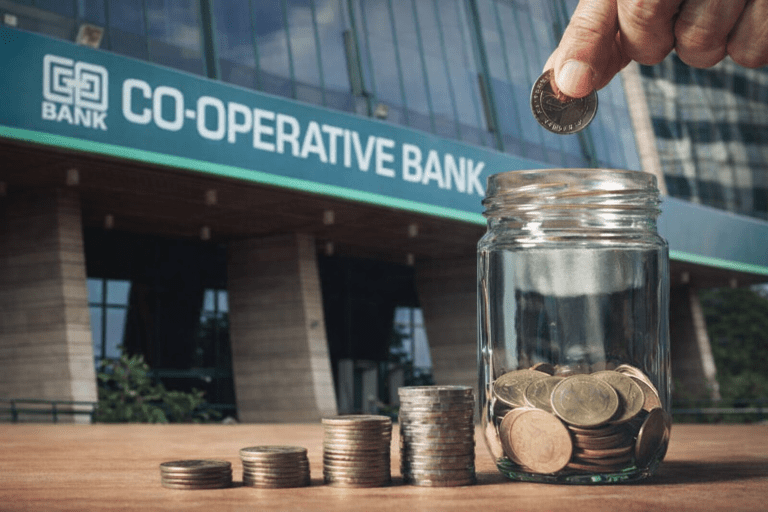
Why every business should open Haba na Haba Account by Co-op Bank

0

In the dynamic world of small and medium-sized enterprises (SMEs), resilience is not just an advantage; it is a necessity.

Entrepreneurs navigate fluctuating markets, shifting customer demands, supply chain pressures and evolving regulatory requirements.

While these challenges can be rewarding, they are often demanding. Building a business that can withstand uncertainty requires more than determination; it calls for a dependable financial partner.

The Haba na Haba Access Account by Co-operative Bank of Kenya is designed with this reality in mind.

Tailored for growing businesses, the account provides entrepreneurs with practical tools to manage cash flow, access credit, and conduct transactions efficiently, laying the groundwork for long-term stability and growth.

One of the standout features of the Haba na Haba Access Account is its accessibility. With no minimum operating balance, business owners are spared the pressure of maintaining high account thresholds, freeing up capital for day-to-day operations and reinvestment.

Account holders enjoy unlimited access to their funds, enabling them to respond quickly to operational needs or emerging opportunities. Whether it is restocking inventory, paying suppliers, or managing payroll, liquidity remains within reach.

In addition, eligible account holders can access business loans, providing a pathway to expansion and strategic investment. For many SMEs, timely access to credit can mean the difference between stagnation and sustainable growth.

Moreover, the Co-op Bank Haba na Haba account comes with a debit card that can be used for withdrawals and payments at all VISA-branded outlets, offering convenience both locally and internationally.

Entrepreneurs also benefit from low monthly ledger fees, helping to keep operational costs manageable. A suite of transactional solutions further ensures that businesses can manage payments and receipts smoothly.

Recognising the growing importance of digital finance, the Haba na Haba Access Account further offers mobile banking and internet banking services. This allows business owners to monitor and manage their finances anytime, anywhere.

Even more conveniently, the account can be opened digitally through the Co-op Bank and YEA mobile applications, reducing paperwork and saving valuable time.

How to open Haba na Haba account

Customers wishing to open Haba na Haba account are urged to visit the nearest Co-operative Bank branch countrywide with copies of National ID Card and KRA PIN. The minimum account opening balance is Sh550.

Haba na Haba Access Account features

  • No minimum operating balance
  • Access to funds as many times as required
  • Account holder can access business loans
  • Debit card available for withdrawals as well as for payments purposes at all VISA branded points
  • Low monthly ledger fee
  • Offers transactional solutions to account holders
  • Convenient mobile banking and internet banking available
  • Can be opened digitally via the Co-op Bank and YEA Apps.

Also Read: Buying and selling of shares via M-Pesa starts on NSE