

Home Blog Page 106

How Facebook turned around my life after losing multimillion farming investment to floods

0

Noah Nasiali, a Kenyan agripreneur has narrated how floods swept away his multimillion investment and how well-wishers helped him recover the loss.

In an interview with the Organic Guy Podcast, Nasiali, the founder and CEO of Afarmers AgriTech & Leadership Centre, recalled the unfortunate incident in 2018, when relentless floods swept through his farm in Athi River, destroying crops and infrastructure.

 Given the extent of the loss he believed his years of hard work had been erased overnight.

“We lost everything. Six greenhouses, six acres of crops, water tanks, the training area, everything was carried away by the floods,’’ he recalled.

Rather than retreat in defeat, Nasiali chose to document the setback. He recorded a brief 30-second video informing participants that a scheduled training session at his farm would be postponed due to the damage caused by the heavy rains.

He shared the clip online, unaware that it would resonate far beyond his immediate network. The video quickly gained traction, amassing more than 1.2 million views. But for Nasiali, the true impact was not in the numbers.

“That post got 1.2 million views,” he said. “But what moved me wasn’t the views. It was farmers reaching out, offering help, and even showing up physically to rebuild,” Nasiali narrated.

Within days, about a dozen young volunteers arrived at the farm, ready to support reconstruction efforts. Their solidarity marked the beginning of a new chapter.

Shortly thereafter, Nasiali received an unexpected communication from Facebook. The social media giant invited him to California, informing him that he had been selected for its Community Leaders in Residence programme — an initiative designed to recognise individuals leveraging online platforms to create meaningful social impact.

“I didn’t even understand what it meant at first. Later, I got an email confirming I’d been selected for a Facebook Residency.”

Three months later, during the United Nations General Assembly in New York, Facebook formally introduced its inaugural cohort of Community Leaders in Residence.

Nasiali represented Africa and the Middle East alongside four other leaders from France, the United States, Latin America and India. At the event, each participant was awarded $1 million to further community-based initiatives.

“They told us we were each being awarded one million dollars to continue our work in our communities,” he recalled.

Since receiving the recognition and funding, Nasiali has significantly scaled up his enterprise, Afarmers AgriTech & Leadership Centre.

The organisation has evolved into a pan-African platform focused on equipping smallholder farmers with digital tools, practical training and innovative agricultural solutions.

Also Read: Livestock expert calls on farmers to invest in Dorper farming as demand for mutton soars

Stanbic Holdings elevates Joshua Oigara to new banking role

0

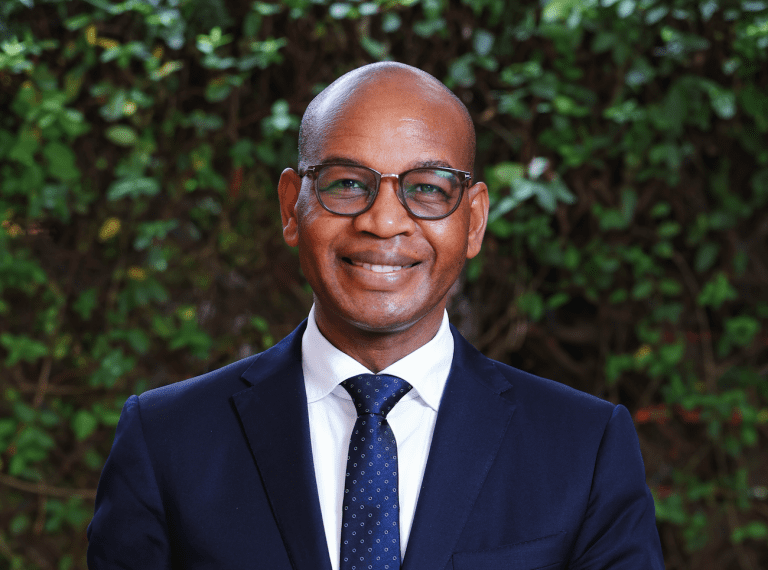
Stanbic Holdings PLC has appointed Joshua Oigara as its new Chief Executive and Director, effective 1 March 2026.

The appointment was announced ahead of the upcoming retirement of Patrick Mweheire as Chief Executive and Director, effective February 28, 2026.

“The Board is pleased to announce the appointment of Dr. Joshua Oigara as Chief Executive and Director of Stanbic Holdings Pic, effective 1 March 2026. This appointment is subject to requisite regulatory approvals,” Stanbic PLC announced on February 12.

In his new role, Oigara will lead the holding company, overseeing investment and insurance businesses in Kenya and South Sudan.

Oigara was appointed as the Chief Executive and Executive Director of Stanbic Bank Kenya Limited on 1st December 2022 after leaving KCB Group where he served as Group Chief Executive Officer and Managing Director, since January 2013.

Over the last decade, Oigara has been instrumental in driving the growth and development of the banking sector. He also serves as a Non-Executive Director of Stanbic Nominees Limited.

He holds an MBA with distinction in International Business Management from Edith Cowan University, Australia; a Bachelor of Commerce degree from the University of Nairobi; and an Advanced Management Programme Graduate from INSEAD, Fontainebleau, France.

He is also a Certified Public Accountant of Kenya, CPA (K) and a member of the Kenya Institute of Bankers (KIB) and the Institute of Certified Public Accountants of Kenya (ICPAK).

Also Read: Qatar Airways brings Doha to fortnite with immersive ‘QVerse Island’ experience

When the job title goes home and you stay behind

0

In Kenya, a job title is not just employment; it is identity, access, and a full-service lifestyle. Business cards open doors, security guards salute, bank managers return missed calls, and distant relatives suddenly remember your clan. Formal employment does more than pay salaries; it quietly runs people’s lives.

That is why many professionals struggle badly once employment ends. Retrenchment, retirement, resignation, or a failed political attempt often exposes an uncomfortable truth. Without the employer’s badge, many highly capable people suddenly appear lost, not stupid, just unprepared for independence.

Kenya’s labour data puts this into perspective. According to KNBS, only about 17 to 20 per cent of working Kenyans are in formal employment, yet this small group enjoys disproportionate structure, stability, and social capital. The other 80 per cent survive in informal work, where self-organisation is not a skill; it is oxygen.

Corporate life comes with invisible support systems that slowly replace personal capacity. Office drivers handle movement. Personal assistants manage calendars, schedule meetings, and remind you of your own deadlines. Support staff process school fees, book flights, organise shopping, and sometimes coordinate household repairs. Some offices indirectly manage private homes better than the owners do. Life becomes a series of forwarded emails and approved requests.

Over time, judgment, initiative, and even memory get outsourced. Decisions come with templates. Problems arrive pre-solved. Authority is borrowed from the organisation, not earned individually. So when employment ends, the shock is not just about money; it is about suddenly having to think again.

Namsia: 3 phases of a retirement plan you need for a good lifestyle after retiring

A 2023 IHRM survey showed that over 60 per cent of retrenched professionals struggle to re-enter productive work even when they receive severance packages. Capital exists, ideas exist, but execution collapses. The structure is gon,e and so are the guardrails.

This explains why some very successful executives fail at private business. They grew companies where they were employed, expanded markets, managed teams, and hit targets. Yet when they start their own ventures, things fall apart. Managing systems you do not own is different from building one from scratch. Reporting to a board is easier than waking up and reporting to yourself.

Politics offers a public version of the same lesson. Kenya has seen senior executives leave comfortable offices to contest elective seats. While employed, they commanded crowds and respect. On their own, without employer brands, logistics, and organised support teams, many struggle. IEBC results consistently show first-term candidates from business ownership backgrounds outperform corporate converts. Personal networks beat polished PowerPoint skills every time.

In villages across the country, the pattern is familiar. You meet someone introduced as “he used to be a top executive.” Apart from executive English and impressive stories, there is little to show. Years after losing a job, some are still job-hunting well past their productive age. Even when offered capital to start something, they stall. They are excellent at receiving instructions, not at giving themselves direction.

Your workplace desk isenot permanent; do these things as you prepare for retirement

Contrast this with the jua kali sector. Informal workers contribute over 30 per cent of Kenya’s GDP and employ millions. They wake up daily with no HR department, no insurance, and no calendar reminders. What they build instead is adaptability, social capital, and resilience. When one plan fails, another begins before lunch.

Employment is not the enemy. Jobs build skills, discipline, and exposure. The problem starts when employment replaces personal capacity instead of strengthening it. Some job titles open doors that people mistake for personal achievement. When the title disappears, the doors close.

The lesson is simple and uncomfortable. As you climb the corporate ladder, build parallel strength. Networks not owned by your employer. Income streams that do not need approval. Life skills that survive your last working day.

Life needs both the employed professional and the jua kali hustler. Different lanes, same economy.

The danger lies in confusing the company system with personal strength. Jobs end. Life does not pause.

About the Author

Mulumi Mwangi is a seasoned businessman with more than five decades of life experience, bringing a rare depth of perspective to both enterprise and writing. Trained as an electrical engineer, he has founded, built, and managed ventures across diverse sectors, including advertising, marketing, agribusiness, real estate, and fintech.

His writing is firmly grounded in lived experience. It draws from family life as a father, husband, brother, and uncle; from public life through his service as a political party official; and from the hard lessons of business, both failure and success. These experiences, combined with everyday social interactions, have shaped a reflective and pragmatic worldview.

Mulumi’s work is offered as a personal perspective rather than a prescription. His views are candid, experience-driven, and open to debate—acknowledging that insight is often refined through dialogue, reflection, and the humility to accept that one may be right or wrong.

Contact: [email protected]

Qatar Airways brings Doha to fortnite with immersive ‘QVerse Island’ experience

0

The World’s Best Airline is bringing iconic landmarks of Doha, including Hamad International Airport, in addition to on-board experiences, into the Fortnite universe for young travellers and gamers

Visitors can immerse in interactive fun-packed and adventurous experiences, compete alongside their favourite gaming content creators, and unlock exclusive Qatar Airways travel rewards

11 February 2026- DOHA, Qatar – Qatar Airways unveiled its first-ever digital destination, ‘QVerse Island’ in Fortnite, one of the world’s most popular digital environments. QVerse Island reimagines the capital of Qatar, Doha, by offering travellers a new, immersive way to explore the city while engaging with the airline’s brand experience.

The game starts at Hamad International Airport where players can interact with Sama, Qatar Airways’ digital cabin crew and explore various locations, including ‘The ORCHARD’. Once on the island, players will take on fun-packed, mission-based challenges guided by Sama, across Doha’s landmarks and other iconic attractions. The island is also studded with hidden spots for players to uncover ‘golden tickets’ that unlock the chance to win travel rewards and flights

Sama is a prominent digital figure across Qatar Airways’ platforms who plays a central role as the in-world guide in QVerse Island. Her presence in Fortnite strengthens the continuity of Qatar Airways’ digital identity that includes the airline’s immersive web experience, QVerse, online brand storytelling, experiential activations, and interactive environments. By guiding players, Sama is bringing the airline’s brand to a new digital space.

Travel intent is increasingly shaped through various digital channels, including social media platforms and immersive gaming environments. Qatar Airways, through the QVerse Island, is extending its presence to such ecosystems to actively engage with travellers long before they search for their next journey. By introducing Doha within Fortnite, the airline is ushering in a new era where virtual adventures are transformed into tangible travel experiences and rewards.

The launch aligns with Qatar Airways’ growing investment in next-generation digital experiences, including the rollout of Starlink connectivity – the fastest on a widebody fleet. The airline currently operates over 120 Starlink-enabled aircraft, making it the operator of the world’s first and largest widebody fleet equipped with the fastest Wi-Fi in the sky. Passengers onboard Starlink-powered flights can enjoy a faster-than-home Wi-Fi experience with up to 500 Mbps on an increasing number of routes across six continents, including flights to the majority of destinations served by Qatar Airways in the Americas and Australia*, and on prominent routes in Africa, Asia, Europe, and the Middle East.

Qatar Airways Cargo Transports 25 Million Red Roses from Kenya for Valentine’s Day

Together, QVerse Island, Sama, and Starlink represent the airline’s commitment to creating a connected, digitally-intuitive travel experience that begins long before take-off.

About Qatar Airways

A multiple award-winning airline, Qatar Airways won the ‘World’s Best Airline’ title for an unprecedented ninth time at the 2025 World Airline Awards, managed by the international air transport rating organisation, Skytrax. Qatar Airways was previously named the World’s Best Airline in 2011, 2012, 2015, 2017, 2019, 2021, 2022, and 2024.

The airline continues to be synonymous with excellence, and has yet again received recognition for ‘World’s Best Business Class’, and ‘World’s Best Business Class Airline Lounge’. As the leading connector in the region, Qatar Airways has also been lauded with the ‘Best Airline in the Middle East’ title for the 13 time.

Qatar Airways recently received the Platinum performance recognition by Cirium, the leading aviation analytics organisation, for its reliability and operational performance. The recognition is a testament to the airline’s unwavering commitment to providing seamless and proven operations as part of its award-winning passenger experience.

Qatar Airways currently flies to over 170 destinations worldwide, connecting through its Doha hub, Hamad International Airport, the ‘Best Airport in the Middle East’ for 11 consecutive years, as well as ‘World’s Best Airport Shopping’ for the third year in a row, as voted by Skytrax. Hamad International Airport has previously been named the ‘World’s Best Airport’ by Skytrax in 2021, 2022, and 2024.


Grounded in error – Ten fallacies about Kenya Airways (Part two)

0

In the preamble to this two-part series, Peter Drucker cautioned against the perils of applying yesterday’s logic to today’s problems. Yet much of the commentary by former employees of Kenya Airways falls precisely into this trap, advancing remedies that events have already rendered obsolete. The five claims that follow, put forward as expert aviation analysis and concluding this series, are at odds with publicly available facts and do not withstand scrutiny.

1. CLAIM: KQ’s fleet groundings stem from poor maintenance planning.

VERDICT: False.

The grounding of aircraft is not a peculiarity of Kenya Airways but a post-pandemic affliction that has spread across the global aviation industry. After more than a year of COVID-19 shutdowns, aircraft manufacturers curtailed production while skilled workers dispersed, some to other jobs, others into retirement. The result has been a tangle of supply-chain bottlenecks: prolonged lead times for essential spares such as rotables and consumables, overstretched maintenance, repair and overhaul facilities – particularly for engines – and fierce competition for scarce inventory.

Large airlines, cushioned by scale, have found ways to cope. Some deploy spare aircraft from their fleet to cover for those delayed in maintenance. Others have bought new planes simply to cannibalise them for parts, a practice known in the trade as “rob-to-service.” A few have even kept ageing aircraft such as the fuel-hungry four-engine Airbus A340, flying well past intended retirement, judging inefficiency preferable to inactivity.

Kenya Airways, like most smaller carriers, enjoys no such latitude. Its predicament is not one of deficient planning but of limited scale. To soften the impact, the airline has partnered with Lufthansa Technik to provide comprehensive component support, an acknowledgement that the problem is structural, not managerial.

2. CLAIM: KQ has prioritized its passenger business at the expense of cargo, forfeiting a more lucrative revenue stream to foreign carriers.

VERDICT: False

Far from neglecting cargo, KQ has expanded it. Over the past two years, the airline has doubled its dedicated freighter fleet from two Boeing 737s to four 737-800s, a tacit acknowledgement of cargo’s growing importance to airline economics. In some markets, freight can generate up to 40 per cent more revenue than passenger services. It is worth noting that beyond its fleet of dedicated freighters, KQ utilises the belly-hold capacity of its passenger aircraft to transport cargo, thereby extracting additional value from its scheduled services.

Grounded in error – Ten fallacies about Kenya Airways (Part one)

That said, cargo economics are shaped as much by directionality as by volume. Although Nairobi is the region’s largest cargo export hub by tonnage, traffic flows are overwhelmingly one-way. Many of KQ’s destinations generate little inbound freight, a constraint that requires careful calibration of fleet size and deployment.

Nor can KQ be held responsible for the periodic shortage of freighter capacity out of Nairobi. These episodes largely reflect global market dynamics; established cargo operators have deployed aircraft to higher-yielding jurisdictions, particularly in the Far East, where shippers pay as much as USD 8 per kilogram compared with USD 1.80 – 2 from Nairobi. In such a market, capacity follows price, not neglect.

3. CLAIM: KQ’s aircraft are underutilised. Rivals extract more value from their fleets by flying longer hours, while KQ sacrifices profitability through lower utilization.

VERDICT: False.

For three consecutive years, Kenya Airways has led not only its region but the world in the utilisation of the Boeing 737. Its Embraer 190 fleet ranks among the global top five, while utilisation of the Boeing 787 Dreamliner sits broadly in line with international averages, despite constraints in spare parts. Far from idling its assets, KQ operates them at levels that compare favourably with the industry’s best.

4.⁠ ⁠CLAIM: Kenya Airways earns less revenue than its northern neighbours because it handles fewer transit passengers through its hub.

VERDICT: False.

The claim rests on a narrow view of what constitutes a successful hub. Some of KQ’s regional competitors operate hubs that function largely as transit nodes akin to bus termini optimised for moving passengers swiftly from one flight to another. Nairobi’s Jomo Kenyatta International Airport (JKIA) serves an added purpose. It is not merely a conduit but a destination in its own right.

Misleading headlines, missed context: a case for responsible aviation reporting

Passengers arrive in Nairobi to access Kenya’s beaches and safari circuits, as well as its mountains, deserts, lakes and the Great Rift Valley – all within hours of landing. Beyond tourism, JKIA draws substantial point-to-point traffic linked to Nairobi’s role as a diplomatic and commercial centre. The presence of the United Nations Environmental Programme (UNEP), headquartered in the city, alongside numerous multinational firms, generates steady demand for business travel.

In short, KQ’s hub supports a more diversified traffic mix than a pure transit model. Measuring the airline’s performance solely by transit volumes therefore understates both its strategic value and the revenue potential it confers.

5. CLAIM: KQ lacks the technical and financial expertise to negotiate competitive aircraft lease rates and therefore pays above industry norms.

VERDICT: False.

Aircraft lease rates are shaped less by negotiating power than by market conditions. At present, the global aviation market is characterised by an acute shortage of aircraft, for both finance and operating leases. In such an environment, aircraft, new and used alike, are allocated on a first-come, first-served basis, governed by logic of willing buyers and willing sellers. Prices observed in one year offer little guidance to those prevailing in the next.

Lease pricing is also sensitive to the perceived risk of the lessee. Smaller airlines, typically those operating fewer than 50 aircraft, are judged riskier than large fleet operators and consequently pay a premium for access to scarce capacity. Airlines based in oil-rich states, or those able to pay lease obligations upfront, enjoy more favourable terms than carriers dependent on commercial borrowing. The industry, in short, does not operate on uniform benchmarks. Lease costs reflect the financial standing of each airline, or, where available, the strength of government guarantees rather than any presumed lack of technical or financial competence.

Java House announces 59 job vacancies in Nairobi and Mombasa; how to apply

0

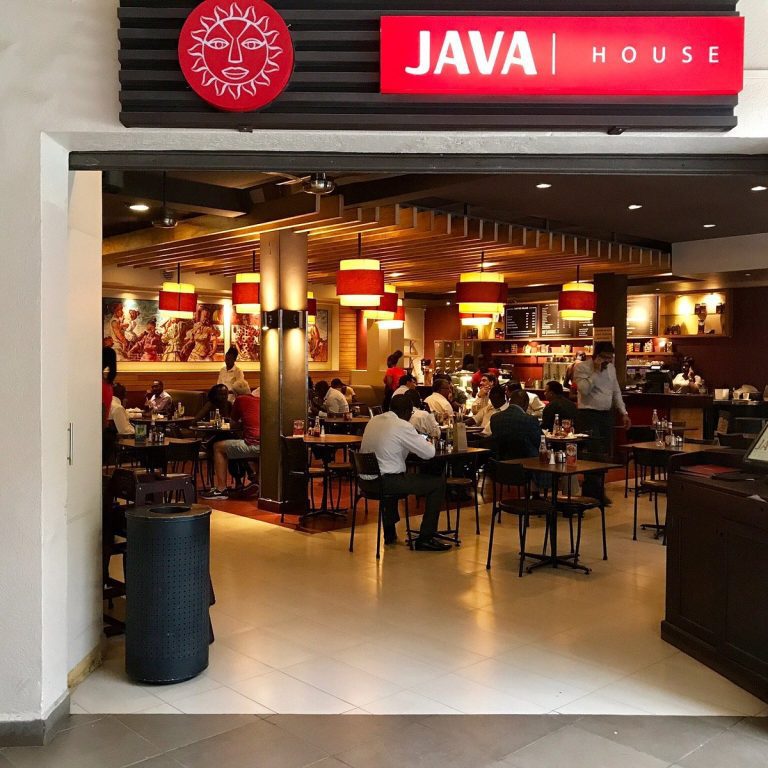
Java House has announced multiple job vacancies for jobseekers in Nairobi and Mombasa Counties.

In an advertisement on its website’s career portal, the firm said it is seeking to hire 59 individuals to fill the positions of Customer Associate, Waitstaff, and Hostess.

Interested applicants must submit applications online via the restaurant’s job portal.

  1. Customer Service Associate – Nairobi and Mombasa

Java House is seeking to hire qualified candidates to fill this position in Nairobi and Mombasa. In Nairobi, the hospitality firm is seeking to hire 10 individuals and 4 individuals in Mombasa.

Interested applicants must have at least one year of experience in a similar role and must submit applications by 31st March 2026.

The duties and responsibilities of the job holder are:

  • Carry out all branch operations – stock taking, record keeping etc.
  • Manage branch margins and costs through proper procedures.
  • Achieve revenue targets.
  • Handle customer complaints and ensure branch NPS score is achieved.
  • Follow all food health and safety practices.
  • Represent assigned units in meetings.
  • Adhere to company policies.
  • Ensure the unit is well stocked to par level and any other order is placed with the right supplier.
  • Ensure safe custody of all branch property and assets.
  • Upholds working ethics and ensures the same is maintained.
  • Manage branch float and revenue.
  • Manage Food Safety standards as per the set company KPIs.
  • Carry out tasks as may be assigned by Superiors.
  • Ensure cleanliness of the branch.

Waitstaff (Nairobi)- 30 vacancies

The job holder will be tasked with taking and serving food and beverage orders to customers while ensuring all customers are promptly attended to, in accordance with Java service standards.

Interested candidates must have at least two years of experience and must submit applications by 31st March 2026.

Qualifications

  • Should have a sound menu and product knowledge.
  • Should have a KCSE certificate mean grade of c plain
  • Should have been in the company for at least six months or have equivalent skills from a food and beverage set up.
  • Ability to work under pressure and long hours
  • Ability to up sell and inform our guest on new menu product
  • Must be a team player
  • Must be customer-oriented
  • Must have proper planning skills
  • Must have Point Of Sale skills
  • Should have inter-personal skills
  • Flexible and accommodative
  • Must be result oriented, self-driven, articulate and pro-active.

Host/ Hostess-15 vacancies

The job holder will be responsible for meeting, greeting, and seating all guests in the restaurant as well as organizing and reserving tables for large groups and bookings.

No minimum experience is required. Interested candidates must submit applications by 28th February 2026.

Duties and responsibilities

  • Meet, greet, and seat all guests in the restaurant.
  • Organize and reserve tables for large groups and bookings
  • Ensure that key service touch points are checked.
  • Maintain clean menus, baby chairs, crockery, and cutlery in takeaway stations.
  • Ensure all seated and takeaway guests are addressed.
  • Assist the manager and chef in any communications of specials for the day and run-outs
  • Ensure necessary orders for proper mise-en-place are given to the manager for ordering.
  • Assist in taking and fulfilling takeaway orders via phone.
  • Ensures guests’ needs are met in the entire dining experience.
  • Contribute to the team effort to achieve customer satisfaction.
  • Bid farewell to the guests on their exiting the branch.

Also Read: KCB Bank and Visa launch business credit card to empower Kenyan SMEs

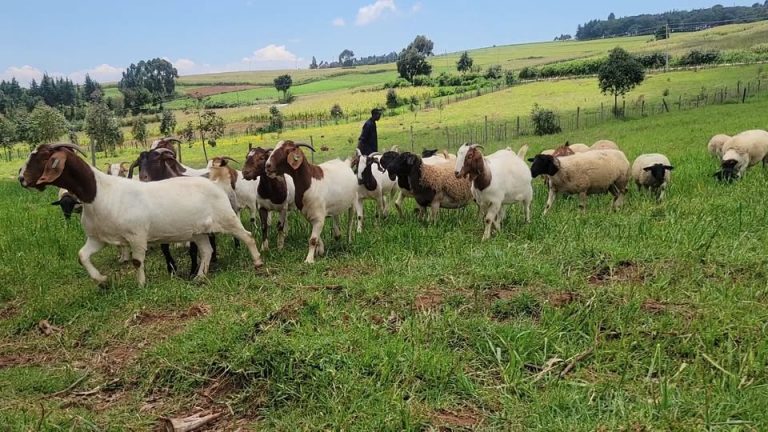
Samson Ng’etich: Molo farmer running biggest Hampshire farm in the country

0

In the lush landscapes of Mau Summit in Molo, Samson Ng’etich, a sheep farmer is revolutionizing livestock farming in the region with the most superior breeds from South Africa.

His farm, christened Penzi Farm, hosts hundreds of high-quality sheep, particularly the Hampshire Down breed imported from South Africa.

“When it comes to Hampshire here at Penzi Farm, we can proudly say we are the top Hampshire farm in the country. We have a number of imported ewes as well as imported rams,” he proudly says.

The farmer currently has imported Rambo and 15 imported ewes that are set to be duplicated to a near-Rambo for farmers looking for pure South African genetics.

“We also have the F1s and F2s as part of our new generation. They are equally good and they are very good rams for farmers who are trying to build their Hampshire flock,” Ng’etich added.

Furaha Wanjiru: Kilifi farmer earning from over 400 rare Galla Goats

He explains that for a farmer to get good-quality ewes, they should start their breeding journey with a pure high-quality genetics ram.

The farm, which started in 2021, is not only revolutionizing livestock breeding by advancing superior genetics, but it’s also promoting animal welfare and empowering local communities through knowledge-sharing.

Ng’etich explained that the farm started with a flock sourced locally which performed below his expectations, forcing him to turn to South Africa for quality breeds.

“We started the farm with a flock sourced from the neighbourhood. However, we were not satisfied with the performance and decided to start importing from South Africa. Ever since, we have not looked back,” he narrated.

He noted that the South African breeds portrayed some superior characteristics which make them easy to manage.

According to him, the animals have a high birth weight, fast weight gain between the ages of 0-3 months, and the food conversion is very high.

Ng’etich says the Hampshire breed is one of the best investments due to its high market demand and adaptability to cold areas. He keeps the breed purposely for mutton thanks to its fast weight gain.

Top 10 richest Kenyans on the Nairobi Securities Exchange in 2026

0

The Nairobi Securities Exchange (NSE) is Kenya’s primary bourse and one of the most vibrant capital markets in Africa.

It serves as the marketplace where shares of listed companies are bought and sold, providing opportunities for both institutional and retail investors to participate in wealth creation.

Some investors at the NSE are prominent individuals or families with large equity stakes, while others are institutional holders that help shape market ownership dynamics.

According to a report by Billionaires Africa, below are the biggest individual investors at the NSE:

  1. Philip Ndegwa family

Portfolio value: $180.80 million

Holdings: 14.94% stake in NCBA Group

The family of Philip Ndegwa, the late former Governor of the Central Bank of Kenya, remains one of Kenya’s wealthiest with investments across banking, insurance, real estate and manufacturing sectors, among others.

  1. Mama Ngina Kenyatta & family

Portfolio value: $159.75 million

Holdings: 13.2% stake in NCBA Group

The former first lady of Kenya is regarded as the wealthiest woman in Kenya with investments across various sectors, including banking, agriculture, education, real estate, and hospitality, among others.

  1. Zarin Merali and family

Portfolio value: $89.97 million

Holdings: 5.41% stake in NCBA Group; 74% stake in Sameer Africa

Zarin is the wife to the late businessman Naushad Merali, founder of Sameer Group. The late businessman was one of the wealthiest individuals in Kenya and was once reported to have made Sh1.6 billion in just an hour due to his sharp business mind.

Merali, who had been featured countless times on the Forbes list as one of the richest people in Africa, had investments across agriculture, real estate, and banking, among others.

  1. James Mwangi

Portfolio value: $67.62 million

Holdings: 3.39% stake in Equity Group Holdings

James Mwangi is the CEO of Equity Group. His wealth primarily comes from his shareholding in Equity Group Holdings as well as investments in other companies like Britam Holdings and real estate.

  1. Baloobhai Patel

Portfolio value: $66.87 million

Holdings: 49.9% stake in Carbacid Kenya; 1.7% of Co-operative Bank, 1.2% of Absa Bank Kenya, 0.5% of CIC Insurance Group

Baloobhai Patel is a prominent Kenyan investor and billionaire best known for holding diversified stakes across multiple sectors, including banking, Insurance, Manufacturing, real estate and agriculture, among others.

  1. Suresh Bhagwanji R. Shah

Portfolio value: $61.03 million

Holdings: 10.58% stake in I & M Group

Suresh Bhagwanji R. Shah is a veteran Kenyan banker and investor best known as the founder of I&M Bank, the lender that grew into today’s I&M Group across East Africa.

He serves as chairman-emeritus of I&M Bank and is also linked to the I&M Bank Foundation, and he has remained a significant shareholder in I&M Group in recent disclosures.

  1. Andrew S. M. Ndegwa

Portfolio value: $57.01 million

Holdings: 4.71% of NCBA Group

A son of the late former Governor of Kenya’ central bank, Philip Ndegwa, Andrew S. M. Ndegwa is a Kenyan businessman and boardroom mainstay best known in markets for his long-running links to the NCBA Group, where he serves as a director and has been a significant shareholder through family investment vehicles.

  1. James P. M. Ndegwa

Portfolio value:: $56.25 million

Holdings: 4.65% of NCBA Group

James is also a son of Philip Ndegwa, currently serving as the group chairman at NCBA.

  1. Gideon Maina Muriuki

Portfolio value: $35.2 million

Holdings: 2.3% of Co-operative Bank; 6% of CIC Insurance Group

Gideon Muriuki is the long-serving group managing director and chief executive of Co-operative Bank of Kenya, a role he has held since 2001.

  1. John Kibunga Kimani

Portfolio value: $27.5 million

Holdings: 33.35% of Kakuzi PLC; 10.43% stake in Centum Investment; 0.52% of Nation Media Group.

John Kibunga holds huge stakes in some of Kenya’s biggest listed companies. The most prominent companies he has invested in include Safaricom PLC, Nation Media Group, Kakuzi Plc, and Centum Investment.

Also Read: Ruto offers Kenya Airways to foreign investors for Sh155 billion

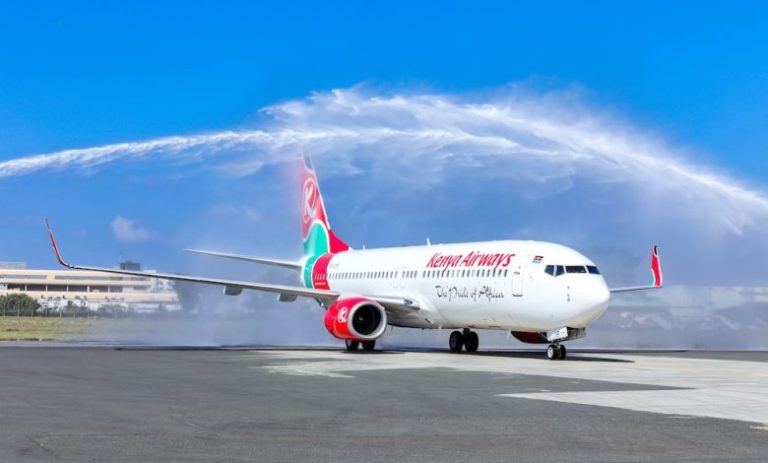
Ruto offers Kenya Airways to foreign investors for Sh155 billion

0

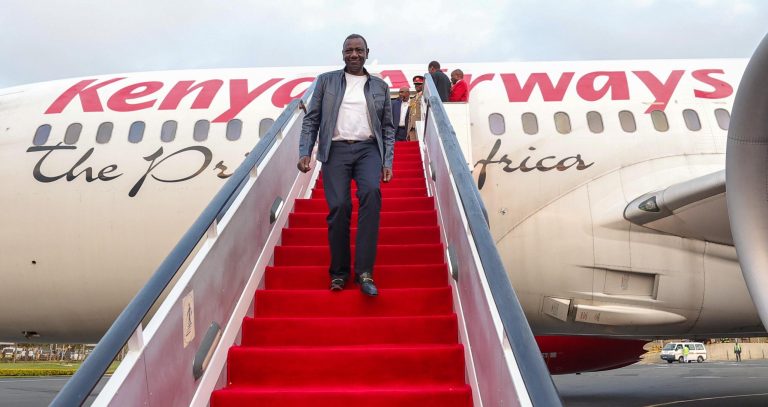
President William Ruto and his government have decided to offload national carrier Kenya Airways to foreign investors.

This has been revealed by the Cabinet Secretary for the National Treasury John Mbadi. According to CS Mbadi, the government will hand over the national carrier to foreigners who will pump in between Sh154.8 billion and Sh258 billion.

The CS claims that the government will float an international expression of interest (EOI) in a bid to get an investor.

“The new investor is expected to inject a minimum of Sh154.8 billion and up to Sh258 billion into the business. We shall be rolling out an international expression of interest to search for a strategic partner,” said CS Mbadi. The CS, however, did not announce when this bid will be opened.

“The government took up Sh63.1 billion which it is now servicing. The government then signed an on-lent agreement with KQ. This amount can be converted to equity once we firm up the onboarding of a strategic investor.”

This marks the second time that President Ruto is trying to sell off Kenya Airways. During a visit to the United States in mid December 2022, President Ruto and his delegation met with the top executives of the United States’ largest carrier Delta Air.

This was widely perceived by the public as a pitch by the new government to sell Kenya Airways to Delta Airlines. It followed public remarks by President Ruto that he was willing to sell KQ.

“I’m willing to sell the whole of Kenya Airways Plc. I’m not in the business of running an airline that just has a Kenyan flag, that’s not my business,” President Ruto had told Bloomberg News on the sidelines of the US-Africa Leaders Summit in Washington DC.

He had added that discussions with Delta were at a preliminary stage. “The government is looking for partnerships that will make Kenya Airways a profitable entity whatever that means, in whatever configuration, whatever form it takes.”

Incidentally, the latest efforts come in the wake of a deeply troubling financial year in which a majority of KQ’s widebody 787 Dreamliners have remained grounded over what the airline claims to be a “global shortage of parts”.

It is however not clear how the airline’s leadership was unable to foresee and develop mitigation strategies. The grounding of these planes has also been blamed as the reason why Kenya Airways is staring at record-breaking losses.

The airline slumped back into loss making territory in the first six months of the 2025 financial year with a net loss of Sh12.15 billion.

This was a sharp about turn from the record profit of Sh5.4 billion that the national carrier posted in the full year 2024, and the net profit of Sh513 million in the first six months of 2024.

READ MORE: Sh32 billion Bomas of Kenya renovation being funded via PPP debts

 Kenya Airways has been seeking for partners who can pump in money. In 2024, then chief executive officer Allan Kilavuka had placed the stake that was on offer to foreign investors at 49 percent.

“We are looking for an equity investor that can invest up to a maximum of 49 per cent,” Kilavuka had said. “This is the maximum because the rules and regulations in Kenya do not allow you to have a Airline Operating Certificate (AOC) if you have more than 50 per cent foreign ownership.”

As at December 2024, records showed that the government was the majority shareholder with a 48.90 per cent stake, followed by KQ Lenders Company 2017 Limited with a 38.09 per cent stake, Dutch airline KLM with a 7.76 per cent stake, Kenya Airways employees with a 2.44 per cent stake, while the remaining shares are spread across other 7 shareholders.

KCB Bank and Visa launch business credit card to empower Kenyan SMEs

0

KCB Bank Kenya in partnership with Visa, a global leader in digital payments have launched a Business Credit Card solution to assist SME’s to better manage cashflow, control expenses, and conveniently pay for day-to-day business needs.

The business-focused credit solution will offer access to working capital through a revolving credit line, offering up to 45 days’ interest-free credit. Additionally, customers will have the option to access either a Kenya Shillings (KES) card or a US Dollar (USD) card, along with enhanced expense management capabilities with employee cards and monthly reconciliation statements. Other benefits include access to Visa commercial offers, providing SMEs with discounts that support cost savings on business spend as they advance their digital transformation initiatives.

This solution is part of the Bank’s digital and innovation strategy which is increasingly offering seamless payment solutions to cater for the ever-changing consumer needs, positioning SMEs to streamline operations and scale more sustainably.

KCB Bank to auction Kericho tea farm over Sh1 billion debt

Speaking during the event, KCB Bank Director, Retail Banking, Jane Isiaho said: “SMEs remain the backbone of the Kenyan economy yet access to finance remains one of the greatest barriers to their growth. Entrepreneurs normally operate on a very tight cashflow with limited resources for their businesses, poor visibility on business spend, difficulty separating personal and business expenses, time-consuming reconciliation, lack of loan flexibility and weak expense controls. By offering this solution, we will be able to enable them to secure financing for their business and operational expenses, manage costs effectively and meet their various business targets.”

Among other benefits include seamless business payments, clear separation between personal and business expenses, employee expense control with customized spending limits, simplified reconciliation and exclusive merchant offers such as global merchant discounts and business-focused offers.

Visa East Africa Vice-President and General Manager, Chad Pollock said, “By offering a faster and efficient payment system to our SME’s customer base, we are able to solve their business needs, enabling them to prosper and run their business efficiently with limited downtime. This enables the development of the business and the Kenyan economy.”

Recently, KCB Bank Kenya partnered with Visa to launch a Tap to Phone contactless payment solution. The innovation enables customers to use their NFC-enabled smartphones to pay by tapping them on payment terminal pay via a contactless payment solution.

This partnership builds on KCB’s ongoing investments to empower customers and merchants by strengthening digital platforms and ensuring a robust payment support system.