

Home Blog Page 109

Grounded in error – Ten fallacies about Kenya Airways (Part one)

0

When Peter Drucker warned that “the greatest danger in times of turbulence is not the turbulence; it is to act with yesterday’s logic,” he might well have had Kenya Airways in mind. A recent television interview with a former employee illustrates the point with unwitting clarity.

The airline’s difficulties are neither novel nor uniquely Kenyan; they reflect structural shocks that have buffeted the global aviation industry. Yet these challenges have summoned a familiar chorus of self-styled experts, many drawing on experience from a bygone era, who prescribe solutions ill-fitted to today’s realities. Their arguments rest on assumptions that are no longer held.

Over the years, ten such fallacies have proved especially durable. Each continues to distort public debate. Each, in turn, merits careful dismantling.

1. CLAIM: Kenya Airways’ difficulties stem from the absence of aviators on its board and top management

VERDICT: False.

Airlines are not, as a rule, run by pilots. Many of the world’s most successful carriers are led by executives with backgrounds in finance, strategy or general management rather than in the cockpit. The chief executives of Turkish Airlines, British Airways, Air France-KLM and Qatar Airways, for instance, are not aviators.

Kenya Airways follows the same model. Its board, like those of its global peers, brings together a range of professional expertise, including finance, law, marketing and corporate strategy, skills essential to steering a complex, capital-intensive business.

Ten aviation lessons for dummies (with a side of humor)

This does not mean aviation expertise is absent. On the contrary, Kenya Airways’ senior management includes seasoned aviators whose technical judgement informs operational decisions. Because running an airline, like any other company, requires a multi-disciplinary team, pilots work with engineers, IT experts, finance and strategy gurus, amongst others, all of whom provide specialist insight when it matters most.

2. CLAIM: KQ receives generous government funding and diverts it to salaries rather than capitalising the business.

VERDICT: False.

Kenya Airways has indeed received state support over the years. But unlike the largesse extended to many of its global peers, this support has not taken the form of grants. Instead, it has been structured as a shareholder loan from the government, repayable with interest.

Nor has funding been frittered away on payroll. Much of it was deployed to stabilise the airline’s balance sheet by settling loans that fell into arrears during the COVID-19 pandemic, when the near-total closure of the global airspace deprived airlines everywhere of revenue. Kenya Airways was hardly unique in facing such distress; it was merely less generously treated.

A glance abroad puts the matter in perspective. Emirates Airlines received a grant of USD 4 billion to support its post-pandemic recovery. Singapore Airlines was handed USD 19 billion. American carriers, despite being privately owned, shared USD 56 billion in outright grants. Against this backdrop, Kenya Airways’ support looks modest. Indeed, the airline requires at least USD 0.5 billion merely to return to fiscal equilibrium

3. CLAIM: KQ fares are static and higher than those of most airlines.

VERDICT: False.

Like most professionally managed carriers, KQ relies on a yield-management system that prices seats according to demand and timing. The lowest fares are typically released up to a year in advance; as departure dates approach and availability tightens, prices rise, with the highest fares charged closest to take-off.

The airline also operates a classic hub-and-spoke model with Jomo Kenyatta International Airport as its hub and direct services radiating to destinations across the network. In aviation, direct flights almost invariably command a premium over itineraries involving a stopover. Judged against other airlines offering comparable non-stop services, KQ’s pricing is therefore broadly competitive rather than unusually expensive.

4. CLAIM: KQ leases its aircraft from Kenyan politicians with vested interests, explaining its persistent inability to turn a profit.

VERDICT: False.

KQ employs a combination of finance and operating leases. Under finance leases, ownership of the aircraft transfers to the airline at the end of the lease term; under operating leases, the aircraft reverts to its owners. In both cases, the lessors are large, internationally established financial institutions or aircraft-leasing firms, each managing fleets ranging from several hundred to well over a thousand aircraft. These firms are globally reputable and lease aircraft not only to KQ but to dozens of airlines worldwide.

5. CLAIM: KQ overpays its employees, thereby eroding its competitive edge.

VERDICT: False.

For much of the past decade, the airline suffered the opposite problem. Wages stagnated, prompting an exodus of skilled staff to better-paying rivals. People with aviation industry skills, like engineers, pilots, and revenue management experts, are in great demand globally. As such, their skills are remunerated based on worldwide scales and not local ones.

Only recently has remuneration improved at KQ, and even now, pay levels remain toward the lower end of industry benchmarks. The effect of these adjustments has been marked. Staff turnover has fallen from a peak of 9 per cent to just 2 per cent last year. At one point, nearly 89 engineers left at one go; retention has rebounded sharply. An employee satisfaction index now exceeds 80 per cent, its highest level on record.


Two African players in top 5: biggest transfers of January

0

The winter transfer window is officially closed. Over the past few weeks, many clubs have taken the opportunity to revamp their squads, fill problem positions and add depth to their rosters ahead of the decisive part of the season. Some clubs opted for minor improvements, while others made deals that could directly affect the balance of power in the leagues and UEFA competitions. The best sports betting site 1xBet talks about the biggest signings of the winter transfer window.

Antoine Semenyo (from Bournemouth to Manchester City, €72 million, Ghana)

The former English champions have been active in the transfer market in January for the second year in a row, which indicates their desire to rebuild the team as soon as possible. To play effectively in attack, Pep Guardiola needs wingers who excel at dribbling, but both Jérémy Doku and Savinho have often been injured this season. Therefore, Man City reacted in the winter and made a transfer that became one of the top 5 most expensive in the club’s history. Antoine Semenyo immediately began to justify the money invested in him – the Ghanaian scored 4 goals and provided 1 assist in his first 6 matches for the new club.

Marc Guéhi (from Crystal Palace to Manchester City, €23 million, England)

The England national team’s defender wanted to leave Crystal Palace last summer and was close to moving to Liverpool. His contract with the Eagles was due to expire at the end of the 2025-26 season, and the club from South London decided to earn at least some money for a very valuable asset, while Man City, as in the case of Semenyo, reacted quickly to personnel problems. Guéhi is expected to solve the problems in the Citizens’ central defense, which arose due to injuries to Joško Gvardiol, Rúben Dias and John Stones, as well as Nathan Aké’s poor form.

Ademola Lookman (from Atalanta to Atlético Madrid, €35 million, Nigeria)

The Nigerian wanted to leave the Bergamo club before the start of the season, but had to wait a little longer. Interest in the player remained, and the winter transfer window became the moment when all parties agreed on the terms. For Atlético, this transfer looks well thought out – the team likes to use hybrid formations, and Lookman can perform several roles in attack at once: play on the wings and between the lines, speed up the pace of the game and gain an advantage through dribbling. But there are some concerns: not every player is capable of embracing Diego Simeone’s philosophy. It’s no coincidence that Los Colchoneros not only bought Lookman in January, but also sold Conor Gallagher and Giacomo Raspadori.

The dawn of a new era. How the 2025 Africa Cup of Nations became one of the most exciting in history

Endrick (from Real Madrid to Lyon, on loan, Brazil)

99 minutes of playing time with no goal contributions is all the 19-year-old Brazilian has achieved this season at Real Madrid. With such limited time on the pitch, it’s difficult to talk not only about progress but also about settling into the rhythm of the big club. It’s crucial for the young forward to get regular playing time, make decisions under pressure and gain confidence through playing, not through training. In Lyon, Endrick has found what he was missing in Madrid: trust. In 431 minutes, he scored 5 goals and provided 1 assist, confirming that his potential is revealed only through constant play. He isn’t yet capable of winning the competition in Los Blancos’ attack, so the choice in favor of playing time seems logical and timely. At this age, development through matches is more important than status and a spot in the squad of a big club.

João Cancelo (from Al Hilal to Barcelona, on loan, Portugal)

The Portuguese player returns to FC Barcelona, the official partner of 1xBet, where he played on loan in the 2023-24 season. At the Catalan club, Cancelo is assigned the role of first substitute on both wings of the defense. On the right, Jules Koundé has no proper replacement, while Gerard Martín is more often used in central defense this season and is not a regular substitute for Alex Balde. Cancelo’s versatility and experience at the top level allow the Blaugranas to fill several problem positions without rebuilding their defense or losing quality.

We’re sure that our review of the main winter transfers will give you a better understanding of the changing balance of power in the top leagues. Follow the best players’ performances with 1xBet!

How Traders in Kenya Compare Online Brokers

0

Kenya had 47,720,195 mobile money subscriptions by end-June 2025, according to the Communications Authority of Kenya (CA) Sector Statistics Report for Q4 FY 2024/2025. When that’s your baseline, it makes perfect sense that Kenyan traders often judge a broker by one simple thing first: how smoothly money gets in, and how reliably it comes back out.

If you’re exploring the best brokers in Kenya, you’ll notice many brands talk about speed and convenience, so it helps to know what to compare and how to verify it. In this article, we’ll focus on funding methods as a practical way to compare brokers, using verified Kenyan infrastructure signals from CA and Central Bank of Kenya (CBK) reporting to keep the guidance grounded.

Your Broker’s Payment Menu Tells a Story

Start with the broker’s funding options because they reveal how well the broker fits into your real routines. Kenya had 76,690,718 active mobile (SIM) subscriptions as of 30 June 2025 (146.3 penetration), and CA explicitly links that growth to demand for services such as mobile broadband, mobile money, and mobile banking.

That matters because a broker can be excellent on charts and analysis, yet still feel frustrating if deposits are clunky or withdrawals keep bouncing between steps. The good news is that funding is one of the easiest parts to test early, without needing deep trading knowledge.

How Kenyans are using online marketplaces to save on cars

A quick credibility note that also helps you as a reader: CA states its quarterly sector statistics are based on data provided by licensees as per their obligations, subject to later review, and prepared in line with International Telecommunication Union standards for administrative or supply-side data. So,when you use these numbers to shape how you compare brokers, you’re matching your decision to how Kenya actually connects, pays, and verifies transactions at scale.

Speed Dating for Payments

If you want a simple mindset shift, here it is: deposits are important, but withdrawals are the real test of day-to-day comfort. In Kenya, a large share of people will experience these steps on a phone, and CA reports smartphone penetration of 83.5% by end-June 2025.

Treat speed as something you measure, not something you assume from marketing. You can do this with two timers, one for how long a deposit takes to become usable, and one for how long a withdrawal takes to land where you need it.

Use one clean scorecard across brokers, then keep it consistent. This is the only list you need:

  • Confirm which rails are supported for your account (mobile money, bank transfer, card), and whether the steps are clearly explained in-app and on the website.
  • Test a small deposit and note the full timeline from initiating the payment to seeing funds available to trade.
  • Request a small withdrawal and time the process from request to completion; record any manual checks you were asked to do.
  • Check the fee and limit details at the point of action (not just a general FAQ); note whether fees, limits, and timelines are stated in plain language.
  • Contact support once with a specific question about withdrawals (limits, verification, or delays) and judge the helpfulness and clarity of the answer.

That’s it. No complicated spreadsheets, and no pretending you can predict every edge case.

One more detail that often gets overlooked: Kenya’s payments ecosystem is built for reach, not just speed. CA reports 453,480 registered mobile money agents as at end-June 2025, which hints at why many people expect cash-out to be straightforward when they need it. A broker that respects that expectation usually makes the whole experience feel calmer and more predictable, even when markets are moving fast.

Trust Signals Live in the Cash-Out

Trust doesn’t come from a broker saying the right words. It comes from consistency: clear rules, clear timelines, and clear communication when something needs checking.

This is where the broader Kenyan financial system gives you a helpful lens. CBK reports that integration of the CBK data warehouse to supervised financial institutions with the system for Payment Service Providers went live on 29 May 2024, enabling real-time oversight. You don’t need to be a compliance expert to benefit from that direction of travel; it supports a market where transparency and traceability become more normal expectations.

There’s also a simple cultural signal: Kenyans are already getting used to digital-first access for investing. CBK reports the Dhow Central Securities Depository (DhowCSD) went live on 31 July 2023 and was launched on 11 September 2023, with access through a mobile app and web portal. CBK also reports total CSD accounts grew to 83,259 by end-June 2024, and that households (individuals) made up 79% of investors in its categorisation. When a country’s mainstream investment access is moving in this direction, it’s reasonable for traders to look for brokers that make payment status, verification steps, and withdrawal expectations easy to understand.

And if a broker can’t explain, in plain language, what slows a withdrawal and what you should do next, is that a relationship you want to depend on?

Choose the Broker That Makes Money Movement Boring

If you take one thing away, let it be this: comparing brokers on funding methods is a smart way to protect your time and build confidence, especially in a mobile-first Kenya supported by the connectivity and payment access CA measures each quarter. When you treat deposits and withdrawals as a feature you can test, you stop guessing and start choosing based on what you can verify.

Kenya’s official signals point toward more digital access and stronger oversight, which is good news for everyday traders who want clear processes and predictable outcomes. So go ahead and raise your standards: pick the broker that makes funding and cashing out feel almost boring, then focus your energy where it belongs, on learning and making better decisions.

Co-operative Financial Sector Embraces Strategic Fintech Partnerships as Digital Revolution Reshapes Member Services in 2026

0

Kenya’s co-operative banking sector has signalled a strategic pivot towards collaborative partnerships with fintech companies as its top strategic focus for 2026, signalling an accelerated push towards digital transformation as the movement seeks to enhance value delivery to millions of members across the country.

The strategic direction was outlined at the 4th Annual Cooperatives CEOs Roundtable, held by the Co-operative Bank of Kenya, which brought together over 100 SACCO chief executives under the theme ‘Transforming Cooperatives through Technology, Innovation, and Human Capital Readiness.’

“The technology landscape is evolving at an unprecedented pace,” said Vincent Marangu, Director of the Cooperatives Banking Division at Co-operative Bank of Kenya, whilst speaking during the roundtable. “For players in Kenya’s financial sector, constant environmental scanning is no longer optional – it is a leadership obligation. Member expectations are shifting, delivery channels are expanding, and the traditional understanding of financial services has been fundamentally reshaped by the emergence of specialised Fintechs.”

The two-day forum addressed critical themes including technology-driven growth, member value innovation, diaspora engagement, and human capital transformation. The forum, which was also attended by senior executives from Visa, Oracle and the Fintech Association of Kenya, engaged SACCO leaders on emerging trends reshaping the financial services landscape.

Meet Jonathan Cooper: The brains behind the Nairobi Museum of Illusions

Discussions highlighted the growing urgency for SACCOs to modernise core banking systems, strengthen data-driven decision-making, and adopt interoperable digital platforms that enable seamless member experiences across channels. Participants also examined how technology can unlock new growth opportunities, including youth engagement, MSME financing, and cross-border services for the diaspora.

According to the latest SACCO Supervision Report, Kenya’s regulated SACCO sector reached approximately 7.39 million members in 2024, marking robust membership growth of nearly 8 % year-on-year. Total assets climbed from KES 972 billion in 2023 to KES 1.07 trillion in 2024, continuing upward to KES 1.13 trillion by late 2025, while member deposits and gross loans grew alongside strong credit demand. Digital transaction values processed through SACCO agent networks surged over 14 %, reaching KES 31.65 billion, reflecting increasing uptake of digital channels across the sector. These figures underscore the movement’s expanding footprint in Kenya’s financial landscape and the urgency of strategic investments in technology to deepen inclusion and service delivery.

A key outcome of the roundtable was a shared commitment by SACCO leaders to accelerate collaboration across the cooperative ecosystem, particularly in areas such as shared digital infrastructure, cybersecurity resilience, and talent development. Emphasis was placed on building future-ready human capital capable of leading digital change while preserving the cooperative values of trust, inclusion, and member ownership.

“Our role as Co-operative Bank is to walk alongside SACCOs as a long-term strategic partner, supporting them with robust digital platforms, financial solutions, and capacity building. By investing in technology and people at the same time, we are collectively laying the foundation for a future-ready cooperative sector that can sustainably serve the next generation of members,” added Mr. Marangu.

The Annual Cooperatives CEOs Roundtable has become a key convening platform for the sector, enabling peer learning, strategic alignment, and engagement with global technology partners shaping the future of financial services. Insights from the 2026 forum are expected to inform SACCO strategies and sector-wide initiatives over the coming year as cooperatives adapt to evolving member needs and a rapidly changing digital economy


Ukraine finds more bodies of Kenyan men who were fighting for Russia

0

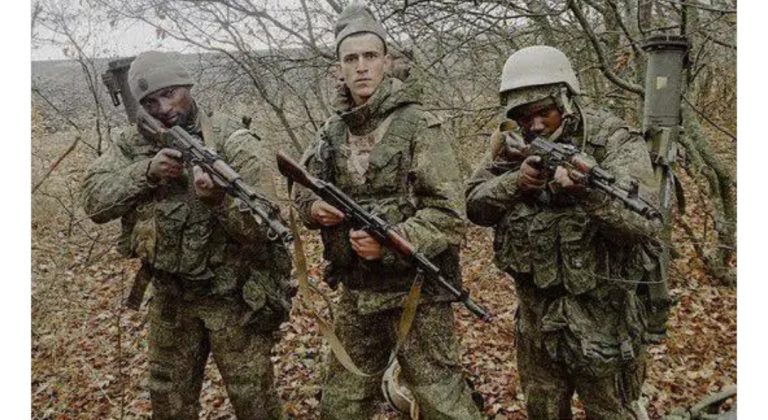
More bodies of Kenyan men who have been fighting for Russia in Ukraine continue to be discovered.

Ukraine, which was unjustly invaded by Russia in 2022, says that it has recovered the bodies of two more Kenyan men in the Donetsk region.

The two men have been identified as 39-year-old Ombwori Denis Bagaka and 35-year-old Wahome Simon Gititu.

According to intelligence reports released by the Ukraine military’s Defense Intelligence of Ukraine unit, these Kenyans had been working for security companies in Qatar from where they were lured into joining the Russia army in its aggression against Ukraine.

Shock tales of Kenyan men dying while fighting for Russia in Ukraine

For Russia, the young Kenyan men they are recruiting, and many others from different African countries, are disposable. Their vulnerability amd desperation to make money openly evident, the Russians send them to war as their frontline.

These Kenyans are the first to receive fire when things get thick. They act as a protective vest for the Russian forces.

In one video that was recently circulated online, Russian forces were seen recording Kenyan men in the warzones and mocking them in Russian languages, labeling them as fools who would die in the war.

In one video that was shared by Ukraine intelligence, a Russia soldier was captured on video bragging how Russia had so many disposable recruits from Africa.

“Behind their backs, he comments in Russian that they are essentially disposable cannon fodder,” Ukraine’s intelligence interpreted the message.

The Russian soldier went on to say:

“Look how many disposables are here. They’re even singing. So cheerful. No problem – once they’re sent to the assault, they’ll sing a different tune.”

Simple habits that will make you a successful business owner if you start today

0

Across industries, high-performing business people often operate in vastly different markets, manage diverse teams, and pursue distinct goals.

Yet beneath these differences lie shared traits and habits that consistently set them apart. Their success is rarely accidental; it is shaped by deliberate choices, disciplined thinking, and an ability to adapt to changing environments.

Below are some of the t

Spend money wisely

Always consider the return on an investment when you evaluate the best ways to spend company funds. Ask yourself, how long will it take me to recoup my investment?

Also consider, Will this investment help me achieve the goals of my business?” If you can’t answer these questions, don’t spend the money.

Meet challenges with enthusiasm

Apply the same level of passion and zeal that you felt when you first started your business to every difficult situation. If you give each new challenge your best effort, you’ll experience positive outcomes more often than not.

Think creatively

Make innovation the centre of your business. Encourage team members and colleagues to experiment with new ideas and fresh approaches to business.

Entrepreneurs who take risks often accomplish extraordinary things because their methods are creative and unexpected. Push outside your comfort zone and approach the risk of failure with a positive attitude.

Plan for the long term

Stop focusing only on the short term, your business may not reach its full potential. Instead, set aside time at least once or twice a year to plan for the future. Routinely monitor your progress on achieving long-term goals.

Communicate quickly and effectively

Respond to emails, phone calls and other requests immediately. The amount of time you take to respond could make the difference between gaining or losing a sale.

Furthermore, when you respond quickly to clients, customers and employees, you develop a reputation for reliability. In your workplace, timely and effective communication will create a culture of focused efficiency.

Also Read: I have 10k savings. Which business can I start and earn Sh300-Sh500 daily?

Explosive Sports Betting Strategies Kenya 2025

0

Introduction to Kenyan Sports Betting Boom

Kenya’s sports betting scene has exploded in recent years, driven by passion for football, athletics, and emerging markets like basketball. Bettors increasingly seek smart ways to turn fandom into profits amid rising mobile money integration. Platforms offer diverse options, making sports betting accessible yet requiring sharp strategies for success. In this guide, explore proven tactics tailored to Kenyan punters, focusing on high-impact approaches without promoting specific sites. For enthusiasts eyeing แทงบอล opportunities, understanding local trends sets the foundation for informed wagers.​

Top Football Betting Markets in Kenya

Football dominates Kenyan betting, with leagues like the Kenyan Premier League and international giants drawing massive action.

Understanding 1X2 Bets in Football

The classic 1X2 bet—home win (1), draw (X), away win (2)—forms the backbone of football betting markets. Punters analyze form, home advantage, and head-to-head stats to pick winners. In Kenya, where mobile apps simplify placing these, success hinges on data like recent goals scored. Average odds hover around 2.00-3.00 for favorites, rewarding patient bettors.​

Over/Under Goals for High-Scoring Matches

Over/under goals bets predict total goals exceeding or falling below a line, like 2.5. Kenyan fans love this for explosive African leagues where defenses falter. Track team averages: if both sides concede over 1.5 per game, ‘over’ shines. This market thrives on stats from youth games to EPL clashes.​

7 Explosive Strategies for Winning Bets

Master these seven powerhouse strategies to elevate your sports betting game in Kenya’s vibrant market.

Strategy 1: Value Betting Mastery – Hunt odds higher than true probability. If stats suggest 60% win chance but odds imply 50%, bet big. Kenyan tools track this across matches.​

Strategy 2: Bankroll Discipline – Allocate 1-2% per bet. A KSh 10,000 roll means max KSh 200 stakes, preventing wipeouts during slumps.

Strategy 3: League Specialization – Focus on KPL or EPL. Deep knowledge of teams like Gor Mahia beats scattershot betting.​

The Digital Economy in Kenya: The Crypto Betting Link

Strategy 4: Live Betting Edges – Wager mid-game on momentum shifts. Mobile speed in Kenya enables quick reactions to red cards or subs.

Strategy 5: Handicap Exploitation – Balance uneven matches. +1 handicap on underdogs pays when they lose narrowly.

Strategy 6: Accumulator Caution – Chain 3-4 low-risk picks for multipliers, but cap at 5% bankroll to avoid busts.

Strategy 7: Stats-Driven Props – Bet player goals or cards using injury reports and form. Harambee Stars games offer gems.​

Each strategy demands research, turning casual punts into calculated edges.

Rise of Alternative Sports Betting Niches

Beyond football, Kenya’s bettors explore athletics, basketball, and volleyball for untapped value.

Betting on Kenyan Athletics Stars

Athletics betting surges during global meets, wagering on 100m sprints or marathons. Track Faith Kipyegon’s form for ‘win’ markets. Odds spike pre-race, rewarding early birds.​

Basketball and Volleyball Opportunities

NBA influences local basketball betting, with over/under points popular. Volleyball’s FIVB events offer set betting amid Kenya’s rising teams. Diversify here for better lines.​

Essential Tools for Kenyan Bettors

Leverage free stats sites, odds comparators, and calculators without site endorsements.

Mobile M-Pesa integration speeds deposits, vital for live plays.

Injury trackers and form guides predict outcomes accurately.

Betting calculators compute stakes for desired returns.​

Risk Management in Sports Betting

Responsible sports betting prevents pitfalls. Set loss limits, avoid chasing, and treat it as entertainment.

Spotting Problem Gambling Signs

Daily bets exceeding budget or emotional wagering signal issues. Kenya’s Betting Control Board urges self-exclusion tools. Seek help via hotlines for balance.​

Legal Framework for Bettors

Licensed operators ensure fair play under Kenyan law. Verify BCLB badges for security. Tax implications apply to big wins.​

Future Trends in Kenyan Betting 2025

Esports and virtual sports emerge, blending gaming with tradition. AI predictions and crypto trials hint at evolution, but football remains king.​

Mobile and App Innovations

Apps dominate, offering push notifications for sports betting edges. 5G rollout boosts live streaming bets.​

Conclusion: Bet Smart, Stay Ahead

These insights equip Kenyan punters for 2025 success. Apply strategies diligently for sustainable wins. Always prioritize fun and responsibility in your journey


ESET Threat Report: Deepfake scams and AI co-generated malware among key cyber risks for Kenya 

0

ESET Research has released its latest Threat Report summarising the threat trends observed in ESET telemetry and analysed by ESET threat detection and research experts in the second half of 2025. During regional briefings, ESET noted that socially engineered fraud remains a key risk in Kenya, particularly investment scams amplified through deepfake video and impersonation. 

ESET researchers have tracked the continued evolution of HTML-based scam campaigns, including the Nomani investment scam, which grew by 62% year-on-year globally. These campaigns are increasingly using high-quality deepfake video, AI-generated phishing sites and short-lived advertising campaigns to evade detection. As Allan Juma, Lead Cyber Security Engineer at ESET, noted, there has been a surge in deepfake video impersonations and fraudulent attacks within the region. 

“A recent, high-profile incident where a deepfake video was used to impersonate a prominent Kenyan political figure to promote a fraudulent investment scheme showcases how rapidly these scams spread across social media platforms and media outlets,” he says. “This incident illustrates how realistic deepfakes can accelerate the reach and impact of scams.” 

On the mobile platform front, NFC threats continued to grow in scale and sophistication globally, with an 87% increase in ESET telemetry and several notable upgrades and campaigns observed in H2 2025. NGate — a pioneer among NFC threats, first discovered by ESET — received an upgrade in the form of contact stealing, likely laying the groundwork for future attacks.

RatOn, entirely new malware on the NFC fraud scene, brought a rare fusion of remote access trojan (RAT) capabilities and NFC relay attacks. RatOn was distributed through fake Google Play pages and ads mimicking an adult version of TikTok and a digital bank ID service. 

Crypto boom exposes Africa cyber risk

At the same time, global threat developments continue to impact Kenyan organisations. In H2 2025, ESET discovered PromptLock, the first known AI-driven ransomware capable of generating malicious scripts dynamically during execution. While AI-powered malware remains rare, ESET researchers caution that AI is increasingly being used to enhance phishing, scams and impersonation techniques, which underpin many of the fraud campaigns taking root in Kenya. 

Ransomware activity continues to grow globally with ESET Research projecting a 40% year-on-year increase in publicly reported ransomware victims compared with 2024. Akira and Qilin now dominate the ransomware-as-a-service market, while low-profile newcomer, Warlock, introduced innovative evasion techniques.

EDR killers continued to proliferate, highlighting that endpoint detection and response tools remain a significant obstacle for ransomware operators. Juma cautions that, in Kenya, ransomware incidents are often handled quietly, resulting in fewer public disclosures and making it difficult to quantify the full extent of ransomware activity in the country. Kenya is also actively participating in efforts to counter cyber-enabled crime. 

The country took part in Operation Sentinel, a joint law-enforcement initiative coordinated by INTERPOL and AFRIPOL, which resulted in 574 arrests and the recovery of approximately USD 3 million linked to cyber-enabled crimes across participating countries. 

Who is he? A look at the career profile of IEBC’s new acting CEO Ledama Sunkuli

0

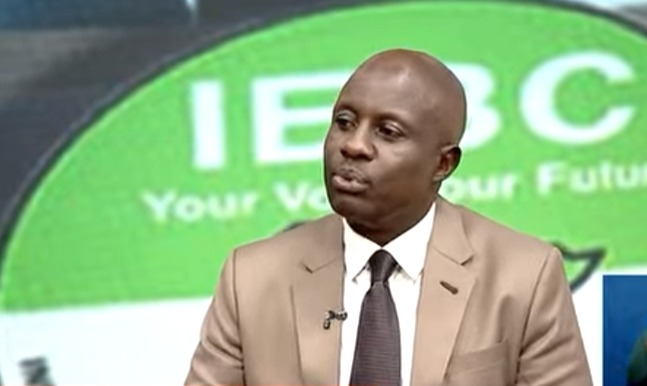
The Independent Electoral and Boundaries Commission (IEBC) has appointed Moses Ledama Sunkuli as the new acting Chief Executive Officer.

In a statement dated Thursday, February 5, the IEBC noted that Sunkuli will serve in an acting capacity for six months, or until the recruitment and appointment of a substantive CEO are finalized.

Sunkuli replaces Hussein Marjan, who resigned, ending more than a decade of service at the commission.

“The Independent Electoral and Boundaries Commission wishes to announce the appointment of Moses Ledama Sunkuli as the Acting Chief Executive Officer and Commission Secretary, effective immediately,” a statement from the IEBC read.

“This appointment follows the exit of the former Chief Executive Officer. Mr. Sunkuli, who currently serves as the Commission’s Director of Electoral Operations, brings extensive experience and internal institutional knowledge to this role,” IEBC added.

Prior to his appointment, Sunkuli served as the Director of Electoral Operations at the Commission.

Sunkuli’s profile

Moses Sunkuli attended Kilgoris High School and is a trained teacher having graduated with a Bachelor of Education Degree (BEd), Secondary Education and teaching from Moi University.

He also holds a Diploma in Business Management from the Kenya Institute of Management, a Bachelor of Commerce (B.Comm) and a Master of Business Administration in Strategic Management, all from the University of Nairobi.

Sunkuli also studied Management of Democratic Elections in Africa at the University of South Africa and is a registered under the Associate of Chartered Insurance of London (ACII) and Kenya (AIIK) and Associate of Chartered Institute of Arbitrators (Kenya Chapter).

He first came into the limelight during the 2022 General Elections when he went into hiding during the tallying and verification of presidential results.

Sunkuli, who was in charge of operations then at the Bomas Tallying Centre (NTC) was allegedly targeted alongside other officers by unknown individuals who allegedly wanted to compromise the integrity of the election process.

He later emerged after President William Ruto had been declared President-elect. In December 2023, he was among those who got national awards; Order of the Grand Warrior (OGW) by President William Ruto.

Also Read: NSSF to build Sh30 billion luxury apartments in Nairobi CBD

NSSF to build Sh30 billion luxury apartments in Nairobi CBD

0

The National Social Security Fund (NSSF) is planning to build office blocks and luxury apartments in Nairobi CBD in a mega project that has been valued at Sh30 billion. These apartments will be hosted on two towers that shall contain 35 and 60 floors. The building will also be designed to host a conference facility, a hotel, and retail spaces.

It is expected that this project will be constructed along Kenyatta Avenue where the NSSF has 3.85 acres of land.  This land has a valuation of Sh4 billion.

“We are considering the idea of regenerating life in the city centre. This is why in [the construction design], we are building apartments to bring people to live in the city centre,” David Koross, the NSSF managing trustee and chief executive officer, told local business newspaper, the Business Daily. According to Mr. Koross, the project will be fully funded by the NSSF over the next four years.

This is the second largest mega infrastructural development project that the NSSF is taking on. The NSSF has partnered with Chinese firm, China Road and Bridge Corporation (CRBC), in a consortium that is building the mega Rironi-Mau Summit Expressway.

The CRBC and NSSF consortium will build the section of road from Nairobi to Gilgil via Naivasha with a total of 81 kilometres, and the section from Nairobi to Naivasha through Maai Mahiu with a total of 58 kilometres.

“The allure of these relatively higher and stable returns is a key motivation behind NSSF’s move into the public-private-partnership (PPP) deal,” Mr. Koross told the media recently.

“By investing in [the highway] project, NSSF aims to earn a robust long-term yield that outpaces typical Treasury securities, ultimately boosting returns for pension contributors while fighting with the fund’s risk appetite.”

The NSSF is currently raking in the highest contributions from members in its history. This year, it is expected to collect around Sh100 billion following increases in contributions that came into effect in February 2026.

Contributions to NSSF have been on a steady growth over the last three years. The increase in contributions is attributed to the continued implementation of the NSSF Act 2013.

READ MORE: NSSF to put Sh25bn in Chinese consortium bidding for Mau Summit highway