

Home Blog Page 110

Affordable Housing Demand Booms As Boma Yangu Signups Hit 1 million Highlights

0

Boma Yangu: Kenyans’ appetite for home ownership under the Affordable Housing Programme (AHP) continues to strengthen, with registrations on the Boma Yangu platform surpassing the one-million mark. The milestone highlights growing public confidence in government-backed affordable housing projects and signals a structural shift in how urban housing demand is being met in Kenya.

Data from the Boma Yangu Affordable Housing Board shows that interest in AHP projects is being driven by more than price alone. Most developments are strategically located within or near major urban centres, reducing commuting time and improving access to economic opportunities.

In addition, the projects integrate essential infrastructure such as roads, electricity, and water, alongside public amenities including schools, markets, healthcare facilities, and shopping areas. This integrated planning model is making affordable housing more attractive and livable for working Kenyans.

Commenting on the milestone, Housing Principal Secretary Charles Hinga described the one-million registration mark as a turning point for the programme. He noted that the scale of sign-ups demonstrates that Kenyans have moved past skepticism and are now actively saving towards home ownership through the government-owned Boma Yangu portal.

According to PS Hinga, the current administration is setting a new benchmark in housing delivery. He contrasted historical delivery timelines with recent progress, noting that it previously took 15 years to deliver about 5,000 housing units in Buruburu. In comparison, the Mukuru Affordable Housing Project delivered 1,078 units within its first year and handed over 4,500 completed homes to new owners on 18 December.

The Mukuru development also includes a modern shopping complex, a Level 4 hospital, and an education complex offering pre-primary, primary, junior, and senior secondary education—illustrating the government’s shift toward fully integrated housing estates rather than standalone residential blocks.

Step-by-step guide to buying affordable housing units, features and charges

A key strength of the Affordable Housing Programme is its tiered approach, designed to serve multiple income segments. Social housing targets very low-income households earning up to KSh 20,000 per month. Affordable housing caters to low- and middle-income earners with monthly incomes between KSh 20,000 and KSh 149,000, while market-rate units are available for higher-income buyers. This structure allows the programme to address housing inequality while remaining financially sustainable.

Beyond housing delivery, AHP is emerging as a significant economic driver. There are currently more than 262,913 housing units under construction across all 47 counties. These projects directly employ about 428,000 Kenyans full-time on construction sites. In addition, an estimated one million workers are engaged full-time across supply chains, providing raw materials, fittings, logistics, and professional services linked to the housing developments.

As registrations on Boma Yangu continue to outpace available supply, the data sends a clear signal to policymakers, investors, and developers. Affordable housing in Kenya is no longer a pilot concept—it is a national demand backed by citizen commitment, economic participation, and a growing track record of delivery.


StarTimes expands business halls nationwide to enhance customer access

0

StarTimes has rolled out a nationwide expansion of its Business Halls as part of a strategy to strengthen customer engagement, improve accessibility, and enhance service delivery across Kenya.

The digital television provider says the move is aimed at bringing its services closer to customers while deepening physical interaction with the brand. The new centres are designed to offer walk-in support, expert guidance, product sales, upgrades, and other StarTimes services under one roof.

With the expansion, StarTimes Business Halls are now operational in Upperhill and Buruburu in Nairobi, as well as in Emali, Mombasa, Ukunda, Malindi, Nakuru, Meru, Kisumu, Kisii, Eldoret, Kakamega, and Kapsabet—ensuring a wider national footprint.

StarTimes adds more kids’ channels in festive free upgrade offer

Speaking on the rollout, StarTimes PR and Communications Officer Robert Ouma said the expansion is already strengthening customer relationships and improving service turnaround.

“This expansion has come in handy for both our customers and the business. We believe good customer service should not be far away, which is why we made a deliberate decision to move closer to our customers,” he said.

Ouma added that the physical centres allow StarTimes to offer timely support, build trust, and create meaningful face-to-face interactions that enhance the overall customer experience.

The company says the Business Halls, together with its dealership network, form part of a broader customer-centric strategy focused on convenience, service quality, and long-term growth—ensuring that wherever customers are, StarTimes services are always within reach.

A rush for natural resources: The modern global contest for real value

0

A familiar pattern is re-emerging across the global landscape. Beneath the language of diplomacy, ideology, and humanitarian intervention lies an enduring driver of conflict and cooperation alike: control of resources. What the world is witnessing today is not a new phenomenon, but a modern rebranding of an old reality — a renewed global rush for real value.

From Eastern Europe to East Africa, power struggles increasingly revolve around access to minerals, oil, gas, water, fertile land, and strategic infrastructure. While conflicts are often framed as battles for democracy or sovereignty, history shows that material interests have always sat at the core of geopolitical competition. Control of natural wealth translates into economic leverage, political influence, and long-term security.

This logic is deeply rooted in history. The creation of rigid borders and international treaties, dating back to the medieval era, was rarely driven by social cohesion. Instead, boundaries were drawn to secure trade routes, agricultural land, and extractive resources. The Roman Empire refined this model through conquest and systematic extraction. European colonial powers later expanded it globally, claiming territories not for cultural integration, but for gold, rubber, ivory, oil, and arable land.

Modern governance systems have since diverged along two broad economic philosophies. Capitalist systems tend to rely on partnerships between states and private corporations to control and monetize resources. Socialist and communist systems emphasize state ownership and centralized control, arguing that natural wealth should serve collective national interests. In practice, both models grapple with the same question: who controls value, and who ultimately benefits?

These tensions are visible within Kenya and across Africa. County governments increasingly seek greater control over local assets — from sugar factories in Western Kenya to tourism revenues in Narok’s Maasai Mara, and calls by Mombasa County to play a greater role in managing port operations. These debates are not radical departures from global norms. They reflect a broader desire to retain value locally rather than see strategic assets controlled externally, often with limited public benefit.

The Case for Africa as the Next Factory of the World

Globally, a structural shift is underway. Power is moving away from purely currency-based dominance toward tangible resource ownership. Nations now highlight gold reserves, lithium deposits, rare earth minerals, and energy assets as markers of strength. This partly explains the strategic push to integrate resource-rich countries such as the Democratic Republic of Congo and South Sudan into regional economic blocs. DRC alone holds some of the world’s largest reserves of cobalt, copper, and other critical minerals essential to modern technology.

Yet resource strategy and politics frequently collide. In the DRC, decisions around security partnerships and foreign troop presence have revived uncomfortable memories of historical exploitation. While national leaders act within complex domestic pressures, such choices inevitably raise questions about sovereignty, influence, and long-term control of national wealth.

The Russia-Ukraine conflict further illustrates this reality. Beyond questions of borders and alliances, it is also a contest over food security, energy supplies, and financial systems. Both countries remain major global exporters despite prolonged conflict, underscoring the scale of their underlying resource wealth. External involvement, particularly from Europe, is shaped as much by strategic interest as by humanitarian concern.

The United States, long dominant through its currency and financial systems, is also adjusting to a changing landscape. The rise of cryptocurrencies and alternative financial instruments has exposed vulnerabilities in fiat-based power. In response, attention has increasingly shifted toward securing supply chains and access to critical natural resources.

Fixing Kenya’s food crisis: Why policy and distribution matter more than production

China’s approach has differed in form, though not in intent. Its pursuit of resources is often paired with visible infrastructure development — roads, railways, ports, and energy projects — offering host countries tangible assets alongside extraction. While not without controversy, this model contrasts sharply with earlier eras of exploitation that left little lasting value behind.

The broader lesson is clear. The global system is re-anchoring itself around real value rather than abstract financial instruments. Former colonial powers, once driven overseas by resource scarcity at home, now face similar pressures in a more competitive world. The hunger for resources did not disappear; it evolved.

Africa, Asia, and the Americas remain richly endowed. Yet Africa, in particular, faces a defining challenge: translating natural wealth into shared prosperity. Long before colonial borders, resources flowed across communities without rigid ownership lines. Today, inherited legal and political frameworks often work against collective benefit.

History, in this sense, is not repeating itself — it has been continuous. The conflicts shaping today’s world are fundamentally about narrative control and resource access. If global imbalances persist, the pressures that once drove conquest may re-emerge in new forms.

The responsibility for African leaders, policymakers, and citizens is clear. Stewardship, accountability, and long-term thinking must guide how resources are governed. Real value lies not just in what is extracted, but in how wisely it is managed for generations to come.

About the Author

Mulumi Mwangi is a seasoned businessman with more than five decades of life experience, bringing a rare depth of perspective to both enterprise and writing. Trained as an electrical engineer, he has founded, built, and managed ventures across diverse sectors, including advertising, marketing, agribusiness, real estate, and fintech.

His writing is firmly grounded in lived experience. It draws from family life as a father, husband, brother, and uncle; from public life through his service as a political party official; and from the hard lessons of business, both failure and success. These experiences, combined with everyday social interactions, have shaped a reflective and pragmatic worldview.

Mulumi’s work is offered as a personal perspective rather than a prescription. His views are candid, experience-driven, and open to debate—acknowledging that insight is often refined through dialogue, reflection, and the humility to accept that one may be right or wrong.

Contact: [email protected]

Why SportPesa Aviator’s minimum stake and winnings give the best deals in Kenya

0

Aviator continues to dominate conversations in Kenya’s online gaming space thanks to its simplicity and fast-paced action. The game attracts both first-time players and experienced bettors who appreciate its clear structure. On SportPesa Kenya, Aviator stands out for offering accessible minimum stakes and exciting winning potential.

Many players are drawn to how easy it is to get started in SportPesa Aviator and play. The low entry point makes the game feel inclusive and welcoming. This accessibility helps SportPesa Kenya expand its footprint across the Kenyan market.

Low minimum stake makes Aviator accessible to everyone

Aviator’s growth reflects a shift in player taste toward quick and engaging formats. Instead of waiting for full match results, players enjoyed instant outcomes. SportPesa successfully positioned itself at the centre of this digital evolution.

One of the strongest features of Aviator on SportPesa is its affordable minimum stake. Players do not need large amounts of money to participate. This allows students, young professionals, and casual gamers to join comfortably.

SportPesa Unveils Kshs 120 Million Multi-Sport Sponsorship Investment in Kenya

The low stake encourages responsible participation. Players can test strategies and use small amounts without any kind of pressure. This balanced approach strengthens trust in the platform.

Accessibility also builds a diverse community of players. From beginners learning the ropes to seasoned users refining tactics, everyone feels included. SportPesa benefits from this broad appeal.

Winning potential that keeps players engaged

Although the minimum stake is low, the potential winnings create real excitement. Aviator’s multiplier system means that even small bets can grow significantly with smart timing. This dynamic keeps players very alert.

The thrill of watching the plane rise adds suspense to every round. Cashing out at the right moment delivers a sense of achievement. SportPesa Kenya enhances this excitement with a smooth and responsive interface.

Winning on Aviator feels rewarding because of the transparency of it all. Players clearly see how their stake connects to potential returns. This clarity reinforces confidence in SportPesa’s offering.

Flexible staking supports smart gameplay

SportPesa allows players to adjust their stakes according to their comfort level. This flexibility encourages strategic thinking instead of impulsive betting. Players can start small and gradually increase stakes as they gain experience.

The ability to place multiple bets in a single round adds depth to Aviator gameplay. Some players choose to secure early profits while letting another stake run longer as they fly and win. This feature creates variety and control of the game.

Such flexibility contributes to Aviator’s growing reputation in Kenya. Players appreciate having options that could save their entire game. SportPesa ensures the system remains simple and instinctive.

Strong platform performance improves winning experience

Fast processing of deposits and withdrawals boosts the excitement of winning. Players value how quickly they can access their funds after a successful round. This reliability strengthens SportPesa’s standing in the market.

The platform’s stability during peak hours ensures smooth gameplay. There are no frustrating lags or interruptions to spoil the experience. Consistency builds long-term loyalty among players.

Customer support further elevates confidence. When questions arise, assistance is prompt and professional. This supportive environment makes Aviator on SportPesa both thrilling and dependable.

Conclusion

Aviator’s minimum stake and winning potential create a perfect balance of accessibility and excitement. SportPesa successfully delivers a product that caters to different types of players. Its impact on the Kenyan market remains strong and visible.

By combining affordability, flexibility, and reliability, SportPesa strengthens its leadership in crash gaming. Players enjoy both the thrill of rising multipliers and the comfort of a trusted platform. Aviator continues to soar as one of the most engaging games in Kenya.

Many come, and many have left, but Sportpesa continues to stand tall. With the kind of trust placed on the platform, it is easy to see why it leads the market in all aspects. The authority it has in the market is hard to question.

Dr. Gakami: Meet Kenya’s first woman Administration Police officer to earn a PhD

0

In a profession historically defined by rigid hierarchies and long-standing traditions, Dr. Margaret Naserian Gakami has carved out a new path one marked by resilience, scholarship, and service.

Dr. Gakami made history as the first woman within Kenya’s Administration Police Service to earn a Doctor of Philosophy degree, a milestone that speaks not only to personal achievement but also to the evolving face of leadership in public security.

In an interview with Citizen Digital, Naserian revealed she graduated in September 2025 with a PhD in Project Planning and Management from the University of Nairobi.

Born in Oloitoktok in Kajiado County, Dr. Gakami attended Ilasit Primary School before proceeding to St. Claire Girls Secondary School Rombo, where she sat her KCSE exam, scoring an impressive B+.

Her performance earned her a direct entry into the University of Nairobi where she pursued her Bachelor’s of Arts in Social work, graduating in 2009.

“Between 2009 and 2011, I was doing my side hustles. It is during then that I got an interest in joining the National Police Service, something I had never thought of before. I went for recruitment in Oloitoktok and the recruiting officers were impressed by my documents and thats how I was recruited,’’ she added.

After undergoing a 15 months training, Dr. Gakami went back to the University of Nairobi for her Master’s in project planning and Management, graduating in 2017, and enrolled for her doctorate degree in 2019.

Throughout her career, she believed that effective policing must be informed by knowledge as much as by authority.

This is why she decided to pursue a PhD to deepen her understanding of leadership, policy development, and institutional systems, some of the areas that are critical to meaningful and sustainable reform within the security sector.

“The main reason I really wanted to push on the field of education is because of the impact knowledge and skills bring in our work and lives. Especially in leadership, you get to understand how policies and the system work so that you can better your services,” she said.

“In my line of duty, it is believed that most police officers are not educated and I want to say that is changing,” she added.

Her service has been marked with professionalism since she joined the Administration Police as a trainee officer.

From those early days, she demonstrated a commitment to duty and discipline that would steadily propel her through the ranks. Over the years, her professional growth mirrored a deepening sense of responsibility, culminating in her appointment as an Assistant Superintendent of Police.

Along the way, Dr. Gakami took on demanding operational roles, including serving as the sub-county commander for Dagoretti South, an assignment that requires both strategic oversight and community-centered leadership.

In this role, she was tasked with balancing law enforcement priorities with the everyday realities of the communities she served, reinforcing trust while maintaining security.

Also Read: How your payslip will look like after Mbadi’s PAYE tax cuts for low earners

Why converting Grade Tens to Form Ones is curriculum justice, not a setback

0

Kenya’s education system is at a defining moment. As the first cohorts transition into Senior School under the Competency-Based Curriculum (CBC), uncomfortable truths are emerging. Many learners entering Grade Ten are not academically prepared for the demands placed upon them. Across subjects, entry behaviour reflects gaps in foundational competence rather than mastery. This is not a failure of learners. It is a systemic failure that calls for an equally systemic response.

Converting the current Grade Tens into Form Ones should therefore be understood not as regression, but as curriculum justice. It is a corrective intervention designed to give learners the time, structure, and support required to master foundational knowledge and thrive in Senior School.

https://images.openai.com/static-rsc-3/VJ6QjBAh_QmAPJfkYkMEidgwvVLWULs86ll21KO5e3P4a3DVDLSfMR5UO24HD1z7mD3NDauPi0AtGOVR5JExvweASVyb1_LsxvKvRcVOP0E?purpose=fullsize&v=1
Why converting Grade Tens to Form Ones is curriculum justice, not a setback

At its core, education is not about speed or policy timelines. It is about competence, mastery, and opportunity. When learners advance without the requisite skills, the system merely postpones failure rather than preventing it.

How we got here: A system ahead of its capacity

The CBC was introduced with sound intentions: to shift education from rote learning to skills, values, and applied competence. However, implementation has consistently outpaced system readiness. During national consultations by the Presidential Working Party on Education Reforms, educators raised concerns about infrastructure gaps, teacher preparedness, and resource constraints—particularly at Junior Secondary level.

How 11-year-old boy turned his CBC assignment into a thriving company

One practical proposal was to introduce a “curriculum cushion” by temporarily allowing certain cohorts to progress through a familiar structure while the system prepared for full CBC implementation. That pause never happened. Instead, learners were advanced through an under-resourced and unevenly implemented Junior Secondary experience. The consequences are now visible in Grade Ten classrooms.

The reality in Junior Schools

Across the country, Junior Secondary Schools face acute teacher shortages and subject mismatches. Teachers are routinely assigned outside their areas of specialization. In some cases, entire schools with nine learning areas across three grades operate with only two teachers. This reality is compounded by inadequate laboratories, limited textbooks, and scarce learning materials for Science, Technology, Pre-Technical Studies, Creative Arts, and Sports.

While recent government efforts to recruit teachers and expand infrastructure are necessary and commendable, they arrived too late for the current Grade Ten cohort. These learners navigated their formative years in a fragmented curriculum environment. Advancing them further without remediation undermines both learner confidence and academic integrity.

Why converting Grade Tens to Form Ones makes sense

The proposal to convert Grade Tens into Form Ones is simple and defensible. Form One content assumes less prior knowledge and is structured to build foundational competence progressively. This allows learners to consolidate literacy, numeracy, scientific reasoning, and learning discipline—skills essential for success in Senior School.

Grace Akinyi: Why CBC system is bad for Kenyan children

Critics argue that this adds an extra year to the academic journey. That argument misses the point. One additional year of structured learning is a modest investment compared to the long-term cost of producing graduates ill-prepared for higher education, the labour market, or entrepreneurship. The real risk lies not in delay, but in advancing learners who are not ready.

System-Level benefits beyond the learner

This intervention would also serve the wider education system. Reverting Grade Tens to Form Ones creates critical time for Kenya to align curriculum delivery with teacher capacity, infrastructure development, and learning resources. It allows Junior and Senior Schools to establish authentic competence-based practices rather than improvised compliance.

By the time subsequent cohorts enter Senior School, the system would be better prepared, learning gaps reduced, and outcomes improved. In human capital terms, this is a strategic reset, not a retreat.

Global lessons on Competence-Based Education

International experience shows that successful competence-based systems include clear remedial and transition pathways. Learners’ progress based on demonstrated mastery, not age or calendar pressure. These systems record lower dropout rates and stronger long-term outcomes. Kenya has the opportunity to localize this principle by adopting a deliberate, learner-centred corrective pathway.

Aviation among 40 subjects to be offered at CBC Grade 10 curriculum

https://admin.concern.net/sites/default/files/styles/1120x630/public/media/images/2024-03/RS81142_.webp?changed=2024-03-22T16%3A36%3A11+00%3A00

Why converting Grade Tens to Form Ones is curriculum justice, not a setback

Leadership, responsibility, and national interest

Ultimately, this is a question of leadership. We cannot claim commitment to CBC while ignoring the structural conditions that prevent its success. Converting Grade Tens to Form Ones is not an admission of failure; it is an act of foresight and accountability. It signals that Kenya values learning outcomes over administrative convenience.

What would the country lose by taking this step? Nothing of substance. What would it gain? A redeemed cohort of learners, a more credible education system, and a stronger foundation for national productivity.

Education policy must be judged not by how quickly it moves learners through grades, but by how well it prepares them for life, work, and citizenship. Curriculum justice demands that we give every learner a fair chance to succeed. For the current Grade Tens, that chance begins with the courage to reset, correct, and lead with principle.

About the author

Dr Charles Nyandusi, PhD, is a curricularist and teacher educator at Moi University specializing in curriculum development, instructional design, and competence-based education implementation in Kenya.

KUCCPS: Apply for these courses if you scored grade C & below

0

The Kenya Universities and Colleges Central Placement Service (KUCCPS) has released a list of marketable courses for students who received Grades C and below in the 2025 Kenya Certificate of Secondary Education (KCSE).

The courses cut across artisan, certificate, and diploma and are being offered in various Technical and Vocational Education and Training (TVET) institutions across the country.

The courses are designed to equip learners with employable competencies in fields such as engineering, construction, manufacturing, agriculture, information technology, hospitality, and creative industries.

Below is the list of the marketable courses for grade C and below students:

  1. Accountancy
  2. Business Management
  3. Supply Chain Management
  4. Human Resource Management
  5. Sales and Marketing
  6. Computer Science
  7. Information Communication Technology (ICT)
  8. Electrical and Electronic Engineering
  9. Automotive Engineering
  10. Building Construction
  11. Plumbing
  12. Welding and Fabrication
  13. Mechanical Engineering Technology
  14. Health and Applied Sciences
  15. Environmental Health
  16. Nutrition and Dietetics
  17. Health Records and Information Technology
  18. Medical Laboratory Technology
  19. Applied Biology
  20. Applied Chemistry
  21. Agriculture
  22. Animal Health and Production
  23. Forestry
  24. Fisheries and Aquaculture
  25. Tourism and Hotel Management
  26. Food and Beverage Production
  27. Fashion Design and Clothing Technology

Also Read: How to apply for KUCCPS placement at the Open University of Kenya

KUCCPS announces multiple job vacancies for drivers, senior positions

0

The Kenya Universities and Colleges Central Placement Service (KUCCPS) has announced multiple job vacancies across various departments.

In a notice, KUCCPS advertised various senior and mid-level vacancies, including five drivers, directors in ICT, finance, and human resources; a deputy director for legal services; a principal accountant; and senior officers in supply chain and planning.

How to apply

Interested applicants were directed to submit applications online via the official KUCCPS career portal.

“Applications MUST be submitted online through the Placement Service Careers Portal. Interested applicants are required to create their profiles, duly fill out the online application form, and attach copies of their CVs, academic certificates and testimonials, before submitting their applications,” KUCCPS said.

Step-by-step-guide:

  • Visit the KUCCPS Careers Portal
  • Create a personal profile on the portal
  • Duly fill out the online application form
  • Attach copies of their CV, academic certificates, and testimonials before final submission

The application period runs from February 3, 2026, to February 23, 2026, at 5pm and is open to all Kenyans, including persons living with disabilities.

“The Placement Service is an equal-opportunity employer.  Persons with disabilities, women, and applicants from marginalised regions are encouraged to apply.  Canvassing will lead to automatic disqualification,” KUCCPS added.

Successful candidates will be expected to fulfill the requirements of Chapter Six of the Constitution of Kenya 2010 by providing:

  • Police Clearance Certificate from the Directorate of Criminal Investigations
  • Clearance Certificate from the Higher Education Loans Board
  • Tax Compliance Certificate from the Kenya Revenue Authority
  • Clearance from the Ethics and Anti-Corruption Commission
  • Report from an Approved Credit Reference Bureau.

A detailed description of the positions and application instructions are available HERE.

Also Read: How to apply for KUCCPS placement at the Open University of Kenya

How to apply for KUCCPS placement at the Open University of Kenya

0

The Open University of Kenya (OUK) has emerged as a transformative institution in higher education, offering flexible, technology-driven learning tailored for both working professionals and full-time learners.

The institution is particularly attractive to learners who require flexibility, as its programmes are designed to accommodate study from anywhere, without the need for full-time physical attendance.

For students seeking admission through the Kenya Universities and Colleges Central Placement Service (KUCCPS), understanding the application process is essential.

This article outlines how to apply for KUCCPS placement at the Open University of Kenya.

Who Is Eligible to Apply?

Applicants must meet the minimum entry requirements. Undergraduate programmes require a KCSE mean grade of C+ or equivalent, while post-graduate programmes require a bachelor’s degree in a relevant field or equivalent.

Step-by-Step Application Process

  1. Access the KUCCPS Student Portal
    Applicants should visit the official KUCCPS student portal at students.kuccps.net and log in using their KCSE index number, year of examination, and password.
  2. Check Available OUK Programmes
    Once logged in, applicants can browse the list of institutions and programmes available during the current application window. Open University of Kenya programmes will appear alongside those of other public universities.
  3. Re-enter credentials

Applicants are prompted to re-enter their KCSE index number and password. This is a security step to confirm the applicant’s identity before accessing OUK programmes.

  1. Review programmes you qualify for

The portal will display a list of OUK degree programmes that each applicant qualifies for. These are based on the applicant’s KCSE performance and subject combinations.

Read through the list carefully and check the programme details, including subject requirements and what the course covers.

  1. Select one programme

Applicants can apply for only one OUK programme through KUCCPS. Select your preferred course and click the “Apply Now” button to apply.

6: Confirm application

Once the application is initiated, the system will require applicants to confirm their application by entering their password again. This will be followed by a confirmation message notifying applicants of their placement status.

Minimum Entry Requirements for OUK

Undergraduate Programmes

  1. Mean grade of C+ and above at KCSE or equivalent as determined by the Senate.
  2. Diplomas or professional qualifications from recognised institutions.
  3. KCSE certificate or equivalent plus a foundational certificate or bridging course from a recognised institution.
  4. KACE with at least 1 principal pass and subsidiary passes.
  5. KCSE/equivalent certificate plus a portfolio for Recognition of Prior Learning (RPL) demonstrating:
    • Two years of workplace training, or
    • Two years of relevant work experience, or
    • Two short courses (minimum 3 months each) in relevant fields.
  6. Other qualifications, as determined by the Senate, include recognition of prior learning, experience, and skills.

Post-graduate Programmes

  • Postgraduate diploma: A bachelor’s degree from a recognised institution.
  • Master’s degree: A bachelor’s degree in a relevant field, or a pass degree plus a relevant postgraduate diploma from OUK or another recognised institution.
  • PhD: A master’s degree in a relevant field recognised by the Senate.

Also Read: Australia opens applications for fully-funded postgraduate scholarships; how to apply

How your payslip will look like after Mbadi’s PAYE tax cuts for low earners

0

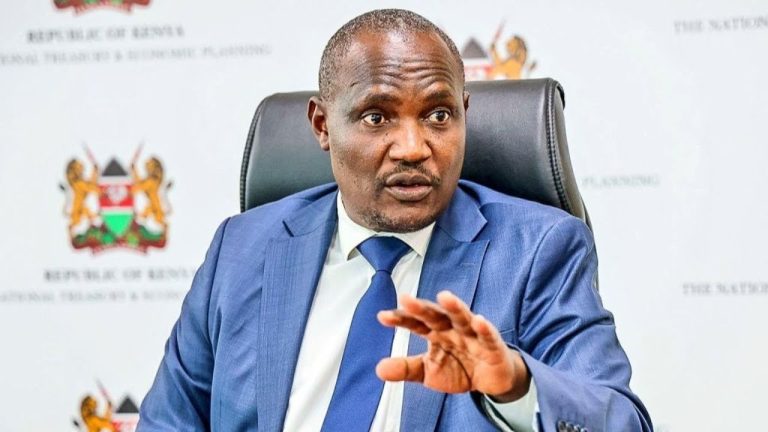
The Cabinet Secretary for National Treasury John Mbadi is plotting a series of tax cuts that will provide relief for Kenyans earning Sh50,000 and below. According to the proposals being fronted, the Mbadi tax cuts will give this category of earners cuts of between Sh731 and Sh2,127.

At the same time, the Mbadi tax cuts which shall be implemented under the Tax Laws (Amendment) Bill that is under preparation will increase the threshold of income that is not taxed to Sh30,000 from the current Sh25,000.

Those earning between Sh30,000 and Sh50,000 shall also benefit from lower taxation of 25 percent from the current rates that range between 30 percent and 35 percent.

“Anybody earning Sh30,000 and below in Kenya should not pay PAYE (Pay As You Earn). They should pay zero,” said CS Mbadi. “We are reducing the tax rate by 5 percent to 25 percent. We are trying to put some money in your pockets.”

According to the National Exchequer, currently, there are about 3,650,165 salaried Kenyans who are earning Sh30,000 and below while 1.36 million Kenyans are estimated to earn Sh50,000 and below.

Currently, the PAYE tax threshold is set at Sh24,000. These changes mean that a Kenyan who is earning Sh30,000 will take home an extra Sh731.25. Their net pay after statutory deductions will increase to around Sh26,925.

Those earning Sh35,000 will get an increase of Sh1,500 to take home Sh31,059.38. They have been paying Sh1,853.13 in PAYE and this will now reduce to Sh353.13.

Kenyans earning Sh50,000 will take home an extra Sh2,127.10. Their take home will come to around Sh41,156 per month after statutory deductions.

This comes as the World Bank pushes Kenya to exempt workers who earn less than Sh32,333 per month from paying the controversial housing tax and the Social Health Insurance fund (SHIF) to the Social Health Authority (SHA).

At the same time, the World Bank wants taxes for Kenyans earning Sh800,000 per month and above raised. Monthly salaries of between Sh32,334 and Sh166,667 would be taxed at a rate of 25 percent while the rate for Kenyans earning between Sh24,000 and Sh32,333 would be lowered to 15 percent from the current 25 percent.

Step-by-step guide to understanding Treasury bills, bonds in Kenya, and how to invest