Home Blog Page 120

Alliance Girls High School vs Karima Girls High School performance in KCSE 2025

Alliance Girls High School is currently classified as a C1 school – formerly known as nationa school. The school is an exclusive boarding school for girls. It is located in Kikuyu, Kiambu County, and was founded in 1948.

Karima Girls High School is also categorized as a C1 school. This school is located in Ndunyu Njeru, Nyandarua County. The school is an exclusive girls boarding school. This school was founded around 1969.

These two schools are ranked as some of the best performing schools in the country. With the results of the 2025 KCSE exams, we can now examine the Alliance Girls vs Karima Girls performance to see which of the two performed better than the other.

Alliance Girls High School

Alliance Girls had an exam entry of 541 students in 2025. This was an increase from the 403 students who had sat the 2024 exams. Out of these candidates, 58 girls at the school scored the highest grade of A Plain followed by 179 girls who managed to score the grade of A Minus.

There were 149 students who scored the grade of B Plus while 87 candidates scored the grade of B Plain. 43 students went home with the grade of B Minus while 13 students scored the grade of C Plus. In total, 529 students managed to score enough marks for direct entry into universities.

There were 8 students at the school who scored a grade of C Plain and one student who scored a grade of D Plus. There were no students who scored the grades of D Plain, D Minus, and E.

In total, Alliance managed a mean score of 10.0605 points which was equivalent to a B Plus.

Karima Girls High School

Karima had 493 candidates who sat the examination. Out of these candidates, 5 students scored the top grade of A Plain. 63 candidates scored the impressive grade of A Minus.

118 candidates scored the grade of B Plus while another 145 candidates took home the grade of B Plain.

The results from the school further show that there were 107 candidates who scored the grade of B Minus. Another 37 students scored a mean grade of C Plus while 14 students went home with C Plain.

Two candidates scored the grade of C Minus while the grade of D Plus was scored by two candidates only. There were no candidates at Karima Girls who scored the grades of D Plain, D Minus and E.

In total, Karima Girls High School recorded a mean score of 9.036511 and a transition to university of 96.35 percent.

Alliance High School vs Moi High Kabarak performance in 2025 KCSE exams

Versatile Jewellery announces recruitment of shop attendant

0

Versatile Jewellery Kenya has announced the recruitment of a shop attendant to assist in carrying out normal daily shop operations including attending to customers.

In a notice, the firm invited interested and qualified candidates to submit applications for consideration.

“We are looking for an organized, enthusiastic, mature and trustworthy individual to run our shop and attend to our customers,” the notice reads in part.

Interested applicants must have the ability to communicate confidently, attentively and clearly to all customers in person and on text.

They must also be neat and clean on daily basis and maintain integrity, confidentiality and professionalism while handling daily activities.

Other requirements include ability to use POS and keep records of stock and sales, coordinate deliveries and manage orders with attention to detail, and good time management.

Interested applicants are directed to send their CV and a video of previous work selling any product to 0739224368.

‘’Send your latest CV and a video submission of you selling a product of your choice to: 0739224368 and include references of your previous workplace,” the notice adds.

Applications must be submitted by Monday, 19th January 2026.

Also Read: AAR Hospital announces a job vacancy for Maintenance Technician

The Strategic Advantage: Why Future-Ready Companies Invest in Testing Innovation

0

In every industry, the gap between leaders and laggards is increasing day by day, and it’s not always because one company has better ideas or personnel. It is mainly because one company delivers ideas reliably, repeatedly, and quickly than the others. Today, software powers the operations, revenue, reputation, and, more importantly, the customer experience.  “Shipping” of products (physical or digital) has become a core competency that defines the success of companies. However, shipping a product at speed without breaking things is a paradox unless the company treats testing as a strategic capability and not just a checkbox.

Testing a product thoroughly and continuously is essential, as it determines whether the product will be well-received by customers or rejected. Testing innovation is what drives the future-ready companies to release frequently, scale confidently, and respond to market shifts without hesitation. Innovative testing helps companies reduce cost, manage complexity, and protect trust.

This article explores innovative testing, its meaning, benefits, and how it ensures software quality.

Testing: Transition From Cost Center to Growth Enabler

For decades, testing has been regarded as a necessary expense in the software development process, a critical yet unexciting aspect. It often competes with features, marketing, and new product bets when software development is planned. This view supports a misconception that quality is the output of testing. However, in reality, quality is the output of a system involving design choices, engineering practices, release processes, observability, and testing.

As software becomes the product’s nervous system, testing becomes its operating model. Future-ready companies investing in testing innovation aren’t just spending more on QA but buying:

  • Speed with confidence
  • Lower operational risk
  • Predictable delivery
  • Resilience in the face of change
  • A better customer experience

All these are strategic outcomes that compound over time.

What “Testing Innovation” Actually Means

Testing innovation is not a one-time transformation or a single tool. It’s a methodology that combines technology, process, and culture to make quality scalable.

Future-ready companies innovate across the following dimensions:

1. Shift-left and shift-right

Shift-left means validating or testing software earlier in the development process. Shift right means validating the software in production through monitoring, synthetic checks, and controlled rollouts. The best future-ready organizations prevent issues early and detect them quickly if they escape, achieving both.

2. Risk-based testing

Testing innovation prioritizes testing based on the risk associated with the feature. It contains prioritization models that focus effort where failure is costly, such as revenue flows, security boundaries, critical user paths, and integrations.

3. Smarter automation

An Automation that is maintainable and aligned with user behavior offers better test design, resilient locators, stable environments, and test data strategies. It also allows you to choose the right levels of automation, like unit, integration, contract, and end-to-end, based on the system. Prominent AI software testing tools, such as testRigor, provide smarter automation that aids in testing innovation in future-ready companies.

4. Testability as a product requirement

Testability is treated similarly to performance or accessibility in future-ready companies. They invest in instrumentation, feature flags, predictable APIs, stable identifiers, and an architecture that supports verification.

5. AI-augmented testing

Artificial Intelligence (AI) helps generate test cases, analyze failures, identify flaky patterns, and improve coverage based on usage data. AI-based testing is especially beneficial in large, fast-moving codebases.

6. Continuous quality

For organizations nowadays, quality is not a phase. It is a continuous process that is validated at every step, at commit time, at merge time, at staging, and in production. Continuous quality monitoring helps organizations keep track of the product and its performance even when it is deployed in production.

Strategic Advantages of Testing Innovation

Here are some of the benefits of testing innovation:

  • Accelerated Speed-to-Market: With AI-powered automated testing, testing cycles are reduced from days to mere hours. A few organizations also use “Agentic AI” to manage multi-step workflows independently, which helps with faster release cycles without human bottlenecks.
  • Cost Efficiency through Prevention: Moving testing and validation to the earliest design phases (Shift-Left testing) enables teams to catch defects when they are significantly cheaper to fix than post-release.
  • Brand Resilience and Trust: Brand reputation is protected through continuous testing. With sophisticated AI-driven cyber threats looming over products, continuous security and resilience testing is a necessity. Organizations that employ continuous testing gain a significant advantage in customer retention.
  • Scalability without Technical Debt: Advanced testing tools now feature self-healing scripts that automatically adapt to UI changes, reducing maintenance costs by up to 80%.
  • Reduced Uncertainty:  When testing is slow, brittle, hard to maintain, or disconnected from real business behavior, it becomes a source of uncertainty itself. Testing innovation reduces this uncertainty by keeping up with the pace of change and continuous monitoring.

Safaricom hosts flagship innovation day to power the future of enterprise

Key Testing Innovations for 2026

Future-ready organizations are prioritizing the following technologies at present:

  • AI-Native Quality Engineering: Companies are moving beyond simple automation to systems that predict failure points using historical data and usage patterns.
  • Intelligent Test Data Management: AI is being utilized to generate synthetic, privacy-compliant data that mirrors production environments without compromising sensitive user information, in accordance with regulations such as GDPR.
  • Continuous Performance Monitoring: The traditional pre-release load testing is shifted to “Shift-Right” strategies that monitor and optimize software performance in real-time within production environments.
  • Low-Code/No-Code Automation: Non-technical stakeholders to generate automated tests using natural language, democratizing quality across the entire organization.

Metrics to be Measured in Testing Innovation

Since testing innovation is strategic, its impact should show up in strategic metrics. Future-ready companies track quality using the following metrics:

  • Deployment frequency (can we ship or deploy the product often?)
  • Lead time for changes (how long it takes to conceptualize an idea to value?)
  • Change failure rate (how often do releases cause incidents?)
  • Mean time to recovery (MTTR) (how fast do we recover from failures?)
  • Escaped defects and severity (what reaches customers?)
  • Flaky test rate and test suite duration (is the system of test suites trustworthy?)
  • Customer-impact indicators like checkout success, crash rate, latency, and NPS

These metrics prove whether testing is accelerating the business or restraining it.

Practical Moves Toward Future-Ready Testing

A company doesn’t become future-ready only by purchasing a tool and declaring victory. The most effective strategies start small and scale.

Here are practical steps that work across industries:

  1. Map Critical User Journeys: Identify the critical flows that matter most, for example, revenue, onboarding, retention, and ensure they have robust, automated coverage.
  2. Reduce Flakiness Relentlessly: Track flaky tests and fix root causes like unstable environments, timing issues, fragile selectors, and nondeterministic data.
  3. Make Test Feedback Faster: Execute test suites in parallel, optimize setup/teardown, shift some checks earlier, and enforce quality gates that are meaningful, but not excessive.
  4. Invest in Test Data and Environments: Treat environment and test failures as product infrastructure and invest in them to reduce failures.
  5. Balance the Testing Pyramid: Try to attain a balance and avoid extremes in testing. Too much of something may cause problems. For example, too many unit tests can miss integration failures.
  6. Adopt Observability as Part of Quality: Use metrics to trace and analyze the testing progress. This will allow you to answer questions like “What changed?” or “Who is impacted?”
  7. Experiment with AI Responsibly: Use AI for test generation, failure triage, and coverage insights, while maintaining clear quality standards and human oversight.

The Bottom Line: Testing Innovation Is a Strategy for Resilience and Growth

Testing should not be viewed as a hurdle, but rather as a lever, especially for future-ready companies.

Testing innovation lays a foundation for speed and stability, a rare combination that becomes increasingly valuable as systems scale and markets evolve. It protects trust, lowers the cost of change, and enables faster learning.

Quality is not merely the absence of defects, but is the presence of confidence. And confidence, at scale, is engineered.

Investing in testing innovation is how companies engineer that confidence, so they can move faster today and stay adaptable tomorrow.


 

AAR Hospital announces a job vacancy for Maintenance Technician

0

AAR Hospital has announced an open job position for a Maintenance Technician.

In a notice, the hospital said it is seeking to recruit a qualified individual to carry out routine maintenance, minor repairs, and general upkeep of hospital facilities.

Interested applicants must have knowledge in carpentry, electrical work, plumbing, joinery and masonry.

Key qualifications include a certificate or trade qualification in Carpentry, Joinery, or related field and 2-3 years work experience in a construction-related field.

Qualified candidates are directed to submit their CV and application letter to: [email protected] by 19th January 2026.

Duties and Responsibilities

  • Carry out minor carpentry works including fabrication, electrical work, repair of doors, ceiling, cabinets, shelves, furniture and fittings.
  • Carry out joinery works such as fixing door frames, windows, skirting boards, and wooden structures.
  • Able to assist with various light maintenance such as hanging snapper frames, touch up painting, plumbing, masonry and metal/wooden surfaces.
  • Conduct minor building maintenance works as assigned.
  • Ensure proper use, handling, and maintenance of tools and equipment.
  • Follow safety procedures and maintain a clean and safe work environment.
  • Report major defects or maintenance issues beyond scope to the supervisor.
  • Respond promptly to maintenance requests and emergencies when required.
  • Any other duties that may be assigned from time to time

 Qualifications

  • Certificate or trade qualification in Carpentry, Joinery, or related field.
  • Minimum of 2–3 years relevant work experience in handyman, maintenance, or construction-related roles.
  • Hospital Experience is an added advantage

 Key Competencies – Skills/ Knowledge/ Aptitude

  • Proven experience in carpentry, joinery, or masonry works.
  • Ability to read measurements, drawings, and basic work instructions.
  • Knowledge of materials, tools, and safe work practices.
  • Good attention to detail and workmanship
  • Ability to work independently with minimal supervision
  • Physically fit and able to perform manual tasks.
  • High level of professional etiquette and decorum

Also Read: Mirema School announces job vacancies for teachers, accountants, and marketers

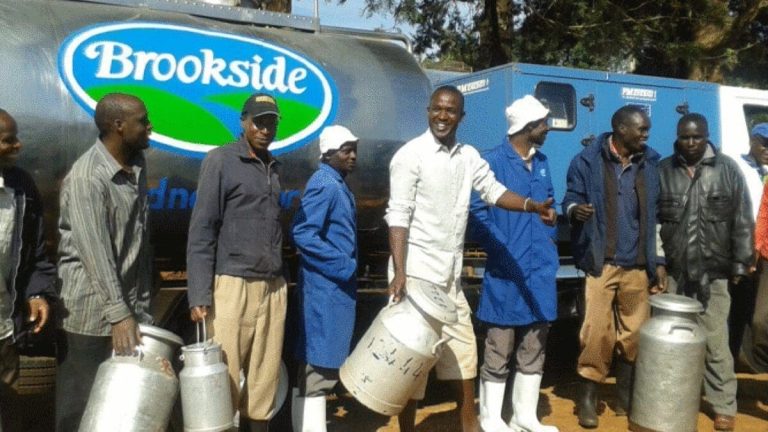
Requirements and how you can start supplying fresh milk to Brookside

0

Brookside Dairy Limited is one of the largest processors of milk in the country. The firm which boasts as East and Central Africa’s leader in milk and milk products is known for its high-quality and nutritious dairy products.

Some of its brands are Farm Fresh, Dairy Best, Dairy Fresh, Fruitness Yoghurt, and Plus probiotic Yoghurt.

The firm, which has a daily processing capacity of 1.5m litres works with thousands of farmers for supplies to meet local and foreign demand for its dairy products, while creating a ready market for the farmers.

How to partner with Brookside for milk supplies

Farmers wishing to partner with Brookside for milk supplies are invited to express interest by sending an SMS to 22323 or calling 0702967911.

Requests can also be made via [email protected]. Dairy farmers registered with Brookside earn various benefits, including access to regular market, regular payments, regular training, and farmers’ reward schemes.

However, to qualify to be a supplier, farmers must ensure their milk meets the required standards.

For instance, chilled milk must be at a temperature of between 3-6 degrees centigrade. All chilled milk supplied to the Company’s Ruiru-based factory fetches up to Sh42 per litre and up to Sh41 for warm milk, depending on volume.

Cooling centre prices range between Sh38 and Sh39 per litre for warm and chilled milk, respectively.

Acceptable Quality Parameters

  • Fresh Cow Milk
  • Free of any flavours and odours
  • Free of any impurities and physical dirt
  • pH between 6.6 and 6.7 maximum
  • Minimum butterfat content 3.7 percent
  • Low microbial count resazurin reducing dye test grade 5-6
  • Acidity 0.13%-0.14%
  • Free from antibiotics,preservatives or any additive
  • Density between 1.028 & 1.032 maximum & solids not fat not less than 8.5%
  • The milk shall be negative to alcohol and clots on boiling test
  • The milk shall be rejected if in the opinion of the grader, it is unfit for processing for whatever reason

In December last year, Brookside announced a cash reward payout of Sh257 million for individual farmers and dairy groups, for the supply of raw milk in the period between July 1, and November 30, 2025.

The payment was disbursed less than six months after the processor paid another Sh303 million in bonuses for milk supplied between December 1, 2024 and May 31, 2025.

Brookside’s general manager for milk procurement, Emmanuel Kabaki, said the payout aims to encourage farmers to grow volumes while mainstreaming clean milk production in the value chain.

Also Read: KALRO introduces new high-yielding cow to boost local milk production

Story of Lenana School and some of influential leaders it produced

0

Lenana School is one of the most popular national schools in Kenya, known for its remarkable academic performance and state-of-the-art learning facilities.

Founded in 1949 in Karen, Nairobi, Lenana School is the brainchild of colonial Governor Philip Mitchell, who had served as the Governor of Uganda, Fiji, and Kenya.

At the time, the school was known as the Duke of York and was reserved for white students. The institution boasted impressive facilities, including a golf course, rifle range, cricket oval, and swimming pool.

In the early 1960s, the school began to diversify, admitting its first black and Asian students. It was later in 1969 renamed Lenana School after Chief Laibon Lenana, a Maasai leader who collaborated with the British.

James Kamunge made history as the first Kenyan principal of the school initially heading an all-white teaching staff.

Kenyan billionaires who went to same high school with Uhuru Kenyatta

The school had a Combined Cadet Force training course of para-military standards, which included uniforms, guns, ammunition, an armoury, a parade ground with adjacent stores and offices, an obstacle course, and a shooting range.

The course was initiated during the colonial era amidst the Mau Mau uprising and continued until it was stopped by the government after the 1982 coup attempt.

The bell from HMS Duke of York is mounted on a bell shed in front of the school parade ground, between the chapel and the main hall.

A painting of Chief Lenana, created by student artist Sam Madoka, hangs next to the staircase leading to the second floor of the administration block.

Currently, the school has a student population of 2,000 with William Kemei as the current principal.

Lenana School boasts a distinguished alumni list who have excelled in various fields including politics, journalism, and business.

Notable alumni include Deputy President Kithure Kindiki, Nairobi Governor Jonson Sakaja, former ICT Cabinet Secretary Joe Mucheru, and the former chairman of the Independent Electoral and Boundaries Commission (IEBC) the late Wafula Chebukati.

Through the 1980s and into the 21st century, the national School has maintained strong academic performance, consistently ranking among the top 100 schools nationally in the Kenya Certificate of Secondary Education (KCSE) examinations.

Full list of Kenyan companies named best employers for 2026

0

Various Kenyan companies have earned the 2026 Top Employers Certification from the Top Employers Institute (TEI) for their contribution in shaping Africa’s workforce.

The companies are part of 2,500 organisations across 131 countries recognized for their commitment to building high-performing people practices, grounded in independent validation, data-driven insight and a clear focus on driving business performance, employee engagement and growth.

 “Achieving Top Employer status in 2026 is an extraordinary accomplishment that reflects excellence in individual countries, and crucially, sustained people practices across regions and worldwide. This achievement places these organisations among a select group of employers setting the international benchmark for people strategy. We are incredibly proud to continue our partnership with them as they inspire excellence across the global HR community,” Adrian Seligman, CEO, Top Employers Institute, remarked.

According to TEI, the Top Employers have shown resilience, adaptability, and a strong focus on future readiness, including investing in their people, fostering inclusive cultures, and building workplaces where employees can thrive.

“This year’s certified Top Employers have shown resilience, adaptability, and a strong focus on future readiness. In an environment shaped by technological advancement, changing workforce expectations, and global uncertainty, these organisations continue to invest in their people, foster inclusive cultures, and build workplaces where employees can thrive.”

Below are some of the Kenyan companies recognized as Top Employers in 2026

  1. Safaricom PLC
  2. Absa Bank
  3. Britam Kenya
  4. Coca-Cola Beverages
  5. BAT Kenya
  6. DHL
  7. Huawei Kenya
  8. Pernod Ricard Kenya
  9. I&M Bank

Also read: The Story of Kenya Nut Company and the coffee farmer who brought it into existence

Safaricom named Kenya’s top employer for 2026

0
Safaricom (NSE: SCOM) has been named Kenya’s No. 1 Employer and a Top Employer in Kenya and Africa for 2026 by the Top Employers Institute, a global authority that benchmarks organisations against international people-practice standards.
This marks the fifth consecutive year that Safaricom has received the certification, which assesses six key areas including people strategy, work environment, talent acquisition, learning, diversity, equity & inclusion, and wellbeing efforts.
“The award affirms that investing in our people is fundamental to delivering our strategy. Empowered teams enable us to innovate responsibly, serve customers better, and bring our vision of becoming Africa’s leading purpose-led technology company to life,” said Peter Ndegwa, Safaricom Group CEO.
In 2025, Safaricom refreshed its employer value proposition to reflect how employees are supported to connect their roles to business outcomes, build future-relevant skills, and progress in their careers. This is complemented by an enabling workplace culture as well as world-class benefits such as an employee mortgage scheme, comprehensive medical cover, and access to in-house facilities like on-site clinics and gyms, all designed to support long-term financial, physical and mental wellbeing.
Safaricom has also continued to receive independent recognition for its people and inclusion practices. In December 2025, the company received the Inclusive Employment & Workplace Award at the Gender Equality and Disability Inclusion Awards, recognising its progress in increasing the representation of women in leadership, achieving 3.9% representation of persons with disabilities across the workforce, and improving accessibility across products, services and workplaces.
Top Employers Institute CEO Adrian Seligman commented: “This certification reflects Safaricom’s dedication to building an outstanding workplace that enables sustained business performance. Their strong alignment between people strategy and organisational goals, combined with a commitment to continuous improvement, demonstrates the impact of their practices.”
In 2025, the Top Employers Programme certified nearly 2,500 organisations in 131 countries and regions, covering more than 14 million employees globally.

Security Guard from Gachie Wins Shs1M in Safaricom Shangwe @25 promotion

0
Geoffrey Kipkoech, a 49-year-old security guard from Gachie, is the latest KES 1 million winner in Safaricom’s ongoing nationwide Shangwe @25 promotion.
Kipkoech, a father of five who works at Rosslyn Estate in Nairobi, received the life changing news while attending a training session. After missing several calls, he was finally reached by Safaricom and informed of the win, news that left him shocked and overwhelmed.
“I have been a security guard for the past fifteen years, struggling to take care of my family on a modest income. This win is truly life changing for me and my family. I sincerely thank Safaricom for this wonderful gift. I will use the money to support my family, pay school fees for my children, and buy more dairy cows to grow my small dairy and tea farm back at home,” said Kipkoech.
Mr. Kipkoech became a winner after purchasing airtime through M-PESA. A regular user of the service, he relies on it for his daily transactions, making it an essential tool in managing his responsibilities and supporting his family.
Beyond his security role, Kipkoech is also a small-scale farmer. He keeps cattle in his village and owns a tea farm in Nandi, which helps supplement his family’s income.
He plans to invest part of his prize money in building rental houses in his hometown of Nandi to create a stable, long-term source of income for his family. He also intends to expand his dairy farming activities by purchasing additional cows to further strengthen his household’s livelihood.
Driven by gratitude and a strong desire to give back, Kipkoech has chosen to support Kipsiori Catholic Church in Nandi and to build a small house for a vulnerable family in his village as part of his community initiative. He also plans to donate chairs to the church to enhance comfort and support community development.
“With the community project, I want to support my local church in Nandi by purchasing chairs and also build a small house for a vulnerable family in my village,” said Kipkoech.
Since its launch, Shangwe @25 has been rewarding customers daily and weekly with cash prizes, data bundles, devices, and business support tools. Each week, more than 50,000 customers win KES 10,000, KES 50,000, or KES 100,000. Over the course of the promotion, more than five million customers are expected to win prizes worth KES 250 million, with 25 customers set to become millionaires by the end of the campaign.
The promotion also supports businesses of all sizes. Micro and small enterprises are rewarded with tuk-tuk pickups to enhance logistics such as stock transportation and deliveries, while selected businesses receive stock worth KES 250,000 to accelerate growth. Medium and large enterprises receive KES 500,000 to support corporate social responsibility (CSR) projects of their choice.
The Shangwe @25 campaign forms part of Safaricom’s 25th anniversary celebrations a nationwide initiative to thank customers, uplift communities, and celebrate 25 years of connection, innovation, and impact.
To access M-PESA services, dial *334#.

Username Properties announces well-paying marketing job; how to apply

0

Real Estate firm Username Properties Limited has announced a job opportunity for marketing professionals.

In an advertisement, the firm said it is seeking to recruit a marketing manager to assist the company in developing, implementing, and managing innovative marketing strategies that drive brand awareness, customer acquisition, retention, and revenue growth.

“The role requires expertise in digital marketing, customer engagement, data analysis and a deep understanding of emerging trends in the real estate industry,’’ the advertisement reads.

Among the key responsibilities are implementing the organization’s marketing strategies and projecting expected marketing volumes.

The job holder will also be responsible in managing the marketing team and providing leadership & direction of advertisement campaigns, as well as overseeing all communication, PR and promotional activities selected to support the company.

Requirements:        

Interested applicants must have:

  • Business or marketing-related degree or equivalent professional qualification.
  • Experience in all aspects of developing and managing marketing strategies.
  • Technical marketing skills.
  • Proven experience in customer and market research.
  • Relevant product and industry knowledge.
  • Digital marketing skills.
  • Experience with relevant software applications

Key Competencies

  • Very outgoing
  • Excellent written and verbal communication skills
  • Collaborative skills
  • Formal presentation skills
  • Organization and planning
  • Strategic and critical thinking skills
  • Data analysis and management
  • Problem analysis and problem-solving
  • Team leadership
  • Adaptability & Creativity
  • Judgment and decision-making

How to apply

Qualified candidates are urged to submit their applications via https://forms.gle/nCjsN75daJFYM1M49 by 15th February 2026.

Successful candidates will be entitled to a monthly basic salary of between Sh170,000 -Sh250,000, alongside other benefits.

Also Read: Nairobi expressway announces toll attendant jobs; how to apply