Home Blog Page 121

Username Properties announces well-paying marketing job; how to apply

0

Real Estate firm Username Properties Limited has announced a job opportunity for marketing professionals.

In an advertisement, the firm said it is seeking to recruit a marketing manager to assist the company in developing, implementing, and managing innovative marketing strategies that drive brand awareness, customer acquisition, retention, and revenue growth.

“The role requires expertise in digital marketing, customer engagement, data analysis and a deep understanding of emerging trends in the real estate industry,’’ the advertisement reads.

Among the key responsibilities are implementing the organization’s marketing strategies and projecting expected marketing volumes.

The job holder will also be responsible in managing the marketing team and providing leadership & direction of advertisement campaigns, as well as overseeing all communication, PR and promotional activities selected to support the company.

Requirements:        

Interested applicants must have:

  • Business or marketing-related degree or equivalent professional qualification.
  • Experience in all aspects of developing and managing marketing strategies.
  • Technical marketing skills.
  • Proven experience in customer and market research.
  • Relevant product and industry knowledge.
  • Digital marketing skills.
  • Experience with relevant software applications

Key Competencies

  • Very outgoing
  • Excellent written and verbal communication skills
  • Collaborative skills
  • Formal presentation skills
  • Organization and planning
  • Strategic and critical thinking skills
  • Data analysis and management
  • Problem analysis and problem-solving
  • Team leadership
  • Adaptability & Creativity
  • Judgment and decision-making

How to apply

Qualified candidates are urged to submit their applications via https://forms.gle/nCjsN75daJFYM1M49 by 15th February 2026.

Successful candidates will be entitled to a monthly basic salary of between Sh170,000 -Sh250,000, alongside other benefits.

Also Read: Nairobi expressway announces toll attendant jobs; how to apply

The Story of Kenya Nut Company and the coffee farmer who brought it into existence

0

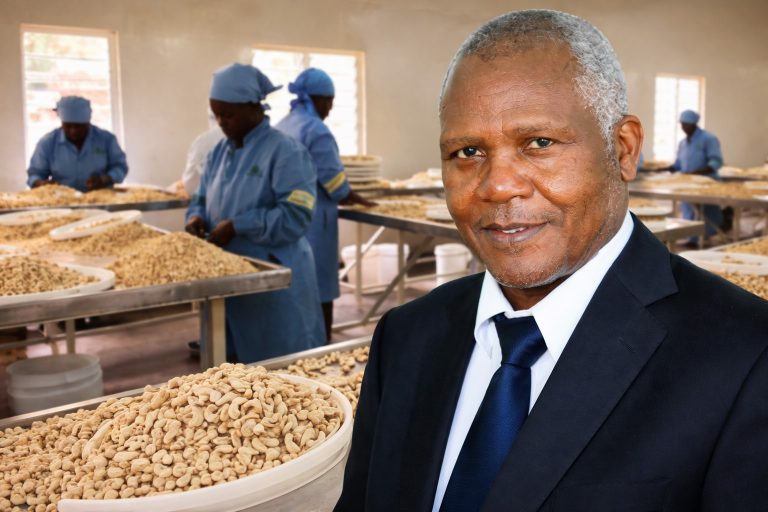
The Kenya Nut Company is one of the renowned agribusiness firms in the country, dealing with the production, processing, and sale of agricultural products with a primary focus on macadamia and cashew nuts.

The company processes and sells macadamia nuts to various international markets in Europe and North America.

Kenya Nut was established in 1974 in the Kenya highlands by one Pius Ngugi, a renowned Kenyan entrepreneur and coffee farmer.

The company was established at a time when coffee prices were low in the international market, prompting the government to encourage farmers to invest in macadamia nuts.

Being the most expensive nuts, Ngugi took up the challenge in 1972 and set up a macadamia plantation. While he anticipated to make a tidy sum from the venture, this did not happen due to a lack of market.

The businessman would later approach the government for support to save his investment, an idea that was welcomed. In 1974, the government in partnership with Japanese investors helped him set up a small processing company.

The company grew tremendously focusing on the production of quality macadamia and Cashew Nuts.

In the early 2000s, Kenya Nut entered a phase of diversification with the construction of two processing plants.

The company has over the years diversified its operations to include coffee, chocolates, and natural oils. Some of its popular brands include Leleshwa Wines, Out of Africa, and Nutfields.

With over 1,264 employees, the company operates seven farms on over 8,000 acres, with a complete production system from seedlings to ready-for-sale products and an international market.

Kenya Nut also secures supplies from over 30,000 small nut producers in the country, some of whom it supports with the best agricultural practices.

One of the company’s production highlights was in 2018, when it processed 25 percent of the national harvest and put on the market 2.5 percent of the world’s production of shelled macadamia nuts.

Kenya Nut Founder      

Kenya Nut was founded by Pius Ngugi, one of Kenya’s agribusiness tycoons. Born on March 8, 1944, in Kiambu County, Ngugi is known for his multi-million investments that span the agriculture, insurance, and real estate sectors.

Beyond Kenya Nut, he is also associated with Thika Coffee Mills, a major processor and exporter of specialty coffee.

He has also invested in the insurance sector through shares in Kenya Alliance Insurance and is a shareholder in Tatu City, a multi-billion-shilling real estate development.

His other ventures include sweet manufacturing, dairy farming, and automobile trading through Amazon Motors.

Also Read: Regulators back government’s partial sale of Safaricom stake

“Mr Donholm” – James Kerr Watson (1881–1955): Architect, Builder, and Pioneer of Nairobi’s Eastern Frontier

0

“Mr Donholm”, James Kerr Watson remains one of the lesser-known yet structurally significant figures in Nairobi’s colonial history. A Scottish-trained architect, contractor, and settler-farmer, Watson’s work bridged private enterprise and public infrastructure at a time when Nairobi was evolving from a railway depot into a colonial capital. His legacy is embedded in land development, transport networks, civic architecture, and agricultural innovation, particularly in what is today eastern Nairobi.

Early Life and Arrival in Colonial Kenya

Born in Ayrshire, Scotland, on 3rd October 1881, Watson was trained as an architect during a period when the profession emphasized permanence, functionality, and material discipline. He arrived in British East Africa around 1908, drawn by opportunity following the completion of the Uganda Railway and the designation of Nairobi as the colonial administrative centre. At the time, skilled professionals were scarce, and individuals with technical expertise were quickly absorbed into both private and government-supported development initiatives.

Soon after his arrival, Watson acquired 5,000 acres of land east of Nairobi, which he named Doonholm Farm, after a Scottish estate. The land lay well beyond the town’s limits and was largely undeveloped, positioning Watson as one of the earliest settlers on Nairobi’s eastern frontier.

Doonholm Farm and Architectural Firsts

Watson approached settlement with an unusually long-term perspective. He established a stone quarry on his land, providing building material not only for his own projects but also for the growing town. Using stone from this quarry, he constructed the first two-storey stone house in the area for his family at Doonholm, marking a departure from the temporary timber and iron structures common among early settlers.

He built the first St Andrew’s Church, the original MacKinnon Building, Whiteway Laidlaw & numerous other buildings in Nairobi. He built Kampala Post Office, Namirembe Cathedral, Uganda. Socially and culturally, Watson also stood out. He was among the first settlers in Kenya to own a piano, a detail that, while minor, illustrates the gradual transplantation of European domestic life into the colony and the transition from frontier existence to settled society.

Roads, Milk Supply, and Early Transport Infrastructure

One of Watson’s most consequential development initiatives was road construction. As a dairy farmer supplying milk to Nairobi, he faced persistent transport challenges. To address this, Watson sought permission from the colonial administration to construct a Road. Permission was granted, and he constructed Doonholm Road on his land to facilitate the efficient movement of milk and farm produce into the city.

Meet owners of Donholm’s multi-billion Greenspan Mall

This road, later renamed Jogoo Road, became one of Nairobi’s earliest engineered roads and a critical transport corridor linking the eastern hinterland to the city centre. Watson’s involvement extended beyond alignment and advocacy; he played a direct role in its design, construction, and early tarmacking. What began as a private logistical solution evolved into a public infrastructure that continues to serve Nairobi more than a century later.

Contractor, Quarry Owner, and Builder of Nairobi

Watson’s quarry positioned him as a key contractor during Nairobi’s formative construction phase. He participated in several landmark projects that helped define the city’s civic and commercial identity. Among these were the Cameo Cinema, originally known as Theatre Royal, one of Nairobi’s earliest entertainment venues; sections of Kenyatta Avenue, the city’s principal boulevard; and the Kenya National Archives, an institution central to Kenya’s administrative memory.

While some of these buildings were completed or modified after his most active years, Watson’s role in supplying materials and undertaking construction work places him among the builders who laid Nairobi’s physical foundations. His architectural training ensured that these projects emphasized durability and order, aligning with colonial objectives of permanence and authority.

Agricultural Innovation and the First Cattle Dip

Agriculture remained central to Watson’s enterprise. Doonholm Farm operated as a mixed-use estate with a strong emphasis on dairy and livestock. When his cattle began dying from East Coast Fever, a devastating tick-borne disease, Watson responded pragmatically by constructing what is widely regarded as the first cattle dip in Kenya.

This intervention was critical not only to saving his herd but also to introducing a disease-control mechanism that would later be adopted widely across colonial Kenya. In this respect, Doonholm functioned as a site of agricultural innovation, influencing livestock management practices beyond its boundaries.

Financial Strain and Land Disposals

By the 1940s, Watson had largely withdrawn from active construction and contracting to focus on farming. However, financial difficulties persisted. Rising operational costs, declining agricultural margins, and accumulated debt forced him to begin selling portions of Doonholm Farm incrementally.

A significant portion of the land was acquired by the colonial government for the construction of Nairobi’s airport, later Jomo Kenyatta International Airport (JKIA), at a compensation rate of £8 per acre. In retrospect, this valuation underscores the imbalance of power between settlers and the colonial state and the long-term economic consequences of compulsory acquisitions.

Succession, Sale, and Post-Independence Legacy

After Watson died in 1955, the farm passed to his son, Nick Watson. Nick shifted operations toward pig rearing and managed the remaining land until 1966, when he sold the final 1,554 acres to William Malu, the Member of Parliament for Machakos West (Kilungu), for £18,000. This transaction marked the end of the Watson family’s direct involvement with Doonholm.

Following independence, the name Doonholm was adopted for a new parliamentary constituency, initially represented by Mwai Kibaki, who would later become Kenya’s third President. Subsequent administrative changes saw the constituency renamed Bahati and later Makadara, while Doonholm Road was officially renamed Jogoo Road.

Conclusion: An Enduring Urban Footprint

James Kerr Watson was more than a settler-farmer. He was an architect of systems—roads, buildings, agricultural infrastructure, and supply chains—that underpinned Nairobi’s early growth. His initiatives, driven by practical necessity and professional discipline, produced enduring structures that shaped the city’s eastern expansion. Today, although little remains of Doonholm Farm itself, Watson’s imprint survives in Nairobi’s roads, neighbourhoods, and institutions, quietly anchoring the modern city to its colonial-era foundations.

Regulators back government’s partial sale of Safaricom stake

0

Regulators have welcomed the sale of part of the Government’s stake in Safaricom, saying that the price was competitive and the transaction is unlikely to negatively affect the market.

The Capital Markets Authority (CMA), Competition Authority (CAK), and the Communication Authority told MPs scrutinising the deal the divestiture was a good idea and would yield benefits for the minority shareholders in Safaricom.

Wycliffe Shamiah, the Chief Executive Officer of the CMA, said the KSh34 per share that Vodacom will pay for the 15 per cent stake is competitive and could only have been achieved through a block sale. He said CMA encourages negotiation between the parties in a transaction of this nature, and the shareholder-to-shareholder deal is sound.

“Divestiture of non-core commercial functions allows the Government to concentrate managerial capacity and public expenditure on priority service areas, including infrastructure, health and education,” said Mr Shamiah at the meeting with the joint committee.

CMA said the transaction is likely to appeal to local and foreign institutional investors, which will result in an increase in the value of the shares, which has been evident in the surge of the share price since the announcement of the agreement.

“This is because it signals confidence in Safaricom once a strong global telecommunication company such as Vodafone (which owns 65 per cent of Vodacom) increases its investment in the company,” said Mr Shamiah.

David Kemei, the Director General of the CAK, said the transaction would also be analysed at the regional level as it affects companies that operate in member states of the Common Market for East and Southern Africa (COMESA).

“It is the Authority’s preliminary view that the divestiture and the associated change in ownership will occur at the shareholder level and are not expected to result in any change to the existing market structure,” said Mr Kemei.

CA Director General David Mugonyi said Safaricom has already requested approval of the proposed change in shareholding and is going to get word from the regulator within a week.

“The preliminary position of the Authority is that the request for the proposed change in shareholding can be accommodated considering that: there is no local shareholding threshold requirement under policy, law or regulations, the transaction retains local equity participation through the government of Kenya and the transaction has been approved by the Cabinet,” said Mr Mugonyi.

Mbadi: Why Kenya is selling a 15 per cent stake in Safaricom to Vodacom

CA is one of the key regulators overseeing Safaricom, with the Central Bank of Kenya (CBK) also involved because of regulation of M-PESA, and the Competition Authority watching out for the market. CBK is among the institutions required to give the nod for the transaction to go ahead.

Vodafone Kenya Limited, the company that will hold the shares on behalf of Vodacom, has also applied to the CMA to be exempted from making a takeover of Safaricom by buying out minority shareholders. It has already complied with the requirement to make a public announcement of its acquisition of additional shares.

The company will also be required to secure approval from regulators in Ethiopia.

Types of Sports Bets Popular in Kenya

0

Sports betting in Kenya has established itself as a popular activity and is a big part of the sporting culture. There are multiple customers having the option of custom betting experiences and tailoring their own strategies. Knowing what betting markets are available is helpful in making an optimal decision and focusing one’s efforts on a specific goal. Get Linebet promo code as we analyze the types of sports bets in the industry and how they are captured in the betting websites in Kenya in this article.

Introduction to Sports Betting

Before analyzing the various types of bets, let us examine the general betting landscape in Kenya. In the local betting market, the number of online betting platforms is significant and highly competitive. These platforms offer their users a wide variety of tools and features that influence how differently each customer interacts with each event.

Types of Sports Bets Popular in Kenya

What is a Sports Bet?

Making an estimate of a sporting event’s outcome and placing a wager over it is what placing a sports bet means. Once a bettor picks an outcome of a sporting event that they are betting on, they get a reward based on the odds that the online sports betting company has determined. Sports betting odds are determined by the sports betting company based on how probable the outcome is, and how probable it is that the bettor will win the bet. Sports betting is focused on the outcome of a sporting event and can range in complexity. Many sports betting companies allow you to place multiple bets on a single event and bet on a single event for just about any outcome or occurrence. And of course, bets can be made on the outcome of one sporting event that will occur after a long time and is known to be complicated.

How Betting Works in Kenya

In Kenya, your sports betting takes place with licensed online betting businesses regulated by the Betting Control and Licensing Board (BCLB). Sports betting also legally involves the activities of oy in the activities of the punter. The activities that legally involve the punter and are set up sequentially to aid the punter in legally betting on different sports. The sequence of activities begins with the punter creating an account with the betting brand, depositing funds, and then selecting a match or market and a specific wager type. Betting companies provide platforms that allow punters to send requests to place bets via SMS.

Considering the market share, betting on football, particularly in the English Premier League, La Liga, Serie A, and local leagues, is the highest. Regardless, betting on basketball, rugby, cricket, tennis, and esports is increasing. Betting companies provide what are called fixed odds, meaning the odds are set at the time the bet is placed, and could be changed later for future bets.

Sportsbook Options and In-Play Betting

Kenyan sports betting platforms feature a plethora of available markets and wagering choices, including pre-match and in-play bets. Pre-match bets are placed on multiple games before the match commences, while real-time betting, or live betting on sports, allows participants to place bets while the game is actively being played. Other features are designed to aid betters, like live statistics, real-time odds, and live betting.

1. Moneyline Bet

Kenya is known for its basic and simple forms of betting. Moneyline betting is a favorite, and users tend to lean towards this betting form. Moneyline betting is relatively simple in concept, as it entails placing a bet that predicts the winner of a match.

Types of Sports Bets Popular in Kenya

How Moneyline Bets Work

The first thing that must be done when placing a match winner bet is deciding which of the teams or players competing in that event will emerge victorious. When looking at betting odds in decimal form – which is the default in Kenya – assume that one of the participants is labeled with odds at 2.00. This means that if a bet is placed at that amount and the event is won, the stake will be repaid and a profit equal to the stake will be added.

There are no other variables to consider when looking to make a match winner bet, and this is what makes placing one so easy and convenient, especially if you are new to betting. The preference for uncomplicated betting opportunities is one of the main reasons for the moneyline to be one of the most popular wagering choices.

Examples and Tips

Take the moneyline betting at a market that provides odds at 1.90 for Gor Mahia and at 3.20 for AFC Leopards as an example. When Gor Mahia competes against AFC Leopards, with a match winner bet in this market, you have to select the team that you think will be the winner at the market’s closing time. It is also possible to have a betting market that provides options for a draw.

Here are the main tips in this market.

  • Verifying the team form, injuries and head-to-head record is a basic underlying fact that you should never assume as a guess.
  • High odds betting is a no-go, especially if there is no reason behind that as a bet.
  • Only use moneyline bets in easy to predict scenarios, especially when it’s clear that one team has the upper hand.

2. Point Spread Bet

The goal of a point spread bet is for the betting company to even out what they think is a margin of difference, if any, when considering the strengths of each team that are competing against one another. The company is essentially creating what should be an evenly challenged betting duel out of a one-sided matchup.

Understanding the Point Spread

A bet involving a point spread means that there is a point gap that must be conquered. The favorite team is required to win by that point spread in order for the bet to win. The underdog team has a range of winning outcomes. The underdog team can win. Underdog winners of the bets will win the bets; the underdog loser can also win the bet. The point spread is to equalize the point range for bet inclusion.

Point Spread vs Handicap Bets

Point spread bets and handicaps take number of points from favored teams and add to underdog teams in order to balance the competition and bet market. Even so, handicap betting, especially as the Asian handicap, removes the option of a draw by means of offering split lines, which can be either +0.5, +1.0, and -1.5. For point spread betting that is usually in American sports, the spread is +7 or -7 and is along whole numbers.

In Kenya, particularly in the Kenya sports market, handicap bets are extremely common in college football betting. Knowing that there are differences in the bets helps a better choose the format for the bet that better suits that game.

3. Over/Under Bet (Total)

Betting on total bets, also called overs and unders, focus on estimating the total score of the game, points, or goals rather than simply betting on the winning team.

How Totals Are Calculated

If a football match has a predicted total of 2.5, that means a better can pick over, meaning that 3 or more goals need to be scored, or under 2.5, which means 2 goals or less need to be scored. If the person predicts over, they will win with 3 goals. If the person predicts under, they win with 2 goals or less.

Using Totals Strategically

Although a match winner may be difficult to predict, the total may be predicted strategically. Therefore, important strengths to consider are the overall offensive and defensive tilts of the two teams, the weather and recent goal averages. If they are considered, the match total can be predicted effectively. Total’s betting is common in football and basketball, making them one of the more versatile betting options in Kenya.

Types of Sports Bets Popular in Kenya

4. Parlay Bet

Multiple bets are combined into one ticket with a parlay bet. If one of the bets lose, the entire slip is lost.

Combining Multiple Bets

A parlay may include 2 or more selections, and because of this, the payout is higher than simply betting on each one individually. The payout is higher because the risk is higher.

Risks and Rewards of Parlay Bets

Promising high returns, parlays capture the attention of many bettors in Kenya. However, they also pose great risk. One mistake in your selection, and you lose the whole bet. When using parlays, remember to:

  • Limit the number of your selections.
  • Merge your bets based on thoughtful research.
  • Stay away from selections that won’t add value to the bet as they will add risk without increasing potential winnings.

5. Teaser Bet

Teaser bets can be found mostly in basketball and American football, as well as some other sports, depending on the betting websites and apps.

Adjusting the Point Spread

Teasers allow bettors to individually increase or decrease the point spread. For example, if one team is favored at -7, with a teaser you can change it up to -3 or -2. Less risk is involved with this, but it will positively impact your chances of winning. This, however, will result in a lower payout.

Difference Between Teasers and Parlays

Both can be used to make multiple selections at the same time, but all selections must be correct. With parlays, you are not allowed to change the odds. This is not the case with teasers, as you can change the point spread. This makes parlays extremely high risk for extremely high payouts, while teasers are simply lower risk for lower payouts.

6. Prop Bet (Proposition Bet)

Also known as proposition bets, prop bets revolve around certain events that can occur during the game rather than the outcome.

Common Prop Bets

Things like these are examples of novelty bets:

  • Number of corner kicks.
  • Will a certain player score a goal?
  • Will a certain match include a penalty?
  • Assists and rebounds.

Prop Bet vs Standard Bet

A standard bet is when you have to predict just the match result, total score, or spread, while a novelty bet would have you focus on individual elements of the game. Because novelty bets are more unpredictable, they’re used more by the experienced who know how deep to go in researching player performance.

7. Futures Bet

A Futures bet would be the result of a long-term event. This type would be the most ideal for someone who closely follows certain sports seasons or tournaments.

Placing Long-Term Bets

Futures could involve predicting:

  • Who the league champion will be.
  • Who the tournament winner will be.
  • Who will win certain seasonal awards (e.g. top scorer).

This betting market is placed significantly earlier than expected, sometimes months in advance, before the result is known.

Popular Futures in Sports

In Kenya, a fan of sports would enjoy predicting the English Premier League champion, UEFA Champions League winner, and AFCON outcomes. Because these bets take time to conclude, they are particularly suited for bets with competitive odds.

8. Live / In-Play Betting

In live betting, a player is allowed to place a bet during the course of a match.

Types of Sports Bets Popular in Kenya

Advantages of Live Betting

The main pro of live betting is being able to react to the live events unfolding before your eyes and adjusting your strategy accordingly. With live betting, a bettor is able to see how the teams are performing before making the decision to place a bet.

Tips for Successful In-Play Bets

The best way to execute in-game betting is:

  • Track the match live or utilize betting platforms that provide live updates.
  • Skip the emotional betting and put your money down only when the stats justify it.
  • Look for the moments when they still have a fighting chance, but the odds have started to shift in the house’s favor.

9. Round Robin Bet

A round-robin bet allows a player to construct multiple parlays from a selection pool.

How Round Robin Works

Example of Round Robin. \n If, for instance, a bettor picks three teams, a round-robin bet will automatically create three different two-leg parlays. This allows for way more ways of winning as not all the picks need to be correct to bag some returns.

Strategies for Round Robin Betting

Round robins are perfect when the picks are good, but not a slam dunk to win. These provide a great balance between risk and reward. To do it effectively, make sure to only select a handful of teams or picks to keep the cost down. Use round robins when the matches are likely to be unpredictable.

10. Single Bet

A single bet is the easiest bet type you can do, as it involves only one selection.

How Single Bets Work

When a prediction is successful, the bettor gains a profit depending on the odds. If the prediction is inaccurate, the stake gets lost. Popularity increases due to being easy to manage.

When to Use a Single Bet

Having a lot of confidence in one prediction is the ideal case for single bets. Single bets also favor beginners to the betting scene who want a simpler, less complicated process, as they won’t have to worry about coordinating multiple different conditions.

How Education Enhances Responsible Betting Culture

Differences Between Bet Types

Having the most fundamental understanding of the sports betting options is essential in ensuring they choose the best option suited to their betting strategy. This true especially when a bet is a wager that may depend on a selection to win or whether a team must win or lose based on the final score or margin of victory on the playing field. Let’s learn the differences in bet types below:

Key Factors to Consider

The key factors to consider are basically everything about the bet in accordance with the sport being bet on. This includes the sum of bets needed, the complexity of the market and whether a bet is long-term or based on in-game events, such as predicting which team will win, whether a team will win outright, the expected type of wager, or even how a team to win performs in college basketball or other sports that depend heavily on the final score and potential payout.

Risk Levels and Payouts

There’s is no doubt a fundamental difference in all types of bets and their risk and payout in relation to each other. The single and match winner bets have low risk & payouts, anything other than that would have high risk & high payouts like parlays and round robins. Bet types like prop/future have their risks and payouts tied to very specific conditions, making it more of a ‘specialized’ betting market where the bettor must consider if the team will win, how they might win the game, or how the margin of victory affects the potential payout of that type of wager.

Conclusion

Sports betting in Kenya has several types of bets and each one has varying features and risks involved. Knowing the bets available as well as the sports data helps improve decision-making, whether one likes simple plays such as singles and moneylines or complex ones such as parlays and teasers. Knowing each category and its mechanics helps in forming strategies, managing expectations, and betting responsibly.

FAQ

Which Bet Type is Best for Beginners?

Single and moneyline bets are best for beginners as they are the simplest form of bets and they only require one selection and are easier to grasp than parlays and props.

Can You Combine Different Bet Types?

Some operators combine common betting market and different types of bets in parlays or round robins. However, there are some markets where mixing is not allowed.

How Does Live Betting Differ from Standard Bets?

Standard bets are placed before the game begins while live betting takes place during the match and the odds are constantly updated.

What Are the Risks of Parlay and Round Robin Bets?

Parlays have a high-risk factor because one selection can ruin the whole bet. Round robins mitigate this risk to an extent by having multiple combinations, but they are more expensive to place.


Maranda High School vs Kagumo High School KCSE 2025 performance

Maranda High School and Kagumo High School were ranked as among the top schools in the country that produced an impressive performance in the 2025 KCSE exams. The two schools are categorized under the C1 cluster – which was formally popularly known as national schools.

Kagumo High School is located in Kiganjo, Nyeri County while Maranda High School is located in Siaya County. With the results for the 2025 KCSE out, we looked at how each school performed and how the Maranda High vs Kagumo High performances compared:

Maranda High

In2025, Maranda had 566 students who sat for the examinations. Out of these candidates, 101 students managed the highest score of A Plain while 184 students managed to score the impressive grade of A Minus.

At the same time, 124 students who were enrolled at Maranda managed to get a mean grade of B Plus with another 66 students scoring a mean grade of B Plain. The school had 49 candidates who scored B Minus.

There were 33 candidates who scored the mean grade of C Plus, putting the total number of students who qualified for direct university slots at 557 students.

6 candidates at Maranda went home with the mean grade of C Plain while 4 students scored the mean grade of C Minus. There were no students who scored the grades of D Plus, D Plain, D Minus or E at Maranda.

In total, the school had a mean grade of 10.2 and a university transition rate of 98.24 percent.

Kagumo High

At Kagumo, there were 514 students who sat for the 2025 KCSE examinations. Out of these candidates, 75 students managed the highest score of A Plain while 149 students managed to get the impressive grade of A Minus.

Kagumo High had 111 students who took home the grade of B Plus while another 81 students managed to get the grade of B Plain.

There were 63 students who scored the mean grade of B Minus while 22 students scored the mean grade of C Plus. In total, the number of students at Kagumo who managed to get direct transition to university was 501.

There were 11 students who scored the mean grade of C Plain and 2 students who scored the mean grade of C Minus. There were no students who scored the grades of D Plus, D Plain, D Minus or E at Kagumo. In total, Kagumo managed a mean score of B Plus with 9.9455 points.

Alliance High School vs Moi High Kabarak performance in 2025 KCSE exams

Samburu, Marsabit, Laikipia, Isiolo youth get Sh103.9m Nyota start-up capital

0

President William Ruto has launched the NYOTA Project Business Start-Up Capital disbursement, injecting Sh104 million to support youth-led businesses in Samburu, Isiolo, Laikipia, and Marsabit counties.

Today’s disbursement will benefit 4,159 young entrepreneurs drawn from the 4 counties, each receiving Sh25,000 to start or grow their businesses. Sh22,000 of the grant will be deposited directly into Pochi La Biashara to support business operations, while Sh3,000 will be saved under the Haba Na Haba savings account with the National Social Security Fund (NSSF).

Speaking during the disbursement function, President Ruto described the NYOTA Project as a strategic intervention aimed at leveraging Micro, Small and Medium Enterprises (MSMEs to accelerate Kenya’s economic development. He emphasized the central role of young people in the country’s transformation, stating, “The talent, energy, and expertise of our youth will drive Kenya into a first-world economy.”

The President further noted that, under the NYOTA Project, the Government will train 600,000 young men and women on access to government procurement opportunities, enabling them to competitively participate in tenders at both national and county government levels.

Government announces second disbursement of NYOTA funds

Deputy President Kithure Kindiki affirmed that Kenyan youth remain the country’s greatest national resource, noting that the NYOTA Project is strategically aligned with the Bottom-Up Economic Transformation Agenda (BETA) and is designed to unlock opportunities for youth-led enterprises across the country.

Samburu, Marsabit, Laikipia, Isiolo youth get Sh103.9m Nyota start-up capital
One of the beneficiaries all smiles after receiving a confirmation message during the disbursement of the NYOTA Project Business Start-Up Capital.

Principal Secretary, State Department for MSME Development, Susan Mangeni, applauded the youth for stepping forward to participate in nation-building through entrepreneurship. She noted that the beneficiaries are now better equipped through business skills training, access to start-up capital, and structured mentorship to grow sustainable enterprises.

Governors present from Laikipia, Marsabit, and Isiolo counties pledged their support to NYOTA beneficiaries through a range of county-level interventions, including business license waivers, additional training through county-operated TVET institutions, waivers on livestock movement permits, and continuous business development support.

Proto Energy and OLA Energy partner to roll out automotive LPG in Kenya

0

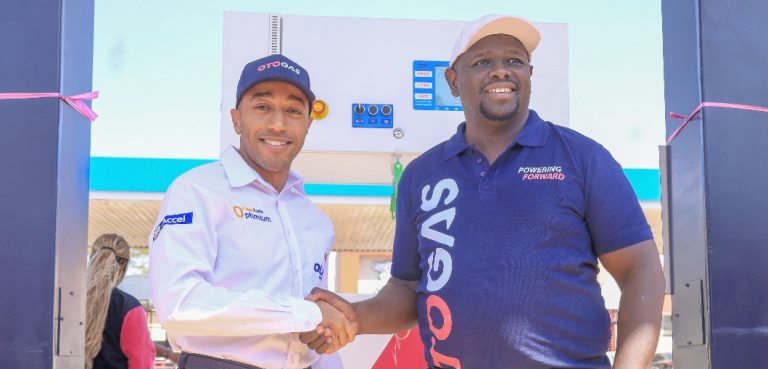
Proto Energy, through its OTO Gas brand, has entered into a strategic partnership with OLA Energy to introduce automotive Liquefied Petroleum Gas (LPG) dispensing pumps at OLA petrol station in Nairobi. The launch marks the first phase of a planned multi-site rollout that will expand access to cleaner, more affordable automotive fuel solutions across Kenya.

The partnership leverages OLA Energy’s established fuel retail infrastructure and customer trust to accelerate the adoption of LPG as a viable alternative to petrol and diesel, particularly for vehicles converted to dual-fuel systems. These systems allow motorists to switch seamlessly between LPG and conventional fuel, offering flexibility, cost savings, and lower emissions without compromising vehicle performance.

Globally, LPG is already a proven automotive fuel, with more than 27 million vehicles running on Autogas and over 70,000 refueling stations in operation worldwide. Studies show that LPG produces up to 15–20% lower CO₂ emissions than petrol, while significantly reducing particulate matter compared to diesel. In Kenya, where transport contributes an estimated 40–45% of urban air pollution, cleaner fuel alternatives are increasingly critical to sustainable urban mobility.

Speaking at the launch, Joel Kamau, Managing Director of Proto Energy, said the partnership represents a major step forward in mainstreaming automotive LPG in Kenya.

“This partnership with OLA Energy allows us to take OTO Gas closer to the everyday motorist by integrating LPG into a trusted retail environment,” said Kamau. “Our goal has always been to make cleaner, more affordable energy solutions practical and accessible, and this launch demonstrates that LPG is no longer a niche option but a viable, scalable fuel for Kenya’s mobility needs.”

OLA Energy to Integrate Renewable Energy to Reduce Fuel Consumption

Kamau added that the initiative aligns closely with national policy priorities.

“The Kenyan government has set a target to increase LPG penetration to 70% by 2028 under the National LPG Growth Strategy. At Proto Energy, we are fully aligned with this vision. By investing in infrastructure and partnerships like this one, we are helping turn policy ambition into on-the-ground solutions that reduce emissions, lower costs, and support economic productivity,” he said.

For OLA Energy, the collaboration reinforces its strategy to evolve beyond traditional fuels and support the country’s transition to cleaner energy options.

“This partnership with Proto Energy reflects OLA Energy’s commitment to innovation and sustainability within the energy sector,” said Mohamed Elhoderi, Managing Director of OLA Energy. “By hosting LPG dispensing at our petrol stations, we are expanding the choices available to our customers while maintaining the quality, safety, and reliability they expect from the OLA brand.”

Mohamed noted that co-locating LPG pumps within existing stations creates efficiencies for both consumers and operators.

“Leveraging our existing network allows us to introduce cleaner fuel solutions without requiring entirely new infrastructure. This model is commercially sound, scalable, and aligned with the future of energy retail in Kenya,” he said.

Kenya already has a strong foundation for LPG growth, with approximately 24–31% of households using LPG as their primary cooking fuel. This widespread familiarity with LPG, supported by an established regulatory framework, provides a solid base for expanding its use into the transport sector. The OTO Gas–OLA Energy partnership builds on this trust while addressing the country’s need for affordable and lower-emission mobility solutions.

The Buruburu launch is the first of several planned LPG pump installations under the partnership, with both companies indicating intentions to scale the model across additional OLA Energy stations. Beyond private motorists, the initiative is expected to attract interest from fleet operators, logistics companies, and ride-hailing platforms seeking to manage fuel costs and reduce environmental impact.

As Kenya balances economic growth with sustainability imperatives, the collaboration between Proto Energy and OLA Energy positions automotive LPG as a practical transition fuel- one that delivers immediate cost benefits while contributing to cleaner cities and a more resilient energy future.


Mirema School announces job vacancies for teachers, accountants, and marketers

0

The Mirema School has announced the recruitment of various professionals to fill open positions across its teaching and administrative departments.

According to its recruitment portal, the institution is seeking to recruit teachers, a graphic designer, a videographer, an accountant, and a male boarding assistant.

The Roysambu-based school further listed requirements for each position. They include:

  1. Graphic Designer & Videographer – Marketing Department

Qualified candidates will be responsible for creating visually compelling designs, capturing high-quality video content, and ensuring brand consistency across all media platforms.

The successful candidate will work closely with the Marketing Coordinator to produce content that promotes the school’s values, culture, and programs.

Requirements / Qualifications

  • Diploma/Degree in Graphic Design, Film Production, Media, or a related field.
  • Proven experience in graphic design and videography (portfolio required).
  • Proficiency in design software (e.g., Adobe Creative Suite, Canva) and video editing tools (e.g., Adobe Premiere Pro, Final Cut Pro).
  • Strong eye for detail, creativity, and visual storytelling.
  • Good understanding of social media content trends and best practices.
  • Excellent communication and interpersonal skills.
  • Ability to work under tight deadlines and manage multiple projects.
  • Valid Certificate of Good Conduct
  1. Accounts Assistant

The job holder will support essential financial and accounting operations, ranging from daily bookkeeping to budget preparation and facilitating audits.

Requirements / Qualifications

  • Bachelor’s degree in Finance, Commerce, or related field.
  • Must have completed CPA Part 2 (or equivalent professional accounting qualification).
  • Minimum of 2 years of relevant accounting experience.
  • Proficiency in QuickBooks, Sage, or similar accounting software.
  • Valid Certificate of Good Conduct.
  1. Junior School Teacher – Creative Arts

The job holder will be responsible for designing and delivering engaging lessons for learners aged 6-11 that align with the curriculum while making room for exploration, fun, and emotional development.

Requirements / Qualifications

  • Bachelor’s Degree or Diploma in Secondary Teacher Education (with subject specialization in Art, Music, or Drama)
  • 2+ years of teaching experience in a junior or primary school setting
  • Registered with TSC (Teachers Service Commission)
  • Valid Certificate of Good Conduct
  1. Teacher – Mathematics & French

The ideal candidate will bring both numerical precision and linguistic flair to the classroom, inspiring students to excel in these two diverse but complementary subjects.

Requirements / Qualifications

  • Bachelor’s Degree or Diploma in Secondary Teacher Education (specialization in Mathematics & French)
  • 2+ years teaching experience in a secondary or junior secondary school setting
  • TSC Registration (Teachers Service Commission)
  • Valid Certificate of Good Conduct
  1. Assistant Head Of Department – Boarding (Male)

The job holder will support the Head of Boarding in managing the daily operations, discipline, and overall well-being of boarders.

Requirements / Qualifications

  • Diploma/Certificate in Counselling, Teaching, Nursing, or related field
  • Additional Counselling qualification is required
  • Minimum 3 years relevant experience in a boarding or student welfare role
  • Valid Certificate of Good Conduct
  1. Kindergarten Teacher

The ideal candidate will inspire curiosity, creativity, and confidence in young learners by using play-based and interactive teaching methods.

Requirements / Qualifications

  • Diploma in Early Childhood Development Education (ECDE)
  • 2+ years relevant teaching experience
  • TSC Registration
  • Valid Certificate of Good Conduct

How To Apply

Interested and qualified candidates are urged to send their CV and Cover Letter to:[email protected] with the job title as the subject.

Applications will be reviewed on a rolling basis and only shortlisted candidates will be contacted.

“Mirema School is an equal opportunity employer committed to excellence in education and the holistic well-being of our learners. We welcome applications from talented, passionate, and values-driven professionals who share our vision of nurturing and empowering the next generation,” the school states.

Also Read: Open University announces mass hiring; How to apply

Open University announces mass hiring; How to apply

0

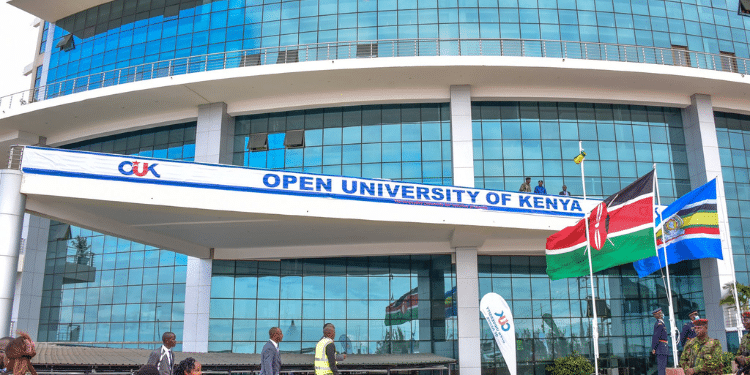
The Open University of Kenya (OUK) has announced 62 job vacancies across its education and administrative departments.

In a notice on Tuesday, January 13, OUK invited qualified candidates to apply for the positions by February 2, 2026.

Interested candidates must submit an application letter, a detailed Curriculum Vitae indicating academic qualifications, professional experience, and academic leadership.

The applications should be addressed to: The Vice-Chancellor, Open University of Kenya, P.O. Box 2440-00606, Nairobi, Kenya. and must be submitted online through the link provided on the University website: https://ouk.ac.ke/careers.

Candidates must also provide valid email addresses, telephone contacts, copies of certificates, National ID, and other relevant documents.

Applicants with degrees from foreign Universities must attach a letter of recognition from the Commission for University Education (CUE).

The advertised positions include:

  1. Deputy Director, Teaching and Learning
  2. Senior Lecturer, Computer Science
  3. Lecturer, Computer Science
  4. Tutorial Fellow, Computer Science
  5. Research Assistant, Computer Science
  6. Lecturer, Mathematics
  7. Lecturer, Statistics
  8. Tutorial Fellow, Mathematics/Statistics
  9. Lecturer, Community Health Nursing
  10. Tutorial Fellow, Midwifery
  11. Lecturer, Agricultural Economics
  12. Tutorial Fellow, General Agriculture
  13. Lecturers, Accounting and Human Resource Management
  14. Tutorial Fellows, Finance, Supply Chain & Logistics Management, Project Management.
  15. Lecturers, Kiswahili, English, and Education Psychology
  16. Tutorial Fellow, Technology Education (Power Mechanics)
  17. Research Assistant, Education-English Literature
  18. Principal ICT Officer
  19. Senior ICT Officer, Network Security & Infrastructure
  20. Senior ICT Officer, Research Assistant (EdTech & AI Focus)
  21. Senior ICT Officer, Full Stack Developer
  22. ICT Officer, Learner Support & Learning Operations (Curators)
  23. ICT Officer, Multimedia Designer (UI/UX & Digital Media)
  24. ICT Officer, Full Stack Developer
  25. Systems Librarian Officer II
  26. Senior Audit Assistant I
  27. Deputy Director, Human Resource Management
  28. Senior Procurement Officer
  29. Senior Procurement Assistant II
  30. Senior Accountant
  31. Assistant Director, Legal Services
  32. Senior Assistant Registrar
  33. Administration Officer II
  34. Accounts Assistant II
  35. Driver I
  36. Clerical Officer I & II

Also Read: Nairobi expressway announces toll attendant jobs; how to apply