Home Blog Page 119

Mezza Kenya announces mass hiring of waiters, chefs, baristas; how to apply

0

Mezza Kenya has announced mass hiring of individuals passionate about food and food service.

In a notice, the hospitality firm said it is seeking to hire chefs, waiters & waitresses, kitchen stewards, baristas, a barman, and a branch Manager.

Interested applicants are urged to send their CVs to [email protected].

Mezza, known for its Shawarma, burgers and sandwiches has four branches in Kilimani (Rose Avenue), Westlands (Manohar Centre, Mpaka Road), Parklands (Transit Hotel), and Lavington (M-Square Mall).

Hair Model Casting Call

At the same time, Karim Salon and Spa has also announced a job opportunity for hair model. Interested applicants must be aged between 27-40 years old.

They must also have a full hairline, as well as be confident and comfortable in front of the camera.

Other requirements include professionalism and reliability, as well as the ability to adapt to various poses and a flexible schedule.

Interested candidates are urged to send their pictures to 0717656131.

Open jobs at Mr. Insurance

Mr. Insurance has announced open position for Claim and Underwriting Analyst. The job holder will be responsible for coordinating the placement and servicing of insurance policies while managing the entire claims lifecycle on behalf of the client.

Interested applicants must have a Bachelor’s degree in insurance, commerce, finance or a related business field, and at least two years working experience in insurance environment.

Experience working with Birthmark system is an added advantage. Interested and qualified candidates are urged to send their CV and Cover Letter to [email protected] by 23rd January 2026.

Also Read: Username Properties announces well-paying marketing job; how to apply

Why Kenya Airways’ recovery needs facts, not aviation folklore

0

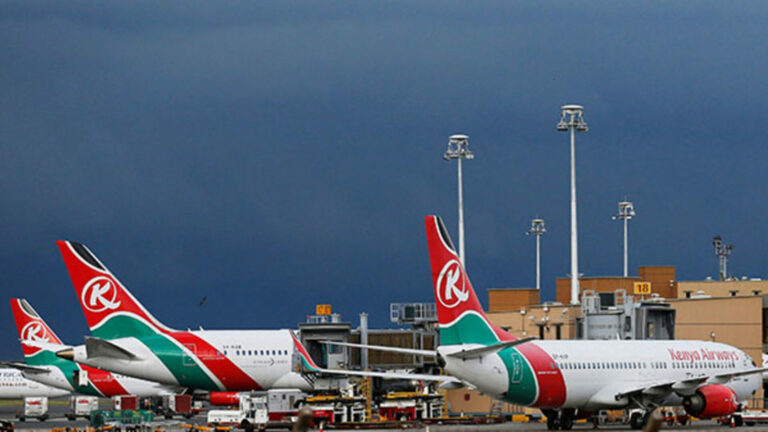
In times of crisis, national institutions like Kenya Airways (KQ) attract no shortage of opinions—many well-meaning, some emotional, and others dangerously detached from fact. Healthy debate is not only welcome; it is necessary. But when commentary is framed as expert analysis while resting on half-truths and misrepresentations, it risks misleading the public and undermining a fragile recovery.

A recent article by a former pilot purporting to diagnose how “KQ’s fortunes sank” and proposing a rescue plan fits squarely into this category. While the intention may have been noble, the arguments presented collapse under basic scrutiny. Aviation is a highly regulated, capital-intensive, and globally interconnected industry. Any serious analysis must therefore be grounded in industry realities, not nostalgia or conjecture.

First, the portrayal of Kenya Airways’ regulatory fine by COMESA as an unprecedented African failure is misleading. Airlines across the world—from Europe to North America and Africa—are routinely fined by regulators for competition or consumer-rights breaches. Such penalties are enforcement tools, not unique markers of institutional decay. To single out KQ as exceptional in this regard betrays either selective analysis or a misunderstanding of global aviation governance.

Equally flawed is the claim that KQ’s fleet restructuring signals strategic confusion or abandonment of long-haul ambition. In truth, fleet resizing and lease renegotiations were survival measures adopted by virtually every airline during and after the COVID-19 pandemic. Kenya Airways still operates Boeing 787-8 Dreamliners as the backbone of its long-haul network and is in the process of restoring grounded aircraft affected by global engine-part shortages—a problem that has crippled airlines worldwide, not just KQ.

Assertions that the airline lacks cargo capacity are demonstrably false. Cargo has, in fact, been one of Kenya Airways’ brighter spots. Freight and mail revenues have grown significantly, supported by the introduction of dedicated freighter aircraft and increased tonnage. In a period when passenger demand was volatile, cargo provided much-needed revenue stability—hardly the profile of an airline “without cargo capability.”

Some of the proposals advanced, such as transforming KQ into a vast aviation-industrial hub through partnerships with American manufacturing giants, sound ambitious but are
strategically unrealistic. Airlines are not industrial conglomerates. Their margins are thin, their capital requirements enormous, and their focus necessarily narrow. Successful diversification in aviation happens close to the core—cargo, maintenance, training—not through speculative industrial overreach.

The argument that KQ must own simulators for every aircraft type and build massive new cargo centres similarly ignores economic reality. Full-flight simulators cost billions of shillings and only make sense with consistently high utilization. Kenya Airways already operates simulators and maintenance facilities where it is economically viable, while outsourcing the rest—standard global practice. Building redundant infrastructure is not a strategy; it is a waste.

Dissecting the falsehoods surrounding Kenya Airways (Part 1)

Perhaps most concerning is the tendency to conflate governance with sectoral representation.A board is not meant to be a microcosm of tourism, horticulture, or aviation operations. Its mandate is fiduciary oversight, risk management, and strategic direction. Operational expertise resides in management, supported by advisors. To suggest otherwise is to misunderstand basic principles of corporate governance.

Claims that KQ has exited the North American market are also inaccurate. The airline has
expanded, not retreated, increasing frequencies on its New York route—one of its most strategically important intercontinental links. Financial engineering tools such as sale-and-
leaseback arrangements should not be confused with market withdrawal.

Even more misleading is the presentation of a non-binding letter of intent in the emerging air mobility space as a multi-billion-shilling investment already incurred. Letters of intent secure future options; they are not capital expenditures. Treating them as such inflates figures and distorts financial reality.

Finally, comparisons between Kenya Airways and global giants like Delta Air Lines ignore scale, balance-sheet strength, and market context. Delta’s fleet decisions cannot be transplanted wholesale onto a smaller African carrier navigating legacy debt and post-pandemic recovery. Such analogies may sound compelling, but they add more heat than light.

Kenya Airways is not without its challenges. Legacy debt, historical missteps, and external
shocks have left deep scars. But the airline has also recorded operational improvements,
stabilized key routes, and strengthened cargo performance. Constructive criticism must
acknowledge both sides of this ledger.

National carriers matter, not as symbols of blind patriotism, but as strategic economic assets. Their recovery deserves rigorous analysis grounded in fact, not the seductive simplicity of aviation folklore dressed up as expertise. Kenya Airways does not need saviors armed with speculation. It needs informed debate, disciplined execution, and patience grounded in reality.

Investors rethink banks as real estate gains appeal

0

In an era of rising inflation, volatile currencies, and uncertain economic growth, the question on the safest place to keep money has become more critical than ever.

While saving in the bank has traditionally been viewed as the safest option, an increasing number of investors are turning to real estate and for good reason.

Unlike cash sitting idle in a savings account, real estate offers tangible value, long-term appreciation, and consistent returns that often outpace inflation. Property investment is no longer just a preserve of the wealthy; it has become a practical wealth-building tool for the middle class and young professionals seeking financial security.

  1. Resilience against inflation

One of the strongest arguments for real estate is its resilience against inflation. When the cost of living rises, so does the value of property and rent. In contrast, the real value of money held in a bank account diminishes over time as inflation erodes purchasing power.

According to Username Investments co-founder and Board Chairman Reuben Kimani, the majority of savings accounts only yield 2–6% annual interest, which is significantly less than the average annual rate of inflation.

Kimani explains that over time, inflation reduces the investor’s money in banks ultimately eating away their wealth.

“For instance, the Sh1,000,000 you currently have in a bank may appear to be the same after five years, but in practice, it will buy you significantly less of anything you want to buy, whether it be real estate, building supplies, or even household items,” he explains.

“Meanwhile, if you bought land today with the same amount, you will be able to sell it for a higher cost in a few years, despite the rate of inflation. Unlike money that depreciates quietly in the bank, land grows in worth, often outpacing inflation by a wide margin. Within a few years, the value of a plot bought for Sh1,000,000 today in a desirable location could double or even triple, particularly in high-demand areas close to Nairobi, Nakuru, or other expanding towns,” he adds.

Username Properties crowned trusted leading real estate firm in Kenya

  1. Passive Income and Capital Growth

Beyond value preservation, real estate offers the dual benefit of steady income and capital appreciation. Rental properties, for instance, provide a predictable monthly cash flow, while the underlying property appreciates over the years.

According to Kimani land is one of the few assets whose value nearly always rises unlike bank money. As population increases and infrastructure advances, land steadily increases in value each year, protecting the investors’ assets.

“As populations increase and infrastructure advances, key areas like Kikuyu, Ngong, Nakuru and Kisumu have demonstrated steady growth. Land improves over time and grows with you, unlike bank money. It is one of the most dependable methods to create wealth for future generations because it is a physical, immovable asset that cannot be replaced.”

A well-located apartment in Nairobi’s satellite towns such as Ngong,  Syokimau, or Kitengela can yield annual rental returns of 7–10 percent, far higher than the average bank savings rate of 2–6 percent.

  1. Tangible & Secure Asset

Real estate offers a degree of control rarely available in financial markets. Investors can improve property value through renovations, better management, or strategic positioning. This flexibility contrasts sharply with the passive nature of bank savings where returns are entirely dependent on external interest rate policies.

“You can construct a house, start a business, rent it out, or just keep it as its value increases. Additionally, having a legitimate title deed in hand guarantees that your investment is safeguarded and can be passed down to future generations because your ownership is not merely symbolic but is legally recognized and transferable,” Kimani explains.

  1. Flexibility & Use

Land is a versatile asset with countless uses. With a plot of land, you can construct your ideal house, turn it into rental apartments or business space, rent it out for farming or other uses, or just keep it as its value rises.

Additionally, it can be divided and sold for a profit, converted into recreational facilities like gardens, resorts, or event venues, or used as collateral to obtain funding for other endeavors. Land offers long-term security in addition to financial gains, as it can be inherited by future generations, ensuring that your investment will outlive you.

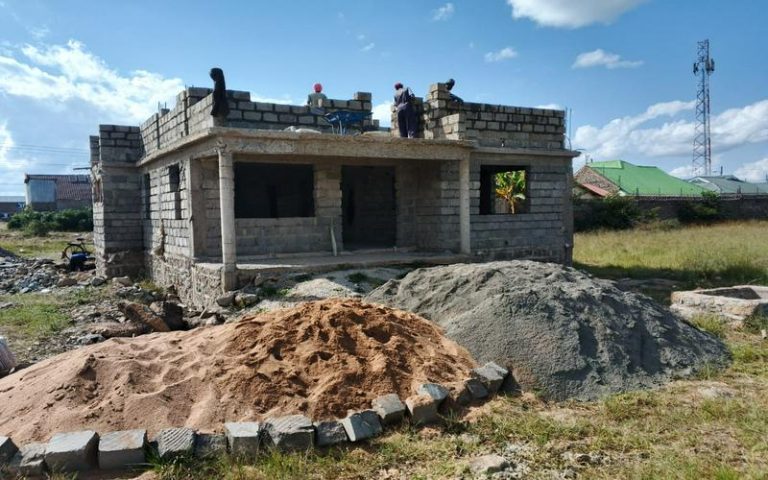
How do we raise Sh4.5m to finish our mansion, start farming in Nyandarua?

This personal finance question on raise money to finish construction of a family house was answered by Alex Kibebe. Mr. Kibebe is the founder of Rubiani Wealth Management Ltd and an investment consultant and business development coach.

The Question: Our names are Philip and Jane. We are married with two children. We are employed in permanent and pensionable jobs and earn a combined amount of Sh126,000. We currently have one main debt of Sh330,000 which we took from a relative that we need to pay off by April 2026.

We have an unfinished four-bedroom family house located in Machakos County that we want to finish before the end of this year. The approximate cost of finishing is between Sh2.5 million and Sh3 million. We also have three acres in Nyandarua County that are currently idle. We would like to fence off this land, build a modern zero grazing infrastructure, and a live-in wooden house for a farmhand.

The goal is to start dairy, goat, and chicken farming, and also farm peas, cabbages and potatoes. We are thinking about applying and investing Sh2 million loan into this project. Currently, we do not have significant savings. We only have Sh120,000 emergency kitty saved in a bank account.

Our main expenses are as follows: school fees Sh150,000 annually, rent Sh24,000, shopping and groceries Sh25,000, househelp Sh12,000, our parents (both sides of family) Sh20,000, tithe Sh12,600, fuel Sh12,000, airtime Sh2,000, power, water & tv subscriptions Sh13,000. How do we achieve these goals?

The Answer: Your combined monthly income is Sh126,000 against monthly expenses of about Sh133,000, after factoring in a monthly provision of Sh12,500 for school fees. This means you are currently running a monthly deficit of roughly Sh7,000.

In addition, you have an outstanding loan of Sh330,000 that is due in April of this year. You are also looking to complete your home in Machakos and invest in agribusiness on your Nyandarua land.

To achieve these goals without exposing your family to excessive financial risk, you will need to adjust your timelines and deliberately reduce your expenses to eliminate the monthly deficit and generate a surplus of at least Sh15,000 per month, which will form the foundation for debt repayment and future investments.

Begin by reviewing your expenses based on priority. For instance, you could reduce your shopping and grocery budget to about Sh20,000 by sourcing from more affordable markets and cutting back on luxuries. Parental support could be temporarily reduced to Sh10,000 through open discussion.

Fuel costs could come down to around Sh8,000 by using public transport where practical, while water and television subscriptions could be reduced to about Sh10,000 by limiting entertainment expenses to internet services only. These adjustments could help you achieve the targeted Sh15,000 monthly surplus.

If you manage to consistently free up Sh15,000 per month, I would advise that you prioritise clearing the Sh330,000 loan. With only three months remaining, settling the full amount by April may not be feasible. A more realistic approach would be to renegotiate the repayment terms with your relative.

My Sh272,000 savings in MMF earned Sh1,100 net interest in 15 days

One option would be to pay Sh80,000 from your emergency fund immediately, and then commit to monthly repayments of Sh15,000 from now until April 2027, at which point the loan would be fully settled. Once out of debt, prioritise rebuilding your emergency fund using your savings over the next five months, to replenish it with at least Sh75,000.

Once your emergency fund is restored, your next priority should be that of completing your Machakos house to a liveable standard. Doing so would save you Sh24,000 monthly rent, significantly freeing your budget. However, borrowing Sh2.5–Sh3 million at this stage would place significant strain on your income.

I would encourage you to re-budget the project to focus strictly on making the house habitable rather than fully finished. Possibly, a budget of around Sh1.2 million may be sufficient to achieve this. If you were to take such a loan from a SACCO at an interest rate of about 12 percent per annum over five years, the monthly repayment would be approximately Sh26,700.

You could apply your Sh15,000 monthly savings toward this amount and temporarily fund the shortfall from your emergency fund and, or from halting the allocation of Sh12,600 to tithe. Note that while tithe is based on personal belief, it is not cast in stone, especially when it is to the detriment of your financial wellbeing and progress.

Once the house is complete, the rent savings would comfortably cover the loan repayment, with the surplus redirected into savings or a Money Market Fund (MMF) – to boost your funds.

The other alternative is to sit down with your fundi and identify the most critical parts of the house that need to be done for you to move in and start saving on rent.

For example, installing steel doors and windows on one section of the house could allow you to move in and complete the other parts in phases. This would save you the amount that is currently going into rent, which you can then redirect to acquiring some of the required accessories such as tiles.

Regarding the Nyandarua farming project, I would advise against taking a loan at this stage. While agribusiness can be profitable, it carries significant risks especially when managed remotely – including delayed cash flows, losses due to poor supervision, weather and disease risks, and the learning curve associated with farming. Debt would therefore add unnecessary pressure to your finances.

A more prudent approach would be to develop the project gradually using savings.

You could start by fencing the land and then build a basic farm house. Next, focus on one income stream such as potatoes or poultry. As the venture stabilises and you gain experience, you can reinvest profits and expand into additional lines.

If you follow this phased and disciplined approach, you should be able to clear your debt, stabilise your cash flow, and make meaningful progress on your housing and farming goals over the next two to three years without placing undue strain on your family’s finances.

A version of this personal finance question and answer was previously published in the Saturday Magazine. The Saturday Magazine is a publication of the Nation Media Group.


Smart manufacturing businesses to start with limited capital

0

The high unemployment rate in Kenya has forced young people to think outside the box and create solutions to stay ahead of the curve.

Entrepreneurship has become popular with young people, with a big chunk opting for clothing and fast food businesses. This is owed to the fact that these businesses are easy to start as they require low starting capital.

Entrepreneurship has become popular with young people, with a big chunk opting for clothing and fast food businesses. This is owed to the fact that these businesses are easy to start as they require low starting capital.

Mexico is an attractive nearshoring location for manufacturing because of its relatively low costs, but the distance from Kenya may be a deterrent for some. There are, however, thousands of other business ideas that are least explored despite being lucrative and cheap to start that don’t involve moving. This article features some of the best manufacturing ideas to pursue.

There are, however, thousands of business ideas that are least explored despite being lucrative and cheap to start. This article features some of the best manufacturing ideas to pursue.

Candle Making

This is one of the unique and profitable businesses. According to the Cosmetics Kenya Limited Institute, this business is over 100 percent profitable- especially for entrepreneurs eying regional exports to countries like Burundi, Congo, Uganda, and South Sudan-who are the largest consumers of the commodity.

The raw materials for candle making are cheap and easy to get from many outlets countrywide. You can make various candle types, such as Non-drip, scented, and Colored ones.

To get started, you will need a candle-making machine, wax, wicks (utambi), water, good packaging, and room. The machine is the most costly investment you will require to make in this business as the cheapest costs around Sh20,000.

Maureen Kenga: How I balance my career and side businesses

Other materials, such as candle wax, wicks, and packaging, will cost you around 6,000, meaning you can start this business with around 30,000.

Wax is normally sold in 25KG boxes. Each box of wax costs around Sh4,500 and can produce up to 1000 candles. This means that if you price each candle at Sh10, you will make Sh10,000 per unit of production.

Food and beverage production

This includes baking snacks like cakes and other wheat products and supplying them to various retail shops in your neighborhood.

You can also start bottling drinking water and supply it to shops and supermarkets.

Handmade Paper Making

The Khaki paper business can be a great business idea for youths and stay-at-home Mums. They are now the most sought-after since the government banned the plastic bags.

No machine or special equipment is required to start this business, especially if you are planning to start on a low budget. A capital of Sh5,000 is enough to buy all the raw materials needed to get started.

Adhiambo Ooko: How desperation pushed me to start my business, break even

All you need is a ream, glue, different-sized boards (depending on the kg of the paper you are making), and brushes. A ream of Sh3,000 can produce 5,000 bags sold at Sh3 each, giving you a total of Sh15,000.

Leather Goods Manufacturing

Think of leather goods such as wallets, belts, bags, and even footwear. This business, however, requires a lot of research to understand the different types of leather pricing and labor market dynamics.

Custom Furniture Manufacturing

The furniture-making business is a lucrative business that does not require a lot of startup capital. You only need to have the necessary skills and passion.

You can decide to make either beds, couches, dining furniture, or office furniture among others. The quality and beauty of your furniture will attract customers, so you must capitalize on that.

You can start with the most basic tools, such as Claw hammers and screwdrivers. Hand plane, Chisels, Hand saw, Tape measure, Ruler, Pencil, Level, and Drill, among others.

I am a failed businessman; these are five things I regret

Pillow Making

With Sh10k, you can make very attractive sofa pillows, throw pillows, or bed pillows and sell them out for good money.

All you need is a tailor who can make them for you at a cheaper price. A pillow cushion from Gikomba goes from around Sh70 to Sh150.

Make sure your pillows are unique and attractive to stand a chance to reap huge profits. You can sell them in your neighborhood, Whatsapp status, or Facebook, Instagram, and TikTok.

Gift Bags Designing and Making

If you are creative, you can start designing gift bags that are beautiful and appealing to buyers. The materials for a few bags are not expensive.

All you need is the tutorials, which you will get on YouTube. Social media is the best place to sell your products, but you can also reach out to individual businesses and offer to supply them with gift bags.

How banks can transform compliance through technology

0

Provision of banking services in Africa continues to undergo profound digital transformation, where most transactions are conducted virtually via digital devices, and cash is moved electronically. Mobile banking, fintech innovation, and cross-border digital payments have reshaped how individuals and businesses consume financial services.

In Kenya and across the continent, banks face sharp scrutiny from an expanding regulatory landscape, including Anti-Money Laundering (AML), combating the financing of terrorism (CFT) and combating the financing of proliferation (CPF) that involves disrupting funds for weapons of mass destruction (WMD) through targeted financial sanctions.

With increased cross-border trade, everyone, including governments, look upon banks to provide Know Your Customer (KYC) services, fraud risk management, and increasingly adhere to stringent data protection and privacy regulations as well as Environmental, Social, and Governance (ESG) reporting standards.

Compliance is no longer a back-office obligation, and this calls for increased investments in technology, particularly Artificial Intelligence (AI) and Machine Learning (ML), to enable banks to meet compliance requirements.

This is important as traders want a banking partner who offers one-stop shop services on compliance matters. For banks, this is a competitive advantage, a core capability, and a source of differentiation. By embedding compliance into product and process design, banks can meet regulatory obligations efficiently while fostering innovation through a compliance-by-design approach.

In March 2025, the Central Bank of Kenya published the results of a survey on AI adoption in the banking sector, revealing moderate uptake, with 50% of respondents indicating some level of implementation. The survey found that among institutions that had adopted AI and machine learning, the leading applications were credit risk assessment (65%), cybersecurity (54%) and customer service (43%), followed by e-KYC (41%) and fraud risk management (40%).

These findings underscore significant untapped potential for AI to transform customer experience and strengthen risk management, particularly in AML and compliance monitoring. As intra-African trade continues to increase, compliance teams within banks must play a leading role in establishing strong governance, ensuring transparency, and preparing institutions for emerging regulatory expectations.

The Central Bank of Kenya has confirmed that it is in the final stages of developing a Guidance Note on Artificial Intelligence, with 95% of surveyed institutions having requested formal regulatory direction. The anticipated principles-based framework will focus on governance, risk management, transparency, and the ethical use of AI, laying the foundation for responsible innovation in the financial sector.

Mbadi: Why Kenya is selling a 15 per cent stake in Safaricom to Vodacom

AI and ML models offer practical solutions to compliance challenges by learning and tracking typical behavioural patterns by customer, product, and corridor, flagging anomalies such as unusual counterparties, transaction values, or routing patterns in cross-border flows. These tools can also generate more accurate and complete assessments of ongoing customer due diligence and customer risk, which can be updated to account for new and emerging threats in real time.

By detecting potential violations of normal customer profiles in data or groups of customers with higher-risk characteristics, AI has streamlined priorities towards high-risk cases and reduced the time spent on false positives. This capability is increasingly critical as transaction volumes and complexity grow. Such technological advances transform compliance from a costly obligation into a strategic advantage.

Customers do not need to know one another to execute a transaction since AI-powered identity authenticates customer identity through document scanning, biometric verification and mobile-based identity solutions. These solutions have also enabled banks to onboard new customers remotely without the need to visit a physical bank to fill in registration details.

Accounts are fully secure and only users who pass the mobile-based identity verification are allowed access, thereby preventing fraud. This also supports financial inclusion by enabling access to financial services for individuals who struggle to provide adequate identification documents for opening bank accounts.

In addition, Regulatory Technology (RegTech) solutions enable financial institutions to monitor regulatory developments, map obligations across their operations, conduct initial gap assessments, ensure that policies and procedures are always up to date and streamline regulatory reporting.

This capability is particularly valuable for pan-African institutions in ensuring agility while responding to regulatory changes across multiple jurisdictions. With its presence in 34 African countries, Ecobank advocates for harmonised payment systems and regulatory frameworks as a catalyst for accelerating intra-African trade.

Regional regulatory alignment further amplifies these gains. As African regulators work towards greater harmonisation of standards, banks with pan-African footprints are uniquely positioned to bridge local realities with global expectations, enabling smoother cross-border transactions and reducing friction for businesses operating across multiple markets.

The convergence of digital innovation and regulation presents an opportunity to support regional integration and strengthen public confidence. Banks that integrate compliance into their digital strategies, invest in ethical AI, enforce strong governance, and actively engage regulators will be best positioned to compete, facilitate trade, and protect financial integrity.

On an Africa-wide platform, traders want a synchronised platform that provides them with end-to-end solutions. Say Ecobank Group’s AML monitoring and sanctions screening capabilities within its SWIFT payment infrastructure ensure that all cross-border payment messages undergo real-time compliance checks before fund settlement.

With increased intra-African trade that rides on online platforms, accelerated digitalisation of cross-border transactions, and timely, efficient, and secure payment processing is paramount. Real-time compliance monitoring is a non-negotiable cornerstone of safeguarding the integrity of international payment flows.

Ultimately, the future of banking in Africa will be defined by how institutions harness technology to meet regulatory obligations, deter financial crime, and foster trust among businesses, consumers, and public institutions alike. Compliance is no longer a constraint on growth; it is a foundation for sustainable innovation, regional integration, and long-term confidence in Africa’s financial system.

About the Author

How banks can transform compliance through technology
Anne Mureithi, Compliance Director, Ecobank Kenya Limited and Central Eastern and Southern Africa (CESA)

Anne Mureithi is the Director, Compliance – Ecobank Kenya Limited and Central Eastern and Southern Africa (CESA)

How Kenya Power employees forged payslips and HR letters to take loans

0

An audit by the office of the Auditor General has exposed how Kenya Power employees used forged payslips to take loans. The audit report found out that 384 employees had faked their paystubs for the purpose of acquiring loans from unsuspecting lenders. These workers had then obtained human resource letters confirming their employment at power utility firm.

“An internal investigation during the year on alleged use of forged documents by employees to obtain loans from financial institutions revealed that 384 employees acquired loans using forged payslips and Human Resource approval letters,” the report on Kenya Power’s 2024/25 financial year by the Auditor General Nancy Gathungu stated.

At the same time, the report found out that 361 employees had payslips with more than two third deductions for the purposes of loan installments. This was in breach of Section 19 of the Employment Act of 2007 which prohibits employers from deducting more than two-thirds of an employee’s salary.

“361 employees were in breach of statutory one-third basic salary rule. The practice highlights weaknesses in the company’s payroll and human resource approval processes, which may have facilitated deductions beyond the statutory thresholds,” Ms Gathungu said in the report.

According to the report, with these employees earning less than one-third of their pay, they moved to exploit weaknesses in Kenya Power’s systems to generate fake payslips and human resource approval letters.

This expose follows another that found out that in the financial year that ended in June 2024, Kenya Power employees had been colluding with guards stationed at off-grid power stations and fuel transporters, leading to the theft of 1.16 million litres of fuel.

This fuel was stolen through manipulation of records of fuel deliveries and diversion of supplies in an elaborate scheme that was orchestrated over a period of more than two years.

New York Times: How Ruto’s family, allies make profits from sending Kenyans to Saudi

Safaricom revamps fixed broadband with flexible pricing

0
The appointment comes as Safaricom prepares to upend how fixed internet is sold, shifting from rigid monthly plans to daily, weekly and monthly options that mirror mobile data pricing. The model is central to the company’s plan to triple the size of Kenya’s fixed broadband market over the next five years.
Anampiu, who took up the role from January 5, is leading strategy, growth and profitability across Safaricom’s fixed broadband business, spanning home and enterprise connectivity. She will also oversee new pricing models designed to lower the cost of entry for households outside high-income neighborhoods.
Safaricom chief executive Peter Ndegwa said in December that fixed broadband sits at the center of the group’s next growth phase.
“We have just over 400,000 customers on fixed broadband today, in a market that is only serving about 1.2 million,” Ndegwa said. “At a country level, the opportunity is closer to four million. That leaves roughly three million people still to be connected.”
Safaricom expects the segment to grow by as much as 50% a year without hitting saturation, with a mix of fibre, 5G fixed wireless and cheaper customer devices.
Safaricom plans to roll out tokenized Wi-Fi access and prepaid fibre in the second half of its financial year, which runs from October to March, allowing customers to buy broadband in time-based bundles instead of committing to monthly plans.
“In the same way we transformed mobile data with flexible pricing, we are now doing the same for fixed,” Ndegwa said. “By changing how we go to market and how we price, we can expand participation and still manage our cost to serve.”
Anampiu joins from Bayobab Kenya, part of MTN Group, where she served as managing director and led fibre network expansion and business restructuring. She has previously held senior roles at Airtel Africa, Orange Kenya, and Bayer East Africa.
Her appointment also supports Safaricom’s broader push to bundle fixed connectivity with ICT, cloud and IoT services for small and medium-sized businesses, a segment the company sees as underserved.
Fixed broadband and enterprise services, Ndegwa said, are key to ensuring customers “buy outcomes, not products” as Safaricom tightens integration across its consumer, business and public sector offerings.

Dissecting the falsehoods surrounding Kenya Airways (Part 1)

0

Attention has recently been redirected to a sequence of articles in a leading daily which present themselves, with considerable self-regard, as exposès of alleged malfeasance at the national carrier Kenya Airways. The pieces contend, inter alia, that the grounded fleet afflicting the airline is “not misfortune but brazen looting.” They go on to assert that a “ruthless syndicate” within the company has been cannibalising aircraft on the tarmac, only to sell the purloined parts back to the airline as a sordid carousel of theft.

Such claims would merit scrutiny were they not so energetically undermined by the authors’ own handiwork. The articles betray a striking poverty of aviation literacy. This is apparent not merely in their failure to grasp the complexities of fleet management and maintenance economics, but even in their mishandling of the industry’s most basic elementary vocabulary, where “aircraft,” treated as a collective noun rather than a countable one, resists the authors’ clumsy pluralisation. The lapse is emblematic. Where precision is indispensable, conjecture is substituted; where facts are required, insinuation suffices. The result is less an investigation than an exercise in indignation dressed as journalism.

A glance at Aviation for Dummies 101, the sort of primer that one might have hoped unnecessary, would make plain that aircraft service parts fall into three broad categories. First come expendables: low-value trifles such as filters and O-rings, mercifully discarded after use. Next are repairables: components that may be mended when damaged but that do not require mandatory overhauls after a given number of cycles.

Finally, there are rotables, the aristocracy of aircraft parts – high-value, safety-critical items engineered to be repaired, overhauled and returned to service repeatedly, rather than unceremoniously scrapped, in the interests of both cost discipline and operational efficiency.

Kenya Airways Cargo wins prestigious African Air Cargo Airline of the year award

This article fixates on rotables, riding on the assumption that they alone might tempt an enterprising thief. Even so, the suggestion that such components could be spirited away from an aircraft on the tarmac belongs more to the realm of imaginative journalism than to operational reality.

Most rotables demand specialised tooling and the attention of certified technicians; their removal is governed by exacting safety and maintenance protocols. In practice, therefore, rotables are not pilfered under the open sky but extracted, if at all, under the confines of a hanger, where Maintenance, Repair and Overhaul (MRO) activities are conducted.

Another consideration bears emphasis. Each rotable component carries a unique serial number and an accompanying data plate recording its usage, maintenance history and regulatory compliance. The notion that a KQ employee could spirit away such a component and later sell it back is therefore implausible. Rotables are serialized, exhaustively tracked and readily traceable to the specific aircraft from which they were removed.

Nor is the procurement of rotables a casual or informal undertaking. Such components may be sourced only from approved, reputable suppliers and must be accompanied by an unimpeachable parts pedigree. Any item lacking this documentary lineage is summarily excluded from the global aviation supply chains to which KQ, like its peers, is bound.

What the journalists appear to have mistaken for theft is, in fact, rob-to-service: the controlled transfer of rotables and serviceable components between aircraft, a routine expedient used to preserve operational continuity amid global spare-parts shortages. Far from being furtive or improvised, the practice is universally accepted, tightly regulated and widely employed across the aviation industry.

Any rotable or serviceable component removed from one aircraft and installed on another within the same fleet is subject to exhaustive tracking, inspection, certification and documentation, all in strict accordance with the standards imposed by aviation regulatory authorities. To portray this as pilferage is not merely inaccurate; it betrays a misunderstanding of how modern aviation maintenance actually works.

Aviation is a technically intricate business governed by interlocking operational, financial and regulatory restraints. Those who presume to report on it owe their readers more than armchair conjecture. Commentary unmoored from an understanding of how an airline such as Kenya Airways actually functions is not merely lazy; it is actively harmful. At best, it misinforms the public; at worst, it undermines confidence in the national carrier and strays into territory with implications for national security.

Egypt vs Nigeria: a battle for bronze worthy of the final!

0

Egypt vs Nigeria: The battle for the title of Africa’s strongest football nation is nearing its conclusion – it’s time to grab a front-row ticket to the exciting show. All key information about the Egypt vs Nigeria match is now available via the link. As always, the best sports betting site 1xBet has prepared a pre-match analysis that will become the foundation for your responsible play. The big football tournament is in full swing: the teams will fight for a consolation prize in the form of bronze medals and a chance to end the competition on a high note.

Egypt’s broken dreams

The 7-time African champions were left without a trophy once again. In the AFCON 2021 final remake, Mohamed Salah and his teammates failed to tame the Senegal national team’s spirit and will to win. At the end of the match, Sadio Mané’s crazy long shot caught Mohamed El Shenawy off guard and sent the Lions of Teranga to the final.

Despite the efforts of star attacking duo Mohamed Salah and Omar Marmoush, Egypt struggled to create scoring opportunities throughout the tournament. This was also the case in the match against Senegal: the Pharaohs only managed to take one shot on target, with their xG amounting to just 0.12.

To snatch the bronze medals from Victor Osimhen and Ademola Lookman, Egypt need to improve their counterattacking play. The rapid runs of Salah and Marmoush could force Nigeria to capitulate.

1xBet 2025: Strengthening Markets, Communities, and Trust

Luck turned its back on Nigeria

The Super Eagles won fans’ hearts with their spectacular and entertaining play, becoming the highest-scoring team in the tournament with 14 goals in 6 games. However, in the semi-finals, Morocco managed to stifle their attacking momentum. The Atlas Lions simply didn’t let their opponents get going and took the match to a penalty shootout.

The fate of the ticket to the final was decided by Yassine Bounou, who showed miraculous reflexes. Nigeria once again stopped one step away from the trophy and will try to redeem themselves in the battle for third place.

The Super Eagles had arrived in high spirits for their match against Morocco, throwing a carnival-like party in the players’ tunnel with singing and dancing. In the game against Egypt, they’ll need more concentration and composure to convert their scoring opportunities and finish the tournament with medals for the second time in a row.

Who will win the bronze medals?

Considering the teams’ current form and rosters, Nigeria are considered the favorites. Their H2H history points to equal chances — in their last 5 encounters, the Super Eagles and the Pharaohs have each won twice, with another match ending in a draw.

Egypt vs Nigeria Odds: W1 – 3.565, X – 3.155, W2 – 2.363

The best sports betting site 1xBet has posted even more useful information about the key match via the link. Pre-match analysis and studying statistics are the basis of responsible gambling. Don’t miss the spectacular Egypt vs Nigeria battle, which is sure to keep everyone on the edge of their seats!