Home Blog Page 122

Open University announces mass hiring; How to apply

0

The Open University of Kenya (OUK) has announced 62 job vacancies across its education and administrative departments.

In a notice on Tuesday, January 13, OUK invited qualified candidates to apply for the positions by February 2, 2026.

Interested candidates must submit an application letter, a detailed Curriculum Vitae indicating academic qualifications, professional experience, and academic leadership.

The applications should be addressed to: The Vice-Chancellor, Open University of Kenya, P.O. Box 2440-00606, Nairobi, Kenya. and must be submitted online through the link provided on the University website: https://ouk.ac.ke/careers.

Candidates must also provide valid email addresses, telephone contacts, copies of certificates, National ID, and other relevant documents.

Applicants with degrees from foreign Universities must attach a letter of recognition from the Commission for University Education (CUE).

The advertised positions include:

  1. Deputy Director, Teaching and Learning
  2. Senior Lecturer, Computer Science
  3. Lecturer, Computer Science
  4. Tutorial Fellow, Computer Science
  5. Research Assistant, Computer Science
  6. Lecturer, Mathematics
  7. Lecturer, Statistics
  8. Tutorial Fellow, Mathematics/Statistics
  9. Lecturer, Community Health Nursing
  10. Tutorial Fellow, Midwifery
  11. Lecturer, Agricultural Economics
  12. Tutorial Fellow, General Agriculture
  13. Lecturers, Accounting and Human Resource Management
  14. Tutorial Fellows, Finance, Supply Chain & Logistics Management, Project Management.
  15. Lecturers, Kiswahili, English, and Education Psychology
  16. Tutorial Fellow, Technology Education (Power Mechanics)
  17. Research Assistant, Education-English Literature
  18. Principal ICT Officer
  19. Senior ICT Officer, Network Security & Infrastructure
  20. Senior ICT Officer, Research Assistant (EdTech & AI Focus)
  21. Senior ICT Officer, Full Stack Developer
  22. ICT Officer, Learner Support & Learning Operations (Curators)
  23. ICT Officer, Multimedia Designer (UI/UX & Digital Media)
  24. ICT Officer, Full Stack Developer
  25. Systems Librarian Officer II
  26. Senior Audit Assistant I
  27. Deputy Director, Human Resource Management
  28. Senior Procurement Officer
  29. Senior Procurement Assistant II
  30. Senior Accountant
  31. Assistant Director, Legal Services
  32. Senior Assistant Registrar
  33. Administration Officer II
  34. Accounts Assistant II
  35. Driver I
  36. Clerical Officer I & II

Also Read: Nairobi expressway announces toll attendant jobs; how to apply

KNEC releases KPSEA, KILEA Performance reports; How to access

0

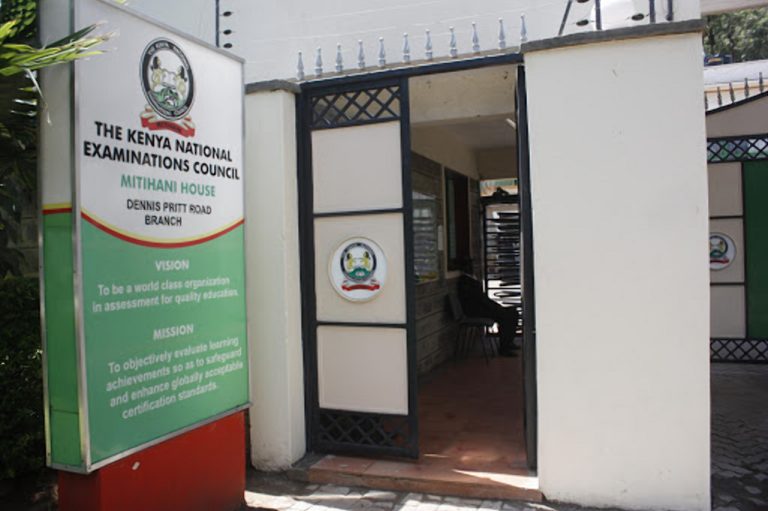
The Kenya National Examinations Council (KNEC) has announced the release of the 2025 Kenya Primary School Education Assessment (KPSEA) and Kenya Intermediate Level Education Assessment (KILEA) performance reports.

In a notice on Tuesday, January 13, KNEC said candidates who sat the KPSEA tests can access their results through the official portal: https://kpsea.knec.ac.ke.

“The 2025 KPSEA and KILEA performance reports are ready for access by schools and candidates,” the notice read.

After logging in to the portal, candidates will be required to enter their assessment number together with at least one registered name, and accept the privacy and access notice before conducting a search.

For KILEA candidates, KNEC directed them to collect their reports directly from their respective schools.

The examination body further directed that schools can access detailed individual learner performance reports through the CBA portal at https://cba.knec.ac.ke.

KNEC urged users to rely only on its official platforms for accurate information and cautioned against sharing personal examination details on unofficial websites or social media platforms.

A total of 1,298,089 candidates sat for KPSEA exams administered between October 27 and October 30, 2025.

Om the other hand, the Kenya Intermediate Level Education Assessment (KILEA) which targets learners with special needs at the intermediate level ran from October 27 to October 31, 2025.

Also Read: Alliance High School vs Moi High Kabarak performance in 2025 KCSE exams

Nairobi rider reveals how IshowSpeed helped him make Sh10,000 in five hours

0

A boda boda rider in Nairobi has revealed how he made Sh10,000 in five hours shortly after American streamer IshowSpeed landed in Kenya for his Africa tour.

In a video on his TikTok account, the rider said he was hired to ferry IshowSpeed’s followers who were keen on documenting the final leg of his Kenyan tour.

The assignment turned out to be one of his most profitable after his customers paid him Sh10,000 after the five-hour trip.

“Honestly, yesterday was my day. Yesterday I made a clean Sh10,000 just like that. There were two rich kids I met who told me to follow that guy everywhere he went. Luckily, I had my Boxer 150, so I stayed bumper to bumper with him until he finished his road trip at KICC,” he said.

“When the young men alighted, they paid me Sh10,000. They said, ‘Bro, you did a good job,’ and sent me the Sh10,000,” he added.

He went on to thank IshowSpeed for visiting Kenya adding that his presence created an unexpected job opportunity for some people.

“Thank you so much, you made my day yesterday. I made Sh10,000 in five hours, something I have never done before. Thank you very much. Welcome to Kenya again, iShowSpeed,” he said.

IShowSpeed, popularly known as Speed, is an American streaming sensation and the world’s top English-speaking streamer.

His trip to Kenya was part of his 28-day Africa tour, which aims to cover 20 countries. The trip which began on December 29, 2025 has seen Speed visit various African countries including South Africa, Angola, Botswana, Eswatini, Mozambique, Zimbabwe, Rwanda and Kenya.

Among the highlights of his activities in Kenya were riding camels at Uhuru Park, playing basketball with youth at the Mukuru Affordable Housing Project and touring the Maasai Mara, where he participated in traditional cultural activities, including the iconic Maasai jumping dance.

His visit to Kenya also saw him hit another digital milestone, surpassing the 48 million subscriber mark on YouTube.

Upcoming stops include Algeria, Benin, Egypt, Ethiopia, Ghana, Ivory Coast, Liberia, Morocco, Namibia, Nigeria, Senegal, and Zambia.

Also Read: Ndindi lowers Kiharu school fees to Sh500 per term; uji, chapos to be served

Alliance High School vs Moi High Kabarak performance in 2025 KCSE exams

0

In the 2025 KCSE examinations, Moi High School Kabarak – which is popularly known as Moi Kabarak – emerged as the best performing school in Kenya. The school beat Alliance High School which has been dominating national exams for years.

But beneath the mean scores, a breakdown of the results posted by the two schools reveals how the Alliance High vs Moi Kabarak duel went down in the 2025 examinations. Let’s take a look:

Moi Kabarak

In the examinations, 82 candidates from Moi Kabarak managed to score the highest grade of A Plain. At the same time, the school had 150 candidates who scored the grade of A Minus while another 119 candidates scored the grade of B Plus.

In total, the school had a total of 406 candidates who sat for the examination. At the same time, the school had an overall mean score of A Minus from 10.6 points.

Alliance High

The school had a total of 461 students who sat for the exams. Out of these, 128 students managed to score the highest ranked grade of A Plain. 141 students went on to score the equally impressive grade of A Minus while 92 students took home the grade of B Plus.

At Alliance High School still, there were 48 students who scored the grade of B Plain while 32 candidates managed to get the grade of B Minus.

There were 15 students who scored the grade of C Plus, putting the total number of candidates who scored the university entrance grade of C Plus and above at 456 out of the total candidature of 461.

There were only five students who scored below C Plus. Two of these students scored the grade of C plain while 3 students scored a C Minus. The school did not have any student who scored the grades of D Plus, D Plain, D Minus, and E.

READ MORE: Ndindi lowers Kiharu school fees to Sh500 per term; uji, chapos to be served

In total, Alliance had a mean score of A Minus with a total of 10.4707 points, which was an improvement from the 10.28 points it had recorded in the previous 2024 examination year.

Safaricom earns CDP ‘A-List’ recognition for climate leadership and net-zero ambitions

0

Safaricom PLC (NSE: SCOM) has achieved another milestone in its environmental stewardship agenda by being listed on CDP’s (formerly the Climate Disclosure Project) “A-List”, positioning the telco as one of the global leaders in transparency on climate change. This is the second consecutive year that the company has been recognized for its robust disclosures.

Safaricom’s “A-List” status is significant since only 4% of companies globally have been recognized by CDP, the world’s ranking system for environmental disclosure in 2025. This enables organisations to measure, manage and publicly disclose their environmental impacts.

According to Safaricom’s 2025 Sustainable Business Report, digital technology has boosted its ability to track and forecast emissions. A new greenhouse gas data management tools and the integration of AI dashboards have improved the quality of data which is crucial for reporting and disclosures.

“At Safaricom, we adhere to the International Financial Reporting Standards (IFRS) S1 and S2 and the Taskforce on Climate -Related Financial Disclosures (TCFD) frameworks for our climate reporting, which has proved effective which has resulted in our positive listing .We introduced an internal carbon pricing mechanism and we continue to drive our reforestation efforts by planting over 2.3 million trees which has contributed to the offsetting of residual emissions. Our sustainability-linked loan should contribute to our ESG agenda, most notably, being a net-zero by 2050,” said Peter Ndegwa, Chief Executive Officer, Safaricom.

A Life-Changing Call from Safaricom Turns Tuk-Tuk Driver into a Millionaire

Safaricom’s environmental agenda is enhanced by its efforts to become a Net-Zero carbon emitting organisation by 2050. Its commitment has been reflected in the company’s 2025 Sustainable Business Report which highlighted efforts such as solarizing 1,432 Base Transceiver Stations which have reduced the reliance of fossil fuels..

“This recognition on CDP’s “A-List”, reflects our quest for disclosure and action as we look forward to being Africa’s leading purpose-led technology company, the role of innovation is pivotal to accelerate our environmental agenda and disclosures and not only drive green energy but also affect communities in a positive way by mitigating climate change.” added Mr. Ndegwa.

The company has put forward several efforts to reduce its emissions. Safaricom aims to have 5,000 of its sites running on solar power with 95% of its network being powered by green energy by 2030. It also plans to plant 5 million trees in over 5,000 hectares as well as decarbonizing its supply chain to more eco-friendly suppliers.


Ndindi lowers Kiharu school fees to Sh500 per term; uji, chapos to be served

Kiharu Member of Parliament Ndindi Nyoro has scored another first after lowering school fees in all day schools in his constituency. Starting this year, Kiharu school fees for day students will be just Sh500 per term. Previously, Kiharu school fees was Sh1,000 per term, under the Masomo Bora initiative.

The Masomo Bora initiative is a programme that Nyoro has been running in the constituency. The initiative is currently covering about 12,000 students in 65 day secondary schools.

The new school fees will cover all students from Grade 10, Form Three and Form Four. According to the MP, the fees will cover all students regardless of whether they are from Kiharu or not, as long as they school in Kiharu day schools.

At the same time, Nyoro has introduced a food programme for all students. In this programme, students will be served with chapatis every last Friday of the month. They will be served with rice for three days, githeri for three days and will also get porridge during tea breaks. These meals will be served to students attending classes during Saturdays.

Nyoro has also identified twenty schools in which students joining Grade 10 will be provided with free uniforms. All schools in the constituency will also receive Sh10 million to purchase revision materials in 2026 to boost performance.

Principals from the best performing and best improved schools will also be rewarded with fully paid trips to Dubai. Those who emerge victorious and have traveled to Dubai previously will also get a chance to choose to visit Malaysia.

How Ndindi Nyoro built multi-million business empire before joining politics 

In addition, Nyoro has said that from his own resources, the best improved teacher per subject in each of the sub-counties will get a paid-up trip to Mombasa. This will include the previous 2025 year since teachers who would have benefitted were enrolled for the marking of the KCSE examinations and missed out as a result.

The Digital Economy in Kenya: The Crypto Betting Link

0

Kenya finds itself in an amusing gridlock between technology adoption and online-based entrepreneurship. It was the first economy to pilot mobile money with M-Pesa, and hence is now grappling with one of the newly introduced trends at the intersection of the financial realm and digital innovation: the further traction of cryptocurrencies in the online betting industry.

Although it is a niche activity, it gives details about the adoption of new digital financial options and other trends in fintech that exist among Kenyans.

Understanding the Shift from M‑Pesa to Blockchain

The digital economy is flourishing in Kenya, made possible by two factors: the availability of mobile phones and mobile payment systems that include M-Pesa. Online sports betting has got an enormous fanatical fan base, as well. This universal comfort with digital money has also made Kenya an African leader in cashless transactions.

The cryptocurrencies slowly gaining acceptability and being used as alternative forms of payment include Bitcoin, Ethereum, and stablecoins. Crypto is rather a parallel alternative to the current systems like M-Pesa, and, unlike them, it has advantages such as quicker transactions, reduced fees, and even the prospect of entering foreign markets. It is a sign of a broader trend: Kenyan customers and entrepreneurs are ready to investigate new fintech solutions.

How To Trade Cryptocurrency In Financial Markets?

Why Crypto Appeals in Digital Betting

Several factors explain why further interest in cryptocurrencies has increased in this field.

  • Speed and efficiency: Crypto transactions are usually quicker than the traditional banking procedure, particularly in cases of cross-border transfer, and thus deposits and withdrawals are now more convenient.
  • Reduced transaction costs: Due to bypassing some of the intermediaries, some fees may be reduced in regard to frequent or micro-transactions.
  • Globalisation: Cryptocurrency acceptance enables platforms to attract a larger global audience, which emphasises the globalisation of Kenya into digital financial systems.
  • Security concerns: The encryption offered by blockchain offers a strong structure for how secure digital transactions can be, which builds confidence in the digital operation.

These features do not only entail gambling but also evidence greater integration of blockchain towards safe, effective, and reachable online financial activities.

Finance in a Changing Regulatory World

The most significant step Kenya took so far on crypto was the enactment of the Virtual Asset Service Providers Act in November 2025. This new law creates clear rules for the crypto industry in Kenya. It means services such as cryptocurrency exchanges and digital wallet suppliers are officially regulated, and they are also controlled by the country’s primary financial regulators.

Although there is a legal framework in place, none of the virtual asset service providers have been licensed yet, and elaborate rules are being drawn up. It implies that currently, platforms that accept cryptocurrency to make payments do not have formal control and should highlight the importance of due diligence on the side of users and entrepreneurs.

The New Rules for Digital Entrepreneurs

Even though betting using crypto is a niche, it provides an insight into larger business and fintech opportunities:

  • Innovation adoption: Kenyan users are ready to experiment with the new possibilities of finances, which means that the market is open to new digital products.
  • Global connectivity: Crypto-based platforms allow digital services to expand to international markets without banking boundaries.
  • Regulatory awareness: With regulatory enforcement of digital finance processes becoming dynamic in Kenya, business reporters have to approach their operations with regulatory awareness, which requires being cautious and proactive in the interactions between the business and the regulator.
  • Risk management: Cryptocurrencies are susceptible to changes, and developing financial services with asset sensitivity and user safety would play an essential role in dealing with risky situations.

They can be useful to future efforts in Kenya, in which blockchain-based financial products,  decentralised finance (DeFi), and other digital innovations are potential avenues.

Conclusion

The possibility of cryptocurrency application in online betting in Kenya does not concern the gambling process itself as much as it shows how a mature digital economy adopts innovative financial technologies. It shows the nature of Kenyan innovation, acceptance of online-based financial measures, and the possibility of worldwide assimilation.

The trends may be of interest to entrepreneurs, fintech developers, and investors, as the trends could provide them with something to act upon when it comes to the future of the Kenyan digital economy, where business opportunities are being occupied by speed, efficiency, and technology.


Mbadi: Why Kenya is selling a 15 per cent stake in Safaricom to Vodacom

0

The Kenyan government has defended its decision to sell a 15 per cent stake in Safaricom to Vodacom, arguing that the move will protect the State from future share dilution, unlock maximum value from a long-held investment, and provide much-needed non-tax revenue to finance critical infrastructure projects.

Appearing before a joint committee of the National Assembly, Treasury Cabinet Secretary John Mbadi explained that the proposed transaction, already approved by the Cabinet, is part of a broader fiscal strategy aimed at strengthening public finances while safeguarding the long-term success of Kenya’s most profitable company.

According to Mbadi, the government will retain a “material investment” in Safaricom even after the sale, holding a 20 per cent stake that allows it to continue exercising oversight without bearing the financial risks associated with future capital requirements.

“The key benefit that the Government of Kenya shall derive from the divestiture is to mitigate the risk of future dilution due to capital requirements by the business,” Mbadi told MPs. He noted that shrinking fiscal space and rising public debt have limited the State’s ability to inject capital into companies it controls, even when such investments could deliver clear economic returns.

Safaricom, East Africa’s largest telecoms firm, operates in a highly competitive and capital-intensive industry that requires continuous investment in technology, infrastructure and innovation. Mbadi warned that without a strong private-sector partner capable of taking long-term risks, the government could face dilution of its stake in the future if it is unable to participate in capital raising.

USSD codes for banks and Micro Finance Institutions (MFIs) in Kenya

The joint parliamentary committee, comprising members of the Departmental Committee on Finance and National Planning and the Select Committee on Public Debt and Privatisation, is currently scrutinising the proposed sale. The committee is also expected to hear from other stakeholders as part of the public participation process.

Mbadi said Vodacom, which is 65 per cent owned by global telecoms giant Vodafone, was the preferred buyer because of its financial strength, strategic fit and long-standing relationship with Safaricom. Vodafone entered the Kenyan market in 1998 and has remained invested for over 25 years, unlike Safaricom’s main competitor, which has changed ownership multiple times over the same period.

“With Vodacom, the Government is guaranteed hard cash, minimal disruption to the business, continuity in the success of Safaricom, and a long-term partner that can take higher and long-term risks,” Mbadi said. He added that the transaction eliminates settlement risk due to Vodacom’s proven track record in completing similar investments.

Despite reducing its shareholding, the government insists it will retain sufficient influence over Safaricom, which it considers a strategic national asset. Mbadi pointed out that regulatory oversight by institutions such as the Communications Authority, the Central Bank of Kenya, the Office of the Data Protection Commissioner and the Competition Authority remains robust.

“This is one business area where commercial and regulatory functions are very distinct, hence shareholding is no longer a material Government tool of control,” he said.

How EIB-backed finance is bridging the financing gap for Africa’s young innovators

To address public concerns, the Treasury negotiated a series of safeguards as part of the deal. These include the retention of two government-appointed seats on the Safaricom board, continuity in corporate governance, preservation of the Safaricom name and brand, and a guarantee of no acquisition-related redundancies for at least three years. The agreement also ensures that the chairman, CEO and independent directors remain Kenyan, and that support for the Safaricom Foundation continues.

On pricing, Mbadi defended the agreed price of KSh34 per share, saying it was the outcome of extensive valuation exercises conducted by Treasury advisers, including KCB Investment Bank. Various valuation methods were used, taking into account Safaricom’s net assets, earnings, dividends and discounted cash flows, as well as its status as a listed company.

The assessments produced a wide range of values, with earnings-based valuation at KSh26, price-to-earnings at KSh17, discounted cash flow at KSh18.51, discounted dividend model at KSh23.61, and a six-month weighted average price of KSh27.50. Leading investment banks provided an average valuation of KSh30.82 per share. Mbadi said the final negotiated price of KSh34 represents a premium, yielding total proceeds of KSh204.3 billion (about $1.576 billion).

In addition, the government will receive a dividend advance of KSh40 billion, instead of the KSh55 billion it would have earned over the next six years. Mbadi argued that when discounted at market rates, the future dividends are worth only KSh29.3 billion today, meaning the advance offers better value. He added that investing the KSh40 billion now could grow it to around KSh75 billion over six years, making the transaction more attractive both in present and future value terms.

The Treasury CS said the proceeds from the Safaricom stake sale will play a critical role in funding priority projects in energy, roads, aerospace, water and digital transformation, without increasing the tax burden on Kenyans.

“Our economy is at a critical turning point,” Mbadi said. “To sustain the gains made in inflation control, interest rates, currency stabilisation and GDP growth, we must turn to innovative financing mechanisms to fund infrastructure and public service projects.”

As parliamentary scrutiny continues, the Safaricom-Vodacom deal is shaping up as one of the most significant privatisation-related transactions in Kenya’s recent history, with far-reaching implications for public finance, capital markets and the telecommunications sector.


Nairobi expressway announces toll attendant jobs; how to apply

0

Moja Expressway has announced a fresh recruitment drive aimed at supporting day-to-day operations on the Nairobi Expressway.

In a notice released on Tuesday, January 13, the firm said it is seeking to recruit 20 Toll Attendants to assist motorists on the Nairobi expressway as traffic volumes continue to grow.

The positions are open for both men and women with at least a diploma. Applicants must also have basic IT skills, given the digital nature of the toll operations.

Prior work experience in the field is an added advantage, though not a mandatory requirement.

Successful candidates will be responsible for collecting toll fees from motorists using the Nairobi Expressway.

They will also be responsible for maintaining facilities as prescribed by the company as well as carry out other duties as per the company’s operation standards.

How to Apply

Interested candidates are urged to submit applications online through the official Nairobi expressway website: https://nairobiexpressway.ke/careers/job/a0c7cf49-8916-431a-b5c6-7f7ac853c7c5.

The application deadline for the vacancies is 30th January 2026.

Also Read: Meru teacher who worked as part-time security guard finally gets hired by TSC

Nyandarua High vs Karima Girls performance in KCSE 2025

Nyandarua High School and Karima Girls High School are two of the best performing public secondary schools in Nyandarua County. The two schools are ranked as C1 schools (formerly known as national schools).

When it comes to national examinations, it is either of these two schools that lead the way in the county. As a result, every examination year, eyes are on the lookout to see how the Nyandarua High vs Karima Girls rivalry shapes up.

Following the release of the 2025 KCSE examination results, this is how the the two schools performed:

Nyandarua High School

For the KCSE 2025 examinations, Nyandarua had 224 students who sat the exams. Out of these students, 11 candidates scored the highest grade of A Plain while 31 scored the grade of A Minus.

In addition, results from the school show that there were 55 students who scored the grade of B Plus and another 58 students who scored the grade of B Plain.

32 students went home with a grade of B Minus while 23 students scored the mean grade of C Plus. The mean grades of C Plain and C Minus were scored by 9 and 5 candidates respectively.

At Nyandarua, there were no candidates who scored the grades of D Plus, D Plain, D Minus or E. In total, the school recorded a mean score of 9.112 with a transition to university rate of 93.75 percent. The school had a total of 210 candidates who scored the mean grade of C Plus and above.

Karima Girls High School

Karima had 493 candidates who sat the examination. Out of these candidates, 5 students scored the top grade of A Plain. 63 candidates scored the impressive grade of A Minus.

118 candidates scored the grade of B Plus while another 145 candidates took home the grade of B Plain.

The results from the school further show that there were 107 candidates who scored the grade of B Minus. Another 37 students scored a mean grade of C Plus while 14 students went home with C Plain.

Two candidates scored the grade of C Minus while the grade of D Plus was scored by two candidates only. There were no candidates at Karima Girls who scored the grades of D Plain, D Minus and E.

In total, Karima Girls High School recorded a mean score of 9.036511 and a transition to university of 96.35 percent.

See how Education Ministry allowed Starehe to reject 632 Grade 10 learners