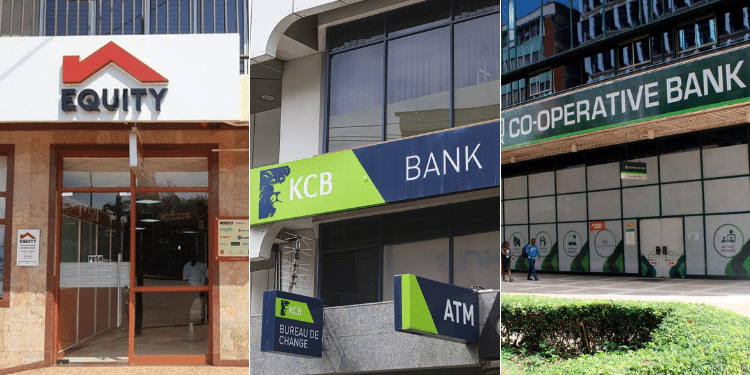
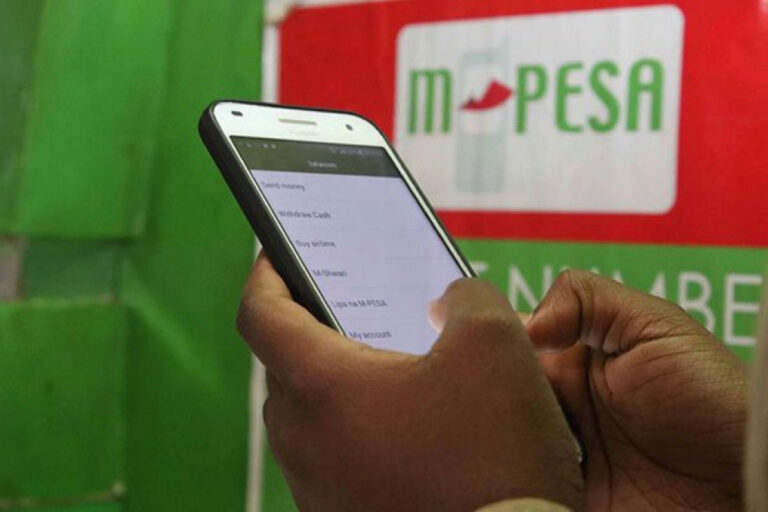
Kenyan banks are increasingly rolling out dedicated M-Pesa Paybill numbers as part of a broader response to the country’s rapidly expanding cashless economy.
Driven by the widespread adoption of mobile money and changing consumer preferences, lenders are integrating Paybill services to make payments more seamless, secure and accessible for individuals and businesses alike.
Below are the M-Pesa Paybill numbers for commercial banks in Kenya.
The County Government of Murang’a, led by Governor Irungu Kang’ata, has announced full senior school scholarships for orphaned learners in the county transitioning to grade 10.
In a notice on Wednesday, January 7, 2026, the county said that it is offering six full scholarships to deserving learners. The aid will be provided in partnership with the Co-operative Bank of Kenya, Food for Education, and a well-wisher.
“Murang’a County implements various programmes to improve the socio-economic well-being of its residents. Given budgetary constraints, the County continues to strengthen partnerships with stakeholders and build linkages with the private sector to enhance service delivery. In this regard, Murang’a County is pleased to acknowledge and appreciate support from the private sector towards its education initiatives,” the statement reads.
Interested applicants are urged to submit applications online through the county’s bursary portal: https://bursary.muranga.go.ke by Thursday, January 9, 2026.
Applicants will be selected based on vulnerability and academic performance, with total orphans set to get the first priority accounting for 60 percent of available slots.
On the other hand, partial orphans or learners with a parent living with disability account for 30 percent of the selection criteria.
To be considered, applicants must produce death certificates of parents and a valid PWD card for learners with disabled parents.
Additionally, KJSEA performance will account for 40 percent of the selection process, with learners who scored 60 points or above receiving a 40percent weighting, while those who scored 50-59 points will receive a 20 percent weighting.
Kilifi County Senior School Scholarships
Kilifi County has also announced scholarships for needy learners who sat the 2025 KJSEA exam. In a statement on Tuesday, January 6, Kilifi Governor Gideon Mung’aro said the program targets bright but needy learners in the county.
“The Kilifi County Government, through the Kilifi Ward Scholarship Fund, invites applications from eligible students who sat the KJSEA 2025 examinations for consideration under the Full County Scholarship Programme,” the statement reads.
According to Murang’o, applicants must have attained a minimum of 61 points in the KJSEA examinations.
Qualified candidates were advised to collect application forms from their respective ward offices.
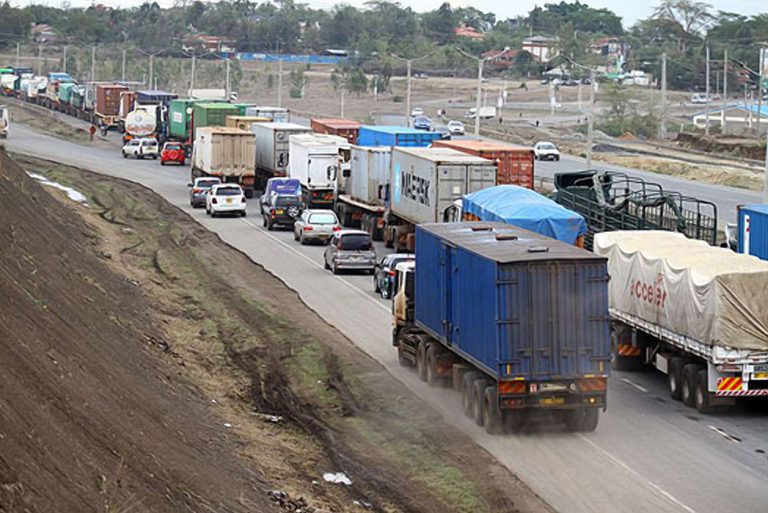
American company Everstrong Capital’s bid to build the Nairobi-Mombasa Expressway has received a new lifeline. This is after the Public-Private Partnership (PPP) Directorate opted to have the project undergo a fresh project development and feasibility exercise instead of terminating it altogether.
This has been revealed by the PPP Directorate in its latest quarterly report. The project development and feasibility report is expected to demonstrate the viability and affordability of the major highway that has been dubbed as the Usahihi Expressway.
According to former U.S Ambassador to Kenya Kyle McCarter who is a director at Everstring Capital, the private equity firm has restructured the feasibility study for the project to meet the requirements of the National Treasury-led PPP Directorate.
“Everstrong and KeNHA have prepare a restructured feasibility study for a fresh submission,” McCarter told local media.
The government had initially dropped the mega Sh468 billion Nairobi-Mombasa Expressway project in August 2025. The project – which had been touted as a landmark infrastructure project in Africa by a company from the United States – was dropped after a meeting by the public-private-partnership (PPP) committee of the National Treasury.
The first signs of trouble for the Usahihi Expressway project emerged in early July when it was revealed that the committee had rejected the Nairobi-Mombasa Expressway plan.
According to the committee, the project development report (PDR) was presented as a greenfield project. However, the PDR allegedly had gaps on land use and land acquisition for the project. A PDR contains a comprehensive overview of the project, and details the project’s development including its goals, scope, and potential risks.
Everstrong Capital submitted the project’s feasibility study in May 2025. “In a landmark moment for Kenya and African infrastructure at large, Everstrong Capital has officially submitted the full feasibility study for the 459km Usahihi Expressway to the Kenya National Highways Authority (KeNHA),” the company had announced.
Everstrong had been looking to raise up to Sh129 billion from the local market, including from local banks and local pension funds. The developer would then raise Sh258 billion from external markets to bring the total estimated construction cost to Sh465.12 billion. Once complete, the Expressway would have operated on a toll-basis.
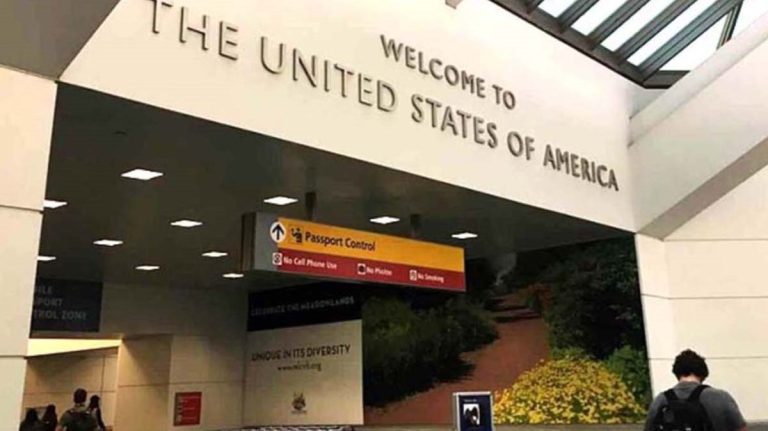
The United States administration under President Donald Trump has added the number of countries whose nationals are required to place a visa bond when applying for the B1/B2 visa.
Under the visa bond policy, applicants from the flagged countries are required to pay $15,000 (Sh1.935 million) in order to enter the United States.
On Tuesday January 7, 2025, the administration announced that it was adding 25 more countries to the list. This came barely a week after it added seven countries to the list that contained six countries. In total, the list now includes 38 countries.
More than 60 percent of the countries in the list are from Africa, with the rest coming from Latin America and Asia.
In the new US visa bond list, the United States has added Uganda among these countries. This means that out of the three main East Africa countries of Uganda, Tanzania and Kenya, only Kenya has been spared from the list. Tanzania was added onto this list in October 2025.
According to the Department of States, nationals who are subject to the visa bond policy are required to enter the United States through three designated airports. These airports are the John F. Kennedy International Airport, Boston Logan International Airport, and Washington Dulles International Airport.
According to the Department of States, all the countries whose nationals will need to visa bonds are:
“Any citizen or national traveling on a passport issued by one of these countries, who is found otherwise eligible for a B1/B2 visa, must post a bond for $5,000, $10,000, or $15,000,” the U.S State Department says.
The specific amount that is to be paid is determined at the time of the visa interview. “The applicant must also submit a Department of Homeland Security Form I-352. Applicants must agree to the terms of the bond through the Department of the Treasury’s online payment platform Pay.gov. This requirement applies regardless of place of application.”
The department cautions that visa applicants should only submit Form I-352 to post a bond only after a consular officer directs them to do so.
“A bond does not guarantee visa issuance. If someone pays fees without a consular officer’s direction, the fees will not be returned.”
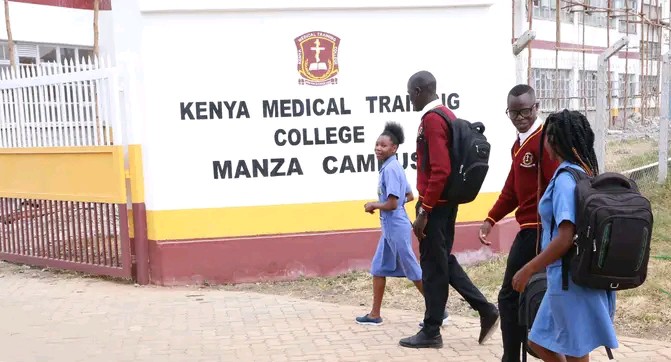
In a notice on Wednesday, January 7, KUCCPS invited interested candidates to send their applications between January 7 to January 27, 2026.
“Application for placement to Kenya Medical Training College (KMTC), March 2026 intake, is now open. Log in to the KUCCPS System portal window to view available programmes and apply,” the notice read in part.
How to Apply
To join KMTC to pursue a Certificate course, applicants must have a minimum of C- with specific qualifications in cluster subjects in Kenya Certificate of Secondary Examinations (KCSE).
For Diploma programmes, applicants must have attained a minimum of C with specific qualifications in cluster subjects.
Upgrading courses require candidates to have a certificate in a respective field while for Higher Diploma programmes, candidates must have attained a Diploma course as per the guidelines.
Qualified candidates are urged to submit their application via the KUCCPS portal: students.kuccps.net
On the application dashboard, candidates will be prompted to enter their Kenya Certificate of Secondary Education (KCSE) index number, KCSE year, and password.
Applicants are advised to use their Kenya Certificate of Primary Education (KCPE) index number or birth certificate number as their password.
KMTC has 7 Faculties with 18 Departments offering 126 Medical Courses, including short courses. For the March 2026 intake, 21,774 vacancies are available in 36 Diploma and Certificate programmes offered across 98 KMTC campuses nationwide.
Some of the Diploma courses offered at KMTC include Diploma in Mortuary Science, Diploma in Clinical Medicine and Surgery, Diploma in Emergency Medical Technology, Diploma in Health Counselling, and Diploma in Health Insurance Management.
KMTC also offers Diploma in Orthopaedic Technology, Diploma in Orthopaedic and Trauma Medicine, Diploma in Pharmacy, Diploma in Physiotherapy, Diploma in Public Health, Diploma in Radiography and Imaging, and Diploma in Speech and Language Therapy.
Other diploma programmes are Diploma in Kenya Registered Nursing, Diploma in Kenya Registered Nursing and Midwifery, Diploma in Kenya Registered Nursing (Mental Health and Psychiatry), Diploma in Medical Engineering, Diploma in Medical Laboratory Sciences, and Diploma in Medical Social Work.
On the other hand, available certificate courses include Certificate in Community Health Assistant, Certificate in Health Records and Information Technology, Certificate in Kenya Enrolled Community Health Nursing, Certificate in Medical Emergency Technician, Certificate in Public Health, and Certificate in Orthopaedic Trauma Medicine.
Kenya’s wild frontier has always been a land of timeless wonder — sweeping savannahs, echoing horizons, and wildlife encounters that stir the soul and sharpen one’s sense of adventure. Whether you are a value-driven traveller seeking discovery on a budget or a discerning explorer pursuing premium comfort, Kenya Expresso Tours and Safaris Ltd (KETS Safaris) delivers curated safari experiences built on authenticity, reliability, and exceptional customer value.
In a market where experience quality must align with financial prudence, Kenya Expresso Tours and Safaris bridges tradition and modern travel expectations — ensuring every guest steps into the wilderness with confidence, clarity, and a sense of meaningful journeying.
Budget-Friendly Safaris: Authentic Experiences at Great Value
Budget-friendly safari packages in Kenya are structured to open the gates of our leading national parks and reserves at a fraction of the price, without compromising the essence of the safari experience. These itineraries are thoughtfully designed to keep costs lean while maximising adventure, discovery, and community immersion.
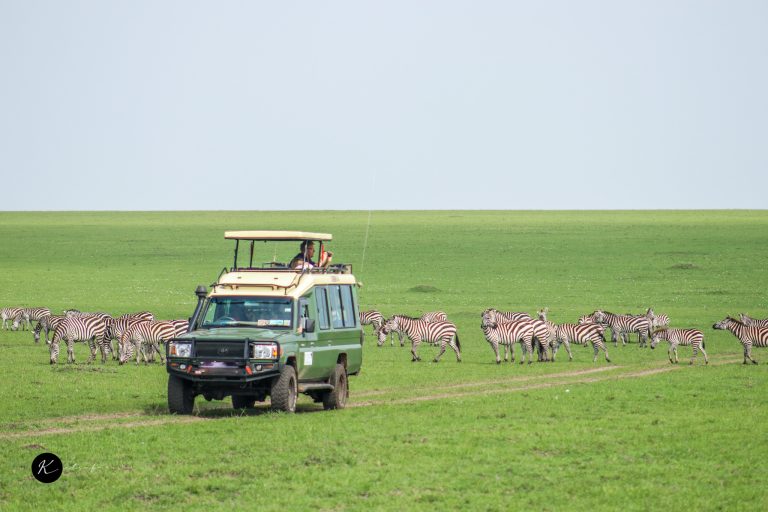
Typical inclusions under our value-tier safari programs include group game drives in open-roof vans or shared 4×4 vehicles, accommodation in well-maintained budget lodges or tented camps, standard meal plans, and scheduled visits to iconic destinations such as the Maasai Mara, Amboseli, and Lake Nakuru. Travellers enjoy sweeping wildlife encounters, group camaraderie, and an unfiltered connection with Kenya’s landscapes and cultures.
While these safaris may not feature the indulgent amenities of luxury travel, they deliver unbeatable access to wildlife viewing, storytelling moments around campfires, and authentic interactions with local communities. For backpackers, students, solo travellers, and adventurous families, budget safaris offer a practical, high-impact value proposition — proof that transformative travel does not have to carry a premium price tag.
Budget-Friendly and Luxury Kenya Safari Options with KETS Safaris
Comfort and Class: The Luxury Kenya Safari Experience
For travellers where exclusivity, comfort, and seamless service are mission-critical, KETS Safaris curates luxury safari journeys that elevate every mile of the expedition. These itineraries are engineered for executive-level refinement and immersive relaxation, blending privacy, premium hospitality, and tailored experiences.
Guests enjoy accommodation in high-end safari lodges and luxury tented camps positioned in breathtaking landscapes, complemented by personalised service, private guides, and flexible game drive schedules. Gourmet dining, exclusive viewing decks, and optional premium experiences — including hot-air balloon safaris and air charter transfers — create a safari environment defined by tranquillity, serenity, and world-class hospitality.
This tier is ideal for honeymooners, families celebrating milestone moments, senior travellers, corporate leaders, and guests seeking a refined, stress-free encounter with the Kenyan wilderness. The objective is simple yet powerful: deliver a premium safari experience that feels effortless, deeply personal, and unforgettable.
Comparing Costs: Understanding the Value Spectrum
Cost remains one of the most significant differentiators between safari categories.
Budget safari packages may begin from approximately USD 100 to USD 150 per day, designed around group travel efficiencies and shared services. Luxury safaris, by contrast, may range from USD 400 to over USD 1,000 per day depending on the lodge category, level of personalisation, and scope of premium activities included.
However, with KETS Safaris, value remains constant across every pricing tier. Whether a traveller selects a budget expedition or a premium custom itinerary, each safari is built with professional planning discipline, strong operational oversight, and a commitment to delivering outstanding guest experience outcomes.
Destinations Covered Across Both Safari Options
Regardless of package level, both luxury and budget itineraries provide access to Kenya’s most celebrated wildlife destinations. These include:
Maasai Mara National Reserve — the home of the Big Five, cinematic landscapes, and the legendary wildebeest migration.
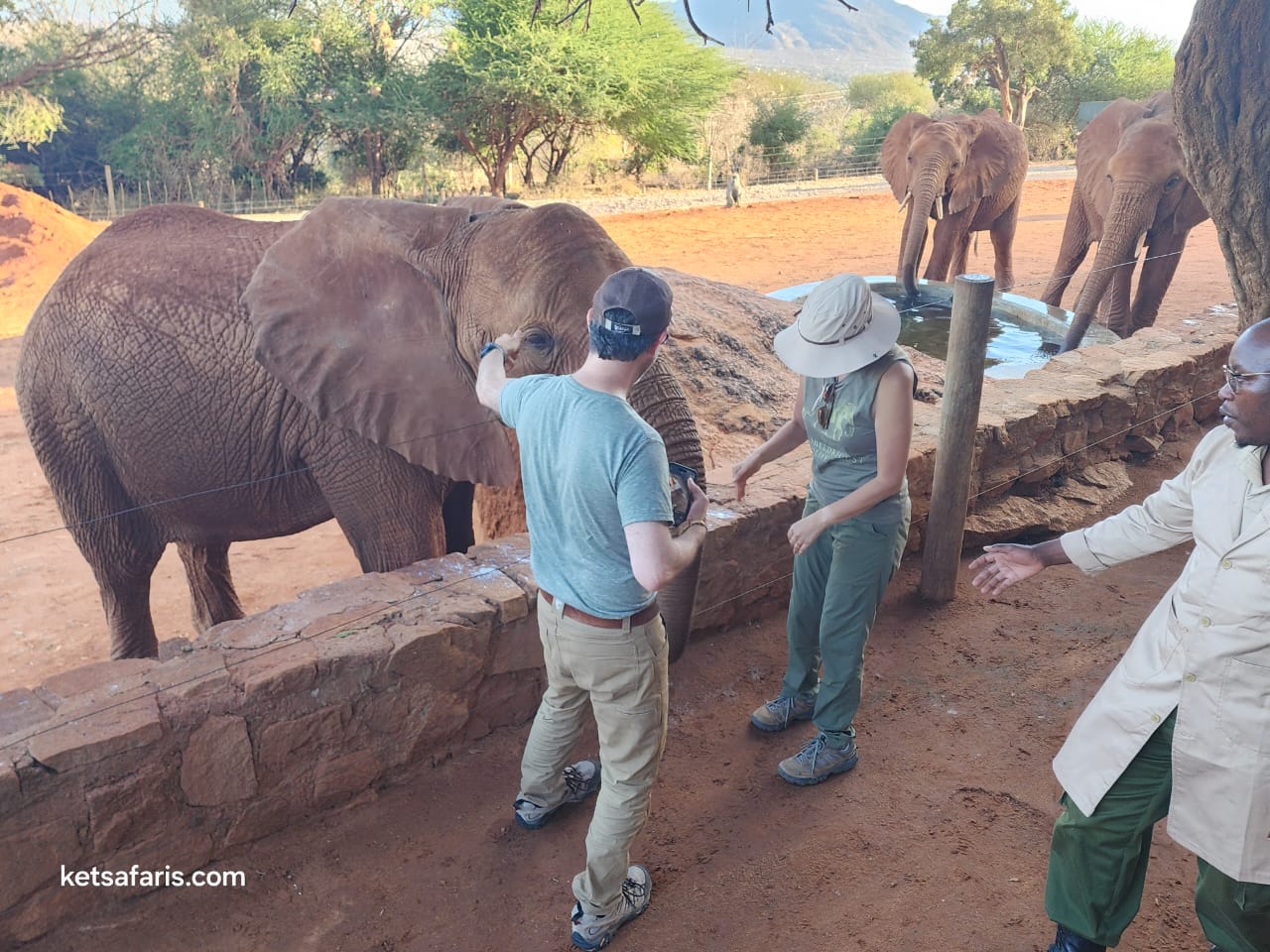
Amboseli National Park is world-renowned for its herds of elephants set against the dramatic backdrop of Mount Kilimanjaro.
Lake Nakuru National Park — a sanctuary for flamingos, rhinos, and diverse birdlife.
Tsavo East and Tsavo West National Parks — vast historic wilderness corridors rich in rugged scenery and untamed wildlife heritage.
These locations form the backbone of Kenya’s safari portfolio, and Kenya Expresso Tours and Safaris ensures every itinerary — whether budget or luxury — is anchored in strong destination value and compelling experiential storytelling.
Budget-Friendly and Luxury Kenya Safari Options with KETS Safaris
Which Safari Experience Is Right for You?
The optimal safari choice depends on your priorities, personality, and travel objectives.
A budget safari is the right strategic fit if you value affordability, adventure, group engagement, and are comfortable with modest amenities in exchange for unforgettable encounters.
A luxury safari is ideal if you prefer elevated comfort, privacy, premium service delivery, and additional enhancements such as private guides, air transfers, and curated leisure moments.
Kenya Expresso Tours and Safaris Ltd collaborates closely with every traveller, aligning expectations, budget parameters, and experience goals to craft a safari journey that reflects personal lifestyle, aspirations, and travel intent.
Plan Your Ideal Safari Journey with Kenya Expresso Tours and Safaris Ltd (KETS Safaris)
Across decades of service excellence, Kenya Expresso Tours and Safaris has built a reputation rooted in trust, professionalism, and operational consistency. Whether you are envisioning a value-driven adventure or a high-end luxury escape, our team delivers end-to-end itinerary support, transparent pricing, and meticulously coordinated travel logistics.
Your story in the Kenyan wilderness deserves to be memorable, meaningful, and well-executed. Engage our team today and begin charting your next safari experience — where heritage meets innovation, and every journey tells a timeless African story.
About Ketsafaris
Kenya Expresso Tours and Safaris Ltd is a travel agency regulated under Cap 499 section of the Companies Act. Our portfolio of destinations and an array of attractions, be it in sublime luxury or rustic simplicity, from the savannah to the sunny Lake Victoria and coastal beaches.
From river Nile, water rafting, the scenic landscape and wildlife of the Maasai Mara, Serengeti, Kruger, and Victoria Falls, among other amazing places. This spectacular array of destinations, coupled with our vast experience, quality service and dedicated professional team, is a guarantee of a truly unforgettable African Safari with us.
Kaspersky experts outline how the rapid development of AI is reshaping the cybersecurity landscape in 2026, both for individual users and for businesses. Large language models (LLMs) are influencing defensive capabilities while simultaneously expanding opportunities for threat actors.
Deepfakes are becoming a mainstream technology, and awareness will continue to grow. Companies are increasingly discussing the risks of synthetic content and training employees to reduce the likelihood of falling victim to it. As the volume of deepfakes grows, so does the range of formats in which they appear. At the same time, awareness is rising not only within organisations but also among regular users: end consumers encounter fake content more often and better understand the nature of such threats. As a result, deepfakes are becoming a stable element of the security agenda, requiring a systematic approach to training and internal policies.
Deepfake quality will improve through better audio and a lowering barrier to entry. The visual quality of deepfakes is already high, while realistic audio remains the main area for future growth. At the same time, content generation tools are becoming easier to use: even non-experts can now create a mid-quality deepfake in just a few clicks. As a result, the average quality continues to rise, creation becomes accessible to a far broader audience, and these capabilities will inevitably continue to be leveraged by cybercriminals.
Online deepfakes will continue to evolve but remain tools for advanced users. Real-time face and voice swapping technologies are improving, but their setup still requires more advanced technical skills. Wide adoption is unlikely, yet the risks in targeted scenarios will grow: increasing realism and the ability to manipulate video through virtual cameras make such attacks more convincing.
Efforts to develop a reliable system for labelling AI-generated content will continue. There are still no unified criteria for reliably identifying synthetic content, and current labels are easy to bypass or remove, especially when working with open-source models. For this reason, new technical and regulatory initiatives aimed at addressing the problem are likely to emerge.
Open-weight models will approach top closed models in many cybersecurity-related tasks, which create more opportunities for misuse. Closed models still offer stricter control mechanisms and safeguards, limiting abuse. However, open-source systems are rapidly catching up in functionality and circulate without comparable restrictions. This blurs the difference between proprietary models and open-source models both of which can be used efficiently for undesired or malicious purposes.
The line between legitimate and fraudulent AI-generated content will become increasingly blurred. AI can already produce well-crafted scam emails, convincing visual identities, and high-quality phishing pages. At the same time, major brands are adopting synthetic materials in advertising, making AI-generated content look familiar and visually “normal.” As a result, distinguishing real from fake will become even more challenging, both for users and for automated detection systems.
AI will become a cross-chain tool in cyberattacks and be used across most stages of the kill chain. Threat actors already employ LLMs to write code, build infrastructure, and automate operational tasks. Further advances will reinforce this trend: AI will increasingly support multiple stages of an attack, from preparation and communication to assembling malicious components, probing for vulnerabilities and deploying tools. Attackers will also work to hide signs of AI involvement, making such operations harder to analyse.
“While AI tools are being used in cyberattacks, they are also becoming a more common tool in security analysis and influence how SOC teams work.Agent-based systems will be able to continuously scan infrastructure, identify vulnerabilities, and gather contextual information for investigations, reducing the amount of manual routine work. As a result, specialists will shift from manually searching for data to making decisions based on already-prepared context. In parallel, security tools will transition to natural-language interfaces, enabling prompts instead of complex technical queries,” adds Vladislav Tushkanov, Research Development Group Manager at Kaspersky.
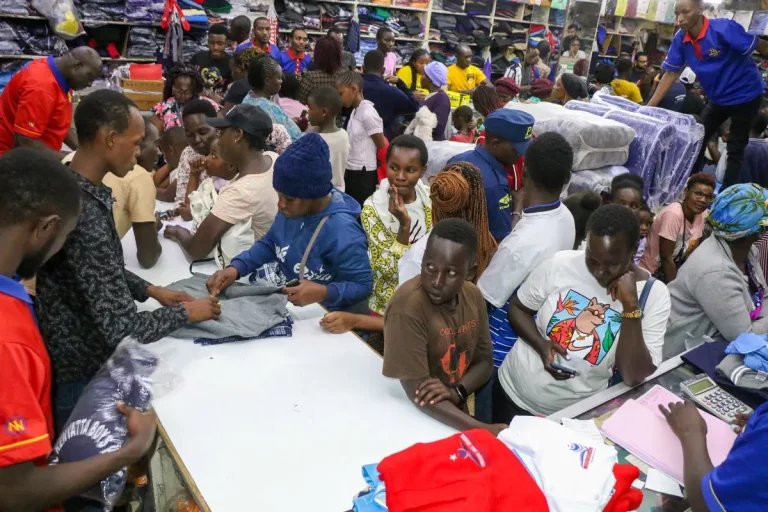
As the 2026 academic year begins and learners return to school, while others join, parents and guardians are preparing to meet a range of essential back-to-school needs, including uniforms, stationery, personal items, and school fees.
Gone are the days when the process felt daunting, as financial institutions have stepped out with convenient solutions to ease the burden experienced by parents when preparing learners to resume their studies.
The Co-operative Bank of Kenya is leading this transformation and has rolled out a suite of practical financial solutions aimed at easing the annual back-to-school rush for parents and guardians.
By integrating affordable credit, digital payments and merchant partnerships, the lender is streamlining how families prepare for the academic year, reducing both cost pressures and time spent navigating multiple service providers.
At the centre of the transformation is digital convenience. Co-op Bank’s mobile and internet banking platforms allow parents to pay school fees, settle balances with suppliers and track spending in real time, reducing the need for cash transactions or long queues at banking halls
Below are some of the payment options customers can use to shop for various back-to-school needs.
M-Pesa Paybill 400200
The first step is through the Co-op Bank’s mobile platforms. Sending money from M-Pesa to a retailer’s Co-operative Bank account through paybill number 400222 is free.
Additionally, once you have sent money, it will immediately reflect on the merchant’s account.
MCo-op Cash Mobile app
If you have a smartphone, you may opt to download the MCo-op Cash mobile app from your phone’s Google Play Store or App Store.
The mobile app will allow you to access your Co-operative Bank account for free, and will enable you to easily transfer funds for free.
By using the app, you will not have to physically withdraw money or write a banker’s cheque.
One can either dial *667# or download the MCo-op Cash App to access the service.
Co-op Kwa Jirani
In the same breathe, instead of walking into a bank, you may use a Co-op kwa Jirani banking agent. Banking at a Co-op Kwa Jirani agent is as good as banking at a Co-op bank branch.
Co-op ATM Cards
Co-op Bank payment cards include Credit Cards, Debit Cards, and Prepaid cards. With any of this, you can withdraw cash at any Visa-branded ATM, or pay for goods & services in a physical outlet or online.
There’s no charge for making payments with your Card. The only amount which is deducted from the card is the cost of the item or service you are paying for.
However, if you withdraw cash using the card, you will be charged a commission up-front, which is immediately deducted from your available card limit.
You don’t need to go and queue at an ATM to withdraw cash when you need to shop or make a payment. You can pay directly in an outlet that has a Point of Sales (POS) machine.
Besides shopping, parents and guardians paying school fees to a Co-op Bank account can do so in various convenient ways, including Paybill services, Co-op Agent, or the Co-op Bank Mobile app.
To pay School fees to a Co-op Bank account, follow this procedure:
A Kenyan student has narrated how he joined the prestigious Harvard University after recording an impressive performance in the Kenya Certificate of Secondary Education (KCSE).
In a video shared by @askharvardstudents, Johnson Aboge revealed he scored an A of 84 out of 84 points in KCSE, earning him a slot at the prestigious United States-based university.
The brilliant student revealed his dream to study abroad came when he was about 13 years and it was not long before the dream came true.
“At the beginning of my high school, when I was about 13 or 14, is when I started thinking of studying abroad. Some high school alumni who had studied at Harvard came to speak to us, and I got inspired to also study here after hearing their stories,” he said.
He revealed that his entry into Harvard followed an application through a college access program in Kenya.
“I was lucky to apply to only one school and get into it, so I did not have to write many essays,” he recalled.
Born in Migori County, Aboge attended Kapsabet Boys High School and emerged as the third-best student in the country in the 2019 KCSE.
At Harvard, he pursued applied Mathematics and a language citation in Arabic with a secondary in Global Health.
He advised those aspiring to study at Harvard to go for it undeterred by their weaknesses.
“Just do the things that you like. You don’t have to be the perfect candidate. I have some flaws, including some spelling errors in my application, but I still got in during early action,” he said.
“Just be yourself and work hard. Work really hard because hard work pays. I know the acceptance rate seems low, but people have to apply to get in here,” he added.
Safaricom has announced updated M-Pesa charges for various money transfer services for 2026.
The charges apply to various transactions, including sending and withdrawing money, as well as Lipa na M-Pesa services.
The new 2026 charges will see customers using M-Pesa services transact up to Sh500,000 daily. According to the telco, the maximum amount that can be sent in one transaction is Sh250,000.
Additionally, the maximum withdrawal amount per transaction is Sh250,000, while withdrawals below Sh50 are not permitted.
Below is the full breakdown of 2026 M-Pesa charges:
Transaction Range (KShs)
Transfer to M-Pesa Users / Pochi La Biashara / Business Till to Customer