Home Blog Page 126

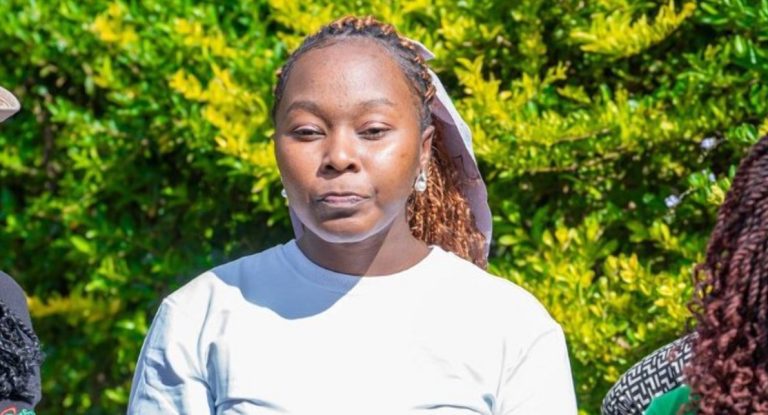
Faith Muchira: The phone call that changed my life forever

0

“My life changed on December 8, 2025,” begins 30-year-old Faith Muchira. “I was at home in Gatunduri, Embu County, with my baby. I was busy with household chores. I had just warmed some water for my baby as I prepared to start cleaning utensils.”

She purchased internet bundles on her phone and set up a hotspot connection for her television to stream cartoons in order to keep her baby engaged as she worked. A couple of minutes later, she heard her phone ringing.

“The phone was in the bedroom. When I picked it up, I noticed that the caller was from Safaricom. The number was 0722 000 000,” she says.

At first, she thought that Safaricom was calling over an M-PESA transaction that might have been wrongly sent to her number.

“I took the call casually. I thought it was someone who may have inadvertently sent money to my number and Safaricom was calling to confirm before making a reversal,” she says.

“The caller first asked if they were speaking with Faith Muchira. I answered affirmatively and they asked me to read out my ID number to confirm if I was Faith.”

She hung up the phone immediately she was asked about her identity card number and went back to her chores.

“I was startled when they asked for my ID number. I hung up the phone. I was afraid that this was scam. Why were they asking for my ID number?”

A few minutes later, the phone rang again.

“I picked it up. The caller told me to confirm that the number was from Safaricom. They reassured me that it was Safaricom calling and I was not being scammed. I eased my fears off and gave them my ID number.”

Faith says that after confirming she was the person they had reached out to, Safaricom asked her to check a message that had been sent to her mobile number during the call.

“I checked. I couldn’t believe it. I had won Sh1 million in the ongoing Shangwe@25 campaign,” she says, a bright smile forming on her face.

It took some time for reality to sink in. That day, she kept checking and rechecking the message she had received. “For hours, I couldn’t believe it. I would even pinch myself just to make sure that I was not dreaming. I would stand in front of the mirror and just smile,” she says.

Faith says that this call is the turnaround that she has been waiting all her life. You see, she has been running small business ventures from her home.

“I am not formally employed. I run small hustles from my home,” she says. She has been selling the Pure Pishori brand of rice, which she sources from Nice Millers. “I buy rice in small sacks on wholesale and sell from home to my neighbours. I have not opened a shop yet because of capital,” she says.

At the same time, Faith has been working as a mobile nail technician within Gatunduri village. “I move around the village and shopping centre offering manicure painting services.” To top it all, Faith is also a small-scale farmer. “I am also a rabbit farmer. I have been rearing rabbits from my mom’s homestead in Nguviu village.”

Faith says that she intends to use her newfound fortune to expand her business ventures. “I am planning to expand my pishori rice and manicure painting business. I want to open a nails parlour shop in town where there is a bigger flow of customers. I also want to open a shop in town where I can start bringing bigger stocks of rice for sale,” she says, adding that she will build a hutch for her rabbits at her home.

“I am not going to venture into new businesses that I am not familiar with. I am going to scale up what I have been doing to generate more income,” she says.

In addition to the Sh1 million reward, Faith was granted Sh250,000 for a community project that she would like to uplift. “I have chosen to have the money rewarded to our village chama. The chama has been intending to purchase tents and chairs to help villagers whenever we have burials, weddings, ruracio (dowry ceremonies) and other village events,” she says.

Faith Muchira: The phone call that changed my life forever
Faith Muchira when she received her reward on December 16, 2025. Image/Courtesy

Interestingly, Faith is just one of the many lives that Safaricom is changing with that golden phone call. In some cases, Safaricom has gone to the extent of encouraging winners to invest and grow their fortunes with a money market fund.

Take Joseph Ndung’u, aa 27 year-old who hails from Mshomoroni in Kisauni Constituency. Ndung’u is a TukTuk driver. After he won Sh1 million a few days before Christmas in December 2025, Safaricom deposited the money in his Ziidi Money Market Fund (MMF), a low-risk investment product that allows Kenyans to earn interest from their money. The product allows for free and instant deposits and withdrawals between M-PESA and Ziidi.

To reach as many Kenyans as possible, Safaricom has also set up various other reward categories, all of which are impacting small and medium enterprises like Serah Nabwire’s. Serah was rewarded with Sh100,000 in November 2025. She has been running a mahindi choma business since 1999.

“I have been using Safaricom for two years now. I registered my line with Pochi la Biashara in order to support my business operations,” she says. Nabwire recalls that on the day she received the call that she had won Sh100,000, business was not booming.

“I was just sitting here at my workplace. The sun was out. It was an extremely hot day,” she says. The news that she had won the reward came as a relief for her family. She used part of the money to settle a motorcycle debt that her husband had taken. “I settled the debt and now my husband can work as a boda boda rider without fear of getting auctioned,” she says. She also set aside some money for her child’s school fees, and used the remainder to reward herself with a new phone.

SEE MORE: Inside Safaricom’s 25 years of touching lives and small businesses 

The Shangwe@25 promotion campaign started on October 31, 2025 and shall conclude on January 19, 2026. “Shangwe@25 promotion campaign is our way of saying thank you to our customers who have stood with us over the last 25 years. It is also our way of ensuring that when one customer wins, their community wins too,” says Safaricom chief executive officer Peter Ndegwa.
Government announces second disbursement of NYOTA funds

0

The government has announced the second phase of business start-up capital disbursement under the National Youth Opportunities Towards Advancement (NYOTA) Project.

In a statement on Tuesday, January 6, the State Department for MSMEs Development said the disbursement will take place from Thursday, January 8, 2026, to Friday, January 16, 2026 graced by President William Ruto.

According to the statement, about 50,000 beneficiaries will each receive Sh22,000 as a deposit to their NYOTA Pochi la Biashara e-wallet and an additional Sh3,000 into their NSSF savings account.

The disbursement targets beneficiaries in 27 counties across the country including Uasin Gishu, Elgeyo Marakwet, Nandi, Trans-Nzoia, Turkana, West Pokot, Nakuru, Narok, Bomet, Kericho, Baringo, Laikipia, Isiolo, Samburu, Nyeri, Murang’a, Kirinyaga, Nyandarua, Meru, Tharaka Nithi, Embu, Machakos, Kitui, Makueni, Nairobi, Kiambu, and Kajiado.

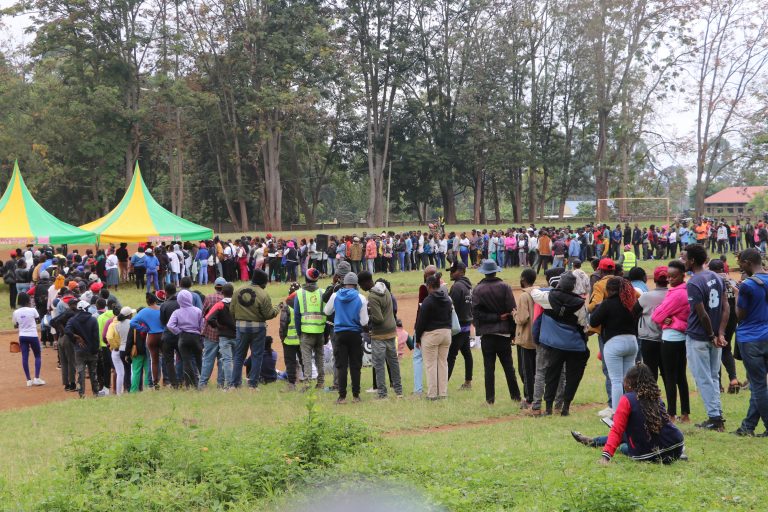
The disbursement will begin in Eldoret on January 8 for beneficiaries in Uasin Gishu, Elgeyo Marakwet, Nandi, Trans-Nzoia, Turkana, and West Pokot counties.

It will be followed by Nakuru on January 9 for Nakuru, Narok, Bomet, Kericho, and Baringo. The program will continue in Nanyuki on January 12 for beneficiaries in Laikipia, Isiolo, and Samburu.

Other venues are Nyeri on January 12 for Nyeri, Murang’a, Kirinyaga, and Nyandarua; Meru on January 14 for Meru, Tharaka Nithi, and Embu; Machakos on January 15 for Machakos, Kitui, and Makueni; and Nairobi on January 16 for Nairobi, Kiambu, and Kajiado.

ALSO READ: Education Ministry allows Starehe to reject 632 Grade 10 learners

All NYOTA Project business grant beneficiaries will benefit from a two-month mentorship programme delivered by business development experts and local entrepreneurs.

Additionally, the beneficiaries will undertake a second phase of Business Development Support training to prepare them for the second tranche of business grant disbursement.

The government further announced that the third phase of disbursement, targeting 16 additional counties, including Kilifi, Lamu, Tana River, Mombasa, Kwale, Taita Taveta, Kisumu, Siaya, Homa Bay, Migori, Nyamira, Kisii, Marsabit, Garissa, Mandera, and Wajir, will be announced in due course.

Wells Fargo announces mass hiring of security guards; how to apply

0

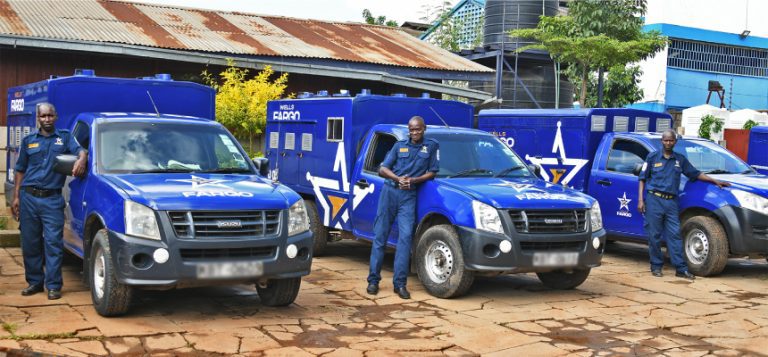
Wells Fargo Limited has announced mass hiring of security guards as part of its effort to strengthen its frontline security staff.

In an advertisement published on its Facebook page, the security and courier firm said it is seeking to recruit 150 security guards.

“Wells Fargo Ltd is starting the year strong with a mass recruitment drive for security guards. If you are disciplined, dedicated, and ready to serve, this could be your moment,” Wells Fargo stated.

“Wells Fargo is seeking to recruit 150 dedicated security guards to strengthen our frontline security staff,” it added.

Interested applicants must be of high integrity, physically fit, and ready to join a professional security team.

Requirement

Applicants must be form four leavers aged between 22 and 40 years with at least a D+ in the Kenya Certificate of Secondary Education (KCSE).

They must also present various documents, including an original and a photocopy of the secondary school leaving certificate and KCSE Certificate. Applicants whose KCSE certificates are not yet out can present their KCSE result slip.

Other required documents are two recent colour passport-size photographs, original and photocopies of the National Identity Card, police clearance certificate, NSSF card, SHA universal Health ID Number and KRA PIN Certificate.

Others are valid bank account details, a letter from the chief or sub-chief of the applicant’s rural home, three letters of recommendation from current and former employers, and a detailed sketch maps showing applicant’s urban and rural residences.

The minimum height requirement is 5ft 10 inches for men and 5ft 8inches for women.

“Failure to provide any of the above may lead to disqualification,” it warned.

How to apply

Applicants must provide a handwritten application letter addressed to the human resources manager, Wells Fargo Ltd, P.O. Box 43370-00100, Nairobi.

According to the firm, candidates will be selected at Fargo Training School, Nairobi, located at Suvida Business Complex, Beijing Road, on Wednesday, January 7, 2025.

“Wells Fargo Limited does not charge any fees for application, selection, or appointment. If any staff asks for a favor, fee, or bribe in this recruitment process, please report immediately to [email protected] or SMS/WhatsApp to 0700286417 or [email protected],” it cautioned.

Also Read: Job interview: mistakes not to make when answering “Why are you interested in this position?”

Back to school chronicles: How to get quick school fees loan

0

The first term of school reopening is usually the hardest for parents as it comes along with more responsibilities and expenses, especially for those parents who have students joining form one.

For most parents, it means buying everything new: new shoes, uniforms, stationery, textbooks, and exercise books.

Sometimes, it becomes hard for parents to manage all those expenses, given the heavy Christmas and New Year spending.

Luckily, Co-op Bank has come up with a solution to ensure parents take back their kids to school even in times of financial hurdles.

The bank is providing instant mobile loans of up to Sh1 million for school fees through Mco-op Cash to customers with a salary or business account.

No forms, calls, or security required; all you need to do is to register yourself on your phone for free and apply for the loan immediately. To register, dial *667# OR download the Mco-opcash app and select REGISTER.

Easy ways to pay school fees, back to school shopping

To check your Mco-op Cash loan limit (how much you qualify for):

  • Dial *667# or open the MCo-op Cash app and login with your MCo-op Cash PIN
  • Select E-loans
  • Select Check Limit
  • Click on APPLY LOAN and follow the steps
  • The money will be deposited in your Mco-op Cash wallet (This is a virtual account. The account number is your mobile number with ‘1’ at the end). You can transact directly from the wallet or transfer the money to your Salary or Business account

To apply for Mco-op Cash loan:

  • Dial *667# or open the MCo-op Cash app and log in with your MCo-op Cash PIN
  • Select E-loans
  • Select Check Limit
  • Click on Apply Loan and follow the steps
  • The money will be deposited in your MCo-op Cash wallet (This is a virtual account. The account number is your mobile number with ‘1’ at the end). You can transact directly from the wallet or transfer the money to your Salary or Business account

Simple tips to help you survive this January after heavy Christmas spending

0

January is here. That month of the year when people are ever broke and sad after heavily spending on the festivities. 

It’s that month that reminds you of the bad decisions you’ve been making. It’s that month that seems longer than the other months of the year. It’s called chapter 1 of 12.

Responsibilities are already ticking, from school fees, uniforms, rent, shopping, etc,  but the pocket is already torn. There is no need to worry anyway because that’s the spirit of January, commonly referred to as Njaanuary – the month of hunger.

All you need to do to survive this month is to create a proper plan for your finances. The following tips will help you sail through the month.

Prioritize your spending

Spend on the most important things and allocate your money appropriately. You need to suspend luxury and focus on the basic things.  Also, when going out shopping, try to compare prices.

This is how you can ensure you are not cash poor after retirement

Track Down Your Loose Change

Hunt around your house to collect all those hidden coins. Also, don’t ditch your change in shopping outlets. Once you convert those coins to cash, you could have a huge sum to put toward your emergency expenses.

Cut down on your bills

Look for a way to cut down your daily expenses.  If you live close to your workplace, walking to work is a great alternative to save money on commuting costs. 

If the office is too far, consider using public means of transport as they are cheaper than driving your car. Get cheaper monthly tariffs for calls and texts instead of buying airtime daily.

Also, try carrying food to work instead of going out for lunch at restaurants.

5 big billing mistakes that are hurting your cash flow

Sell what you no longer Use

Looking around your house, you won’t miss two or three things you no longer use. Some things you can set aside to resell include clothes, shoes, bags, and chairs, among others.

Someone elsewhere is dying to have those products, so sell them. You can sell them online via platforms such as Jiji or Facebook marketplaces or in black markets. Use the money to sort out other things in your life, like bills.

Avoid moving around

The more you move around, the more you spend. Move around only when it’s important. If you look at how much you use fuelling your car or the fare for public transport, you might consider staying home to save on that extra cash.

Find an additional source of income.

If you are a full-time employee, consider picking up a part-time job.  You can also consider flexible hustles, such as selling products online. This will keep you afloat as you wait for your income.

Education Ministry allows Starehe to reject 632 Grade 10 learners

The Cabinet Secretary for Education Julius Ogamba has revealed that his ministry allowed Starehe Boys Centre and Starehe Girls Centre to reject 632 Grade 10 learners who had been placed at the two institutions.

The cabinet secretary made this revelation days after some parents lamented that they had been turned away from the two institutions, with others complaining that their children had been transferred to other schools.

According to Ogamba, the ministry of education had provided the two schools with a list of Grade 10 learners who had been placed there, after which the institutions rejected a total of 632 learners.

The institution claimed that these students, despite meeting the minimum scores, did not “qualify” to be placed at the schools.

“Upon comparison of the Ministry’s placement list and the schools’ internal selection criteria, it was established that only 81 boys and 61 girls met institutional criteria,” CS Ogamba said.

According to the minister, Starehe Boys rejected 317 learners while Starehe Girls rejected 315 learners. Shockingly, the learners were not only transferred without making requests; some were transferred to day schools that were lower than the C1 schools they had qualified for.

One parent told the media that their child who had scored 72 points and received a placement at Starehe Girls Centre had been moved to a day school. Another whose child had scored 71 points and was placed at Starehe Boys Centre had been moved to Moi High Mbururi in Embu County while yet another with 70 points had been shifted to Kagumo High School in Nyeri.

When the parents tried to seek assistance from the ministry, they were told that the school operates like a private entity and there was nothing the ministry could do. CS Ogamba, in his statement, had claimed that the affected learners had been placed at their second choice C! schools.

Prior to the death of its founder and director Geoffrey Griffin in 2005, Starehe Boys Centre was ranked as one of Kenya’s best national schools. The school regularly dominated the national Kenya Certificate of Secondary Education examinations.

Over the past twenty years, the schools have lost their old glory in national examinations, sometimes ranking outside the top ten best schools nationally. Nonetheless, the schools are still regarded as institutions with good performances.

SEE MORE: Education Ministry extends Grade 10 Senior School transfers deadline

1xBet 2025: Strengthening Markets, Communities, and Trust

0

2025 was a high-energy year for 1xBet across multiple African markets. The brand combined continent-wide football sponsorship assets with local initiatives, expanded digital activations in GEOs where online remained the primary channel, and continued building offline presence where retail development was available. Alongside marketing activity, 1xBet invested in platform upgrades, payment convenience, and responsible gaming communication – while also supporting community projects with long-term value.

A Pan-African Football Focus: CAF Partnership & AFCON Momentum

African football remained a central pillar of 1xBet’s regional strategy. As an official partner of the Confederation of African Football (CAF), the brand continued supporting major competitions across the continent and building anticipation for AFCON – one of Africa’s most watched sporting events. This long-term partnership helped unify communications across GEOs, providing a consistent football narrative that local teams could adapt to their markets.

Promotions & Local Activations

Throughout 2025, 1xBet delivered a diverse and well-structured promotional calendar across multiple markets, combining scalable digital formats with locally adapted activations. A consistent flow of headline campaigns – including CAF Trophy Hunt, Spin and Win, weekly Freebet draws, and other recurring formats – ensured continuous visibility and regular audience engagement throughout the year.

At the center of this promotional ecosystem stood Big Match, the flagship campaign of 2025 and one of the most widely communicated initiatives across markets. Supported by dedicated articles and media coverage, Big Match distinguished itself through its straightforward mechanics, strong football context, and offline prize ceremonies featuring high-value cash rewards. In Ghana, Burundi, Zambia, Congo-Brazzaville, Gambia and others  winners were awarded in person, transforming the campaign into a tangible, real-world experience that extended beyond digital communication and reinforced brand credibility.

1xBet Casino: the best gambling games, top tournaments, generous bonuses, and huge winnings!

Alongside global formats, 1xBet actively localized its activations to reflect national context and key calendar moments. Independence Day bonuses in markets such as Côte d’Ivoire, Mali, and Burundi became important emotional touchpoints, while campaigns like WOW Promo, “Bets for All”, app-focused initiatives, and 1xGames supported reach, creativity, and product visibility across different user segments.

In parallel, 2025 marked meaningful progress in local presence and offline execution in several countries. In Equatorial Guinea, 1xBet strengthened its footprint through sponsorship of football competitions in Malabo, summer promotions at betting locations, and the opening of a new betting shop – a significant step in expanding offline operations. In Sierra Leone, the launch of the country’s first betting shop became a major milestone and a strong informational trigger that supported subsequent social media activity. Zambia demonstrated one of the most active on-the-ground calendars, combining bar match screenings, participation in large local events, PlayStation tournaments at betting locations, and sponsorship of the Drift vs Spin motorsport event.

Together, these initiatives highlighted 1xBet’s ability to scale campaigns across multiple markets while adapting execution to local realities – balancing digital reach with offline visibility, and turning promotions into memorable brand moments supported by both online communication and real-world engagement.

Social Media Contests & Digital Engagement

Throughout 2025, social media contests continued to be one of 1xBet’s most consistent ways of engaging with its audience. In total, the brand delivered hundreds of interactive social media campaigns, with 20–35+ contests per country on average, resulting in well over 5,000 prize recipients across the continent throughout the year.

Many of these promos were implemented in collaboration with local ambassadors, football clubs, and community partners, including joint campaigns with artists, athletes, and social initiatives. Overall, these social media activities ensured stable visibility, regular audience interaction, and scalable engagement across multiple markets throughout the year.

Partnerships & Ambassadors: Sport and Culture, Locally Relevant

In 2025, 1xBet strengthened credibility and local visibility through partnerships tailored to each market’s context:

  • Burundi: collaboration with the Burundi Football Federation and local music ambassadors Sat-B and Drama T, aligning the brand with both football and culture.
  • DR Congo: ambassador activity with Ferre Gola, paired with major promo delivery and offline prize moments.
  • Gambia: ambassador work with Jizzle, including sponsorship support for concerts – connecting sports communities with cultural life.
  • Kenya: sponsorship of Waziri 1xCup and partnership with Mathare United FC, supporting grassroots sport and youth participation.
  • Cameroon: structured partnerships spanning Tenor, FC Bamenda, and the Cameroon Basketball Federation, creating a multi-sport, multi-channel presence.
  • Congo-Brazzaville: continued ambassador collaboration with Tidiane Mario and renewed work with FC Diables Noirs.

1xGames: immerse yourself in the world of excitement on 1xBet!

Social Impact & Education: Projects with Long-Term Value

Beyond brand activity, 1xBet supported a range of initiatives designed to deliver lasting community impact across multiple regions, with a focus on education, grassroots sport, cultural development, and social responsibility.

Through the SiGMA Foundation, 1xBet contributed to long-term educational projects in Uganda and Ethiopia, supporting the modernization of learning facilities and community infrastructure. In Uganda’s Kasese region, the initiative is creating a safe and sustainable educational environment for around 300 people, while in Ethiopia the focus included education and women’s empowerment through structured community centers.

In Guinea, social engagement was delivered through the 1xImpact program — a year-round platform supporting vulnerable groups via humanitarian and family-oriented initiatives. In Zambia, the Safety on the Road project promoted responsible behavior among drivers and pedestrians using educational content, media formats, and interactive engagement.

Sport-driven impact played a central role in Nigeria and Kenya. In Nigeria, 1xCup supported grassroots football through large-scale amateur tournaments combined with digital visibility, while 1xWoman focused on empowering women in sport through education and mentorship. In Kenya, the Waziri 1xCup combined multi-sport competition with tangible community support, strengthening youth sport and local infrastructure.

Additionally, 1xBet received the Best Sponsorship Programme Award at the Gaming Operators’ Gala & Award Night for its contribution to sports development in Nigeria through the 1xCup project. The award highlighted the brand’s structured approach to football sponsorship, youth competitions, and compliance with regulatory standards, reinforcing 1xBet’s reputation as a long-term partner in the development of African sports.

Cultural initiatives expanded the brand’s social footprint in Congo Brazzaville and Ghana. In Congo, 1xBet supported FESPAM, Africa’s largest pan-African music festival, contributing to creative industries and youth engagement. In Ghana, participation in Dashiki Festival 2025 connected sport, culture, and community through environmental action, football competitions, and cultural celebrations.

Together, these projects reflect 1xBet’s long-term approach to social impact — supporting education, inclusion, safety, sport, and culture across diverse markets.

Mathematically proven: the 1xBet platform has the highest odds!

Product & Platform Development: Performance, Payments, Local Relevance

Across markets, 1xBet’s 2025 product focus emphasized speed, convenience, and locally relevant content.

  • Platform upgrades: multiple markets upgraded the platform, improving performance and overall usability (e.g., Zambia, Burkina Faso, Madagascar, Guinea, Mali and others where noted).
  • Payments & cashback: local payment convenience expanded through cashback and integrations, including examples such as Orange cashback increases (e.g., 5% to 10% where implemented), and Airtel cashback introductions (e.g., Gabon; Chad referenced Airtel 10%).
  • Local content expansion: in Burundi, the sports line added matches from the local League A, improving relevance for domestic football audiences.
  • App and channel development: DRC highlighted the launch of an iOS app; other markets expanded content distribution and owned channels (e.g., Telegram relaunch where noted).

Sports Interest: What Fans Followed

While each market had its own nuances, audience interest across the portfolio consistently centered on football, with strong additional attention to basketball, tennis, and esports depending on the GEO. Major drivers of attention included CAF competitions, top European leagues (EPL, La Liga, Serie A), and the UEFA Champions League Final, with globally high-profile fixtures frequently acting as key content peaks.

Responsible Betting: 1xBalance Campaigns

Responsible gaming remained an important communication direction across multiple markets in 2025. The 1xBalance initiative continued to develop through ongoing social media campaigns, featuring educational formats, awareness-driven content, and practical guidance aimed at supporting a more informed approach to betting behavior.

The 1xBalance campaign remains active across the brand’s social channels and will continue into 2026. In January 2026, 1xBet also plans to launch a dedicated 1xBalance website, which will offer structured advice, practical guides, and responsible gaming tools designed to support conscious and balanced play.

Global Recognition: SiGMA Africa Awards Finalist

On the international stage, 1xBet continued to receive industry recognition. Last year, the brand was named Best Sportsbook Operator in Africa at the prestigious SiGMA Africa Awards 2024, a mark of true industry excellence. This year’s highlight came as 1xBet was named a finalist in the SiGMA Africa Awards 2025 in two categories: Best Sportsbook Operator 2025 and Best on Mobile 2025.
These nominations, alongside international wins like “Mobile Sports Product of the Year” at the International Gaming Awards 2025, confirm 1xBet’s position among Africa’s elite gaming brands.

Looking Ahead

By the end of 2025, 1xBet had strengthened multi-market execution through a balanced mix of digital activations, offline steps where available, product improvements, and community projects. With AFCON momentum, ongoing platform development, and new market initiatives taking shape, 2026 is positioned to bring fresh formats and expanded activity across the portfolio – built on a foundation of consistency, local relevance, and long-term investment.

Equity Bank simplifies back-to-school payments with nationwide agent network

0

Few things test the resilience of a household budget like the back-to-school season. The period comes with many financial demands, including school fees, uniforms, books, and daily supplies.

Getting ready for school has never been simpler. Equity Bank is placing its bank agents at the centre of the solution; helping parents pay, shop and manage finances with ease.

By offering quick solutions for fee payments and mobile money transactions, the over 42,000 accredited Equity Bank agents, located in retail outlets, corporate offices, malls, postal outlets, and other convenient locations across the country, are turning a logistical headache into a smooth, stress-free process.

Instead of battling long queues at schools or struggling with last-minute payments, you can now rely on agents for a faster and more convenient way to handle these tasks and to lipa bills bila presha.

Pay Fees Through Equity Agents

Customers can conveniently pay school fees through banking agents and will be issued with a receipt, which can be submitted to the school as confirmation of payment.

For customers who prefer assisted service, Equity Agents help guide the payment process using Equity’s approved channels, including:

*247#

Equity Mobile App

Equitel

By providing assisted access to these platforms, agents ensure school fees payments are completed accurately and on time, helping customers avoid delays during the busy back-to-school period.

Manage Cash and Deposits Near You

Equity Agents provide customers with convenient access to cash withdrawals and deposits within their neighbourhoods, making it easier to manage day-to-day back-to-school expenses. Parents and guardians can withdraw money for uniforms, books and other school supplies, or deposit funds in preparation for school fees payments.

By transacting with an Equity Agent nearby, customers avoid long travel distances and queues at banking halls, allowing them to save time and handle school-related financial needs quickly and efficiently during the busy back-to-school period.

Equity Group sacks 2,000 employees in latest crackdown

Complete Payments Even When Funds Are Low

Back-to-school expenses can be demanding. Customers who need flexibility can access financial solutions through Equity’s digital channels. Equity Agents help customers understand these options and help them complete transactions smoothly.

Bank agents can guide customers on how to:

Apply for loans of up to KSh 3 million via *247#, Equity Mobile App or Equitel

Complete transactions using Boostika prompts when paying through *247#, Equity Mobile App or Equitel

Don’t share your PIN with anyone, including the agent!

Enjoy Fast Service closer to home, even beyond working hours

Equity Agents are located within communities, making banking services more accessible during the busy back-to-school season.

Whether you are paying school fees, depositing money or withdrawing cash, agents provide a simple and reliable way to manage your finances close to home.

Visit an Equity Agent near you and enjoy Back to School Bila Pressure. Remember, your PIN is your secret, don’t share with anyone.

For assistance, contact Equity on 0763 000 000.


Khafafa: Wamuchomba is sincere but sincerely wrong on Kenya Airways

0

To anyone outside aviation, aircraft maintenance can appear disarmingly mundane, little different from the routine servicing of a motor vehicle. The reality is altogether more exacting. Whereas drivers may occasionally overrun a scheduled service interval by a few hundred kilometres with little consequence, aircraft operate under maintenance programmes prescribed by their manufacturers and enforced with uncompromising rigour, for reasons of safety rather than convenience.

Compliance, therefore, is not discretionary. Certification may be withheld, and often is, from operators that habitually disregard these requirements. In many jurisdictions, regulators go further still, suspending operations or, in egregious cases, imposing permanent bans on carriers found in flagrant breach of established standards.

Githunguri Member of Parliament Gathoni Wamuchomba’s recent remarks, though no doubt well-intentioned, reveal a thin grasp of the operational realities of Kenya Airways (KQ) and the economies of aircraft maintenance. She asserts, without evidence, that the national carrier has 11 aircraft grounded, alleging further that these planes have been idle for five years while lease payments continued unabated, imposing a heavy burden on taxpayers.

Wamuchomba appears unable to distinguish between aircraft that are grounded and those undergoing routine, scheduled maintenance. Within any airline’s network, flights are assigned specific tail numbers and each aircraft operates under a carefully calibrated schedule that allocates both flying hours and maintenance windows. These maintenance periods, planned way in advance, can range from as little as seven hours on the ground to as long as three months, depending on the nature of the check.

An aircraft is deemed grounded only when it has been withdrawn from service and barred from flight, either temporarily, for repairs or maintenance extending beyond three months, or design defects that render it unfit to fly until remedied and certified by aviation authorities. The distinction is decisive. Routine maintenance proceeds as part of an airline’s internal schedule and does not require regulatory inspection. Grounding, by contrast, does. In Kenya such aircraft fall under the explicit oversight of the Kenya Civil Aviation Authority.

How KQ decides to buy new planes, process and cost

It is true that a number of KQ aircraft have been grounded at various points, though at different times and over different years. No single aircraft has been out of service for five years, let alone eleven aircraft grounded. What has occurred instead is extended maintenance, largely driven by global supply-chain disruptions that have delayed the delivery of critical spare parts. Contrary to Wamuchomba’s assertions, which attribute these extensions to managerial failings, such constraints have afflicted much of the global airline industry, particularly carriers with significant exposure to the Boeing 787 Dreamliner.

Some aircraft have been placed on extended maintenance. Two Boing 737s, inducted in the second quarter of 2025, fall into this category. One returned to service on December 24 th; the second, initially scheduled to re-enter service this week, has been deferred to mid-January owing to shipping delays over the festive period.

Two Embraer E190s were inducted in August 2025. One resumed operation on December 18th. The other remains in maintenance pending the return of engines and landing gear currently undergoing mandatory overhauls at overseas facilities. After the mid-January release of the B737-800, five aircraft will remain temporarily grounded with a clear and sequenced plan in place for their recovery.

Airlines customarily pare back capacity during the low season, using the lull to undertake heavy maintenance and prepare their fleets for the demands peak travel. KQ is no exception. It has trimmed certain frequencies in line with softer seasonal demand, while exploiting the opportunity to service its aircraft comprehensively. Current projections suggest that the entire fleet will return to service by the first quarter of 2026, aided by easing supply-chain constraints and the airline’s participation in additional spare-parts pools.

None of this is obscure. The information is in the public domain and easily accessible to anyone inclined to look. That raises an awkward question: how could Wamuchomba, a seasoned journalist with ample investigative tools at her disposal, have so badly misconstrued the position at Kenya Airways?

Simple money habits that helped me save Sh450,000 in one year

A Kenyan man has narrated how he managed to save Sh450,000 in 2024 exceeding his target of Sh300,000.

According to a post that appeared on Money254, the unidentified man revealed he works as an accountant at an FMCG company in Eastleigh, Nairobi, earning a net salary of Sh70,000.

His saving journey was inspired by his financial goals, which included purchasing a piece of land, enrolling his child in school, and taking his family on a vacation.

The man, who is in his mid-30s, revealed that the Sh300,000 savings goal was a significant jump from the Sh200,000 he managed to save in 2023.

Below is his narration on his savings journey:

“With 35 percent of my income committed to savings, I had to carefully manage the remaining 65 percent (Sh45,500) to cover my living expenses.

The first step was developing a budget to balance my day-to-day needs with my savings ambitions.

I chose to keep my housing costs low by renting a modest one-bedroom apartment in Eastleigh for Sh17,000, which was enough for my partner, my three-year-old child, and me.

Living close to my workplace allowed me to save on commuting costs as I could either walk or, in a pinch, take a boda boda for a small fee.

The remaining 40 percent of my salary—around Sh28,000—covered essentials like food, utilities, and other daily expenses. Here’s how I broke down this part of my budget:

  • Food and groceries: Sh15,000
  • Utilities (water, electricity, and internet): Sh5,000
  • Childcare and Miscellaneous expenses: Sh8,000

Apart from sticking to this budget, to ensure that I wasn’t overspending in any area, I need to track every shilling I spent. To achieve this, I recorded every expense and used a budgeting app me and my partner could edit.

Ndindi Nyoro: Building houses, apartments is not a good investment

To streamline my savings, I opened multiple accounts dedicated to different goals. Here’s how I allocated my savings for different savings goal:

  • Land purchase: Monthly transfers to my SACCO account.
  • School fees for 2025: Deposits to a fixed deposit account.
  • Car Upgrade: A separate savings account at my bank.
  • Holiday Vacation Savings: A high-interest money market fund (MMF).

Each month, a portion of my salary would be automatically transferred to these accounts.

In June, as the tax-filing season approached, I leveraged my accounting skills to find a part-time job. I offered tax-filing services to small businesses and managed to secure two clients.

One of them, impressed by my work, retained me as their part-time bookkeeper. This role involved reconciling financial transactions such as purchases, expenses, sales revenue, invoices, and payments.

I could complete the work remotely, spending around two hours daily and four hours on Sundays, for which I earned Sh15,000 a month.

Around the same time, I also requested a raise at my current job, where I had been working for three years. My employer acknowledged my dedication and granted me a Sh10,000 salary increase.

With an additional Sh25,000 coming in each month from these two sources, I made a conscious choice not to let lifestyle inflation creep in.

Instead of increasing my expenses, I decided to save this extra income, which helped accelerate my progress.

By maintaining my original savings plan of Sh24,500 per month, I was on track to save Sh294,000 by year-end. With the additional Sh25,000 saved monthly from July to December, I added an extra Sh125,000 to my savings. This pushed my total savings projection to Sh419,000.

In addition to my salary and part-time earnings, I experienced an unexpected financial boost in October.

Back in 2022, I had loaned Sh30,000 to a cousin who had lost his job and was starting a small business. Unfortunately, his business didn’t succeed, and he defaulted on the loan, which I eventually wrote off as a loss since he hadn’t gave me a collateral.

However, out of the blue, I received Sh50,000 from him on my M-Pesa in October. He had secured a stable job earlier in the year and had started repaying his debts. Not only did he return the principal amount, but he also included interest to acknowledge the delay.

Rather than splurging with this unexpected windfall, I allocated Sh30,000 to my savings while allowing myself a modest Sh20,000 to spend on some long-delayed purchases.

This additional Sh30,000 brought my projected savings to Sh449,000, significantly exceeding my initial target.”

Source: Money254