Home Blog Page 127

Cheruiyot: How Sh70,000 in an account can make you Sh400,000 in 2 years

Putting aside money for future use can help you meet life goals and live a financially stress-free life.

According to the 50-30-20 budget rule, 50 percent of your money should go toward needs, 30 percent toward wants, and 20 percent toward savings.

Benjamin Cheruiyot, a financial advisor at Abojani Investments, has shared insights on how a person earning Sh70,000 can save Sh400,000 in 2 years.

According to him, a person earning Sh70,000 should save Sh14,000 monthly using the 50-30-20 budget rule.

Of the Sh14,000, Sh9,000 should be directed to a SACCO BOSA account, which offers long-term savings with borrowing privileges, while Sh5,000 should be allocated to a money market fund (MMF) account, providing stable returns.

The Role of Institutional Investments in Shaping Bitcoin’s Market Value

Cheruiyot notes that at the end of the first year, the projected savings would be Sh188,160. This includes Sh120,960 (net average 12 percent) in the MMF savings and Sh67,200 (net average 12 percent) in the SACCO BOSA account.

He advises that at the end of the first year, the account holder should move Sh100,000 from the MMF savings and buy treasury bonds.

By the end of the second year of continued savings, the money in the MMF account will be Sh144,435, Sh142,464 in the SACCO BOSA savings, and a Treasury Bond of Sh100,000.

At the same time, Cheruiyot notes that the account holder will have earned an interest of Sh 16000 by the end of the second year, which should be transferred to the MMF account, bringing the MMF savings balance to Sh160, 435.

This means that the total value of the investment portfolio will be Sh402,899 by the end of the second year, and will keep rising in the third and fourth years.

First term 2026 school opening, mid-term and closing dates

1

The 2026 school calendar shall contain the historic transition of learners from Grade 9 to Grade 10. This transition shall involve the inaugural class under the contentious Curriculum Based Education (CBE system).

The 2026 school calendar shall kick off with the first term which will come after a lengthy two-month break. According to the Ministry of Education, the first term 2026 school opening shall be on January 5, 2026. Grade 10 learners are however expected to report to school for their inaugural Senior School class from January 12.

Once learners start of the first term 2026, they will be in classrooms until February 25th when they will break for their mid-term. The mid-term shall last for five days, with learners resuming school on March 1.

The learners will then remain in class until April 7 when they will break for three weeks, then resume school from April 24, 2026. In total, the first term 2026 shall comprise of 13 weeks of learning.

In this year’s calendar, the second term shall be the longest learning period, lasting for a total of 14 weeks. This term will run from April 27 to July 31. Half term shall run for five days from June 24 to June 28.

The third term shall be the shortest learning period and will last for about 9 weeks to pave the way for national examinations. This term shall run from August 24 to October 23.

The longest break from school shall be for the December holidays and shall last for about 10 weeks, starting from October 26 to January 1, 2027.

National examinations that shall be conducted this year will include the Kenya Certificate of Secondary Education which shall take place for three weeks between November 2 and November 20. The Kenya Junior School Education Assessment and the Kenya Pre-Vocational Level Education Assessment shall take place from October 26 to November 5.

The Kenya Primary School Education Assessment shall take place for four days starting from October 26 to October 29. The Kenya Intermediate Level Education Assessment shall take place from October 26 to October 30.

READ MORE: How Ruto’s family, allies make profits from sending Kenyans to Saudi – New York Times

Shock of Senior School choices changed without learners’ requests

0

Parents of learners who are set to join Grade 10 in January are now lamenting that their children’s Senior School choices are being changed even without transfer requests. Some of the affected parents say that when they download the admission letters, the schools that their kids have been sent to are different from those that they were placed in through the SMS confirmation messages.

These schools are also not part of the choices that the learners had highlighted. In one case that was highlighted by educationist Wambugu Kamau, a learner who was initially placed at Nairobi School was later transferred to Utumishi Academy in GilGil, even though they had not made a request for the transfer.

In a different case, a parent narrated how their child was placed at TJ Kajwang Mixed Day School in Mathare area of Nairobi, even though the child and the parents reside in Kisumu County and had not selected the mixed day school in their choices.

In other cases, learners who were placed in C1 schools (which were formerly known as national schools) are reeling from shock after being downgraded to C2 schools (which were formerly known as extra-county schools).

In one case, a parent said that their child was placed at Starehe Boys Centre. The child has since been moved to Oloolaise High School in Ngong even though no transfer request was made. Oloolaise is a C2 school while Starehe is a C1 school.

The same affected a learner who was initially placed at Starehe Boys Centre only to be later moved to Cardinal Otunga High School without making any placement requests.

SEE MORE: Step by step guide on how to revise Senior School placements

The Ministry of Education had opened a one week transfer window. During this window, the ministry received a total of 355,457 applications. Out of these, 211,636 applications were approved while the remaining applications were rejected.

A new window has since been opened following huge transfer demands from parents. The new window shall run from January 6 to January 9 2026.

How Modern Farm Machinery Is Transforming Productivity Across The Agricultural Sector in Africa

0

The agricultural landscape has undergone a profound shift over the past several decades, but the pace of innovation in the last few years has been especially remarkable. Today’s farmers are no longer relying solely on tradition, intuition, or labor-intensive routines. Instead, they are operating within an ecosystem shaped by data, engineering advances, and sophisticated equipment designed to maximize efficiency while reducing strain on both people and land.

As global demand for food continues to rise and climate variability becomes more unpredictable, the ability to produce more with fewer resources has never been more important. Modern farm machinery stands at the center of this evolution, offering solutions that help agricultural operations of all sizes work smarter, not harder.

The Expanding Role of Technology in Modern Agriculture

Farm productivity has always been tied to the equipment available, but technology has transformed that relationship from one of simple mechanical assistance to one of strategic decision-making. Agricultural experts and global institutions such as the Food and Agriculture Organization consistently highlight how mechanization and smart equipment contribute to higher crop yields, more stable production, and improved resource management. The emerging consensus is clear: technology is no longer a supplementary option but an essential component of sustainable farming.

Today’s machinery integrates automation, precision controls, and digital monitoring systems that help farmers analyze soil conditions, track crop progress, and manage inputs like water and fertilizer with exacting accuracy. These innovations reduce waste, improve timing, and support the kind of data-informed practices that were once the exclusive domain of large industrial operations. As these tools become more accessible, mid-sized and smaller farms are increasingly able to leverage their benefits.

Precision, Efficiency, and Reduced Labour Pressures

One of the most significant advantages of modern equipment is its ability to address labor shortages—an issue widely recognized across global agricultural sectors. Contemporary machines take on tasks that traditionally required large teams, from planting and tilling to spraying and harvesting. This shift not only saves time but also reduces human error and physical strain.

Precision technologies such as GPS-guided tractors, sensor-equipped implements, and variable-rate application tools ensure that each pass across the field is optimized. Rows remain straight, overlaps and missed areas disappear, and resources are applied exactly where they are needed. These improvements translate directly into higher productivity and cost savings. When a machine can plant, fertilize, or irrigate with pinpoint accuracy, a farm’s output becomes more consistent and less vulnerable to inefficiency.

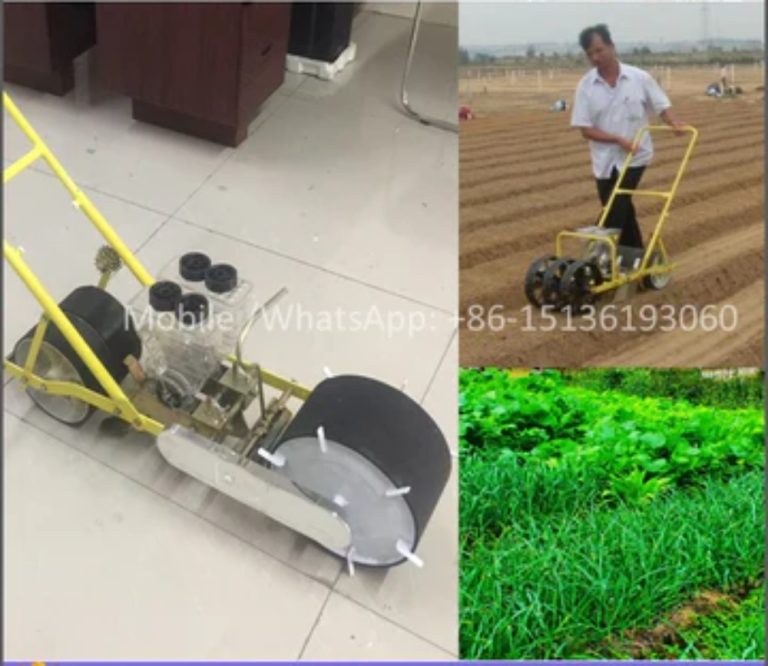
It’s essential to acknowledge how accessible high-quality agricultural machines, also locally known as machines agricoles, have become in the African market. This accessibility is playing a key role in broadening the adoption of technologies that were once available only to major operations. As equipment becomes more specialized and diverse, farms can select high-performing tools suited to their crop type, land size, and management approach rather than relying on one-size-fits-all solutions.

Sustainability Through Smarter Resource Use

Modern agriculture is increasingly expected to strike a balance between productivity and environmental stewardship. Machinery designed for precision agriculture supports this balance by minimizing input waste and improving soil health. Tools equipped with smart sensors and real-time feedback systems help ensure that water, fertilizers, and crop protection products are used more judiciously. This aligns with broader sustainability recommendations shared by agronomy experts and environmental institutions that advocate reducing runoff, preserving soil structure, and enhancing long-term land resilience.

Reduced tillage equipment, for example, disturbs the soil less, which helps maintain organic matter and prevents erosion. Similarly, machines that facilitate targeted spraying or micro-irrigation reduce the overall volume of chemicals and water needed. Over time, these practices support both environmental goals and economic stability, helping farms operate efficiently while preparing for shifting climate conditions.

Automation and the Rise of Autonomous Tools

Autonomy is no longer a distant concept—it is becoming a mainstream component of agricultural operations. Automated equipment, ranging from self-steering tractors to autonomous harvesters, delivers consistent performance independent of fatigue or changing field conditions. This contributes to timely fieldwork, which is critical for protecting yield potential during narrow planting and harvesting windows.

Furthermore, automation enhances safety. Farmers can remotely monitor and control machinery, reducing exposure to dust, chemicals, and hazardous terrain. As the technology continues to advance, autonomous equipment is expected to play an increasingly central role in helping farms operate continuously during peak seasons without requiring excessive labor hours.

Equipment Tailored to Diverse Farming Needs

Agriculture is far from uniform. Fields vary in size, shape, soil type, and farming goals, and the machinery market has evolved to accommodate this diversity. Whether a farm specializes in row crops, orchards, vineyards, or livestock management, specialized tools exist to streamline daily operations and address unique challenges.

Agnes and Philip Murgor: Success secrets behind our 650 acre dairy farm

Compact tractors, multi-purpose loaders, efficient seeders, and crop-specific harvesters allow farmers to fine-tune their workflow. These machines contribute to a more adaptable and resilient agricultural sector—one capable of responding quickly to market demands, weather disruptions, and resource constraints.

Improving Farm Management Through Connectivity

Connectivity has expanded the way farmers interact with their machinery. Many modern machines are equipped with telematics systems, allowing operators to monitor performance, track maintenance schedules, and evaluate productivity through centralized dashboards. This form of digital oversight aligns with industry trends that emphasize data-driven decision-making for stronger long-term outcomes.

Manufacturers and agricultural technology providers often collaborate with research institutions to ensure these systems align with best practices in agronomy and farm management. As a result, the information gathered not only helps individual farm operations but also contributes to a larger body of knowledge that supports the sector’s continuous improvement.

Conclusion: A More Capable and Resilient Future for Agriculture

Modern farm machinery has evolved far beyond being just a set of tools—it represents a significant shift in how agricultural work is conceptualized, organized, and sustained. By integrating precision, automation, sustainability, and digital intelligence, today’s equipment empowers farmers to do more than simply keep up with demand. It enables them to thrive in an environment where efficiency and adaptability are essential.

As innovation continues, the agricultural sector stands to benefit from machinery that supports both productivity and environmental responsibility. Farms that embrace these advancements are better positioned to navigate challenges, optimize their operations, and contribute to a stable global food system. Through careful adoption and thoughtful use, modern machinery is helping build a stronger, more resilient future for agriculture—one well-equipped to meet the complexities of today and the possibilities of tomorrow.


High fares, thin margins: The structural cost burden facing African airlines

0

A familiar refrain in discussions of air travel is that African airlines are expensive. This prompts a puzzling question: why are fares high when most carriers on the continent still lose money? The answer lies in their revenue structures and the costs they must bear, which together reveal an unforgiving economics. Here is an analysis of airline revenues and costs and what they portend for the profitability African carriers.

    1. For the world’s most successful airlines, passenger tickets account for only 60-70% of revenue. Cargo can contribute as much as 40% in some cases, while ancillary services, such as baggage fees and seat selection, typically generate 15-30% for full-service carriers and as much as 60% for low-cost airlines. African airlines, by contrast, remain heavily reliant on ticket sales, which provide up to 80% of their income. Cargo yields an average of just 9% and ancillary services way below 15%. This imbalance is costly: cargo and ancillary activities are usually the most profitable parts of an airline’s business.
    2. Fuel is one of an airline’s largest expenses, typically accounting for 20-30% of revenue. In Africa, it is about 17% more expensive than elsewhere. When global prices swing, these higher costs are passed on, pushing air fares beyond the reach of many African travellers.
    3. Labour costs are another heavy claim on an airline’s revenues. It is reportedly up to 30% of total operating expenses. Passengers tend to notice only check-in staff and cabin crew, but a far larger workforce operates out of sight. Baggage handlers, ground-equipment operators, turnaround coordinators and cleaners are all essential in keeping aircraft on schedule. Turning around an international flight within a tight time window can require at least 100 people working in concert. However, Africa tends to have far lower labour costs than most of the world’s regions. Where the continent suffers a disadvantage is in the automation of airport operations. In other jurisdictions, automation reduces labour costs through self-check-in kiosks, automated bag drops and biometric technology for passenger processing. Smart gates and drones enhance security and cut on long-term costs while ensuring shorter queues and better passenger flow.
    4. Aircraft operating fees account for roughly 11% of global airline revenue. In Africa, the share is typically higher. Unlike regions dominated by large, consolidated fleets, the continent’s airline industry is fragmented among many small carriers. Lacking scale, these operators face higher unit costs as they cannot secure the savings that come with bulk purchases of spare parts, fuel or spread training and insurance costs across larger fleets. Airport charges in Africa are also unusually steep. Landing, parking and handling costs are markedly above the global norm with passenger charges often twice the world average.
    5. The aviation policies of most African countries reflect a mix of protectionism and fiscal opportunism. Several governments favour domestic carriers, imposing hefty fees on other airlines from within the continent seeking access to their airports. In some cases, aviation is treated as a luxury and high taxes on airlines and passengers are seen as an easy source of government revenue. Africa needs to hasten the implementation of the Single African Air Transport Market so that policy barriers to free air movement within the continent are obviated.

How airlines heat in-flight meals at 35,000 feet, and it’s not a microwave

The International Air Transport Association (IATA) forecasts a global airline net-profit margin of 3.9% in 2025. In Africa, the outlook is far bleaker: margins are expected to reach just 1.1%. Measured per passenger, that translates to a profit of only USD1.40 or about Ksh182. With such thin returns, African airlines are especially vulnerable. Disruptions from VIP movements, bird strikes and global supply chain problems, often delaying aircraft from returning to service after scheduled maintenance, can quickly turn modest profits into losses, weighing heavily on already fragile balance sheets.

EPRA lists filling stations selling adulterated fuel as crackdown intensifies

0

The Energy and Petroleum Regulatory Authority (EPRA) has unmasked filling stations in the country engaging in illegal business activities, including selling adulterated fuel.

In a statement on Wednesday, December 31, released a list of sites and vehicles found in violation between October 1 and December 29, 2025.

During the period, the authority revealed it conducted a total of 4,394 tests at 967 petroleum sites. From the tests, 957of the sites were found to be compliant while 10 failed to meet the required fuel quality standards.

“The Energy and Petroleum Regulatory Authority (The Authority) is mandated under Section 92 of the Petroleum Act 2019 to monitor petroleum products offered for sale in the local market with the aim of preventing motor fuel adulteration or dumping of export bound fuels,” read part of the statement.

“In this regard, the Authority undertakes a program of continuous monitoring of the quality of petroleum motor fuels on sale, transport and storage throughout the country.”

Among the stations found in violation of fuel quality standards are Meridian Fuels Filling Station in Ngata, Nakuru, Akwabi Filling Station in Bukura, Kakamega, and Eden Energy Service Station in Wote, Makueni County.

According to EPRA, the Meridian and Akwabi filling stations were both found selling Diesel adulterated with Domestic kerosene. While Meridian was reopened upon compliance with the required standards, Akwabi remains closed down.

On the other hand, Eden Energy Service Station in Wote, Makueni County, was found selling Diesel meant for export in the local market. The station was reopened after upgrading of product and paying taxes and penalties amounting to Sh132,780.

The regulator also impounded three trucks in Taita Taveta and Mombasa for transporting adulterated or export-bound fuel, with legal proceedings still ongoing in court.

Further, EPRA seized diesel stored in jerrycans from four sites in Moyale, Marsabit County with high sulphur content, believed to be smuggled products.

“The Authority maintains a hotline number, 0709 366 000, operational during normal working hours to enhance enforcement and compliance activities. We urge members of the public to report purported cases of petroleum fuel adulteration or export dumping through the hotline, as well as via our USSD code (*363#) and SMS service (40850). A full list of all sites found with adulterated products is also available on our website,” EPRA said.

Also Read: 40,000 Grade 10 learners apply for 1,000 transfer slots at Mang’u, Alliance

40,000 Grade 10 learners apply for 1,000 transfer slots at Mang’u, Alliance

0

National schools that are currently clustered under the C1 category received the largest amount of transfer requests in the current senior school revisions window. According to the Cabinet Secretary for Education Julius Ogamba, Alliance High School, Mang’u High School and Kenya High School received 20,000 transfer requests each against 500 transfer slots that were open for each.

This implies that Alliance and Mang’u received a combined total of 40,000 transfer requests while against a combined 1,000 slots. All three schools received a combined total of 60,000 against 1,500 open slots.

“There were up to 20,000 applications for schools like Alliance High School, Kenya High School, and Mang’u High School, against an average capacity of 500 slots,” said CS Ogamba.

The CS revealed this on Tuesday, December 30, when he extended the senior school placement transfers window. The new Senior School transfers window shall now be run from January 6 to January 9 2026.

In the first revisions window, the Ministry of Education received a total of 355,457 applications. Out of these, 211,636 applications were approved while the remaining applications were rejected.

Parents and learners who will be looking to make fresh transfer requests between January 6 and January 9 can follow these steps:

1). Visit https://placement.education.go.ke and click ‘Log In’ on the landing page.

2). Enter the Junior School selection username and password carefully. Once you do this, input the verification code displayed to gain access.

3). Click on ‘Request Transfers’ which is on the left sidebar to view all learners in the school and their current Senior School Placements.

4). Select the learner you need to transfer and click ‘Next’. Then choose whether the transfer you want to make is to a public school or a private school and then proceed.

5). In this section, enter the reason for the transfer that you are seeking when prompted to do so. Then click ‘Next’.

6). Select the appropriate educational pathway and the learner’s subject combination before continuing.

7). Choose the new school that the learner will be transferred to and the review all the details.

8). Verify all the transfer details carefully and the click ‘Submit’ to complete your request.

See more: Education Ministry extends Grade 10 Senior School transfers deadline

Education Ministry extends Grade 10 Senior School transfers deadline

0

The Ministry of Education has extended the Grade 10 Senior School transfers deadline. In a statement that was released by Education Cabinet Secretary Julius Ogamba, learners will be able to revise their transfer in the extended period that shall run from January 6. The new Senior School transfers deadline shall now be January 9.

The minister made this announcement shortly after the results of the first revision window were announced. In these results, the Ministry of Education received a total of 355,457 applications. Out of these, 211,636 applications were approved while the remaining applications were rejected.

When doing the revision, Grade 10 learners are allowed to list their preferred school of choice plus three additional options they would prefer if they don’t get their top revised choice.

For example, a learner who was initially placed at Nyandarua High School may choose to transfer to Mang’u High School by listing Mang’u High School as their first choice, then listing an additional three options such as Alliance High School, Nyeri High School, and Nanyuki High School.

The review is being guided by an automated system that will match preferences to learners’ performance and the availability of slots in schools.

For parents and school administrators looking to revise Senior School placements, there are about eight steps that you will need to follow to successfully make your revision request. Here, we break down the procedure with this step by step guide on how to revise Senior School placements:

1). Visit https://placement.education.go.ke and click ‘Log In’ on the landing page.

2). Enter the Junior School selection username and password carefully. Once you do this, input the verification code displayed to gain access.

3). Click on ‘Request Transfers’ which is on the left sidebar to view all learners in the school and their current Senior School Placements.

4). Select the learner you need to transfer and click ‘Next’. Then choose whether the transfer you want to make is to a public school or a private school and then proceed.

5). In this section, enter the reason for the transfer that you are seeking when prompted to do so. Then click ‘Next’.

6). Select the appropriate educational pathway and the learner’s subject combination before continuing.

7). Choose the new school that the learner will be transferred to and the review all the details.

8). Verify all the transfer details carefully and the click ‘Submit’ to complete your request.

READ MORE: Close to half a million learners make Senior School transfer requests

Close to half a million learners make Senior School transfer requests

0

Close to half a million learners who are set to join Grade 10 in January have requested to transfer from the schools they were initially allocated by the Ministry of Education. According to Education Principal Secretary Professor Julius Bitok, the Ministry of Education had received more than 350,000 transfer requests as at January 29.

Out of these Senior School transfer requests, the ministry had processed 200,000. About 150,000 requests were approved while about 50,000 requests were disapproved.

“Out of more than 350,000 requests, the ministry has processed over 200,000 applications, with more than 150,000 learners approved and successfully moved to their new schools,” Professor Bitok told a local daily. “What we are doing after the window closes is taking time to review the remaining cases.”

He noted that in the majority of transfer requests, learners were primarily looking to move from the schools they were initially placed in.

“Every learner already has a school. Even if their request is rejected, they still have a placement. No one is left without a school. You are simply moving from one school to another where possible,” he said.

The learners are expected to start reporting to their new schools from January 12, 2026.

Step by step guide on how to revise Senior School placements

When doing the revision, Grade 10 learners are allowed to list their preferred school of choice plus three additional options they would prefer if they don’t get their top revised choice.

For example, a learner who was initially placed at Nyandarua High School may choose to transfer to Mang’u High School by listing Mang’u High School as their first choice, then listing an additional three options such as Alliance High School, Nyeri High School, and Nanyuki High School.

The Senior School transfer requests are being guided by an automated system that will match preferences to learners’ performance and the availability of slots in schools.

Learners are able to submit their revised choices, which include switching from STEM to Social Sciences as long as they meet the requirements for the switch and the new schools of choice have open spaces.

CBK licenses 42 new digital lenders

0

The Central Bank of Kenya (CBK) has announced the licensing of 42 additional digital lenders bringing the total number of approved lenders to 195.

In a statement on Tuesday, December 30, 2025, CBK said the move was in accordance with section 59 (2) of the CBK Act and followed the licensing of 27 DCPs in September 2025.

“The Central Bank of Kenya (CBK) announces the licensing of an additional 42 Digital Credit Providers (DCPs). This is pursuant to Section 59(2) of the Central Bank of Kenya Act (CBK Act). This brings the number of licensed DCPs to 195 following the licensing of 27 DCPs announced in September 2025,” read part of the statement.

The names of the new providers were posted on the CBK’s official website.

Digital Credit Providers (DCPs) are financial institutions that offer loans and credit services through digital channels such as mobile apps, websites, and USSD codes.

DCPs credit products range from education and development loans to short-term personal loans, asset financing, and business loans.

In 2022, CBK officially started regulating the providers, so as to ensure consumer protection and transparency. According the regulator over 800 applications have been received since March 2022, with many still under review pending the submission of the required documents.

As of November 2025, the licensed DCPs had issued 6.6 million loans valued at Sh109.8 billion.

Also Read: Ministry of Defence announces mass hiring of casual workers: Salary and how to apply