The Ministry of Defence has invited Kenyans to apply for various permanent and pensionable casual jobs within its departments.
In an advertisement dated December 30, the Ministry said it is seeking to recruit qualified Kenyans to fill 30 gardener assistant positions and 15 positions for sanitary cleaners.
Requirements
According to the advertisement, qualifications for the positions include being a Kenyan citizen with a valid national identity card.
Additionally, applicants must hold a minimum of a D plain in KCSE.
How to apply and salary
Interested applicants are required to complete one PSC2 (Revised 2016) form and submit it along with copies of the relevant certificates.
The form can be downloaded from the Public Service Commission website: www.publicservice.go.ke.
“Applications are invited for the following posts in the Ministry of Defence. Interested and qualified persons are requested to make their applications by completing ONE application form PSC2 (Revised 2016) and submit the same together with copies of the required certificates,” the advertisement reads.
Completed applications should be submitted to the Principal Secretary, Ministry of Defence, P.O. Box 40668-00100, Nairobi, or be hand-delivered to Ulinzi House, gate off Lenana Road, by January 20, 2026.
Successful applicants will be employed on permanent and pensionable terms, earning a basic salary of between Sh19,000 and Sh24,000 for gardeners.
They will also be entitled to a house allowance that would depend on the area of deployment, a Sh3,000 commuter allowance, and a leave allowance of Sh4000 per year.
On the other hand, sanitary cleaners would pocket a basic salary of between Sh18,000 and Sh22,000 with the same amount of commuter and leave allowance.
The ministry promised fair and equal consideration regardless of tribe, age, gender, or colour, encouraging that all Kenyans from all walks of life would be considered.
Any form of canvassing will lead to automatic disqualification and only shortlisted candidates will be contacted.
In a global economy still shaking off inflationary shocks, geopolitical tension, and tightening financial conditions, currency stability has become a quiet but decisive battleground. In Africa, where exchange rates often tell deeper stories about governance, discipline, and economic direction, a few currencies have emerged in 2025 as clear standouts.
These currencies are not merely strong on paper. They are signals — of policy choices made, institutions tested, and economies positioning themselves for long-term relevance.
Tunisia’s Dinar: Africa’s benchmark for monetary discipline
At just over three dinars to the US dollar, the Tunisian Dinar remains Africa’s strongest currency in 2025. Its strength is not driven by oil windfalls or speculative capital, but by an old-fashioned commitment to monetary control.
Tunisia’s central bank has consistently prioritised inflation management and exchange-rate stability, even as the country navigates political uncertainty and fiscal pressure. The result is a currency that has held its value while others across emerging markets have slipped.
In currency markets, discipline still matters — and Tunisia proves it.
Libya’s Dinar: Strength built behind high walls
Trading at roughly five dinars to the dollar, Libya’s currency remains one of Africa’s most valuable — and most tightly controlled. The dinar’s resilience is anchored in oil revenues and reinforced by strict foreign exchange regulations that limit speculation and capital flight.
This is strength by design, not by market freedom. While the official rate paints a picture of stability, the broader economy continues to wrestle with political fragmentation and parallel market pressures.
Still, on official metrics, the Libyan dinar remains an African heavyweight.
Morocco’s Dirham: Stability through diversification
Morocco’s dirham, trading below ten to the dollar, reflects an economy that has steadily diversified its risk. From automotive manufacturing to tourism, agriculture, and phosphates, Morocco has built multiple pillars of foreign exchange inflows.
The central bank’s gradual shift toward a more flexible exchange regime has boosted investor confidence without destabilising the currency. In 2025, the dirham stands as a case study in how measured reform can deliver stability.
East Africa: Not the strongest by value — but stronger than the numbers suggest
East African currencies do not top Africa’s strength rankings when measured purely by exchange rates. In 2025, East Africa’s leading currencies are defined less by face value and more by resilience, reform momentum, and strengtheni fundamentals.
Kenya Shilling: A recovery story worth watching
After enduring one of its toughest periods in recent history, the Kenyan shilling has stabilised in 2024 from a high of 161 to the dollar in January 2024, trading in the low-to-mid 130s against the dollar ad sustained through 2025. This recovery follows a period of aggressive fiscal adjustment, IMF-backed reforms, and renewed investor confidence.
The shilling’s rebound has restored credibility to Kenya’s macroeconomic management and reinforced Nairobi’s position as East Africa’s financial anchor.
It is not Africa’s strongest currency — but it is one of its most closely watched.
Tanzania Shilling: Stability by design, not by chance
The Tanzanian shilling continues to rank among the region’s most stable currencies, trading around 2,500 to 2,600 per dollar. Tanzania’s approach has long favoured cautious borrowing, tight monetary control, and reliance on gold and commodity exports.
In an era of volatility, predictability has become a competitive advantage — and Tanzania has quietly mastered it.
Uganda Shilling: Consistency as a currency strategy
Uganda’s shilling, trading near 3,800 to the dollar, has earned a reputation for consistency rather than spectacle. Supported by exports such as coffee, gold, and fisheries, the currency has avoided extreme swings even during global downturns.
For investors and businesses, that steadiness carries weight.
Rwanda Franc: Small economy, strong institutions
The Rwandan franc, trading around 1,300 to 1,400 per dollar, reflects one of the most disciplined policy environments in the region. Strong institutions, low tolerance for corruption, and a clear long-term development agenda continue to underpin Rwanda’s currency stability.
In Rwanda’s case, institutional strength translates directly into monetary credibility.
The continental takeaway
Africa’s strongest currencies in 2025 share common traits:
Disciplined central banking,
Controlled inflation,
Diversified or well-managed foreign exchange inflows,
And, in some cases, deliberate currency controls.
North Africa continues to dominate the rankings by raw currency value. Southern Africa contributes stability through prudent resource management. East Africa, meanwhile, is carving out a different reputation — one built on reform, resilience, and regional integration rather than headline exchange rates.
In the long run, that may prove to be the stronger play.
Bizna Kenya Insight
Currency strength is not just about how many units trade against the dollar. It is about trust — in policy, in institutions, and in the future direction of an economy.
In 2025, Africa’s currency map tells a clear story: stability is being earned, not assumed. And East Africa, quietly and deliberately, is positioning itself as a region that understands this truth.
The Kenya Airports Authority (KAA) has issued a statement after an aircraft full of passengers veered off the taxiway at the Jomo Kenyatta International Airport (JKIA).
In a statement, KAA acting Managing Director Mohamud Gedi said the incident occurred on Monday December 29, evening.
According to the MD, the aircraft which was carrying 50 passengers had just safely landed at JKIA from Elwak airstrip in Mandera County, before it veered off the taxiway.
“Kenya Airports Authority (KAA) wishes to inform the public of an aircraft incident that occurred this afternoon at Jomo Kenyatta International Airport (JKIA). A domestic flight from Elwak airstrip in Mandera to JKIA Nairobi with 50 passengers on board veered off Taxiway Echo shortly after landing at JKIA,” the statement read.
All 50 passengers aboard the plane escaped unhurt, with emergency response teams deployed to contain the situation.
“All passengers and crew were safely accounted for. Airport emergency response teams have been activated in line with established procedure,” KAA added.
The authority said it is working closely with relevant aviation agencies to ensure the safe removal of the aircraft from the affected area, as investigations into the incident continue.
“Kenya Airports Authority reassures the public of its continued commitment to the safety, security, and efficiency of airport operations,” the statement reads.
From employee rights in Kenya to career resolutions, there are numerous ways that you an use to boost and grow your career.
Here are 10 resolutions employees should make in order to reflect upon their performance and find ways to integrate themselves more fully into the success of a business, which then generally evolves into their success, too.:
1. I will work smarter
Identify three things you can do to be more efficient and effective in your current job? Is your staff spending too much time on e-mail, for example? Too much time returning phone calls? Does it interrupt their work too frequently? Sometimes, those job inefficiencies are not very obvious. However, if they can specifically identify them, then those inefficiencies can be eliminated and staff can become more productive. This can increase work satisfaction as well.
2. I will increase my working network in and out of my immediate area and inside and outside my company
Do you encourage your staff to get to know more people? Can you meet more people not just to say hello, but to find out what they do, how they do it and what skills they use to be productive? Let them know about your traits, abilities and interests, too. Ask yourself if you can you interact with them to mutually benefit both your jobs. Can you include them in your circle of contacts so that you can call on them when you need a favor, a contact, or a reference? The reverse should be true as well.
3. I will find three things that I can do to make myself irreplaceable
Why should the company continue to employ you? Why are you good at what you do? Does the company know this? What else should the company know about you? In times of layoffs or terminations, why should the company keep you while dismissing others? If you cannot answer these questions during economic hard times, in particular, your name could easily be included in any “termination group.”
4. I will find ways to get along better with my boss and colleagues
Manage upward. If your boss is not managing you well enough or to your liking, then find positive, non-complaining ways to change this situation so that you are able to share your views with him or her. Do you need more (or less) direction, supervision, freedom, responsibility or authority? What can colleagues be doing more of, less of or doing differently to create a more positive working environment that meets organizational goals? Speak up and make sure your voice is heard.
5. I will join at least one company-wide task force or committee
Do people outside of your immediate group, team or unit know your capabilities, interests and skills? Do you know what is happening in other sectors of our company? Are the same challenges and opportunities faced by people elsewhere in our organization? By joining committees, you not only gain a broader view of the company’s goals and issues, you also challenge your own skills, abilities, and knowledge and increase your networking impact.
6. I will join a professional organization in my area
Life and work are about growing and developing yourself. What have you done for yourself lately? Have you met like-minded colleagues who share some of your hopes, dreams, and goals? Do not miss this important opportunity to learn more about your profession while increasing the breadth and depth of your networking circle.
7. I will take a job-related self-improvement seminar
Are there new techniques, tools and concepts that you need to know about to constantly make yourself into a more important and irreplaceable employee? When is the last time you stimulated your own thinking and gained new perspectives on your job and future? A seminar may very well be the stimulus you need to re-energize yourself and increase your job satisfaction.
8. I will develop four goals to help me grow and develop as a more achievement-oriented employee
Stagnation is the kiss of death in today’s corporate economy, where layoffs and downsizing occur daily. So, think seriously about what you can do to be more achievement-oriented in addition to taking a seminar and joining a professional group. Do you want to assume more responsibility in your job? Form or chair a taskforce? Rethink and improve a product, policy, or procedure? Create monthly, open-door meetings with the boss. Be creative.
9. I will evaluate my personal contribution to this organization
List three strengths and three limitations to your overall progress. Identify ways to improve on all six, including what you will need from your direct supervisor or other administrators to help move you along the roadway to success.
10. I will try to improve my relationship with at least one person with whom I do not get along
Take the initiative; meet with him or her and discuss the issues, whether overt or subtle, that prevent you from having positive interactions. Remember that your goal as an employee is to make the best of your talents, create synergies with colleagues and increase the productivity and effectiveness of the company. A clear deterrent to those tasks are problematic people relations. How can you minimize that obstacle to success?
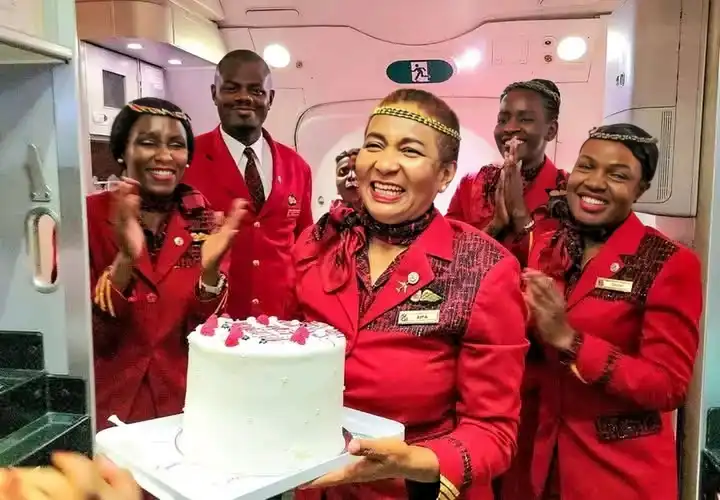
Veteran flight purser Asha Mohamed has retired after 37 years of service at Kenya Airways (KQ).
In a statement on Thursday, December 25, the national carrier praised Asha for her dedication and professionalism throughout the 37 years and 10 months of service. During the period, she served as Flight Purser and Cabin Crew Manager.
Her final assignment, the iconic 15-hour nonstop flight from Nairobi to New York, was not just another long-haul duty, but a farewell journey, marking the end of a lifetime spent serving passengers at 35,000 feet.
“We thank you, Asha, for your immense contribution to our in-flight team and for a legacy built on excellence, leadership, and love for the KQ uniform, a legacy that will continue to inspire generations to come,” Kenya Airways said in a statement.
“Throughout her years in the sky, Asha consistently embodied our value of customer obsession, leading with care, discipline, and an unwavering focus on delivering safe and memorable journeys,” it added.
Asha, who joined Kenya Airways in 1988, attributed her long and successful career to faith, dedication, integrity, professionalism, and love for her work.
She remained committed despite multiple challenges among them industry changes, airline restructuring, and demanding schedules, thanks to her supportive family members.
“I’m a mother of four teenagers, with my youngest now 20 years old. My husband and my extended family have really supported me through the years at Kenya Airways. Being away from family is never easy, but as Africans, we have strong extended families, and that support made all the difference,” she said.
She leaves a legacy of discipline, mentorship, and love for aviation that has inspired generations of cabin crew.
In a gazette notice dated Saturday, December 27, 2025, the Authority outlined its decisions, which are categorized into the issuance of new or renewed licenses and the variation of existing ones.
“Pursuant to the provisions of the Civil Aviation Act and the Civil Aviation (Licensing of Air Services) Regulations, 2018 (Regulation 28), notice is given that the Kenya Civil Aviation Authority has made decisions on applications for air service licenses whose particulars were previously published in Kenya Gazette Notice No. 10299 of 2025. The decisions are specified in the third column, and the particulars of the applications are in the second column for each applicant named in the first column of the schedule below,” read the notice.
KCAA decisions on air service license applications
For new and renewed licenses, KCAA granted air service licenses to 20 entities, with approval periods ranging from one to three years. Notable recipients include Tui Airlines Nederland B.V. (one year), Kenya Airlines Ltd (one year), and Freedom Airline Express Limited (three years).
For variations of existing licenses, the Authority approved five applications, allowing operators such as Astral Aviation Limited and Governors Aviation Ltd to introduce new routes or add additional operational bases.
Full list of airlines granted licenses
Some operators received multiple approvals across different service categories. For instance, Airvan Kenya Limited was authorised to operate international and domestic scheduled services, non-scheduled services, and aerial work services under varying validity periods. Only two applicants listed in the gazette notice, that is Jetafric Airways Limited and Oasis Flights Company Limited, had their applications declined, with decisions recorded as “License not granted.”
The table below summarises the Kenya Civil Aviation Authority’s decisions on air service license applications, including the approved service types, effective dates, and the duration of each license granted.
Applicant Name
Type of Service(s) Applied For
Decision Status
Effective Date
Period (Duration)
Tui Airlines Nederland B.V.
Inclusive Tour Charters (Amsterdam-Zanzibar-Mombasa)
Granted
10th Nov, 2025
1 Year
My Freighter (dba Centrum Air)
International Non-scheduled Cargo (Tashkent-Nairobi-Dubai)
Granted
10th Nov, 2025
1 Year
Fly Safari Airlink Ltd
International Non-scheduled & Emergency Medical
Granted
19th March, 2025
2 Years
Governors Aviation Ltd
Variation of Domestic Scheduled routes (Wilson to various ranches)
Granted
N/A
Existing License Validity
Fly Mode Flight Centre Ltd
Variation to include JKIA as a base
Granted
N/A
Existing License Validity
Freedom Airline Express Ltd
Variation of Domestic Scheduled routes (Dadaab, Kakuma)
Granted
N/A
Existing License Validity
Fly Mara Airlines Limited
Variation to include JKIA as a base
Granted
N/A
Existing License Validity
Astral Aviation Limited
Variation to include Nairobi-Dubai-Haikou-Delhi route
Granted
N/A
Existing License Validity
Freedom Airline Express Ltd
International Scheduled (Nairobi to Mogadishu, Kigali, etc.)
Granted
4th May, 2025
3 Years
Kenya Airlines Ltd
Domestic & International Non-scheduled Cargo
Granted
31st Oct, 2025
1 Year
Skylift Group Limited
Domestic & International Non-scheduled
Granted
10th Nov, 2025
1 Year
Ninety Nines Flying School
Flying Instructions within Kenya
Granted
28th June, 2025
3 Years
Flitestar Academy Limited
Flying Instructions within Kenya
Granted
23rd July, 2025
3 Years
Jubba Airways Ltd
International & Domestic Non-scheduled
Granted
15th May, 2025
1–3 Years
Wilderness Air Ltd
Non-scheduled & Aerial Work (Patrol, Photography)
Granted
2nd Nov, 2025
1 Year
ALS Limited
Scheduled, Non-scheduled & Emergency Medical
Granted
1st Aug, 2025
1–3 Years
Aeorojet Aviation Ltd
International & Domestic Non-scheduled
Granted
31st Oct, 2025
1 Year
Flypremier Company Ltd
Non-scheduled Africa (Scheduled routes denied)
Partial Grant
10th Nov, 2025
1 Year
Airvan Kenya Limited
Scheduled, Non-scheduled, Medical & Aerial work
Granted
2025 / 2026
1–3 Years
ALS Contracts Ltd
International & Domestic Non-scheduled
Granted
12th Aug, 2025
3 Years
Everett Aviation Charter Ltd
Non-scheduled, Medical, Aerial work & Instructions
Here’s a number that should grab your attention: 96% of Kenyan bettors use their mobile phones to place bets. That’s not a typo. In a country where M-Pesa processes over $300 billion annually and 76% of young Kenyans actively bet, the marriage of fintech and gaming isn’t just convenient—it’s revolutionary.
So what’s fueling this boom? Casino jackpots. And they’re changing everything about how Kenyans engage with online gaming.
Online casino jackpot pool display
The Fintech Factor: Why M-Pesa Changed Everything
Let’s be real—before M-Pesa, online betting in Kenya was a hassle. Bank transfers, verification delays, withdrawal headaches. Now? You can deposit KES 50 and be spinning slots in under a minute. That’s the power of localized payment options.
Kenya’s Digital Economy by the Numbers
30+ million M-Pesa users in Kenya (nearly 70% of adults)
90%+ of Kenyan adults have access to financial services via mobile money
82.8% of Kenyans have placed bets (GeoPoll 2024)
Kenya ranks #1 or #2 in Africa for betting participation
Super Jackpot winner celebrationo
Real Wins, Real Money: What Players Are Actually Winning
Talk is cheap. Let’s look at what’s actually hitting players’ M-Pesa wallets. Beside aviator that is the leading casino game in Kenya,Platforms like Kenya’s best betting sitehave been posting winner after winner:
KES 1,855,466 – Super Jackpot on 40 Burning Hot
KES 801,503 – Grand level win on 40 Burning Clover
KES 300,000+ – Major Jackpot on Aztec Gems
KES 147,141 – Major win on 40 Burning Hot Bell Link
Daily Mini Jackpots—KES 3,000-7,000 hitting regularly
Want to see the latest winners? Check out the latest jackpot updates and winners on Bangbet.
Bangbet winners are celebrating the the EPL Blast victory with smiles and confetti.
Understanding the Jackpot Tiers
Not all casino jackpots are created equal. Here’s how the tier system works:
Mini Jackpots—KES 3,000-7,000, drop frequently during gameplay
Minor Jackpots – KES 20,000-100,000, regular mid-range wins
Major Jackpots – KES 100,000-500,000, significant payouts
Grand Jackpots – KES 500,000-1,000,000, life-changing territory
Super Jackpots—KES 1,000,000+, the headline makers
Mobile casino gaming on a smartphone
The Games That Are Actually Paying Out
Based on recent winner announcements, these slots are where the action is:
40 Burning Hot – Consistent Super Jackpot producer
40 Burning Clover – Grand level wins recorded
Aztec Gems—Major Jackpot favorite
Fire 88 – Regular Minor Jackpot drops
40 Burning Hot Bell Link – Hot streak of Major wins
Explore the full range of casino games in Kenya on Bangbet and find your favorite.
Woman celebrating with “Congratulations to the Top Winners” and Bangbet branding.
What’s Next for Kenya’s Casino Jackpot Scene?
The trajectory is clear. With fintech adoption accelerating and smartphone penetration climbing past 55%, expect casino jackpots to become even more central to Kenya’s gaming economy. The platforms that win will be those that continue to perfect the M-Pesa integration and mobile-first experience.
Bangbet Kenya (licensed by BCLB under license BK0000826) has been operating since 2018, and their consistent winner announcements suggest they’ve figured out what Kenyan players want: fast deposits, real payouts, and games that actually hit.
Most betting stories start with noise. This one starts with confidence. Across Kenya, first-time bettors are quietly changing how they choose where to begin. They are no longer chasing flashy headlines or complicated offers. They are looking for a platform that feels clear, fast, and trustworthy from the very first click. That shift is exactly where the ImaraBetKaribu Bonus is finding its momentum. Designed as a true welcome rather than a gimmick, the Karibu Bonus is turning first bets into real moments that matter and for many new users, into their first genuine win on ImaraBet Kenya.
For a new bettor, the first experience sets everything. Registration. Deposit. Bonus clarity. The first ticket. The wait. The result. ImaraBet Kenya built the Karibu Bonus with that journey in mind. Not to overwhelm new users, but to remove hesitation and make the first step feel natural. It is a welcome offer that respects how Kenyan players think; start small, understand the platform, and enjoy the match without pressure. For one first-time player, that approach turned a simple decision into a moment that made ImaraBet feel real.
A first step that didn’t feel risky
Michael is a football fan like millions of Kenyans. Weekend fixtures, form analysis, and the quiet confidence of predicting results were already part of his routine. What held him back was not interest, it was trust.
“I didn’t want anything complicated,” he says. “I just wanted to start small and see how the platform actually works.”
So, he decided to register on ImaraBet Kenya and test the experience. After making his first deposit, he activated theImaraBetKaribu Bonus, not because he expected magic, but because it offered a clean starting point that felt safe and transparent. This is where many platforms lose new users. ImaraBet didn’t.
When a welcome feels like a welcome
Many so-called welcome offers sound exciting in headlines but feel frustrating in reality. Too many steps. Confusing rules. Long explanations that raise more questions than confidence. Michael describes the ImaraBet experience differently. The flow was clear. The bonus logic made sense. Nothing felt hidden.
“It didn’t feel like a trap,” he says. “It felt like someone saying, ‘Welcome, take your time.’”
That simplicity is the real power of theImaraBet welcome bonus. It does not just add value. It removes fear. It allows first-time users to focus on the game, not the fine print.
The moment it became real
After placing his first ticket, Michael did what every football fan does. He watched. He waited. Every minute mattered. Then the result landed. Not a viral jackpot. Not an exaggerated headline. Just a real first win, the kind that quietly changes perception. The moment when a platform stops being an app and becomes a brand you trust.
“It wasn’t about showing off,” he says. “It was about knowing this works and that I can build from here.”
That first win is where brand loyalty begins. And it is why stories around the ImaraBetKaribuBonus Kenya are spreading organically.
Why ImaraBet built the Karibu Bonus this way
According to ImaraBet, the Karibu Bonus was designed around one principle; make the first experience simple.
“The first journey defines everything,” an ImaraBet spokesperson explains. “From registration to deposit to placing the first bet, the process has to feel smooth and honest.”
In a crowdedonline betting market, odds are important. But clarity, speed, and trust are what make new players stay. That is why the Karibu Bonus on ImaraBet is structured as an entry point, not a barrier.
Small wins that make a real difference
Michael says his first win did not go into celebration. It went into something practical.
“It helped me sort out a few things at home,” he says. “Even a small win can lift pressure.”
That is what gives this story weight. The win did not need to be massive to matter. It simply needed to be real. And when the first experience is smooth, people naturally share it in conversations, in WhatsApp groups, and increasingly, in online articles linking back to ImaraBet Kenya promotions.
How to start and claim the Karibu Bonus
For new users looking for a clean entry point, the process is straightforward-
1. Join ImaraBet Kenya
2. Make your first deposit
3. Activate the ImaraBetKaribu Bonus
4. Place your first ticket and enjoy the match
Existing users can use the ImaraBet login to explore additional campaigns through the ImaraBet promotions page.
Responsible play comes first
ImaraBet consistently reminds players that betting should remain entertainment, not pressure. New users are encouraged to start small, set limits, and learn more aboutresponsible betting in Kenya. Participation is strictly 18+ only.
Where your ImaraBet story begins
The ImaraBetKaribu Bonus is not just another promotion. It is a first impression designed to earn trust. Because the best platforms do not just offer bonuses. They offer a smoother start. A clearer journey. A first bet that feels easy and a first win that feels real. If you have been waiting for the right moment to begin, this is it.Register today, claim your Karibu Bonus, and place your first bet on ImaraBet Kenya.
There are games you play when you have time and games you check even when you don’t. In Kenya right now, Aviator sits firmly in the second category. It’s the game people open “just to see,” the one discussed in group chats, matatus, and late-night calls. Now, SportPesa Kenya has taken that energy and given it structure, timing, and purpose through Aviator Rains and the Aviator Challenge two features quietly turning Aviator into a daily ritual, not just a quick spin.
Aviator has already earned its place as one of the most talked-about crash games in Kenya. What SportPesa Kenya has done next is not louder promotions or confusing mechanics, but something smarter by building moments players can anticipate and challenges players can commit to. With Aviator Rains delivering sudden, high-attention moments and the Aviator Challenge rewarding discipline over impulse,Aviator on SportPesa Kenya is no longer just about reacting fast it’s about showing up consistently and catching the right moment.
SportPesa Kenya adds rhythm to Aviator, not noise
Most platforms push crash games through constant bonuses that burn out as fast as they appear. SportPesa Kenya has gone in the opposite direction by introducing daily structure into Aviator. Aviator Rains injects surprise moments that change the mood instantly and keep players watching closely. The Aviator Challenge, on the other hand, adds a reason to return with intention rather than impulse. This combination is what turns casual sessions into habits. Players are no longer just logging in to “try luck.” They’re logging in because something could happen and because they want to stay consistent when it does.
Why Aviator Rains is creating “you had to be there” moments
Aviator has always been intense, but intensity alone doesn’t build loyalty. Anticipation does. Aviator Rains in Kenya introduces that anticipation, the feeling that something special could hit at any moment, rewarding those who are present, alert, and paying attention. It turns ordinary sessions into shared stories. Players don’t just say they played Aviator, they say they were there when it rained. That’s how features turn into culture, and why Aviator Rains is quickly becoming one of the most discussed updates in the Aviator community.
The Aviator Challenge rewards discipline, not noise
There’s a reason Aviator commands respect among experienced players: timing matters. The Aviator Challenge is designed for players who understand that winning isn’t about chasing every round, it is about playing with control, setting limits, and knowing when to cash out. Instead of rewarding randomness, the Challenge encourages consistency. Players who stick to a plan, manage their bankroll, and stay focused are the ones who benefit most. For newer users learninghow to play Aviator in Kenya, the Challenge provides a clear, confidence-building path instead of trial-and-error chaos.
Why this matters for Kenya’s crash-game culture
Aviator isn’t growing because it’s flashy, it’s growing because it fits how Kenyans play. Short sessions. Mobile-first access. Real-time decisions. Social conversation. SportPesa Kenya has recognised this and built features that respect those habits instead of fighting them. By adding Aviator Rains and the Aviator Challenge, SportPesa has turned thebest Aviator platform in Kenya, something players can follow daily, not just dip into randomly. That’s how games stop being trends and start becoming routines.
What SportPesa Kenya says about the Aviator evolution
“Aviator has become one of the most talked-about games in Kenya because it’s instant and exciting,” said a SportPesa Kenya spokesperson. “With Aviator Rains and the Aviator Challenge, we’re giving players more reasons to return, stay engaged, and enjoy Aviator in a more structured way.”
“We’re not changing what players love about Aviator. We’re building around it so every session feels like a moment worth catching.”
How to get started with Aviator Rains and the Aviator Challenge
Getting involved is simple and fast-
• Play Aviator on SportPesa Kenya
• Stay alert for Aviator Rains moments
• Join the Aviator Challenge and play with consistency
• Keep track of updates through SportPesa promotions
• Use the SportPesa Kenya help centre if you need support
Everything runs within the same trusted SportPesa ecosystem, built for speed, clarity, and responsible play.
Why this is the moment to lean in
Aviator is already one of Kenya’s most talked-about crash games. With Aviator Rains and the Aviator Challenge, SportPesa Kenya has given players something more valuable than hype: a reason to return every day. This is not about chasing luck. It’s about catching moments, staying disciplined, and playing a game that now feels alive in real time. If you’ve been waiting for the right moment to make Aviator part of your routine, this is it. Play Aviator today. Catch the rain. Take the challenge.
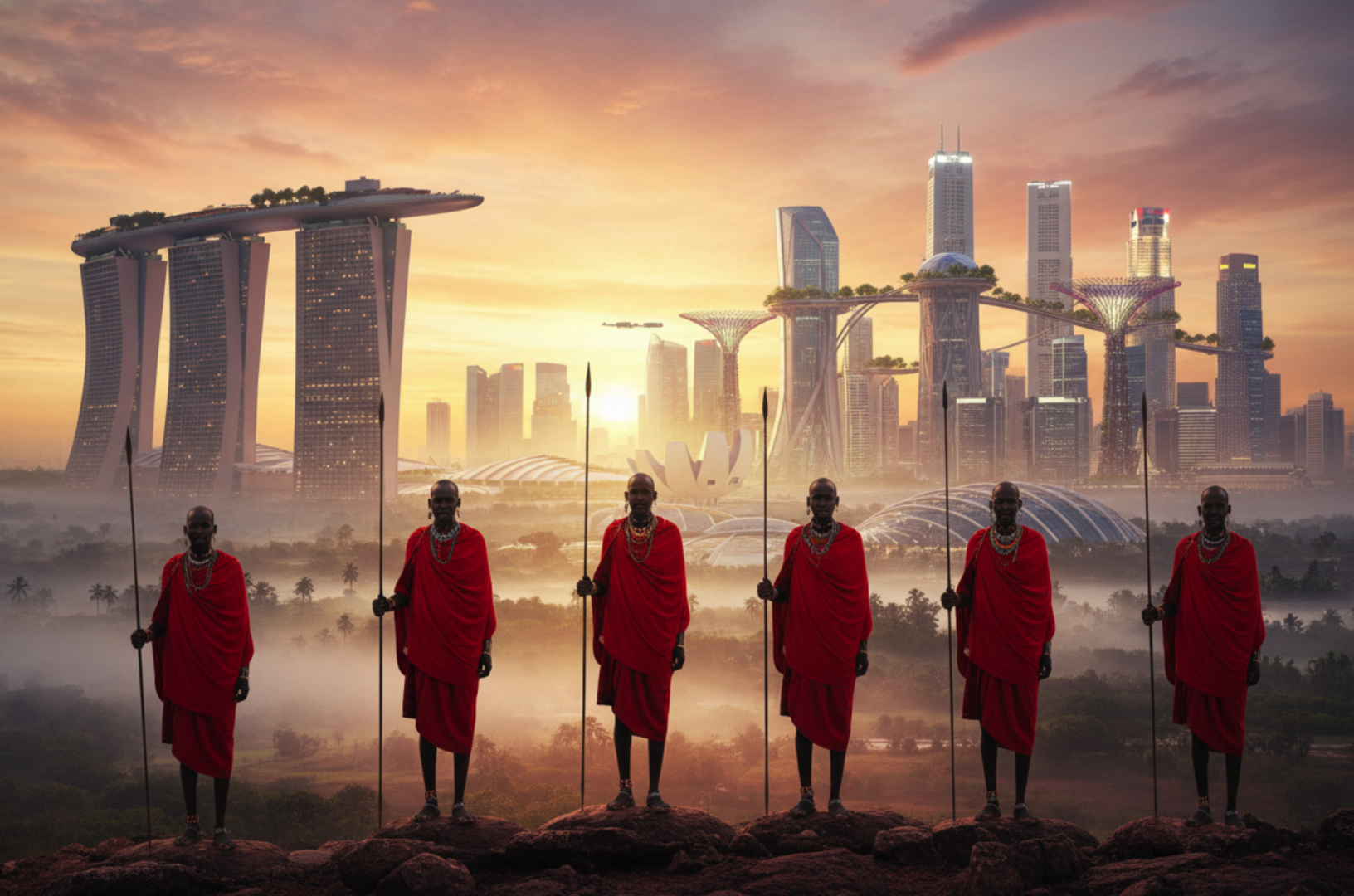
Singapore is roughly the size of Nairobi County. Kenya is nearly 800 times larger. Yet in 2024, Singapore’s GDP stood at approximately USD 500 billion, while Kenya’s hovered around USD 110 billion. The difference is not geography, population, or intelligence. It is execution.
Kenya has long described itself as “a country of immense potential.” Singapore never did. It described itself as vulnerable—and then built systems accordingly.
Economic Output: Productivity tells the real story
Singapore’s GDP per capita exceeds USD 80,000. Kenya’s is just over USD 2,000. This gap is often framed as a development problem. In reality, it is a productivity problem.
In Kenya, over 60 per cent of the workforce is employed in the informal sector, according to KNBS. In Singapore, informality is statistically negligible. Formalization matters because it enables taxation, planning, skills development, and credit access—inputs Kenya’s economy chronically lacks.
Ease of Doing Business: The cost of time
In Singapore, company registration is almost entirely digital and can be completed within a day. In Kenya, despite the eCitizen platform, business owners still navigate KRA, county governments, sector regulators, and compliance renewals that vary by location.
For SMEs, these delays are not minor inconveniences. A World Bank estimate previously showed Kenyan firms spend over 200 hours annually on tax-related compliance alone. Time that could be spent selling, innovating, or expanding is absorbed by administration.
Corruption: A tax without a receipt
Transparency International consistently ranks Singapore among the top five least corrupt countries globally. Kenya, by contrast, ranks in the lower half, with corruption estimated by local business associations to add between 10–20 percent to project costs in certain sectors.
This is not abstract. It affects procurement, licensing, enforcement, and dispute resolution. In Singapore, contracts are enforced swiftly. In Kenya, court cases can drag on for years, forcing businesses to price legal uncertainty into their operations.
Infrastructure: Investment vs output
Kenya deserves credit. Over the past decade, the country has invested heavily in infrastructure—roads, the Standard Gauge Railway, port upgrades, and renewable energy. Installed electricity capacity now exceeds peak demand, and over 90 percent of power generation comes from renewables.
Yet manufacturers still cite power reliability and cost as top concerns. Logistics inefficiencies between Mombasa Port and inland destinations add days and costs that Singapore eliminated decades ago through process discipline and port automation.
Infrastructure spending alone is not enough. Infrastructure must reduce friction measurably.
Urban Planning: Productivity lost daily
Nairobi loses billions of shillings annually to traffic congestion. Average commute times exceed 90 minutes for many workers. Singapore’s average commute is under 45 minutes, supported by an integrated mass transit system.
Time is economic output. When workers spend hours in traffic, businesses pay through lost productivity, burnout, and higher operating costs. Singapore treats mobility as an economic lever. Kenya still treats it as a transport problem.
Housing: Stability enables growth
In Singapore, more than 80 percent of citizens live in Housing Development Board (HDB) estates—planned, affordable, and mortgage-financed. Home ownership anchors social stability and workforce predictability.
In Kenya, the housing deficit exceeds two million units, with an annual demand of about 250,000 units against supply of less than 50,000. Informal settlements house a significant portion of the urban workforce, undermining health, productivity, and social outcomes.
Housing is not just a social issue. It is an economic one.
Singapore vs Kenya: What the numbers reveal about execution, not potential
Education and Skills: Alignment matters
Kenya produces thousands of graduates annually, yet employers consistently report skills mismatches. Singapore’s education system is tightly aligned with industry needs, emphasizing STEM, technical skills, and continuous re-skilling.
Kenya’s human capital is strong, but coordination between education, industry, and policy remains weak. Talent exists. Systems to deploy it efficiently do not.
Natural Resources: A false comfort
Kenya has fertile agricultural land, geothermal energy, tourism assets, and mineral prospects. Singapore has none. Yet Singapore built a global trade, finance, and logistics hub by monetizing trust, efficiency, and predictability.
Kenya’s reliance on commodities and consumption leaves it exposed to shocks—droughts, currency depreciation, and global price swings. Singapore built resilience through diversification and value addition.
The Entrepreneur’s Reality
Despite the challenges, Kenya remains one of Africa’s most entrepreneurial economies. MSMEs contribute over 30 per cent of GDP and employ the majority of the workforce. Digital payments, mobile banking, and platform businesses have scaled faster here than in many richer economies.
This is the paradox. Kenya’s systems lag, but its people adapt.
For entrepreneurs, every broken process is an opportunity. Informal logistics birthed last-mile delivery startups. Banking gaps birthed mobile money. Weak retail infrastructure birthed e-commerce and social commerce.
The opportunity is not in copying Singapore wholesale. It is in applying its core lesson: discipline beats destiny.
The Strategic Takeaway
Singapore did not wait for perfect conditions. It built institutions first and wealth followed. Kenya has vision documents, policy frameworks, and national plans—but execution resets every election cycle.
Until institutions outlast politics, progress will remain uneven.
Still, for builders willing to endure friction, Kenya is not a lost cause. It is an unfinished one.
And unfinished markets, for the disciplined and patient, are where outsized returns are made.